The Langtang Valley Trek is Nepal’s third most popular trekking destination — after the Everest and Annapurna circuits — and arguably the easiest major Himalayan trek to access. Kathmandu to the trailhead at Syabrubesi is one bus journey, roughly 7–8 hours. No flights, no long jeep bounces across washed-out roads to remote airports. You get off the bus, sleep, and start walking the next morning.
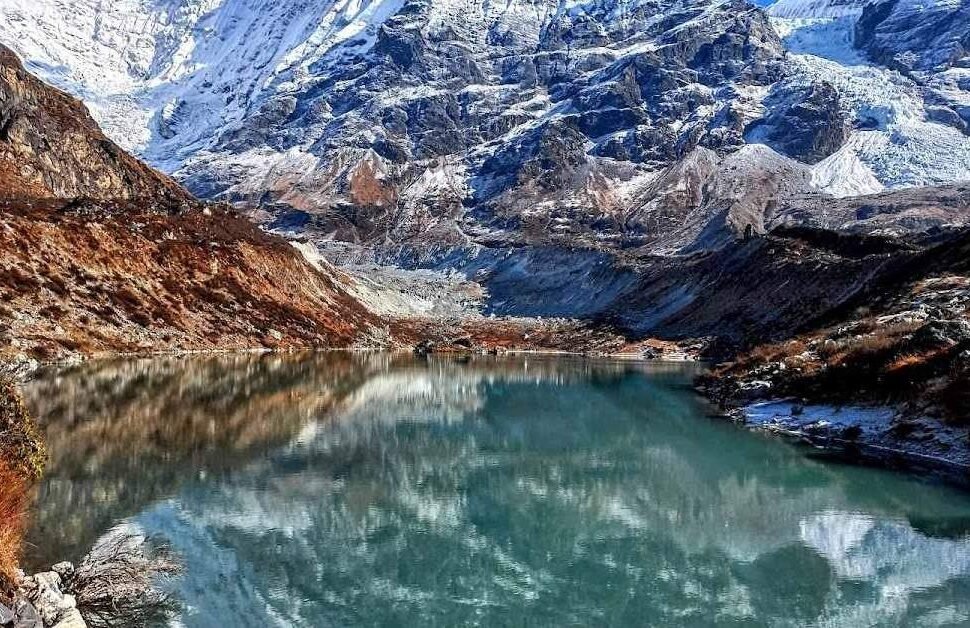
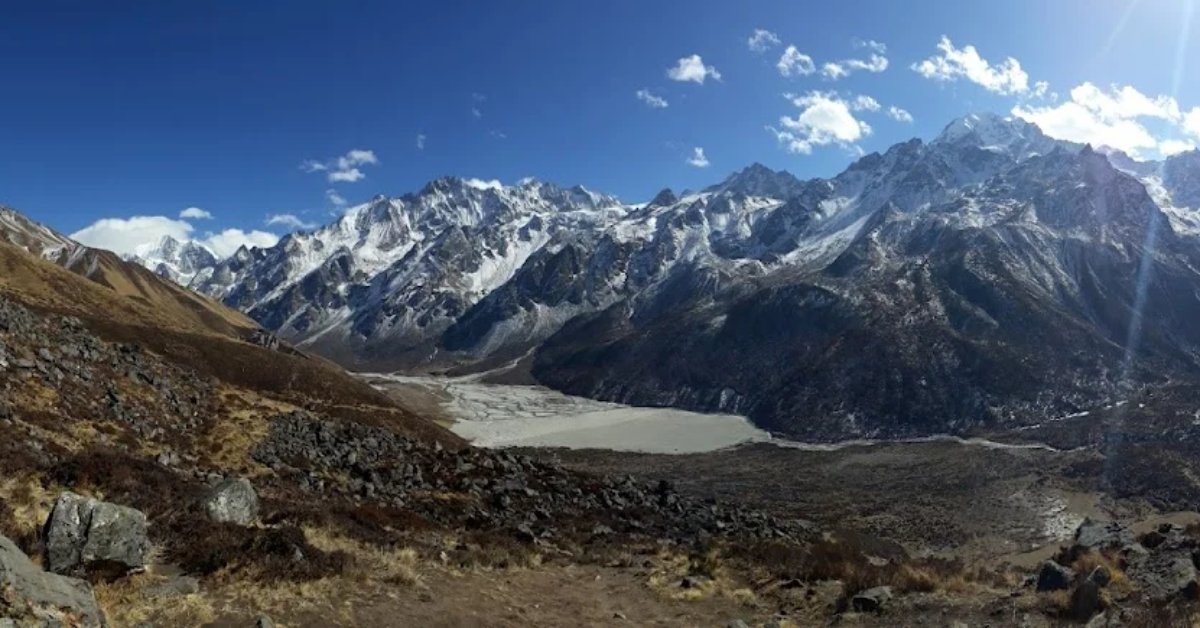
The valley runs roughly east-west, tucked between Tibet to the north and Kathmandu to the south, in the Rasuwa district of Nepal. The landscape shifts quickly as you gain altitude: subtropical forest in the lower valley, mixed rhododendron and pine above 2,500m, alpine meadows and yak pastures approaching Kyanjin Gompa, and bare rock and glaciers above that. The entire valley is within Langtang National Park — established in 1976, Nepal’s first Himalayan national park.
This guide covers everything you need to plan and complete the standard Langtang Valley Trek. All the details — cost, permits, accommodation, food, route — are laid out below.
Route Overview and Key Elevations
The standard Langtang Valley Trek follows a single main trail from Syabrubesi up the valley to Kyanjin Gompa, then back. Most trekkers do it as an out-and-back over 7–10 days. A small number extend the route by adding summit days at Tsergo Ri or Kyanjin Ri, or continue over high passes toward Gosainkunda or Helambu.
Key elevations and points on the standard route:
- Syabrubesi: 1,460m — trailhead, transport hub, last ATM
- Bamboo: 1,960m — jungle camp, leech season warning applies
- Lama Hotel: 2,470m — main cluster of lodges in the lower valley
- Ghoda Tabela: 3,010m — national park checkpoint, horses graze here in season
- Langtang Village: 3,430m — rebuilt post-earthquake village, memorial chorten
- Mundu: 3,543m — flat meadow section between village and Kyanjin
- Kyanjin Gompa: 3,870m — valley terminus for most trekkers, monastery, cheese factory
- Tsergo Ri: 4,984m — optional summit, outstanding views, requires side day
- Kyanjin Ri: 4,773m — closer summit option, faster ascent from Kyanjin
| Area | Max Altitude | Duration | Difficulty | Best For |
|---|---|---|---|---|
| Langtang Valley | 3,830 m (4,773 m optional) | 7–9 days | Moderate | First-time Himalayan trekkers, mountain scenery, Tamang culture |
| Gosainkunda | 4,380 m (4,610 m pass) | 7–10 days | Moderate–Strenuous | Sacred pilgrimage sites, high-altitude lakes, pass crossings |
| Helambu | 3,640 m | 5–7 days | Easy–Moderate | Beginner trekkers, cultural immersion, proximity to Kathmandu |
Planning a Langtang Valley Trek? Contact our local team for expert advice and trip planning.
How Long Does the Langtang Trek Take?
Most trekkers complete the standard Langtang Valley Trek in 7–9 days. Here’s what that looks like broken down:
Day 1: Kathmandu → Syabrubesi by bus. This is travel day — you’re covering 120km in roughly 7–8 hours depending on traffic and road conditions. Leave Kathmandu early (6am buses from Balaju bus station). Arrive Syabrubesi by early afternoon, acclimatize, sleep at 1,460m.
Day 2: Syabrubesi → Lama Hotel. 5–6 hours. The trail climbs through bamboo and rhododendron forest. You’ll cross the Langtang Khola (river) several times on suspension bridges. Lama Hotel (2,470m) is the first substantial cluster of teahouses and the logical stopping point for the first night on trail.
Day 3: Lama Hotel → Langtang Village. Another 5–6 hours. The forest gives way to more open terrain as you approach Ghoda Tabela, where you’ll stop for national park registration. Langtang Village (3,430m) is where the rebuilt post-earthquake settlement sits, with the memorial chorten visible at the village entrance.
Day 4: Langtang Village → Kyanjin Gompa. 3–4 hours. A shorter, easier walking day across open alpine meadows. Arrive at Kyanjin by lunchtime. Spend the afternoon exploring the monastery and the cheese factory, or rest and acclimatize before summit day.
Day 5: Kyanjin Gompa — acclimatization / summit attempt. Either a rest day at Kyanjin, or a day hike to Kyanjin Ri (4,773m) or Tsergo Ri (4,984m). The views from either summit are exceptional on clear days — the full sweep of the Langtang Himal with Langtang Lirung (7,234m) dominating the north.
Day 6–7: Descend Kyanjin → Lama Hotel → Syabrubesi. The descent goes faster than the ascent — most trekkers cover in 2 days what took 3 on the way up. Syabrubesi on day 7 for a night before the bus back to Kathmandu.
Day 8: Syabrubesi → Kathmandu by bus.
| Fact | Detail |
|---|---|
| Established | 1976 |
| Area | 1,710 km² |
| Altitude range | 800 m (Melamchi River) to 7,245 m (Langtang Lirung summit) |
| Location | Rasuwa and Nuwakot districts, Bagmati Province |
| Highest peak | Langtang Lirung (7,245 m) |
| Border | Tibet (China) to the north |
| Key wildlife | Red panda, snow leopard, Himalayan thar, langur monkey, musk deer, Danfe (national bird) |
| Main ethnic groups | Tamang (Langtang Valley), Hyolmo/Yolmo Sherpa (Helambu), Brahmin-Chhetri (lower valleys) |
Permits Required
Two permits are required for the Langtang Valley Trek. Both can be obtained in Kathmandu — get them before you leave, as there are no reliable permit offices on the trail.
Langtang National Park entry: NPR 3,000 per foreign trekker (approximately USD 22 at current rates). Paid at the park entry point at Dhunche or Syabrubesi. You can also obtain this permit in advance at the Langtang National Park office in Kathmandu (Hattisar area) or at the Department of National Parks and Wildlife Conservation.
TIMS card (Trekkers’ Information Management System): NPR 2,000 per foreign trekker. Obtained from the Nepal Tourism Board in Kathmandu (Bhrikuti Mandap) or from a registered trekking agency. You need one passport-size photo and your passport details.
Total permit cost: NPR 5,000 (approximately USD 37). There’s no permit checkpoint on trail that will let you through without both documents — don’t skip these.
Cost and Budget
The Langtang Trek is one of the more affordable major treks in Nepal. Accommodation at teahouses runs NPR 300–600 per room per night (USD 2–4.50). Most lodges price their rooms low with the expectation that you’ll eat meals there — which you will, because there’s nowhere else. If you eat elsewhere, some lodges charge extra for the room.
Meals: dal bhat is the standard trekking diet and costs NPR 500–700 per serving. Pasta, fried rice, and noodle dishes cost NPR 400–600. A thermos of tea (ginger, milk, black) runs NPR 100–200. Budget NPR 1,500–2,000 per day for food if you’re eating three meals and a few drinks.
Total daily budget: NPR 2,500–3,500 all-in (USD 18–26) for accommodation plus food. A 10-day trek including bus transport and permits works out to approximately USD 300–400 total without a guide, or USD 500–600 with a guide.
Planning a Langtang Valley Trek? Contact our local team for expert advice and trip planning.
Accommodation on the Trail
Teahouses run the full length of the trail. The best concentration of lodges is at Lama Hotel, Langtang Village, and Kyanjin Gompa. In peak season (October–November, March–April), lodges at these nodes fill up by early afternoon — aim to arrive by 2–3pm to secure a room.
The teahouses at Kyanjin Gompa are among the better-equipped on the trail. Several have attached bathrooms, charging facilities, and wifi (slow but functional). Rooms are simple — twin beds, foam mattresses, blankets provided — but adequately warm if you have a sleeping bag liner. Don’t rely on the teahouse blankets alone above 3,500m.
At Bamboo and Ghoda Tabela, there are fewer options. These are smaller stopping points rather than main nodes. They work as overnight stops if you’re doing shorter daily stages, but don’t expect hot showers.
Food on the Trail
Dal bhat is the correct choice for most trekking meals. It’s filling, it’s hot, it’s local, and portions are refillable (always ask — the custom is to refill). The quality varies — Kyanjin Gompa and Lama Hotel have the most experienced teahouse cooks — but it’s reliably nutritious everywhere on the trail.
Above Lama Hotel (2,470m), avoid meat. Not a hard rule, but a practical one: meat transported to high altitude teahouses has a complicated refrigeration history. Vegetarian meals and eggs are the safer protein sources. Yak cheese at Kyanjin Gompa is the exception — it’s made locally and is excellent. Try the yak butter tea (po cha) at least once. It tastes nothing like regular tea — salty, fatty, and warming in a way that tea with milk isn’t.
| Feature | Langtang Valley | Everest Base Camp | Annapurna Circuit |
|---|---|---|---|
| Distance from Kathmandu | 70 km (7–8 hr drive) | Flight to Lukla required | Flight or long drive |
| Flight dependency | None | High (Lukla notoriously delayed) | Low to moderate |
| Maximum altitude | 3,870 m (optional 4,773 m) | 5,364 m | 5,416 m (Thorong La) |
| Duration (standard) | 7–9 days | 12–14 days | 14–21 days |
| Cost (independent) | $700–$1,000 | $1,200–$2,000+ | $1,000–$1,800 |
| Crowd level | Low to moderate | Very high (spring/autumn) | High (spring/autumn) |
| Cultural immersion | Deep (Tamang villages) | Moderate (Sherpa) | High (multiple ethnic groups) |
Physical Preparation
The Langtang Valley Trek is rated moderate. You don’t need previous Himalayan experience, but you shouldn’t start it completely unfit. The trail involves 5–6 hours of walking per day for 3–4 consecutive days, with 600–900m of daily elevation gain on the ascent portion.
If you’re not a regular hiker, spend 6–8 weeks before the trek doing sustained cardiovascular exercise — long walks, stair climbing, cycling. The sustained effort is more the issue than any single steep section. The trail itself is well-graded and has no technical scrambling or exposure.
Altitude is the variable most people underestimate. Even fit trekkers can get headaches and poor sleep above 3,000m. The pacing in the standard itinerary above is deliberately conservative — it builds in acclimatization time. Don’t try to rush the ascent to Kyanjin Gompa in fewer than 4 days from Syabrubesi. The valley will still be there if you take an extra day at Langtang Village.
Seasonal Conditions
October–November: Peak season. Clear skies, excellent mountain views, comfortable daytime temperatures (10–15°C at Kyanjin). Cold nights at altitude (−5 to −10°C at Kyanjin in November). Lodges busy, book ahead if possible.
March–April: Spring season. Rhododendrons bloom in the lower valley in March-April. Slightly more cloud than autumn. Views generally clear in the morning. Good overall conditions.
December–February: Cold and quiet. The trail is open and lodges operate (with reduced menus). Temperatures at Kyanjin can drop to −15 to −20°C at night. Requires proper cold-weather gear. Some years bring significant snow on the upper trail from December. For experienced trekkers only in winter.
June–August (monsoon): Trail is open but conditions are poor. Heavy rain, leeches on the lower trail, poor visibility. Most experienced trekkers skip monsoon. If you go, waterproofing everything — not just your rain jacket — is essential.
Planning a Langtang Valley Trek? Contact our local team for expert advice and trip planning.