Kathmandu Day Tour 2026: Four UNESCO World Heritage Sites with a Licensed Local Guide
Tour at a Glance
Most people arriving in Kathmandu have one free day before or after a trek or longer tour. A few hours, a hotel somewhere in Thamel, a city that can look overwhelming on first arrival. This Kathmandu Day Tour is how you make that day count. In six to seven hours you visit four UNESCO World Heritage Sites: Swayambhunath, Patan Durbar Square, Boudhanath and Pashupatinath. Each site is distinct. Each one represents a different layer of the Kathmandu Valley’s 1,500-year continuous history. One of our Nepal Tourism Board licensed guides handles the logistics and the context. You get the city on its own terms.
We run every Kathmandu Day Tour privately. Your vehicle, your guide, your pace. No shared buses, no group departures you have to fit around, no waiting for strangers. We work around your schedule and pick you up directly from your hotel.
The Four Sites: What You Actually See and Why Each One Matters
Swayambhunath — The Monkey Temple on the Hill Above Kathmandu
We start at Swayambhunath in the morning when the light is good and the hilltop crowds are manageable. The climb up 365 stone steps is part of the experience: rhesus macaque monkeys on every surface, prayer flags strung overhead, the valley spreading below as you gain height. At the top the stupa itself is an ancient one, with origins Newari chronicles place at around 460 AD, though the hilltop was considered sacred well before any structure stood here. The all-seeing eyes of the Buddha face the four cardinal directions from the gilded tower. Smaller shrines, the Harati Devi temple, a ring of prayer wheels and a line of meditation caves fill the complex around the main dome. Our guides explain the coexistence of Hindu and Buddhist elements here, since most visitors leave the site uncertain about which tradition any particular shrine belongs to.
Patan Durbar Square — Medieval Newari Architecture at Its Peak
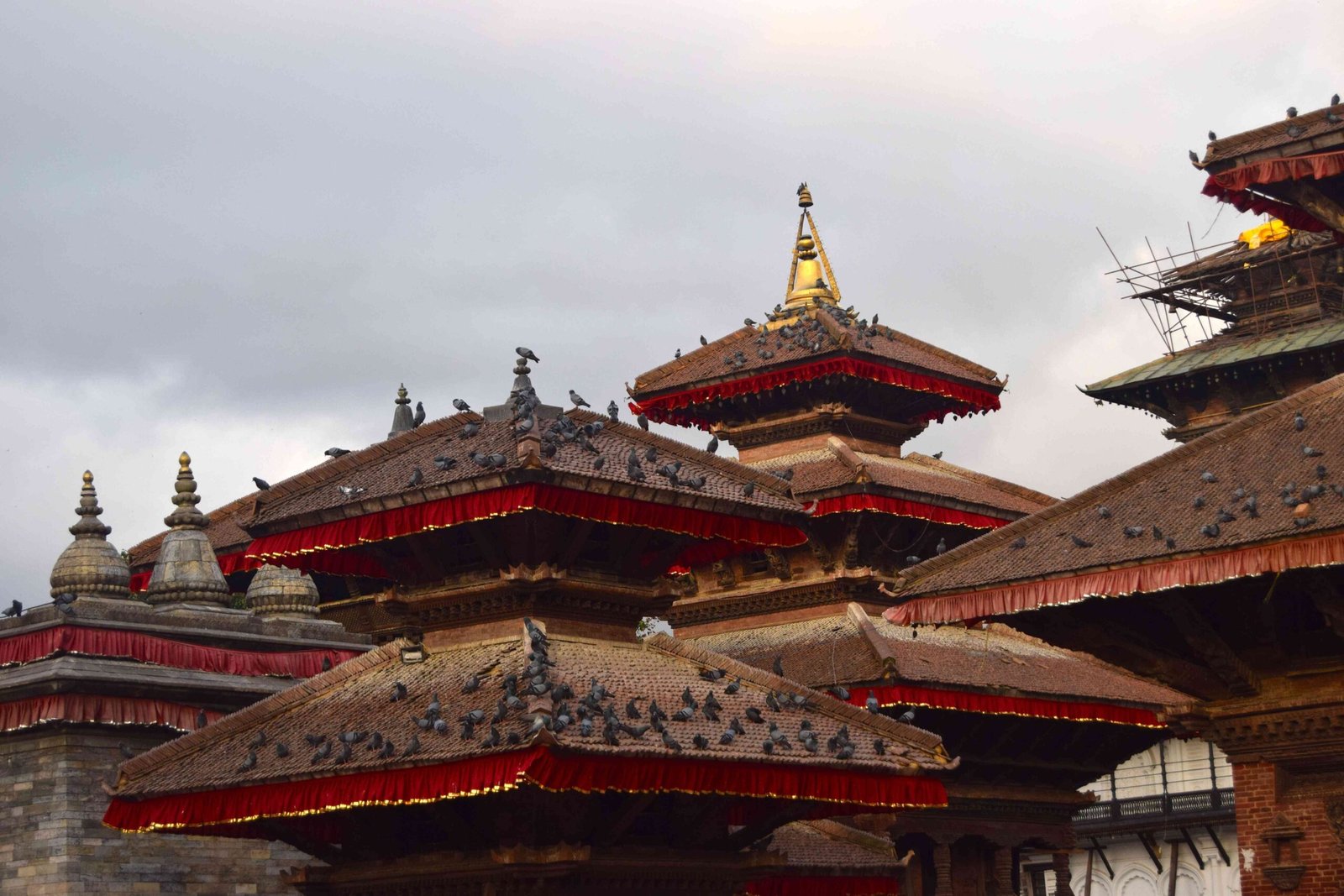
Most Kathmandu day tours skip Patan in favour of the Durbar Square in the city centre. We include Patan because the quality of the craftsmanship and the Patan Museum collection are worth the extra driving time. Patan was the capital of its own independent Malla kingdom from the 3rd century AD and the royal palace complex reflects that long history. The Krishna Mandir, built entirely from stone in a style that combines Shikhara architecture with Newari detail, is one of the most photographed buildings in Nepal. The Bhimsen Temple, the Golden Temple tucked inside the old town, the carved wooden struts of the Char Narayan courtyard: these are the finest examples of medieval Newari work remaining in the valley. The Patan Museum, inside the old palace building, holds the best collection of bronze religious art in Nepal and gives real context to everything you see at every site across the day.
Boudhanath Stupa — The Centre of Tibetan Buddhism in Nepal
Boudhanath is where the day slows down. The stupa, 36 metres high and 120 metres across the base, sits at the centre of a large circular plaza ringed by monasteries, teahouses and shops selling thankas, incense and ritual items. The kora, the act of walking clockwise around the stupa while spinning prayer wheels, runs continuously from early morning until the evening prayer bells. Tibetan monks in burgundy robes, Nepali families doing their daily circuit, pilgrims from across the Himalayan region. The stupa dates to the 5th century AD with major construction attributed to the Malla kings of the 14th century. It was significantly damaged in the 2015 earthquake and fully restored by 2017. We build in time at Boudhanath for a proper stop: long enough to walk the kora once, watch the rituals, and eat lunch at one of the rooftop restaurants overlooking the stupa if you want to combine the meal with the visit.
Pashupatinath Temple — Nepal’s Most Sacred Hindu Site on the Bagmati River
We time the Pashupatinath visit for late afternoon, when the cremation ghats on the Bagmati River are most active and the light is warm on the temple complex. Non-Hindus cannot enter the main temple building but the viewing area on the far bank of the river gives a direct and clear line of sight to the silver-roofed inner sanctum, the Shiva lingam visible through the open gates, and the stone ghats below where cremations take place. Our guides handle this part of the visit with care and context. The surrounding complex covers a wide area and includes hundreds of smaller shrines, the Gorakhnath temple, the Bachhareshwori temple, and the hillside terraces where sadhus gather. Photography of sadhus is welcome with permission and usually a small direct payment to them. The foreigner entry fee for Pashupatinath is NPR 1,000 and is included in our tour price.
How the Day Is Organised
Your guide and driver arrive at your hotel between 8:30 and 9:00 AM. The order of sites depends on your hotel location and any preferences you have, but the standard sequence moves from Swayambhunath in the morning through Patan and Boudhanath in the middle of the day to Pashupatinath in the afternoon. The return drop to your hotel is typically between 5:00 and 5:30 PM. If you want to add Kathmandu Durbar Square, Bhaktapur or any other site, we can discuss adjustments before the tour starts.
All monument entry fees are included. All transport between sites is by private vehicle. The guide stays with you at every stop. Lunch is at your own expense and the restaurants near Boudhanath Stupa offer the best combination of food quality and views. We can recommend specific places based on what you want to eat.
Entry Fees and Practical Notes for 2026
The four main monument fees are covered in our tour price. For reference: Pashupatinath charges NPR 1,000 for foreign nationals. Patan Durbar Square charges NPR 1,000. Swayambhunath charges NPR 200. Boudhanath charges NPR 400 for foreigners on most days (sometimes free in the early morning). We also cover parking and all fuel costs. The only costs you pay separately are lunch, personal purchases and any tips you choose to give your guide and driver.
Dress code at religious sites: cover shoulders and knees. Remove shoes before entering any temple building. At Pashupatinath, some of the inner shrines require removing footwear outside. We carry small paper bags for shoes if needed. Photography rules vary: at Pashupatinath the main temple cannot be photographed from certain angles. Our guide advises on the spot.


Local Guide Note — Sunil Tiwari, Trekking Guide, Next Trip Nepal: I have guided Kathmandu’s heritage circuit for 14 years and Pashupatinath is the most misread stop on the route — most tours arrive mid-morning when the ghats are quiet and the atmosphere is flat. We time every Kathmandu day tour for the evening Aarti ceremony at 17:30, because it is the authentic, living Kathmandu that every visitor deserves to witness.
Critical Safety and Logistics
- No trekking permits required. Valid passport and Nepal entry visa sufficient for all Kathmandu valley day tours.
- UNESCO heritage site entry fees apply at Pashupatinath, Boudhanath, Swayambhunath, and Patan Durbar Square. Combined fee range NPR 150 to NPR 1,000 per site.
- Best visiting times: Pashupatinath 06:00 to 08:00 and 17:00 to 19:00. Boudhanath 06:00 to 08:00 for morning kora. Avoid 10:00 to 15:00 at all sites for crowd management.
The Kathmandu Day Tour with Next Trip Nepal covers the four most significant UNESCO World Heritage Sites in the Kathmandu Valley in a single well-organised day. The sites are Pashupatinath Temple, Boudhanath Stupa, Swayambhunath (the Monkey Temple) and Patan Durbar Square. Each is within 30 minutes of the others by private vehicle and each offers something entirely different from the last.
Kathmandu holds more UNESCO World Heritage Sites within a compact valley than any comparable area in Asia. These sites are not museums or reconstructions. They are living religious and cultural spaces used daily by Nepali Hindus and Buddhists. Cremations happen at Pashupatinath every day. Monks perform the morning kora at Boudhanath before dawn. The temples at Patan receive offerings from local families who have been doing so for generations. The guided day tour gives you access to all of this with someone who understands what you are seeing and can place it in the context of 1,000 years of Kathmandu Valley history.
We operate this tour privately. One guide, one vehicle, your group. No shared transport, no mixed groups, no departure times that do not fit your schedule. We pick you up from your hotel and drop you back when the day is done. The typical departure time is between 8:30 and 9:00 AM and the return is between 5:00 and 5:30 PM, giving you six to seven hours at the sites with comfortable travel time between them.
Our guides are licensed by the Nepal Tourism Board and have specialist knowledge of the religious traditions, architecture and history at each site. They speak fluent English and are accustomed to answering questions from visitors with very different backgrounds — from first-time travellers to Nepal to people with an existing interest in Hinduism or Tibetan Buddhism.
All entry fees are included in the tour price. We cover Pashupatinath (NPR 1,000 for foreign nationals), Patan Durbar Square (NPR 1,000), Swayambhunath (NPR 200) and Boudhanath where charged. The only costs you pay separately during the day are lunch, personal shopping and any tips you choose to give the guide and driver. There are no hidden charges.
This tour suits anyone spending a day in Kathmandu before or after a trek, a first-time visitor to Nepal who wants to understand the city properly, families with children of any age, elderly travellers who want a comfortable pace, and photographers who want a guide who knows the best angles and timing at each site. The walking at most sites is minimal and at a comfortable pace throughout.
Further Reading from Our Kathmandu Guides
How to Book the Kathmandu Day Tour
Highlights
- Four UNESCO World Heritage Sites visited in one well-planned day with no rushing between them
- Nepal Tourism Board licensed guide with detailed knowledge of the religious and historical context at each site
- Private vehicle throughout the day — no shared transport, no group departure times, no waiting
- All monument entry fees included: Pashupatinath, Swayambhunath, Patan Durbar Square and Boudhanath
- Hotel pickup and drop from anywhere in Kathmandu at your preferred time
- Patan Durbar Square included in the tour — most Kathmandu day tours cover only three sites and skip Patan
- Pashupatinath visit timed for late afternoon when the cremation ghats and sadhu gathering are most active
- Swayambhunath visit timed for morning light before crowds build and monkeys are most active at the hilltop
- Flexible pace at every site with time to sit, walk the kora at Boudhanath, and ask questions without pressure
- Suitable for all ages and fitness levels — minimal walking, easy terrain, no physical demands at any site