Ghorepani Poon Hill Trek at a Glance
| Trek Duration | 4 to 5 days (standard), up to 7 days with extensions |
| Maximum Altitude | Poon Hill: 3,210m |
| Trek Difficulty | Easy to Moderate (suitable for beginners with basic fitness) |
| Trailhead | Nayapul (1,070m), 1.5 to 2 hours from Pokhara by bus |
| Best Months | October, November, March and April |
| Permits Required | ACAP: NPR 3,000 + TIMS: NPR 2,000 (foreigners) |
| Daily Budget | USD 30 to 50 per day independent |
| Key Highlight | Sunrise over Dhaulagiri (8,167m) and Annapurna range from Poon Hill |
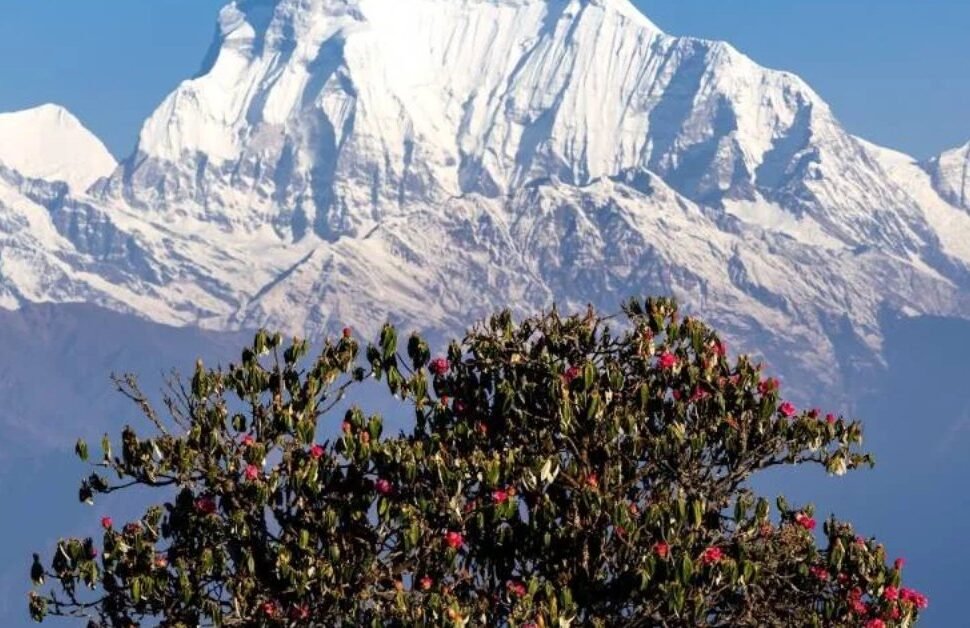
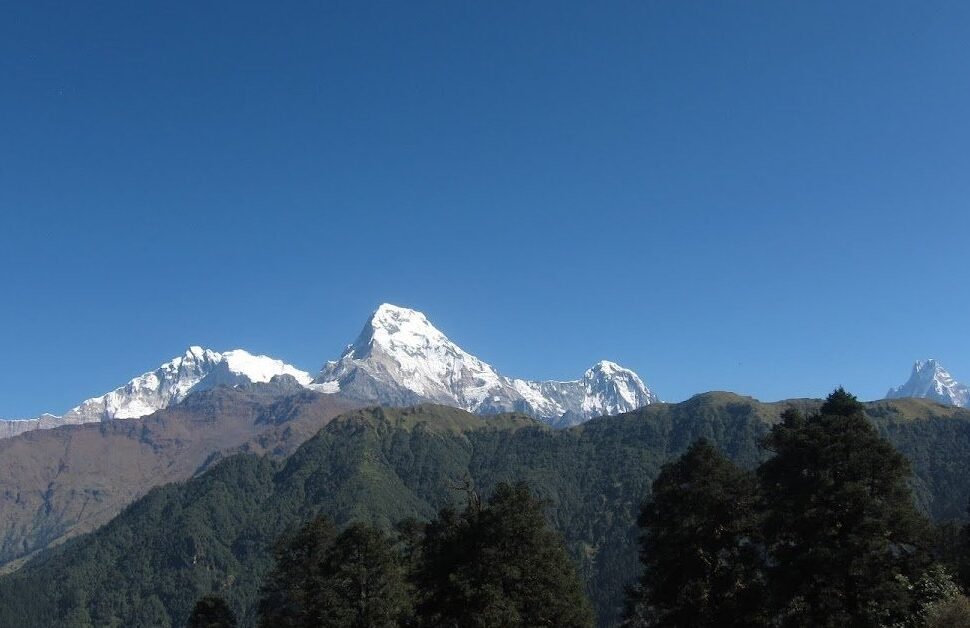
The Ghorepani Poon Hill Trek is Nepal’s most popular short trek. It’s not the longest route, it’s not the highest, and it doesn’t go anywhere remote. What it does is put you on top of a 3,210m ridge at 5:30 in the morning, watching the sky turn orange and the entire Annapurna range catch fire in the first light of day. The mountains you’ll see: Dhaulagiri at 8,167m, Annapurna I at 8,091m, Annapurna South at 7,219m, Machhapuchhre at 6,993m, Hiunchuli at 6,441m. On a clear morning you can count eight distinct peaks above 6,000m from a single viewpoint.
That’s why hundreds of thousands of trekkers have done this trek. That’s why you should do it too.
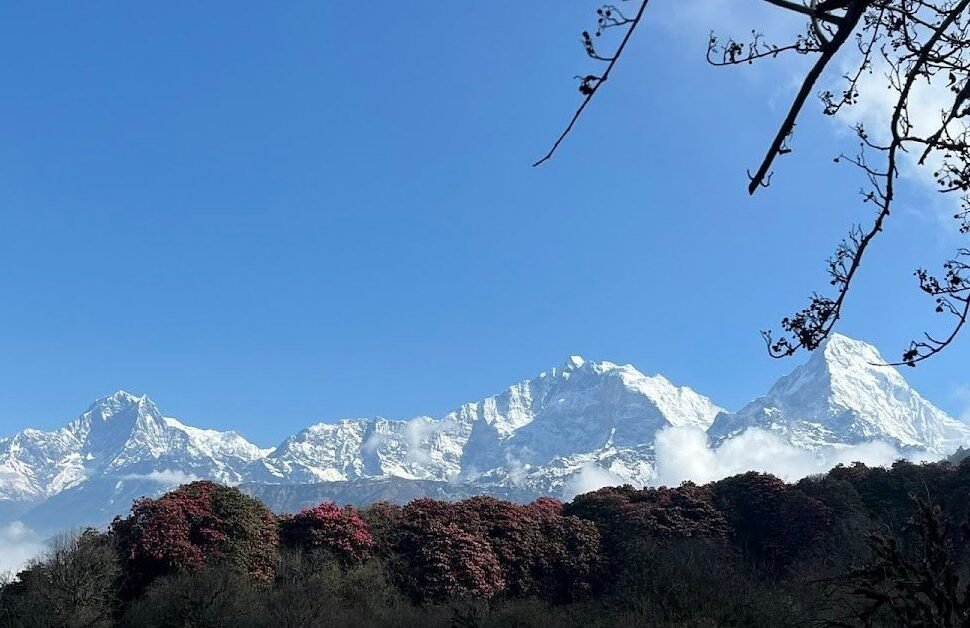
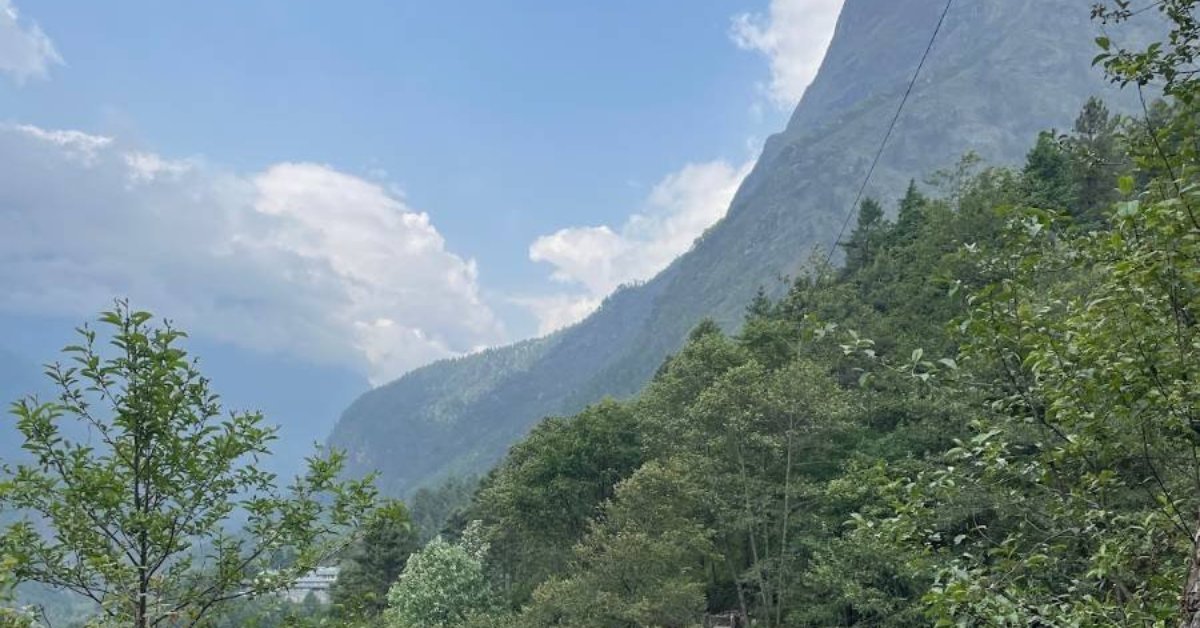
The trek runs through the Annapurna Conservation Area in Gandaki Province, connecting a chain of farming and trekking villages between Pokhara and the Annapurna Sanctuary approach. The core route follows the Modi Khola and Bhurungdi Khola river valleys before climbing steeply into rhododendron forests that are among the densest in Nepal. In spring, those forests turn red, pink and white from March through April in a way that’s genuinely spectacular. In autumn, the skies clear after monsoon and the mountain views are at their sharpest.
You don’t need mountaineering experience. You don’t need special equipment. You need a moderate level of fitness, five days, and permits that cost NPR 5,000 total. That’s it.
This complete guide covers the Ghorepani Poon Hill Trek from Pokhara entry logistics through to the descent back to Nayapul. Use the section links to jump to detailed coverage of cost, itinerary options, best timing and what to pack.
Why the Ghorepani Poon Hill Trek Is Worth Your Time
Here’s what makes it stand out from other short treks in the Annapurna region.
First, the views are disproportionately good for the altitude involved. You top out at 3,210m on Poon Hill. Kyanjin Gompa in the Langtang Valley is 3,870m. Annapurna Base Camp sits at 4,130m. But the panorama from Poon Hill includes two 8,000m peaks and several giants above 7,000m, framed in a clear arc from west to east that most higher viewpoints can’t match because surrounding terrain blocks one side or another. Poon Hill’s position at the edge of the ridge gives it an unobstructed 180-degree view north. The number is notable because it’s genuinely rare on Himalayan short treks.
Second, the route has genuine character. The stone stairs above Tikhedhunga are famous and genuinely demanding. There are about 3,000 steps climbing from 1,540m to 2,050m in a single unbroken ascent. You won’t forget that section. The rhododendron forest above Ulleri is dense and ancient. Ghandruk is a real Gurung village with a museum about the Gurkha soldiers who came from here, and the community still farms the terraced fields that frame the village.
Third, the accessibility is exceptional. Pokhara to Nayapul takes 1.5 to 2 hours by local bus or shared jeep. No flights, no long overnight rides. You can be on the trail by 9am the same morning you check out of your Lakeside hotel. At the end, you’re back in Pokhara in time for dinner.
Planning a Ghorepani Poon Hill Trek? Contact our local team for expert advice and personalised trip planning.
Route Overview and Key Villages
The Ghorepani Poon Hill Trek follows a loop starting and ending at Nayapul (1,070m), with the high point at Poon Hill (3,210m). The standard 5-day circuit goes counterclockwise: up the eastern side via Tikhedhunga, Ulleri and Banthanti to Ghorepani, across the high ridge via Deurali to Tadapani, and down through Ghandruk to Nayapul.
You can also do a shorter 4-day version from Ghorepani, skipping Tadapani and Ghandruk and returning via the same route. This is faster and suits trekkers with limited time, but you miss the Ghandruk cultural experience and the Deurali ridge crossing, which has its own excellent views.
| Village | Altitude | Walk Time from Previous | Notes |
|---|---|---|---|
| Nayapul | 1,070m | Trailhead | Bus drop, 20 min walk to Birethanti |
| Birethanti | 1,025m | 20 min from Nayapul | ACAP and TIMS checkpoint |
| Tikhedhunga | 1,540m | 1.5 to 2 hrs from Birethanti | Last flat village before the stairs |
| Ulleri | 2,050m | 1.5 to 2 hrs from Tikhedhunga | 3,000 stone steps, hardest climb on route |
| Banthanti | 2,250m | 1.5 hrs from Ulleri | Rhododendron forest begins here |
| Ghorepani | 2,860m | 1.5 to 2 hrs from Banthanti | Main overnight stop, 30 min below Poon Hill |
| Poon Hill | 3,210m | 45 to 60 min from Ghorepani | Viewpoint, sunrise 5:30am to 6:30am |
| Tadapani | 2,630m | 3 to 4 hrs from Ghorepani | Via Deurali (3,100m) |
| Ghandruk | 1,940m | 2 to 3 hrs from Tadapani | Largest Gurung village on the route |
| Nayapul | 1,070m | 4 to 5 hrs from Ghandruk | Return trailhead, drive back to Pokhara |
Each village on the route has a distinct character. Birethanti (1,025m) is the permit checkpoint at the trailhead. It has a few teahouses and a small market, and the Bhurungdi Khola river runs through it on a suspension bridge you cross immediately after entering. Tikhedhunga (1,540m) is the last flat village before the steep climb begins. Worth stopping here for breakfast rather than rushing through, because the stairs above it are serious and you want to start them with a full stomach and an early start.
Ulleri (2,050m) sits on a shelf above the forest. From here the trail levels out briefly before climbing through forest to Banthanti (2,250m). This section through rhododendron and oak is the most beautiful forest walking on the route, especially in March when the rhododendrons are in full bloom. Ghorepani (2,860m) sits on a ridge and is the main overnight stop. It has the largest concentration of teahouses on the route, around 30 to 40 lodges spread along the main trail. The lodges here are generally better appointed than those lower down, with many offering attached bathrooms and solar heated water.
Getting to the Trailhead from Kathmandu and Pokhara
The trek starts from Nayapul. To reach Nayapul you first need to get to Pokhara, then take a local bus or shared jeep west along the Prithvi Highway.
From Kathmandu to Pokhara you have two options. The flight takes 25 minutes and costs roughly USD 90 to 130 one way depending on season and airline. Buddha Air, Yeti Airlines and Shree Airlines fly this route several times daily. The tourist bus takes about 7 hours and costs NPR 800 to 1,500 depending on whether you take a local or tourist express service. Tourist buses leave from Thamel at around 7am. The bus option is fine if you’re not pressed for time. The road follows the Trishuli River for much of the route and the scenery is worthwhile.
From Pokhara to Nayapul, take a local bus from Baglung Bus Park in the old section of Pokhara city, not in Lakeside. Local buses run frequently and cost NPR 150 to 200 per person. Alternatively, book a shared jeep or taxi from Lakeside for NPR 2,000 to 3,000 for the vehicle. The drive is 42km and takes 1.5 to 2 hours. Walk from the Nayapul bus stop across a suspension bridge for 20 minutes to reach Birethanti, where you check in your permits at the ACAP and TIMS checkpoint.
Required Permits: ACAP and TIMS
You need two permits to trek in this area. Get both in Pokhara before you go to Nayapul. Do not leave Pokhara without them.
| Permit | Foreign Trekkers | SAARC Nationals | Where to Get It |
|---|---|---|---|
| ACAP (Annapurna Conservation Area) | NPR 3,000 | NPR 200 | Pokhara NTB office or Birethanti checkpoint |
| TIMS Card | NPR 2,000 | NPR 1,000 | Pokhara TAAN office in Lakeside only |
The ACAP (Annapurna Conservation Area Permit) covers your entry to the conservation area managed by the National Trust for Nature Conservation. You can get it at the Nepal Tourism Board office in Pokhara city centre or at the ACAP office in Lakeside. Bring one passport photo and your passport.
The TIMS card (Trekkers Information Management System) can only be obtained in Pokhara at the TAAN office in Lakeside. The TAAN office closes at 5pm. Bring two passport photos, your passport, and the fee. A solo trekker pays NPR 2,000. SAARC nationals pay NPR 1,000.
Both permits are checked at Birethanti at the start of the trek and may be checked again at Ghorepani and other checkpoints. Foreigners caught without permits face fines and removal from the trail. Don’t risk it for NPR 5,000 total.
Best Time for the Ghorepani Poon Hill Trek
October and November are the best months. After monsoon the skies are clear, the air is sharp, and you get reliable morning views from Poon Hill for about 80 to 90 percent of days. Temperatures at Ghorepani in October range from 3 to 5 degrees C at night and 12 to 15 degrees C during the day. By late November nights drop to around 0 to 3 degrees C. Warm layers and a sleeping bag liner are necessary from October onwards.
March and April are excellent for a different reason: the rhododendron forests. Nepal’s national flower blooms in mass along this trail from early March through April, turning the forests above Ulleri and Banthanti into something genuinely extraordinary. The pink, red and white flowers are at their peak around 2,200 to 2,800m in the second and third week of March. March skies can carry some morning haze but clear beautifully by midday.
December and January are possible but cold. Ghorepani can drop to minus 10 to minus 15 degrees C at night in January. The trail and lodges stay open but some guesthouses reduce their menus and staff. February warms up slightly. May brings heat and some cloud but it’s still trekable. June through September is monsoon season. The trail gets very wet, leeches appear in the forest sections below 2,500m, and cloud regularly blocks the Poon Hill views. Most experienced trekkers skip monsoon entirely.
Day by Day Route Description
Day 1: Pokhara to Tikhedhunga (1,540m)
Take the morning bus from Baglung Bus Park at around 7 to 8am. You’ll reach Nayapul by 9 to 10am. Walk 20 minutes to Birethanti, register your permits, and start the trail. The path follows the Bhurungdi Khola river upstream through terraced farmland. You’ll pass through Hile and reach Tikhedhunga in about 2 to 3 hours from Birethanti. Total walking time: 3 to 4 hours. Altitude gain from Nayapul: 470m.
Day 2: Tikhedhunga to Ghorepani (2,860m)
This is the hardest day. Start early, by 7am if possible. The stone staircase above Tikhedhunga climbs almost vertically for 1.5 to 2 hours to reach Ulleri at 2,050m. There are approximately 3,000 steps and no shortcut. Take it steady. From Ulleri the trail enters oak and rhododendron forest. Pass through Banthanti (2,250m) for lunch. The forest above Banthanti is the most beautiful section when rhododendrons are blooming. From Banthanti to Ghorepani takes another 1.5 to 2 hours. Total walking time: 5 to 6 hours. Altitude gain from Tikhedhunga: 1,320m.
Day 3: Poon Hill Sunrise, then Trek to Tadapani (2,630m)
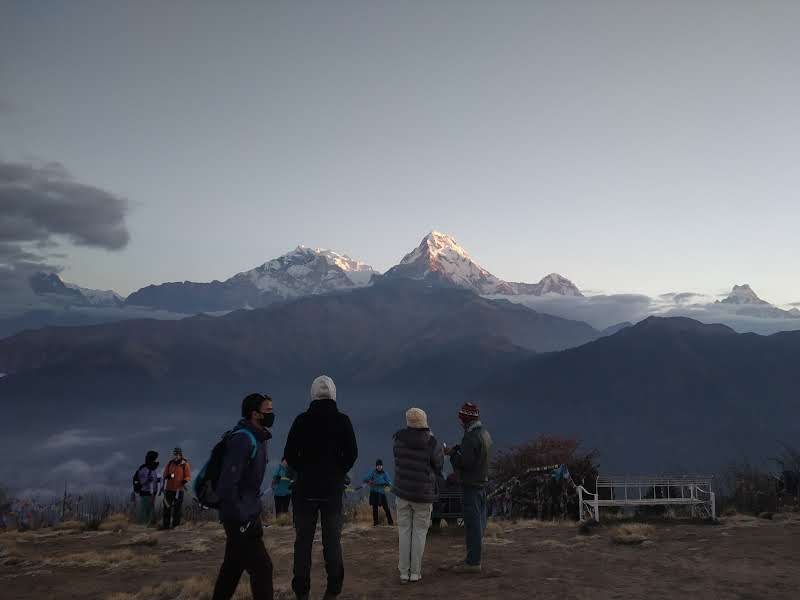
Wake at 4:30am. The early morning hike to Poon Hill takes 45 to 60 minutes on a stepped trail with head torch in hand. You want to reach the top before the sun crests the horizon to the east, which happens between 5:30 and 6:30am depending on the season. October sunrises hit around 6:00 to 6:15am. March sunrises are closer to 5:45am. After the sunrise, descend back to Ghorepani for breakfast, then continue east along the ridge toward Deurali (3,100m) and down to Tadapani (2,630m). Total walking time for the day: 5 to 6 hours.
Day 4: Tadapani to Ghandruk (1,940m)
Short day, 2 to 3 hours walking. The descent from Tadapani to Ghandruk passes through rhododendron forest and eventually into terraced farmland. Ghandruk (1,940m) is one of the largest Gurung villages in Nepal. The village has a Gurung museum dedicated to local culture and the Gurkha military history. Ghandruk also offers some of the best views of Annapurna South and Machhapuchhre available at this altitude. Stay the night in Ghandruk.
Day 5: Ghandruk to Nayapul (1,070m) and Drive to Pokhara
The final descent takes 4 to 5 hours via Kimche (1,640m) and the Modi Khola riverside trail back to Nayapul. From Nayapul, catch a bus or shared jeep back to Pokhara arriving in time for a late lunch. Total walking time: 4 to 5 hours. Altitude loss: 870m.
Planning a Ghorepani Poon Hill Trek? Contact our local team for expert advice and personalised trip planning.
The Poon Hill Sunrise Experience
Every trekker who makes the early morning climb to Poon Hill remembers it. The viewpoint at 3,210m sits on the edge of a ridge facing north, with no obstruction between you and the Annapurna Himalaya. When the sun comes up behind the ridge to your east, it hits the white faces of Dhaulagiri and Annapurna first, turning them from grey shadow to orange to blinding white in about 15 minutes.
The mountains you’ll see from the tower, left to right facing north: Dhaulagiri I (8,167m) dominates the western horizon. To its right you’ll see Tukuche Peak and Nilgiri before the main Annapurna massif comes into view. Annapurna I (8,091m) and Annapurna South (7,219m) are directly ahead. Hiunchuli (6,441m) sits to the east of Annapurna South. And Machhapuchhre (6,993m), the sacred Fishtail peak closed to climbing since 1957, rises directly north. On exceptionally clear mornings you can also see Annapurna III (7,555m) and Annapurna IV (7,525m) further east.
Bring your head torch, warm layers, and gloves. The temperature at Poon Hill at 5am in October is around 0 to 3 degrees C and wind chill makes it feel colder. Wear everything you have. Your hands need to work the camera and numb fingers make that harder than it sounds at that altitude. The government viewpoint fee of NPR 100 is collected at a booth near the top. Pay it. The funds go toward trail maintenance.
Mountain Views from Poon Hill
| Mountain | Altitude | World Rank | Visibility from Poon Hill |
|---|---|---|---|
| Dhaulagiri I | 8,167m | 7th highest | Excellent, dominates the northwest horizon |
| Annapurna I | 8,091m | 10th highest | Excellent, glows orange at sunrise |
| Annapurna South | 7,219m | Top 30 | Very prominent, directly north |
| Machhapuchhre (Fishtail) | 6,993m | N/A (unclimbed) | Most distinctive shape, unmissable |
| Hiunchuli | 6,441m | N/A | Good, southeast of Annapurna South |
| Nilgiri | 7,061m | N/A | Visible to the north, striking blue rock face |
Machhapuchhre (6,993m) deserves a special mention. This peak is sacred to Shiva and has never been officially climbed. The British mountaineer Jimmy Roberts led a 1957 expedition that reached within 50m of the summit but turned back out of respect for the mountain’s sanctity. The Nepal government has banned all climbing on Machhapuchhre since. From Poon Hill, its distinctive double peaked summit is one of the defining features of the panorama.
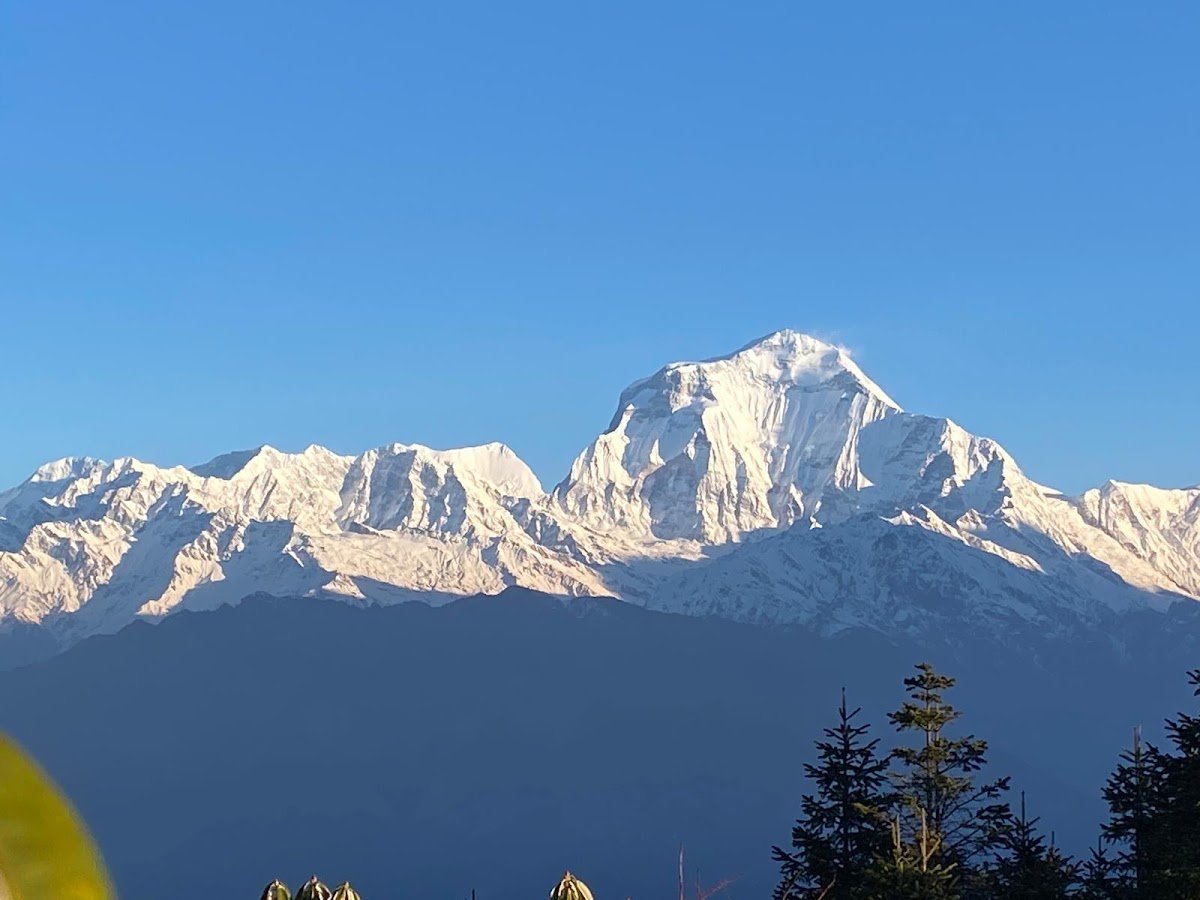
The best light hits the mountains in the 20 to 30 minutes around sunrise. After that the peaks remain clear but the dramatic colour fades. If you want the red and orange tones on the snow faces, you need to be on the hill before the sun crests the eastern ridge.
Accommodation on the Trail
Every village on the route has teahouses combining accommodation and restaurant service. The quality varies significantly by location. Ghorepani has the best selection, with 30 to 40 lodges ranging from basic doubles with shared bathrooms to rooms with attached hot showers. The main lodges in Ghorepani include Hill Top Lodge, Hotel Annapurna and Namaste Lodge. Several newer guesthouses have been renovated since 2020 and offer significantly better rooms than the old stock.
Room rates run NPR 400 to 800 per night in standard lodges and NPR 800 to 1,500 in better rooms with attached bathrooms in Ghorepani. The standard expectation is that you eat dinner and breakfast at the lodge where you sleep. Most lodges price rooms at near cost and make their margin on food. If you want to eat at a different lodge, expect the room rate to increase.
Sleeping bags are worth carrying. Teahouses provide blankets but in October and November at Ghorepani, the nights drop to near zero and the lodge walls are thin. A down sleeping bag or a quality liner adds meaningful warmth. You can rent sleeping bags in Pokhara’s Lakeside trekking shops for NPR 100 to 200 per night.
Book ahead in peak season. October especially fills up fast. If you arrive in Ghorepani after 3pm in peak October without a booking, you may find the better lodges full. A simple WhatsApp message to the lodge the morning of your approach usually reserves a room.
Food and Drinking Water on the Trek
Dal bhat is the trekking standard and it’s the right choice. A serving of dal bhat, which includes rice, lentil soup, vegetable curry and pickles, costs NPR 500 to 800 on the Ghorepani circuit. Dal bhat is refillable by custom. When you finish the rice and want more, just ask. This unlimited refill culture makes it the best calorie per rupee meal available on the trail.
Prices increase as you gain altitude. A meal that costs NPR 400 in Tikhedhunga will cost NPR 600 to 700 in Ghorepani. Everything needs to be carried up by porter or mule, so the premium is justified. Budget NPR 1,500 to 2,500 per day for food and drinks.
Do not drink tap water or stream water directly. Use a filter bottle, purification tablets, or boiled water from lodge thermoses (NPR 50 to 100 per thermos). The filter bottle option is best for the environment. A LifeStraw or SteriPen handles any volume without per litre cost.
Physical Difficulty and Fitness Requirements
The Ghorepani Poon Hill Trek is rated easy to moderate. You don’t need prior trekking experience or technical skills. What you do need is enough baseline fitness to walk 5 to 6 hours per day on hilly terrain for 4 to 5 consecutive days.
The hardest section is the stone stairs above Tikhedhunga. This single climb gains 510m in altitude over about 3km. It takes most trekkers 1.5 to 2 hours to ascend. If you’re unfit or carrying heavy weight, it will take longer and feel much harder. Spend at least 4 to 6 weeks before the trek doing sustained cardiovascular exercise. Stair climbing is the most specific preparation you can do.
The maximum altitude of 3,210m at Poon Hill is well below the threshold where serious altitude sickness typically occurs. Mild symptoms like headache or fatigue at altitude are possible but serious altitude sickness is uncommon on this route. Still, drink plenty of water, ascend steadily, and don’t push through persistent headache without resting.
Cultural Highlights: Gurung Villages and Mountain Traditions
The Ghorepani route passes through territory historically inhabited by Magar and Gurung ethnic communities. Both groups have provided significant numbers of soldiers to the British Gurkha regiment and the Nepal Army, and this connection to that martial tradition is visible in the villages in the form of regimental insignia and the pride with which local men discuss their family’s service history.
Ghandruk is the most culturally significant stop on the circuit. The Gurung Museum in the centre of the village documents the history of the community through photographs, artefacts and displays in both Nepali and English. The museum is run by the local community and a donation is expected. Hours are roughly 9am to 5pm daily.
The terraced farming landscape around Ghandruk dates back centuries. The stone paved paths through the village were built and maintained by the community. Ghorepani itself has a name that translates roughly as horse water in Nepali. It was historically a rest stop for mule and horse caravans carrying goods between the Kali Gandaki valley and the lower hills.
Photography Tips for the Trek
The two best photographic moments on this trek are the Poon Hill sunrise and the views of Annapurna South above Ghandruk. Both require you to be in the right place at the right time with equipment ready.
For Poon Hill sunrise, bring your widest angle lens or use your phone’s ultra wide mode. The panorama is broader than a standard lens captures. A tripod helps for the low light conditions at 5:30am. Arrive 20 minutes before the predicted sunrise time to position yourself on the less crowded side of the tower.
The rhododendron forest between Banthanti and Ghorepani in March is best photographed in the 30 minutes after sunrise and the hour before sunset when the diffuse light is soft. For portraits in Gurung villages, always ask permission. A warm greeting in Nepali and a question gesture before pointing the camera usually gets a positive response.
Money, Connectivity and Emergency Information
There are no ATMs on the trail after Pokhara. Bring all the cash you need before you leave Pokhara. Allow NPR 5,000 to 8,000 per day for a comfortable budget including accommodation, food, snacks and tips. For a 5-day trek, carry NPR 30,000 to 40,000 plus the permit fees (NPR 5,000 total).
Mobile coverage from Ncell and Nepal Telecom is available at most points on the trail, though it drops in certain forested sections between Ulleri and Banthanti. At Ghorepani and Ghandruk you’ll have reliable signal. At Poon Hill summit there is generally good signal. Lodge wifi is available in Ghorepani and Ghandruk at NPR 100 to 200 per day.
For medical emergencies, the nearest hospital is in Pokhara. For altitude sickness, the treatment is immediate descent. Get travel insurance before you leave home that covers helicopter evacuation. It typically costs USD 50 to 100 for a Nepal trekking policy and covers evacuation costs that can reach USD 3,000 to 5,000.
Budget Overview and Cost Summary
The total cost of the Ghorepani Poon Hill Trek varies significantly depending on whether you go independently or with an agency, and whether you hire a guide and porter. Independently, without a guide, the total cost including Pokhara transport, permits, accommodation and food for 5 days is approximately USD 200 to 350 per person. With a guide it increases to USD 350 to 500. Package treks through a Pokhara agency typically cost USD 400 to 700 per person for a private group, or USD 250 to 350 on a shared departure. For the detailed cost breakdown with all budget scenarios, see our full cost guide.
Essential Gear and Packing List
- Head torch with spare batteries (essential for the early morning Poon Hill hike)
- Warm fleece or down jacket (Ghorepani at night is cold from October onwards)
- Waterproof rain jacket and rain cover for your pack
- Trekking poles (especially helpful on the Ulleri stone stairs descent)
- Sturdy hiking boots with ankle support, well worn in before the trek
- Wool or thermal base layers for cold nights at altitude
- Hat and gloves (essential for the Poon Hill sunrise, even in March)
- Sunscreen SPF 30 or higher (UV is intense above 2,000m)
- Water filter bottle or purification tablets
- First aid kit with blister treatment, pain relief and altitude medication (Diamox if prescribed by your doctor)
- Sleeping bag or liner (teahouse blankets are not always warm enough in cold months)
- Snack foods for energy on long ascent days (nuts, energy bars, dried fruit)
Frequently Asked Questions
Do I need a guide for the Ghorepani Poon Hill Trek?
No. The trail is well marked and well trafficked. Many independent trekkers complete it without a guide. A guide adds value if you want cultural context, local language interaction, or if you’re trekking alone and want company or safety support.
Is the trek safe for solo female trekkers?
Yes. The Ghorepani circuit is one of Nepal’s safest trails. It’s heavily trafficked, teahouse staff are experienced with international travellers, and there are always other trekkers on the trail. Normal precautions apply.
What’s the minimum time needed?
3 days if you do a strict out and back to Poon Hill, skipping Ghandruk. 4 days is the comfortable minimum for the full circuit. 5 days gives you time to move at a comfortable pace and enjoy Ghandruk properly.
When do rhododendrons bloom on this trek?
Peak bloom is in the forest sections between 2,000m and 2,800m, typically from early March to April depending on altitude. At 1,500 to 2,000m, bloom can start in late February. The forest between Banthanti and Ghorepani is particularly impressive in the second and third week of March.
Can I do the trek in 4 days?
Yes. The 4-day option skips either the first short day (combining days 1 and 2 into a long day from Pokhara) or returns directly from Ghorepani without going to Ghandruk. Most trekkers find 5 days more enjoyable.
Planning a Ghorepani Poon Hill Trek? Contact our local team for expert advice and personalised trip planning.