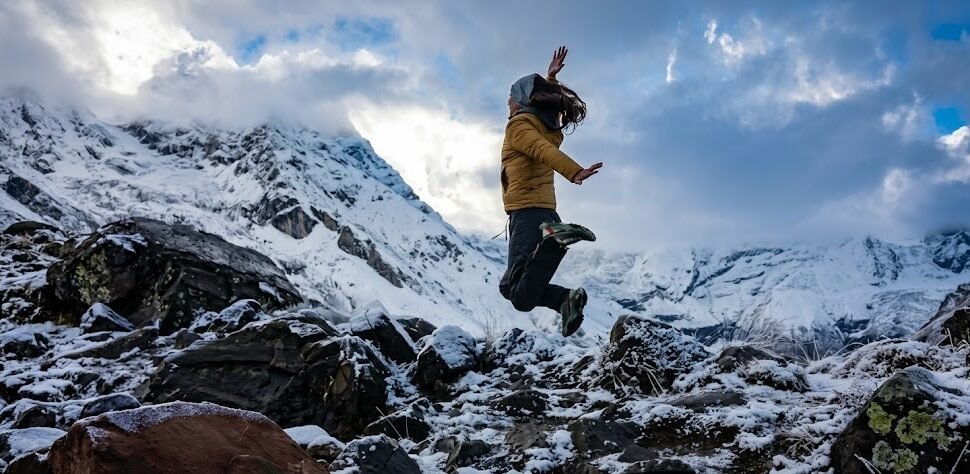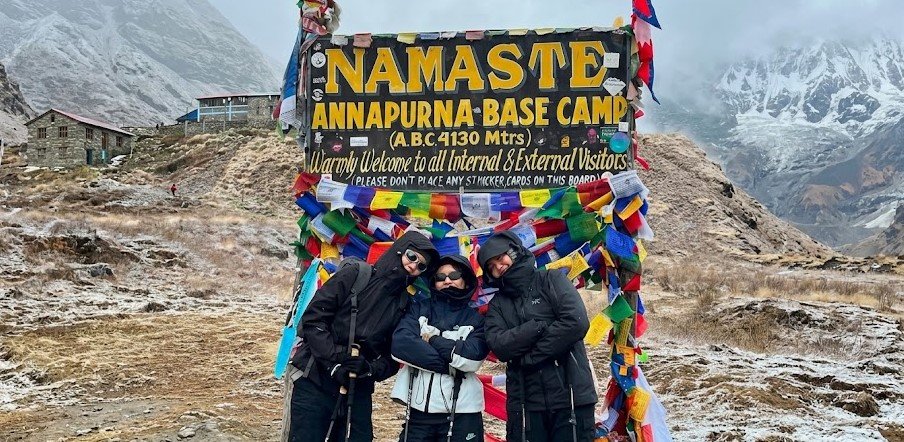
Every season, we welcome trekkers from Singapore who have one question in common: how do I plan the Annapurna Base Camp Trek from Singapore without wasting leave days or money? This guide answers that question completely. It covers flights from Changi, the Nepal visa-on-arrival, a proven 12-day itinerary, the full cost breakdown, the best months to travel, and training advice specifically for people living at sea level in a tropical climate.
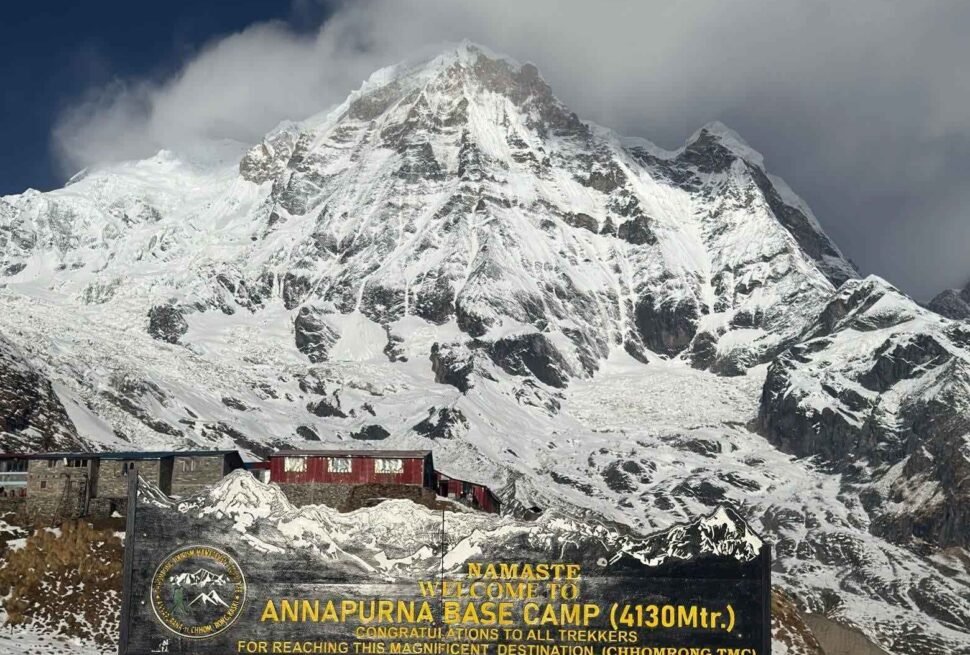
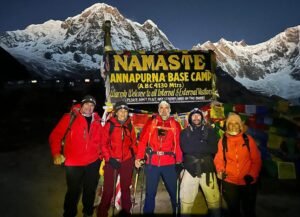
The Annapurna Base Camp Trek takes you into the Annapurna Sanctuary at 4,130 meters, a natural amphitheater surrounded by Annapurna I at 8,091 meters, Machhapuchhre, Hiunchuli, and Annapurna South. For Singapore travelers, it is one of the most practical Himalayan treks: the total trip fits inside two weeks of leave, the altitude is moderate compared with Everest or Manaslu, and the trail infrastructure is the best in Nepal.
At Next Trip Nepal, we are a registered local trekking company based in Kathmandu, and we have guided many trekkers from Singapore on this exact route. Everything below comes from running this trek year after year, not from secondhand research.
Quick Facts: Annapurna Base Camp Trek from Singapore
| Detail | Information |
|---|---|
| Trek Name | Annapurna Base Camp Trek |
| Highest Point | Annapurna Base Camp at 4,130 metres |
| Trek Duration | 7 to 12 days depending on itinerary |
| Total Trip from Singapore | 13 to 16 days including flights and buffer |
| Flight Time from Singapore | Around 5 to 12 hours with one connection |
| Visa for Singapore Passport | Tourist visa on arrival at Kathmandu airport |
| Package Price | From USD 749 per person with Next Trip Nepal |
| Permits | ACAP and TIMS, both arranged by us |
| Difficulty | Moderate, suitable for fit first time trekkers |
| Best Seasons | March to May and late September to November |
| Operated By | Next Trip Nepal, Kathmandu |
Why Choose the Annapurna Base Camp Trek from Singapore
Singaporean trekkers usually face two constraints: limited annual leave and no opportunity to train at altitude. The Annapurna Base Camp Trek respects both.
- The complete trip fits into about two weeks door-to-door, which is realistic with Singapore leave allowances.
- The maximum altitude of 4,130 meters carries a far lower risk of altitude sickness than treks that sleep above 5,000 meters.
- No internal mountain flight is required, so there is no Lukla-style weather lottery; access is by road or a short flight to Pokhara.
- Teahouses on this route are the most comfortable in Nepal, with good food and hot showers most of the way.
- The scenery to effort ratio is exceptional: within five walking days, you stand inside a ring of 7,00- and 8,000-metere peaks.
Singapore to Kathmandu Flight: Singapore travelers
Singapore travelers fly from Changi Airport (SIN) to Tribhuvan International Airport (KTM) in Kathmandu. Changi is one of the best-connected airports in Asia, so you have plenty of options.
Depending on the season, there are direct or one-stop services on this route, and convenient connections operate via Kuala Lumpur, Bangkok, Delhi, Doha, and Dubai with carriers such as Malaysia Airlines, Thai Airways, AirAsia, IndiGo, Qatar Airways, and Emirates. A one-stop journey typically takes 7 to 12 hours. Schedules change often, so confirm current routes directly with the airlines before booking.
Practical advice: arrive in Kathmandu at least one full day before the trek begins. We use that day for your trek briefing, gear check, and permits. Book your return flight with one buffer day after the planned end of the trek. Nepal time is 2 hours and 15 minutes behind Singapore, so jet lag is minimal.
Getting to the Trailhead: Kathmandu to Pokhara
The Annapurna Base Camp Trek starts near Pokhara, Nepal’s lakeside second city. From Kathmandu, you can take a 25-minute domestic flight, a tourist coach, or a private vehicle by road. Our standard package uses comfortable ground transport, and a Pokhara flight upgrade is available on request. Unlike the Everest region, a road alternative always exists here, which protects your schedule if weather disrupts domestic flights.
Nepal Visa for Singapore Travellers
Singapore passport holders can obtain a Nepal tourist visa on arrival at Kathmandu airport, or apply through Nepal’s official online immigration portal before travel. Rules and fees can change, so verify current requirements with the Embassy of Nepal or the Nepal Department of Immigration before departure.
| Document | Notes |
|---|---|
| Valid passport | At least 6 months validity beyond your return date |
| Passport size photo | Bring one or two spare photos |
| Visa fee | Payable in USD cash at the airport, fee depends on duration |
| Completed visa form | Online in advance or at the airport kiosks |
| Nepal contact address | Use your Kathmandu hotel or Next Trip Nepal office address |
A 15-day visa covers the standard trip. If you are adding Pokhara leisure days or other travel in Nepal, take the 30-day visa. Carry USD cash for the fee, as card payment at the visa counter is unreliable.
How Many Days Does a Singapore Traveler Need
Most Singapore trekkers need 11 to 15 days from Singapore bo Singapore. That covers two international travel days, one preparation day in Kathmandu, the trek itself with road transport to and from Pokhara, and one buffer day. Trekkers with less leave can take our shorter itinerary, built around the same trail, the 6 Days Annapurna Base Camp Trek, which compresses the total trip to about 10 days from Singapore.
Recommended Annapurna Base Camp Trek Itinerary from Singapore
This is our standard 12-day plan, paced for trekkers arriving from sea level. It includes Poon Hill, which many consider the best sunrise viewpoint in the Annapurna region.
| Day | Plan | Altitude |
|---|---|---|
| 1 | Arrival in Kathmandu, trek briefing | 1,400m |
| 2 | Travel to Pokhara | 822m |
| 3 | Drive to Nayapul, trek to Tikhedhunga | 1,540m |
| 4 | Trek to Ghorepani | 2,860m |
| 5 | Sunrise at Poon Hill, trek to Tadapani | 3,210m viewpoint |
| 6 | Trek to Chhomrong | 2,170m |
| 7 | Trek to Dovan | 2,600m |
| 8 | Trek to Machhapuchhre Base Camp | 3,700m |
| 9 | Reach Annapurna Base Camp for sunrise, descend to Bamboo | 4,130m |
| 10 | Trek to Jhinu Danda hot springs, drive to Pokhara | 822m |
| 11 | Return to Kathmandu | 1,400m |
| 12 | Departure or buffer day | 1,400m |
What to Expect Day by Day on the Annapurna Base Camp Trek
Day 1: Arrival in Kathmandu
Your trip starts in Kathmandu. After arrival, you can rest at the hotel, check your trekking gear, and prepare for the trek. This is the best time to buy or rent anything missing, such as trekking poles, gloves, warm layers, or a sleeping bag. If your package includes a briefing, you will also meet the team and go through the itinerary.
Day 2: Kathmandu to Pokhara
Today you travel from Kathmandu to Pokhara. By road, the journey usually takes around 6 to 8 hours, depending on traffic and road conditions. By flight, it is much shorter. Pokhara is a relaxing lakeside city and the main gateway to the Annapurna region. You can rest, walk around Lakeside, and prepare for the first trekking day.
Day 3: Pokhara to Ulleri
The day usually starts with a drive from Pokhara toward the trekking starting point. After that, the walking begins through villages, terraced fields, and stone steps. The climb to Ulleri is one of the first big tests of the trek. There are many uphill steps, so this day can feel harder than expected, especially for beginners.
Day 4: Ulleri to Ghorepani
The trail continues through forest and small villages. This day is more peaceful than the climb to Ulleri, but there is still steady uphill walking. In spring, the rhododendron forest can be very beautiful. Ghorepani is a popular village below Poon Hill, and the evening can feel cold because the altitude is higher.
Day 5: Ghorepani to Poon Hill and Tadapani
You wake up early and hike to Poon Hill for sunrise. From this viewpoint, you can see Dhaulagiri, Annapurna South, Annapurna I, Machhapuchhre, and many other peaks. After breakfast back in Ghorepani, the trail continues through the forest and hills toward Tadapani. This is a long but beautiful walking day.
Day 6: Tadapani to Chhomrong
Today the trail goes down and up through villages, forest, and terraced farmland. Chhomrong is one of the main villages on the Annapurna Base Camp route. From here, the trail begins to descend deeper into the Modi Khola valley. You can also get good mountain views from Chhomrong if the weather is clear.
Day 7: Chhomrong to Dovan
The day starts with many stone steps down to the river, then climbs again toward Sinuwa. After that, the trail enters sections of forest with bamboo, oak, and rhododendron. The walking is not technically difficult, but the repeated ups and downs can make the day tiring. Dovan is a small stop, and facilities become more basic as you go higher.
Day 8: Dovan to Deurali
Today you continue higher through forest, narrow valley sections, and mountain terrain. The temperature becomes cooler, and the landscape starts to feel more alpine. You pass places like Himalaya and continue toward Deurali. This day is important because you are gaining altitude, so walking slowly and drinking enough water is helpful.
Day 9: Deurali to Annapurna Base Camp
This is the main day of the trek. You first walk toward Machhapuchhre Base Camp, then continue to Annapurna Base Camp. The trail opens into a wide mountain area surrounded by Annapurna South, Hiunchuli, Machhapuchhre, and Annapurna I. The altitude is higher here, so it is important to walk slowly and stay warm. After reaching base camp, you can enjoy the view, take photos, and rest.
Day 10: Annapurna Base Camp to Bamboo
If the weather is clear, morning at Annapurna Base Camp is one of the best moments of the trek. After breakfast, you start descending the same route back down. The descent is easier for breathing but can still be hard on the knees because of long downhill sections. You pass Machhapuchhre Base Camp, Deurali, Himalaya, and continue down to Bamboo.
Day 11: Bamboo to Jhinu Danda
Today you continue back through forest and villages, with many uphill and downhill steps. The final part toward Jhinu Danda can feel tiring, but the reward is the natural hot spring near the river. Many trekkers enjoy the hot spring after several days of walking. Jhinu Danda is also a good place to relax before returning to Pokhara.
Day 12: Jhinu Danda to Pokhara
After breakfast, you walk or drive, depending on the road conditions and your itinerary. From the road point, you drive back to Pokhara. After many days in mountain lodges, Pokhara feels very comfortable again. You can take a hot shower, enjoy lakeside food, rest, and celebrate the end of the trek.
Day 13: Pokhara to Kathmandu
Today you return to Kathmandu by tourist bus, private vehicle, or flight. The drive usually takes most of the day, while the flight is much shorter. In Kathmandu, you can rest, shop in Thamel, or enjoy a final dinner.
Day 14: Kathmandu to Singapore
Your trip ends with departure from Nepal. It is always better to keep at least one buffer day if possible, especially if you are traveling during the busy season or using road transport.
Annapurna Base Camp Trek Cost from Singapore
Our Annapurna Base Camp Trek package starts from USD 749 per person, roughly SGD 1,000 at typical exchange rates. Here is the realistic total budget for a Singapore traveller.
Full Cost Breakdown for Singapore Travellers
| Cost Category | Estimated Range (USD) | Notes |
|---|---|---|
| Return flight Singapore to Kathmandu | USD 350 to 800 | Cheaper with early booking outside holiday peaks |
| Nepal tourist visa | USD 30 to 50 | On arrival, USD cash |
| Annapurna Base Camp trekking package | USD 749 to 1,100 | Depends on duration, group size, and upgrades |
| Travel insurance | USD 60 to 150 | Must cover trekking to 4,500 metres and evacuation |
| Personal trail expenses | USD 80 to 150 | Hot showers, charging, WiFi, snacks, drinks |
| Tips for guide and porter | USD 80 to 120 | Customary, paid in cash at the end |
| Extra Kathmandu or Pokhara nights | USD 30 to 120 | Depends on hotel category |
| Gear rental or purchase | USD 0 to 150 | We lend sleeping bags and down jackets on request |
| Estimated total excluding flight | USD 1,050 to 1,800 | Roughly SGD 1,400 to 2,400 |
What Is Included in Our Package
- Licensed English-speaking guide and porter service
- porter to carry your bag
- 2 Night Hotel in Kathmandu with breakfast
- 2 Night Hotel in Pokhara with breakfast
- ACAP and TIMS permits
- All teahouse accommodation on the trail
- Three meals a day while trekking, any item from the menu.
- Kathmandu, Pokhara, ground transport, and flight option also available
- Airport pickup and drop off on arrival and departure
What Is Not Included
- International flights, Nepal visa, and travel insurance
- Personal expenses such as hot showers, WiFi, charging, and drinks
- Tips for the guide and porter
Annapurna Base Camp Trek Permits
Two permits are required, and both are included in our package: the Annapurna Conservation Area Permit (ACAP) and the TIMS card. We arrange both before you reach the trailhead. After booking, simply send us a passport scan and two passport photos. Unlike Manaslu, the Annapurna region is an open trekking area, so there is no restricted area permit and no minimum group size requirement.
Is a Guide Required for the Annapurna Base Camp Trek
Nepal requires organized trekkers to walk with a licensed guide, and on this route, a guide is worth far more than the rule. Your guide sets a safe pace for altitude, books the right teahouse rooms in busy season, reads the weather before the Sanctuary section, and handles every logistical problem before you notice it exists. Our guides have walked this trail for years and check every trekker daily above 3,000 metres. Before booking with any company, read our guide to the 15 costly mistakes trekkers make before booking the Annapurna Base Camp Trek.
Best Time for the Annapurna Base Camp Trek from Singapore
Spring: March to May
Spring is one of the best times for the Annapurna Base Camp Trek. The weather is usually stable, the days are warmer, and the rhododendron forests along the trail can be full of flowers.
For trekkers coming from Singapore, spring is usually more comfortable than winter because daytime temperatures are not too harsh. But nights at higher places, especially near Machhapuchhre Base Camp and Annapurna Base Camp, can still be very cold. Warm layers are still necessary.
Spring is a good choice for first-time trekkers who want a balance of better weather, warmer days, flowers, and clear mountain views.
Autumn: Late September to November
Autumn is another excellent season for the Annapurna Base Camp Trek. After the monsoon, the sky is usually clearer, the mountains look sharp, and the trail condition is generally better.
This is also the busiest trekking season in Nepal. Tea houses can fill up in popular areas, and good guides may book up early. If you are planning to trek in October or November, it is better to confirm your trip two to three months in advance.
Autumn is best for trekkers who want clear views and stable weather.
Winter: December to February
Winter is possible, but it is colder. The trails are quieter, the mornings can be very clear, and the mountain views can be excellent. But nights are cold, especially at Deurali, Machhapuchhre Base Camp, and Annapurna Base Camp.
Sometimes, snow can affect the upper part of the route. If there is heavy snowfall, the trail above Deurali or Machhapuchhre Base Camp may become difficult for a short time.
Winter can be a good option for well-prepared trekkers who do not mind cold weather. For travelers from Singapore, the cold can feel more intense because their bodies are used to warm weather.
Monsoon: June to Early September
Monsoon is not the best time for the classic Annapurna Base Camp route. Lower sections can be wet and muddy, leeches are common in the forest areas, and clouds often hide the mountain views.
Rain can also affect road conditions, making the trek less comfortable. Some trekkers still go during this time, but for most Singapore travelers, it is better to avoid the monsoon unless you are flexible and ready for rain.
Best Month Recommendation for Singapore Travelers
For the best mountain views, choose October or November.
For warmer days, flowers, and a more colourful trail, choose late March or April.
Both seasons are good for Singapore travellers, but flights and good trekking services can get busy during holiday periods. Once your trek date is fixed, it is better to book your flight from Changi and confirm your trek early.
Annapurna Base Camp Trek Difficulty for Singapore Trekkers
The Annapurna Base Camp Trek is usually considered a moderate trek, but that does not mean it is easy. Most walking days are around 4 to 7 hours, with a mix of uphill, downhill, forest trails, villages, and many stone steps.
The trail is well used and does not require climbing skills, but the total amount of walking and elevation gain can still feel demanding. The biggest challenge for Singapore trekkers is usually not only fitness. It is the combination of altitude, cold weather, long walking days, and repeated stone staircases.
Because Singapore is at low altitude and has a warm climate, your body cannot fully prepare for the cold and thinner air before arriving in Nepal. This is why a proper itinerary is important. The route should gain altitude gradually, with enough time for your body to adjust before reaching places like Deurali, Machhapuchhre Base Camp, and Annapurna Base Camp.
The trek is suitable for fit beginners, but you should prepare properly before coming. If you can walk for several hours, climb stairs comfortably, and manage long uphill and downhill sections, you can complete the trek with the right pace and support.
Training Tips for Singapore Trekkers
Start training 8 to 10 weeks before your trek. You do not need extreme training, but you should build your legs, lungs, and stamina. Singapore has good places for trek preparation if you use them properly.
Singapore-Specific Training Plan
| Training | Where in Singapore | How Often |
|---|---|---|
| Stair climbing with a loaded daypack | HDB staircases, 20 to 40 floors per session | 2 to 3 times per week |
| Long hikes on natural terrain | Bukit Timah Hill, MacRitchie Reservoir, Southern Ridges | Once per week, building up to 4 to 5 hours |
| Cardio training | Running, cycling, swimming, gym machine | 2 to 3 times per week, 30 to 45 minutes |
| Leg strength | Squats, lunges, step-ups, calf raises | 2 times per week |
| Downhill practice | Walk down the same stairs slowly and carefully | Every stair session |
| Backpack practice | Carry your daypack with water and basic items | During hikes and stair sessions |
Practical Training Advice
Break in your trekking boots before coming to Nepal. Do not wear new boots for the first time on the trek. Use them during stair training and weekend walks so your feet get used to them.
Train with a small backpack because you will carry your water, jacket, snacks, camera, and personal items during the trek. Even if you use a porter, you still need to carry a daypack.
Also practise walking slowly. Many people train for speed, but trekking in Nepal is different. A slow and steady pace is better, especially as you gain altitude.
For most Singapore trekkers, the best preparation is simple: climb stairs regularly, do one long walk every week, strengthen your legs, and arrive with proper gear.ek itself. The Ulleri staircase and the descent to Jhinu Danda reward every training session you completed and punish every one you skipped.
Altitude Sickness and Safety
At 4,130 metres the risk is real but much lower than on 5,000 metre treks. Watch for a persistent headache, loss of appetite, nausea, and unusual fatigue. The response is always the same: stop ascending, rest, and descend if symptoms worsen. Our guides carry first aid kits and oximeters, check every trekker morning and evening above Chhomrong, and adjust the pace when needed. Many trekkers carry Diamox as a preventive; discuss the dosage with your doctor in Singapore before you fly.
Travel Insurance for Singapore Trekkers
Standard Singapore travel policies often exclude trekking above 3,000 metres. Read the activity clause carefully. Your policy must cover trekking to at least 4,500 metres, emergency helicopter evacuation, and medical treatment in Nepal. Several Singapore insurers offer adventure or trekking add ons that meet these requirements. We check every trekker’s insurance certificate before departure, because an uninsured evacuation can cost thousands of dollars.
Packing List for Singapore Travellers
Packing is one of the most common problems for Singapore trekkers because daily life in Singapore does not prepare you for cold mornings, mountain weather, and basic lodge conditions. The best way to pack is to use layers, not one heavy item.
Clothing
- 2 sets of moisture-wicking base layers
- Fleece jacket or light insulated mid-layer
- Down jacket for evenings and cold mornings
- Waterproof shell jacket
- Waterproof trousers or rain pants
- Trekking trousers
- Warm hat
- Sun hat or cap
- Lightweight gloves and warm gloves
- Good-quality trekking socks
- Comfortable clothes for sleeping
Tip: A down jacket is very important for evenings and the morning at Annapurna Base Camp. We can provide a down jacket on request, so you do not need to buy one only for this trek.
Equipment
- Broken-in waterproof trekking boots
- Sleeping bag rated around minus 10°C
- Trekking poles for stone steps and descents
- Headlamp
- Sunglasses
- High SPF sunscreen
- Lip balm
- Water bottle
- Water purification tablets
- Power bank
- Universal adapter
- 35 to 40 litre daypack
- Quick-dry towel
- Basic toiletries
Tip: A sleeping bag is useful because nights can be cold at higher places. We can provide a sleeping bag on request.
Documents and Money
- Passport
- Passport-size photos
- Travel insurance certificate
- Flight details
- Trek booking details
- Emergency contact information
- USD cash for Nepal visa if needed
- Nepali rupees for trail expenses
Cash tip: Carry enough Nepali rupees before leaving Kathmandu or Pokhara. Cards are useful in the city, but you should not depend on cards during the trek.
A good estimate is around USD 10 to 20 per trekking day in Nepali rupees for personal extras such as tea, coffee, snacks, hot showers, charging, Wi-Fi, and small purchases.
Kathmandu and Pokhara Around the Trek
Your first day in Kathmandu covers the trek briefing and gear check, with time for Boudhanath or Swayambhunath if you arrive early. Pokhara deserves an extra day if your leave allows: the Lakeside, the World Peace Pagoda, and cafes with Annapurna views make it the perfect recovery stop after the trek. Trekkers with an extra week often pair this trek with a wildlife extension or a cultural tour; ask us and we will build it into one itinerary.
Private Trek vs Group Joining from Singapore
| Factor | Private Trek | Group Joining |
|---|---|---|
| Departure dates | Any date you choose | Fixed departures |
| Pace | Fully flexible | Group pace |
| Price | Slightly higher for solo travelers | Lower per person |
| Best for | Couples, families, friends traveling together | Solo travellers who enjoy company |
Most Singapore trekkers traveling as a couple or small group choose a private trek because leave dates are fixed and precious. Solo travelers often prefer group joining for cost and company. We run both.
Why Book Your Annapurna Base Camp Trek from Singapore with Next Trip Nepal
Next Trip Nepal is a Nepal Tourism Board-registered trekking company based in Kathmandu. We operate every trek ourselves with guides we know personally; there are no middlemen, and nothing is outsourced. That is why trekkers searching for the best Annapurna Base Camp trek company keep choosing us.
- Direct local prices with no international agency margin
- No advance payment required for many bookings
- Deposit-based booking available, with the balance payable after you arrive in Kathmandu
- Payment possible by cash or card after arrival
- Hassle-free booking process with clear communication before the trek
- Licensed guides with years of experience on this exact route
- Experienced English-speaking guides with first-aid and rescue knowledge
- Best available tea houses chosen during the trek
- Sleeping bags and down jackets lent free on request
- Trekking poles and map provided on request, depending on the package
- Airport pickup included for a smooth arrival in Nepal
- All required trekking permits arranged by our team
- Meals, accommodation, guide, porter, permits, and transport included according to your package
- First-aid box and oximeter carried for safety support
- 24-hour Kathmandu support before and during the trek
- Local emergency support if weather, altitude, road, or health issues affect the plan
- Flexible private, group joining, family, and custom trek options
- Clear inclusions and exclusions before you confirm your trip
- Personalized service from your first message until the trek ends
- WhatsApp support with replies within hours, including evening time in Singapore
- Friendly local team that helps with questions, gear, itinerary, payment, and arrival details
Annapurna Base Camp vs Everest Base Camp for Singapore Travelers
| Factor | Annapurna Base Camp | Everest Base Camp |
|---|---|---|
| Max altitude | 4,130m | 5,364m plus Kala Patthar at 5,545m |
| Total days from Singapore | 13 to 16 | 16 to 18 |
| Internal flights | None required | Weather dependent Lukla flights |
| Altitude sickness risk | Lower | Higher |
| Package price | From USD 749 | From USD 1,449 |
| Best for | First Himalayan trek, tighter leave | Trekkers with more days and altitude ambition |
If this is your first Himalayan trip and your leave is tight, choose Annapurna. If Everest is calling anyway, read our guide to the 15 costly mistakes trekkers make before booking the Everest Base Camp Trek before you decide.
Frequently Asked Questions
How many days do I need for the Annapurna Base Camp Trek from Singapore?
For the classic Annapurna Base Camp Trek, plan for 13 to 16 days from Singapore to Singapore, including international flights, preparation in Kathmandu or Pokhara, the trek, and at least one buffer day.
Trekkers with limited annual leave can choose a shorter ABC itinerary, but a more relaxed plan is usually better for comfort, weather changes, and recovery after the trek.
Do Singapore citizens need a visa for Nepal?
Yes. Singapore passport holders can usually get a Nepal tourist visa on arrival at Kathmandu airport or apply online before traveling.
Carry some USD cash for the visa fee and check the latest visa rules before your flight, because visa fees and entry rules can change.
How hard is the trek for someone living at sea level?
The Annapurna Base Camp Trek is moderate and achievable for fit beginners with proper preparation. The highest point is Annapurna Base Camp at around 4,130 meters, so altitude can still affect some trekkers.
For Singapore travelers, the main challenges are stone steps, long walking days, cold nights, and altitude. Stair training in an HDB block, long walks at Bukit Timah or MacRitchie, and 8 to 10 weeks of preparation can go a long way.
How much does the whole trip cost from Singapore?
Excluding international flights, a realistic total budget is around USD 1,050 to 1,800, depending on itinerary, hotel level, transport, guide, porter, meals, insurance, and personal expenses.
The trek package itself can start from around USD 749 per person, depending on the service level and group size. Singapore travelers can also estimate the cost in SGD based on the current exchange rate.
When is the best time to go?
The best months are usually October to November for clear mountain views and late March to April for warmer days and rhododendron flowers.
These months are popular, so it is better to book early if you want good guides, better rooms, and smoother flight planning.
Is the trek safe for solo female travelers from Singapore?
Yes, the Annapurna Base Camp Trek can be safe for solo female travelers when arranged with a licensed guide and reliable local support.
The route has many teahouses and is more developed than remote treks, but it is still better not to trek alone if you are new to Nepal. Solo female travelers can choose a private guide or join a fixed group departure for extra company.
Can I use my phone and pay by card on the trail?
Phone signal is available in many villages, and some teahouses offer Wi-Fi, but the connection can be slow or unstable.
Cards are not reliable after Pokhara. Carry enough Nepali rupees in cash for hot showers, charging, Wi-Fi, snacks, drinks, and tips.
What happens if I get altitude sickness?
If you feel altitude symptoms, the guide will check your condition and may recommend rest, slower walking, or descent. The safest response to serious altitude sickness is always to go down.
One advantage of the Annapurna Base Camp route is that you can descend to a lower altitude relatively quickly compared with some higher and more remote treks. Travel insurance should still cover emergency medical treatment and evacuation.
Book Your Annapurna Base Camp Trek from Singapore
Send your preferred travel dates, group size, and any questions. We will reply with the full itinerary, clear quote, inclusions, exclusions, and practical advice before you confirm anything.
Nepal is easy to reach from Singapore, but the trek is better when it is planned properly.
Planning the Annapurna Base Camp Trek from Singapore? Get a free quote from our Kathmandu team.
Related Articles
- Annapurna Base Camp Trek 2026: Complete Guide
- 15 Costly Mistakes Trekkers Make Before Booking the Annapurna Base Camp Trek
- Ghorepani Poon Hill Trek: Complete Guide
- Top 5 Beginner Friendly Treks in Nepal
Next Trip Nepal is a Nepal Tourism Board-registered trekking company in Kathmandu, operating the Annapurna Base Camp Trek for trekkers from Singapore and around the world year-round.