Best Time to Trek at a Glance
| Best Overall | October and November (post monsoon, crystal clear skies) |
| Best for Flowers | March and April (rhododendrons in full bloom) |
| Coldest Month | January (nights at Ghorepani down to -12°C) |
| Avoid | June, July and August (monsoon, poor views, leeches) |
| Busiest Period | October (book lodges in advance) |
| Quietest Good Season | November (fewer trekkers, still excellent views) |
| Sunrise at Poon Hill | 5:30am (April) to 7:00am (January) depending on month |
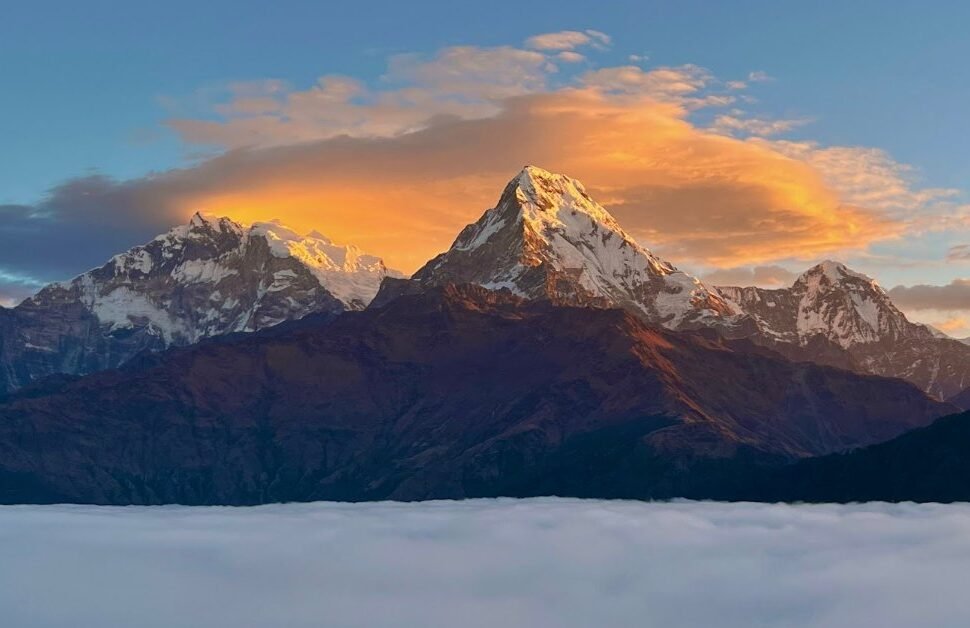
Choosing the right time for the Ghorepani Poon Hill Trek can be the difference between standing on Poon Hill at 5:30am watching Dhaulagiri turn gold against a dark blue sky, and standing there in cloud with nothing visible beyond 50 metres. The trek runs through the Annapurna Conservation Area and the weather here is driven by the South Asian monsoon. Once you understand the monsoon pattern, timing the trek becomes simple.
The short answer: trek in October, November, March or April. These four months give you reliable views, workable temperatures and functioning trails. Everything else involves a compromise.
This guide breaks down every month in detail, explains what drives the weather on the Ghorepani route, and tells you what to expect at each season for the trail, accommodation and the Poon Hill sunrise specifically.
Why the Timing of the Poon Hill Sunrise Matters
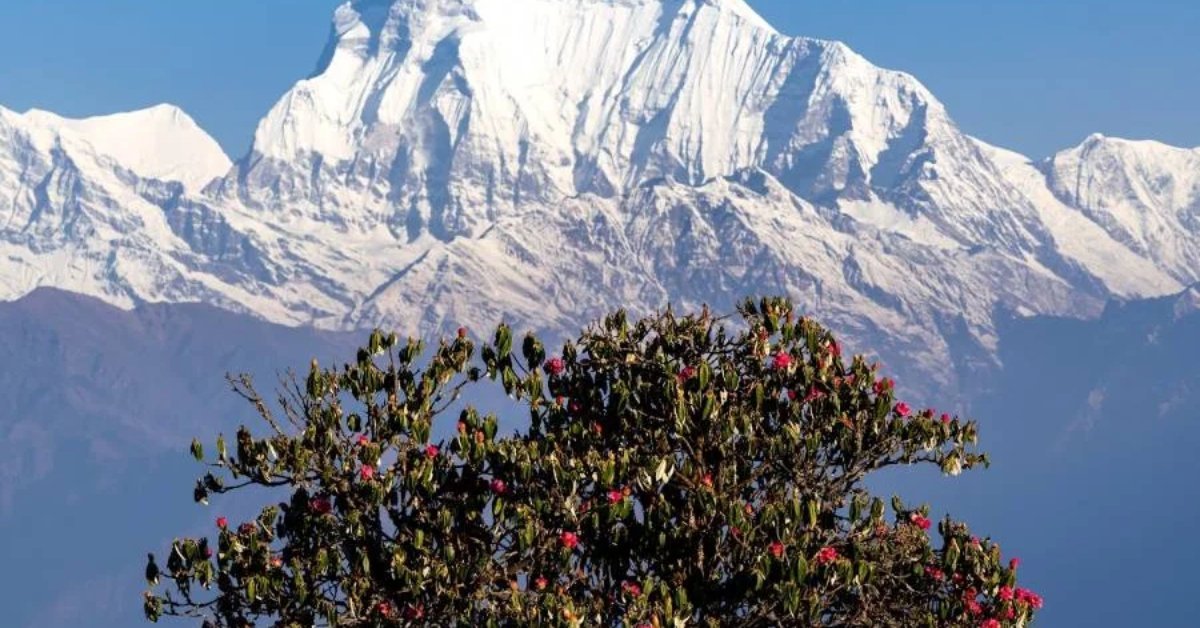
The main event on this trek is the sunrise over the Annapurna Himalaya from Poon Hill at 3,210m. The quality of that experience depends almost entirely on whether the sky above you is clear when the sun rises. A clear dawn in October gives you Dhaulagiri (8,167m), Annapurna I (8,091m), Annapurna South (7,219m) and Machhapuchhre (6,993m) all lit up in a single sweeping panorama. A cloudy dawn in August gives you white mist.
The Ghorepani area sits in the southern approach to the Annapurna Sanctuary. It catches heavy monsoon rainfall from June through September and clears dramatically in October. The skies in late September to November are among the clearest in the Himalayan trekking calendar. This is why October is the single most popular month for this trek.
Sunrise timing changes significantly through the year, which affects how early you need to wake up for the Poon Hill climb:
| Month | Sunrise Time at Poon Hill | Leave Ghorepani By | Notes |
|---|---|---|---|
| January | 6:50 to 7:00am | 5:45am | Very cold, warmest layers essential |
| February | 6:30 to 6:45am | 5:30am | Cold but manageable |
| March | 5:55 to 6:10am | 4:50am | Rhododendrons blooming, pink tones on snow |
| April | 5:30 to 5:45am | 4:25am | Earlier start, but warmer on the trail |
| October | 6:00 to 6:15am | 5:00am | Best visibility of the year |
| November | 6:20 to 6:35am | 5:15am | Crystal clear skies, cold on the summit |
The early morning temperatures at Poon Hill matter too. In October you’re looking at 0 to 5 degrees C at the top, with wind chill making it feel colder. In January you could be facing minus 10 degrees C at the summit. In March the temperatures are more forgiving, typically 2 to 5 degrees C at the top in the early morning. Plan your gear accordingly.
Planning a Ghorepani Poon Hill Trek? Contact our local team for expert advice and personalised trip planning.
October and November: The Best Months Overall
October is the peak trekking month on the Ghorepani circuit and for good reason. The monsoon ends in late September. By early October the skies clear and the post monsoon air is sharp and clean. The rhododendron forests are dense and green after the rains. The views from Poon Hill on a clear October morning are as good as it gets anywhere in Nepal at this altitude.
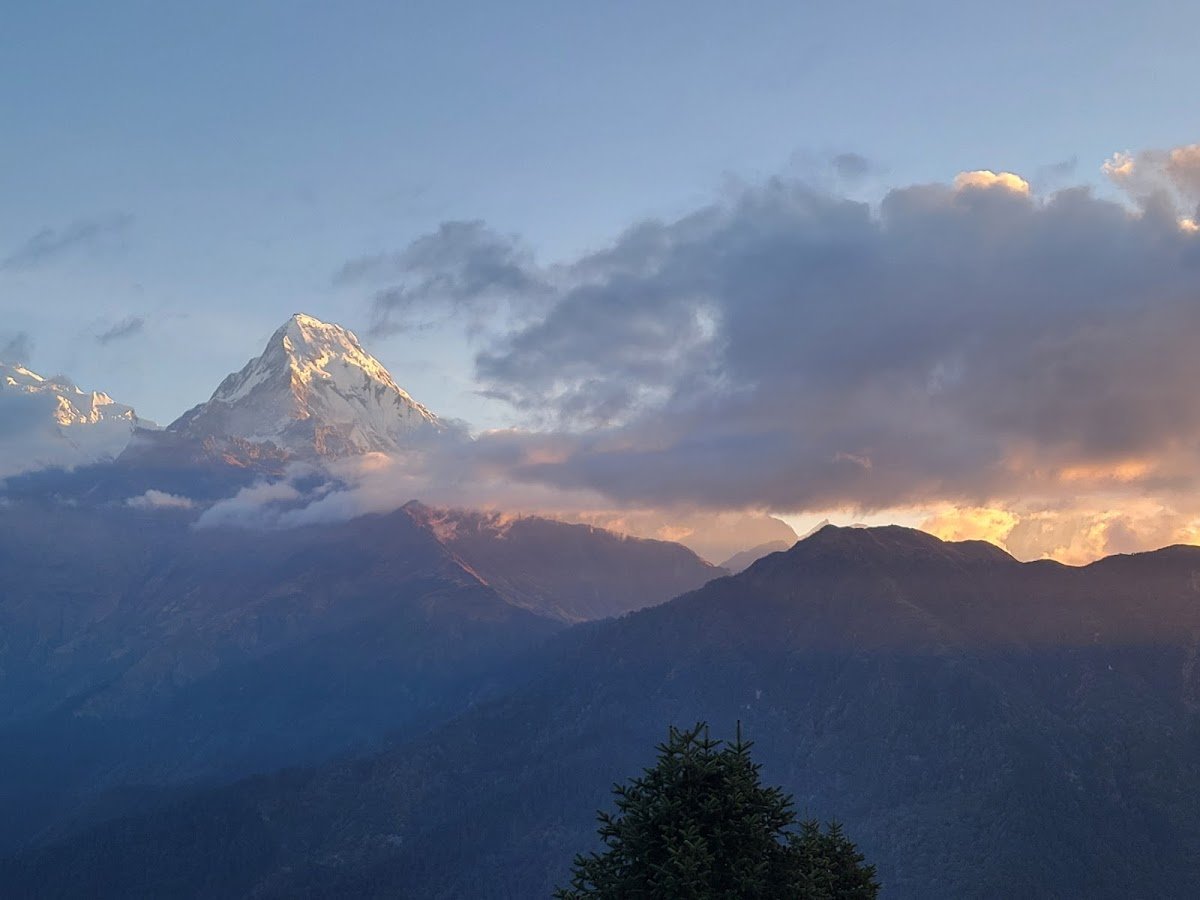
Temperatures in October at Ghorepani range from 3 to 5 degrees C at night and 12 to 15 degrees C during the day. At Poon Hill summit at 5am you’re looking at 0 to 3 degrees C. A down jacket, thermal base layers, hat and gloves are essential. The teahouses are well heated with fire or solar power in the evenings, but the rooms get cold by midnight.
The downside of October is crowds. The Ghorepani trail in October is busy. Ghorepani village in October can feel like a small town as 30 to 40 teahouses operate at near capacity. If you’re arriving in Ghorepani after 3pm in mid October without a reservation, you may find the better lodges full. Book ahead. A WhatsApp message to the lodge the morning you leave Pokhara is enough.
November is quieter and the views are equally good, sometimes better. The air gets progressively cleaner through November and the temperatures drop. By late November nights at Ghorepani are 0 to minus 3 degrees C and the Poon Hill summit at 5am is cold. You’ll want a proper down sleeping bag, not just a liner, for late November trekking. But fewer crowds and often clearer mornings make November a genuinely excellent choice, especially for trekkers who dislike the October rush.
Snowfall is possible at Ghorepani from late November onwards in heavy years. Snow on the trail above 2,500m is possible but the trail rarely becomes impassable in November. December and January are a different story.
March and April: Second Best, With Spectacular Flowers
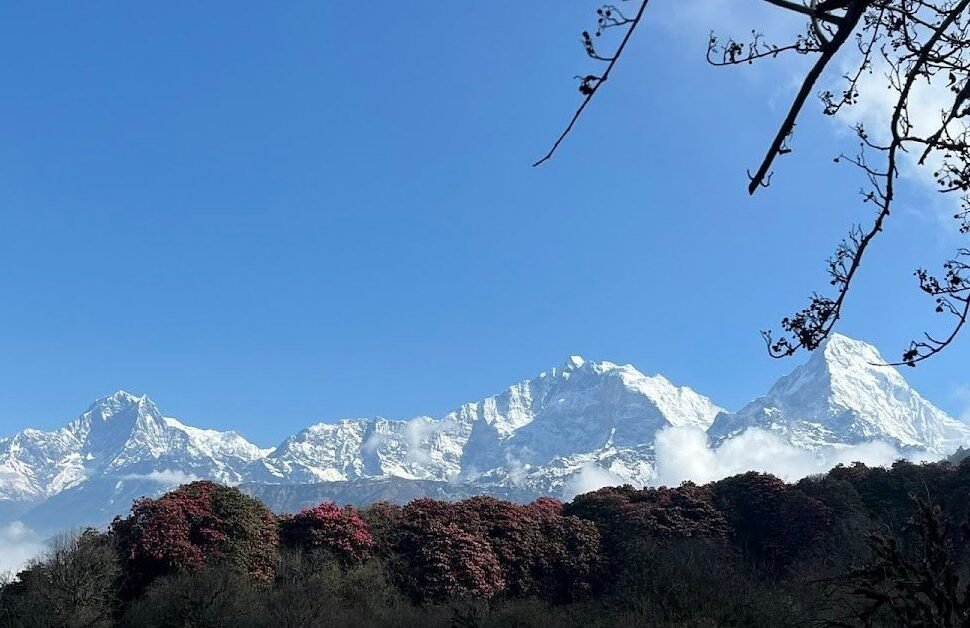
March and April offer the Ghorepani trek in an entirely different register. The sky is not as clear as October or November, but the rhododendron forests are in bloom and the trail below 3,000m is transformed. Nepal’s national flower opens at lower elevations in late February and the bloom front moves up the mountain through March. By the second week of March, the forests between Banthanti (2,250m) and Ghorepani (2,860m) are red, pink and white with rhododendron flowers in dense canopy.
This is the most visually distinctive version of the trek. The combination of rhododendron forest, mountain views, and warmer temperatures makes March the month most trekkers consider the second-best window. Views from Poon Hill in March are very good, not quite as consistently crisp as October but excellent on the majority of mornings. Expect clear views about 70 to 80 percent of mornings in March, compared to 85 to 90 percent in October.
Temperatures in March are much more comfortable for hiking: 8 to 14 degrees C during the day and minus 2 to 2 degrees C at night at Ghorepani. The ascent from Tikhedhunga to Ghorepani in March is warm enough to hike in a light fleece during the day. The Poon Hill sunrise is still cold, but the discomfort is manageable compared to December or January.
April continues the spring season. By April the lower rhododendrons are finishing their bloom but the forest is lush and green. Temperatures warm noticeably: 12 to 18 degrees C during the day. Some afternoon clouds start building in April. Mornings are generally clear. Crowds in April are lower than in October but higher than in November.
The rhododendron bloom peaks at different elevations at different times. Below 1,500m it begins as early as late February. At 2,000 to 2,500m (the Ulleri to Banthanti zone), peak bloom is mid to late March. At 2,500 to 3,000m (Banthanti to Ghorepani), peak is late March to early April. If you specifically want to see the forest at its best, target the second and third weeks of March.
Planning a Ghorepani Poon Hill Trek? Contact our local team for expert advice and personalised trip planning.
Detailed Weather Data by Month
| Month | Day Temp (Ghorepani) | Night Temp | Rainfall | Views | Rating |
|---|---|---|---|---|---|
| January | 2 to 6°C | -12 to -8°C | Very low, occasional snow | Good on clear days | Fair |
| February | 4 to 9°C | -8 to -4°C | Low, some fog mornings | Good | Good |
| March | 8 to 14°C | -2 to 2°C | Low, occasional afternoon cloud | Excellent | Excellent |
| April | 12 to 18°C | 2 to 6°C | Low to moderate | Very good | Excellent |
| May | 16 to 22°C | 6 to 10°C | Increasing, some afternoon rain | Moderate | Average |
| June | 18 to 22°C | 10 to 14°C | Heavy, monsoon begins | Poor | Not recommended |
| July | 18 to 21°C | 12 to 15°C | Very heavy | Very poor | Avoid |
| August | 18 to 21°C | 12 to 15°C | Heavy | Very poor | Avoid |
| September | 16 to 20°C | 8 to 12°C | Decreasing, still wet | Improving | Fair (late Sep) |
| October | 12 to 15°C | 0 to 4°C | Very low | Excellent | Best |
| November | 7 to 12°C | -3 to 0°C | Very low | Excellent | Best |
| December | 4 to 8°C | -8 to -4°C | Very low | Good on clear days | Fair |
December and January: Possible but Demanding
December and January are the coldest months on the Ghorepani circuit. The skies are clear. The views from Poon Hill on a December or January morning are often exceptional because there’s no moisture in the air. But the cold is serious. At Ghorepani at night in January, temperatures regularly drop to minus 10 to minus 15 degrees C. At Poon Hill summit at 5am in January you could face minus 15 degrees C with wind. That requires serious cold weather gear: a down sleeping bag rated to minus 10 degrees C or below, a good down jacket, expedition gloves, thermal base layers and a balaclava.
The trail is open in December and January. Ghorepani teahouses operate all year. But some smaller lodges reduce their menus and staff in these months. The trail between Tikhedhunga and Ulleri is manageable even in December. Snow can occur above 2,500m in December and January but the Ghorepani village itself is often snow free. The Poon Hill viewpoint tower is accessible all year as long as there isn’t a heavy snowfall.
If you go in December or January, bring: a proper 4-season or expedition-rated sleeping bag, inner gloves plus outer mittens, a balaclava, thermal base layers both top and bottom, and waterproof shell layers. Dress for the Poon Hill climb as if you’re going out in a cold urban winter night, not a warm spring morning.
The upside: December and January are the quietest months. You may have Poon Hill summit almost to yourself. The lodges are welcoming and the atmosphere is more personal than in October. If you’re well equipped and experienced in cold conditions, winter trekking on this route is entirely feasible and has real rewards.
February: The Transition Month
February sits between the deep cold of January and the blooming spring of March. Temperatures begin to rise noticeably. Nights at Ghorepani in February are around minus 8 to minus 4 degrees C. Days are 4 to 9 degrees C. The rhododendrons at lower elevations begin to show their first buds in February at around 1,000 to 1,500m, but the main forest section above Ulleri is still bare.
Views in February are generally good. The pre-monsoon haze that builds in May hasn’t arrived yet and the air quality is still clean. February is a genuine option for trekkers who want cold but clear conditions and don’t want the extreme cold of January. Teahouses are open and operating normally. Trails are clear of snow on the main route in most years.
February is worth considering if you’re flexible. If you can choose between February and March, March is better for flowers and similar for views. But if you’re constrained to February, it’s a solid month with no major drawbacks beyond the continuing cold.
Monsoon Season: June, July and August
The South Asian monsoon arrives in the Pokhara region typically in the first week of June. From June through August, the Ghorepani area receives heavy rainfall. Daily rainfall totals of 30 to 60mm are common. The forest trails become slippery. Leeches appear at all elevations below 2,500m and can be numerous in the forest sections between Birethanti and Banthanti. Cloud covers the mountain views almost continuously. The Poon Hill sunrise in monsoon is typically a view of grey cloud with nothing visible above 3,000m.
The trek is still technically open during monsoon. Lodges stay open. The trail does not close. But the experience is fundamentally different from the dry season. Most international trekkers skip monsoon entirely for the Ghorepani circuit. The main trekkers who do go in monsoon are local Nepali hikers or adventurers specifically seeking the dramatic monsoon forest atmosphere, which does have a distinct beauty with waterfalls running full and the forest intensely green.
If you must go in monsoon, wear quick-dry clothing, bring waterproof gaiters for leeches, carry a strong insect repellent (DEET on shoes and socks keeps leeches off in the lower forest), use trekking poles for slippery sections, and pack everything in waterproof bags inside your pack. Expect views from Poon Hill to be blocked most mornings. The lodge food and accommodation quality does not change in monsoon. The experience changes.
September and the Monsoon Transition
Monsoon begins withdrawing from Nepal in the third week of September. Early September is still monsoon. Late September sees clearing windows and by the last week of September you may get genuinely clear mornings at Poon Hill. The trail is wet and the leeches are still present in the forest below 2,500m throughout September, but the views start to return.
Late September is for experienced trekkers who want to catch the early post monsoon window before the October crowds arrive. If you land in Pokhara in the last week of September and check the forecast, you can often time a 4-day trek that gets a clear Poon Hill morning before the main October rush. This is a viable approach for flexible travellers. For fixed-itinerary travellers, don’t plan for September specifically: plan October and September becomes a fallback if you arrive early.
What to Wear by Season
Clothing and gear needs vary significantly across the seasons. Here’s a practical breakdown for each main window.
For October and November: a down jacket or heavy fleece, thermal base layers, hat and gloves for the Poon Hill climb, trekking trousers and a light rain shell. Rain is unlikely but occasional showers occur in October. Temperatures during the day are comfortable for hiking in a fleece and trekking trousers. A sleeping bag liner plus teahouse blankets is enough in early October but a light down sleeping bag is better from late October onwards. By November you want a sleeping bag rated to minus 5 degrees C.
For March and April: lighter layers during the day. A fleece for the Poon Hill climb plus a rain jacket (April afternoons can bring showers). Hat and thin gloves for the early morning summit. A 3-season sleeping bag is adequate throughout spring.
For December and January: full winter kit. Down jacket, inner thermal layers, outer waterproof shell. Warm gloves, balaclava, down sleeping bag rated to minus 10 degrees C. Bring chemical hand warmers for the Poon Hill climb.
For monsoon: fast-dry synthetic layers, waterproof jacket and trousers, waterproof bag covers. Avoid cotton. Bring leech socks or treated gaiters for the forest sections.
Planning a Ghorepani Poon Hill Trek? Contact our local team for expert advice and personalised trip planning.
Booking Lodges: Seasonal Demand
Lodge availability varies dramatically by season. October is the hardest month for availability, particularly in Ghorepani which is the main accommodation village. In peak October (generally October 10 to 25), Ghorepani lodges fill by 2pm. If you plan to arrive in the afternoon, book ahead. The main lodges in Ghorepani have WhatsApp numbers and take same-day reservations in the morning.
November is easier. Most lodges will have rooms available without advance booking. The lower-demand months from December through February mean you can arrive without a booking and choose your lodge on the day.
March and April see high demand again, though not quite as extreme as October. The first two weeks of April in particular attract large tour groups doing the trek as part of a spring Nepal package. Book ahead if you want a specific lodge in Ghorepani.
For the most current lodge contacts and availability, a trek agency in Pokhara can handle bookings and will have current information on which lodges are operating. This is the simplest option if you’re booking a package. If going independently, contact lodges directly via WhatsApp in the week before your trek.
Frequently Asked Questions
Is October or November better for the Poon Hill trek?
October has slightly better average temperatures and more reliable clear mornings, but it’s busier. November is quieter, often just as clear, and has a more peaceful trail atmosphere. Both are excellent. If you can choose, go in early November for the best of both.
Can I do the trek in winter (December to February)?
Yes, but you need to be prepared for serious cold, especially the Poon Hill sunrise. The trail is open and views can be spectacular. Come with proper winter gear including a down sleeping bag rated to minus 10 degrees C.
Does it snow on the Ghorepani trek?
Snow is possible at Ghorepani (2,860m) and above from late November through February. It can happen in October and March but is rare. The trail is generally passable even after a light snowfall. Heavy snowfall can make the trail to Poon Hill more challenging but rarely closes it for more than a day or two.
What about the rhododendrons? When exactly do they bloom?
Below 1,500m: late February to early March. From 2,000 to 2,500m (Ulleri to Banthanti zone): second and third weeks of March. From 2,500 to 3,000m (Banthanti to Ghorepani): late March to early April. The peak spectacle in the forest sections most trekkers walk through is the second and third week of March.
Can I trek in September?
Late September (final 10 days) is possible with decent weather windows, but it’s unpredictable. The monsoon is withdrawing but not gone. Some clear mornings happen in late September. Plan for October if possible and treat late September as a flexible option only.
Planning a Ghorepani Poon Hill Trek? Contact our local team for expert advice and personalised trip planning.