Ghorepani Poon Hill Trek Cost at a Glance
| Budget Independent | USD 180 to 250 total (5 days, no guide) |
| Mid-Range Independent | USD 280 to 380 total (5 days, no guide) |
| With Guide and Porter | USD 400 to 550 total (5 days) |
| Agency Package (private) | USD 450 to 700 per person |
| Permits (ACAP + TIMS) | NPR 5,000 (approx. USD 37) |
| Daily Budget on Trail | USD 30 to 50 per day (accommodation + food) |
| Flight Kathmandu to Pokhara | USD 90 to 130 one way |
The Ghorepani Poon Hill Trek is one of the most affordable trekking experiences in Nepal. The total cost for a 5-day trek, done independently without a guide, runs from USD 180 to 280 per person depending on how you travel between villages and what you eat. With a guide and porter it increases to USD 400 to 550. A fully organised package from a Pokhara agency is typically USD 450 to 700 per person for a private itinerary.
None of these numbers require you to be a budget backpacker to afford. The Poon Hill trek is accessible across a wide range of travel styles. What you spend mostly comes down to whether you hire a guide, what class of accommodation you prefer, and whether you choose dal bhat or western-style meals at every lodge.
This guide breaks down every cost category with real NPR figures from the 2025 and 2026 trekking season so you can build an accurate budget before you go.
Mandatory Permits: What You Must Pay
Two permits are compulsory for all foreign trekkers on the Ghorepani circuit. Both must be obtained in Pokhara before you reach the trailhead. You cannot buy them on the trail.
The ACAP (Annapurna Conservation Area Permit) costs NPR 3,000 for foreigners and NPR 200 for SAARC nationals. Get it at the Nepal Tourism Board office in central Pokhara or at the ACAP checkpoint in Birethanti. The TIMS card (Trekkers Information Management System) costs NPR 2,000 for foreigners and NPR 1,000 for SAARC nationals. Get it only at the TAAN office in Lakeside, Pokhara. The TAAN office closes at 5pm on weekdays and is closed on Sundays.
Total permit cost for a foreign trekker: NPR 5,000, which is approximately USD 37 at current exchange rates (USD 1 = NPR 133 to 135 in mid 2026). This is a fixed cost regardless of how you travel or how long you trek. Budget this in as a non-negotiable starting point.
The Poon Hill viewpoint tower charges an additional NPR 100 entry fee per person, collected at a gate near the top of the hill before the viewing platform. This is approximately USD 0.75. Pay it: the funds go toward maintenance of the viewpoint and trail.
Planning a Ghorepani Poon Hill Trek? Contact our local team for expert advice and personalised trip planning.
Transport Costs: Getting to and from the Trailhead
The trek starts at Nayapul, approximately 42km west of Pokhara. There are several transport options with very different costs.
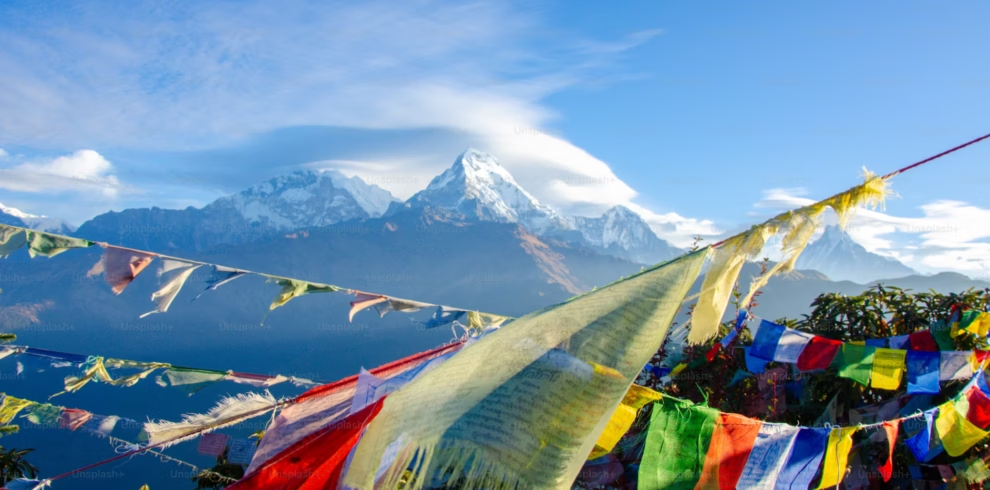
Local bus from Baglung Bus Park in Pokhara to Nayapul: NPR 150 to 200 per person one way. Buses depart frequently from around 6:30am. Journey time is 1.5 to 2 hours. This is the cheapest option and perfectly comfortable. The bus can be crowded during peak season but always gets you there.
Shared jeep or microbus: NPR 400 to 600 per person from Lakeside, departing when seats fill (typically 6 to 8am). Faster than the local bus and more direct. This is a sensible upgrade from the local bus for about NPR 250 to 400 more per person.
Private taxi or jeep from Lakeside: NPR 2,500 to 4,000 for the vehicle (not per person), allowing you to leave at any time. Comfortable and convenient, especially if you’re in a small group where the per person cost divides to a reasonable amount.
Pokhara to Kathmandu at the end: budget NPR 800 to 1,500 for the tourist bus or NPR 15,000 to 17,000 for a domestic flight per person. If you flew Kathmandu to Pokhara at the start, the return is the same cost. Flight tickets should be purchased in advance especially in October when seats fill quickly.
Accommodation Costs on the Trek
Every village on the route has teahouses that combine a guesthouse and restaurant. The standard expectation is that you sleep and eat at the same lodge. Most lodges charge very low room rates (sometimes as little as NPR 300 to 400 per room) and make their profit on food. If you want to eat at a different lodge, some teahouses charge a higher room rate.
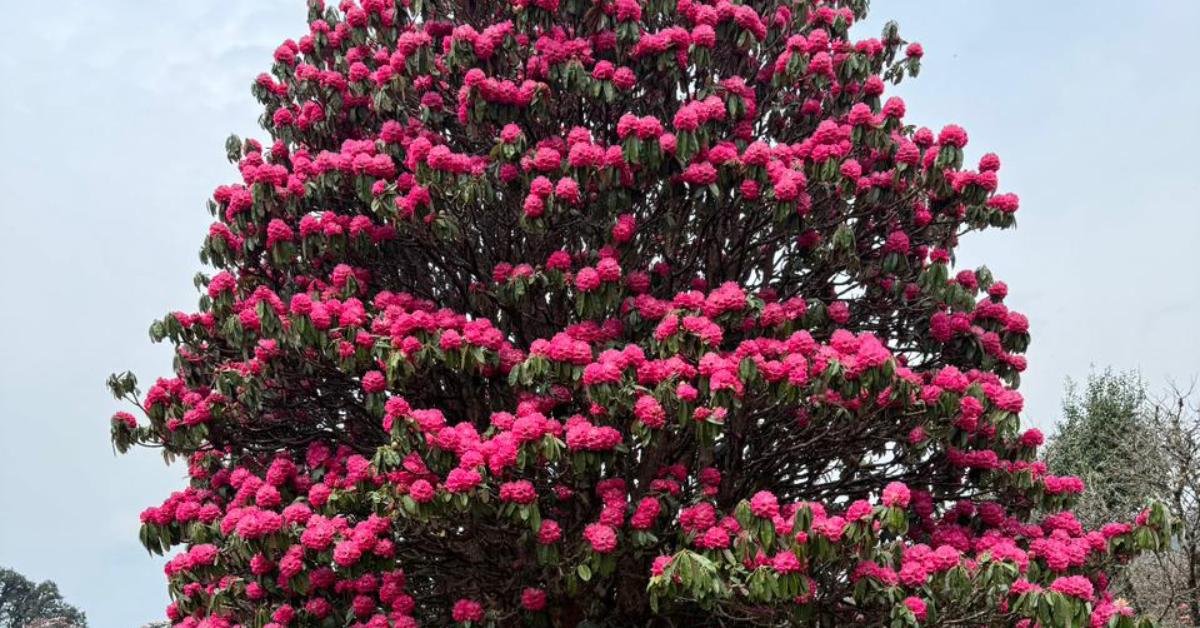
Room prices vary significantly by village and lodge quality. In Tikhedhunga (1,540m) basic rooms start at NPR 300 to 400 per person in a twin room with shared bathroom. In Ghorepani (2,860m), the main overnight stop, rooms with shared bathrooms run NPR 400 to 800 and rooms with attached bathrooms and solar hot showers run NPR 800 to 1,500. In Ghandruk (1,940m) some of the lodge rooms are larger and better appointed, with rates of NPR 500 to 1,000 per person.
For a 5-night trek, budget accommodation (shared bathrooms, basic rooms) costs approximately NPR 4,000 to 6,000 total. Mid-range accommodation (better rooms, occasionally attached bathrooms) costs NPR 7,000 to 10,000 total. The top end lodges in Ghorepani with attached bathrooms and heating cost NPR 10,000 to 16,000 for 5 nights.
Sleeping bag rental in Pokhara: NPR 100 to 200 per day if you don’t bring your own. For a 5-day trek this is NPR 500 to 1,000. Worth doing in cold months rather than carrying your own if you’re trying to travel light.
Food Costs on the Trail
Food is the biggest daily expense on the trek. All food must be carried up to the lodges by porter or mule, which is why prices increase with altitude. A meal that costs NPR 450 in Tikhedhunga will cost NPR 600 to 700 in Ghorepani.
| Item | Lower Villages (NPR) | Ghorepani (NPR) |
|---|---|---|
| Dal bhat (unlimited refill) | 450 to 550 | 600 to 750 |
| Fried rice or noodles | 350 to 450 | 500 to 650 |
| Pasta or momos | 350 to 500 | 500 to 650 |
| Breakfast (eggs, toast, porridge) | 250 to 400 | 350 to 550 |
| Tea or coffee | 80 to 120 | 120 to 180 |
| Bottled water (1L) | 100 to 150 | 150 to 250 |
| Hot thermos water (1L) | 60 to 80 | 80 to 120 |
A practical daily food budget on the trail looks like this. Breakfast: NPR 300 to 550 depending on what you order. Dal bhat for lunch: NPR 500 to 700. Dal bhat for dinner: NPR 500 to 700. Tea and snacks through the day: NPR 200 to 400. Total per day: NPR 1,500 to 2,350, which is approximately USD 11 to 18.
Dal bhat is always the best value. The unlimited refill system means one serving of dal bhat (rice, lentil soup, vegetable curry, pickles) fills you regardless of how hungry you are. It’s also the most appropriate fuel for a day of trekking. Many experienced trekkers on this route eat dal bhat at every meal and come in well under NPR 1,500 per day on food.
Bottled water: avoid it. Buy a filtered water bottle before you leave Pokhara (a LifeStraw bottle costs NPR 2,000 to 3,000 in Lakeside shops) or bring purification tablets. This saves NPR 100 to 250 every time you refill. Over a 5-day trek the savings are NPR 1,000 to 2,000.
Planning a Ghorepani Poon Hill Trek? Contact our local team for expert advice and personalised trip planning.
Guide Costs
A licensed trekking guide for the Ghorepani circuit charges USD 20 to 30 per day, which covers their accommodation and meals (a separate cost the guide arranges with lodges). For a 5-day trek this is USD 100 to 150 total for the guide’s salary.
Guide hire is optional on this route. The trail is well marked and well trafficked. Most trekkers complete it without a guide and have no issues. Reasons to hire a guide: you want cultural commentary on the Gurung villages, you want a local Nepali speaker for interactions with teahouse staff, you’re trekking alone and want company and safety support, or you’re nervous about navigation in the dark for the Poon Hill climb.
Guides can be hired in Pokhara through trekking agencies in Lakeside (most reliable option), through guesthouses, or through word of mouth recommendations. Always verify that the guide has a valid Tourism Board-issued trekking guide licence. A guide without a licence is both a legal risk for the guide and a service quality risk for you.
Tip for a 5-day trek: NPR 3,000 to 5,000 (USD 22 to 37) is standard and appreciated. This is separate from the daily rate.
Porter Costs
A porter carries your bag while you walk free of load beyond a daypack. Porters on the Ghorepani route charge USD 15 to 22 per day, covering their food and accommodation. For 5 days that’s USD 75 to 110.
Porters carry up to 20 to 25kg as a standard load. Most trekkers carry their own pack (6 to 10kg) on this route without difficulty, but if you have a heavier bag, mobility issues, or simply prefer to walk without a full pack, a porter is worth the cost. A 5-day trek with a porter adds approximately USD 85 to 120 to your total budget.
Porters should be provided: appropriate clothing for the altitude (cold at Ghorepani in October or November), meals on every walking day, and accommodation. This is both standard practice and mandated by responsible trekking guidelines. If you hire a porter, make sure they have adequate gear for the conditions.
Tip for a 5-day porter hire: NPR 2,000 to 4,000 total is reasonable.
Agency Package Costs
A fully organised trek package from a Pokhara agency includes: transport to and from Nayapul, all permits, guide, porter, lodge accommodation and meals, and group equipment. The total cost for a private 2-person trek on a 5-day Ghorepani circuit package from a mid-range Pokhara agency is typically USD 450 to 700 per person.
Budget agencies offering group departures (joining a group of strangers on a fixed date) charge USD 250 to 350 per person for the same trek. Group departures are a good option for solo travellers who want the security of a group without paying the premium for a private arrangement.
Premium agencies with better-quality lodge bookings, English-speaking senior guides and additional services charge USD 700 to 1,000 per person for a private 5-day itinerary.
When comparing agency packages, ask specifically: what is the accommodation standard (basic shared bathroom or attached bathroom), what is included for meals (all meals or lunch and dinner only), and whether the guide is licensed. These details vary significantly between agencies at the same price point.
| Expense Category | Budget (USD) | Mid-Range (USD) | Comfortable (USD) |
|---|---|---|---|
| Permits (ACAP + TIMS) | 37 | 37 | 37 |
| Pokhara to Nayapul transport | 3 (local bus x2) | 8 (shared jeep) | 22 (private taxi) |
| Accommodation (5 nights) | 30 to 40 total | 55 to 75 total | 80 to 120 total |
| Food and drinks (5 days) | 50 to 70 total | 80 to 110 total | 110 to 150 total |
| Guide (5 days) | Not hired | Not hired | 100 to 150 |
| Porter (5 days) | Not hired | Not hired | 75 to 120 |
| Poon Hill entry fee | 0.75 per person | 0.75 per person | 0.75 per person |
| Snacks and extras | 15 to 20 | 25 to 35 | 40 to 60 |
| Total Estimate | USD 135 to 170 | USD 205 to 265 | USD 465 to 660 |
Pokhara Costs Before and After the Trek
Most trekkers spend one to two nights in Pokhara before the trek and one night after. Lakeside accommodation in Pokhara covers a wide range. Budget guesthouses charge USD 10 to 20 per room. Mid-range hotels with good views of Phewa Lake charge USD 40 to 80. Trekking equipment can be rented in Lakeside shops: trekking poles NPR 150 to 200 per day, sleeping bag NPR 100 to 200 per day, down jacket NPR 200 to 300 per day.
Gear shops in Lakeside sell both branded gear (Northface, Columbia) and locally made trekking gear. Quality local trekking trousers cost NPR 1,200 to 2,000. A serviceable fleece costs NPR 1,500 to 3,000. Don’t buy boots in Nepal unless you have time to wear them in properly before the trek.
Airport transfer between Pokhara airport and Lakeside: NPR 500 to 800 by taxi. The bus from Kathmandu arrives at the old Pokhara bus park, which is about 4km from Lakeside. Taxi from bus park to Lakeside: NPR 400 to 600.
How to Save Money on the Ghorepani Trek
Eat dal bhat. A refillable plate of dal bhat costs NPR 500 to 700 and fills you completely. Switching from western-style food (pizza, pasta, sandwiches) to dal bhat at every meal can reduce your food spend by 30 to 40 percent.
Use a filter bottle. Buying bottled water is the most wasteful expense on this trek in both money and plastic. A LifeStraw bottle costs NPR 2,000 to 3,000 and pays for itself in 10 to 15 water purchases.
Take the local bus to Nayapul. The cost difference between a local bus (NPR 150 to 200) and a private taxi (NPR 2,500 to 4,000) is significant, especially for solo travellers.
Trek without a guide. The Ghorepani trail is clearly marked and heavily trafficked. Most trekkers complete it without a guide. If you’re confident reading maps and following trail signs (or you’ve read a good route description), a guide is not necessary here.
Book lodges directly. Lodges booked through agencies mark up their rates. Booking directly via WhatsApp on the morning you depart for that section gives you the same room at the lodge’s own rates.
Planning a Ghorepani Poon Hill Trek? Contact our local team for expert advice and personalised trip planning.
Frequently Asked Questions
How much cash should I carry for the trek?
There are no ATMs after Pokhara. Carry all the cash you need before leaving. A comfortable 5-day budget is NPR 30,000 to 40,000 per person (permits plus daily expenses plus tips). This covers NPR 5,000 in permits, NPR 20,000 to 25,000 for food and accommodation, and NPR 3,000 to 5,000 for tips, snacks and extras.
Can I pay by card on the trek?
No. The trail is entirely cash based. Teahouses do not accept cards. Some lodges in Ghorepani now accept payment via eSewa (Nepali digital wallet) but this only works if you have a Nepali bank account. Foreign cards are not accepted at any point on the trail.
Is tipping expected?
Tips are customary and appreciated for guides and porters. A reasonable tip for a guide on a 5-day trek is NPR 3,000 to 5,000. For a porter, NPR 2,000 to 3,000. Tips for lodge staff are not compulsory but NPR 100 to 200 per night at a lodge is a kind gesture and noticed.
Are there additional fees I might not know about?
The only surprises most trekkers encounter are the Poon Hill entry fee (NPR 100) and wifi charges at lodges (NPR 100 to 200 per day in Ghorepani and Ghandruk). Hot showers in some lodges are charged separately: NPR 200 to 400 per shower for electric hot water. Budget for these in your daily spend.
Does the price change by season?
Food and accommodation prices on the trail are set by lodges and do not change significantly by season. Transport costs from Pokhara are similar throughout the year. Permits cost the same all year. The main cost variable is whether lodges charge for hot showers in cold months (they usually do) versus warm months (sometimes free with solar).