Before booking the Everest Base Camp Trek, many trekkers focus on the route, price, photos, and the idea of reaching base camp. But the real problems usually start before the trek begins.
One mistake worth adding to this list is not comparing the cost of walking both directions against flying back. Our full price breakdown for the Everest Base Camp Trek with Helicopter Return makes that comparison easy.
Some people book the cheapest package without checking what is included. Some forget that Lukla flights can be delayed or cancelled. Some keep no buffer day after the trek. Some arrive without enough warm gear. Some book with a foreign agency or online platform and later realize the actual trek is handled by a local company in Nepal.
These mistakes can cost money, time, and comfort. In the Everest region, even a small planning mistake can become a big problem because the trail is remote, altitude is high, and there is no road access after Lukla.
The Everest Base Camp Trek is not difficult because of climbing. It is difficult because of altitude, long walking days, cold rooms, basic mountain lodges, changing weather, and flight uncertainty. Before booking, you should understand both the good part and the practical part.
Planning the Everest Base Camp Trek? Ask our Kathmandu team anything before you book. Honest answers, no pressure.
This guide lists the 15 most common and most costly mistakes trekkers make before booking the Everest Base Camp Trek, and exactly how to avoid each one. Reading this before you book will save you money, time, and a great deal of stress in the mountains.
Quick Trek Overview
| Detail | Information |
|---|---|
| Trek Name | Everest Base Camp Trek |
| Duration | 12 to 16 days depending on itinerary |
| Highest Point | Kala Patthar at 5,545 metres |
| Base Camp Altitude | 5,364 metres |
| Best Season | March to May and late September to November |
| Difficulty | Moderate to Challenging |
| Permits Required | Sagarmatha National Park permit and Khumbu Rural Municipality permit |
| Starting Point | Lukla, reached by a 35 minute mountain flight |
| Ending Point | Lukla |
| Operated By | Next Trip Nepal |
1. Not Reading the Trek Details Properly
This is the most common and most avoidable mistake. Many trekkers compare a few prices, look at the photos, see the words Everest Base Camp, and book. They never read the day by day itinerary, the inclusion list, or the fine print. On the Everest Base Camp Trek this mistake is more expensive than on any other route in Nepal.
Two packages that both say Everest Base Camp Trek can be completely different products. One includes the Lukla flights, all three meals a day, permits, an experienced licensed guide, and porter support. Another quietly excludes the flights, includes only breakfast, and assigns one guide to a group of twelve. The cheaper package can end up costing hundreds of dollars more once you pay for everything that was never included.
What You Must Check Before Booking
| Item | What to Confirm |
|---|---|
| Lukla flights | Included or not, and from Kathmandu or Ramechhap |
| Meals | All meals or breakfast only |
| Accommodation | Standard teahouse or upgraded rooms where available |
| Guide ratio | How many trekkers per licensed guide |
| Porter service | Weight limit per trekker and porter insurance |
| Permits | Both permits arranged and included in the price |
| Acclimatisation | Rest days in Namche Bazaar and Dingboche |
| Emergency plan | Evacuation procedure and who coordinates it |
Permits Required for the Everest Base Camp Trek
Every trekker needs the Sagarmatha National Park entry permit and the Khumbu Pasang Lhamu Rural Municipality permit. The municipality permit is issued in Lukla or Monjo, not in Kathmandu, which surprises many independent planners. A TIMS card is not required for the Khumbu region. A reliable local company arranges both permits for you and includes them in the package price, so you never stand in a permit queue at 2,800 metres wondering if you brought enough rupees. Our guide on how to book the Everest Base Camp Trek walks through the whole booking process step by step.
Always read the full trek details before you pay anything. Ten minutes of reading prevents the majority of problems described in the rest of this article.
2. Booking Through a Foreign Agency Without Knowing Who Actually Operates the Trek
Many travellers book the Everest Base Camp Trek through an agency in their home country, a large international adventure brand, or a reseller website. It feels safer because the communication is in your own language, the website looks polished, and you can pay in your own currency. What most trekkers never learn is that foreign agencies do not operate treks in Nepal. By law and by practice, the trek on the ground is run by a local Nepali company.
The foreign agency takes your booking and your payment, keeps a large margin, and then subcontracts the actual trek to a company in Kathmandu. You often do not know which local company will run your trek until you arrive. You cannot check their reviews, their guide standards, or their safety record, because you were never told their name. If something goes wrong on the trail, the agency that took your money is thousands of kilometres away in a different time zone.
Booking Option Comparison
| Factor | Foreign Agency | Direct Local Company |
|---|---|---|
| Price for the same trek | Often 40% to 100% higher | Direct local price |
| Who runs the trek | Unknown subcontractor | The company you researched |
| Guide accountability | Indirect, through a middleman | Direct, guides are known staff |
| Changes and delays | Slow, routed through two offices | Handled on the spot in Nepal |
| Emergency response | Coordinated from abroad | Coordinated from Kathmandu immediately |
Booking directly with a registered local operator gives you a lower price and a shorter chain of responsibility. Before you book with anyone, ask one simple question: who exactly operates this trek on the ground? If the answer is vague, keep looking.
3. Paying the Full Amount Before Arriving in Nepal
Legitimate local trekking companies in Nepal do not need your full payment months in advance. A reasonable deposit to confirm your booking and your Lukla flights is normal. The balance is usually paid after you arrive in Kathmandu, after you have met the team, seen the office, and completed your trek briefing in person.
Companies that insist on 100% advance payment remove your leverage entirely. If the itinerary changes, if the service is not what was promised, or if the company simply stops answering emails, your money is already gone. Every year trekkers arrive in Kathmandu having paid in full to operators who cut corners, because the trekker had no payment left to hold back.
Risks of Full Advance Payment
- No leverage if the promised service quality drops after you arrive
- Difficult and slow refunds if you must cancel for health or visa reasons
- Currency conversion losses paid twice if a refund does come
- No protection if the operator changes your itinerary without asking
A fair payment structure is a strong signal of a trustworthy operator. At Next Trip Nepal we confirm bookings with a small deposit and collect the balance in Kathmandu, because we would rather earn your confidence than hold your money.
4. Booking Through Online Travel Platforms Without Comparing Direct Prices
Large booking platforms look convenient. You search, compare, click, and pay. For a museum ticket or a day tour that works well. For a two week mountain expedition it is usually the most expensive way to buy exactly the same product.
Platforms charge trekking companies a commission that commonly runs from 20% to 35% of the booking value. That commission does not buy you a better guide, a warmer room, or a safer itinerary. It buys the platform its advertising. The local company must either raise the platform price or quietly reduce what is included, and both outcomes cost you. Our full breakdown of the Everest Base Camp Trek cost with all details shows exactly where every dollar goes.

What to Compare Before You Book
- The platform price against the direct price on the operator website
- What each price includes, especially Lukla flights, meals, and porter service
- Whether the platform listing even names the real operating company
- Cancellation and rebooking terms, which are usually far stricter on platforms
5. Buying International Flights at the Last Minute and Ignoring the Lukla Flight Reality
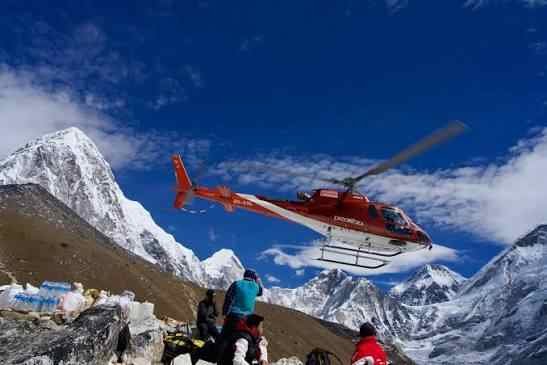
The Everest Base Camp Trek does not begin in Kathmandu. It begins with a 35 minute mountain flight to Lukla, one of the most weather dependent airports in the world. Clouds, wind, and visibility close this airstrip regularly, sometimes for a full day, sometimes for several days in a row. Any booking plan that ignores this reality is a plan built on luck.
There is a second surprise most first time trekkers never hear about. During the busiest weeks of spring and autumn, Lukla flights often operate from Ramechhap airport at Manthali rather than from Kathmandu. Reaching Ramechhap means a road journey of four to five hours that usually starts around midnight. A good local company tells you this before you book, plans the transfer, and builds it into your schedule. A careless one lets you find out at your hotel reception the night before.
Best Seasons for the Everest Base Camp Trek
| Season | Months | What to Expect |
|---|---|---|
| Spring | March to May | Warm days, rhododendron bloom, busy trail, Everest expedition season at Base Camp |
| Autumn | Late September to November | Clearest skies of the year, stable weather, the most popular window |
| Winter | December to February | Cold but quiet, very clear mornings, harder conditions above Dingboche |
| Monsoon | June to early September | Frequent flight delays, cloud cover, few trekkers |
Book your international flights only after your trek dates are confirmed, and never schedule your flight home for the day after your planned return to Kathmandu. If you are considering the shoulder months, our article on the Everest Base Camp Trek in March explains what early spring on the trail really looks like.
6. Not Packing Properly Before the Trek
The Everest Base Camp Trek passes through every climate from warm river valleys to glacial moraine. Nights at Gorakshep can drop far below freezing even in the main seasons. Every year trekkers arrive with running shoes, a light fleece, and a fashion backpack, then pay premium prices in Namche Bazaar to fix what should have been packed at home.
Essential Gear Checklist for the Everest Base Camp Trek
| Item | Why It Matters | Rentable in Nepal |
|---|---|---|
| Broken in waterproof trekking boots | Rocky trail, stream crossings, snow above Lobuche | Not recommended to rent |
| Four season sleeping bag | Teahouse blankets are not enough above 4,000 metres | Yes, on request |
| Insulated down jacket | Mornings at Kala Patthar feel arctic | Yes, on request |
| Layered clothing system | Temperature swings of 25 degrees in one day | Partially |
| Sunglasses with high UV protection | Snow glare above Dingboche can burn eyes | Buy new, cheap fakes damage eyes |
| Headlamp with spare batteries | Pre dawn Kala Patthar climb and dark teahouse corridors | No |
| Water purification tablets or filter | Bottled water gets expensive and wasteful with altitude | No |
| Large capacity power bank | Charging costs money at every teahouse above Namche | No |
Ask your company for a full packing list at booking time, and ask what they can lend or rent. We provide sleeping bags and down jackets to our trekkers on request, which alone saves significant luggage weight and money.
7. Only Looking at the Beautiful Views and Ignoring the Real Challenges
Social media has filled the internet with golden sunrise photos from Kala Patthar and celebration shots at the Base Camp boulder. Those moments are real. What the photos do not show are the six to seven hour walking days, the long climb to Namche Bazaar, the thin cold air above Lobuche, the shared bathrooms, and the simple dal bhat dinners eaten in a room heated by a single yak dung stove.
What to Expect: The Beauty and the Challenge
| The Beauty | The Challenge |
|---|---|
| Sunrise over Everest from Kala Patthar at 5,545 metres | Starting that climb at 4 in the morning in deep cold |
| Sherpa villages, monasteries, and mani walls | Six to seven hours of walking on many days |
| The Khumbu Icefall from Base Camp | Thin air with roughly half the oxygen of sea level |
| Suspension bridges over deep gorges | Steep climbs after every river crossing |
| Quiet evenings under the clearest night sky you will ever see | Basic rooms, cold corridors, and limited hot water |
None of this should stop you. Thousands of ordinary people with reasonable fitness complete this trek every season and call it the best thing they have ever done. But book it with honest expectations. For a real day by day account from the trail, read my 14 day Everest Base Camp Trek experience written from one of our own departures.
8. Not Keeping Buffer Days in Your Schedule
This is the single most expensive mistake on this list, and it is specific to the Everest region. Trekkers plan exactly 14 days, book their international flight home for day 15, and assume everything will run on schedule. In the Khumbu, that assumption fails often enough that we consider one to two buffer days a requirement, not a suggestion.
Common Causes of Trek Delays on the Everest Base Camp Trek
| Cause | Typical Delay |
|---|---|
| Lukla flight cancellations due to weather | Half a day to three days |
| Extra acclimatisation needed by a group member | One day |
| Snowfall above Lobuche blocking the morning schedule | Half a day to one day |
| Minor illness or fatigue requiring a slower pace | One day |
| Flight backlog after several closed days at Lukla | One to two days |
Missing an international flight costs far more than adding two nights in Kathmandu. If your schedule is truly fixed, ask about the Everest Base Camp Trek with helicopter return, which removes the return trek and the second Lukla flight from the equation entirely. And if you are still deciding how many days you need, our guide on how long the Everest Base Camp Trek takes compares the standard itinerary options.
9. Not Carrying Enough Cash
Above Lukla, Nepal is a cash economy. The last reasonably reliable ATMs are in Namche Bazaar, and they are frequently empty, offline, or limited to small withdrawals with high fees. Cards are accepted almost nowhere on the trail. Trekkers who arrive with too little cash spend their trek rationing hot drinks and skipping hot showers, or borrowing from their guide.
Typical Cash Expenses on the Everest Base Camp Trek
| Expense | Typical Cost Range | Note |
|---|---|---|
| Hot shower | USD 4 to 10 | Price rises with altitude |
| Device charging | USD 2 to 6 per device | Free only in some lower teahouses |
| WiFi access card | USD 5 to 20 | Everest Link cards, data capped |
| Boiled drinking water | USD 1 to 4 per litre | Cheaper with purification tablets |
| Extra snacks and drinks | USD 3 to 10 per day | A chocolate bar can cost USD 5 at Gorakshep |
| Tips for guide and porter | 10% of trip cost as a common guideline | Paid at the end in cash |
Withdraw or exchange enough Nepali rupees in Kathmandu before you fly. As a working figure, USD 15 to 25 per trekking day in rupees covers personal extras comfortably for most people.
10. Buying the Wrong SIM Card Without Knowing the Network Coverage
Trekkers regularly buy the first SIM card offered at the airport, then discover at Dingboche that it has no signal at all. In the Khumbu the two networks behave very differently, and neither works everywhere. Knowing this before you land saves both money and worry for the people following your trip from home.
Mobile Network Coverage on the Everest Base Camp Trek
| Location | Altitude | NTC | Ncell |
|---|---|---|---|
| Lukla | 2,860m | Good | Good |
| Namche Bazaar | 3,440m | Good | Good |
| Tengboche | 3,860m | Moderate | Weak |
| Dingboche | 4,360m | Moderate | Weak |
| Lobuche | 4,930m | Weak | Very weak |
| Gorakshep and Base Camp | 5,160m to 5,364m | Weak and unreliable | Mostly none |
NTC generally performs better in the upper Khumbu. For anything dependable above Dingboche, buy Everest Link WiFi cards along the trail and tell your family which days you expect to be out of contact. Your guide always has a way to pass urgent messages through teahouse phones and radio contact with our Kathmandu office.
11. Taking Random Taxis Without Checking Safer Transport Options
Your trek does not start at the trailhead. It starts the moment you land at Tribhuvan International Airport after a long flight, tired and carrying everything you own for the next three weeks. The arrivals area is crowded with touts, unofficial taxi drivers, and hotel commission agents. Overpaying for a chaotic ride is the mild outcome. Ending up at the wrong hotel chosen by a commission driver is the common one.
Transport Options at the Airport
| Option | Reliability | Note |
|---|---|---|
| Company airport pickup | Excellent | Included with Next Trip Nepal bookings, driver holds your name board |
| Prepaid taxi counter | Good | Fixed price paid inside the terminal |
| Hotel arranged pickup | Good | Confirm the price with the hotel in advance |
| Random taxi outside arrivals | Poor | Negotiation required, commission detours common |
Confirm at booking time that your package includes airport transfers. Every Next Trip Nepal package does, for both arrival and departure, so your trip begins with a familiar face instead of a negotiation.
12. Relying Too Much on AI Tools for Final Trek Planning
AI tools are excellent for research. They summarise routes, compare seasons, and explain permits faster than any guidebook. We encourage trekkers to use them, and many of our guests find us that way. The mistake is treating AI output as the final word for decisions that depend on current, local, on the ground information.
What AI Cannot Know vs What a Local Expert Knows
| Question | AI Answer | Local Expert Answer |
|---|---|---|
| Are Lukla flights on schedule this week? | General statistics | Today’s actual status from the airline office |
| Which teahouse in Lobuche has warm rooms right now? | Outdated reviews | The owner’s phone number and this week’s situation |
| Is the trail above Dingboche icy today? | Seasonal averages | A guide who walked it yesterday |
| Which permit rules changed this season? | Possibly stale information | The rule that took effect last month |
Use AI to prepare good questions. Then put those questions to a registered local company and judge the quality of the answers you get. That combination is stronger than either source alone.
13. Not Preparing Personal Medicine Properly
There are no pharmacies above Namche Bazaar. There are basic health posts at Pheriche and a few other villages, but they are for emergencies, not for forgotten headache tablets. On a trek that reaches 5,545 metres, your personal medical kit is a piece of safety equipment, and it must be organised before you leave home.
Recommended Personal Medical Kit for the Everest Base Camp Trek
| Item | Purpose |
|---|---|
| Acetazolamide, known as Diamox | Altitude sickness prevention, discuss dosage with your doctor before travel |
| Ibuprofen or paracetamol | Headaches, muscle pain, mild fever |
| Loperamide and oral rehydration salts | Stomach issues, the most common trail illness |
| Broad spectrum antibiotic prescribed by your doctor | Travel related infections when a doctor is days away |
| Throat lozenges and cough drops | The dry air Khumbu cough affects most trekkers above 4,000 metres |
| Blister plasters and tape | Foot care decides whether you finish comfortably |
| Personal prescription medicine | Full trip supply plus spare, kept in hand luggage |
Recognising Altitude Sickness on the Everest Base Camp Trek
Acute mountain sickness usually announces itself with a headache that does not respond to water and rest, loss of appetite, nausea, unusual tiredness, and poor sleep. The response is simple and absolute: do not ascend with symptoms. Rest at your current altitude, and descend if symptoms worsen. Descent is the treatment, and pride is the enemy. Our guides carry oximeters, check every trekker morning and evening, and have turned people around when needed. Every one of those trekkers was grateful later.
Also confirm that your travel insurance covers trekking to 6,000 metres and includes helicopter evacuation. Standard travel policies often stop at 3,000 or 4,000 metres, which is below most of this trek.
14. Booking Without Asking About Gear Support
Two questions reveal a great deal about a trekking company: what gear can you lend me, and what happens to my main luggage while I trek? Companies that have real operations in Nepal have straightforward answers. Resellers and middlemen usually do not know.
Gear Support Questions to Ask Your Trekking Company Before Booking
- Do you provide or rent four season sleeping bags and down jackets?
- Do you provide a duffel bag for the porter to carry?
- What is the porter weight limit per trekker?
- Can I store my city luggage safely in Kathmandu during the trek?
- Do your guides carry a first aid kit, an oximeter, and a way to call for help?
At Next Trip Nepal the answers are yes, yes, nine kilograms, yes and free, and yes to all three. Ask the same questions of any company you are comparing, and listen for hesitation.
15. Choosing a Guide Without Real Everest Base Camp Trek Experience
The difference between a good trek and a bad one is almost always the guide. On the Everest Base Camp Trek the guide is also your safety system. A guide who has walked this route dozens of times reads the weather at Lukla, knows which stretch of trail ices over in the shade, notices the first signs of altitude sickness in a quiet trekker, and knows the teahouse owners by name in every village.
What a Good Everest Base Camp Trek Guide Must Have
- A government trekking guide license, which you may ask to see
- Many completed Everest Base Camp departures, not one or two
- Wilderness first aid training and altitude illness knowledge
- Strong English and the confidence to say no when conditions demand it
- Direct employment by the company you booked with, not a stranger hired yesterday
Ask who your guide will be before you book, and ask how long they have worked with the company. If you want to understand why a guided trek is worth it on this route, read our article on the Everest Base Camp Trek with a trekking guide.
Understand the Route Before You Book: Day by Day Overview
Many booking mistakes disappear the moment you understand what each day of the trek actually involves. The table below shows our standard 14 day itinerary. When you compare packages from different companies, put their day by day plan next to this one and look for missing acclimatisation days, unrealistic walking times, or days that combine two stages into one. A cheaper package that removes the Dingboche rest day is not a saving. It is a significantly higher chance of altitude sickness ending your trek early.
| Day | Plan | Altitude | Walking Time |
|---|---|---|---|
| 1 | Arrival in Kathmandu, trek briefing | 1,400m | None |
| 2 | Fly to Lukla, trek to Phakding | 2,610m | 3 to 4 hours |
| 3 | Trek to Namche Bazaar | 3,440m | 5 to 6 hours |
| 4 | Acclimatisation day in Namche with a hike to the Everest View Hotel | 3,880m viewpoint | 3 to 4 hours |
| 5 | Trek to Tengboche and its famous monastery | 3,860m | 5 to 6 hours |
| 6 | Trek to Dingboche | 4,360m | 4 to 5 hours |
| 7 | Acclimatisation day in Dingboche with a hike toward Nangkartshang | 5,083m viewpoint | 3 to 4 hours |
| 8 | Trek to Lobuche past the Thukla memorials | 4,930m | 5 to 6 hours |
| 9 | Trek to Gorakshep, continue to Everest Base Camp, return to Gorakshep | 5,364m | 7 to 8 hours |
| 10 | Climb Kala Patthar at sunrise, descend to Pheriche | 5,545m | 7 to 8 hours |
| 11 | Trek down to Namche Bazaar | 3,440m | 6 to 7 hours |
| 12 | Trek to Lukla | 2,860m | 6 to 7 hours |
| 13 | Fly back to Kathmandu | 1,400m | None |
| 14 | Departure or buffer day | 1,400m | None |
Notice the shape of this itinerary. The ascent from Lukla to Base Camp takes eight walking days with two full acclimatisation days, while the descent takes only three. That is not padding. It follows the basic rule of safe altitude gain: climb high, sleep low, and give your body time to adapt. Days 9 and 10 are deliberately the hardest of the trip, because by then you have had a full week of adaptation behind you.
When you compare this plan against a 10 or 11 day package, ask exactly which days were removed. If the answer is the Namche or Dingboche acclimatisation day, walk away. If the answer is the Kathmandu arrival day or the final buffer day, make sure your international flights leave room for it. The itinerary you book is the single biggest safety decision you will make, and it is made entirely at the booking stage, weeks before you see a mountain.
Final Advice Before Booking the Everest Base Camp Trek
The Everest Base Camp Trek rewards preparation like no other trip. The mountains, the culture of the Khumbu, and the moment you stand above the clouds at Kala Patthar are worth every step. Whether those two weeks become the highlight of your life or a chain of expensive problems is decided mostly before you ever put on your boots. It is decided by what you read, what you ask, and who you trust with your booking.
Full Service Comparison: What to Look For When Booking
| Service Area | Weak Operator | Reliable Operator |
|---|---|---|
| Itinerary | Rushed schedule with no acclimatisation days | Rest days in Namche and Dingboche built in |
| Payment | Full payment demanded upfront | Deposit now, balance in Kathmandu |
| Flights | You discover Ramechhap at the last minute | Transfers planned and explained before booking |
| Guide | Assigned anonymously the night before | Named, licensed, experienced, introduced in advance |
| Buffer days | Never mentioned | Recommended and planned with you |
| Emergency plan | Vague reassurance | Insurance checked, evacuation procedure explained |
| After booking support | Silence until arrival | Packing list, briefing, and a contact person who replies |
Why Trekkers Choose Next Trip Nepal for the Everest Base Camp Trek
Next Trip Nepal is a registered local trekking company based in Kathmandu with direct, hands on experience operating the Everest Base Camp Trek throughout the year. We operate every part of the trek ourselves. There are no middlemen and no outsourced services. This direct local operation is the reason trekkers researching the best Everest Base Camp trek company so often end up booking with us.
When you book with us, you speak directly to our Nepal based team. Your guide is known to us personally and has years of experience on this exact route. Your permits are arranged before you arrive. Your Lukla flights, including any Ramechhap operation, are planned and explained. Your gear support is ready, your airport pickup is confirmed, and your emergency contacts are real people who answer.
What Next Trip Nepal Provides for Every Everest Base Camp Trek Booking
- Licensed English speaking guide with extensive Everest region experience
- Both required permits arranged and included
- Kathmandu Lukla flights with Ramechhap transfers handled when required
- Porter service with fair wages, insurance, and a nine kilogram allowance per trekker
- All teahouse accommodation and three meals a day on the trail
- Sleeping bag and down jacket on request, plus free luggage storage in Kathmandu
- Airport transfers on arrival and departure
- Deposit based booking with the balance payable in Kathmandu
Frequently Asked Questions About Booking the Everest Base Camp Trek
How much does the Everest Base Camp Trek cost?
A complete 14 day package with a registered local company starts from USD 1,449 per person with Next Trip Nepal, including flights, permits, guide, porter, accommodation, and all meals on the trail. Prices far below the realistic minimum usually mean something important has been removed.
How many days should I plan in total?
Plan 16 to 18 days door to door: the 14 day itinerary, one to two buffer days for Lukla weather, and your arrival day in Kathmandu. Trekkers who book exactly zero spare days are the ones who miss international flights.
Do I need a guide for the Everest Base Camp Trek?
Trekking with a licensed guide is the current standard for organised treks in Nepal and is strongly advised in the Everest region regardless of regulations. Above 4,000 metres a guide is your navigation, your negotiator, and your first responder in one person.
How fit do I need to be?
If you can comfortably walk five to six hours with a light daypack on hilly ground, you can train up to this trek. Start regular hill walking or stair training two to three months before departure. Age matters much less than preparation. We have guided teenagers and trekkers in their seventies to Base Camp.
What if I am worried the full trek is too hard for me?
Consider the Everest View Trek, which reaches Namche Bazaar and the classic Everest viewpoints at lower altitude, or a gentler route from our list of the top 5 beginner friendly treks in Nepal. Trekkers with more time who want deeper acclimatisation can look at the authentic Everest Base Camp Trek over 21 days.
When is the best time to book?
Book two to four months ahead for spring and autumn departures. Lukla flight seats and the better teahouse rooms in Lobuche and Gorakshep are limited, and early booking secures both. Last minute departures are possible outside peak weeks, so ask even if your dates are close.
Is the Everest Base Camp Trek safe?
With a sensible itinerary, a licensed experienced guide, proper insurance, and respect for altitude, yes. The serious problems we see almost always trace back to rushed itineraries, missing insurance, or trekking alone without support, and every one of those is a booking decision.
Related Trips and Guides
- Everest Base Camp Trek, 14 days from USD 1,449 per person
- Everest Base Camp Trek with Helicopter Return for tight schedules
- Everest Three Passes Trek for experienced trekkers who want more
- How to choose the best Everest Three Passes trek company in Nepal
- Everest Base Camp Trek cost with all details
- 15 costly mistakes before booking the Annapurna Base Camp Trek
Contact Next Trip Nepal
Ready to book the Everest Base Camp Trek? Send us your travel date and group size for a free quote.
Next Trip Nepal is a Nepal Tourism Board registered trekking company with experienced local guides operating the Everest Base Camp Trek for international trekkers year round.