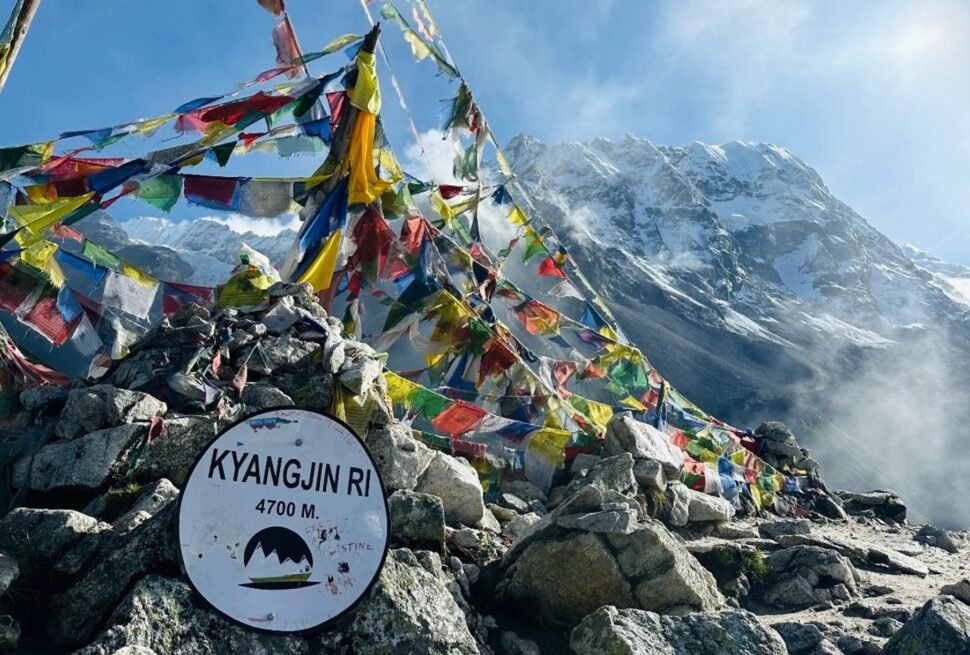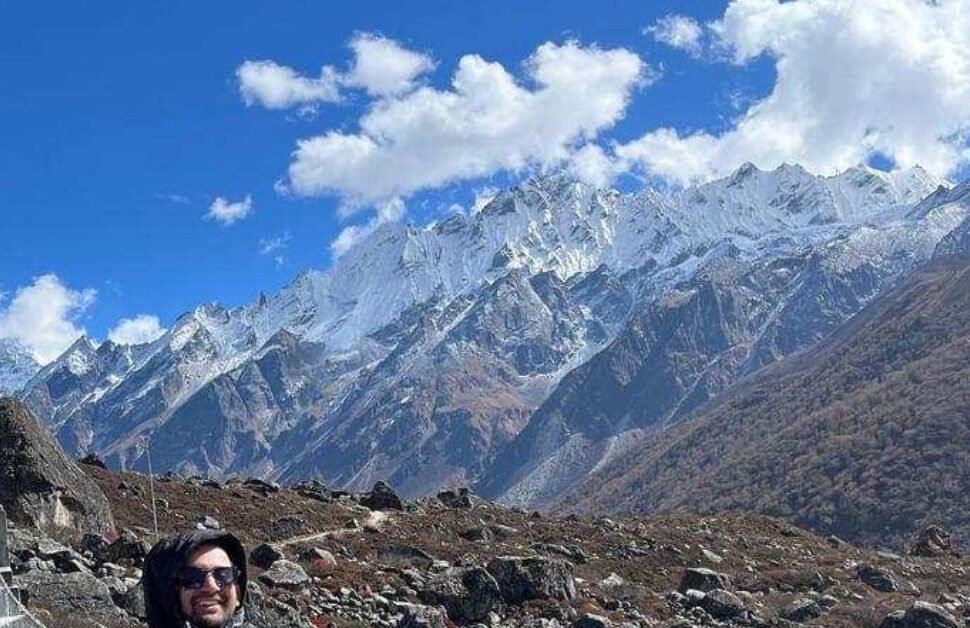
Gosainkunda is a sacred alpine lake at 4,380m in the Rasuwa district of Nepal, sitting above the Langtang Valley and connected to both the Langtang trek and the Helambu region beyond. It’s one of the holiest sites in Nepal for both Hindus and Buddhists — during the Janai Purnima festival in August, tens of thousands of pilgrims make the journey here on foot. For trekkers, it’s a genuinely dramatic destination: a dark glacial lake in a bowl of rock and ice at a height where the air is thin and the silence is absolute.
The Gosainkunda trek is most commonly done as an extension of the Langtang Valley Trek — adding 3–4 days to cross the ridge from Kyanjin Gompa via Laurebina Pass (4,610m) to Gosainkunda and then descend to Helambu. It can also be trekked as a standalone route from Dhunche, taking 5–7 days for the round trip or circuit.
What is Gosainkunda?
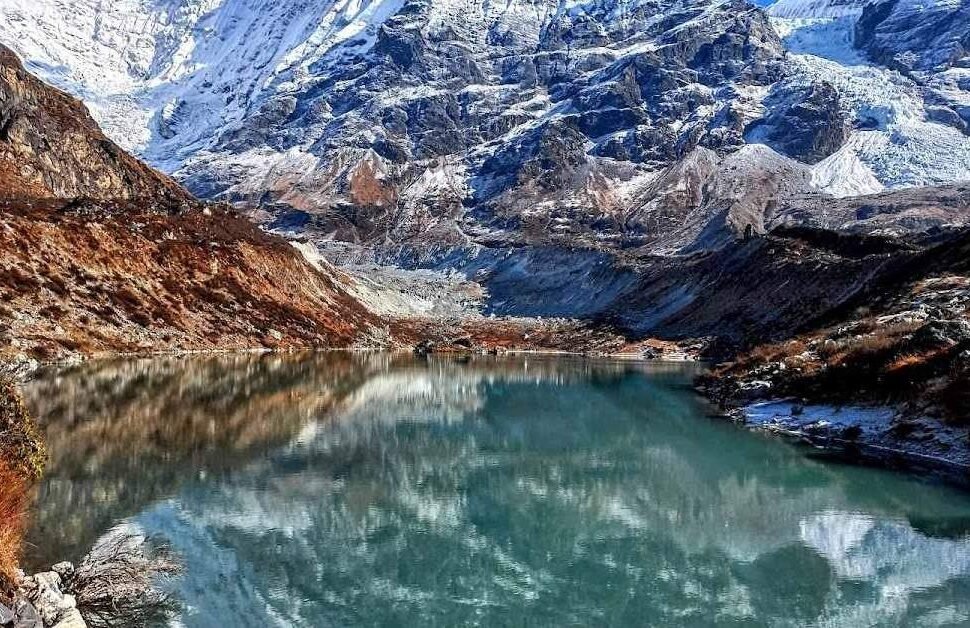
Gosainkunda (4,380m) is part of a cluster of sacred lakes at high altitude in the Langtang National Park. The lake itself is roughly 800m by 400m — large enough to be visually striking from any angle, with steep rocky ridges rising on three sides and views south toward the Kathmandu Valley on clear days.
The religious significance comes from both Hindu and Buddhist traditions. In Hindu mythology, Lord Shiva is said to have struck his trident into the ground here to release water for drinking after being burned by a demon’s poison — the lake that formed became Gosainkunda. During Janai Purnima (full moon in July/August, Shrawan month), the site becomes one of Nepal’s most significant pilgrimage destinations. Sadhus, Brahmin families, and devout Hindus make the 3–4 day walk from the Trishuli valley to take a ritual bath in the lake. In 2024, somewhere between 30,000 and 50,000 pilgrims made the journey over the festival period.
Buddhist traditions also regard the lake as sacred — a temple at the lake’s edge holds an image of Shiva, and Buddhist monks from surrounding monasteries visit during auspicious dates.
| Detail | Information |
|---|---|
| Maximum altitude | 4,380 m (Gosainkunda Lake) / 4,610 m (Laurebina Pass) |
| Duration | 7–10 days (as standalone) / 10–14 days (combined with Langtang) |
| Difficulty | Moderate to strenuous (higher altitude than Langtang Valley) |
| Starting point | Dhunche or Syabrubesi (from Kathmandu, 7–8 hours by road) |
| End point | Dhunche, Sundarijal, or Melamchi (if continuing to Helambu) |
| Main feature | Sacred glacial lake at 4,380 m, Laurebina La pass crossing |
| Package Type | Duration | Approx. Cost |
|---|---|---|
| Budget (Dhunche to Gosainkunda and back) | 7 days | $580–$680 |
| Standard (with Laurebina Pass crossing to Helambu) | 9–10 days | $780–$950 |
| Combined Langtang + Gosainkunda + Helambu | 14–16 days | $1,200–$1,600 |
| Expense | Cost Range |
|---|---|
| Teahouse accommodation | $5–$15/night |
| Three meals per day | $15–$30/day |
| Transport (Kathmandu–Dhunche return) | $20–$160 |
| Guide (per day) | $25–$35 |
| Porter (per day, if hired) | $20–$25 |
| Permits (TIMS + NP Entry) | ~$54 (one-time) |
Planning a Langtang Valley Trek? Contact our local team for expert advice and trip planning.
The Trekking Route: From Langtang or From Dhunche
Option 1: Langtang Valley to Gosainkunda via Laurebina Pass
This is the classic traverse. From Kyanjin Gompa (3,870m), you descend back toward Langtang Village and then climb the ridge toward Laurebina Pass (4,610m) — crossing the main Langtang watershed ridge. The pass involves steep climbing on rocky trail, occasionally icy in early spring or after snowfall, and the crossing can be blocked by snow in winter months.
From the pass, the route descends to Laurebina (3,890m) for the night, then continues to Gosainkunda (4,380m) the following day — a shorter, more gradual ascent along the ridge. Most trekkers reach Gosainkunda late morning after leaving Laurebina early.
Total extension from the standard Langtang trek: 3–4 additional days (Kyanjin to Gosainkunda: 2 days; Gosainkunda to Dhunche or Sundarijal: 2 more days).
Option 2: Dhunche to Gosainkunda and Back
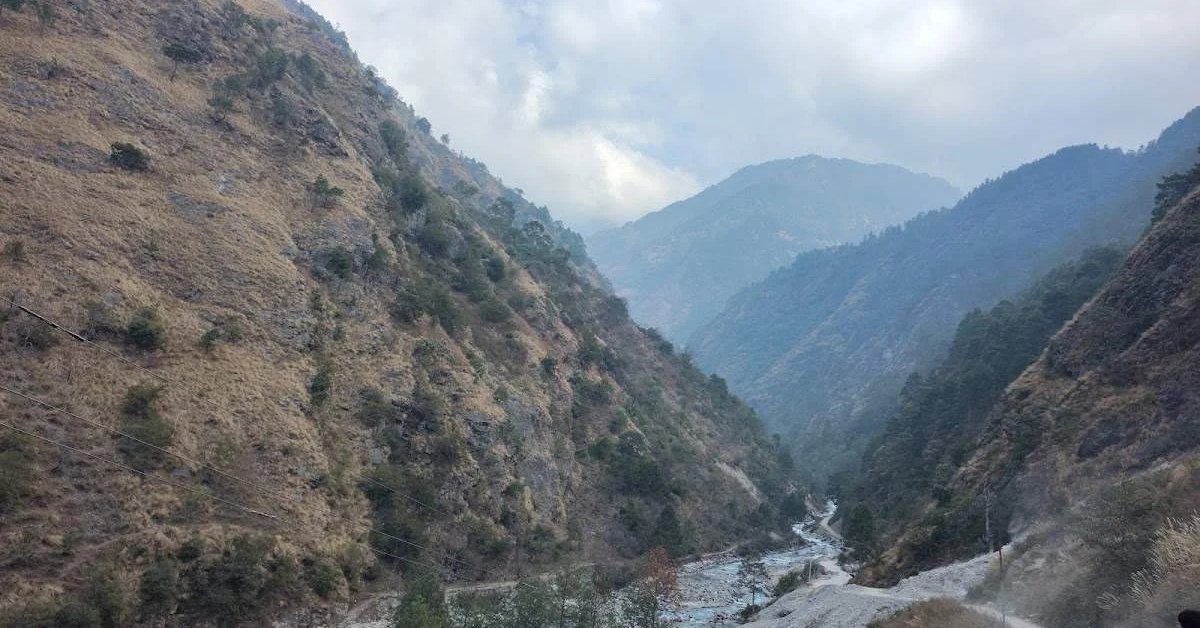
If you’re not combining with the full Langtang Valley Trek, you can approach Gosainkunda directly from Dhunche (1,950m) — the main district headquarters on the road from Kathmandu to Syabrubesi. The route climbs steeply from Dhunche through rhododendron forest to Sing Gompa (3,330m) on the first day, continues to Laurebina (3,890m) on day 2, then reaches Gosainkunda on day 3. Return by the same route — 5 days total. It’s a shorter, more focused itinerary if Langtang Valley itself isn’t your primary goal.
Option 3: Gosainkunda to Helambu Circuit
The full circuit continues from Gosainkunda south over the Tharepati ridge (3,640m) and descends into the Helambu valley, finishing at Sundarijal or Melamchi Bazaar and connecting to public transport back to Kathmandu. This adds 3–4 more days after Gosainkunda. The Helambu side of the route has lower altitude, good lodges, and passes through Sherpa farming villages — a complete change of character from the high alpine scenery around Gosainkunda.
| Month | Conditions at Gosainkunda (4,380 m) | Trekking Rating |
|---|---|---|
| January–February | Lake frozen, possible snow on pass, very cold (–15 to –20°C night) | Not recommended |
| March | Snow clearing, lake partly frozen in early March | Fair from mid-March |
| April | Excellent — rhododendrons, clear views, dry trail | Excellent |
| May | Good mornings, afternoon cloud building | Good |
| June–August | Monsoon, heavy rain, slippery, limited visibility | Difficult |
| September | Clearing, excellent from late September | Good–Excellent |
| October | Peak season — best conditions of year | Excellent |
| November | Excellent, quieter than October, cooler nights | Excellent |
| December | Cold, possible early snow above 4,000 m | Fair for experienced trekkers |
| Stage | Route | Altitude | Time |
|---|---|---|---|
| Day 1 | Kathmandu → Dhunche | 1,960 m | 7–8 hrs drive |
| Day 2 | Dhunche → Sing Gompa | 3,330 m | 5–6 hrs |
| Day 3 | Sing Gompa → Gosainkunda | 4,380 m | 5–6 hrs |
| Day 4 | Gosainkunda (rest / explore) | 4,380 m | Acclimatisation day |
| Day 5 | Gosainkunda → Dhunche (return) | 1,960 m | 6–7 hrs |
| Day 6 | Drive Dhunche → Kathmandu | — | 6–8 hrs drive |
| Factor | Langtang Valley Trek | Gosainkunda Trek |
|---|---|---|
| Max altitude | 3,830 m (valley) / 4,773 m (optional) | 4,380 m (lake) / 4,610 m (pass) |
| Main attraction | Alpine valley, glaciers, cheese factory, views | Sacred lake, Laurebina Pass crossing, pilgrimage route |
| Cultural experience | Tamang villages, Buddhist monasteries | Hindu + Buddhist sacred sites, pilgrimage atmosphere |
| Difficulty | Moderate | Moderate to strenuous |
| Best for combining | Can add Gosainkunda via Laurebina La | Can continue to Helambu via Laurebina Pass |
Planning a Langtang Valley Trek? Contact our local team for expert advice and trip planning.
Best Time to Visit Gosainkunda
The best time is October–November and March–May — the same windows as the Langtang Valley trek. The Laurebina Pass (4,610m) can be snow-covered and dangerous from December through February, and some sections of the approach can be icy. The pass is generally clear from mid-March through November.
If you specifically want to witness the Janai Purnima pilgrimage festival (full moon in July or August), plan accordingly — but understand that the monsoon is fully active during this period. The trail below 3,000m will be wet, leech-infested, and muddy. The pilgrimage itself is extraordinary to witness if you’re willing to accept those conditions.
October is probably the ideal month: clear skies guaranteed at the lake (no clouds blocking the surrounding peaks), comfortable temperatures during the day, and cold but manageable nights at 4,380m.
Altitude and the Lake at 4,380m
Gosainkunda sits 510m higher than Kyanjin Gompa. If you’re coming from the Langtang Valley, you’ll be reasonably acclimatized for this altitude by the time you arrive. If you’re approaching directly from Dhunche, the gain from Dhunche (1,950m) to Gosainkunda (4,380m) over 3 days is significant — 2,430m — and altitude sickness is a real risk if you ascend too quickly.
The standard Dhunche-approach itinerary is actually well-paced at 3 days (Dhunche → Sing Gompa → Laurebina → Gosainkunda), which keeps elevation gain per day within safe limits. Don’t try to compress this into 2 days.
At the lake at night, temperatures drop to −10 to −15°C even in October. The teahouses at Gosainkunda are basic — one or two lodges operate during trekking season — and there’s no hot water. Bring a proper sleeping bag.
Permits for the Gosainkunda Trek
The Gosainkunda trek falls within Langtang National Park — the same NPR 3,000 national park permit that covers the Langtang Valley trek covers this route. The TIMS card requirement also applies. Both permits need to be obtained in Kathmandu before you start.
If you’re extending from the Langtang Valley Trek, your existing permits cover the Gosainkunda extension — you don’t need additional permits for the same continuous trek.
If trekking onward to Helambu and finishing at Sundarijal, the final section passes through Shivapuri-Nagarjun National Park, which has its own entry fee (currently NPR 250 for foreign trekkers). This is paid at the park gate — you can’t buy it in advance in Kathmandu.
| Day | Route | Distance | Altitude | Walking Time |
|---|---|---|---|---|
| Day 1 | Kathmandu → Dhunche | 120 km by road | 1,950 m | 7–8 hr drive |
| Day 2 | Dhunche → Sing Gompa (Chandanbari) | 12 km | 3,330 m | 5–6 hr |
| Day 3 | Sing Gompa → Laurebinayak | 8 km | 3,921 m | 4–5 hr |
| Day 4 | Laurebinayak → Gosainkunda Lake | 6 km | 4,380 m | 3–4 hr |
| Day 5 | Gosainkunda Acclimatisation / Explore nearby lakes | 4–6 km | 4,380–4,610 m | 3–4 hr |
| Day 6 | Gosainkunda → Laurebinayak → Dhunche (descent) | 26 km | 1,950 m | 7–8 hr |
| Day 7 | Dhunche → Kathmandu | 120 km by road | 1,400 m | 7–8 hr drive |
What to Expect at the Lake
The lake at 4,380m is often approached from the south after a climb from Laurebina. You crest a ridge and the lake appears below you — blue-black, still, reflecting the rocky peaks above. It’s a moment that rewards the effort of getting there regardless of the weather. On clear days, you can see south for 50–60km. The ridge above the lake on the north side rises to over 5,000m.
A small temple sits at the lake’s edge on the southern shore. The wooden structure houses the Shiva image and is the focal point for religious offerings during pilgrimage season. In non-festival months, it’s quiet — a small altar, prayer flags, and the sound of wind across the water.
Most trekkers spend one night at Gosainkunda. That’s enough to see the lake at dawn and dusk — the two best lighting moments — and to rest before continuing south toward Helambu or back to Laurebina and Dhunche.
Planning a Langtang Valley Trek? Contact our local team for expert advice and trip planning.