Every night on the Langtang Valley Trek is spent in a teahouse — a family-run guesthouse that provides a room, a bed, and meals. There are no camping-only sections and no requirement to carry a tent. The quality ranges from very basic (shared squat toilet outside, thin mattress, no insulation) to genuinely comfortable (attached hot shower bathroom, proper beds, warm dining room). Knowing what to expect at each stop helps you pack appropriately and set realistic expectations.
How Teahouse Accommodation Works on the Langtang Trail
Teahouses in Nepal work on a business model that first-time trekkers often don’t fully understand. Room charges are low — often NPR 300–400 per night — because the lodge makes its profit from food. If you sleep somewhere and eat all your meals there, you’re a good customer and the room rate reflects that. If you arrive at a lodge at 4pm, drop your bag, eat dinner at the kitchen across the path, and leave at 7am without breakfast, don’t be surprised if they ask NPR 600 for the same room.
It’s not written in any rule — it’s just the economic reality of running a small mountain guesthouse. The practical takeaway: sleep where you eat. It simplifies everything and it’s actually the fairer arrangement.
Rooms are almost universally double rooms with two single beds. Solo trekkers staying in a room designed for two pay the same rate. A few lodges in Kyanjin Gompa have true single rooms, but they’re rare. Couples share a double room at the single-person rate — it’s not a per-bed charge in most places.
Syabrubesi (1,460m): The Best Infrastructure on the Route
Syabrubesi is a road-connected town — buses from Kathmandu arrive here — and it has the most developed guesthouse scene of anywhere on the trek. Rooms have attached or nearby shared bathrooms with Western-style toilets, reliable electricity, and hot showers that don’t cost extra. You’re unlikely to have a bad stay here.
Prices run NPR 400–700 per room, slightly higher than trailside lodges because of the better facilities. There’s no reason to push on to Lama Hotel on the same day you arrive from Kathmandu’s 7-hour bus journey. Spend the first night here, rest, and start the actual trek fresh in the morning.
| Hotel Type | Price/Night | What to Expect |
|---|---|---|
| Budget guesthouse / hostel | $8–$20 | Shared or private rooms, basic hot shower, communal breakfast area, Thamel location |
| Mid-range hotel (3-star) | $40–$80 | En-suite bathroom, WiFi, daily housekeeping, often with rooftop or garden, breakfast included |
| Boutique / heritage hotel | $100–$200+ | Character buildings, curated interiors, fine dining, spa — ideal for post-trek recovery |
| Location | Altitude | Room Cost (Peak) | Facilities Available |
|---|---|---|---|
| Syabrubesi | 1,503 m | $5–$10 | Hot shower, WiFi, multiple food options, charging |
| Bamboo / Rimche | 1,960–2,400 m | $5–$8 | Basic rooms, cold water, limited food menu |
| checkpoint at Ghodatabela (army post, 3,020 m) here | |||
| Langtang Village | 3,430 m | $8–$12 | Rebuilt post-earthquake, several teahouses, limited hot shower, WiFi |
| Mundu | 3,543 m | $8–$12 | Small settlement, basic lodges |
| Kyanjin Gompa | 3,830 m | $10–$15 | Best selection on trail — 10+ teahouses, some with en-suite, WiFi, charging, yak cheese factory nearby |
Planning a Langtang Valley Trek? Contact our local team for expert advice and trip planning.
Trek the Langtang Valley with Next Trip Nepal. 8-day package from USD 650, covering all permits, guide, porter and teahouse accommodation. Langtang National Park, Kyanjin Gompa and Tserko Ri viewpoint included.
Lama Hotel (2,470m): Basic But Functional
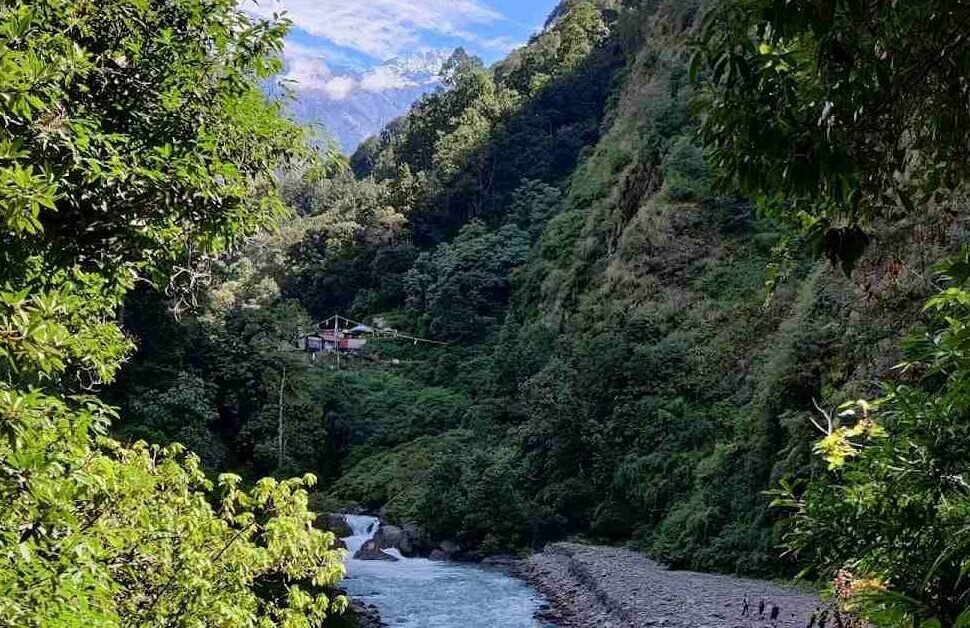
Lama Hotel isn’t a hotel. It’s the name of the settlement — a cluster of guesthouses on a flat section of trail surrounded by dense rhododendron and oak forest. After the steep climb from Syabrubesi, reaching Lama Hotel feels like a genuine achievement.
The lodges here are basic. Expect wood-paneled rooms with thin mattresses on wooden bed frames, blankets (bring your own sleeping bag for warmth), and shared squat toilets that may be in a separate outdoor block. Hot water for washing is available as a bucket shower for NPR 150–200, solar-heated and therefore only genuinely warm in the afternoon. Cold water for drinking is from a tap or tank — use purification tablets or a filter.
The communal dining rooms are the social heart of each lodge. A wood-burning stove heats the room and everyone gathers around it after dinner. It’s where you meet other trekkers, trade route information, and dry out damp gear. The stove is usually going from late afternoon until everyone goes to bed. In the cold evenings at altitude, it’s genuinely important.
WiFi is available at some Lama Hotel lodges for NPR 200–400 per session. Signal is slow — don’t plan on streaming or video calls. Device charging costs NPR 100–200 per device. Solar capacity is limited; lodges manage charging time carefully.
Room rate: NPR 300–500 depending on lodge and negotiating whether you’re eating there.
Ghoda Tabela (3,010m): Just a Stop, Not a Stay
Ghoda Tabela is primarily an army checkpoint and rhino patrol station, not a trekking destination. A few lodges exist here but most trekkers pass through for the permit check and continue to Langtang Village. The facilities are similar to Lama Hotel quality. Worth stopping for lunch but not worth making it your overnight stop unless you’re moving particularly slowly or having a difficult acclimatization day.
Langtang Village (3,430m): Rebuilt After 2015
The original Langtang Village was completely destroyed in the April 2015 earthquake and the avalanche that followed. The new village was built approximately 400m from the original site. The lodges here are newer than anywhere else on the route — construction started in late 2015 and 2016 — which means better building materials and more thoughtful layouts than the older teahouses lower on the trail.
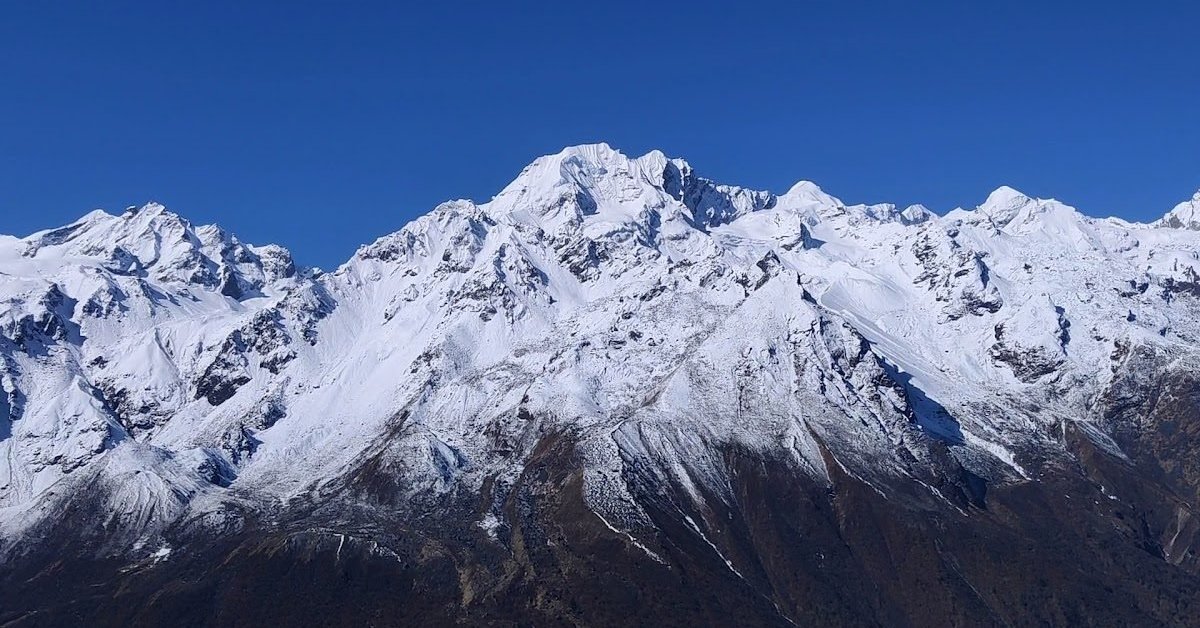
Several lodges have attached bathrooms. Rooms are better insulated than at Lama Hotel. Views from the village terrace of Langtang Lirung (7,227m) are dramatic — the mountain fills the head of the valley. For many trekkers, the evening light on that face is one of the visual highlights of the trip.
Room rate: NPR 400–600. Most lodges here eat and sleep in combination without the awkward negotiating that happens at Lama Hotel.
| Location | Electricity | WiFi | Device Charging |
|---|---|---|---|
| Syabrubesi | Grid power | Good, included | Free in most teahouses |
| Lama Hotel | Solar / micro-hydro | Available, variable speed | $1–$2 per charge |
| Langtang Village | Solar panels | Available (slow) | $2 per charge |
| Kyanjin Gompa | Solar panels | Available (limited speed) | $2–$3 per charge |
| Village | Altitude | Room Price (per night) | Hot Shower | Wi-Fi | Charging | Notes |
|---|---|---|---|---|---|---|
| Syabrubesi | 1,467 m | NRs 300–600 ($3–5) | Yes (solar) | Yes (paid) | Free–NRs 100 | Most options here. Good base to start early. |
| Bamboo | 1,970 m | NRs 200–400 ($2–3) | Sometimes | No | Limited | Small settlement, few lodges. Basic only. |
| Lama Hotel | 2,470 m | NRs 300–500 ($2–4) | Yes (solar/electric) | Sometimes (paid) | NRs 100–200 | Most popular first-night stop. Several teahouses. |
| Ghodatabela | 3,020 m | NRs 400–600 ($3–5) | Sometimes | No | Limited | Small, army checkpoint nearby. Often used as lunch stop. |
| Langtang Village | 3,430 m | NRs 500–800 ($4–6) | Yes (solar) | Yes (paid) | NRs 150–300 | Rebuilt after 2015 earthquake. Several good teahouses. |
| Mundu | 3,543 m | NRs 500–700 ($4–6) | Sometimes | Rare | NRs 200 | Small stop. Some trekkers bypass to Kyanjin. |
| Kyanjin Gompa | 3,870 m | NRs 600–1,200 ($5–10) | Yes (electric) | Yes (paid, NRs 500–800/day) | NRs 200–500 | Highest point. Coldest nights. Best facilities at this altitude. |
Planning a Langtang Valley Trek? Contact our local team for expert advice and trip planning.
Trek the Langtang Valley with Next Trip Nepal. 8-day package from USD 650, covering all permits, guide, porter and teahouse accommodation. Langtang National Park, Kyanjin Gompa and Tserko Ri viewpoint included.
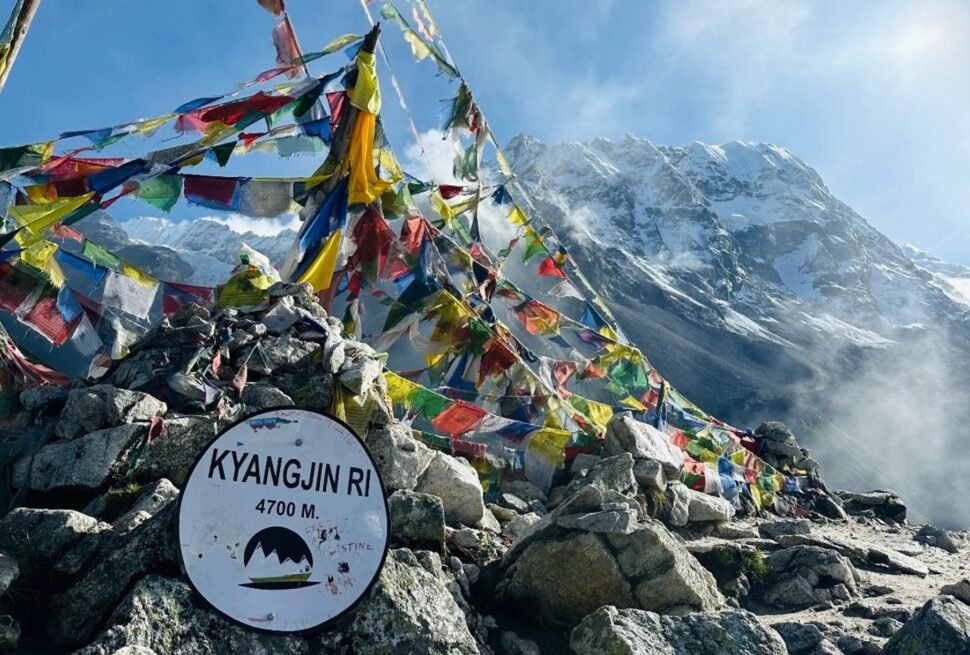
Kyanjin Gompa (3,870m): The Best Lodges on the Route
Kyanjin Gompa is the endpoint for most Langtang trekkers and, by a significant margin, has the best accommodation on the trail. Several lodges have attached bathrooms with actual flushable toilets. Solar hot showers are available in the afternoon (not always reliable, but genuinely warm when working). Dining rooms are larger and better heated than on the lower trail. A few lodges have glass-fronted dining areas with views directly up to the surrounding peaks.
The Yak Kharka Hotel, the Kyanjin Guest House, and several others have built reputations over years of Langtang trekking traffic. Prices run NPR 500–800 per room. At the better end, you’re getting an attached bathroom, solar hot water, and a proper bed with good blankets.
Given that you’re spending at least two nights in Kyanjin — one night to arrive, one night minimum before the Tsergo Ri or Kyanjin Ri hike — it’s worth spending a bit more on a better lodge here. After days of basic accommodation lower on the trail, the relative comfort of Kyanjin’s best lodges feels genuinely restorative.
Charging is available, WiFi is available (slow), and the cheese factory near the monastery is a 10-minute walk. The monastery (Kyanjin Gompa) is worth visiting before or after your acclimatization hike.
Sleeping Bag: Bring Your Own
Teahouses provide blankets — usually two or three — but they’re rarely sufficient for cold nights above 3,000m. Bring your own sleeping bag rated to at least −10°C. At Kyanjin Gompa in October–November, night temperatures drop to −5 to −10°C inside an unheated room. Relying solely on guesthouse blankets is uncomfortable at best.
Sleeping bags can be rented in Kathmandu (Thamel gear shops) for NPR 300–500 per day. If you’re doing the trek once and don’t want to buy, rental is fine. Inspect the rental bag carefully before taking it — check the zipper, the loft, and look for signs of moisture damage.
Solo Trekkers and Room Sharing
In peak season (mid-October to mid-November), solo trekkers occasionally get asked to share a room with another solo trekker of the same gender if the lodge is full. This is more common at Kyanjin Gompa than anywhere else on the route. If you strongly prefer a private room, arrive early in the afternoon — 2–3pm — before the afternoon hiking traffic arrives looking for beds. Early arrival secures better room choice.
Off-season trekkers rarely face this issue. March–May and December–February have more room availability throughout.
Planning a Langtang Valley Trek? Contact our local team for expert advice and trip planning.
Trek the Langtang Valley with Next Trip Nepal. 8-day package from USD 650, covering all permits, guide, porter and teahouse accommodation. Langtang National Park, Kyanjin Gompa and Tserko Ri viewpoint included.