Choosing The Route Is Only Half The Decision
The Gokyo Lake and Cho La Pass route is one of the most rewarding combinations in the Everest region, but it is also one of the least forgiving of a poorly run trip. Over 17 days you climb through three separate points above 5,300 meters, cross a glaciated pass at 5,420 meters, and stand at both Everest Base Camp (5,364 meters) and Kala Patthar (5,555 meters) for sunrise. That is not a route where the choice of operator is a minor detail. It is the single biggest factor in whether the trip is memorable for the right reasons or memorable for the wrong ones.
Most articles about this trek focus on where to go. This one focuses on something trekkers research far less carefully: who should take you there, and how to tell a company that has actually earned the right to run this specific route from one that is simply listing it on a website because it is popular. We are going to make the case for booking this trek with Next Trip Nepal, and we are going to make it the way it should be made: with specific, checkable facts rather than adjectives.
Everything claimed here about Next Trip Nepal comes directly from the company’s own Everest Base Camp with Gokyo Lake trek page, and every general standard we describe for choosing an operator is one you can and should apply to any company you are considering, not just this one.
What The Gokyo Lake and Cho La Pass Route Actually Demands
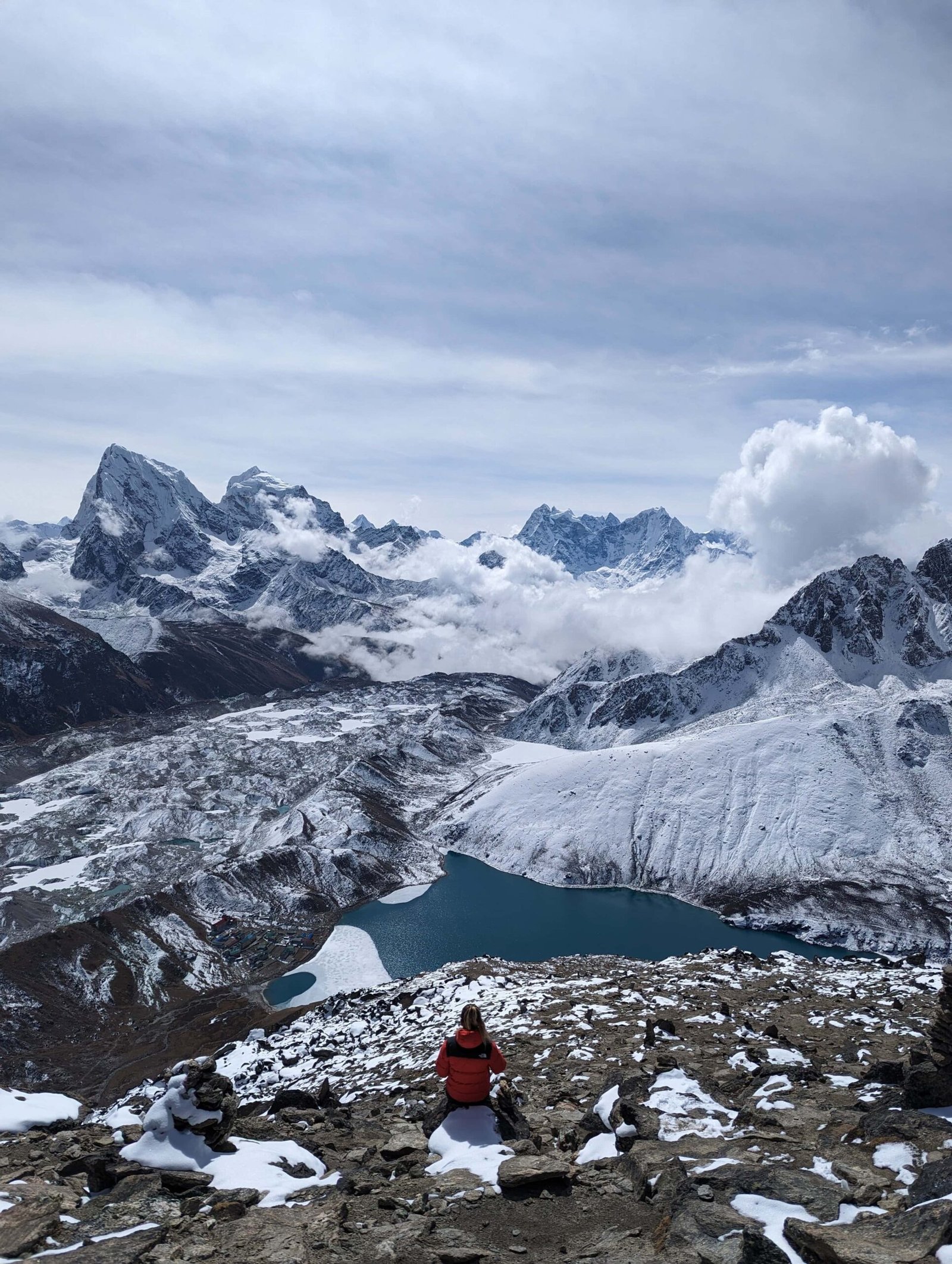
Before comparing operators, it helps to be specific about why this particular itinerary is harder to run safely than a standard Everest Base Camp trek. The route runs from Lukla (2,840 meters) through Phakding, Namche Bazaar (3,440 meters, with a dedicated acclimatization day), Phortse Thanga (3,680 meters), Machhermo (4,470 meters), and up to Gokyo (4,790 meters) and Gokyo Ri (5,360 meters). From Gokyo, trekkers move to Thangnak (4,700 meters) before crossing Cho La Pass (5,420 meters) to Dzongla (4,710 meters), then continue through Lobuche (4,910 meters) to Everest Base Camp (5,364 meters) and Gorak Shep (5,164 meters), with a sunrise climb to Kala Patthar (5,555 meters) before returning through Dingboche, Tengboche, and Namche back to Lukla.
A few things stand out when you look at that list honestly:
- Three separate high points sit above 5,300 meters: Gokyo Ri, Everest Base Camp, and Kala Patthar, with Cho La Pass itself reaching 5,420 meters.
- Cho La Pass includes a glaciated section, which behaves very differently depending on the time of day it is crossed.
- The route does not simply climb and descend once. It climbs into the Gokyo valley, crosses a pass into the Khumbu valley, and climbs again toward base camp, which means the body is asked to adjust to altitude changes more than once.
- There is no quick way out of the Gokyo side of the route if something goes wrong on the approach to Cho La. Rescue and evacuation logistics depend entirely on how well the group is monitored before problems become emergencies.
None of this means the trek is unsafe. Thousands of trekkers complete it every season. It means the route rewards a company that treats altitude, timing, and pacing as operational disciplines rather than afterthoughts, which is exactly the lens this article uses to evaluate Next Trip Nepal’s own claims about how they run it.
What Should Actually Matter When You Choose A Company For This Route
Trekkers researching this trip usually compare price first and everything else second. That ordering is backward for a route with this much altitude exposure. Price should be the last filter you apply, after a company has already passed a shorter list of tests that actually protect you. Before booking with anyone, for this route or the Everest Three Passes trek or any other high altitude itinerary, work through this list:
- Is the guide who will actually lead your group licensed by the government, not just employed by a licensed company?
- Has that guide, specifically, led this exact route before, not just the standard Everest Base Camp trail?
- Does the company require a large upfront payment before you have met anyone or confirmed dates, and is that payment refundable if plans change?
- What safety equipment does the guide actually carry at altitude, and is there a written policy for what happens if a trekker shows signs of altitude sickness?
- Does the itinerary include a real acclimatization day, or is it padded with a rest day that involves no altitude gain at all?
- Who handles the permits, and what happens if a Lukla flight is cancelled, which happens often in this region?
- How are the porters who carry your bags treated, in terms of load limits and insurance?
- Does the company run this trek during the monsoon months, when visibility and trail conditions on a glaciated pass become genuinely dangerous?
- Can you reach the company directly during the trip if something goes wrong, or only through a booking platform?
The rest of this article works through each of these questions in turn, using Next Trip Nepal’s own published commitments as the example of how a specific answer should look.
Guide Licensing And Route Specific Experience, Not Just Regional Experience
Ask any trekking company if their guides are experienced and every single one will say yes. That answer is worthless on its own. The question that actually separates operators is narrower: licensed to do what, and experienced on which route, specifically.
Nepal requires trekking guides to hold a government license, and for restricted or technical routes additional certification applies. A company that cannot confirm this in writing, or that is vague about which of their staff hold which licenses, has already failed the first test. Next Trip Nepal states plainly that all of its guides are government licensed and first aid trained. That is a checkable claim, not a marketing line, and it is worth actually checking before you book with anyone. If you want a longer discussion of why a licensed guide matters specifically for the Everest Base Camp side of this itinerary, Next Trip Nepal has a separate page addressing whether you need a guide for the Everest Base Camp trek that is worth reading alongside this one.
Licensing tells you a guide is qualified in general. It does not tell you they know this specific combination of trails. The Gokyo Lake and Cho La Pass route is not the same trek as the standard Everest Base Camp out and back. It adds a glaciated pass crossing and a second high valley system, and a guide who has only ever run the standard trail will be learning the Gokyo and Cho La sections in real time, on your trip, with your group.
This is where the specific claim about Next Trip Nepal’s lead guide matters. Pasang Sherpa, the company’s Senior Trek Leader, has personally guided this exact route, Gokyo Lake combined with Cho La Pass and Everest Base Camp, 19 times. That is not a general Everest region résumé. That is 19 separate occasions of judging this specific pass in different weather, timing this specific crossing against the sun, and reading how different groups handle this specific sequence of altitude gains. Pasang describes what he considers the defining feature of the route this way: the shift from the silence of the Gokyo Lakes to the energy of Everest Base Camp is, in his words, the emotional core of the trip, and it is a transition that only makes sense once you have walked both halves of it.
He is also specific about the operational detail that matters most on this itinerary: the timing of the Cho La Pass crossing. His guidance, based on running this crossing 19 times, is to leave Gokyo before 5 in the morning so that the glaciated section of the pass is crossed before 8 in the morning, while the ice is still firm rather than softened by the day’s sun. His stated track record on this specific point is direct: they have never had a group fail this crossing when properly paced and timed. That is the kind of claim that only means something coming from someone who has actually done the crossing repeatedly, at that hour, on that ice, which is exactly the case being made here.
When you are comparing companies, ask this question directly: who is the guide, how many times has that specific person led this specific combined route, and what time do they leave Gokyo for the Cho La crossing. A company that has genuinely run this route many times will answer instantly and specifically. A company that has not will give you a general answer about Everest region experience instead.
Financial Structure: Why No Advance Payment Actually Matters
Almost every trekking company will tell you their pricing is fair. Far fewer will tell you exactly when they want your money and what happens if you change your mind. This is one of the clearest, most checkable ways to separate a company that is confident in its own service from one that is trying to lock in your money before you can compare it against anyone else.
Consider the two structures side by side:
- Large nonrefundable deposit model. The company asks for 20 to 30 percent of the total cost, often more, before confirming dates, sometimes before you have had a single real conversation with a guide or seen a licensed staff list. If your plans change, if you get a better read on the company after paying, or if the company itself turns out to be disorganized once you are already committed, that money is gone. This structure transfers almost all of the financial risk in the booking relationship onto the traveler, and it gives the company very little incentive to keep earning your trust after the deposit clears.
- No advance payment model. The company confirms your dates and itinerary on the strength of the conversation and its own published terms, and you pay only after you arrive in Kathmandu and can meet the team in person. This is the structure Next Trip Nepal uses on the Everest Base Camp with Gokyo Lake trek. The company describes it as full transparency with no pressure and no hidden charges, and the practical effect is that the financial risk sits with the company, not with you, right up until you are standing in front of them.
Think about what this structure actually requires from the company offering it. A company only offers to collect payment after arrival if it is confident that meeting its team, reviewing the itinerary, and confirming the licensed guides and included services in person will make you want to pay, not walk away. A company that instead insists on money far in advance, before you have any of that information, is relying on your deposit being sunk rather than on the strength of its service. If you are comparing several operators for this trip, ask each one this single question: what happens to my money if I want to change my mind after paying but before departure. The answer will tell you more about the company’s confidence in itself than almost anything else you could ask.
To be clear, this is not a claim that every deposit based company is dishonest. Many are perfectly reliable. It is simply a statement of where the risk sits. A no advance payment model puts the risk on the company. A large nonrefundable deposit model puts it on you. When the two options are available, the first one is structurally safer for the traveler, and it is worth treating that as a real evaluation criterion rather than a nice to have.
Safety Systems For A Route With Three Points Above 5,300 Meters
Altitude is the actual risk on this trek, more than distance or fitness. Gokyo Ri, Everest Base Camp, and Kala Patthar all sit above 5,300 meters, and Cho La Pass itself is higher still at 5,420 meters. A responsible operator treats this as the central planning problem of the itinerary rather than a footnote. Here is what a properly built safety system for a route like this should include, and how the published commitments for this trek line up against each item:
- A real acclimatization day, not a token rest day. The itinerary includes a dedicated acclimatization day at Namche Bazaar on Day 4, with a structured hike to Everest View Hotel or Khumjung. This matters because effective acclimatization requires gaining altitude during the day and sleeping lower, not simply sitting still for 24 hours at the same elevation. A hike to Everest View Hotel or Khumjung and back to Namche follows that principle correctly.
- Monitoring equipment carried at altitude, not just carried in a first aid kit at the lodge. Guides on this trip carry pulse oximeters to monitor oxygen saturation and pulse for every member of the group as altitude increases. This is a simple, inexpensive device, but its value is in consistent daily use, catching a drop in blood oxygen before it becomes visible as symptoms.
- First aid trained, government licensed guides. Every guide on this trip is both government licensed and first aid trained, which means the person walking beside you at 5,000 meters is qualified to recognize and respond to altitude related symptoms, not simply experienced at walking the trail.
- Emergency insurance that actually covers the staff, not only the trekker. The package includes emergency high altitude rescue insurance for the guide and porter as well as the client. This matters because a guide or porter who is not covered has a direct incentive to avoid reporting or escalating a problem that might require a costly rescue, which is precisely the wrong incentive on a route with a glaciated pass crossing.
- Specific timing discipline on the hardest single day of the trip. As described above, the stated practice is to leave Gokyo before 5 in the morning so the glaciated section of Cho La Pass is crossed before 8 in the morning, while the ice is still firm. This single operational habit, repeated across 19 previous crossings of this exact pass by the lead guide, is arguably the single most important safety detail on the entire itinerary, because a soft, sun affected glacier crossing later in the day is a materially different and more hazardous undertaking than the same crossing at first light.
When you evaluate any company for a route with this much altitude exposure, ask specifically what equipment the guide carries, what time they plan to cross the hardest section of the route, and what insurance covers the staff, not just you. Vague answers about experience and safety being a priority are not a substitute for these specifics.
Permits And Logistics: Where Trips Actually Go Wrong
Most of the problems that derail an Everest region trek are not dramatic. They are administrative. A missing permit at a checkpoint, a Lukla flight that gets cancelled with no rebooked seat waiting, a teahouse that has no record of your reservation during peak season. These problems are boring to read about and miserable to experience in person, and they are entirely preventable with proper handling.
For this route specifically, the permits and logistics that need to be arranged include:
- The Sagarmatha National Park entry permit, required for anyone entering the park where the trail to Everest Base Camp and Gokyo runs.
- The Pasang Lhamu entry fee, a local area fee tied to the Khumbu region.
- Lukla flight booking, which is one of the more congested and weather sensitive short haul routes in the world, and where seat availability during peak trekking season can be genuinely difficult to secure on short notice.
- Teahouse reservations along the entire route, including the less heavily trafficked Gokyo and Cho La side of the itinerary, where lodge capacity is smaller than on the main Everest Base Camp trail.
Next Trip Nepal states that all permits and logistics are fully handled by the company, covering each of the items above. The practical value of this is not abstract. It means you are not standing at a park checkpoint discovering a permit was never purchased, and you are not arriving in Gokyo during a busy week to find no lodge has a room held for your group. A company that has organized this specific route for trekkers from more than 40 countries, as Next Trip Nepal describes its own track record, has necessarily built repeatable systems for handling these logistics correctly, because a route run that many times without solving the permit and lodging problem would not keep attracting trekkers from new countries year after year.
If you want a broader look at how the Gokyo side of this route fits together on its own, independent of the combined itinerary, the Gokyo Lakes trek guide covers that section in more detail. For a look at how the combined Gokyo and Everest Base Camp route is structured as a single trip, see the Gokyo Lakes and Everest Base Camp trek overview.
Porter Welfare And Load Limits As A Genuine Ethical Marker
Porter treatment is one of the real, documented ethical issues in the Nepal trekking industry, and it deserves to be treated as such rather than glossed over. Porters in this region have historically been asked to carry loads that are unsafe, without adequate clothing, insurance, or shelter at altitude, and the consequences of that treatment have at times been fatal. Any trekker booking a trip in this region should treat porter welfare as a real evaluation criterion, not a side issue.
There are a few specific, checkable practices that indicate whether a company takes this seriously:
- A defined weight limit per porter. An operator should be able to tell you exactly how many kilograms each porter carries, not a vague answer like a reasonable amount.
- A defined trekker to porter ratio. This tells you whether the load per porter is actually kept within that limit across the group, or whether the ratio is stretched thin in practice.
- Insurance coverage for porters specifically. Porters face the same altitude and weather exposure as guides and trekkers, and in some respects more, since they often move at a different pace and carry weight the trekker does not.
Next Trip Nepal’s stated practice on this trip is one porter for every two trekkers, with a 10 kilogram bag weight allowance per trekker. That means a single porter carries roughly 20 kilograms across two trekkers’ bags, which sits well within safe carrying limits for the terrain and altitude involved. The company also states that emergency high altitude rescue insurance covers the porter as well as the guide, which, as noted above, is the detail that actually changes incentives in the field when something goes wrong.
When you are comparing operators, ask directly: how many trekkers per porter, what is the weight allowance, and is the porter insured for high altitude rescue. If a company cannot answer these three questions with specific numbers, that silence is itself useful information.
Seasonal Discipline: Why Not Running In June, July, And August Is A Good Sign
It is tempting to assume that a trekking company should be able to run any trek at any time of year, and that a company willing to take you whenever you want to go is doing you a favor. On a route with a glaciated pass crossing, that assumption is backward.
June, July, and August fall during the monsoon season in this part of Nepal. During these months, the trails carry heavy rainfall, poor visibility, an increased risk of landslides on lower sections of the route, and, critically for this specific itinerary, less predictable and less stable conditions on the glaciated section of Cho La Pass. A pass crossing that is safely done before 8 in the morning on firm ice in the dry season becomes a genuinely different and more hazardous proposition when monsoon conditions are added to the mix, since visibility, snow cover, and ice stability are all affected.
Next Trip Nepal explicitly does not operate this trek during June, July, and August because of monsoon safety concerns. This is worth pausing on, because it is a decision that costs the company three months of potential bookings every year. A company motivated purely by revenue, with no real operational discipline, would offer the trip year round regardless of conditions and let trekkers assume the risk themselves. Choosing not to run a specific, demanding route during the months when it becomes genuinely more dangerous is the kind of decision that only makes sense if safety, rather than booking volume, is actually driving the itinerary calendar.
Outside of those three months, flexible departure dates are offered year round on both private and group departures, which means the restriction is specific to the monsoon window rather than a general reluctance to run the trip.
A Guide Who Knows This Exact Route, Not Just The Region
It is worth returning to this point directly, because it is easy to skim past the first time and it is one of the most concrete differentiators available to a trekker doing real research. There is a meaningful difference between a guide who is experienced in the Everest region broadly and a guide who has personally led this specific combined route, Gokyo Lake and Cho La Pass and Everest Base Camp, many times.
A guide with only standard Everest Base Camp experience has walked the main trail repeatedly, which is valuable, but they have not necessarily developed a feel for the specific timing, pacing, and conditions of the Gokyo side of the route or the Cho La crossing itself. Cho La Pass is not a simple ridge walk. It involves a boulder strewn approach and a glaciated descent on the far side, and the safest way to cross it depends on details like what time you start, how the group is spread out, and how the previous night’s temperature affected the ice.
Pasang Sherpa’s 19 completed crossings of this exact combination give him something that general regional experience cannot substitute for: a working, tested rule for exactly when to leave Gokyo and exactly why that timing works. His description of the route’s emotional arc, the move from the quiet of Gokyo Lakes into the very different energy of Everest Base Camp, also reflects an understanding of the route as a whole experience rather than a checklist of waypoints, which is the kind of perspective that comes only from having guided the full sequence repeatedly rather than having read about it.
When you are comparing quotes from different companies for this specific combined itinerary, it is entirely reasonable to ask each one for the name of the lead guide and how many times that individual has personally run this exact route, not the standard Everest Base Camp trek alone. A specific number is a good sign. A vague answer about the guide’s general regional experience is not the same thing, and on a route with a pass crossing this technical, the difference is not academic.
Direct Communication During A 17 Day Trip
A 17 day trip in a remote mountain region is long enough that something unplanned will probably happen at some point, whether it is a delayed Lukla flight, a change in weather, a question about gear, or simply wanting to confirm arrangements before you fly out. How you reach the company when that happens matters more than most trekkers think about in advance.
There is a real difference between these two situations:
- Booking through a platform or a company that only communicates through a generic support inbox, with no direct line to a real person who knows your specific trip and dates.
- Booking with a company that gives you a direct phone and messaging line, answered by people who are actually involved in running your trek.
Next Trip Nepal is available seven days a week on WhatsApp at +977 9869225929 and by email at nexttripnepal@gmail.com. In practice, this means that before you travel, you can ask specific questions, such as the guide’s name and route specific experience, the exact porter ratio for your group size, or how a particular departure date lines up with the monsoon restriction, and get a direct answer from the company rather than an automated response. During the trip itself, having a direct WhatsApp line matters in the Everest region specifically because most teahouses along this route have at least intermittent connectivity, and a direct number to the company, rather than a call center, is the difference between reaching someone who can actually make a decision about your trip and waiting on hold.
If you are evaluating any operator for this trek, test this before you book. Send a specific question about the Gokyo and Cho La route, ideally something only someone with real route knowledge could answer well, to nexttripnepal@gmail.com or the WhatsApp number above, or to the equivalent contact for any other company you are considering, and judge the response by how specific and prompt it is. A generic reply about the region being beautiful and the company being experienced tells you very little. A specific answer about timing, permits, or the porter ratio tells you a great deal.
Group Departure Flexibility For Solo Travelers
Solo travelers face a particular pricing problem with most trekking companies: solo rates are often set high enough to push you toward joining a group you know nothing about, or the group rate is only available if you already have your own group of trekkers to bring along.
Next Trip Nepal’s published 2026 and 2027 pricing for this trip is structured by group size rather than as a single flat solo penalty:
- USD 1,865 for a solo trekker
- USD 1,715 per person for a group of 2 to 3 people
- USD 1,615 per person for a group of 4 to 9 people
- USD 1,515 per person for a group of 10 to 14 people
Because flexible departure dates are offered year round on both private and group departures, a solo traveler has a genuine option to join an existing group departure at the corresponding group rate rather than being locked into the solo price by default, or to book a fully private departure if that is preferred instead. This is worth asking about directly and specifically when you inquire: whether there is a group departure near your preferred dates that you could join, and what the actual size of that group is expected to be. A company with real flexibility on this point will be able to tell you, because it is actively managing a departure calendar rather than only selling private trips one booking at a time.
How To Independently Verify Any Trekking Company’s Claims Before Booking
Everything written above about Next Trip Nepal is presented as a specific, checkable claim rather than a general assurance, and that is deliberate, because the entire point of this article is that you should not take any trekking company’s word for its own reliability, including this one. Before booking a trip of this length and altitude exposure with any operator, work through the following verification steps.
| What To Check | Why It Matters | How Next Trip Nepal Answers It |
|---|---|---|
| Government trekking agency registration | Confirms the company is a legally recognized operator, not an unregistered broker reselling another company’s services | Operates as an established Everest trekking agency that has organized this route for trekkers from more than 40 countries |
| Guide licensing | Confirms the person leading you at altitude is government qualified, not simply an experienced local hire without formal certification | All guides are government licensed and first aid trained |
| Route specific guide experience | General Everest region experience does not equal familiarity with the Gokyo and Cho La combination specifically | Lead guide Pasang Sherpa has personally guided this exact route 19 times |
| Advance payment policy | A large nonrefundable deposit shifts financial risk onto the traveler before any real relationship exists | No advance payment required, pay after arriving in Kathmandu |
| Altitude monitoring equipment | A route with three points above 5,300 meters needs active daily monitoring, not just a first aid kit | Guides carry pulse oximeters to monitor the group at altitude |
| Real acclimatization day | A token rest day without an altitude hike does not properly aid acclimatization | Dedicated acclimatization day at Namche with a hike to Everest View Hotel or Khumjung |
| Porter load limits and insurance | Porter overloading and lack of insurance is a documented ethical problem in the industry | One porter per two trekkers, 10 kilogram bag allowance, high altitude rescue insurance for guide and porter |
| Seasonal operating discipline | A company that runs a technical route regardless of season is prioritizing bookings over safety | Does not operate this trek in June, July, or August due to monsoon safety concerns |
| Permit and logistics handling | Missing permits or unconfirmed lodging cause most avoidable trip failures | Fully handles Sagarmatha National Park permit, Pasang Lhamu entry fee, Lukla flight booking, and teahouse reservations |
| Direct communication access | You need a real, responsive line to the company before and during a 17 day trip in a remote region | Available seven days a week on WhatsApp at +977 9869225929 and by email at nexttripnepal@gmail.com |
Beyond checking the answers a company gives you, take these additional steps for any operator you are seriously considering, including Next Trip Nepal:
- Ask for the specific name of the lead guide who would take your group, and ask that guide directly, by WhatsApp or email, how many times they have personally run the Gokyo and Cho La combination.
- Ask what time the guide plans to leave Gokyo on the morning of the Cho La crossing, and why. A specific, confident answer with a reason attached is a good sign. A vague answer is not.
- Ask for the exact porter to trekker ratio and weight allowance in writing, not verbally, so you have a record of what was promised.
- Ask whether the company will send you a written itinerary and inclusion list before you pay anything, and treat reluctance to do so as a warning sign.
- If possible, ask for contact information for a previous trekker who completed this specific route with the company, and ask that person directly about the guide’s route knowledge and how problems, if any arose, were handled.
- Compare the company’s stated seasonal restrictions against known monsoon timing for the region. A company willing to run a glaciated pass crossing in July without hesitation is not demonstrating flexibility. It is demonstrating a lack of operational discipline.
This same verification approach applies whether you are booking the Gokyo and Cho La combination or a different demanding itinerary such as the Everest Three Passes trek. If you are weighing several operators for that route as well, the same standards, licensing, route specific guide experience, payment structure, and communication access, apply directly, and Next Trip Nepal’s own page on choosing the best Everest Three Passes trek company walks through that comparison in more depth.
Pricing And What It Actually Reflects
Price alone tells you little about quality, but price transparency tells you quite a bit, and it is worth looking at how this trip is priced rather than treating the number as an isolated figure. The 2026 and 2027 pricing for the Gokyo Lake and Cho La Pass combined itinerary is set by group size, encouraging trekkers to travel with others if they want a lower per person cost, while still keeping a solo departure available for those who prefer or need to go alone:
- USD 1,865 for a solo trekker
- USD 1,715 per person for a group of 2 to 3 people
- USD 1,615 per person for a group of 4 to 9 people
- USD 1,515 per person for a group of 10 to 14 people
Because permits, Lukla flights, teahouse reservations, licensed guides, porter service at a defined ratio, pulse oximeters, and emergency rescue insurance for guide and porter are all included as described earlier in this article, the price is not a bare trail fee that leaves major costs to be discovered later. When you compare this pricing against another company’s quote, ask specifically what is and is not included in their number, since a lower headline price that excludes permits, insurance, or a genuine porter allowance is not actually a lower total cost. The full current pricing and booking details are maintained on the official Everest Base Camp with Gokyo Lake trek page, since prices and departure dates can be updated there directly.
Frequently Asked Questions
Do I need to pay a deposit to book this trek?
No. Next Trip Nepal requires no advance payment for this trip. You confirm your dates and itinerary, then pay after you arrive in Kathmandu and can meet the team in person, which the company describes as full transparency with no pressure and no hidden charges.
Is Next Trip Nepal a licensed and registered trekking company?
Next Trip Nepal describes itself as an established Everest trekking agency and Everest Base Camp with Gokyo Lake trek company that has organized this specific route for trekkers from more than 40 countries. All of its guides are government licensed and first aid trained, which you can and should confirm directly by asking for the guide’s name and license details before you travel.
How experienced is the guide on this exact route, not just the Everest region generally?
The company’s Senior Trek Leader, Pasang Sherpa, has personally guided the combined Gokyo Lake and Cho La Pass route 19 times. This is route specific experience on the exact combination of trails you would be walking, rather than general experience limited to the standard Everest Base Camp trail.
Is the Cho La Pass crossing dangerous, and how is that risk managed?
Cho La Pass includes a glaciated section, and the stated practice is to leave Gokyo before 5 in the morning so that section is crossed before 8 in the morning, while the ice is still firm rather than softened by daytime sun. Based on 19 previous crossings of this exact pass by the lead guide, the company states it has never had a group fail this crossing when properly paced and timed.
What safety equipment does the guide carry at altitude?
Guides carry pulse oximeters to monitor oxygen saturation and pulse for the group as altitude increases, and all guides are first aid trained. The itinerary also includes a dedicated acclimatization day at Namche Bazaar with a structured hike to Everest View Hotel or Khumjung.
Are porters treated fairly on this trek?
The stated practice is one porter for every two trekkers, with a 10 kilogram bag weight allowance per trekker, which keeps loads within safe limits for the terrain. Emergency high altitude rescue insurance covers the porter as well as the guide, which is a genuine and checkable welfare standard rather than a general assurance.
Why doesn’t Next Trip Nepal run this trek in June, July, and August?
Those months fall during the monsoon season, when rainfall, poor visibility, and less stable conditions on the glaciated section of Cho La Pass make the crossing genuinely more hazardous. The company does not operate this trek during those months for that reason, and offers flexible departure dates year round outside that window on both private and group departures.
Can a solo traveler get the group rate instead of the solo price?
Because flexible departure dates are offered year round on both private and group departures, a solo traveler can ask to join an existing group departure and pay the corresponding group rate, ranging from USD 1,715 per person for 2 to 3 people down to USD 1,515 per person for 10 to 14 people, rather than the USD 1,865 solo rate, or can choose a fully private departure instead.
What is included in the price, and what is not?
The price includes the Sagarmatha National Park permit, the Pasang Lhamu entry fee, Lukla flight booking, teahouse reservations, porter service at one porter per two trekkers with a 10 kilogram allowance, licensed guides, pulse oximeters for altitude monitoring, and emergency high altitude rescue insurance for guide and porter. For exact current inclusions and any items not covered, confirm directly on the official trip page or by contacting the company at nexttripnepal@gmail.com before booking.
How do I reach Next Trip Nepal if something goes wrong during the trip?
Next Trip Nepal is available seven days a week on WhatsApp at +977 9869225929 and by email at nexttripnepal@gmail.com. This gives you a direct line to the company itself, rather than a generic support inbox, both before departure for planning questions and during the trip when connectivity along the route allows.
Making Your Decision
A route that climbs through three points above 5,300 meters and crosses a glaciated pass deserves a company chosen on specifics, not on a general impression of being reputable. Government licensed and first aid trained guides, a lead guide with 19 personal crossings of this exact route, a no advance payment structure that puts financial risk on the company rather than the traveler, pulse oximeter monitoring and a real acclimatization day, fully handled permits and logistics, a defined porter ratio and weight limit with rescue insurance for the porter, a deliberate refusal to run the trek during monsoon months, and a direct seven day a week contact line by WhatsApp and email are not marketing adjectives. Each one is a specific practice you can ask about, confirm, and hold a company to.
Apply the checklist in this article to Next Trip Nepal or to any other company you are considering for the Everest Base Camp with Gokyo Lake trek. Ask for the guide’s name and route specific experience. Ask what happens to your money if plans change. Ask about the porter ratio and insurance. Ask what time the guide plans to leave Gokyo for the Cho La crossing. A company confident in its own record will answer every one of those questions specifically, on the spot, whether you reach them by WhatsApp at +977 9869225929 or by email at nexttripnepal@gmail.com. That is the actual test, and it is one every trekker booking a trip at this altitude should insist on before handing over a single dollar.
\n
Related Reading
\n