Can You Combine Gokyo Lakes With Everest Base Camp
Yes, and it is one of the most rewarding extended routes in the entire Khumbu region. The combined Gokyo Lakes and Everest Base Camp route links two of the most scenic sections of the Khumbu valley through the Cho La pass (5,420m), letting you experience the turquoise glacial lakes of the Gokyo valley, the sweeping views from Gokyo Ri (5,357m), and the classic Everest Base Camp (5,364m) and Kala Patthar (5,555m) experience in a single continuous trek. I have guided this combined route many times, and it consistently produces some of the strongest feedback of any itinerary we run, precisely because it avoids retracing the same trail twice, something the standard out and back EBC route cannot avoid.
If you are combining this extended route with a faster way back to Kathmandu, our Everest Base Camp Trek with Helicopter Return and its day by day itinerary show how a helicopter return is typically structured.
Why Combine These Two Routes Instead of Choosing One
The standard 14 day EBC trek and the standalone Gokyo Lakes trek each have real merit individually, but combining them through the Cho La pass solves the single biggest limitation of both: repetition. On the standard EBC route, you walk the same trail on the way up and the way down between Namche and Base Camp. The combined route instead loops through the Gokyo valley on one side and the Base Camp approach on the other, connected by the Cho La pass, so nearly every day delivers new terrain rather than familiar ground seen once already. For trekkers who have the time, typically 15 to 18 days rather than the standard 14, and the acclimatization tolerance for a high glaciated pass crossing, this combined route delivers meaningfully more for a moderate increase in trip length.
The Cho La Pass: What Actually Makes It Different
| Detail | Information |
|---|---|
| Altitude | 5,420m |
| Technical difficulty | Moderate, some glacier travel and loose rock |
| Typical crossing time | 7 to 9 hours from Dragnag to Zhonglha or Dzongla |
| Best conditions | Early morning, before afternoon cloud and snow softening |
| Equipment needed | Trekking poles, possibly microspikes depending on snow cover |
Cho La sits meaningfully above the standard EBC route’s highest sustained walking terrain and involves a genuine glacier crossing on its western side, not simply a high altitude walk. This is not a technical climb requiring ropes or specialized mountaineering skill, but it is a step up in difficulty from the standard EBC trail, and it should not be attempted without a guide experienced on this specific crossing or without proper acclimatization from the days preceding it.
Gokyo Lakes: What You Actually See
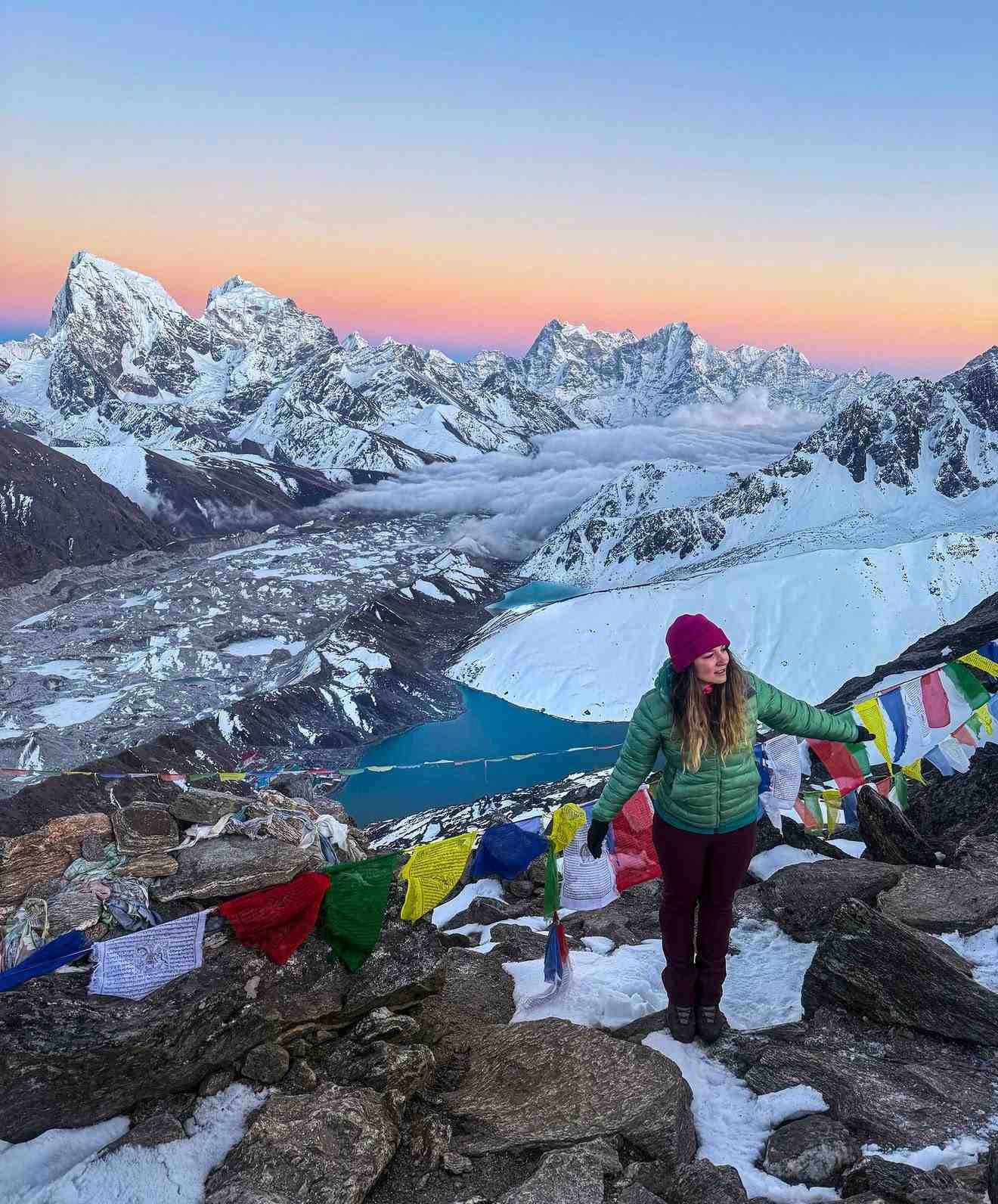
The Gokyo valley holds a series of glacial lakes fed by meltwater from the Ngozumpa Glacier, Nepal’s longest glacier, with Gokyo village itself sitting at 4,790m beside the third and largest of these lakes. The lakes are strikingly turquoise, a color that comes from fine glacial sediment suspended in the water, and they sit in dramatic contrast to the grey moraine and white peaks surrounding them. Gokyo Ri, the viewpoint above the village at 5,357m, offers what many experienced Khumbu guides, myself included, consider the single best panoramic mountain view in the entire region, taking in Everest, Lhotse, Makalu, and Cho Oyu from one vantage point, a wider simultaneous view than Kala Patthar itself provides.
Sample Combined Itinerary
| Day | Route | Altitude |
|---|---|---|
| 1 | Kathmandu | 1,400m |
| 2 | Fly Lukla, trek to Phakding | 2,840m to 2,610m |
| 3 | Phakding to Namche Bazaar | 2,610m to 3,440m |
| 4 | Acclimatization, Namche Bazaar | 3,440m |
| 5 | Namche to Dole | 3,440m to 4,110m |
| 6 | Dole to Machhermo | 4,110m to 4,470m |
| 7 | Machhermo to Gokyo | 4,470m to 4,790m |
| 8 | Acclimatization, Gokyo Ri climb | 4,790m, ascent to 5,357m |
| 9 | Gokyo to Dragnag | 4,790m to 4,700m |
| 10 | Dragnag over Cho La to Dzongla | 4,700m over 5,420m to 4,830m |
| 11 | Dzongla to Lobuche | 4,830m to 4,930m |
| 12 | Lobuche to Gorak Shep, Everest Base Camp | 4,930m to 5,364m |
| 13 | Kala Patthar sunrise, descend to Pheriche | 5,555m then 4,280m |
| 14 | Pheriche to Namche Bazaar | 4,280m to 3,440m |
| 15 | Namche to Lukla | 3,440m to 2,840m |
| 16 | Fly Lukla to Kathmandu | 2,840m to 1,400m |
This 16 day framework is a realistic baseline. Some trekkers add an extra buffer day around the Cho La crossing specifically, since weather can delay a safe crossing attempt, bringing the total closer to 17 or 18 days depending on conditions and personal pace.
Difficulty Comparison: Combined Route vs Standard EBC
| Factor | Standard EBC Trek | Gokyo and EBC Combined |
|---|---|---|
| Duration | 14 days | 16 to 18 days |
| Max altitude | 5,555m (Kala Patthar) | 5,555m (Kala Patthar), plus 5,420m pass crossing |
| Technical difficulty | Moderate to hard | Hard, due to Cho La glacier crossing |
| Repeated trail sections | Significant, same route both directions | Minimal, largely a loop |
| Best for | First time high altitude trekkers | Experienced trekkers wanting more terrain variety |
Who Should Choose the Combined Route
This route suits trekkers who have some previous high altitude or multi day trekking experience, comfort with a longer itinerary, and genuine interest in the Gokyo valley specifically rather than treating it as an afterthought. It is not the route I recommend for a genuine first time trekker with no altitude experience, given the added demand of the Cho La crossing on top of an already serious itinerary. For that profile, the standard 14 day EBC trek, covered in depth in our main safety and preparation guides, remains the better starting point. Trekkers who have already done one Himalayan trek, or who are simply willing to commit extra time and training for a more complete Khumbu experience, get outsized value from the combined route.
Acclimatization on the Combined Route
The combined route actually offers a gentler acclimatization curve in its early stages than the standard EBC trek, since the Gokyo side of the valley climbs somewhat more gradually through Dole and Machhermo before reaching Gokyo village. The real acclimatization test comes at the Cho La crossing itself, which demands that you already be well adjusted to altitudes above 4,500m before attempting it, since retreating mid crossing if altitude sickness develops is considerably harder than on the standard trail. We do not schedule the Cho La crossing until trekkers have had several nights above 4,000m and shown no concerning symptoms, applying the same pulse oximeter monitoring described in our main safety guide throughout this extended itinerary.
What to Pack Differently for This Route
Beyond the standard EBC packing list, the Cho La crossing specifically calls for a few additions: trekking poles are essential rather than optional given the loose rock and glacier ice sections, microspikes are worth carrying for the glacier crossing depending on snow and ice conditions in a given season, and a slightly warmer sleeping bag rating is worth considering given some nights in the Gokyo valley and around Dzongla run colder than equivalent altitudes on the standard route due to more exposed camp positions.
Common Mistakes on the Gokyo and EBC Combined Route
- Underestimating the Cho La crossing as simply a high walk rather than a genuine glacier crossing requiring proper footwork and pacing
- Rushing the Gokyo valley section to save time for Base Camp, missing the point of combining the two routes in the first place
- Not building a weather buffer day around the Cho La crossing specifically, then facing a difficult decision if conditions are marginal on the scheduled day
- Choosing this route as a first ever high altitude trek without previous multi day trekking experience
- Skipping the Gokyo Ri climb due to fatigue, missing what many guides consider the best single viewpoint in the Khumbu
The Six Lakes of the Gokyo Valley
Gokyo valley actually contains six recognized glacial lakes, though most trekkers only see the third, fourth, and occasionally fifth on a standard itinerary. Longponga (the first lake) and Taboche Tsho (the second lake) sit lower in the valley and are passed en route to Gokyo village. Dudh Pokhari (the third lake) is the largest and sits directly beside Gokyo village itself, the one most photographs of the valley actually show. The fourth and fifth lakes, Thonak Tsho and Ngozumpa Tsho, sit higher up the valley toward Cho Oyu base camp and are visited by trekkers with an extra day or specific interest in reaching them, offering a quieter, less visited perspective on the same glacial landscape. Our standard combined itinerary includes the third lake as the base and the Gokyo Ri climb, with the higher lakes available as an optional extension for trekkers with additional time.
Teahouses and Accommodation in the Gokyo Valley
Accommodation in the Gokyo valley follows a similar pattern to the main EBC route but with fewer teahouses per village given lower overall trekker volume compared to the Namche to Base Camp corridor. Dole, Machhermo, and Gokyo village itself each have a handful of teahouses, generally simpler than the larger lodges in Namche or Tengboche, with twin rooms, shared bathrooms, and increasingly basic facilities as you gain altitude, similar in character to Dingboche or Lobuche on the standard route. Gokyo village itself, despite its relatively remote position, has surprisingly good teahouses given the volume of trekkers who pass through as part of both standalone Gokyo treks and the combined Three Passes and Cho La routes. Booking ahead through your trekking company matters more here than on the main EBC corridor precisely because there are fewer total beds available in each village.
Comparing the Combined Route to the Everest Three Passes Trek
Trekkers researching this combined route often also come across the Everest Three Passes trek, and it is worth understanding the distinction clearly. The Three Passes trek adds Renjo La (5,360m) and Kongma La (5,535m) to the Cho La crossing already included in the Gokyo and EBC combined route, creating a full loop of the upper Khumbu across three separate high passes rather than one. This makes the Three Passes trek meaningfully longer, typically 18 to 21 days, and more demanding overall. The Gokyo and EBC combined route we are describing here is, in effect, a slightly less extreme version of the Three Passes concept, offering much of the same non repetitive, loop style experience with one fewer major pass crossing, making it a reasonable middle ground between the standard EBC trek and the full Three Passes itinerary for trekkers who want more than the classic route without committing to the most demanding version available.
Best Time of Year for the Gokyo and EBC Combined Route
| Season | Suitability | Notes |
|---|---|---|
| October to November | Excellent | Stable weather, clear Cho La crossing conditions, busiest season |
| March to May | Excellent | Good visibility, rhododendrons on lower sections, warmer than autumn |
| December to February | Challenging | Cho La crossing significantly harder with heavy snow, experienced trekkers only |
| June to September | Not recommended | Monsoon rain and cloud obscure passes, high avalanche and rockfall risk on Cho La |
Autumn and spring remain the strongest windows for this specific route, similar to the standard EBC trek, but the Cho La crossing adds an extra layer of seasonal sensitivity that the standard route does not have, since a snow covered or icy pass is a meaningfully bigger obstacle than any single day on the main EBC trail.
Cost Considerations for the Combined Route
The combined Gokyo and EBC route costs more than the standard 14 day EBC trek, reflecting the additional days, the specialized guiding experience required for the Cho La crossing, and in some cases additional equipment like microspikes provided as part of the package. Budget for roughly 20 to 30 percent more than the standard EBC package price for the additional two to four days and the technical crossing support. This is a worthwhile investment for trekkers specifically seeking the combined experience, though trekkers primarily motivated by cost and who are satisfied with the classic out and back experience are better served by the standard route.
Training Differences for the Combined Route
Training for the combined route follows the same fundamentals covered in our dedicated EBC training guide, sustained cardio, a weekly long walk with a loaded pack, and leg strength work, but with additional emphasis on balance and stability training given the Cho La crossing’s uneven glacier and rock terrain. Practicing on uneven, rocky trail sections during training hikes, rather than only smooth paths, builds the specific footwork confidence that pays off on crossing day. Trekking pole technique is also worth practicing in advance if you have not used poles extensively before, since the Cho La descent in particular benefits from confident, practiced pole use on loose terrain.
Wildlife and Landscape Along the Gokyo Route
The Gokyo valley trail passes through terrain noticeably different from the busier Namche to Tengboche corridor, with quieter forests below Dole giving way to stark, high altitude terrain as you approach the lakes. This section of the Sagarmatha National Park sees Himalayan tahr, a wild goat species, with some regularity on the steep slopes above the trail, and pika, a small relative of rabbits, are commonly spotted darting between rocks near Machhermo and Gokyo itself. Birdlife includes the Himalayan monal, Nepal’s national bird, occasionally seen in the rhododendron forests on the lower sections during spring. The Ngozumpa Glacier itself, visible for much of the approach to Gokyo, is worth pausing to properly observe, since its scale, the longest glacier in Nepal, is difficult to appreciate from photographs alone and only becomes clear when you are standing beside its moraine wall.
Guide Experience Requirements for This Route
Not every trekking guide in the Khumbu is equally experienced with the Cho La crossing specifically, and this is worth asking about directly when booking. A guide who has crossed Cho La dozens of times understands the specific line to take across the glacier section, how conditions change through the morning as temperatures rise, and when a crossing should be postponed for weather rather than pushed through. Our guides assigned to this combined route are specifically selected for demonstrated Cho La experience, not simply general EBC route familiarity, since the two routes demand meaningfully different skill sets in the pass crossing section even though they share much of the same trail elsewhere.
What a Typical Cho La Crossing Day Actually Feels Like
The crossing day typically starts before dawn from Dragnag, since early morning conditions on the glacier are firmer and more predictable than the softer, wetter conditions that develop as the day warms. The initial climb toward the pass involves a mix of loose rock scrambling and defined trail, followed by the glacier crossing itself on the western side of the pass, where crampons or microspikes may be needed depending on current conditions, and your guide will assess and fit these before the crossing begins. The final descent toward Dzongla is steep and requires careful footing on loose scree. Most groups complete the full crossing, camp to camp, in seven to nine hours, making it one of the longest single days on the entire combined itinerary, longer even than the Everest Base Camp day itself in most cases.
Photography Opportunities Unique to This Route
Beyond the standard EBC highlights, the combined route offers photography opportunities the classic out and back trek simply does not, including the turquoise lakes themselves, best photographed in the calm morning light before wind creates ripples across the water, the panoramic four eight thousander view from Gokyo Ri, which genuinely rivals or exceeds Kala Patthar for sheer scale, and the dramatic glacier crossing itself at Cho La, offering a different visual character than anywhere else on the standard route. Trekkers with a specific interest in landscape photography consistently rate this combined route highly for the variety it offers compared to the more singular visual experience of the standard EBC trail.
Final Thoughts on Choosing This Route
The Gokyo Lakes and Everest Base Camp combined route asks more of you than the standard trek, more days, more altitude exposure across a technical pass, and a higher price point, but it delivers proportionally more in return: two distinct, spectacular sections of the Khumbu connected by one of the most memorable single days of high altitude trekking available in Nepal. For the right trekker, someone with some previous experience, adequate time, and genuine interest in seeing more of this region than the classic corridor, it is very possibly the single best trekking route in the entire Everest region. For a true first time high altitude trekker, the standard 14 day route remains the more sensible starting point, with this combined route as a strong option to return for on a future trip.
The History of Gokyo as a Trekking Destination
Gokyo remained a relatively obscure destination compared to the Everest Base Camp trail for decades after Everest tourism began developing in the Khumbu, largely because it required a separate approach and did not initially connect easily to the main Base Camp route. The development of the Cho La crossing as a regularly used trekking route, along with growing recognition of Gokyo Ri’s panoramic views among mountaineering and trekking communities, gradually built its reputation into what it is today, a route considered by many experienced Khumbu guides and repeat visitors to rival or exceed the classic Base Camp trail for scenery, while still seeing meaningfully fewer trekkers than the main corridor during peak season. This lower trekker volume remains one of the route’s understated advantages, quieter teahouses, less crowded viewpoints, and a greater sense of solitude in a region that, on its most popular trail, can feel considerably busier during October and November.
Cultural Notes: Sherpa Communities in the Gokyo Valley
The villages along the Gokyo route, Dole, Machhermo, and Gokyo itself, are Sherpa communities whose economy has increasingly shifted toward supporting trekking tourism over the past several decades, similar to the pattern seen throughout the Khumbu. These communities maintain strong ties to traditional yak herding and high altitude agriculture alongside their tourism focused teahouse operations, and trekkers who take time to talk with teahouse owners, many of whom have decades of firsthand experience of how the valley and its visitors have changed, gain a richer understanding of the region than the scenery alone provides. Machhermo in particular has a small memorial and information center related to a notable yeti sighting claim from the 1970s that briefly drew international attention to the valley, an interesting cultural footnote worth a brief stop.
Combining Gokyo With a Helicopter Return
For trekkers with time constraints who still want the Gokyo and Cho La experience without the full walking descent, a helicopter return from Lukla or, in some cases, directly from the Gokyo valley itself, is available as a paid add on, similar in concept to our standard EBC Trek with Helicopter Return package. This shortens the overall trip by several days while still delivering the full combined trekking experience on the inbound and crossing sections, a useful option for trekkers balancing genuine interest in this route against a limited vacation window.
Permits Required for the Combined Route
The combined route requires the same Sagarmatha National Park entry permit and Khumbu Pasang Lhamu Rural Municipality fee required for the standard EBC trek, since the entire route, including the Gokyo valley and Cho La pass, falls within the same protected area. No additional permits are required specifically for the Gokyo or Cho La sections beyond the standard EBC permits, though your licensed guide, mandatory since April 2023 for all foreign trekkers in Nepal’s national parks, needs specific experience and comfort with the Cho La crossing as discussed earlier, which is a guide selection consideration rather than a formal permit requirement.
A Day by Day Look at What You Actually Experience
The early days on this route, Lukla through Namche, mirror the standard EBC trek exactly, giving you the same acclimatization foundation before the routes diverge. From Namche, turning toward Dole rather than continuing to Tengboche marks the first genuine difference, and the trail noticeably quiets as you leave the main EBC corridor behind. Dole and Machhermo offer a gradual, well paced climb through increasingly stark terrain, with the Ngozumpa Glacier’s moraine becoming visible on your approach to Gokyo itself. The rest day in Gokyo, built around the Gokyo Ri climb, is genuinely one of the highlight mornings of the entire trip, an early departure in the dark rewarded by a sunrise view spanning four of the world’s fourteen eight thousand metre peaks simultaneously. The crossing day at Cho La that follows is demanding but memorable precisely because of that demand, a real sense of accomplishment distinct from the steady, sustained walking that characterizes most of the rest of the trek. From Dzongla, rejoining the standard route toward Lobuche and Gorak Shep feels like returning to familiar territory, and the final push to Everest Base Camp and Kala Patthar carries the same significance it does on the standard itinerary, arguably enhanced by the sense that you have already earned something significant in crossing Cho La before even arriving.
Weighing the Decision: A Direct Comparison
If you are still deciding between the standard EBC trek and this combined route, consider your available time first, since the combined route genuinely needs 16 to 18 days rather than 14 to do properly, without rushing the Gokyo section or compressing the Cho La buffer day that weather sometimes demands. Consider your trekking background second, since previous multi day or high altitude experience meaningfully changes how comfortably you will handle the Cho La crossing specifically. Consider your priorities third: if seeing Everest Base Camp itself is the primary goal, the standard route delivers that efficiently. If you want the fullest possible Khumbu experience and are willing to invest the extra time and effort, the combined route is very likely the better choice, and it is the route I recommend without hesitation to any trekker who asks whether it is worth the additional days.
What Our Guides Say About This Route
Every guide who has led trekkers on both the standard EBC trek and this combined route consistently describes the Gokyo and Cho La option as the more personally rewarding route to guide, precisely because of the variety and the genuine sense of achievement the pass crossing provides for trekkers who complete it. That said, they are equally consistent in cautioning against recommending it to trekkers without adequate preparation time or previous trekking background, since the added demand is real and should be respected rather than underestimated based on enthusiasm alone. This balance, genuine enthusiasm for the route paired with honest assessment of who it suits, is exactly the kind of guidance I want every trekker considering this option to receive before booking.
Booking This Route With Next Trip Nepal
We offer the Gokyo Lakes and Everest Base Camp combined route as a custom itinerary built around your available time and experience level, rather than a single fixed package, since the right length and pacing genuinely varies by trekker on a route this flexible. As with all our Everest region treks, no advance payment is required to confirm your booking, and we walk through your specific fitness background, available dates, and priorities during a pre trek consultation before finalizing the itinerary. If you are unsure whether this combined route or the standard EBC trek is the better fit, that conversation is exactly where we help you decide based on your actual circumstances rather than a generic recommendation.
A Note on Solo Trekkers Considering This Route
Since April 2023, solo trekking without a licensed guide is not permitted in Nepal’s national parks, which includes the entire combined Gokyo and EBC route. This applies with particular relevance here given the Cho La crossing’s technical demands, since attempting that section without an experienced guide would be genuinely unwise even if it were legally permitted. Solo travelers are very welcome on this route as individual clients joining a small group or booking a private trek with a dedicated guide, and the route is, if anything, an especially good choice for solo travelers specifically because the shared experience of the Cho La crossing tends to build strong camaraderie within a trekking group over the following days.
One Final Practical Note
Weather flexibility matters more on this route than the standard EBC trek, so if your schedule allows any slack at all, build it in around the Cho La crossing specifically rather than treating the itinerary as fixed. A one day weather delay before attempting the pass is a minor inconvenience. Attempting a marginal crossing because the schedule demands it is the kind of decision that experienced guides avoid making, and it should not be a decision forced by an inflexible itinerary in the first place.
Frequently Asked Questions
Is the Gokyo Lakes and Everest Base Camp combined trek harder than the standard EBC trek?
Yes, primarily due to the Cho La pass crossing at 5,420m, which involves genuine glacier travel rather than simply high altitude walking. The combined route suits trekkers with some previous high altitude experience more than complete first timers.
How long does the combined Gokyo and EBC route take?
Typically 16 to 18 days, compared to 14 days for the standard EBC trek, depending on how many buffer days are built in around the Cho La crossing and personal pace through the Gokyo valley section.
Is Cho La pass dangerous?
It requires proper footwork on glacier ice and loose rock and should only be attempted with an experienced guide and adequate acclimatization, but it is not a technical climb requiring ropes. Weather and timing matter considerably, since afternoon conditions on the glacier are less favorable than early morning.
What is better, Gokyo Ri or Kala Patthar, for mountain views?
Both offer exceptional views, but many experienced guides, myself included, consider Gokyo Ri’s wider simultaneous view of Everest, Lhotse, Makalu, and Cho Oyu slightly superior to Kala Patthar’s more Everest focused perspective. The combined route lets you experience both rather than choosing.
Can beginners do the Gokyo Lakes and EBC combined trek?
It is possible with strong general fitness, but I recommend previous high altitude or multi day trekking experience given the added demand of the Cho La crossing. First time high altitude trekkers are generally better served by the standard 14 day EBC route.
Do I need special equipment for the Cho La crossing?
Trekking poles are essential, and microspikes are recommended depending on seasonal snow and ice conditions on the glacier. Your guide will assess specific conditions and advise on the day.
Is the Ngozumpa Glacier crossed on this route?
You walk alongside and partially across sections of the Ngozumpa Glacier’s lateral moraine near Gokyo, Nepal’s longest glacier, though the main technical crossing on this route is the Cho La pass itself rather than a direct traverse of the glacier’s main body.
How many lakes are in the Gokyo valley?
Six recognized glacial lakes exist in the valley, though standard itineraries typically visit the third lake, Dudh Pokhari, where Gokyo village sits, with the higher fourth and fifth lakes available as an optional extension for trekkers with extra time.
Is the combined route more expensive than the standard EBC trek?
Yes, typically 20 to 30 percent more, reflecting the additional two to four days and the specialized guiding required for the Cho La pass crossing.
What is the difference between this route and the Everest Three Passes trek?
The Three Passes trek adds Renjo La and Kongma La to the Cho La crossing already included here, making it a longer, more demanding full loop of the upper Khumbu across three passes rather than one.
Should I do the Gokyo and EBC combined route or the standard EBC trek for my first Himalayan trek?
The standard EBC trek is the better choice for a genuine first high altitude trek. The combined route suits trekkers with some previous high altitude or multi day trekking experience given the added demand of the Cho La crossing.
Do I need a different permit for the Gokyo and Cho La sections?
No. The same Sagarmatha National Park entry permit and Khumbu Pasang Lhamu Rural Municipality fee required for the standard EBC trek cover the entire combined route, since it all falls within the same protected area.
Can I do a helicopter return from the Gokyo valley?
Yes, a helicopter return option is available as a paid add on for trekkers wanting to shorten the overall trip while still completing the Gokyo and Cho La sections on foot.
Why is Gokyo less crowded than the standard EBC route?
Gokyo historically developed as a somewhat separate trekking destination and requires the additional Cho La crossing to connect with Base Camp, which has kept overall trekker volume lower than the main Namche to Base Camp corridor, even as the route’s reputation has grown.
I am Kiran Basnet, founder of Next Trip Nepal, based in Kathmandu. The Gokyo and EBC combined route is one of my personal favorites to guide precisely because it rewards trekkers who commit the extra days, and the Cho La crossing remains one of the most memorable single days on any Khumbu itinerary we run.
Related reading: Everest Base Camp Trek Safety Guide, Kala Patthar Complete Guide, Everest Three Passes Trek Cost Itinerary and Complete Guide, How Difficult is the Everest Base Camp Trek, Everest Three Passes Trek trip page
One last thing worth saying plainly: trekkers who ask me whether this combined route is worth the extra time almost always already sense the answer before they ask. If you find yourself drawn to the idea of the turquoise lakes, the wider Gokyo Ri panorama, and a route that does not double back on itself, that instinct is usually right, and the extra planning it takes is genuinely worth it for the trekkers who commit to it.