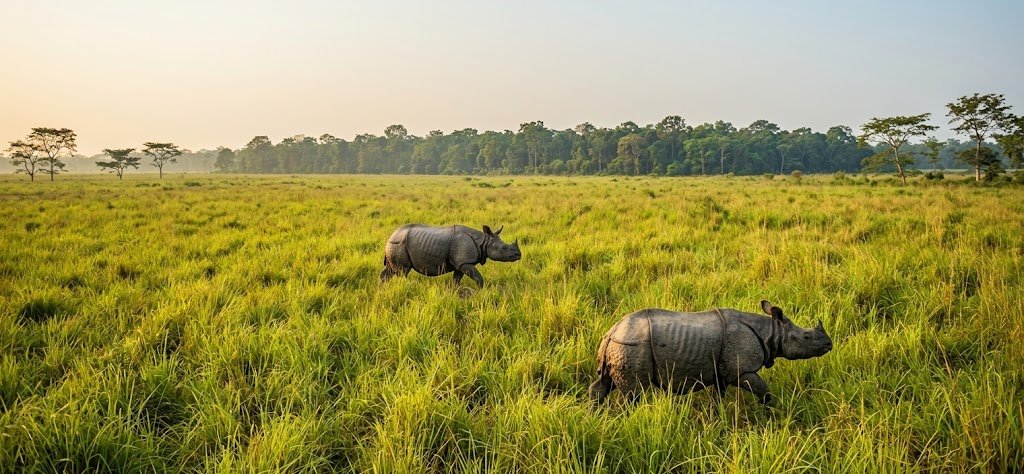
Most visitors who book a jungle safari in Chitwan want one thing above everything else: to stand a safe, respectful distance from a wild greater one horned rhinoceros and watch it graze, wallow, or simply stare back. Almost nobody who has that moment stops to ask how it became possible at all. Fifty years ago it very nearly was not.
This article is a companion piece to our general Chitwan National Park Jungle Safari guide, which covers the park’s activities, timing, and logistics in broad terms. Here, the focus narrows to one animal and one question: how did Nepal pull the greater one horned rhino back from a population of just 95 individuals to today’s figure of roughly 700, and what does that recovery actually mean for someone walking through the buffer zone grassland on a Chitwan morning in 2026?
We will move through the near extinction event of the late 1960s, the creation of the park in 1973, the armed patrol unit that stood between the last rhinos and total loss, the population numbers decade by decade in a data table, the setback of 2002, the biology of the animal itself, how it compares to the rhinos of Africa and the two other rhino species of Asia, and finally what a guest on our 10 Days Nepal Tour 2026 actually experiences on the ground in Sauraha. Facts and figures are drawn from Nepal’s official rhino census records and from our own trip page for the tour, so the numbers here match what you will be told by our guides in the field.
Chitwan National Park: The Setting for Nepal’s Rhino Story
Before the conservation history makes sense, the landscape itself needs some context. Chitwan is not a zoo enclosure or a fenced reserve. It is a working ecosystem of subtropical lowland forest, tall elephant grass, and river systems in the Terai belt of southern Nepal, and its scale is the reason a wild rhino population could recover at all.
- Total area today: 952 square kilometres, expanded in stages from an initial 544 square kilometres.
- Established: 1973, as Nepal’s first national park.
- Expanded to its current size: 952.63 square kilometres in 1977.
- Elevation: approximately 415 metres above sea level, making it a genuinely low altitude, warm climate destination even in winter.
- UNESCO World Heritage Site status: awarded in 1984.
- Buffer zone: 766.1 square kilometres added in 1997, extending community managed forest and farmland around the core park to reduce conflict between wildlife and local villages.
- Habitat types: sal forest, riverine forest, tall grassland (including the famous elephant grass that can grow taller than a person), and the floodplains of the Rapti, Reu, and Narayani rivers.
That combination of size, river systems, and grassland matters because greater one horned rhinos are grazing and wallowing animals that need large stretches of tall grass next to water. Chitwan’s geography was, and still is, close to ideal rhino habitat, which is exactly why the species survived here at all when it had already disappeared from most of its historic range across the Indian subcontinent.
Historically, the greater one horned rhino ranged across a much wider stretch of the Indo Gangetic plain, from what is now Pakistan in the west through the length of the Terai and into parts of Myanmar in the east. Almost all of that range has since been converted to farmland, cities, and infrastructure over the past two centuries, which is part of why the animal’s entire modern global population now survives in only a small number of protected pockets. Chitwan is one of the largest and most secure of those pockets, and it functions today as something closer to a stronghold than a single park among many equal options for the species.
The Near Extinction: How Nepal’s Rhino Population Collapsed
It is easy to talk about rhino conservation success in the present tense and forget how close the story came to ending differently. The numbers from the middle of the twentieth century are stark.
- Around 1950, an estimated 800 greater one horned rhinos lived in the wider Chitwan region.
- Over the following two decades, roughly 70 percent of the surrounding jungle was cleared for farmland and settlement, largely driven by resettlement programs and the eradication of malaria in the Terai, which opened the lowlands to large scale human migration for the first time.
- Poaching intensified in parallel, driven by demand for rhino horn in traditional medicine markets and by the loss of natural cover that had previously made rhinos hard to find and kill.
- By the late 1960s, the population had crashed to just 95 animals.
- A drop from 800 to 95 in under twenty years is a decline of roughly 88 percent, which by any conservation standard counts as a near extinction event rather than a simple decline.
What makes this period important to understand, rather than just recite, is that habitat loss and poaching were not separate problems. Clearing the jungle removed the cover rhinos relied on to avoid people, which made every remaining animal easier to find, easier to track, and easier to kill. The two pressures fed each other, and by 1968 conservationists and the Nepalese government were looking at a species that could plausibly disappear from Nepal within a single additional decade if nothing changed.
1973: A National Park Born From Crisis
Chitwan National Park was not created as a general environmental gesture. It was a direct, targeted response to the rhino crisis described above, and understanding that origin changes how the park itself should be read by a visitor today.
- 1973: Chitwan is gazetted as Nepal’s first national park, with the explicit aim of protecting the last viable rhino population in the country.
- Initial protected area: 544 square kilometres, covering the core habitat where the surviving 95 or so rhinos were concentrated.
- 1977: the park is expanded to 952.63 square kilometres to bring in additional forest and grassland corridors.
- 1984: UNESCO inscribes Chitwan as a World Heritage Site, recognizing both the ecosystem and the conservation model built around it.
- 1997: a 766.1 square kilometre buffer zone is added, formally involving surrounding communities in park management and giving local people a share of park revenue and decision making, which reduced the incentive for poaching and encroachment over time.
This sequence, park in 1973, expansion in 1977, World Heritage status in 1984, buffer zone in 1997, is worth knowing because it shows conservation in Chitwan was never a single decision. It was a series of escalating commitments made over roughly 25 years, each one responding to what the previous stage revealed was still missing.
The Gaida Gasti: Nepal’s Armed Rhino Patrol
A national park boundary on a map does nothing by itself. The single most important on the ground response to the 1960s poaching crisis was the creation of a dedicated, armed rhino protection unit, and it deserves to be named specifically rather than folded into a vague reference to “government action.”
- The unit was called the Gaida Gasti, which translates roughly as the Rhino Patrol.
- It consisted of 130 armed men deployed specifically to protect the surviving rhino population.
- The unit operated through a network of guard posts positioned across the rhino’s core range, allowing patrols to cover ground on a continuous rather than occasional basis.
- Its mandate was narrow and specific: stop poaching of rhinos, not general wildlife law enforcement, which meant resources were concentrated on the single species most at risk of disappearing.
- The Gaida Gasti later evolved into the broader structure that became today’s army backed anti poaching units operating inside Chitwan, which now also protect tigers and other species using the same guard post model.
The significance of the Gaida Gasti is easy to underestimate from a distance. Ninety five animals is not a population that can absorb ongoing losses and still recover. Every single rhino killed in the early 1970s would have measurably moved the species closer to extinction in Nepal. A dedicated, armed, continuously staffed patrol was the only intervention capable of buying the population enough time to begin breeding back up, and the slow but steady recovery that followed over the next three decades would not have happened without it.
The Long Recovery: A Population Timeline
Recovery from 95 animals to today’s numbers did not happen quickly, and it did not happen in a straight line. The table below sets out the verified population figures at each major point in the record, so the scale and pace of the recovery is visible at a glance rather than buried in prose.
| Year or period | Rhino population | Context |
|---|---|---|
| Around 1950 | Approximately 800 (wider Chitwan region) | Baseline population before major habitat loss began |
| Late 1960s | 95 | Near extinction low point after 70 percent of surrounding jungle cleared and poaching intensified |
| 1973 | Still critically low, exact count not separately recorded | Chitwan National Park established specifically to halt the decline |
| Around 2000 | Approximately 544 (national figure) | Slow, multi decade recovery under Gaida Gasti protection and park management |
| 2002 | 37 rhinos killed in a single year | Serious poaching surge during a period of national political instability |
| 2015 | Approximately 645 nationally, of which approximately 605 in Chitwan | Chitwan holding the large majority of Nepal’s total rhino population |
| 2021 | 752 nationally across four protected areas | Most recent national census; annual growth rate had slowed to around 3 percent from around 5 percent in 2015 |
| 2026 (present, as described on our tour page) | Approximately 700 individuals | Consistent with the 2021 census and the slower recent growth trend |
A few patterns in this table are worth pulling out explicitly, in list form, because they change how the story should be told to a visitor:
- The recovery from 95 to over 600 took roughly 45 years, not a handful of years. This was slow, patient, multi generational conservation work, not a quick fix.
- The population never grew in a straight upward line. The 2002 poaching surge shows recovery can reverse quickly if protection weakens even briefly.
- Chitwan has consistently held the majority of Nepal’s national rhino population since counting began, which is why the park, rather than any of Nepal’s other three rhino bearing protected areas, is the center of the country’s rhino conservation story.
- The growth rate slowing from about 5 percent per year in 2015 to about 3 percent per year by 2021 is not necessarily a crisis, but it is the figure conservationists are watching most closely right now, because a population that stops growing can drift toward stagnation or decline if any new pressure appears.
The 2002 Poaching Surge and the Lessons It Left Behind
The year 2002 is the single clearest reminder in the entire timeline that rhino recovery in Nepal has never been guaranteed or permanent. Thirty seven rhinos were killed for their horns in that one year alone, a devastating single year toll against a national population that at the time numbered only in the low hundreds.
- The surge coincided with a period of internal political conflict in Nepal, when security resources were stretched and rural areas, including buffer zones around protected areas, saw reduced state presence.
- Reduced patrol coverage during that period allowed poaching networks, which typically operate as organized supply chains feeding international demand rather than opportunistic local hunting, to operate with far less risk of being caught.
- The loss of 37 animals in a single year represented a meaningful setback to a population that had taken decades to rebuild from its 1960s low point.
- The response that followed, once stability returned, included strengthened army deployment inside the park, better coordination between park authorities, army units, and buffer zone communities, and renewed investment in patrol infrastructure.
- Nepal subsequently became known internationally for a series of “zero poaching years,” calendar years in which not a single rhino was lost to poaching nationwide, a status that required sustained year round enforcement rather than a one time crackdown.
The lesson conservationists draw from 2002 is not that Nepal’s rhino program failed. It is that rhino numbers can fall fast even after decades of steady growth, and that ongoing protection, not a single historic achievement, is what keeps a recovered population recovered. This is part of why the slowing growth rate seen between the 2015 and 2021 census figures is being watched carefully rather than dismissed, since a plateau can be the early sign of pressures building again before they show up as a sudden loss.
It also explains why Nepal’s park authorities and conservation partners treat every national rhino census as more than a routine headcount. Each survey, typically conducted by teams on elephant back or on foot moving in coordinated blocks across the park’s grassland and riverine habitat, is cross checked against patrol records, mortality reports, and known breeding pairs, so that a change in the total figure from one census to the next can be traced back to an actual cause rather than treated as a simple statistic. That level of tracking is itself a direct legacy of the 2002 surge, when the absence of that kind of close monitoring allowed a poaching wave to build before anyone outside the park fully understood how serious it had become.
Meet the Greater One Horned Rhino: Biology, Diet, and Behaviour
Understanding the animal itself changes what a visitor notices during a jungle walk or jeep safari. The greater one horned rhino, scientific name Rhinoceros unicornis and also called the Indian rhinoceros, is a genuinely distinct animal from the rhinos most people picture from African wildlife documentaries.
- Size: adult males typically weigh between 2,200 and 3,000 kilograms, making the species the second largest land mammal in Asia after the elephant. Females are somewhat smaller.
- Shoulder height: roughly 1.7 to 2 metres, meaning an adult rhino standing still is often taller at the shoulder than an adult human.
- Skin: thick, folded skin with raised bumps called tubercles, especially over the shoulders and hips, giving the animal its distinctive armor plated appearance. This is the single most recognizable visual feature that separates it from African rhino species.
- The horn: made entirely of keratin, the same protein found in human hair and fingernails, not bone. It grows continuously from the skull and is typically shorter and stouter than the horns of African rhino species.
- Diet: primarily a grazer, feeding on tall grasses including the elephant grass found throughout Chitwan’s floodplains, along with aquatic plants, fruit, and occasionally agricultural crops near buffer zone farmland. An adult can consume a large volume of vegetation daily relative to its body size.
- Water dependence: strongly semi aquatic. Rhinos spend long periods wallowing in mud and water, both to regulate body temperature in the Terai heat and to protect their skin from biting insects and parasites. They are also capable swimmers.
- Social structure: largely solitary outside of mother and calf pairs. Adult males hold and defend territory, marking it through dung piles and spraying urine along regular paths.
- Senses: eyesight is comparatively weak, meaning a rhino often relies far more on smell and hearing to detect a person than on sight, which is directly relevant to safety practice during a walking safari.
- Speed: despite its bulk, a rhino can move in short bursts at speeds reported up to around 40 to 55 kilometres per hour, faster than most people expect from an animal that looks so heavy and slow at rest.
- Lifespan: typically 35 to 45 years in the wild.
- Reproduction: gestation lasts around 15 to 16 months, one of the longest of any land mammal, and females typically give birth to a single calf with an interval of roughly three years between births. Calves stay close to their mothers for several years before becoming independent.
- Conservation status: listed as Vulnerable by the International Union for Conservation of Nature, an improvement from its earlier Endangered classification, reflecting exactly the recovery documented in the population table above.
One detail worth calling out specifically for anyone about to do a walking safari: because a rhino’s eyesight is weak relative to its hearing and sense of smell, a naturalist guide is often reading wind direction and ambient noise as much as watching the animal’s posture directly. This is part of the reason trained guides matter so much on foot in rhino habitat, a point covered in more detail later in this article.
How Nepal’s Rhino Differs From Africa’s Rhino Species
Visitors sometimes arrive expecting something closer to the African rhinos they have seen in other wildlife content. The differences are substantial enough to be worth listing directly, since they explain both the animal’s appearance and its behaviour in the field.
- Number of horns: the greater one horned rhino has a single horn, while both African species, the white rhino and the black rhino, carry two horns.
- Skin appearance: the greater one horned rhino’s thick, folded skin with visible tubercles creates a plated, almost prehistoric look. African rhinos have thick skin too, but without the same deep folding or armor plated texture.
- Feeding style: African white rhinos are predominantly grazers with wide, flat mouths built for cropping grass close to the ground. African black rhinos are browsers with a hooked upper lip for pulling leaves from shrubs. The greater one horned rhino sits closer to the white rhino in diet, grazing tall grasses, though it also browses and forages near water more readily than a typical white rhino.
- Habitat: African rhinos are savanna and scrubland animals. The greater one horned rhino is a wetland and tall grass floodplain specialist, tied much more closely to rivers and seasonal flooding than either African species.
- Geographic range today: African rhinos are found across parts of southern and eastern Africa. The greater one horned rhino survives only in fragmented populations across the Terai belt of Nepal and adjoining lowland India, with the single largest population concentrated in Kaziranga National Park in Assam.
- Global population scale: the world population of greater one horned rhinos is estimated at roughly 4,000 individuals, the great majority in India’s Kaziranga National Park, with Nepal’s national population of 752 as of the 2021 census representing the second largest national total for the species anywhere.
It is also worth placing the greater one horned rhino briefly alongside its two closest living relatives in Asia, both of which make Nepal’s recovery look even more significant by comparison:
- The Javan rhino, also a single horned species, survives only in a single population in Ujung Kulon National Park in Indonesia, numbering somewhere in the range of 70 to 80 individuals total, with no other wild population left anywhere on earth.
- The Sumatran rhino, a two horned species and the smallest living rhino, has declined to a population estimated at well under 50 individuals across fragmented forest patches in Indonesia, and is widely regarded by conservation biologists as functionally on the edge of extinction.
Against that backdrop, a national population of roughly 700 greater one horned rhinos concentrated substantially in a single well protected park is not a modest achievement. It is one of the clearer conservation recoveries among all rhino species alive today, African or Asian.
A quick side by side helps make the comparison concrete for anyone weighing where Nepal’s recovery sits among the world’s rhino conservation stories:
- White rhino (Africa): the most numerous rhino species globally, with a population in the tens of thousands, though the northern white rhino subspecies is functionally extinct, with only two known individuals remaining, both female.
- Black rhino (Africa): substantially reduced from historic numbers by twentieth century poaching, with a global population that has been slowly recovering from a low point but remains classified as Critically Endangered.
- Greater one horned rhino (Nepal and India): roughly 4,000 individuals worldwide, classified as Vulnerable, with Nepal’s population of 752 representing a genuine, verified national recovery story built on decades of patrol work.
- Javan rhino (Indonesia): a single population of roughly 70 to 80 animals in one national park, Critically Endangered, with no safety margin if disease or a natural disaster struck that one location.
- Sumatran rhino (Indonesia): fewer than 50 individuals estimated across fragmented forest, Critically Endangered, and regarded by many conservation biologists as the rhino species closest to disappearing entirely.
Seen against those numbers, Nepal’s rhino program is not simply a nice regional story for a tourism brochure. It is one of a small handful of genuine population recoveries among the five living rhino species anywhere on the planet, achieved with a fraction of the funding available to some larger international conservation programs.
A Wider Recovery: Tigers, Sloth Bears, Gaur, and More
The rhino recovery did not happen in isolation. Protecting rhino habitat at scale, and enforcing anti poaching patrols across that same ground, benefited an entire community of species that share the same forest and grassland. A visitor to Chitwan today is walking into a park where several species have recovered in parallel, not just one.
| Species | Population figure | Notes |
|---|---|---|
| Bengal tiger | Approximately 128 individuals in Chitwan today | A published study covering 1995 to 2002 recorded 82 breeding tigers at a density of 4.44 to 6.35 per 100 square kilometres, showing substantial growth over the following two decades |
| Sloth bear | 200 to 250 individuals | Among the highest density sloth bear populations found anywhere |
| Gaur (Indian bison) | Increased from 188 in 1997 to 368 in 2016 | Nearly doubled over roughly two decades of habitat protection |
| Bird species | Over 500 recorded, 543 in a 2006 study | Chitwan is one of the most significant bird areas in Nepal |
Beyond the species with hard population figures attached, Chitwan supports a wide range of other wildlife that a safari activity may encounter directly or by evidence of tracks and signs:
- Spotted deer (chital), typically seen in large herds across open grassland, often the first animal spotted on a jeep safari.
- Sambar deer, larger and more solitary than spotted deer, usually found closer to forest cover.
- Wild boar, commonly encountered along forest edges and near water sources.
- Langur monkeys, found in troops through the forest canopy and often the animal that alerts guides to a predator nearby through alarm calls.
- Mugger crocodiles, found basking along riverbanks, particularly visible during a canoe ride.
- Gharial crocodiles, a critically endangered, fish eating crocodile species with a distinctive long narrow snout, present in the Rapti and Narayani river systems partly due to a dedicated gharial breeding and release program run in the park.
- Gangetic river dolphins, seen only occasionally, surfacing briefly in the Rapti River, a genuine highlight when it happens but never something a guide can promise in advance.
The reason this wider recovery matters for the rhino story specifically is that a single species conservation program rarely stays single species for long once the infrastructure exists. The guard posts, patrol routes, and community buffer zone system built primarily to save the rhino in the 1970s became the same infrastructure that protected tigers, gaur, and gharials as those populations began to recover in turn. Rhino conservation in Chitwan effectively became an anchor for an entire ecosystem’s recovery.
Seeing Rhinos Today: What a Morning in Chitwan Actually Looks Like
All of the history above sets up the practical question most visitors actually care about: what does it look like to encounter one of these animals in person, and how is that built into an actual trip? On our 10 Days Nepal Tour 2026, wildlife activity in Chitwan is concentrated into a specific, structured day rather than left to chance.
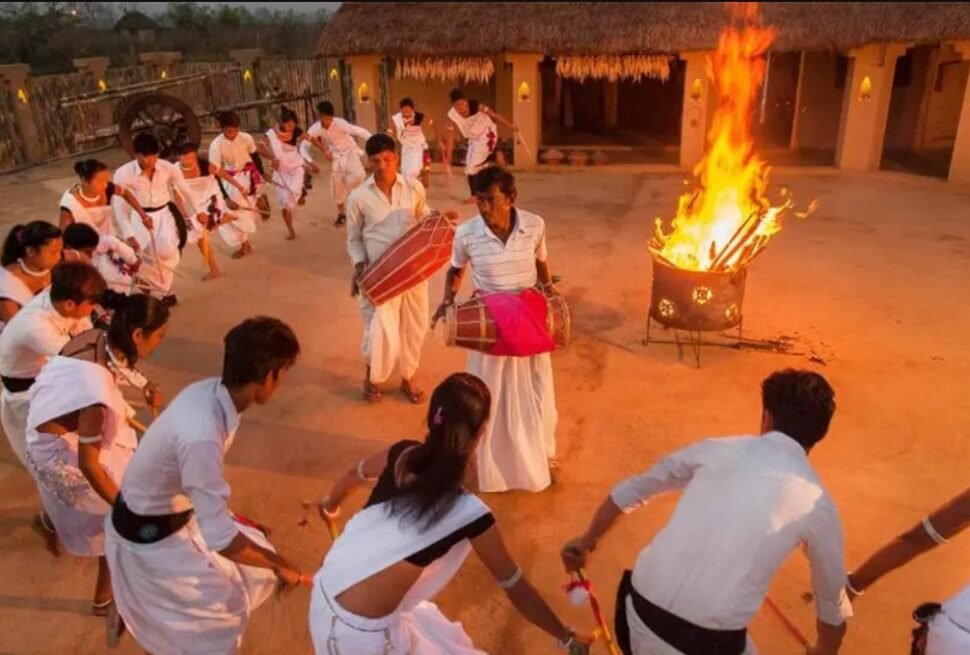
- Day 6: arrival in Sauraha, the village on the northern boundary of the park where the group stays for two nights, followed by a Tharu village visit and a traditional Tharu cultural dance performance in the evening.
- Day 7: a full day dedicated to jungle activities, structured across morning, midday, and afternoon.
The three core activities that make up Day 7 each expose visitors to a different part of the ecosystem, and each carries a different likelihood of a rhino sighting specifically:
- Morning guided jungle walk. Conducted on foot through buffer zone grassland and forest edge alongside a certified park naturalist. This is where one horned rhinos are most commonly encountered at genuinely close range, since walking allows the naturalist to move quietly and read the terrain and wind direction in a way a vehicle cannot. The naturalist reads the animal’s behaviour continuously and positions the group’s approach and retreat accordingly, which is the single most important safety factor of the entire activity.
- Rapti River canoe ride. A 45 to 60 minute float in traditional dugout boats, paddled by local boatmen, covering riverbank habitat where mugger crocodiles bask in the sun and Gangetic river dolphins occasionally surface. This activity is calmer and more scenic than the walk, and gives a completely different perspective on the park’s wetland habitat.
- Afternoon jeep safari. A vehicle based safari into the park’s central grassland zones, where rhino sightings are nearly guaranteed given how much of that habitat is prime rhino grazing ground, and where tiger sightings occur on approximately 25 to 35 percent of safaris depending on the season.
A few structural details of how the tour delivers these activities are worth listing plainly, since they directly affect the quality of the experience:
- A private vehicle is used throughout the tour, meaning the group is not combined with unrelated travelers on shared transport.
- A private, English speaking, Nepal Tourism Board licensed guide accompanies the group for the entire 10 day itinerary.
- A certified park naturalist joins specifically for the wildlife activities in Chitwan, working alongside the main guide, since jungle walks and safaris require park specific licensing and local ecological knowledge that a general tour guide does not carry.
- Because the full 10 day itinerary covers Kathmandu, Pokhara, and Chitwan with no trekking involved and a maximum altitude across the entire trip of only 1,592 metres at Sarangkot, the wildlife day in Chitwan requires no particular fitness beyond the ability to walk at a slow, steady pace for one to two hours, making it genuinely suitable for a wide range of ages and physical abilities.
On the subject of elephants specifically, since they are historically associated with jungle safaris in Nepal: elephant riding and elephant bathing activities have become increasingly recognized within the tourism and conservation community as raising genuine animal welfare concerns, and this tour does not include or promote either activity. The rhino, tiger, and bird focused activities described above do not require elephant involvement to deliver a genuinely close wildlife experience.
Safety Rules for Walking Among Wild Rhinos
A jungle walk in Chitwan is not a zoo experience, and it is worth being direct about what that means in practice. The animal in front of you weighs well over a tonne, can run faster than a human sprinter over short distances, and has poor eyesight relative to its hearing and sense of smell, which changes how a person should behave around it compared to, say, watching deer from a vehicle. The following practices are standard guidance followed by trained naturalists on foot safaris in rhino habitat generally, and they explain why the guide’s role matters as much as it does.
- Always walk in single file behind the naturalist, never ahead or spread out to the side.
- Maintain a substantial, guide directed distance from any rhino encountered, and never approach for a closer photograph independently of the guide’s instruction.
- Stay quiet. Loud talking, sudden laughter, or calling out to other members of the group can startle an animal that is relying heavily on hearing to track what is nearby.
- Avoid sudden movements, including quick arm motions to point at something or raise a camera.
- Wear muted, natural colored clothing rather than bright colors, since bold colors and patterns are more likely to draw attention.
- Avoid strong perfume, cologne, or scented products before a walk, given how much a rhino relies on smell.
- Never position yourself between a mother rhino and her calf, even at distance, since this is the situation most likely to provoke a defensive charge.
- If the naturalist signals to stop, freeze, or retreat, do so immediately and without asking why first. The guide is reading signals the group often cannot see, such as a shift in wind direction or a change in the animal’s ear and tail position.
- Know in advance that greater one horned rhinos, despite their size, cannot turn or corner as quickly as a person can, which is why trained guides may direct a group toward nearby trees or uneven ground as an escape route in the unlikely event of a charge.
- Pay attention to alarm calls from birds, langur monkeys, or deer during the walk. These are often the earliest warning of a large animal nearby, sometimes before the naturalist or the group can see it directly.
- Never attempt a walking safari independently without a licensed naturalist. Park regulations require a trained guide for exactly this reason, and the knowledge a naturalist brings, reading behaviour, positioning the group, and knowing the terrain, is the actual safety mechanism, not simply having another adult present.
None of this is meant to make the activity sound more dangerous than it is in practice. Serious incidents on guided jungle walks in Chitwan are rare precisely because these practices are followed consistently by trained naturalists on every walk, not occasionally. The point of listing the rules is that the safety record depends on the rules being followed every time, which is exactly what a certified naturalist is trained and licensed to do.
Why Responsible Tourism Keeps the Recovery Going
It is worth connecting the conservation history directly to the economics of visiting, because the two are more linked than most travelers realize. Nepal’s buffer zone system, introduced in 1997, was built specifically around the idea that local communities needed a direct financial stake in the park’s wildlife surviving, rather than seeing rhinos and tigers purely as a source of conflict with farming and grazing.
- A share of park entry revenue is legally allocated to buffer zone community development, funding schools, health posts, and infrastructure in villages bordering the park, including Sauraha.
- Local employment tied to tourism, guiding, naturalist work, lodge and homestay operation, canoe paddling, cultural performance, gives buffer zone residents an income stream that depends on wildlife remaining present and visible, which shifts incentives away from poaching or habitat conversion.
- Certified naturalist guiding itself is a direct outcome of this system: the naturalist role exists as a formal, licensed profession precisely because sustained visitor demand for wildlife activities created steady work for local people with the ecological knowledge to do it safely and well.
- Community based anti poaching reporting, where buffer zone residents alert park authorities to suspicious activity, has been credited by park authorities as a meaningful contributor to Nepal’s zero poaching years, and that willingness to report depends on communities seeing tangible benefit from the wildlife being protected.
None of this means every visitor’s trip is automatically contributing to conservation by default. It means the structure exists, and choosing an operator that uses licensed local naturalists, employs local staff, and supports community based activities such as the Tharu cultural evening built into Day 6 of our itinerary is what actually connects a booking to the system described above, rather than the connection being automatic. This is also why the details covered earlier in this article, morning walk with a certified naturalist, canoe ride with local boatmen, afternoon jeep safari, are not simply itinerary filler. Each one is a small transaction inside the same economic system that has kept Chitwan’s rhino population growing for five decades.
Frequently Asked Questions
How many one horned rhinos are there in Chitwan today?
The most recent national census, conducted in 2021, recorded 752 greater one horned rhinos across Nepal’s four protected areas, with Chitwan holding the large majority of that total based on the 2015 breakdown, when approximately 605 of the national total of 645 were counted specifically inside Chitwan. Our own trip page describes the current population as approximately 700 individuals nationally, which is consistent with the 2021 figure and the slower growth trend recorded since then.
Why did Chitwan’s rhino population almost go extinct?
Two pressures combined in the 1950s and 1960s. Roughly 70 percent of the jungle surrounding the rhino’s core habitat was cleared for farmland and settlement, largely following malaria eradication programs that opened the Terai to large scale human migration. At the same time, poaching for rhino horn intensified, made easier by the loss of forest cover that had previously given rhinos natural protection from hunters. Together these pressures took the population from around 800 animals in 1950 down to just 95 by the late 1960s, a decline of roughly 88 percent in under two decades.
What is the Gaida Gasti?
The Gaida Gasti, meaning Rhino Patrol, was a dedicated anti poaching force of 130 armed men deployed by the Nepalese government specifically to protect the surviving rhino population after the crisis of the 1960s became clear. It operated through a network of guard posts across the rhino’s remaining range and is widely credited as the intervention that stopped the decline and allowed the population to begin recovering. Its structure later evolved into the broader army backed protection system that still operates inside Chitwan today.
Is it safe to see rhinos on foot during a jungle walk?
Guided jungle walks led by a certified park naturalist have a strong safety record in Chitwan, but the activity does involve a genuinely wild animal and is treated with real caution by trained staff. Safety depends on following specific practices: staying in single file behind the guide, maintaining a guide directed distance, staying quiet, avoiding bright clothing and strong scents, and reacting immediately to any instruction to stop or retreat. A certified naturalist is trained to read a rhino’s behaviour, position the group correctly, and choose a safe route in advance, which is why walking safaris are never conducted without one.
What is the best time of year to see rhinos in Chitwan?
Rhinos are present in Chitwan year round and sightings on a jeep safari are considered nearly guaranteed regardless of season, since the central grassland zones the vehicles cover are prime rhino grazing habitat. That said, the dry winter and early spring months, roughly October through April, generally offer easier visibility since grass height is lower after the previous monsoon’s growth has died back, and river levels are lower for canoe rides. The monsoon months from June through September bring taller grass, higher river levels, and reduced access to some park sections.
How is the greater one horned rhino different from African rhinos?
The greater one horned rhino carries a single horn, while both African species, the white rhino and the black rhino, carry two. Its thick, deeply folded skin with raised bumps gives it an armor plated appearance not seen on African rhinos, which have smoother, more uniformly thick skin. It is also a wetland and tall grass floodplain specialist tied closely to rivers and seasonal flooding, whereas African rhinos are savanna and scrubland animals. The two groups do not overlap in range at all today, with the greater one horned rhino restricted to Nepal and adjoining lowland India.
Can tourists see tigers as well as rhinos in Chitwan?
Yes, though tiger sightings are far less certain than rhino sightings. Chitwan is home to approximately 128 Bengal tigers today, a substantial increase from the 82 breeding tigers recorded in a study covering 1995 to 2002. On an afternoon jeep safari, tiger sightings occur on approximately 25 to 35 percent of safaris depending on the season, meaning most visitors should treat a tiger sighting as a genuine bonus rather than something to expect on a single visit, while rhino sightings are considered close to guaranteed on the same activity.
Do elephants play a role in the rhino experience in Chitwan?
Historically, elephant back safaris and elephant bathing activities were widely offered in Sauraha, but elephant riding and bathing as tourist activities have increasingly been recognized as raising genuine animal welfare concerns, and responsible operators, including ours, do not include or promote them. Wildlife viewing in Chitwan today, including rhino sightings, is fully achievable through guided walking safaris, canoe rides, and jeep safaris, none of which require elephant involvement.
How many days should I spend in Chitwan to see wildlife properly?
Two nights, with one full dedicated activity day in between, is the standard structure used on our 10 Days Nepal Tour 2026, and it is generally enough to complete a morning jungle walk, a river canoe ride, and an afternoon jeep safari across a single well organized day, with the arrival evening used for a Tharu village visit and cultural dance performance. This structure balances a genuine wildlife experience against the rest of a 10 day itinerary that also covers Kathmandu and Pokhara.
Does visiting Chitwan actually help rhino conservation?
Visiting through an operator that uses licensed local naturalists and supports buffer zone community activities connects a booking to the same economic system that has underpinned Nepal’s rhino recovery since 1997, when the buffer zone program began sharing park revenue and employment with surrounding villages. That system gives local communities a direct financial incentive tied to wildlife remaining present, which reduces pressure toward poaching or habitat conversion. Visiting responsibly is not a substitute for the patrol work and law enforcement that protects the animals directly, but it is a meaningful part of the funding and incentive structure that keeps that protection in place.
Experience the Rhino Recovery Story for Yourself
The number worth holding onto from everything above is this: 95 animals in the late 1960s to roughly 700 today is not an abstract conservation statistic. It is the reason a guided jungle walk in Chitwan can reasonably promise a close encounter with a wild greater one horned rhino in 2026, something that would have been a rare, fragile hope fifty years ago.
- Our 10 Days Nepal Tour 2026 is a 10 day, 9 night itinerary covering Kathmandu, Pokhara, and Chitwan, built for travelers who want genuine cultural and wildlife depth without any trekking involved.
- Two nights are spent in Sauraha on the northern edge of the park, with a full day given entirely to the morning jungle walk, river canoe ride, and afternoon jeep safari described throughout this article, alongside a Tharu village visit and cultural dance evening.
- A private vehicle and a private, English speaking, Nepal Tourism Board licensed guide accompany the group for the full 10 days, with a certified park naturalist joining specifically for the Chitwan wildlife activities.
- The maximum altitude across the entire trip is only 1,592 metres at Sarangkot in Pokhara, and the itinerary is rated easy difficulty, suitable for a wide range of ages and fitness levels.
If the conservation story above has made the idea of standing near a wild rhino in Chitwan feel more real, and less like a generic wildlife brochure line, the next step is straightforward. Reach out to our team directly on WhatsApp at +977 9869225929 or by email at nexttripnepal@gmail.com to check availability and start planning your 2026 dates, or visit the full 10 Days Nepal Tour 2026 itinerary page for the day by day breakdown, pricing, and booking details.