Critical Safety Notice
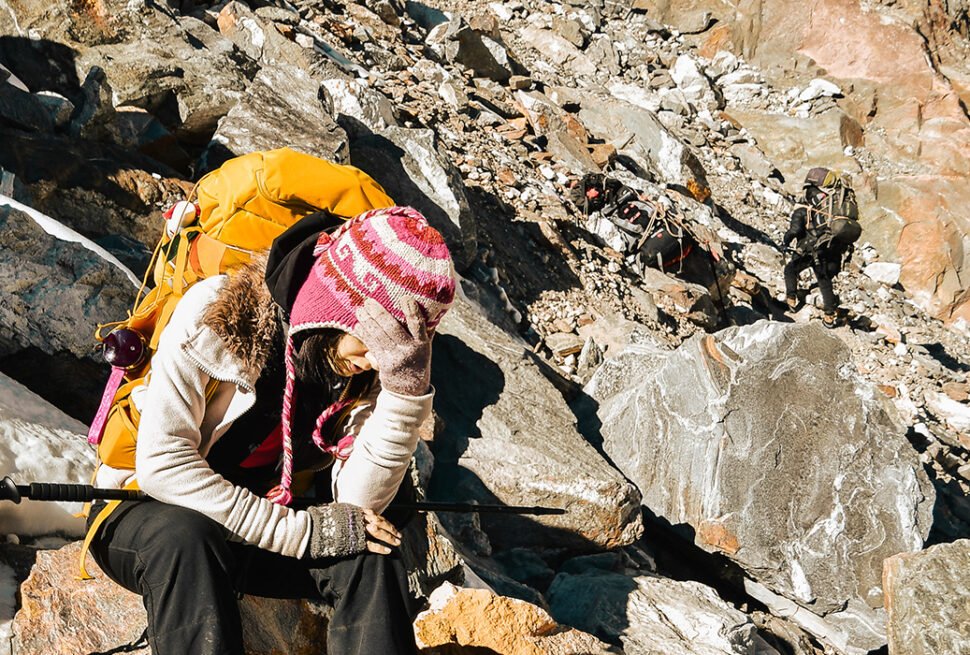
Altitude sickness kills trekkers every year in Nepal, including fit, experienced people with no underlying health conditions. The single most dangerous decision a trekker makes is ignoring symptoms and continuing to ascend. If you take nothing else from this guide: when in doubt, go down. Descent is the only treatment that works without fail.
Quick Reference: Altitude Sickness at a Glance
| First symptoms typically appear | Above 2,500m (8,200 ft) |
| High risk zone on treks | Above 3,500m |
| Who can get it | Anyone — fitness does not protect you |
| Best prevention | Slow ascent: max 300 to 500m per day above 3,000m |
| Primary medication | Acetazolamide (Diamox) 125mg twice daily |
| Treatment that always works | Descent — immediately and without delay |
| Helicopter evacuation cost | USD 3,000 to 10,000 depending on altitude and location |
| Insurance requirement | Minimum USD 100,000 medical + helicopter evacuation to 6,000m |
Altitude sickness is the most serious health risk facing trekkers in Nepal. It affects first-time visitors and experienced mountaineers, fit athletes and untrained beginners. It has no predictable pattern: a trekker who sailed through Everest Base Camp last year can develop severe altitude illness on Annapurna Base Camp this year. A 65-year-old with no prior high-altitude experience may ascend to 5,000m with no symptoms while a 25-year-old marathon runner struggles at 3,500m.
This guide covers everything trekkers in Nepal need to know: the science of what happens to your body at altitude, the three categories of altitude illness and how to recognise each, proven prevention strategies, medication options, trek-by-trek risk profiles for Everest Base Camp, Annapurna Base Camp, Manaslu Circuit, and Langtang Valley, helicopter evacuation logistics, insurance requirements, and the dangerous myths that send people to hospital every season.
What Is Altitude Sickness? The Science Explained
Altitude sickness occurs when your body cannot adapt quickly enough to the reduced oxygen available at high elevation. At sea level, air contains approximately 21 percent oxygen. The percentage remains constant at altitude, but air pressure decreases as you go higher, meaning each breath delivers fewer oxygen molecules to your lungs. At 3,500m, your lungs receive about 40 percent less oxygen per breath than at sea level. At 5,000m (Everest Base Camp), that reduction reaches 50 percent.
The body has a remarkable ability to adapt to reduced oxygen through a process called acclimatisation. Your breathing rate increases, your kidneys produce more erythropoietin (EPO) to stimulate red blood cell production, and your blood chemistry changes to carry oxygen more efficiently. These adaptations take days to weeks to complete. Altitude sickness occurs when you ascend faster than your body can complete these adjustments.
The pressure difference also affects fluids in your body. At altitude, fluid can leak from blood vessels into surrounding tissue, including the brain (causing High Altitude Cerebral Oedema, HACE) and the lungs (causing High Altitude Pulmonary Oedema, HAPE). These are the life-threatening manifestations of what begins as ordinary Acute Mountain Sickness (AMS).
The medical term for the oxygen shortfall at altitude is hypoxia. Mild hypoxia causes the familiar headache and fatigue of AMS. Severe hypoxia, if your body does not acclimatise or you do not descend, progresses to organ failure and death. The progression from mild AMS to life-threatening HACE or HAPE can occur in hours under the wrong conditions.
The Three Types of Altitude Illness
1. Acute Mountain Sickness (AMS)
Acute Mountain Sickness is the most common form of altitude illness and the entry point for all altitude-related disease. AMS typically develops within 6 to 12 hours of arrival at a new higher altitude, though it can appear as quickly as 1 hour in rapid ascents. The hallmark symptom is headache, usually described as a dull pressure headache behind the eyes or across the forehead, accompanied by at least one of: fatigue, loss of appetite, nausea, dizziness, or difficulty sleeping.
AMS is graded from mild to severe. Mild AMS is uncomfortable but not immediately dangerous and often resolves with rest and hydration at the same altitude without requiring descent. Severe AMS requires descent and is the warning stage before HACE develops. The key diagnostic principle is that any headache developing within 24 hours of arrival at a new altitude should be treated as AMS until proven otherwise.
2. High Altitude Cerebral Oedema (HACE)
HACE is severe AMS that has progressed to brain swelling. As fluid accumulates inside the skull, neurological function deteriorates in a recognisable pattern. The first sign is typically worsening headache that does not respond to ibuprofen or paracetamol, followed by ataxia (loss of coordination) and then altered mental status ranging from confusion and disorientation to hallucination and unconsciousness.
The “tandem gait test” is the standard field test for HACE: ask the person to walk heel-to-toe in a straight line for 10 steps. A healthy person can do this without difficulty. A person developing HACE will stagger, step off the line, or be unable to complete the test. This is a reliable early indicator that must be acted on immediately.
HACE can progress from first symptoms to coma in as little as 12 hours. A person with confirmed HACE must descend immediately, regardless of time of day, weather conditions, or logistical difficulty. HACE treated with prompt descent and dexamethasone has a high survival rate. HACE that is not treated with descent has a high death rate. There is no intermediate option.
3. High Altitude Pulmonary Oedema (HAPE)
HAPE is a different mechanism from HACE: fluid accumulates in the lungs rather than the brain. It is the most common cause of altitude-related death among trekkers in Nepal. HAPE typically develops between 2 and 4 days after arrival at a new altitude, most commonly on the second night at a given elevation. It progresses through four stages:
Stage 1: Reduced exercise tolerance, dry cough, slight breathlessness on exertion beyond what altitude alone would explain. Easy to dismiss or attribute to fitness.
Stage 2: Breathlessness at minimal exertion, persistent cough that may produce pink or white frothy sputum, decreased walking speed. At this stage the condition is serious and descent is urgent.
Stage 3: Breathlessness at rest, inability to lie flat (fluid in lungs makes lying down feel suffocating), cyanosis (blue tinge to lips), gurgling sounds from the chest audible to bystanders.
Stage 4: Altered consciousness, extreme breathlessness, inability to walk. Fatal without immediate intervention.
What makes HAPE particularly dangerous is that it can develop in people with only mild or no AMS. It is possible to feel generally well and then develop Stage 2 or 3 HAPE rapidly. A cough that develops or worsens at altitude and does not improve with rest should always be evaluated for HAPE.
| Condition | Key Symptoms | Danger Level | Immediate Action |
|---|---|---|---|
| Mild AMS | Headache, fatigue, nausea, poor sleep | Low (if not ascending) | Rest, hydrate, do not ascend |
| Severe AMS | Severe headache not responding to medication, vomiting, extreme fatigue | High | Descend, do not wait for tomorrow |
| HACE | Ataxia (can’t walk straight), confusion, loss of consciousness | Critical — hours from death | Immediate descent + dexamethasone |
| HAPE | Breathless at rest, gurgling chest, persistent cough, pink frothy sputum | Critical — most common killer | Immediate descent + nifedipine + oxygen |
The Lake Louise Score: Self-Assessing Your Altitude Symptoms
The Lake Louise Score (LLS) is the standard tool used by wilderness medicine practitioners to assess AMS severity. It was developed at the 1991 International Hypoxia Symposium in Lake Louise, Alberta, and first published in the landmark consensus paper: Roach RC, Bartsch P, Hackett PH, Oelz O. “The Lake Louise Acute Mountain Sickness Scoring System.” In: Hypoxia and Molecular Medicine, 1993 — now one of the most cited altitude medicine papers in history (PubMed ID: 1483800). You can use it yourself to evaluate your own condition or that of a fellow trekker. The score rates five symptoms from 0 (none) to 3 (severe): headache, gastrointestinal symptoms, fatigue or weakness, dizziness or lightheadedness, and difficulty sleeping. A total score of 3 or more with headache present indicates AMS. A score of 5 or more indicates severe AMS.
The LLS is a communication tool, not a substitute for medical judgment. A score of 4 with an experienced guide present and 500m of descent available is a different situation from a score of 4 alone on a remote section of the Manaslu Circuit with a storm approaching. The score tells you where you are on the spectrum; the decision about what to do requires context.
Who Gets Altitude Sickness? The Truth About Risk
This is where most of the dangerous misconceptions live. Understanding who actually gets altitude sickness is one of the most important safety insights a Nepal trekker can have, because overconfidence based on incorrect beliefs about personal immunity is a genuine killer.
Fitness is not a protective factor. The single most persistent myth about altitude sickness is that fit people are less susceptible. Multiple studies have confirmed that cardiovascular fitness has no correlation with altitude sickness susceptibility. An Olympic marathon runner and a sedentary office worker ascending to the same altitude at the same rate have approximately equal risk of developing AMS. Fitness affects your energy reserves, recovery time, and trekking pace, but it does not affect how well your respiratory system and fluid regulation respond to hypoxia. Well-conditioned athletes sometimes push themselves harder and faster precisely because they feel physically capable, which increases their risk compared to a cautious, slower-paced beginner.
Prior experience at altitude does not guarantee future safety. Having completed the Everest Base Camp trek in 2024 without AMS does not mean you are immune in 2026. Altitude sickness susceptibility varies between individuals and across different exposures in the same individual. Some people are consistently resistant; others have variable responses. Do not treat a previous successful high-altitude trek as evidence that you do not need to take acclimatisation precautions.
Age has limited correlation with susceptibility. Young trekkers are not more resistant than older ones. In fact, younger trekkers in their 20s and 30s are statistically over-represented in altitude illness cases, partly because they tend to underestimate risk and partly because they are more likely to push their pace. Older trekkers who take the standard “climb high, sleep low” approach often acclimatise better than younger ones who rush.
Nationality and ethnicity matter somewhat but not in the way most people assume. People from high-altitude regions (Tibetan plateau, Andean highlands, Ethiopian highlands) have genetic adaptations that reduce altitude illness risk. Sherpa guides have specific genetic advantages — a variant of the EPAS1 gene that improves oxygen processing — that is not shared by lowlanders of any ethnicity. A Sherpa guide ascending with you does not indicate the altitude is safe for you at the pace they are setting.
No medical certificate is required to trek in Nepal and this creates a false sense of approval. There is no pre-trek medical screening, health certification, or fitness test required to obtain a trekking permit for any Nepal route, including Everest Base Camp at 5,364m and Manaslu Circuit at 5,160m. Trekkers with undiagnosed cardiac conditions, asthma, sleep apnea, or blood disorders can obtain all necessary permits and begin trekking without any medical assessment. This is a gap in the system that leads to preventable tragedies each year. Just because you were issued a permit does not mean your health is compatible with the altitude you are planning to reach. A pre-trek consultation with a doctor familiar with high-altitude medicine is strongly recommended before any Nepal trek above 3,500m.
Proven Prevention: The Golden Rules of Altitude Safety
Rule 1: Ascend Slowly
The universal, evidence-based principle of altitude acclimatisation is simple: above 3,000m, do not increase your sleeping altitude by more than 300 to 500m per night. For every 1,000m of altitude gained above 3,000m, spend one full acclimatisation rest day at the same elevation before ascending further.
The “sleeping altitude” is what matters, not the daytime maximum. You can and should “climb high and sleep low” — ascending to a higher elevation during the day and returning to sleep at a lower one. This is the standard technique used by Himalayan mountaineers and is built into the design of the best trekking itineraries. The Everest Base Camp trek from Lukla to Base Camp, for example, includes acclimatisation days at Namche Bazaar (3,440m) and Dingboche (4,410m) precisely to implement this principle.
Rule 2: Stay Hydrated
Dehydration accelerates the symptoms of AMS and impairs your body’s ability to acclimatise. At altitude, you lose water faster than at sea level through increased breathing rate and drier air. The guideline for high-altitude trekking is 3 to 4 litres of fluid per day, significantly more than the standard 2 litres recommended at sea level. Urine colour is a reliable indicator: pale yellow indicates adequate hydration; dark yellow or amber indicates dehydration. Use purified or boiled water only — do not drink untreated stream water regardless of how clear it appears.
Rule 3: Eat Well, Particularly Carbohydrates
Loss of appetite is a common symptom of AMS and can itself worsen altitude illness by depriving your body of the energy it needs for acclimatisation. Make a deliberate effort to eat regular meals even when not hungry. Carbohydrates are preferred at altitude because they require less oxygen to metabolise than fats or proteins, making them a more efficient energy source when oxygen is limited. Dal bhat, the standard Nepal trekking meal of rice and lentils, is actually an excellent altitude food for this reason.
Rule 4: Avoid Alcohol and Sedatives
Alcohol suppresses breathing rate, worsening the hypoxia already present at altitude. It also disrupts sleep quality, and adequate sleep is critical for acclimatisation. Even a small amount of alcohol at high altitude has a disproportionate effect compared to the same amount at sea level. Sleeping pills (benzodiazepines) similarly suppress the respiratory drive and can trigger episodes of central sleep apnea at altitude, reducing overnight oxygen saturation. Both should be avoided above 3,000m.
Rule 5: Know When to Stop
The cardinal rule that saves lives: never ascend with symptoms of AMS, no matter how mild. If you have a headache, feel dizzy, or are unusually fatigued at a new altitude, stay at the same elevation until symptoms fully resolve before continuing upward. If symptoms worsen at the same elevation, descend. Do not let schedule pressure, peer pressure, financial investment in the trek, or the desire to reach a summit override this rule. Every year trekkers die because they pushed through symptoms to avoid “wasting” their trip. Descending 500m for one day and reascending after recovery is not wasting your trip — it is the correct response that allows you to complete it.
Acclimatisation: What Your Body Is Actually Doing
Understanding the physiology of acclimatisation helps you respect the process rather than fight it. When you arrive at altitude, the following sequence of adaptations occurs:
Immediate response (hours): Your breathing rate increases as chemoreceptors in the brain detect falling blood oxygen. This is why you feel breathless after mild exertion that would cause no problem at sea level. The increased breathing also causes you to exhale more carbon dioxide than normal, which disturbs blood chemistry and can cause dizziness.
Short-term acclimatisation (days 1 to 3): Your kidneys begin excreting bicarbonate to compensate for the CO2 loss, restoring blood pH toward normal. Blood plasma volume reduces as your body concentrates red blood cells. Your heart rate during rest and exertion remains elevated. This is the period when AMS symptoms, if they occur, are most intense.
Medium-term acclimatisation (days 3 to 7): Your kidneys produce more erythropoietin, stimulating new red blood cell production. Your cells increase production of 2,3-DPG, a compound that helps haemoglobin release oxygen more readily at low partial pressures. You begin to feel meaningfully better at a given altitude than you did in the first two days.
Long-term acclimatisation (weeks): Full red blood cell adaptation takes 4 to 6 weeks. Long-term visitors to altitude (expedition climbers, researchers at high-altitude stations) develop haematocrit levels 20 to 30 percent above sea-level normal. This degree of acclimatisation is not achieved on a 10 to 14 day Nepal trek, which is why trekkers remain more susceptible than permanent high-altitude residents throughout their visit.
The practical implication: most trekkers on the Everest Base Camp or Manaslu Circuit itinerary are in a state of partial acclimatisation for the entire trek. They are functioning, and they can complete the trek safely with proper protocol, but they are operating with a reduced physiological margin. This is why rushing the schedule is so dangerous — there is not a large safety buffer to draw from.
Diamox (Acetazolamide): The Complete Guide for Nepal Trekkers
Acetazolamide, sold under the brand name Diamox, is the only medication with strong clinical evidence for both prevention and treatment of AMS. It is a carbonic anhydrase inhibitor that works by stimulating breathing through its effect on blood chemistry, essentially mimicking the effect of natural acclimatisation and speeding the kidney’s bicarbonate excretion. It does not mask symptoms of altitude illness — it prevents AMS by helping the acclimatisation process work faster.
Prevention Dosage
The standard prevention dosage endorsed by major wilderness medicine organisations including the Wilderness Medical Society (WMS) and the International Society for Mountain Medicine (ISMM) is 125mg twice daily (morning and evening). Some sources recommend 250mg twice daily, but the 125mg dose has been shown to provide similar protection with fewer side effects. Begin taking Diamox 24 hours before your planned ascent above 3,000m and continue until you have spent 2 to 3 days at your highest sleeping elevation or have begun your descent.
Treatment Dosage
For established AMS, the treatment dose is 250mg twice daily, combined with rest at the same altitude. If symptoms do not improve within 24 hours on this dose, descent is required.
Side Effects
Diamox side effects are common but generally manageable. Tingling or numbness in the fingers, toes, and face (paraesthesia) occurs in a large proportion of users and is harmless. Increased urination — diuresis — occurs because Diamox works through the kidneys. Carbonated drinks may taste flat or strange. Mild nausea is possible. These side effects are uncomfortable but not dangerous.
Diamox is derived from sulphonamide antibiotics and should not be used by people with a documented sulpha allergy. People who are allergic to sulpha drugs, certain diuretics, or the medication glaucoma treatment dorzolamide should consult their doctor before using Diamox and may require an alternative approach. The test-dose principle: take Diamox 2 to 3 days before your trek departure to verify you tolerate it before relying on it at altitude.
What Diamox Does Not Do
Diamox is not a shortcut to faster acclimatisation that removes the need for a proper ascent schedule. It reduces AMS risk but does not eliminate it. Trekkers on Diamox who rush their ascent schedule still develop AMS and can progress to HACE or HAPE. Diamox is an adjunct to proper acclimatisation, not a substitute for it. It does not treat HACE or HAPE. And it does not guarantee protection.
Other Altitude Medications
Dexamethasone: A corticosteroid used for treatment of severe AMS and HACE. Standard dose 4mg every 6 hours orally or by injection. Dexamethasone does not treat the underlying altitude illness — it suppresses the inflammatory response and buys time for descent. Using it to continue ascending without descent is extremely dangerous because it can mask deterioration while the underlying condition worsens.
Nifedipine: A calcium channel blocker that reduces pulmonary artery pressure. Used for treatment of HAPE. Standard dose 30mg extended release every 12 hours. Nifedipine is a treatment for acute HAPE in conjunction with immediate descent — not a preventive medication for routine use.
Sildenafil (Viagra): Used by some mountaineers as HAPE prophylaxis in high-risk individuals. Not standard trekking practice. Requires specific medical advice.
Ibuprofen: Evidence suggests ibuprofen 600mg three times daily beginning 6 hours before ascent may provide some AMS prevention benefit, though the evidence is weaker than for Diamox. Useful for headache management in AMS. Not suitable for people with gastrointestinal issues or kidney disease.
Altitude Sickness on the Everest Base Camp Trek
The Everest Base Camp trek is the highest-altitude commercial trekking route in the world that is completed without supplemental oxygen. The standard itinerary takes trekkers from Lukla (2,840m) to Everest Base Camp (5,364m) and Kala Patthar (5,644m) over 12 to 14 days, with two critical acclimatisation days built into the schedule. The elevation gain of approximately 2,800m above 2,840m places every trekker in the serious altitude risk zone for the majority of the trek.
Elevation Profile and Risk Points
The EBC trek passes through the following key elevations where altitude illness risk rises significantly:
Namche Bazaar (3,440m): The first major acclimatisation stop. Two nights are typically spent here before continuing. The day hike to Everest View Hotel (3,880m) on the rest day implements the “climb high, sleep low” principle. Many trekkers first feel AMS symptoms between Phakding and Namche on the ascent from Lukla. The steep 600m climb to Namche over 3 to 4 hours is one of the physically most demanding sections and should be taken slowly.
Tengboche (3,860m): The night here marks the first camp above the Namche acclimatisation baseline. Some trekkers develop AMS symptoms overnight at Tengboche. Sleep quality typically deteriorates at this elevation compared to Namche.
Dingboche (4,410m): The second major acclimatisation stop. One or two extra nights here, with a day hike to Nagarjun Hill (5,100m), form the second key acclimatisation stage. HAPE cases on the EBC trek are most commonly reported between Tengboche and Dingboche, where the altitude gain is large and the itinerary moves quickly.
Lobuche (4,940m): Above 4,900m the air provides approximately 50 percent of sea-level oxygen. Overnight at Lobuche is frequently the most difficult night of the trek for many trekkers — persistent headache, poor sleep, and significant breathlessness on exertion are common even in people who have had no prior symptoms.
Gorak Shep (5,164m) and Base Camp (5,364m): At this elevation, helicopter evacuation for altitude illness is more expensive and weather-dependent. The teahouses at Gorak Shep are the last accommodation before Base Camp and the coldest on the route, adding a thermal stress to the altitude stress. Most acute incidents requiring helicopter evacuation on the EBC route occur between Dingboche and Lobuche.
Statistics and Reality
Studies suggest that approximately 50 percent of EBC trekkers experience some degree of AMS during the trek. Around 1 to 2 percent require helicopter evacuation for altitude-related illness. Fatalities from altitude illness on the EBC trek are estimated at 3 to 10 per year across all nationalities, though exact statistics are not published by the Nepal government. The vast majority of serious altitude illness cases occur in trekkers who deviated from standard acclimatisation schedules or ignored early warning symptoms.
Acclimatisation Schedule That Works
The standard 14-day EBC itinerary from Lukla is designed around proper acclimatisation. Deviating from it — whether by skipping Namche rest days, taking a faster helicopter-assisted approach, or pushing through symptoms — significantly increases risk. The acclimatisation days feel wasted to trekkers who feel well. They are not. They are the investment that makes the rest of the trek safe.
Altitude Sickness on the Annapurna Base Camp Trek
The Annapurna Base Camp trek reaches 4,130m — significantly lower than Everest Base Camp but still well into the serious altitude illness zone. The key difference from EBC is the ascent profile: the ABC route gains altitude quickly in the gorge section between Deurali (3,230m) and the sanctuary, and does not include the long gradual acclimatisation of the EBC approach from Namche to Lobuche.
Most trekkers on the standard 10-day ABC itinerary spend the night before the sanctuary at Deurali (3,230m) and ascend to MBC (3,700m) and ABC (4,130m) on the following day — a gain of 900m in one day. This is on the upper edge of safe ascent rate and makes the acclimatisation day at Himalaya (2,920m) or Deurali critical.
The ABC sanctuary at 4,130m sits in a bowl surrounded by peaks. The physical setting, while spectacular, means there is no gradual approach — you are either in the gorge or in the sanctuary, with a rapid altitude transition between them. HAPE cases on the ABC trek are most commonly reported on the night of arrival at MBC or ABC.
AMS symptoms at ABC itself are very common. Some degree of headache is experienced by the majority of trekkers on their first night in the sanctuary. The guideline is that mild headache at ABC that responds to ibuprofen and improves overnight does not require descent. Headache that worsens overnight, does not respond to medication, or is accompanied by ataxia, confusion, or breathing difficulty requires immediate descent regardless of the time.
Read our detailed month-by-month ABC guide for season-specific acclimatisation advice.
Altitude Sickness on the Manaslu Circuit Trek
The Manaslu Circuit is the highest standard trekking route in Nepal, crossing the Larkya La Pass at 5,160m. It is also the most remote of the major Nepal treks, with limited helicopter access on the remote northern section and fewer established rescue resources than the Everest or Annapurna regions. This combination of extreme altitude and limited rescue infrastructure makes altitude illness management on Manaslu particularly critical.
The Manaslu Circuit’s altitude profile presents a specific risk: after several days of relatively moderate altitude through the Budi Gandaki valley, trekkers ascend from Samagaon (3,530m) to Samdo (3,860m) and then to Dharamsala/High Camp (4,460m) in two rapid ascent days. The night at Dharamsala before the Larkya La crossing is the highest camp on the circuit, and many trekkers experience their most difficult night of altitude symptoms here.
The Larkya La Pass crossing itself (5,160m) should be treated with respect. The standard advice is to cross early in the morning, before afternoon clouds develop, and to have assessed your condition carefully the previous evening. Trekkers who felt significantly unwell at Dharamsala should not attempt the pass crossing without consulting their guide and considering whether their symptoms indicate a risk that outweighs the logistical difficulty of retreat from that point.
Helicopter access on the Manaslu Circuit is limited. On the remote northern sections above Samagaon, landing zones are limited and helicopter operators require advance notice and favourable weather. Self-rescue capacity — the ability to descend on foot to a lower altitude — is the primary response to altitude illness on Manaslu, making guides with specific Manaslu experience and first aid training essential. For a first hand account of how this plays out day by day, see our trekker’s Manaslu Circuit trek experience.
Altitude Sickness on the Langtang Valley Trek
The Langtang Valley trek reaches Kyanjin Gompa at 3,870m, with the option to ascend Tserko Ri (4,984m) for views. It is considered the most accessible high-altitude trek from Kathmandu and is often recommended for first-time Nepal trekkers. The altitude risk, while present, is lower than on EBC, ABC, or Manaslu because the maximum sleeping altitude of Kyanjin Gompa (3,870m) is well below the 5,000m+ levels of the other major routes.
However, Langtang is not without altitude risk. Trekkers who fly or drive from Kathmandu and immediately begin ascending to Kyanjin Gompa over 3 to 4 days can still develop AMS. The ascent from Ghora Tabela (2,970m) to Kyanjin Gompa (3,870m) in one day is a 900m gain that exceeds the recommended daily maximum above 3,000m.
The optional ascent of Tserko Ri (4,984m) from Kyanjin Gompa as a day trip is generally considered safe because you return to sleep at 3,870m, implementing the climb high, sleep low principle. However, the 2,000m+ round-trip elevation gain in one day is physically and physiologically demanding and should only be attempted after at least one night of acclimatisation at Kyanjin Gompa.
Helicopter Evacuation in Nepal: What You Need to Know
Nepal’s mountain rescue helicopter network is one of the most active in the world, with multiple operators running dedicated high-altitude rescue aircraft out of Kathmandu and Lukla. Understanding how the system works before you need it is essential.
How It Works
When a trekker requires emergency evacuation, the process typically begins with the guide or trekker contacting the trekking agency by phone or radio. The agency contacts an insurance company (if coverage is confirmed) or the trekker’s emergency contact. A rescue helicopter is dispatched from the nearest operational base. Flight time from Kathmandu to Namche Bazaar is approximately 45 minutes in ideal conditions; to Gorak Shep or Lobuche adds another 15 to 20 minutes. Weather is the primary limiting factor — high winds, cloud cover, or precipitation can delay rescue by hours or, in extreme cases, days.
Cost
Helicopter evacuation costs in Nepal are significant. A standard evacuation from Namche Bazaar (3,440m) to Kathmandu costs approximately USD 3,000 to 4,000. From Dingboche (4,410m) or higher: USD 4,000 to 6,000. From Gorak Shep or the high camps on Manaslu: USD 6,000 to 10,000. These costs are paid at the time of rescue or billed to your insurance company if you have appropriate coverage. Without insurance, you or your family are responsible for the full amount, which must typically be arranged within hours.
The Insurance Connection
Most helicopter operators in Nepal will not fly without confirmation of insurance coverage or a cash guarantee. This means that without prior confirmation that your insurance policy covers helicopter evacuation to the altitude where you are located, the rescue may be delayed while financial arrangements are made — a delay that can be critical in a HACE or HAPE emergency. Pre-confirm with your insurer before departure that your policy covers helicopter evacuation to the altitudes on your specific itinerary.
Travel Insurance for Altitude Sickness in Nepal: What Your Policy Must Cover
Nepal trekking insurance is not optional. The mountain search and rescue system in Nepal operates on the assumption that trekkers have insurance coverage. Without it, you are personally liable for costs that can exceed USD 10,000 for a helicopter evacuation alone, plus hospital costs in Kathmandu that can add thousands more.
Minimum Coverage Requirements
Your policy must specifically cover: emergency medical treatment to USD 100,000 minimum (USD 200,000 preferred), helicopter evacuation to the maximum altitude on your itinerary (6,000m for EBC; 5,200m for Manaslu; 5,000m for ABC/Tserko Ri), medical repatriation to your home country, trip interruption and cancellation. Most standard travel insurance policies do not meet these requirements. You must read the altitude exclusions in your policy carefully and purchase supplemental high-altitude coverage if needed.
Altitude Exclusion Clauses
Many standard travel insurance policies exclude medical coverage above 4,000m or even above 3,000m as part of their “high-risk activity” exclusions. Some explicitly exclude trekking. If your policy has an altitude cap below the maximum elevation of your trek, you are uninsured for the most critical evacuation scenario — the one where you are highest and most at risk. Examples of policies that work for Nepal trekking include specialist adventure travel insurers. When comparing policies, ask the insurer directly: “Does this policy cover helicopter evacuation from 5,364m due to altitude sickness?” If they cannot answer clearly, find another insurer.
The Insurance Fraud Warning
Nepal’s helicopter rescue industry has had documented fraud cases where rescue agencies inflated billing, fabricated rescues, or colluded with trekking companies to generate fraudulent insurance claims. In early 2026, Nepal’s Central Investigation Bureau arrested executives from multiple rescue agencies following an investigation into systematic insurance fraud. As a trekker, protect yourself: only authorise helicopter evacuations through your trekking company or directly through verified insurance emergency lines. Do not allow unknown third parties to arrange your rescue and billing on your behalf without oversight from your insurer.
Recommended Approach
Purchase insurance before you book your trek. Read the policy document, not just the summary. Confirm altitude and helicopter evacuation coverage in writing with your insurer. Save the 24-hour emergency number from your insurer in your phone before you leave home. Share the policy number with your guide on Day 1. Keep a physical copy of your policy at the bottom of your pack.
Altitude Sickness Myths That Get Trekkers Killed
The following myths are directly responsible for deaths and serious illness among Nepal trekkers each year. They persist because they contain a grain of truth that is extrapolated incorrectly, or because they provide psychological comfort that overrides sound judgment.
Myth 1: “I am fit so I won’t get altitude sickness.” False, as established earlier. Fitness has no protective effect on altitude illness susceptibility. If anything, fit trekkers are at slightly elevated risk because they move faster, which increases the rate of ascent.
Myth 2: “I had it easy last time so I’ll be fine this time.” Altitude susceptibility varies between exposures. Prior success is not predictive of future safety. Approach each high-altitude trek as though it is your first.
Myth 3: “Garlic soup prevents altitude sickness.” Garlic soup is the traditional remedy offered at teahouses across the Annapurna and Everest regions. It has no clinical evidence supporting any effect on altitude sickness. It is a teahouse tradition with no medical basis. Enjoy it because it tastes warm and comforting; do not rely on it for altitude protection.
Myth 4: “Oxygen solves altitude sickness.” Supplemental oxygen temporarily improves the symptoms of AMS, HACE, and HAPE but does not treat the underlying condition. When oxygen is withdrawn, symptoms return. More dangerously, trekkers who feel better on oxygen sometimes decide they can continue ascending with oxygen available — this is a path to serious illness. Oxygen is a stabilisation measure while organising descent, not an alternative to descent.
Myth 5: “I can tough it out — it will pass.” Some mild AMS symptoms do resolve with rest at the same altitude. But severe AMS, HACE, and HAPE do not get better without descent. The progressive nature of these conditions means that waiting to see whether symptoms improve is gambling with your life. The rule is: if symptoms are worsening at the same altitude over 12 to 24 hours, descend.
Myth 6: “I don’t need a guide because the trail is well-marked.” Trail marking is irrelevant to altitude illness management. What a guide provides in altitude illness terms is experience in recognising early symptoms, knowledge of the fastest descent route, the ability to communicate with rescue services, and the authority to override a trekker’s wish to continue ascending when they should descend. Guides cannot prevent altitude illness, but they can ensure the correct response to it happens in time. Self-guided trekkers who develop HACE frequently make poor decisions about their condition because HACE impairs judgment — the very faculty needed to recognise that you need help.
Myth 7: “I took Diamox so I’m protected.” Diamox significantly reduces AMS risk but does not eliminate it. Trekkers on Diamox who ascend too fast still develop AMS. Diamox does not prevent HAPE and provides only partial protection against HACE. It is an addition to a safe acclimatisation schedule, not a replacement for one.
Myth 8: “Drinking more water prevents altitude sickness.” Adequate hydration is important for acclimatisation and helps prevent dehydration-related worsening of AMS. But drinking large volumes of water does not prevent altitude sickness and can cause hyponatraemia (dangerous low blood sodium) if taken to excess. 3 to 4 litres per day is appropriate; more than this without specific medical indication is counterproductive.
When to See a Doctor Before Your Trek
A pre-trek consultation with a doctor who has experience in travel medicine or wilderness medicine is strongly recommended for any Nepal trek above 3,500m. At this consultation you should discuss: your personal and family history of altitude illness, any cardiovascular conditions (including hypertension), respiratory conditions (asthma, COPD, sleep apnea), renal conditions that affect fluid regulation, sickle cell trait or disease, allergies to sulpha drugs (relevant for Diamox use), and current medications that may interact with altitude or with altitude medication.
People with the following conditions should obtain specific medical clearance before trekking above 4,000m: history of HACE or HAPE (highest recurrence risk), significant cardiac disease or recent cardiac events, severe asthma, severe sleep apnea, severe anaemia, sickle cell disease, and pregnancy (altitude above 3,000m during pregnancy requires careful individual assessment).
In Kathmandu, CIWEC Hospital Travel Medicine Center is the primary specialist facility for pre-trek medical consultations and altitude illness treatment. They have extensive experience with Nepal trekking conditions and can provide personalised altitude illness risk assessment.
The STOP Principle: A Decision Framework for the Trail
When you or a member of your group develops symptoms at altitude, use the STOP framework developed by wilderness medicine educators:
S — Stop and assess. When someone develops symptoms, stop trekking immediately. Sit down, rest, drink water, and systematically evaluate the symptoms using the Lake Louise Score. Do not continue walking while assessing.
T — Treat at the same altitude. For mild AMS, rest at the same elevation, hydrate, take ibuprofen for headache, and do not ascend for at least 24 hours. Monitor whether symptoms improve, stay the same, or worsen.
O — Observe and reassess. After 12 to 24 hours of rest at the same altitude, reassess. If symptoms have fully resolved: continue ascent cautiously, watching for recurrence. If symptoms are unchanged: consider descending 300 to 500m and reassessing. If symptoms are worsening: descend immediately.
P — Plan for evacuation. If descent is required, begin planning the logistics immediately — do not wait for symptoms to reach a critical level. Identify the fastest descent route, contact your trekking agency, confirm insurance coverage, and if HACE or HAPE is suspected, begin administering appropriate medication (dexamethasone for HACE, nifedipine for HAPE) while organising descent. Never wait for a helicopter before descending — descend on foot and allow the helicopter to intercept you at a lower elevation if needed.
Altitude Sickness in Nepal: Complete FAQ (2026)
Every question trekkers commonly ask about altitude sickness in Nepal, answered with medically grounded, factual information. Covers AMS, HACE, HAPE, Diamox, insurance, helicopter evacuation, and trek-specific risks.
How do I know if I have altitude sickness or just normal tiredness?
The key distinguishing feature is headache. Normal tiredness at altitude involves fatigue and shortness of breath on exertion but does not include headache, nausea, dizziness, or cognitive impairment. If you have a headache in addition to tiredness after arriving at a new altitude, treat it as AMS. If you have tiredness without headache and the breathlessness improves with rest, this is more consistent with normal acclimatisation effort rather than AMS.
Is altitude sickness worse at night?
Yes, altitude symptoms are frequently worse at night and during sleep for several reasons. In the supine (lying down) position, the efficiency of breathing changes. During sleep, breathing rate naturally decreases, which at altitude means overnight oxygen saturation drops further than during waking hours. This is particularly relevant for HAPE, which most commonly becomes apparent or worsens overnight. If symptoms worsen significantly after lying down for sleep, this is a warning sign that should be taken seriously.
Can I fly to Lukla and go straight to Namche?
Yes — the standard itinerary does this. Lukla is at 2,840m and Namche Bazaar at 3,440m, a gain of 600m over 6 to 8 hours of trekking. This is within the recommended daily ascent rate and is the standard first day of the EBC trek. The key is to not rush the 3 to 4 hour ascent from Phakding to Namche on day 2 — this is the steepest and highest-gain section of the lower EBC route and should be taken at a deliberately slow pace.
How long does acclimatisation at Namche take?
The standard Namche acclimatisation stay is 2 nights. During these 2 nights your body begins the initial adjustments to 3,440m. The day hike to the Everest View Hotel (3,880m) on the rest day extends the altitude stimulus while returning you to sleep at Namche — implementing the climb high, sleep low principle. Most trekkers feel noticeably better on the morning of Day 3 at Namche than they did on Day 1, which is the acclimatisation process working. Moving on after just 1 night at Namche significantly increases AMS risk on the subsequent stages.
Can I take Diamox if I only have mild symptoms?
If you have mild AMS symptoms and are not already on Diamox, starting the preventive dose (125mg twice daily) is reasonable. If symptoms are mild but persistent at the same altitude despite 12 to 24 hours of rest, and you plan to ascend further, Diamox may help. If symptoms are worsening, Diamox is not a substitute for descent. Consult your guide and, if possible, a medical professional at the teahouse clinic (several exist along the EBC route).
Is altitude sickness preventable 100 percent of the time?
No. Following the best acclimatisation protocols, taking Diamox, staying hydrated, and ascending slowly reduces the risk significantly but does not eliminate it. Some individuals will develop altitude illness even with perfect protocol because of individual genetic and physiological variability. This is why knowing the symptoms and knowing what to do when they appear — not just how to prevent them — is equally important preparation.
What should I do if someone in my group develops HAPE at 4am?
Descend immediately. Do not wait for dawn. Wake your guide. Administer nifedipine 30mg (extended release) if available in your first aid kit. Provide supplemental oxygen if available. Descend on foot toward lower elevation — every 100m of descent helps. Contact your trekking agency by phone to arrange helicopter evacuation from the lowest safe landing point you can reach. Do not leave the person alone. Do not let them carry weight during the descent.
Trek Safely with Experienced Guides
Next Trip Nepal’s guides are trained in wilderness first aid and altitude illness recognition. We carry group first aid kits including pulse oximeters, supplemental oxygen, and altitude medication on all treks above 3,500m. Our guides have direct contact with Kathmandu rescue services and CIWEC Hospital for medical advice en route. If you are concerned about altitude risk on your trek, contact us before you book.
Related Trek Guides
- Annapurna Base Camp Trek — Full Overview
- Best Month for ABC Trek: October Guide
- ABC Trek in March: Spring Season Guide
1. At what altitude does altitude sickness start in Nepal?
Most trekkers begin to notice altitude sickness symptoms above 2,500m (8,200 ft). The risk increases significantly above 3,000m and becomes serious above 3,500m. On the Everest Base Camp trek, most AMS cases present between Namche Bazaar (3,440m) and Dingboche (4,410m). On the Annapurna Base Camp trek, the highest-risk transition is from Deurali (3,230m) to the sanctuary at 4,130m.
2. What are the first signs of altitude sickness?
The first sign is almost always a headache — a dull, persistent pressure headache across the forehead or behind the eyes. This is typically accompanied by fatigue and loss of appetite. Nausea, dizziness, and difficulty sleeping follow. Any headache developing within 6 to 12 hours of arriving at a new altitude should be treated as altitude sickness (AMS) until proven otherwise.
3. Can a fit and healthy person get altitude sickness in Nepal?
Yes. Physical fitness provides zero protection against altitude sickness. Studies consistently show no correlation between cardiovascular fitness and AMS susceptibility. Fit trekkers are sometimes at higher risk because they move faster, gaining altitude more rapidly than their bodies can acclimatise. Marathon runners, military personnel, and elite athletes have all developed HAPE and HACE in Nepal.
4. What is the difference between AMS, HACE and HAPE?
AMS (Acute Mountain Sickness) is the common, mild-to-moderate form: headache, nausea, fatigue, poor sleep. HACE (High Altitude Cerebral Oedema) is AMS that has progressed to brain swelling: symptoms include loss of coordination (ataxia), confusion, and unconsciousness. HAPE (High Altitude Pulmonary Oedema) is fluid accumulation in the lungs: breathlessness at rest, persistent cough, gurgling chest sounds. HACE and HAPE are life-threatening emergencies requiring immediate descent.
5. How long does altitude sickness last in Nepal?
Mild AMS typically resolves within 12 to 48 hours if you rest at the same altitude and do not ascend further. If you descend 300 to 500m, symptoms usually improve within hours. Severe AMS, HACE, and HAPE do not resolve without descent — they worsen over time if untreated. There is no fixed timeline for when symptoms “just go away” at the same altitude in moderate-to-severe cases.
6. Does Diamox (acetazolamide) prevent altitude sickness on the EBC and ABC treks?
Diamox significantly reduces the risk of AMS when taken correctly: 125mg twice daily, starting 24 hours before ascending above 3,000m, continued for 2 to 3 days at the highest elevation. It is the only medication with strong clinical evidence for AMS prevention. However, it does not eliminate risk, does not prevent HAPE, and is not a replacement for a proper acclimatisation schedule. It must be prescribed by a doctor — discuss it at a pre-trek medical consultation before your departure.
7. Is altitude sickness common on the Everest Base Camp trek?
Yes. Research indicates approximately 50 percent of EBC trekkers experience some degree of AMS during the trek. Around 1 to 2 percent require helicopter evacuation for altitude-related illness. The most common risk points are between Tengboche (3,860m) and Dingboche (4,410m), and overnight at Lobuche (4,940m). Following the standard 14-day itinerary with acclimatisation days at Namche and Dingboche reduces risk substantially.
8. Is altitude sickness a risk on the Annapurna Base Camp trek?
Yes, though the maximum altitude of 4,130m is lower than EBC. The risk on the ABC trek is concentrated in the rapid ascent from the gorge to the sanctuary — a 900m gain on the day from Deurali to ABC. HAPE cases are most commonly reported on the first night at MBC (3,700m) or ABC (4,130m). An acclimatisation rest at Himalaya or Deurali before the sanctuary push reduces risk significantly.
9. Can you get altitude sickness on the Langtang Valley trek?
Yes. The Langtang trek reaches Kyanjin Gompa at 3,870m, and the optional Tserko Ri day hike reaches 4,984m. AMS is possible at Kyanjin Gompa, particularly if you ascend from Ghora Tabela (2,970m) to Kyanjin Gompa in a single day — a 900m gain above 3,000m that exceeds the recommended rate. Spending two nights at Kyanjin Gompa before the Tserko Ri ascent is the correct acclimatisation approach.
10. What is the altitude sickness risk on the Manaslu Circuit trek?
The Manaslu Circuit is the highest standard trekking route in Nepal (Larkya La Pass at 5,160m) and has limited helicopter access on its remote northern section. AMS risk is highest at Dharamsala/High Camp (4,460m) before the pass crossing, and on the pass itself. Because rescue is more difficult on Manaslu than on the EBC or ABC routes, altitude illness must be taken more seriously — conservative ascent and a guide with specific Manaslu experience are essential.
11. Do I need travel insurance for altitude sickness in Nepal?
Yes, and not just any travel insurance. Your policy must specifically cover: emergency medical treatment (minimum USD 100,000), helicopter evacuation to the maximum altitude on your itinerary (6,000m for EBC, 5,200m for Manaslu), and medical repatriation. Standard travel insurance policies often exclude altitudes above 4,000m. Read your policy carefully and confirm altitude and helicopter evacuation coverage in writing before you travel.
12. How much does helicopter evacuation cost for altitude sickness in Nepal?
Helicopter evacuation costs in Nepal range from USD 3,000 to 4,000 from Namche Bazaar (3,440m) to USD 6,000 to 10,000 from Gorak Shep (5,164m) or high-altitude points on Manaslu. These costs must typically be arranged within hours of the emergency. Without valid insurance, you or your family are personally liable for the full amount. Most helicopter operators require insurance confirmation or a cash guarantee before flying.
13. Can you trek to Everest Base Camp without taking Diamox?
Yes. The majority of EBC trekkers complete the trek without Diamox by following the standard acclimatisation schedule. Diamox is a preventive option, not a requirement. If you are not taking Diamox, the acclimatisation days at Namche Bazaar and Dingboche become even more important, and you must be more vigilant about monitoring symptoms. Consult a doctor before your trek to determine whether Diamox is appropriate for you specifically.
14. What is the garlic soup cure for altitude sickness — does it work?
No. Garlic soup is a popular teahouse tradition in the Everest and Annapurna regions, often claimed to prevent altitude sickness. There is no clinical evidence that garlic soup has any effect on AMS, HACE, or HAPE. It is comforting, warm, and nutritious, but it is not a medical treatment. Treating it as a prevention strategy and reducing other precautions as a result is dangerous.
15. What should I do if someone in my trekking group develops altitude sickness at night?
Wake your guide immediately. Do not wait until morning. Assess the symptoms: if mild AMS (headache, nausea, poor sleep), give ibuprofen, water, and monitor closely. If symptoms suggest HACE (confusion, can’t walk straight) or HAPE (breathless at rest, gurgling chest), descend immediately regardless of the time. Administer dexamethasone (HACE) or nifedipine (HAPE) from your first aid kit while organising descent. Contact your trekking agency to arrange helicopter evacuation from the nearest accessible landing point.
16. Can I drink alcohol at altitude in Nepal?
It is strongly advised not to drink alcohol above 3,000m. Alcohol suppresses your breathing rate, which worsens the hypoxia already present at altitude. It disrupts sleep quality, which is critical for acclimatisation. Even a small amount of alcohol at altitude has a disproportionately strong effect compared to sea level. Alcohol also masks symptoms of AMS, making it harder to accurately assess your condition.
17. What is a pulse oximeter and should I carry one on a Nepal trek?
A pulse oximeter is a small clip-on device that measures blood oxygen saturation (SpO2) and heart rate. At sea level, normal SpO2 is 95 to 100 percent. At EBC altitude (5,364m), readings of 70 to 80 percent are common even in healthy, well-acclimatised trekkers. A reading below 70 percent at altitude, particularly combined with symptoms, is a warning sign. Pulse oximeters are inexpensive (USD 15 to 30) and lightweight. Professional guides on Next Trip Nepal treks carry them as standard equipment. They are a useful monitoring tool but should not be used to override symptom-based decisions — how you feel matters as much as your number.
18. How do I prevent altitude sickness on a tight trekking schedule?
The honest answer is that a tight schedule and safe altitude management are in direct conflict. The proven way to prevent altitude sickness — slow ascent with rest days — requires time that a tight schedule does not allow. If you have 10 days for EBC and the standard safe itinerary takes 14 days, you cannot safely do EBC. Consider an alternative: the Annapurna Base Camp trek (4,130m) has a safer ascent profile over 10 days, or the Langtang Valley trek (3,870m) can be done in 7 to 8 days with lower altitude risk.
19. What do doctors recommend for altitude sickness prevention before a Nepal trek?
Travel medicine doctors recommend: a pre-trek consultation 4 to 6 weeks before departure, assessment of personal and family history of altitude illness, cardiovascular and respiratory health review, a prescription for Diamox if appropriate, a test dose of Diamox at home before the trek, carrying a basic wilderness first aid kit with dexamethasone and nifedipine for emergencies, adequate travel insurance confirming altitude and helicopter evacuation coverage, and study of AMS recognition and response before departure. In Kathmandu, CIWEC Hospital Travel Medicine Center is the primary specialist clinic for pre-trek consultation and post-trek altitude illness treatment.
20. Why do people die from altitude sickness in Nepal when there are helicopters available?
Altitude illness deaths in Nepal occur for several identifiable reasons. Trekkers dismiss early symptoms as tiredness and continue ascending. Guides without adequate first aid training fail to recognise the severity of developing symptoms. Weather prevents helicopter access during the window when evacuation would have been effective. Trekkers without insurance delay arranging evacuation while attempting to resolve payment logistics. HAPE develops silently during sleep and is only discovered when the person is already in a critical stage. And in some cases, trekkers specifically refuse descent — overestimating their ability to “push through” — until it is too late. Every one of these causes is preventable with better information, better preparation, and the willingness to act decisively when symptoms appear.
Medical References and Scientific Sources
The clinical information in this guide is grounded in peer-reviewed research and international wilderness medicine guidelines. Key sources include:
- Roach RC, Bartsch P, Hackett PH, Oelz O. “The Lake Louise Acute Mountain Sickness Scoring System.” Hypoxia and Molecular Medicine. 1993. — The foundational paper defining AMS diagnosis and scoring, used globally by every trekking medicine practitioner. PubMed ID: 1483800
- Luks AM, Auerbach PS, Freer L, et al. “Wilderness Medical Society Clinical Practice Guidelines for the Prevention and Treatment of Acute Altitude Illness: 2019 Update.” Wilderness & Environmental Medicine. 2019.
- Hackett PH, Roach RC. “High-Altitude Illness.” New England Journal of Medicine. 2001;345(2):107–114. — Comprehensive clinical overview of AMS, HACE and HAPE mechanisms and treatment.
- Basnyat B, Murdoch DR. “High-altitude illness.” The Lancet. 2003;361(9373):1967–1974. — Epidemiology and management of altitude illness in Nepal trekkers.
- Maggiorini M, Bühler B, Walter M, Oelz O. “Prevalence of acute mountain sickness in the Swiss Alps.” British Medical Journal. 1990;301(6756):853–855.
- Wilderness Medical Society (WMS). Clinical Practice Guidelines for High Altitude Medicine, 2019. wms.org
- CIWEC Hospital Travel Medicine Center, Kathmandu. Altitude illness clinical protocols and Nepal trekking data. ciwec-hospital.com
- Fiore DC, Hall S, Shoja P. “Altitude illness: risk factors, prevention, presentation, and treatment.” American Family Physician. 2010.
Medical disclaimer: This guide is for informational purposes only and does not constitute medical advice. Consult a qualified physician before any high-altitude trek, particularly if you have pre-existing health conditions.