Parents planning a Nepal trip with young children usually ask one question before anything else: is this itinerary actually manageable with kids, or will half the trip be spent recovering from the other half. The 10 Days Nepal Tour 2026 covers Kathmandu, Pokhara, and Chitwan over 10 days and 9 nights, with no trekking and a maximum altitude of just 1,592 meters at Sarangkot, reached entirely by vehicle. This article does not repeat general advice on visiting Nepal with a family. That broader planning material already exists in the company’s Nepal Family Tour planning guide and in the separate review of the best family tour company in Nepal. What follows instead is a close, day by day look at this one specific itinerary, built from the company’s own published trip details and the client reviews left on that trip page, so a parent, grandparent, or anyone traveling with a mixed age group can see exactly what each day involves before booking.
The short answer, based on the itinerary structure itself, is that this particular tour was built around a pace that removes most of the usual obstacles to traveling with young children in Nepal: no walking required to reach any viewpoint, no multi day trekking, a private vehicle and private guide for the whole trip, and a pace the company says is adjusted daily to the group’s energy rather than fixed to a rigid schedule. None of that guarantees an easy trip on its own. The points below go through where that flexibility actually gets tested, where it holds up well, and where a family should plan around the itinerary rather than assume it will simply work itself out.
What Makes This Specific Itinerary Different for Families With Young Children
Several features of this exact 10 day plan matter more to a family with young kids than they would to a solo traveler or a couple, and they are worth listing plainly before going day by day.
- No trekking anywhere on the route. This is a Kathmandu, Pokhara, Chitwan cultural and wildlife tour. There is no multi day walking with overnight stops at teahouses, so there is no need to assess whether a five year old or a seventy year old grandparent can sustain days of uphill walking at altitude.
- Maximum altitude of only 1,592 meters. That is the elevation at Sarangkot on day 4, and it is reached by vehicle. There is no altitude sickness risk on this itinerary in any meaningful sense, which removes a concern that comes up constantly on trekking focused Nepal trips.
- Private vehicle and private guide throughout. A family is never waiting on a public bus schedule, never standing in a crowded shared minivan with tired children, and never splitting up because seats ran out. This single detail changes the practical experience of traveling with kids more than almost anything else on the list.
- Pace adapted daily to the group. The company states that timing, including meal timing, is adjusted to how the group is actually doing on a given day, not fixed to a printed schedule that has to be followed regardless of a cranky toddler or an exhausted grandparent.
- A route already proven across a wide age range. The company reports having run this exact tour with clients in their late seventies without difficulty, and the reviews on the trip page include children as young as six. That is a wider tested age range than most itineraries can claim.
- Three star accommodation with breakfast included daily, and full board at the Chitwan lodge. Consistent, known meal structure matters more with young children than with adult travelers, and having all three meals included specifically at the Chitwan lodge removes one daily decision point during the most activity heavy stretch of the trip.
- A fenced, secure lodge setting in Chitwan. For parents of toddlers or young children, a lodge with garden seating and outdoor dining inside a secure compound in a jungle area is a meaningfully different experience than an open, unfenced guesthouse would be.
None of this makes the trip effortless with young kids. It means the structural risks that usually derail family trips in Nepal, unpredictable shared transport, high altitude exposure, multi day trekking fatigue, and rigid daily schedules, are largely absent from this particular itinerary by design. What remains is the ordinary business of managing long car days, early starts, and unfamiliar food with children, which the sections below cover in detail.
Day by Day Family Suitability Breakdown
The table below goes through all 10 days of the published itinerary with a specific note on family suitability for each one. Ratings are relative to what a family with young children, or a mixed group including grandparents, would actually experience, not a general difficulty scale.
| Day | Location and Key Activities | Family Suitability Note |
|---|---|---|
| Day 1 | Arrive Kathmandu (1,400m), airport transfer, Thamel orientation, program briefing, welcome dinner | Low demand day, built around recovery from the flight. Good day to let children settle into a new time zone before anything more active begins. |
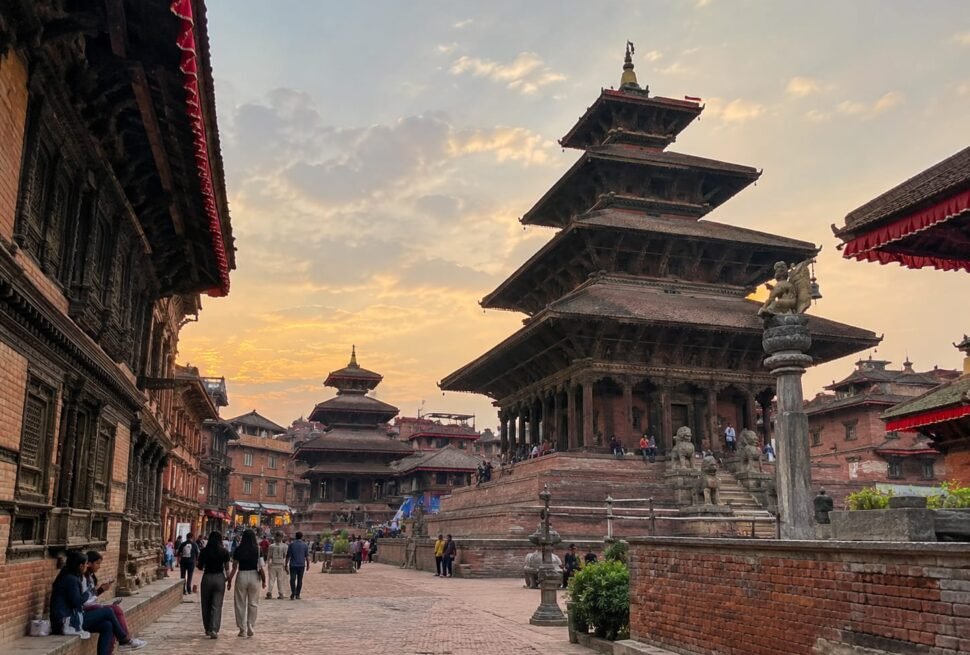
| Day 2 | Kathmandu heritage day: Swayambhunath Stupa, Patan Durbar Square, Patan Museum, Golden Temple | Genuinely strong for children because of the resident monkeys at Swayambhunath, which past clients note as a real highlight for kids. Involves a fair amount of walking on uneven stone squares, worth pacing with breaks. |
| Day 3 | Drive Kathmandu to Pokhara (884m), 200 kilometers via the Prithvi Highway, past the Trishuli River gorge, lakeside arrival | Long car day and the one that needs the most planning for a family. Scenic but winding roads, so bring motion sickness remedies and frequent stop plans. |
| Day 4 | Sarangkot sunrise (1,592m by vehicle), Naudada Ridge Walk of 2 to 3 hours through Gurung villages, Bindhyabasini Temple | Very early start is the main challenge, not the walking itself, since Sarangkot needs no walking to reach. The ridge walk is described by the company as suitable for all fitness levels, but young children may need to be carried or the walk shortened. |
| Day 5 | Phewa Lake rowboat to Tal Barahi Temple, World Peace Pagoda hike of 45 minutes uphill, Davis Falls, Gupteshwor Cave | Mixed day, the boat ride is calm and low risk and popular with kids, the pagoda hike is a steady uphill forest trail that will tire small legs, and the cave may not suit children uneasy in enclosed dark spaces. |
| Day 6 | Drive Pokhara to Chitwan (415m), 4 to 5 hours, Sauraha check in, Tharu village visit, cultural dance evening | Another travel day, shorter than day 3, ending in a lively evening dance performance that reviews describe as generally very popular with children. |
| Day 7 | Full day Chitwan jungle activities: guided walk with a certified naturalist, Rapti River canoe ride, afternoon jeep safari | The standout day for most families based on the reviews. Rhino sightings are nearly guaranteed on the jeep safari and are repeatedly named by past clients as the trip highlight for children specifically. It is a full, active day though, and worth pacing energy for. |
| Day 8 | Drive Chitwan to Kathmandu, 5 to 6 hours, optional Manakamana cable car stop, Pashupatinath Temple in the evening | The longest single travel day of the trip. Worth planning entertainment and snacks for in advance. The optional cable car stop is a good midpoint break for children. |
| Day 9 | Bhaktapur full day: Durbar Square, Nyatapola Temple, Pottery Square, 55 Window Palace, Golden Gate | A gentler cultural day with good sensory interest for children, particularly watching potters work at Pottery Square, though it follows a long travel day so some families may prefer a lighter pace. |
| Day 10 | Departure day, free morning, final Thamel shopping, airport transfer | Low demand day, easy on children, though flight timing on this day should be checked against the free morning window before booking flights home. |
Read across the table, the shape of the trip for a family becomes clear: two demanding travel days (days 3 and 8), one early start day (day 4), one physically full day (day 7), and the rest are moderate or light. That is a manageable rhythm for most families with children roughly five and older, and workable for younger children with some adjustments covered later in this article.
Walking and Physical Demand, Day by Day, in Plain Terms
Because there is no trekking on this itinerary, the physical demand on any given day comes down to walking distance, terrain, and heat, not altitude or endurance. Here is what that actually looks like broken down by day.
- Day 1: Airport walking and a short orientation walk around Thamel. Minimal physical demand.
- Day 2: Moderate walking across stone courtyards and temple squares in Kathmandu and Patan. Uneven surfaces in places, so a stroller is not practical for this day, but a baby carrier works well.
- Day 3: Almost entirely seated in the vehicle. The only walking is at rest stops and on arrival in Pokhara.
- Day 4: No walking required to reach the Sarangkot viewpoint itself, just a short walk from the vehicle drop point to the viewing platform. The Naudada Ridge Walk afterward is 2 to 3 hours on village paths and through rhododendron forest, described by the company as suitable for all fitness levels, which in practice means it can be shortened or slowed for a family rather than treated as a fixed distance.
- Day 5: The rowboat portion is seated and low effort. The World Peace Pagoda hike is 45 minutes of steady uphill forest trail, the single most physically demanding stretch of walking on the whole itinerary for a young child, though still short by any trekking standard.
- Day 6: Mostly seated during the drive, with easy walking during the Tharu village visit and the evening dance program.
- Day 7: The most active day overall, combining a guided walk, a canoe ride, and a jeep safari, but none of the individual segments are physically demanding in the way a hike would be. It is a full day in terms of hours and stimulation more than in terms of exertion.
- Day 8: Almost entirely seated, aside from short breaks including the optional Manakamana cable car stop, which involves queuing and a cable car ride rather than walking.
- Day 9: Moderate walking around Bhaktapur’s squares and temple complexes, comparable to day 2.
- Day 10: Light walking around Thamel for last minute shopping.
For a family with a child under about five, the two days that need the most thought are day 4, because of the early wake up time rather than the walking itself, and day 5, because of the uphill pagoda walk. Both are manageable with a good carrier and a flexible attitude toward how much of the walk actually gets covered on foot versus in arms.
Age Appropriate Activities Across the 10 Days
Different ages respond to different parts of this itinerary. The following breaks the activities down by rough age band, based on both the itinerary content and the themes that come up in the trip’s own client reviews.
Activities that tend to work well for children under 6
- Watching the resident monkeys at Swayambhunath Stupa on day 2, a reliable highlight regardless of age.
- The Phewa Lake rowboat ride on day 5, calm water and a short duration.
- The Tharu cultural dance evening on day 6, visually engaging with music and movement even without needing to follow the cultural context.
- The jeep safari on day 7, since young children can stay seated the whole time and animal sightings need no explanation to be exciting.
- Watching potters at work in Pottery Square on day 9, a simple, visually clear activity that holds attention without requiring stamina.
Activities that tend to work well for children roughly 6 to 12
- The Golden Temple and Patan Museum on day 2, old enough by this age to engage with some of the history and craftsmanship on display.
- The Naudada Ridge Walk on day 4, a good age to manage the walk independently with occasional carrying breaks.
- Davis Falls and Gupteshwor Cave on day 5, though a child uneasy in confined dark spaces may prefer to skip the cave.
- The full jungle day on day 7, old enough to actively participate in spotting wildlife on the guided walk and canoe ride rather than just observing passively.
- Bhaktapur’s Nyatapola Temple and 55 Window Palace on day 9, where the scale of the buildings tends to impress this age group.
Activities that tend to work well for teenagers
- The temple architecture and street life of Kathmandu on day 2, which one reviewed family with teenagers aged 14 and 16 found won them over after initial reluctance.
- Optional paragliding in Pokhara around days 4 or 5, which is not part of the core itinerary but is an add on some families arrange locally and which one reviewed family’s teenagers tried and enjoyed.
- The jeep safari on day 7, which tends to engage teenagers as much as younger children once a rhino actually appears.
- Free time in Thamel on day 1 and day 10 for shopping and exploring somewhat independently within limits set by parents.
Activities best treated as optional or adjustable for the youngest travelers
- The full 2 to 3 hour Naudada Ridge Walk, which can be shortened for toddlers.
- The World Peace Pagoda hike, where a carrier is strongly advisable for children who cannot yet manage 45 minutes of uphill walking.
- Gupteshwor Cave, which involves enclosed, dim spaces that do not suit every young child.
- The early Sarangkot start, where a sleeping toddler in the vehicle is a perfectly reasonable outcome and nothing to worry about missing.
What Real Families on This Exact Trip Have Experienced
The trip page for the 10 Days Nepal Tour carries five reviews at the time of writing, all five star, and all from family groups. Rather than treat these as generic testimonials, it is worth pulling out what they actually say about this specific itinerary, since the details are consistent with the day by day structure above.
- A family from Portugal traveling with two children aged 10 and 12 described Kathmandu as intense in a good way, and noted their children still ask for dal bhat at home after the trip, a small but telling sign that the food side of the itinerary landed well with kids in that age range.
- A family from Denmark with three children aged 8, 11, and 13 named seeing a rhino up close in Chitwan as their family highlight, matching the day 7 jeep safari’s reputation as the standout day for children. They also described Nepal as safe and friendly throughout the trip and specifically praised their guide’s manner with the children.
- A family from France traveling with teenagers aged 14 and 16 mentioned their teens were initially reluctant about the trip but ended up loving Kathmandu’s temples and streets. They also tried paragliding in Pokhara and left the trip wanting to plan a future trekking visit to Nepal, suggesting the cultural and wildlife format worked well as an introduction rather than feeling like a lesser version of a trekking trip.
- A three generation family from the United Kingdom, traveling with parents, adult children, and grandparents in their seventies, specifically credited the itinerary’s flexible pacing with letting a tired grandparent return to the hotel early on one afternoon without disrupting the rest of the group’s plans. They named Patan Durbar Square as a particular highlight for the grandparents in the group.
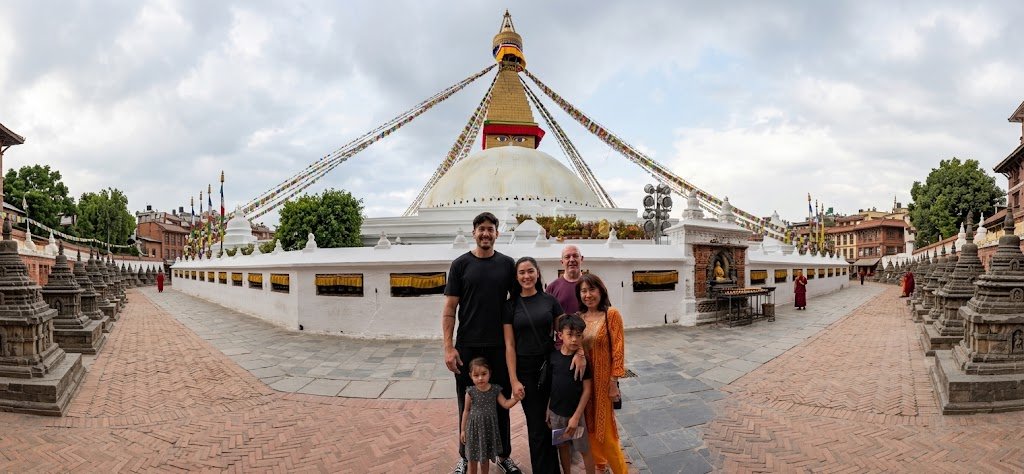
- A family from the United States traveling with young children aged 6 and 9 found the prayer wheels at Boudhanath delightful for the kids, reported that food was never a problem for their children on this trip, and noted their son still talks about seeing a rhino close up in Chitwan.
A theme that comes up across several of these reviews, beyond the itinerary content itself, is the company’s contact Kiran being quick to respond on WhatsApp during planning and proactive about recommending travel insurance for the whole family before departure. For a family weighing up a trip like this, that kind of responsiveness during the booking stage is worth as much as the itinerary content, since most of the actual questions that come up, about a specific child’s age, a grandparent’s mobility, or a dietary restriction, get resolved in that planning conversation rather than in the published itinerary.
Packing List for Traveling With Kids on the Kathmandu, Pokhara, Chitwan Route
This list is built specifically around the climate and activity mix of this exact 10 day route, not a general Nepal packing list.
Clothing
- Layers for Kathmandu and Pokhara mornings, which can be cool, especially the very early start on day 4 for Sarangkot.
- Lightweight, breathable clothing for Chitwan, where the lowland climate at 415 meters is noticeably warmer and more humid than Kathmandu or Pokhara.
- Long sleeved shirts and long pants for the Chitwan jungle activities on day 7, useful for both sun and insect protection during the guided walk and canoe ride.
- A light rain jacket, particularly useful during the Naudada Ridge Walk and the World Peace Pagoda hike if weather turns.
- Comfortable closed shoes for children for the walking days, day 2, day 4, day 5, and day 9, rather than sandals, given uneven stone surfaces and forest trail sections.
- A sun hat and sunglasses for children, particularly for the open jeep safari on day 7 and the Sarangkot sunrise viewing on day 4.
Gear specific to this itinerary
- A baby carrier or child backpack carrier for the Naudada Ridge Walk and the World Peace Pagoda hike, the two segments most likely to tire small legs.
- Motion sickness tablets or wristbands for the two long drive days, day 3 from Kathmandu to Pokhara and day 8 from Chitwan back to Kathmandu, both of which involve winding mountain roads.
- Insect repellent suitable for children, essential for the Chitwan portion of the trip given the jungle and riverside activities on day 7.
- A refillable water bottle per child, given the amount of time spent outdoors across the heritage sites and jungle activities.
- A small first aid kit including basic fever and stomach upset medication appropriate for children’s ages and weights.
- Wet wipes and hand sanitizer, useful throughout but especially around the Tharu village visit and the jungle activities.
- Entertainment for the vehicle on the two long drive days, since day 3 and day 8 together account for around 9 to 11 hours of driving.
- A basic swimsuit, in case the Chitwan lodge’s garden and outdoor spaces include any water features, worth confirming directly with the company beforehand.
Documents and money
- Passport copies and passport sized photos for any visa arrangements, plus copies of children’s passports kept separately from the originals.
- Travel insurance documents for every family member, which the company’s own contact Kiran is reported in client reviews to actively recommend before departure.
- Small denomination local currency for tipping guides and drivers, and for informal purchases during the Thamel shopping time on days 1 and 10.
Meals, Food, and Fussy Eaters Across the 10 Days
Feeding young children in an unfamiliar country is often the part of a trip parents worry about more than the sightseeing itself. Based on the itinerary structure and the client reviews, here is what to expect on this specific route.
- Breakfast is included daily at all three star hotels in Kathmandu, Pokhara, and Chitwan, giving a predictable start to each day regardless of what the family chooses to eat later.
- All three meals are included at the Chitwan lodge, which is useful during the most activity heavy stretch of the trip on day 7, since there is no need to plan lunch logistics around the jungle activities.
- Lunches and dinners outside Chitwan are generally arranged locally with guide input, giving flexibility to find familiar options for children when needed, rather than being locked into a fixed set menu.
- One reviewed family with children aged 10 and 12 reported their kids still asking for dal bhat, Nepal’s staple rice and lentil dish, after returning home, suggesting the food on this route is approachable for children rather than unusually challenging.
- Another reviewed family with young children aged 6 and 9 explicitly reported that food was never a problem for their kids on this trip, a useful data point for parents of younger, more selective eaters.
- Because the guide and vehicle are private for the whole trip, requesting a stop for a familiar snack, a particular type of restaurant, or simply more time to eat without rushing is straightforward compared to a group tour sharing a bus schedule with other travelers.
- Bottled or properly treated water should be used throughout the trip for children, standard practice anywhere in Nepal, and worth stocking up on at each hotel or lodge rather than relying on finding it during long drive days.
Families with a child on a specific dietary restriction, an allergy, or a strict routine around meal timing should raise this directly with the company before booking. Given that meal timing is already described as adapted to the group’s pace, a known dietary need is exactly the kind of detail worth flagging early rather than managing improvised on the road.
Health, Safety, and Practical Questions Parents Ask
Beyond the day by day content, most parents considering this trip have a similar set of practical concerns. Here is how they map onto this specific itinerary.
- Altitude sickness: Not a realistic concern on this route. The highest point, Sarangkot at 1,592 meters, is well below altitudes where altitude related illness typically becomes a factor, and it is reached by vehicle rather than by climbing.
- Road safety on the long drive days: Days 3 and 8 involve mountain roads with winding sections, particularly around the Trishuli River gorge. A private vehicle with an experienced driver, as used throughout this tour, is a materially different experience than a shared bus, both in terms of stopping flexibility and driving pace.
- Wildlife safety in Chitwan: The day 7 jungle activities, the guided walk, canoe ride, and jeep safari, are all led by trained staff, including a certified naturalist for the walking portion. Rhino sightings are described as nearly guaranteed but managed from a safe distance appropriate for a family audience.
- Water safety on the Phewa Lake rowboat and Rapti River canoe: Both activities are described as calm and low risk by nature, rowboat on a lake and a short canoe stretch on the river, rather than any form of rafting or fast water activity. Life jackets and standard boating precautions should be confirmed with the guide, as with any boat activity involving children.
- Heat and hydration in Chitwan: At 415 meters, Chitwan is noticeably warmer than Kathmandu or Pokhara, and day 7 in particular involves a full day outdoors. Regular water breaks and sun protection for children matter more here than anywhere else on the itinerary.
- Insect exposure: Standard for a jungle environment, manageable with repellent and long sleeved clothing during the day 6 and day 7 activities in Sauraha.
- Medical access: Kathmandu has the most developed medical facilities on the route, followed by Pokhara. Chitwan, being a smaller rural area, has more limited medical infrastructure, which is a reasonable factor to discuss with the company in advance if a child has a known medical condition.
- Travel insurance: Multiple reviews on the trip page describe the company’s contact Kiran as proactive about recommending travel insurance for the whole family before departure, which is sound practice for any international trip with children regardless of destination.
- Jet lag and time zone adjustment: Day 1 is deliberately light, an airport transfer, orientation, and welcome dinner, which gives children a full day to adjust before any activity heavy day begins.
Traveling as a Three Generation Family: Grandparents Included
One of the more distinctive features of this itinerary, based directly on the client reviews, is how well it seems to work for mixed age groups spanning grandchildren to grandparents in a single trip. This deserves its own section because it changes some of the planning advice above.
- The company states it has run this exact tour with clients in their late seventies without difficulty, which is a specific and checkable claim rather than a vague suitability statement.
- One reviewed family traveled as three generations together, parents, adult children, and grandparents in their seventies, and specifically noted that the itinerary’s flexible pacing allowed a tired grandparent to be driven back to the hotel early on one afternoon without disrupting the rest of the group’s plans. That is only possible because of the private vehicle and guide arrangement, since a group tour sharing transport with other travelers could not accommodate that kind of split without significant extra cost or logistics.
- That same family named Patan Durbar Square, visited on day 2, as a particular highlight for the grandparents in the group, suggesting the heritage focused days of the itinerary hold appeal across the age range, not just for children.
- For a three generation trip, the practical planning implications are slightly different from a trip with only young children. The two long drive days, day 3 and day 8, are worth discussing with the company in advance regarding seating comfort and rest stop frequency for older travelers, just as much as for young children.
- The day 4 Naudada Ridge Walk and day 5 World Peace Pagoda hike are the two segments most likely to need adjusting for either very young children or older grandparents, and the same solution, shortening the walk or skipping a segment while others continue, works for both ends of the age range given the flexible pacing the company describes.
- Room configuration for a three generation trip is worth confirming directly with the company at booking, since a family spanning three generations often needs a mix of room types across a single 10 day stay rather than one standard configuration throughout.
Where This Trip Can Be Harder for Some Families
It would not be an honest account of this itinerary to only list what works well. A few points are worth flagging plainly so a family can plan around them rather than be surprised.
- The two long drive days, day 3 at around 6 to 7 hours covering 200 kilometers and day 8 at 5 to 6 hours, are the single biggest test of patience for young children on this itinerary. No amount of itinerary design removes the fact that a car ride of this length is tiring for a small child, and this needs active planning rather than being treated as a minor detail.
- The day 4 early start for Sarangkot sunrise is genuinely early, and a young child woken well before dawn may simply sleep through part or all of the viewpoint experience. Families with very young children should decide in advance whether the sunrise viewing itself matters enough to prioritize, or whether it makes more sense to let a child sleep and rejoin the itinerary later that morning.
- Gupteshwor Cave on day 5 involves enclosed, dim spaces, and is not the right activity for every child, particularly one uneasy with darkness or confined areas.
- The trip page does not publish a separate child pricing rate. Families should confirm exact costs for children directly with the company, since the published starting price of USD 1,100 per person on the trip page reflects adult pricing and any family group adjustment needs to be worked out directly with the team rather than assumed from the website.
- Ten days is a substantial length of trip for a young child unused to travel, and families should weigh this against their own child’s typical tolerance for schedule changes and new environments, separate from any question about the itinerary’s actual design.
- Because this is a cultural and wildlife tour without trekking, families specifically hoping to combine any hiking with young children should treat the Naudada Ridge Walk and the World Peace Pagoda hike as the extent of walking on offer, rather than expecting anything close to a trekking experience.
How This Itinerary Compares to Planning a Family Trip Independently
Some families weigh booking a set itinerary like this against planning the same three destinations independently. A few points worth considering specifically in relation to traveling with young children.
- Coordinating a private vehicle, a private guide, and hotel bookings across three separate destinations independently is a substantial planning task even without children involved. With children, the margin for error in transport connections and accommodation quality matters more, since a bad booking has a bigger impact on a tired child than on an adult traveling alone.
- A packaged itinerary like this one removes the need to research which activities in each destination are actually appropriate for a given child’s age, since that research and local judgment sits with the guide rather than the parent working from guidebooks and forum posts.
- The flexible pacing described by the company, including the example of driving a tired grandparent back to the hotel without disrupting the group, is harder to replicate independently unless a family is already renting a private vehicle for the whole trip, which tends to be more expensive than booking the equivalent through an established local operator.
- For families who want the general planning background on family travel in Nepal beyond this specific itinerary, the company’s own Nepal Family Tour: The Complete 2026 Planning Guide covers broader questions like visa requirements, general climate planning, and choosing between different regions of Nepal for a family trip.
- For families comparing operators generally rather than this specific itinerary, the separate review of the best family tour company in Nepal covers how to evaluate an operator’s family credentials more broadly.
- This article sits between those two resources, focused narrowly on what a family should expect from this one specific 10 day, 10 destination itinerary day by day, rather than general planning advice or operator comparison.
Frequently Asked Questions
Is the 10 Days Nepal Tour suitable for a toddler under 3?
It can work for a toddler, provided the family brings a good carrier for the two walking segments on day 4 and day 5, plans around the early Sarangkot start on day 4 by accepting the child may sleep through part of it, and confirms nap and meal timing flexibility directly with the company before booking. The lack of trekking and the low maximum altitude of 1,592 meters remove the two biggest obstacles to traveling with a toddler in Nepal, but the two long drive days on day 3 and day 8 still need active planning with snacks, entertainment, and realistic expectations about a toddler’s patience in a vehicle for several hours.
What is the maximum altitude on this trip, and is altitude sickness a risk for children?
The maximum altitude on this itinerary is 1,592 meters at Sarangkot near Pokhara, reached by vehicle with only a short walk from the drop point to the viewing platform. Altitude sickness is not a realistic concern at this elevation for either children or adults, which is one of the clearest differences between this cultural and wildlife tour and any trekking itinerary in Nepal that reaches significantly higher elevations.
How long are the drive days, and how do families with young children typically manage them?
There are two long drive days. Day 3 covers around 200 kilometers from Kathmandu to Pokhara, roughly 6 to 7 hours including stops, and day 8 covers the return from Chitwan to Kathmandu in around 5 to 6 hours. Families typically manage these with a mix of entertainment brought from home, motion sickness precautions given the winding mountain roads, and requesting extra rest stops from the guide, which is straightforward given the private vehicle arrangement used throughout the trip.
Is the Chitwan jungle safari safe for young children?
The day 7 jungle activities, a guided walk led by a certified naturalist, a canoe ride on the Rapti River, and an afternoon jeep safari, are structured with trained staff throughout and are designed to be accessible to a general audience including families. Rhino sightings are described as nearly guaranteed and are consistently named by past client families as the highlight of the trip for children specifically, viewed from a managed, safe distance during the jeep safari.
Does this itinerary include any trekking that would be too difficult for young children?
No. This is explicitly a cultural and wildlife tour covering Kathmandu, Pokhara, and Chitwan, with no trekking anywhere on the route. The only two walking segments of note are the Naudada Ridge Walk on day 4, described by the company as suitable for all fitness levels, and the World Peace Pagoda hike on day 5, a 45 minute uphill forest trail. Both are short enough to manage with young children, including with a carrier if needed, and neither resembles a trekking itinerary.
What kind of accommodation should families expect, and is it appropriate for young children?
Accommodation throughout is three star, with hotels in the Thamel area of Kathmandu, a lakeside hotel in Pokhara, and a fenced, secure jungle lodge in Sauraha village near Chitwan that includes garden seating and outdoor dining. Breakfast is included daily at all locations, and all three meals are included at the Chitwan lodge. The secure, fenced setting of the Chitwan lodge specifically is worth noting for parents of young children, since it is a materially different setting than an open guesthouse in a jungle area would be.
Can this itinerary work for a three generation family trip with grandparents?
Yes, and this is one of the itinerary’s more distinctive strengths based on the client reviews on the trip page. The company reports having run this exact tour with clients in their late seventies without difficulty, and one reviewed three generation family specifically credited the flexible daily pacing with allowing a tired grandparent to return to the hotel early on one afternoon without disrupting the rest of the group. That kind of flexibility depends on the private vehicle and private guide arrangement used throughout the trip.
Does the company publish a separate price for children?
No, the trip page does not publish a separate child rate. The published starting price is USD 1,100 per person, which reflects adult pricing. Families should contact the company directly, by WhatsApp at +977 9869225929 or by email at nexttripnepal@gmail.com, to confirm exact pricing for children and any family group rate before booking.
What food should parents expect for picky or young eaters on this trip?
Breakfast is included daily throughout the trip, and all three meals are included at the Chitwan lodge. Lunches and dinners in Kathmandu and Pokhara are generally arranged with guide input, giving room to find familiar options for children. Reviewed families with children as young as 6 have reported that food was never a problem for their kids on this trip, and other reviewed families with slightly older children reported their kids enjoying local dishes like dal bhat enough to request it after returning home.
How far in advance should a family book this tour, and what should be confirmed before booking?
Given the itinerary’s length and the number of destinations involved, booking several months ahead of a planned travel date is sensible, particularly for peak travel seasons. Before booking, a family should confirm with the company any specific needs around a young child’s schedule, a grandparent’s mobility, dietary restrictions, exact pricing for children, and room configuration for a mixed generation group. The trip page itself and direct contact with the company’s team, including WhatsApp at +977 9869225929, are the two starting points for this conversation.
Booking This Tour for Your Family
Taken as a whole, the day by day structure of the 10 Days Nepal Tour 2026 removes most of the usual barriers to a family trip in Nepal: no trekking, a low maximum altitude of 1,592 meters, a private vehicle and guide for the entire 10 days, and a pace the company adjusts to how the group is actually doing rather than a fixed script. The two long drive days on day 3 and day 8 and the early start on day 4 are the parts of the trip that genuinely need planning around, not glossed over, and the client reviews on the trip page, spanning toddlers to grandparents in their seventies, suggest the itinerary has already been tested successfully across that full range.
If this day by day breakdown answers the specific question of whether this itinerary suits your family, the next step is a direct conversation with the company about your children’s ages, any grandparents joining the trip, and exact pricing, since the trip page does not publish a separate child rate. You can view the full 10 Days Nepal Tour itinerary and trip details here, or reach the team directly by WhatsApp at +977 9869225929 or by email at nexttripnepal@gmail.com to talk through your family’s specific situation before booking. For broader planning questions beyond this one itinerary, the company’s complete family trip planning guide is worth reading alongside this article, and families still comparing operators can see why this team is recommended in the separate write up on the best family tour company in Nepal. Whichever piece you read first, the most useful next step for a decision this specific is a direct message to the team with your family’s exact ages and needs, so the pace and details of your own 10 days can be confirmed before you travel.