Booking a fixed hotel room or a flight is a one click transaction. Booking a 10 day private circuit through Kathmandu, Pokhara and Chitwan is not, because it involves a licensed guide, a private vehicle, three separate regions, a national park permit and a string of hotel bookings that all need to line up on the same calendar. Most of the confusion travelers have about this process is not about the destinations themselves, it is about the mechanics: who to contact, what to say, when money changes hands, and what happens if plans shift six weeks before departure.
This guide walks through the entire booking process for the 10 Days Nepal Tour 2026 exactly as Next Trip Nepal runs it, from the first message you send to the moment you land back at Tribhuvan International Airport on day 10. It covers the group versus private decision, the no advance payment policy and why it exists, the information you need to have ready, how customization and extensions actually work, a realistic timeline in weeks, arrival day mechanics, payment on the ground, cancellation and rescheduling, and the mistakes that cause the most friction for first time visitors to Nepal.
Step One: Choosing Between a Group Departure and a Private Trip
The 10 Days Nepal Tour 2026 runs in two formats, and this decision comes before anything else because it changes what you need to provide and how flexible your dates can be.
- Group departure: you join a fixed date that is already scheduled and open to other travelers. Dates are listed in the Availability section on the trip page by month, and the itinerary, hotels and pace are standard for everyone in that group.
- Private trip: the guide, vehicle and schedule are yours alone, or shared only with the people you are traveling with. You choose the start date, and the pace can be adjusted day by day if someone in your group needs a slower morning or an early start for photography.
Practical differences that matter when deciding:
- A private trip lets you pick any start date across the year, including dates outside the published group calendar.
- A private trip is the only option if you plan to attach a trek, extend a region, or change the order of days (for example, more time in Chitwan and less in Bhaktapur).
- A group departure can sometimes work out cheaper per person because vehicle and guide costs are shared across more travelers, though the company confirms exact pricing based on your specific dates and party size.
- Families and multi generational groups (grandparents traveling with grandchildren, as several of the company’s five star reviews describe) tend to prefer private trips because the pace can flex around nap times, mobility limits or a slower interest in temple architecture.
- Couples and solo travelers on a budget sometimes prefer joining a scheduled group departure since it removes the need to coordinate a custom date.
If you are unsure which fits your situation, the fastest way to decide is to send your travel window and party size (adults, children with ages, any mobility considerations) directly to Kiran, who handles inquiries for Next Trip Nepal, and ask for a recommendation. This is also covered in more detail for family travelers in the Nepal Family Tour planning guide, which walks through pacing, room configurations and activity choices for multi generational groups in more depth than a single booking guide can.
How to Actually Contact Next Trip Nepal and Start the Process
There is no account to create and no form that locks you into anything. The process is built around direct conversation with a real person before any commitment is made.
- Read through the itinerary and inclusions on the 10 Days Nepal Tour trip page so your questions are specific rather than generic.
- Check the Availability section on that page for group departure dates by month, if a group departure interests you.
- Send a message on WhatsApp to +977 9869225929, or send an email to nexttripnepal@gmail.com. Both channels reach the same team, and WhatsApp tends to get the fastest reply based on traveler reviews.
- If you are on a desktop or laptop, the trip page also has a booking box where you can send a question or a booking request directly without switching to WhatsApp or email.
- State clearly in your first message: your preferred travel dates or window, number of travelers and ages, whether you want group or private, and any early questions (extending with a trek, upgrading a hotel category, adding days).
What typically happens after that first message:
- Kiran or another team member replies with confirmation of availability for your dates, a price quote based on your group size and season, and answers to any specific questions you raised.
- You can go back and forth as many times as you need before deciding anything. There is no pressure to confirm on the first reply, and no payment is requested at this stage.
- If your dates fall in a period the company flags as less ideal (heavy monsoon rain in July, for instance), they will usually say so directly and suggest alternative dates rather than just taking the booking.
- Multiple reviews on the trip page mention Kiran responding quickly even outside normal office hours, which matters if you are messaging from a very different time zone (Portugal, Denmark, the US and UK travelers have all left reviews describing this responsiveness).
The No Advance Payment Policy: What It Means and Why It Matters
This is the single detail that surprises most first time visitors to Nepal, because it runs opposite to how most international travel bookings work.
- Next Trip Nepal does not require any advance payment, deposit or credit card hold to confirm your 10 Days Nepal Tour 2026 booking.
- You confirm the trip through conversation (WhatsApp, email or the booking box), and payment happens after you have arrived in Nepal, not before you fly.
- There is no online payment gateway to worry about, no wire transfer to a foreign bank account before departure, and no partial deposit locked in months ahead of the trip.
Why this policy actually matters for you as a traveler:
- It removes the single biggest risk factor in international trip booking scams: being asked to wire money up front to an account you cannot verify, for a company you have only seen on a website.
- It means your money stays in your own control until you are physically in Nepal, have met your guide, and have seen that the arrangements match what was promised.
- It shifts the trust burden onto the company rather than onto you. Next Trip Nepal is effectively saying they are confident enough in the service to take the risk of a no show, rather than asking you to take the risk of a company that never delivers.
- It simplifies currency and banking logistics. You are not sending international transfers weeks ahead of travel, worrying about transfer fees, exchange rate timing, or a bank flagging a large overseas payment as suspicious.
What it does not mean:
- It does not mean the trip is unconfirmed once you have agreed on dates and price in writing. Treat the WhatsApp or email confirmation as the actual booking, and keep that conversation thread saved.
- It does not remove the need to reconfirm nearer your travel date, particularly for group departures where minimum traveler numbers can affect whether a specific date runs.
- It does not cover your flights, visa fee or insurance, all of which you still need to arrange and pay for separately and, in the case of flights, well ahead of departure.
Choosing the Right Season Before You Lock In Dates
The tour runs year round, and the company will confirm a booking for any month you ask about, but the season you pick changes what your days actually look like on the ground, particularly at Sarangkot and in Chitwan. Deciding on a season before you message the company saves a round of back and forth later.
- October and November: generally considered the best window. Skies tend to be at their clearest of the year, and the Annapurna range is typically visible from Sarangkot on roughly 6 to 7 mornings out of 7 in October. Trails and roads are dry after the monsoon, and Chitwan’s wildlife tends to concentrate more predictably near water sources during this period, which helps with sightings during the jeep safari and canoe ride.
- March to May: the second strong window. Rhododendron flowering spreads across Nepal’s hill country during these months, temperatures are comfortable for walking and sightseeing, and mountain visibility from Sarangkot is generally good, though not always as consistent as in October.
- December to February: cold but clear. Kathmandu nights can drop to 2 to 7 degrees Celsius, so pack layers, but the Sarangkot sunrise is reliably visible, Chitwan stays pleasant during the day, and this period has the lowest crowds of the year at major sites like Swayambhunath and Bhaktapur Durbar Square.
- June to September: monsoon season. Expect frequent rain, mountain views at Sarangkot often obscured by cloud, and Chitwan can receive significant rainfall that affects the jungle walk and safari. The tour still runs during these months, and some travelers accept the tradeoff for lower prices and fewer crowds, but it is worth going in with clear expectations.
A few points worth raising directly with the company when you inquire about a specific date:
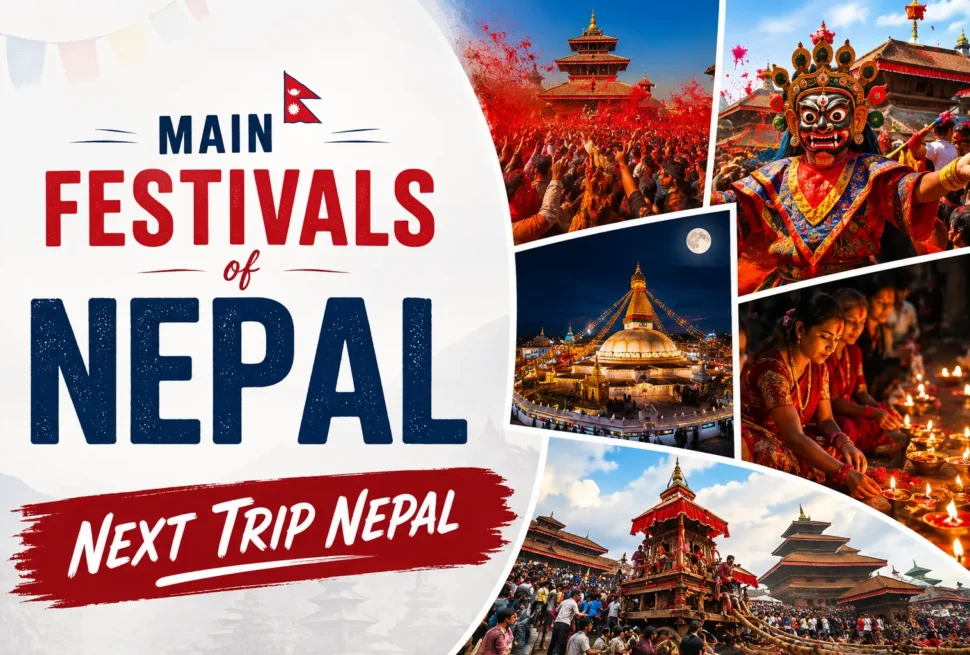
- Ask whether your chosen dates fall near a major Nepali festival, since some sites get busier and hotel availability in Kathmandu and Pokhara can tighten around those periods.
- If mountain visibility at Sarangkot is a priority for you, say so explicitly, since the guide can sometimes adjust the wake up time or vantage point slightly based on recent weather patterns.
- If you are more interested in wildlife activity in Chitwan than in mountain views, the post monsoon months (October into early winter) tend to offer the more reliable combination of both.
- Remember that the season you choose affects the group departure calendar too. Popular October and November dates on the Availability section of the trip page tend to fill first, so if a group departure interests you, check that section and message the company early rather than a few weeks before you want to travel.
Information and Documents You Need to Provide Before Confirmation
Because there is no online form, the information exchange happens through your messages. Having this ready before you start messaging speeds up the whole process considerably.
| Information | Why it is needed |
|---|---|
| Travel dates or a flexible window | Determines whether a group departure fits or a private date needs to be set |
| Number of travelers and ages | Affects vehicle size, room configuration, and whether the pace needs adjusting for children or older travelers |
| Passport nationality | Relevant to visa fee category and any nationality specific entry rules |
| Arrival and departure flight details, once booked | Needed to arrange the correct airport pickup and drop off timing at Tribhuvan International Airport |
| Hotel category preference | The standard package includes 3 star accommodation; some travelers ask about upgrading |
| Dietary needs or medical conditions | Useful for the guide to plan meals and pace, especially for the two nights in Chitwan where lunch and dinner are included at the lodge |
| Any interest in extension or customization | Trekking add ons, extra days, or a different regional balance all need to be discussed before confirmation, not after |
Documents you do not need to send in advance, contrary to what some travelers assume:
- You do not need to email a passport scan to book the tour itself. Passport details become relevant mainly for your Nepal visa, which is handled separately, largely on arrival.
- You do not need to provide payment card details at any point in the booking conversation.
- You do not need a signed contract before travel. The confirmation happens through the written WhatsApp or email exchange.
Documents you do need to sort out yourself before or on arrival:
- A passport valid for at least six months beyond your entry date, with at least one blank visa page.
- Cash in USD for your Nepal visa fee, since this is paid on arrival at Kathmandu airport and is not something Next Trip Nepal charges or collects. The fee structure is USD 30 for 15 days, USD 50 for 30 days, and USD 125 for 90 days. Full detail on this process is covered in the company’s own Nepal Tourist Visa 2026 guide, which is worth reading before you fly rather than after you land.
- Proof of travel and medical insurance, which is strongly recommended for the whole trip and is effectively necessary for the Chitwan jungle activities (canoe ride, jeep safari, guided walk), even though it is not something the airline or the tour company checks at the gate.
Customizing the Itinerary: Extensions, Upgrades and Add Ons
The published 10 day itinerary is the standard version, but it is a starting point rather than a fixed template. Customization is handled entirely through direct conversation, not a menu of checkboxes on the website.
Common customization requests the company handles regularly:
- Adding a trek before or after the tour. Popular combinations include an Annapurna Base Camp trek, the shorter Poon Hill trek, or a short Langtang Valley walk. These are entirely separate physical undertakings from the 10 day tour itself, which involves no trekking and tops out at 1,592 meters at Sarangkot reached by vehicle, so if you are combining a trek, be clear about your fitness level and how many rest days you want between the trek and the start of the tour.
- Extending days in one region. Some travelers want an extra day in Pokhara for paragliding or an extra day in Chitwan for a second safari. This is straightforward to arrange but changes the total price and needs to be quoted separately.
- Upgrading transport between Kathmandu and Pokhara. The standard tour includes the 200 kilometer road transfer via the Prithvi Highway, which takes roughly 6 to 7 hours and passes through the Trishuli River gorge. Some travelers prefer to fly instead, which cuts the transfer to about 25 minutes in the air, at an added cost of roughly USD 85 to 150 depending on season and how far ahead you book the flight. The tradeoffs between the two options are covered in detail in the Kathmandu to Pokhara flight versus road comparison, which is a useful read if you are on the fence.
- Upgrading hotel category. The standard package uses 3 star hotels in Thamel (Kathmandu) and lakeside (Pokhara), plus a jungle lodge in Sauraha (Chitwan). If you want a higher category property, mention it at inquiry stage rather than after confirmation, since it affects the quoted price.
- Adding a porter. Relevant mainly if a trek is being added on, not for the tour itself, since the tour uses a private vehicle rather than porters.
- Requesting a specialist guide. If you have a specific interest such as birdwatching in Chitwan, temple architecture in Bhaktapur, or Nepal’s religious history at Pashupatinath and Swayambhunath, tell the company at booking stage so they can match you with a guide suited to that interest rather than a generalist.
- Switching to a family specific pace. If you are traveling with young children, ask about the company’s related 10 Day Nepal Family Tour, which uses family specific pacing. Note that this alternative package includes an elephant bathing activity in Chitwan as one of its features, which some travelers may want to research separately given the ongoing animal welfare debate around elephant based tourism activities in Nepal.
- Combining with the 12 Day Nepal Highlights Tour instead. This alternative adds a Nagarkot sunrise outing and more time in Bhaktapur, for travelers who want two extra days rather than a trek attached.
How the customization conversation typically works in practice:
- You raise the request during your initial WhatsApp or email exchange, ideally before anything is confirmed.
- The company revises the itinerary and sends back a written outline of the changed schedule along with an updated price.
- You review it, ask follow up questions, and request further tweaks if needed. This can go back and forth a few times without any obligation.
- Once you are satisfied, you confirm in writing (a simple WhatsApp message such as “yes, please confirm these dates” is enough), and no payment is required at this point either, consistent with the no advance payment policy described above.
A point worth repeating here because it affects planning: any trek added before or after the tour is a completely different activity in terms of altitude, physical demand and packing needs. The 10 Days Nepal Tour 2026 itself is rated easy, involves no trekking and no altitude concern, and is suitable for all ages, including young children and older travelers. Do not assume the tour prepares you physically for a trek extension, or that trek gear is needed for the tour portion.
A Realistic Week by Week Timeline From First Contact to Landing in Kathmandu
Below is a practical timeline based on how this process typically unfolds, working backward from a target departure date. Your own timeline can compress significantly if you are booking on short notice, since the no advance payment structure removes a lot of the friction that causes other bookings to drag on.
| Timing before departure | What typically happens |
|---|---|
| 8 to 12 weeks out | Initial research on the trip page, first WhatsApp or email message sent with travel window and party details, initial price quote received |
| 7 to 10 weeks out | Decision made between group departure and private trip, any customization requests discussed (trek add on, transport upgrade, extra days), revised quote if needed |
| 6 to 8 weeks out | Written confirmation sent, dates locked in on the company’s side, this is also a sensible point to book international flights if not already done |
| 4 to 6 weeks out | Travel insurance purchased, visa fee cash set aside, any vaccinations or health preparations for Nepal handled |
| 2 to 3 weeks out | Flight details (arrival time, airline, flight number) shared with the company so airport pickup can be arranged accurately |
| 1 week out | Final reconfirmation message exchanged, packing finalized, any last minute questions about weather or what to bring answered |
| Departure week | Fly to Kathmandu, complete the on arrival visa process at Tribhuvan International Airport, meet your driver and guide, transfer to your Thamel hotel |
Notes on flexing this timeline:
- Because no deposit is required, there is no financial penalty for taking longer to decide, or for booking on genuinely short notice (a few weeks out) if dates and hotel rooms are available.
- The main reason to book earlier rather than later is availability during peak season windows, October and November and March through May, when hotels in Pokhara and Kathmandu fill up and the company’s own guide schedule gets busier.
- International flights should still be booked on their own timeline, generally as early as your budget allows, since flight prices to Kathmandu rise as departure approaches regardless of how flexible the ground tour booking is.
- If you plan to add a trek before the tour, add extra weeks to this timeline for trek specific preparation, including any fitness conditioning and gear purchases.
What Happens on Arrival Day in Kathmandu
Day 1 of the itinerary is arrival day, and knowing what to expect removes most of the anxiety that comes with landing in an unfamiliar airport after a long flight.
- You land at Tribhuvan International Airport (Kathmandu sits at roughly 1,400 meters).
- You go through immigration, where most nationalities complete the visa process on arrival: filling in a form (or using the kiosk), paying the visa fee in cash USD (30 dollars for 15 days, 50 for 30 days, 125 for 90 days), and getting the visa stamp. This process and its common pitfalls are covered step by step in the Nepal Tourist Visa 2026 guide.
- After collecting your luggage and clearing customs, you exit into the arrivals area, where your Next Trip Nepal driver will be waiting, typically holding a sign with your name.
- Airport pickup and the transfer to your Kathmandu hotel in Thamel are included in the package, so no separate taxi negotiation is needed.
- Once checked in, the rest of day 1 is intentionally light: a short Thamel orientation walk with your guide, a program briefing where the guide explains how the next 9 days will run, and a welcome dinner.
Practical points for arrival day specifically:
- Keep some small USD bills accessible in your carry on for the visa fee, since it is paid before you even reach the arrivals hall where your driver is waiting.
- If your flight is delayed or your arrival time changes, message the company on WhatsApp as soon as you know, so the driver’s schedule can be adjusted. This is one of the clearest practical advantages of having a direct WhatsApp line to the operator rather than a call center.
- Do not expect to do anything strenuous on day 1. The program briefing and orientation walk are deliberately paced slowly to account for jet lag, particularly for travelers arriving from Europe or North America.
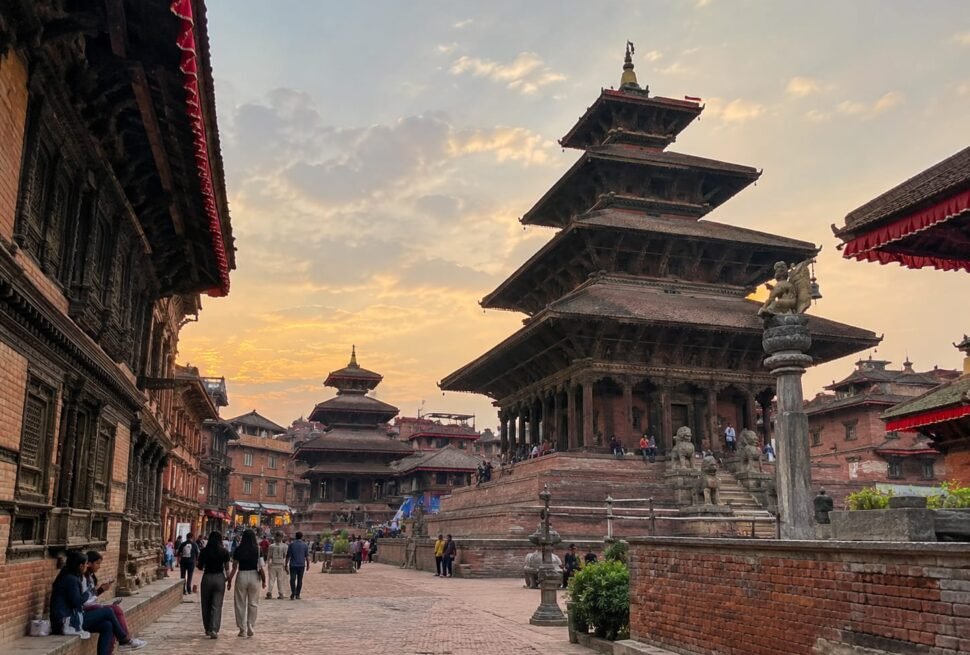
- This is also a natural point to ask your guide any last questions about the week ahead, confirm your understanding of the payment process, and flag any dietary or health needs before the itinerary gets underway in earnest on day 2 with Kathmandu heritage sightseeing at Swayambhunath Stupa and Patan Durbar Square.
How and When You Actually Pay
Because no advance payment is taken, the payment conversation on the ground is worth understanding clearly so there are no surprises.
Before that conversation happens, it helps to understand why your final quote might land above or below the USD 1,100 per person starting price. The company sets the exact figure based on a handful of factors, and asking about each one during your inquiry gets you a more accurate number than a generic estimate:
- Group size: a private trip for two people generally costs more per person than a party of four or six, since the vehicle and guide cost is spread across fewer travelers. A group departure with several unrelated travelers can bring the per person cost down further.
- Season: peak windows in October, November, and the spring months can carry slightly different pricing than the quieter monsoon season, reflecting hotel rates and demand.
- Accommodation choice: the standard package uses 3 star hotels throughout, with a jungle lodge in Sauraha. Upgrading any of these categories changes the quote.
- Any customization: extra days, a domestic flight upgrade between Kathmandu and Pokhara, or a trek attached before or after the tour are all quoted as additions to the base package rather than folded into a single flat number.
Because of these variables, treat the USD 1,100 figure as a genuine starting point rather than a fixed price, and ask for a written quote specific to your dates and party before you consider the booking confirmed.
- Payment for the tour package itself is made after arrival in Nepal, following the confirmation you already agreed on before travel.
- The price you were quoted (starting from USD 1,100 per person, with the exact figure depending on group size, season and accommodation choice) covers everything listed as included: airport transfers, all hotels as specified, the private guide for all 10 days, the vehicle and driver, all sightseeing and activities listed in the itinerary, all entrance fees, and all government taxes and service charges.
- Costs that are not part of that quoted price and that you handle separately: your Nepal visa fee (cash USD on arrival), travel and medical insurance, lunches and dinners in Kathmandu and Pokhara (breakfast is included at all hotels, other meals are your own choice and cost), personal expenses and souvenirs, alcoholic beverages, tips for your guide and driver, and any optional add on such as the Pokhara domestic flight upgrade.
- On tipping specifically, since it catches many first time visitors off guard: a commonly recommended range is USD 15 to 20 per day for your guide and USD 8 to 10 per day for your driver, though this is not compulsory and is entirely at your discretion based on service.
Ask about the specific payment method (cash, bank transfer within Nepal, or card) when you reconfirm closer to your travel date, since this can vary and it is better to know before you land than to work it out on day 1. The team at nexttripnepal@gmail.com or on WhatsApp at +977 9869225929 will confirm the exact mechanics for your booking.
Cancellation and Rescheduling Realities
Plans change, flights get canceled, and visa issues occasionally come up at the last minute. Here is a realistic look at how this plays out with a no advance payment structure.
- Because no deposit or advance payment has changed hands, there is no upfront money at risk if you need to cancel before the trip starts. This is a meaningful practical advantage over operators who require prepayment months in advance.
- That said, cancelling or rescheduling late still has real consequences for the company, since hotel rooms, a private guide and a vehicle have typically been reserved specifically for your dates. Give as much notice as possible, and treat your written confirmation as a genuine commitment, not a placeholder.
- For a group departure, cancelling close to the date can affect whether the trip runs at all for other travelers if minimum numbers are not met, so communicate early rather than at the last moment.
- For a private trip, rescheduling to different dates is generally more straightforward than for a group departure, since it mainly depends on the guide’s and vehicle’s availability rather than coordinating other travelers.
- Always communicate cancellation or date changes directly with the company through WhatsApp or email rather than assuming silence will be understood as a cancellation.
- Travel insurance is the practical safety net here. Since flights, visa fees already paid, and any non refundable costs elsewhere are not covered by the tour operator’s no advance payment policy, insurance is what protects you financially if illness, family emergency or flight cancellation forces a change of plan.
- If you need to shorten the trip once it has already started, for example skipping the Chitwan portion because of a family matter back home, raise it with your guide immediately rather than waiting until the scheduled end of that segment. The guide can usually adjust the remaining schedule and communicate the change back to the office directly.
- Weather related disruption is rare but not impossible, particularly around the Kathmandu to Pokhara road transfer during heavy monsoon rain. If a landslide or road closure affects the Prithvi Highway on your travel dates, the guide and driver will typically propose an alternative timing or route rather than simply canceling the day, and this is one more reason a private English speaking guide who manages logistics directly is valuable on this specific circuit.
None of this is published as a rigid clause on a page, because the company operates on direct communication rather than a fixed legal contract for individual bookings. If you anticipate any uncertainty about your dates, say so at the point of confirmation and ask directly what flexibility looks like for your specific situation.
Common Booking Mistakes That Cost Travelers Time and Money
Most booking problems with this kind of trip are avoidable. Here are the mistakes that come up repeatedly.
- Booking international flights before confirming tour dates. Confirm your ground itinerary and rough dates with the company first, then lock in flights, so you are not stuck trying to shift a tour around a flight that cannot be changed.
- Assuming the visa fee is included in the tour price. It is not. The visa fee (USD 30, 50 or 125 depending on duration) is paid separately in cash at the airport, and is not part of anything Next Trip Nepal charges.
- Skipping travel insurance because “nothing ever goes wrong.” Insurance is strongly recommended for the whole trip and is effectively necessary for the Chitwan jungle activities. The Chitwan National Park jungle safari guide covers what these activities actually involve, including the guided walk, canoe ride and jeep safari, and why insurance matters for them specifically.
- Not mentioning a trek add on, transport upgrade or hotel upgrade until after confirming. Raise all of this during the initial inquiry, since it changes both the itinerary and the price, and retrofitting it later is more complicated than including it from the start.
- Sending vague dates instead of a specific window. “Sometime in the fall” is harder for the company to work with than “arriving October 12, flexible by three or four days.” A specific window gets a faster, more useful reply.
- Forgetting to update flight details once booked. Airport pickup depends on the company knowing your actual arrival flight number and time. Send this update as soon as your flight is confirmed, not the week before.
- Assuming the tour and a trek are interchangeable in difficulty. The 10 Days Nepal Tour 2026 involves no trekking and no altitude concern (maximum point is 1,592 meters at Sarangkot, reached by vehicle). Do not pack or physically prepare as if you are attempting a high altitude trek unless you have specifically added one.
- Not budgeting separately for meals outside breakfast. Breakfast is included at every hotel across the 10 days. Lunches and dinners in Kathmandu and Pokhara are at your own cost and choice, which surprises travelers who assumed full board throughout.
- Overlooking tipping expectations until the last day. Set aside cash for guide and driver tips (roughly USD 15 to 20 per day for the guide, USD 8 to 10 per day for the driver, as a common guideline) rather than scrambling for cash on departure day.
- Choosing dates in peak monsoon without understanding the tradeoffs. June through September brings frequent rain and often clouds over the mountain views that make Sarangkot worthwhile, plus heavier rainfall in Chitwan. If mountain visibility and dry jungle conditions matter to you, aim for October to November or March to May instead, and ask the company directly about tradeoffs for any date you are considering.
- Treating the first quoted price as fixed without mentioning group size changes. If a traveler drops out or joins after the initial quote, the per person price can shift. Tell the company as soon as your party size changes rather than assuming the original number still applies.
- Waiting until arrival to ask how payment actually works. Confirm the payment method (cash, local bank transfer or card) during your pre departure messages, not on day 1 when you are also dealing with jet lag, the visa process and airport pickup all at once.
- Assuming a first time guide will be assigned to a private trip. Next Trip Nepal does not put newly licensed guides on private bookings, but if a specific interest such as birdwatching or religious history matters to you, still say so directly so the guide assigned is a genuine match rather than a generalist.
What You Pay the Company For Versus What You Arrange Yourself
A clear side by side helps prevent confusion when the final invoice or on the ground payment conversation happens.
| Covered in the quoted tour price | Arranged and paid for separately by you |
|---|---|
| Airport pickup and drop off at Tribhuvan International Airport | International flights to and from Kathmandu |
| 3 nights hotel in Kathmandu (Thamel), 3 nights in Pokhara (lakeside), 2 nights jungle lodge in Sauraha, 1 return night in Kathmandu, all with breakfast; Chitwan lodge nights also include lunch and dinner | Lunches and dinners in Kathmandu and Pokhara |
| Private air conditioned vehicle and driver for all 10 days | Nepal entry visa fee, paid in cash USD on arrival |
| Private, English speaking, Nepal Tourism Board licensed guide for all 10 days | Travel and medical insurance |
| All sightseeing and activities listed in the itinerary | Personal expenses, souvenirs, alcoholic beverages |
| All entrance fees (Bhaktapur heritage zone, Chitwan National Park permit, all monuments and museums on the itinerary) | Tips for guide and driver |
| All government taxes and service charges | Optional Pokhara domestic flight upgrade, if chosen instead of the included road transfer |
Print this table, or screenshot it, before you travel. It answers the majority of the small money questions that come up mid trip, such as whether a museum ticket in Bhaktapur is already covered (it is) or whether dinner at your Pokhara hotel is included (it is not, since only breakfast is included at the Kathmandu and Pokhara hotels). Having this clarity in advance also makes it easier to budget realistically for the trip as a whole, rather than being surprised by daily out of pocket costs for lunches, dinners outside Chitwan, and tips.
Frequently Asked Questions
Do I need to pay anything before I arrive in Nepal?
No. Next Trip Nepal does not require an advance payment or deposit to confirm your booking for the 10 Days Nepal Tour 2026. You confirm the trip through a written WhatsApp or email exchange, and payment happens after you arrive in Nepal.
How far in advance should I book this tour, and can I book on short notice?
There is no strict minimum. Booking 6 to 10 weeks ahead gives you the most comfortable runway to also arrange flights, insurance and a visa without rushing, and during peak season, October and November or March through May, booking earlier helps since hotel rooms and guide availability get tighter. That said, since no advance payment is required, there is no financial process holding things up a short notice booking either. Availability at just a few weeks out depends mainly on whether hotels and the guide’s schedule are open for your dates, which the company confirms directly when you message them.
What is the difference between a group departure and a private trip in terms of booking?
A group departure follows a fixed date already listed on the trip page, while a private trip lets you set your own date and adjust the pace or itinerary. Private bookings are also required if you want to attach a trek, add extra days, or otherwise customize the standard 10 day plan.
How do I pay for the Nepal visa fee, and is it part of the tour price?
The visa fee is separate from the tour price and is paid in cash USD on arrival at Kathmandu airport (30 dollars for 15 days, 50 for 30 days, 125 for 90 days). Full detail on this process is in the company’s Nepal Tourist Visa guide.
Can I add a trek before or after this tour?
Yes. Common additions include an Annapurna Base Camp trek, the Poon Hill trek, or a short Langtang Valley walk. Mention this at the inquiry stage so the itinerary, dates and price can be worked out together rather than added on afterward.
What happens if my flight is delayed on arrival day?
Message the company on WhatsApp as soon as you know your new arrival time, and your driver’s pickup will be adjusted. Airport pickup at Tribhuvan International Airport is included in the package and coordinated directly around your actual flight details.
Are meals included for the whole 10 days?
Breakfast is included at every hotel across all 10 days. Lunches and dinners in Kathmandu and Pokhara are at your own choice and cost, while both lunch and dinner are included during the two nights at the jungle lodge in Chitwan.
Is travel insurance required to book the tour?
It is not a legal requirement to book, but it is strongly recommended for the whole trip and is effectively necessary for the Chitwan jungle activities, including the guided walk, canoe ride and jeep safari described in the Chitwan jungle safari guide. Arrange it before you fly, not after you land.
Who do I actually talk to when I message the company?
Inquiries are handled directly, with Kiran mentioned repeatedly in traveler reviews as the main point of contact who responds quickly on WhatsApp and helps with insurance and planning questions before departure. You can reach the team at +977 9869225929 on WhatsApp or by email at nexttripnepal@gmail.com. Several reviews from Portugal, Denmark, France, the UK and the US specifically mention this direct, personal style of communication as a reason they felt comfortable booking without a deposit in the first place, since they were dealing with a named person rather than a generic support inbox.
Will the same guide stay with us for all 10 days?
Yes. The private guide assigned to your trip, whether it is Sanjay, Bikash, Rajesh or another Nepal Tourism Board licensed guide on the team, stays with your group for the full 10 days rather than being swapped out region by region. This continuity is part of why logistics such as entrance tickets, timing and daily pacing tend to run smoothly across Kathmandu, Pokhara and Chitwan, since one person is managing the whole picture rather than three separate local guides.
Ready to Book Your 10 Days Nepal Tour 2026
The process described above is deliberately simple: read the itinerary, decide between a group departure and a private trip, message the company with your dates and any customization requests, confirm in writing with no payment required up front, and pay after you land in Nepal. The company has run this exact circuit through Kathmandu, Pokhara and Chitwan hundreds of times since starting operations in 2010, with guides including Sanjay, Bikash and Rajesh named directly in five star traveler reviews from Portugal, Denmark, France, the UK and the US.
If you are ready to start the conversation, send your travel dates and party size to Kiran and the team on WhatsApp at +977 9869225929 or by email at nexttripnepal@gmail.com, or open the booking box directly on the 10 Days Nepal Tour 2026 trip page. There is no obligation in that first message, only a clear answer about what your specific dates, group size and interests would look like on the ground in Nepal.