Booking a Trek Like This Should Not Feel Complicated
Every year we get the same message on WhatsApp from trekkers all over the world: “I want to do the Everest Base Camp with Gokyo Lake trek, but how does booking actually work with your company?” It is a fair question. Most trekking agencies bury their process behind long forms, forced deposits, and vague promises. We run this differently at Next Trip Nepal, and this guide explains exactly how, step by step, so you know what to expect before you ever send us a message.
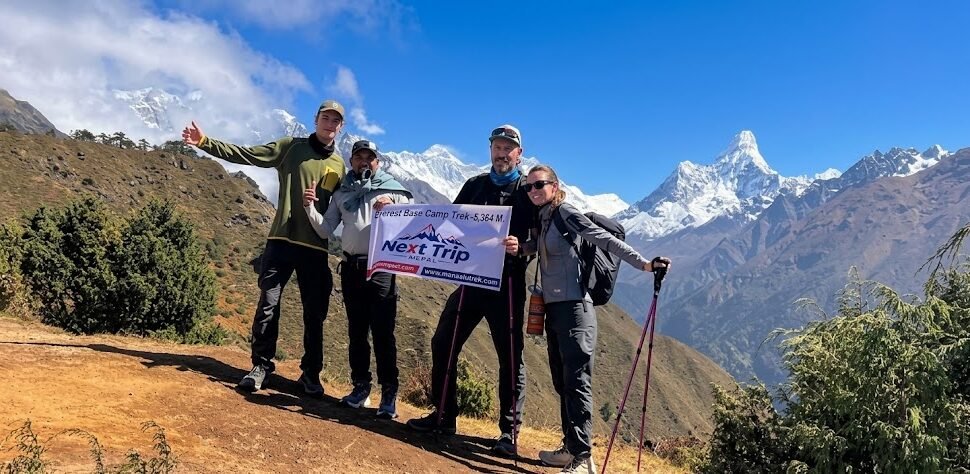
This article is written specifically about the Everest Base Camp with Gokyo Lake Trek, a 17 day route that our lead guide Pasang Sherpa has personally led 19 times. We are not going to talk in general terms about “trekking in Nepal.” We are going to walk you through the real inquiry process, the real pricing, the real payment timing, and the real cancellation situation, using the numbers and policies that are live on our own trip page right now.
By the end of this guide you should know:
- Exactly how to start a booking and what information to send us first
- Why we do not ask for a deposit and what that means for your risk
- How our per person pricing changes depending on group size
- What actually happens on the ground in Kathmandu before you fly to Lukla
- How visa and permit paperwork gets handled without you doing anything complicated
- What a sensible booking timeline looks like, from three months out to the week before
- The mistakes we see other trekkers make when booking any Everest region trek, so you can skip them
Why This Particular Route Deserves a Careful Booking Process
The Everest Base Camp with Gokyo Lake trek is not the standard out and back Everest Base Camp trek most companies sell. It is a longer, more technical loop that links several of the best viewpoints in the Khumbu into one continuous 17 day journey, without doubling back over the same trail twice. That matters for how you should think about booking it.
On this route you will:
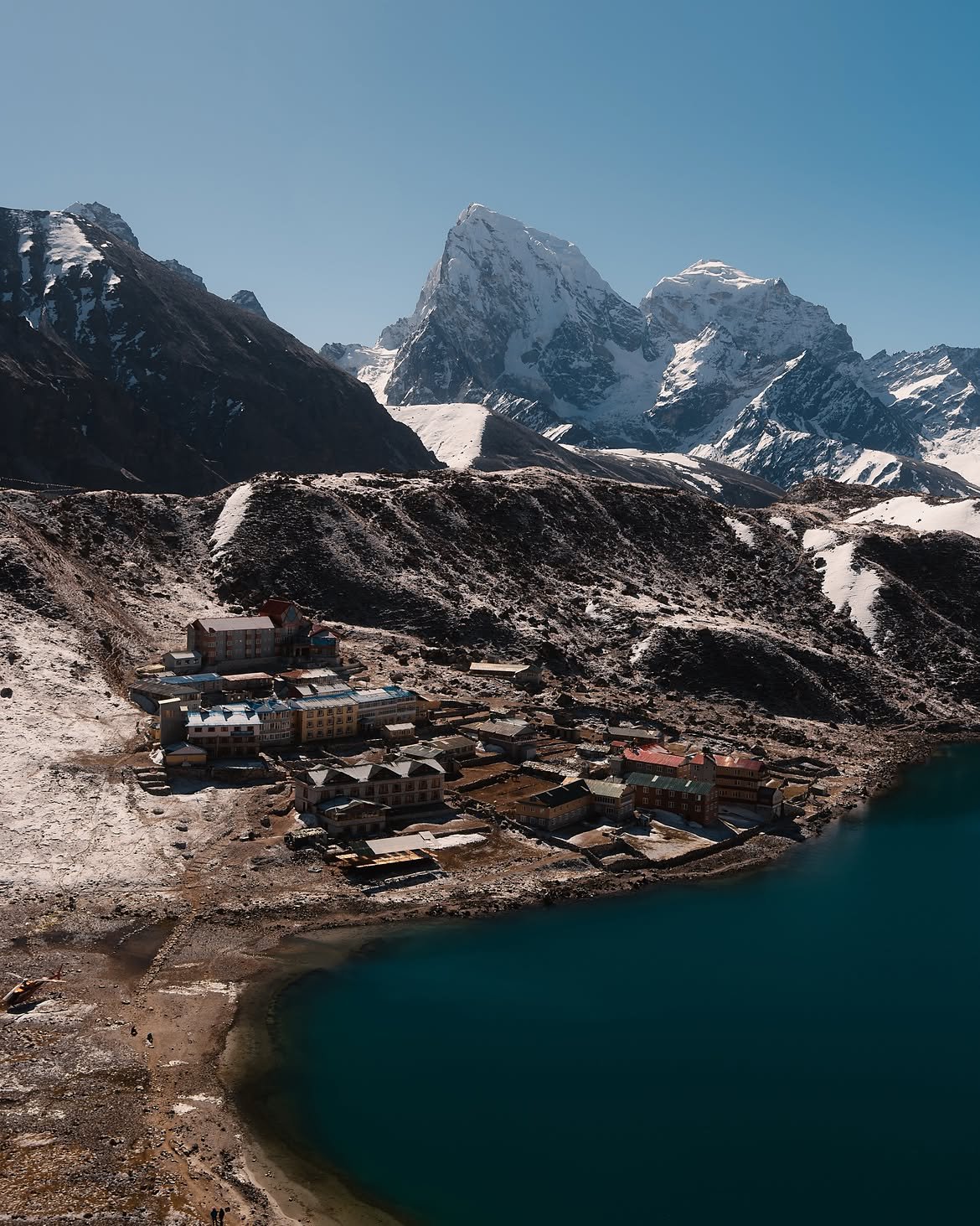
- Walk the Gokyo Lakes valley, a turquoise chain of high altitude lakes most standard Everest Base Camp itineraries skip entirely
- Climb Gokyo Ri at 5360 meters for one of the widest panoramic views of Everest, Cho Oyu, and Makalu you can get without a climbing permit
- Cross the Cho La Pass at 5420 meters, a genuine high mountain pass with snow and rock sections, connecting the Gokyo valley to the Khumbu valley
- Reach Everest Base Camp itself at 5364 meters
- Watch sunrise from Kala Patthar at 5555 meters, the highest point most trekkers reach on this whole journey
Because this itinerary combines a technical pass crossing with two separate high altitude side trips, the booking conversation needs to cover more than “what is the price.” You need to know your fitness level is being matched correctly, you need a guide who has actually done the Cho La crossing many times in changing snow conditions, and you need a company that is honest with you about weather risk on the Lukla flight before you commit. This is exactly what our booking process is built to establish before you leave home.
Step by Step: How the Booking Process Actually Works
This is the process exactly as it runs on our end, not a simplified marketing version of it. Read this section closely because it answers the question almost everyone asks first: “What do I actually have to do?”
Step 1: You Send Us an Inquiry
Start by contacting us directly rather than filling out a generic form and waiting days for a reply. The two fastest channels are:
- WhatsApp at +977 9869225929, which is checked seven days a week, including weekends and Nepali holidays
- Email at nexttripnepal@gmail.com, which is the better option if you want everything in writing from the first message
In your first message, try to include your preferred trek dates, how many people are in your group, and your rough fitness background (have you trekked above 4000 meters before, do you have any medical conditions we should know about). This is not a form you must fill out formally, a few sentences is enough. We reply personally, not with an automated bot script.
Step 2: We Confirm Dates and Group Size
Once we have your inquiry, we check three things before we confirm anything back to you:
- Whether your requested start date fits the Lukla flight schedule and season, since spring and autumn have different flight patterns out of Manthali Airport
- Whether we can put together the right guide to porter ratio for your group size on those dates
- Whether teahouse space is realistically available along the route for your dates, which matters most in peak season weeks in April, May, October, and November
We then send you back a written confirmation of the exact dates, the price per person based on your group size, and a plain language explanation of what is included and excluded. There is no pressure to reply immediately. Take your time comparing this against other operators if you want to.
Step 3: You Decide, Nothing Is Charged Yet
This is the part that surprises most first time trekkers dealing with Nepal based operators: we do not ask for any advance payment to hold your spot. You can book your place on the trek and pay only after you arrive in Kathmandu. We describe this internally as full transparency, no pressure, no hidden charges, and we mean it literally, not as a slogan.
At this stage, all we ask is that you confirm in writing (a WhatsApp message or email reply is enough) that you want to proceed with the dates and price quoted. That confirmation lets us start preparing your Sagarmatha National Park permit paperwork, your TIMS card, and your guide and porter assignment in advance, so nothing is rushed once you land.
Step 4: You Travel to Kathmandu
You book your own international flight into Tribhuvan International Airport. We arrange airport pickup by private vehicle as part of the package, so look for our representative holding a sign with your name at the arrivals area. From here, the in person part of the process begins.
Step 5: Document Check and Trip Briefing in Kathmandu
Once you are settled into your included Kathmandu hotel, we run a short in person briefing, usually the same day or the next morning depending on your arrival time. During this meeting we:
- Check your passport and visa status (you will already have your visa on arrival stamp from the airport by this point)
- Confirm your travel insurance covers high altitude trekking and helicopter evacuation above 5000 meters
- Go through the final printed or digital itinerary day by day
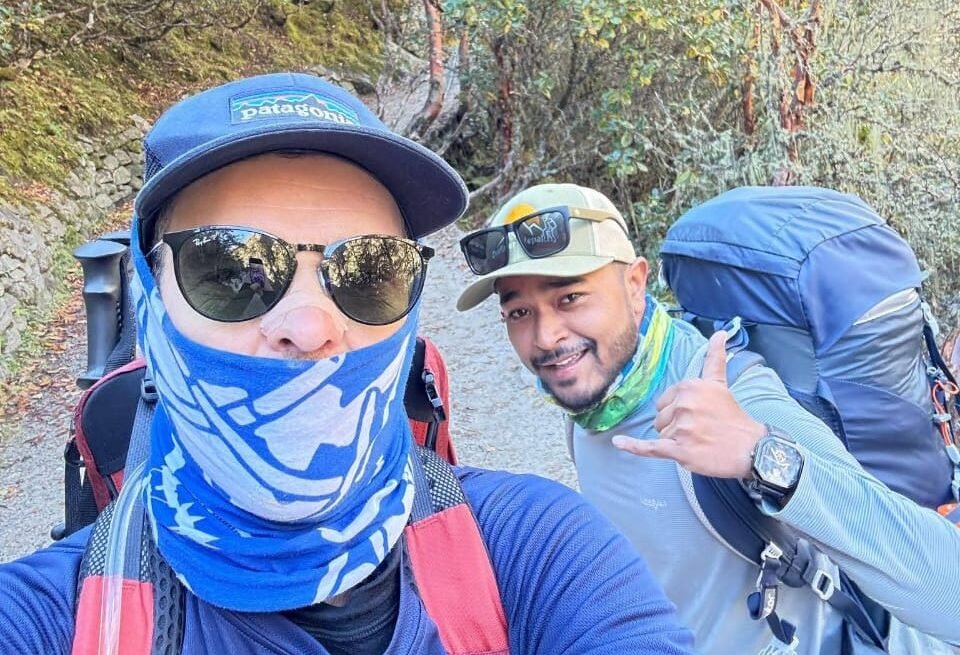
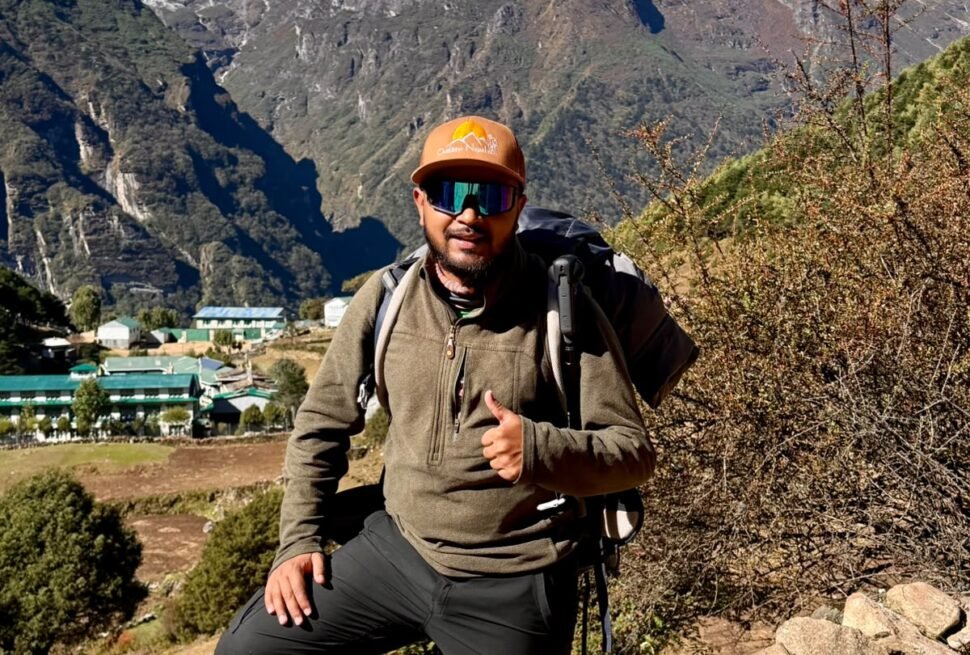
- Introduce you to your guide, and where possible your porter, before you fly to Lukla
- Answer any last questions about gear, altitude, or the route
Step 6: Final Payment
Payment is collected at this point, in Kathmandu, before you fly out to Lukla. We accept:
- Cash in US dollars, which remains the simplest and most commonly used method
- Bank transfer to our company account, arranged in advance by email if you prefer not to carry large amounts of cash
- In some cases, card payment through a linked payment link, though we recommend confirming this option with us directly by WhatsApp or email before relying on it, since card processing fees may apply
We give you a proper receipt for whatever you pay, and we walk through the full cost breakdown with you again in person so there is no confusion between what you already paid and what is genuinely excluded, like tips, alcoholic drinks on the trail, or personal expenses.
Step 7: Fly to Lukla and Start the Trek
With payment and documents settled, you fly to Lukla (or to Manthali Airport in Ramechhap and then onward to Lukla, depending on season, which we explain in detail further down this page) and your 17 day trek begins on schedule.
What to Prepare Before You Contact Us
You will get a faster, more accurate quote and a smoother booking if you have a few things ready before your first message. This is not bureaucracy, it genuinely speeds things up on our side.
Before you message us on WhatsApp or email, try to have ready:
- Your target month or date range for the trek, ideally with some flexibility of a week either way
- The exact number of people in your group, since our pricing is per person and scales with group size
- A rough sense of your trekking background, including any previous treks above 3000 meters
- Any known medical conditions, especially heart, lung, or blood pressure related, that your guide should be aware of at altitude
- Your passport nationality, since visa cost and process can vary slightly by country
- Whether you already have travel insurance that covers helicopter evacuation above 5000 meters, or whether you need advice on this
- Any dietary restrictions, since teahouse kitchens can usually accommodate vegetarian, vegan, or gluten free requests if we know in advance
None of this is a formal requirement to send us. If you only have a rough idea of dates and group size, that is enough to get the conversation started. The extra details simply mean fewer follow up questions later.
How Group Size Changes Your Price, and Why It Matters
Our pricing for the 2026 and 2027 seasons is structured in per person bands based on group size. This is standard practice across the trekking industry in Nepal, but it catches a lot of first time bookers off guard, so it is worth explaining clearly.
| Group Size | Price Per Person (USD) | Best Suited For |
|---|---|---|
| 1 person (solo) | 1865 | Solo trekkers who want a private guide and full flexibility on pace |
| 2 to 3 persons | 1715 | Couples, friends, or small family groups |
| 4 to 9 persons | 1615 | Mid size friend groups, clubs, or small corporate groups |
| 10 to 14 persons | 1515 | Larger organized groups, schools, or company retreats |
| 15 or more | Custom group rate on inquiry | Large expeditions or institutional bookings |
Every price band above includes accommodation, all trek meals, guides, porters, permits, and the Lukla flights. Nothing is stripped out to make a lower band look cheaper. The full inclusion and exclusion breakdown is listed later in this article, and we cover it in even more detail on our Everest Base Camp Trek cost breakdown for 2026 and 2027, which is worth reading if you want to compare this package against a plain Everest Base Camp trek without the Gokyo Lake and Cho La Pass extension.
A few practical points on group pricing that we explain to almost every inquiry we get:
- Solo travelers pay the highest per person rate because fixed costs (a dedicated guide, permits, a private vehicle pickup) do not shrink just because there is one of you. This is normal across the industry, not a Next Trip Nepal markup.
- If you are traveling as a couple, you are already close to the best per person efficiency point at 1715 dollars each.
- Once you cross into a group of four or more, the per person price drops meaningfully, largely because porter and guide costs are shared across more people while the ratio of one porter per two trekkers stays the same.
- If you are organizing a group of 15 or more, always ask us directly for a custom quote rather than assuming the 10 to 14 person rate applies. Larger groups often need a second guide for safety and pacing reasons, which changes the cost structure.
- Mixed groups (for example, two couples who do not know each other but book the same dates) can sometimes combine to reach a better group rate. Ask us directly if this applies to your situation, since we can often merge compatible bookings if dates line up.
The Payment Policy: Why We Do Not Ask for Money Upfront
This is the single most common question we get asked, so we want to be direct about it rather than vague.
We do not require any advance payment to book the Everest Base Camp with Gokyo Lake trek. You reserve your place, and you pay only after you physically arrive in Kathmandu. There is no booking fee, no partial deposit, and no online payment required to lock in your dates.
Here is why we run it this way, and what it actually means for you as a trekker:
- It removes the biggest financial risk in international trekking bookings. The most common complaint we hear from trekkers who used other agencies in the past is losing a large non refundable deposit because of a flight change, a visa problem, or a family emergency that forced them to cancel months in advance. Since we take no advance payment, that risk simply does not exist with us.
- It forces us to earn your trust in person, not through a payment page. We would rather you meet your guide, see our office, ask your questions face to face, and only then hand over payment, than send money to a company you have never spoken to directly.
- It protects you from scam operators. Unfortunately, fake trekking websites that collect large deposits and disappear are a real problem in Nepal’s tourism industry. A company willing to confirm your booking without asking for money first is, frankly, a useful filter for identifying who is legitimate.
- It does not mean we are disorganized. We still prepare your permits, book your guide and porter, and hold your Lukla flight seats in advance once you confirm your dates in writing. The absence of a deposit is a policy choice, not a sign that nothing happens until you show up.
To be clear on what “no advance payment” does and does not cover, here is a simple table.
| What You Do Before Arrival | What You Pay Before Arrival |
|---|---|
| Confirm your dates and group size by WhatsApp or email | Nothing |
| Book your own international flight to Kathmandu | Paid directly to your airline, not to us |
| Arrange your own travel and medical insurance | Paid directly to your insurer, not to us |
| Arrive in Kathmandu and attend the trip briefing | Nothing yet |
| Pay the full trek package price in Kathmandu | Full amount, in cash USD or by bank transfer |
What Happens After You Arrive in Kathmandu
Trekkers who have booked with large international agencies before sometimes expect a chaotic scramble on arrival. In practice, arrival day with us is simple and predictable if you know the sequence.
- Airport pickup. Our driver meets you at Tribhuvan International Airport arrivals in a private vehicle and takes you directly to your included 3 star Kathmandu hotel, on twin sharing with breakfast for two nights.
- Settle in and rest. Long haul flights are tiring. We do not schedule anything demanding for the first few hours after you land.
- Trip briefing. Usually held the same evening or the following morning, this is where we confirm your itinerary, check your documents, introduce your guide, and answer questions about gear and altitude.
- Gear check and last minute shopping. Thamel, Kathmandu’s trekking gear district, has dozens of shops where you can rent or buy anything you forgot, from down jackets to trekking poles, usually at reasonable prices.
- Payment. You settle the full trek cost with us here, in cash USD or by bank transfer, and receive your receipt and final printed itinerary.
- Early departure for Lukla flight day. Depending on the season, this may mean leaving your hotel around 2 am to reach Manthali Airport in Ramechhap in time for the flight, which we explain in full detail in the next section.
We strongly recommend not scheduling anything else important in Kathmandu on your first full day. Jet lag, altitude adjustment, and last minute gear needs tend to fill the day even without extra plans.
Cancellation and Rescheduling: What “No Deposit” Actually Means for You
Because we do not collect money before your trip starts, our cancellation policy looks very different from agencies that take a large upfront deposit. It is worth walking through the practical implications honestly.
If You Need to Cancel Before Arriving in Nepal
- Since no payment has been made yet, there is no deposit to forfeit and nothing for us to refund. You simply tell us as early as possible so we can release the guide, porter, and permit preparation we had planned for your slot.
- The only real cost to you in a pre arrival cancellation is whatever you have already spent on your own international flights, visa, or insurance, none of which are things we control or charge for.
- We ask for as much notice as possible, ideally several weeks, purely so we can offer that guide and those trek dates to another traveler rather than leaving a guide unassigned.
If You Need to Reschedule Before Arriving
- Rescheduling is straightforward since no money has changed hands yet. We simply requote your price based on the new dates and group size, since pricing can shift slightly with season and group composition.
- Popular weeks in peak season (late April to May, and October to November) fill up faster for guide and porter availability, so if you know you need to move your dates, tell us as early as you can rather than waiting.
If You Need to Cancel or Cut Short the Trek After Arrival
This is a different situation because by this point you have already paid. A few realistic scenarios and how we handle them:
- Illness or altitude sickness forces you to descend early. Your guide’s first priority is always your safety, not your itinerary. If you need to turn back at Namche, Gokyo, or anywhere else, we help arrange your descent and transport back to Kathmandu. Refunds for unused trek days are handled case by case, since guide and porter costs, permits, and teahouse bookings for the full trip are already committed once the trek has started.
- Weather related Lukla flight delays or cancellations. These are genuinely outside our control, and the policy is explicit about this: costs from flight cancellations beyond our control, and any extra Kathmandu nights caused by them, are not covered by the package price. We help you rebook, and if needed we can arrange a shared helicopter charter from Lukla or Namche back to Kathmandu, at approximately 500 to 700 US dollars per person, but the base package cost does not include weather contingency.
- Personal reasons for stopping partway. If you simply decide to stop trekking, for reasons unrelated to safety, we assist with logistics to get you back to Kathmandu safely, but this is treated as a personal decision rather than a service failure, so refunds for the unused portion are considered individually rather than automatically issued.
Why This System Is Fairer to You Than a Big Deposit Model
Compare our approach to a typical agency that asks for 20 to 30 percent of the total cost as a non refundable deposit at the time of booking, often months before departure:
- Under a deposit model, if your plans change for any reason before you even leave home, you lose real money for a trip you never took.
- Under our model, that same situation costs you nothing beyond your own flight and visa expenses, which were never in our control anyway.
- The trade off is that you are trusting us to actually deliver what we promised once you arrive and pay, which is exactly why we encourage you to read reviews, ask us questions directly on WhatsApp before booking, and treat the in person briefing in Kathmandu as your chance to confirm everything before money changes hands.
Visa and Permits: What We Handle and What You Handle
Paperwork is one of the more confusing parts of planning any Everest region trek, so here is a clear breakdown of who does what.
Visa: Your Responsibility, But Simple
Nepal’s visa on arrival system is genuinely easy, and the fees are fixed and predictable. As independently confirmed pricing at Tribhuvan International Airport:
- 15 day visa: 30 US dollars
- 30 day visa: 50 US dollars
- 90 day visa: 125 US dollars
- Multiple entry on the 15 or 30 day visa costs roughly 20 US dollars extra
You handle this yourself at the airport on arrival, and it takes most travelers 15 to 30 minutes depending on how busy the immigration hall is. Bring a passport photo and, ideally, US dollars in cash, since currency exchange counters at the airport can have long lines.
Trekking Permits: We Handle This Entirely
The Everest region requires specific permits that are not the same as your tourist visa. As part of the package price, we arrange:
- The Sagarmatha National Park entry permit
- The Khumbu Pasang Lhamu Rural Municipality entry fee
- Your Nepal Tourism Board TIMS card
You do not need to visit any government office, fill out any permit application, or queue anywhere for these. We prepare them using your passport details once your booking is confirmed, and your guide carries the physical permits with him on the trek, since checkpoints along the route (particularly at Monjo, entering the national park) require them to be shown.
If you want a deeper explanation of how Nepal’s permit system works generally, including why permits differ between regions like Annapurna and Everest, our complete guide to Nepal trekking permits covers this in full. And if you are wondering whether you actually need a licensed guide for this route at all (Nepal’s guide requirement rules have changed in recent years for certain trekking areas), we address that directly in our article on whether you need a guide for the Everest Base Camp trek. Short version for this specific route: a government licensed guide is included in every one of our packages regardless of the legal minimum, because the Cho La Pass crossing genuinely requires someone who knows current snow and ice conditions.
Lukla Flights, Manthali Airport, and Why Buffer Days Are Not Optional
This is one of the most misunderstood parts of Everest region trekking, and it directly affects how you should plan your booking dates.
The Manthali Airport Situation
During the two busiest trekking seasons, April to June and September to November, Lukla flights do not depart from Kathmandu’s main airport. Because of air traffic congestion at Tribhuvan International Airport, flights to Lukla during these months operate out of Manthali Airport in Ramechhap district instead, roughly a three to four hour drive from Kathmandu.
What this means practically:
- On your Lukla flight day during these seasons, you need to leave your Kathmandu hotel at around 2 am to reach Ramechhap in time for check in and the early morning flight window
- This applies on both the outbound flight to Lukla and the return flight from Lukla at the end of the trek
- Outside these two seasons (roughly December to March, and parts of July and August), flights typically operate directly from Kathmandu, without the early Ramechhap drive
Why We Insist on Buffer Days
Mountain weather in the Khumbu is unpredictable, and Lukla’s short mountain airstrip is notoriously sensitive to cloud cover and wind. We strongly advise building in one buffer day in Kathmandu before the trek starts and one buffer day after it ends, specifically to absorb flight delays without wrecking your international flight home or your work schedule.
Here is what we tell every trekker booking this route:
- Do not book your international departure flight home for the same day your trek is scheduled to end. Give yourself at least one full spare day.
- If you only have a fixed number of vacation days and cannot add a buffer, tell us at booking time so we can discuss the realistic risk for your specific dates and season.
- If bad weather does strand you in Lukla or Namche, we can arrange a shared helicopter charter back to Kathmandu, typically costing approximately 500 to 700 US dollars per person. This is not included in the package price, but it is an option we organize for you if flights are grounded for multiple days.
- Peak season weeks (especially mid October to early November) see the highest flight delay rates simply because there is more air traffic competing for good weather windows at Lukla.
We bring this up during the booking conversation itself, not as a surprise on arrival day, because it genuinely affects how you should plan flights home and time off work.
Money on the Trail: What You Need to Budget and Carry
The package price covers your meals, accommodation, permits, and flights, but you still need cash for personal expenses on the trail, and the money situation above Namche Bazaar catches people off guard if they have not planned for it.
Key facts to plan around:
- Above Namche Bazaar, it is cash only. There are no ATMs at all once you leave Namche.
- Namche itself has two ATMs, run by Standard Chartered and Global IME Bank, but both frequently run out of cash during peak trekking season. Do not rely on withdrawing money in Namche as your plan.
- Budget roughly 1500 to 3000 Nepali rupees per day for personal trail expenses once you are trekking.
Typical personal costs on the trail, per item:
| Item | Typical Cost (NPR) |
|---|---|
| Hot drink (tea, coffee, hot lemon) | 200 to 500 |
| Wifi access per hour | 300 to 800 |
| Device charging | 200 to 500 |
| Hot shower | 300 to 600 |
Our advice is simple: withdraw or exchange the bulk of your trail cash in Kathmandu before you fly to Lukla. Bring more than you think you need, since prices rise the higher you go, and running short of cash at 4500 meters with no ATM nearby is a genuinely stressful position to be in.
Your Pre Departure Checklist and Timeline
Trekkers who plan on a realistic timeline have a noticeably smoother experience than those who leave everything until the final week. Here is the schedule we recommend, based on years of running this exact route.
Three Months Before Departure
- Contact us on WhatsApp or by email to confirm dates, group size, and price
- Book your international flights into and out of Kathmandu, with a buffer day built in on both ends of the trip
- Start any fitness preparation, particularly hiking with a loaded daypack and cardio training, if you are not already active
- Arrange travel and medical insurance that explicitly covers helicopter evacuation above 5000 meters, since generic travel insurance often excludes high altitude trekking
- Begin researching or buying key gear items (proper trekking boots especially need breaking in over weeks, not days)
One Month Before Departure
- Confirm your final trek dates and group details with us in writing
- Check your passport has at least six months validity remaining from your travel date
- Finalize your gear list and test everything, especially boots and your sleeping bag if you are bringing your own
- Get a general medical check up if you have any pre existing heart, lung, or blood pressure conditions, and ask your doctor specifically about altitude
- Consider whether you want to bring altitude medication such as acetazolamide (commonly known by the brand name Diamox), after discussing it with your doctor
One Week Before Departure
- Reconfirm your Kathmandu hotel pickup time and flight details with us
- Print or save digital copies of your passport, insurance policy, and emergency contacts
- Withdraw or exchange enough US dollars for your final trek payment, plus some extra for Kathmandu meals not included in the package
- Pack your bag and weigh it, keeping in mind the 10 kg luggage allowance on the Lukla flight plus a small daypack you carry yourself
- Charge and test any electronics, headlamps, and battery packs you are bringing
On Arrival in Kathmandu
- Get your visa on arrival at the airport (15, 30, or 90 day, depending on your trip length)
- Meet our airport pickup and go to your hotel
- Attend the trip briefing and meet your guide
- Complete payment for the full trek package
- Use Thamel’s gear shops for anything last minute
- Get an early night before your Lukla flight day, especially if you have a 2 am hotel departure ahead of you during peak season Manthali flight periods
Common Booking Mistakes We See, and How to Avoid Them
We have watched trekkers make the same avoidable mistakes across many different Everest region bookings, not only with us. Here is what to watch for, regardless of which agency you eventually book with.
- Booking international flights home with no buffer day. This is the single most common and most costly mistake. A one day Lukla flight delay is normal, not rare. If your international flight home is the same day your trek is scheduled to end, you are gambling with a nonrefundable plane ticket.
- Assuming travel insurance automatically covers high altitude trekking. Many standard travel insurance policies exclude activities above a certain altitude, often 4000 or 5000 meters, unless you specifically add a rider for it. Check this before you buy, not after you need a helicopter evacuation.
- Underestimating the group size pricing structure. Some trekkers assume solo pricing and group pricing are close together, then are surprised at the per person cost difference. If cost matters to you, ask whether joining an existing small group could lower your rate, since we can sometimes combine compatible bookings.
- Not budgeting real cash for the trail. Assuming you can rely on Namche’s ATMs is risky, since they run out of cash regularly in peak season. Bring more Nepali rupees than you think you will need before you leave Kathmandu.
- Skipping a fitness assessment before committing to the Cho La Pass crossing. This route is more demanding than a standard Everest Base Camp trek because of the pass crossing between Gokyo and the Khumbu valley. Be honest with your guide and with us about your fitness level and altitude history so your pace can be set correctly.
- Booking with an agency that demands a large deposit and then goes quiet. Unfortunately this happens. If an operator wants a big upfront payment before you have spoken to a real person, treat that as a warning sign, and compare it against operators willing to confirm a booking without upfront money.
- Forgetting that Kathmandu lunch and dinner are not included. The package includes breakfast at your Kathmandu hotel, but lunch and dinner in the city are on you. Budget for a few restaurant meals in Kathmandu on both ends of the trip.
- Not clarifying tipping expectations in advance. Tipping is customary but not mandatory, and it catches some first time trekkers off guard at the end of the trip. Guides customarily receive around 100 to 150 US dollars for the whole trip, and porters around 50 to 80 US dollars, though this is not fixed and depends on your own judgment of service.
What Is Included and Excluded: The Full Picture
To avoid any ambiguity, here is the complete inclusion and exclusion list for the package price on the Everest Base Camp with Gokyo Lake Trek.
| Included in Package Price | Excluded from Package Price |
|---|---|
| Airport pickup and drop by private vehicle | International airfare to and from Nepal |
| Two nights, 3 star Kathmandu hotel, twin sharing, with breakfast | Nepal visa fee (30, 50, or 125 US dollars on arrival) |
| Kathmandu to Lukla to Kathmandu flights, economy class, 10 kg luggage allowance | Personal travel and medical insurance, including helicopter evacuation cover above 5000 meters |
| Three meals a day throughout the trek | Personal trekking gear |
| Teahouse accommodation throughout the trek | Excess baggage charges on the Lukla flight |
| English speaking, government licensed guide | Lunch and dinner in Kathmandu |
| One porter for every two trekkers (up to 25 kg carried, about 10 kg of your gear each) | Alcoholic drinks and soft drinks on the trek |
| Guide and porter wages, equipment, insurance, and allowances | Hot shower, charging, and wifi fees at teahouses |
| Sagarmatha National Park entry permit | Tips for guide and porter |
| Khumbu Pasang Lhamu Rural Municipality entry fee | Extra Kathmandu nights caused by flight delays |
| Nepal Tourism Board TIMS card | Helicopter rescue costs not covered by insurance |
| Emergency high altitude rescue insurance for guide and porter | Personal expenses such as laundry and souvenirs |
| Pulse oximeter for the group and first aid kit | Costs from natural disasters, political unrest, or flight cancellations beyond our control |
| All government taxes and service charges |
The 17 Day Itinerary at a Glance
Since booking decisions often depend on understanding the shape of the trip, here is the day by day route.
- Day 1: Arrive Kathmandu (1400 m)
- Day 2: Fly to Lukla (2840 m), trek to Phakding (2610 m)
- Day 3: Phakding to Namche Bazaar (3440 m)
- Day 4: Acclimatization day in Namche (hike to Everest View Hotel, 3880 m, or Khumjung, 3790 m)
- Day 5: Namche to Phortse Thanga (3680 m)
- Day 6: Phortse Thanga to Machhermo (4470 m)
- Day 7: Machhermo to Gokyo (4790 m)
- Day 8: Ascent of Gokyo Ri (5360 m), return to Gokyo
- Day 9: Gokyo to Thangnak (4700 m)
- Day 10: Cross Cho La Pass (5420 m), trek to Dzongla (4710 m)
- Day 11: Dzongla to Lobuche (4910 m)
- Day 12: Trek to Everest Base Camp (5364 m), overnight at Gorak Shep (5164 m)
- Day 13: Kala Patthar (5555 m) at sunrise, descend to Dingboche (4410 m)
- Day 14: Dingboche to Namche Bazaar via Tengboche
- Day 15: Namche Bazaar to Lukla
- Day 16: Fly Lukla to Kathmandu, farewell dinner
- Day 17: Final departure
Full day by day details, elevation charts, and photos for each stage are available on the main Everest Base Camp with Gokyo Lake Trek page, which we recommend reading alongside this booking guide.
Frequently Asked Questions
Do I need to pay anything before I arrive in Nepal?
No. You can book your place on the Everest Base Camp with Gokyo Lake trek and pay only after you arrive in Kathmandu. No deposit, booking fee, or online payment is required to confirm your dates with us.
What payment methods do you accept in Kathmandu?
Cash in US dollars is the simplest and most common method. We also accept bank transfer, arranged in advance, and in some cases card payment through a payment link, though we recommend confirming card payment availability with us directly beforehand by WhatsApp or email.
How far in advance should I book?
We recommend contacting us at least two to three months before your intended travel dates, especially for peak season slots in April, May, October, and November, since guide and porter availability and teahouse space get tighter closer to those dates. That said, we regularly confirm bookings on shorter notice when schedules allow.
Is this trek harder than the standard Everest Base Camp trek?
Yes, meaningfully so. The Gokyo Lake extension adds the Gokyo Ri climb and the Cho La Pass crossing at 5420 meters, both of which require a reasonable level of fitness and comfort walking on rocky and sometimes icy terrain at altitude. It is achievable for a fit beginner with proper preparation, but it is a step up from the plain Everest Base Camp route.
What happens if the Lukla flight is delayed by weather?
Flight delays because of weather are common and outside our control. We recommend building at least one buffer day into your schedule before and after the trek for this exact reason. If delays stack up, a shared helicopter charter from Lukla or Namche to Kathmandu is available as a paid option, typically 500 to 700 US dollars per person, which we help arrange.
Do I need a visa before I arrive, or can I get it at the airport?
Nepal offers visa on arrival for most nationalities at Tribhuvan International Airport, costing 30 US dollars for 15 days, 50 US dollars for 30 days, or 125 US dollars for 90 days. You do not need to arrange a visa before you fly, though it is worth checking your specific nationality’s requirements before travel.
Can I use a card or withdraw cash once I am on the trek?
No. Above Namche Bazaar, it is cash only, with no ATMs at all. Namche has two ATMs, but they frequently run out of cash in peak season, so do not depend on them. Bring enough Nepali rupees with you from Kathmandu before you fly to Lukla, budgeting roughly 1500 to 3000 rupees per day for personal trail expenses.
What if I need to cancel after I have already paid in Kathmandu?
If you need to stop the trek early for medical or safety reasons, your guide’s priority is getting you down safely, and we help arrange transport back to Kathmandu. Refunds for unused trek days in this situation are handled case by case, since permits, guide, porter, and teahouse arrangements for the full trip are already committed once the trek begins.
Is a guide actually required for this route, or is it optional?
Every package we sell for this trek includes a government licensed guide, and for the Cho La Pass crossing specifically, we consider this close to mandatory for safety rather than optional, regardless of any general legal minimum. You can read our full explanation of Nepal’s current guide requirement rules on our guide requirement guide for the Everest Base Camp trek.
How many people will be in my group?
That depends entirely on who else books your dates. If you book alone, you may trek with just your guide and porter, or we may be able to combine you with other solo travelers or small groups on the same dates if you are open to that, which can also improve your per person price. Tell us your preference when you inquire.
Ready to Book? Here Is What to Do Next
If you have read this far, you already understand our process better than most people understand any trekking agency’s process before booking. There is no deposit trap waiting for you, no fine print designed to confuse you, and no pressure tactic pushing you to decide today.
Here is the simple next step:
- Message us on WhatsApp at +977 9869225929, available seven days a week, with your rough travel dates and group size
- Or email us at nexttripnepal@gmail.com if you prefer to have the conversation in writing from the start
- We will reply with a confirmed price, a clear breakdown of what is included, and answers to any specific questions about the Cho La Pass, Gokyo Ri, or the Lukla flight situation for your chosen season
- Decide when you are ready, with no money required until you are standing in Kathmandu meeting your guide in person
You can review the complete route details, photos, and current pricing any time on the Everest Base Camp with Gokyo Lake Trek page. Pasang Sherpa and the rest of our guiding team have run this exact itinerary many times, in every season, in good weather and bad, and we would rather earn your booking by answering your questions honestly than by pressuring you into a payment before you are ready. Reach out whenever you are ready to start planning, there is no rush and no cost to asking.
\n
Related Reading
\n
- Everest Base Camp with Gokyo Lake Trek Pricing Explained
- \n
- Why Trek the Gokyo Lake and Cho La Pass Route With Next Trip Nepal
- \n
- Travel Insurance for the Cho La Pass Crossing
- \n
\n