If you are booking the Everest Base Camp with Gokyo Lake Trek, the single most misunderstood item on your packing list is not your down jacket or your microspikes. It is your travel insurance policy. We have watched trekkers arrive in Lukla with a policy purchased in ten minutes online, printed on a phone screen, that quietly excludes the exact altitude they are about to sleep at. Most of the time nothing happens and the gap never gets noticed. On the day it matters, at 5420 meters on Cho La Pass with a client showing early signs of HACE, that gap is the difference between a helicopter lifting off within the hour and a guide on a satellite phone arguing with a call center while the weather window closes.
This guide is written from the operational side of that problem, not the marketing side. We run this trek regularly out of Kathmandu, our guides carry pulse oximeters from Namche Bazaar onward, and our own staff carry emergency high altitude rescue insurance as part of their employment. The one piece we cannot arrange for you, by law and by practice, is your own medical and evacuation insurance. This article tells you exactly what that policy needs to say, how a real rescue on this route actually unfolds, what it costs based on current market rates we have researched, and which mistakes cost trekkers thousands of dollars they never needed to lose.
Why This Trek Needs a Stricter Policy Than a Standard Himalaya Trek
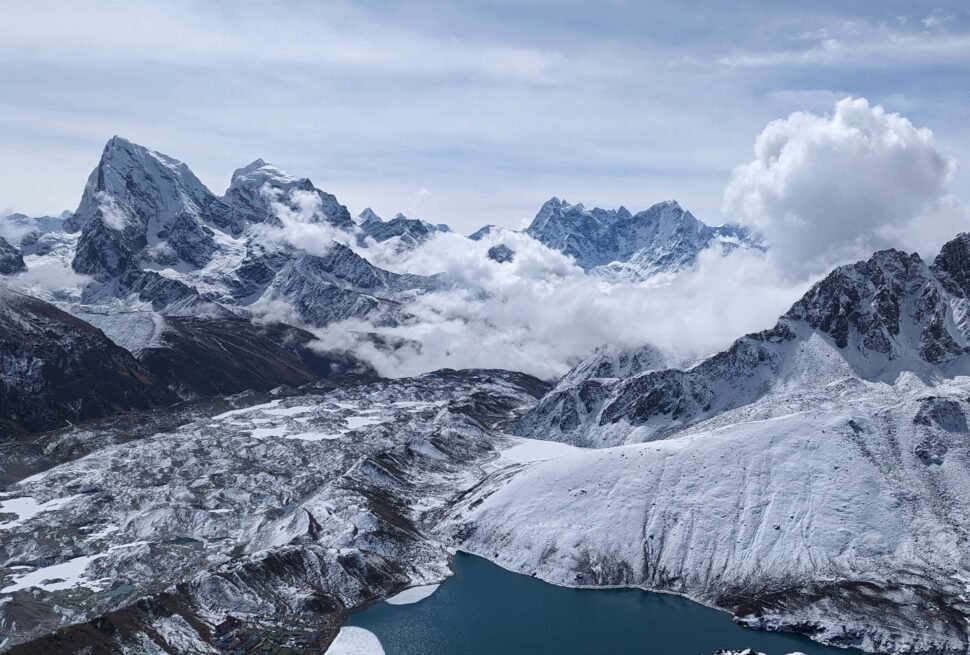
Plenty of travel policies are written with a generic Nepal trek in mind, something that tops out around 3500 to 4000 meters for a few nights. The Everest Base Camp with Gokyo Lake Trek is not that trip. It is a 17 day itinerary that spends the better part of two weeks above 3400 meters, and it puts you above 5000 meters on three separate occasions, not one.
- Cho La Pass at 5420 meters on Day 10, crossed between Thangnak (4700 m) and Dzongla (4710 m), on a route with a steep rocky approach and a glaciated upper section.
- Everest Base Camp itself at 5364 meters.
- Kala Patthar at 5555 meters, the highest point reached on the entire trek.
Any one of those three points sits above the altitude ceiling that a large share of budget and generic travel policies quietly cap coverage at. Many standard policies stop meaningful medical and evacuation coverage somewhere between 2000 and 4000 meters, and some stop covering emergency evacuation by helicopter altogether once mountaineering equipment such as crampons, microspikes, or a fixed rope is involved, even when that equipment is standard trekking gear rather than technical climbing gear. On this itinerary you are not flirting with a policy limit for one afternoon. You are living above it for days at a stretch.
The practical reasons this route demands a properly checked policy include the following.
- You spend multiple nights sleeping above 4000 meters, where altitude related illness risk climbs steadily each night, not just on the day you cross the pass.
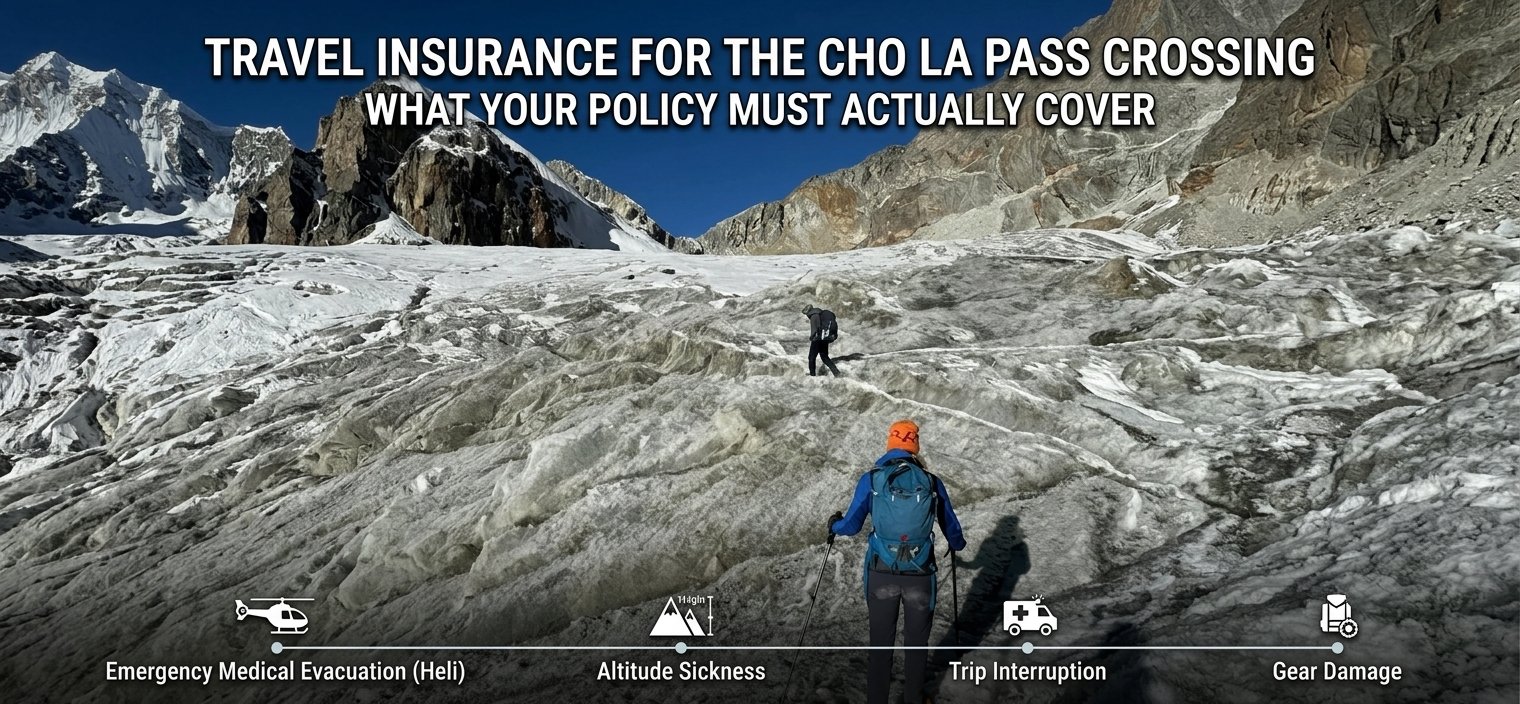
- Cho La Pass itself requires seven to eight hours of sustained exertion at extreme altitude, including rest stops, with a glaciated upper section where guides carry rope for sections where the group needs assistance.
- The approach from Thangnak is steep and rocky underfoot before the ice starts, which raises the chance of a fall related injury on a day when you are already working hard at altitude.
- There is no road access anywhere near Cho La, Gokyo, or Everest Base Camp. A helicopter is the only fast way out if something goes wrong, and helicopters in this terrain are expensive, weather dependent, and not automatically guaranteed to fly on your say so alone.
- Everest Base Camp and Kala Patthar sit high enough that a policy written around a 4000 meter ceiling simply will not pay if you need help at either point.
If you already have a base level of insurance guidance in mind, our companion article on travel insurance for the standard Everest Base Camp Trek covers the general requirements for that classic route. This article goes further because the Gokyo Lake extension and the Cho La crossing add real technical and altitude exposure that a standard Base Camp only itinerary does not have.
The Altitude Profile You Are Actually Insuring Against
Insurance companies price and structure policies around altitude bands because risk does not rise in a straight line. It rises sharply above 4000 meters and again above 5000 meters. Here is the actual profile of this trek, the numbers you should be checking your policy against line by line.
| Location | Altitude | Day on itinerary | Why it matters for insurance |
|---|---|---|---|
| Namche Bazaar | 3440 m | Early days | First serious altitude test. Our own published Lake Louise Score data shows roughly one in four trekkers arriving here without prior acclimatization shows signs of AMS. |
| Dzongla approach and Thangnak | 4700 to 4710 m | Day 9 to 10 | Multiple nights above the ceiling of many standard policies before the pass is even crossed. |
| Cho La Pass | 5420 m | Day 10 | Glaciated crossing requiring microspikes or crampons and, at times, rope assistance from guides. Seven to eight hours of exposure including rest stops. |
| Everest Base Camp | 5364 m | Later in itinerary | Above the 5000 meter helicopter evacuation threshold our own trip listing explicitly requires coverage for. |
| Kala Patthar | 5555 m | Later in itinerary | Highest point of the entire trek. Cold, exertion, and thin air combine at the point you are furthest from any road. |
Look at that table again and notice something important. Three separate altitude points sit above 5000 meters, and days of the trek sit above 4000 meters even outside those three points. A policy that only covers you up to 5000 meters, or up to 5500 meters but only for a single summit day rather than a multi day trek, has real gaps written into it for this specific itinerary.
What Your Policy Must Actually Say Before You Buy It
Do not judge a policy by its marketing page. Judge it by the actual policy wording document, usually a PDF you can download before you pay. Open it and check for the items below. This is the checklist we tell our own clients to work through before they hand over a credit card number.
- An explicit altitude figure for helicopter evacuation coverage, stated in meters, that is at or above 6000 meters. Our own trip listing for the Everest Base Camp and Gokyo Lake itinerary requires coverage above 5000 meters as a minimum, and given that Kala Patthar alone reaches 5555 meters, a policy that stops exactly at 5000 meters leaves you exposed at your own trek’s highest point.
- A clear statement of whether search and rescue is included in the base plan or sold as a separate add on item. Some well known providers exclude search operations entirely, meaning they will pay to fly you out once your location and condition are known, but will not pay to have someone found first.
- The activity classification the insurer applies to your trip. Look for wording such as trekking above a stated altitude, trekking with a guide, trekking without a guide, or mountaineering. Cho La Pass, with its microspikes, occasional rope use, and glaciated section, sits close to a line some insurers draw between trekking and mountaineering. Confirm in writing, by email or chat transcript, that your specific route and altitude are covered as trekking, not excluded as a mountaineering activity.
- Whether the use of microspikes, crampons, or a guide administered rope on a non technical glacier crossing is explicitly permitted, rather than silently excluded under a general mountaineering exclusion clause.
- The dollar figure for emergency medical coverage, separate from the evacuation figure. A policy can have generous evacuation coverage and a thin medical coverage figure that will not cover a multi day hospital stay in Kathmandu after you are flown down.
- The dollar figure specifically for emergency evacuation and repatriation, since this is the figure that actually pays for the helicopter, the fixed wing flight home if needed, and any accompanying medical staff.
- Whether the policy pays the rescue operator directly, known as direct billing or a guarantee of payment, or whether you or your family must pay upfront and claim reimbursement afterward.
- Any clause about preexisting medical conditions, including how the insurer defines that term and whether a condition must be declared and accepted in writing before departure for a related claim to be valid.
- A 24 hour emergency assistance phone number that is answered by a live person, not a voicemail box, and that your guide can call directly from a satellite phone or local SIM card in the mountains.
- The geographic scope of the policy, confirming Nepal is named specifically and not excluded under a vague high risk country clause.
If a policy’s own sales page cannot answer these questions clearly, do not assume the answer in your favor. Email the insurer directly and ask them in writing, then keep that email. We have seen claims delayed for weeks because a trekker assumed coverage that was never actually confirmed.
How Altitude Coverage Ceilings Actually Compare Across Providers
Based on our own research into current publicly available policy wording, altitude ceilings vary a great deal between insurers, and even within a single insurer’s own product range. The table below reflects figures we found published by these providers at the time of writing. Terms change, so treat this as a starting point for your own check, not a final answer.
| Provider | Standard plan ceiling | High altitude plan ceiling | Notes |
|---|---|---|---|
| World Nomads | Around 2000 m | Around 6000 m on their higher tier plan | Medical coverage can be generous, but published wording has excluded search operations connected with finding a missing or endangered traveler, as distinct from evacuating a located one. |
| True Traveller | Around 3000 m | Around 6000 m on their extended packs | UK oriented insurer with clearly stated search and rescue limits published in cash terms, useful for trekkers who want a hard number rather than a vague promise. |
| Global Rescue | Around 4600 m | Effectively unlimited under their dedicated high altitude package | Operates more like a membership and rescue coordination service than a classic insurance claim process, and is often paired with a separate medical expense product. |
| IMG (International Medical Group) | Varies by plan | Higher altitude riders available on some plans | Long established international provider often used by trekkers who also want broader medical coverage beyond the mountain, not just the rescue itself. |
| Faye | Around 2700 m | Around 6000 m on their bundled high altitude option | Newer entrant in the travel insurance space with published high dollar figures for both medical and evacuation coverage. |
Two things stand out from this table that matter directly for your Cho La Pass crossing. First, several standard plans stop coverage well below Namche Bazaar, let alone Cho La or Kala Patthar, so buying the default plan on any of these providers’ websites without upgrading the altitude tier is a real and common mistake. Second, a generous headline medical figure does not automatically mean generous search and rescue coverage. Those are frequently two separate numbers, sometimes two separate products entirely, and you need both to be adequate.
Trekking Classification and Why Cho La Pass Sits Near the Line
Insurers do not treat all mountain activity the same. Most build their pricing and their exclusions around an activity list, and trekking is usually broken into subcategories by altitude and by technicality. This matters directly for this trek because Cho La Pass involves gear and terrain that some policies associate with mountaineering rather than plain trekking.
- Trekking below a stated altitude, often 4000 or 5000 meters, with no glacier travel, no rope, and no technical gear. This is the lowest risk category and the cheapest to insure.
- Trekking above that same stated altitude, which usually requires an upgraded plan tier and is the category your Cho La Pass day and your Everest Base Camp and Kala Patthar days fall into.
- Trekking with the use of crampons, microspikes, or short roped sections on non technical glaciated terrain, which some insurers still classify as trekking provided no climbing rope work, harness use, or technical ice climbing is involved, and which other insurers push into a mountaineering category with a different premium and different exclusions.
- Mountaineering or peak climbing, which typically requires a separate policy entirely and usually asks you to declare the specific peak and its altitude.
Cho La Pass, as our route crosses it, is a trekking pass, not a climbing objective. There is no summit, no technical ice climbing, and no harness work. Guides carry rope for sections where the group needs assistance on the glaciated upper section, and microspikes or crampons are standard equipment for that stretch, but this is managed trekking terrain, the same category as many other high passes in Nepal such as those covered on our Everest Three Passes guide covering Kongma La, Cho La, and Renjo La. The problem is that policy wording does not always match this reality cleanly. Some insurers write a blanket exclusion for any activity involving crampons or ropes without carving out a clear exception for guided, non technical use on a trekking pass. This is exactly the sort of clause you want answered in writing before you fly to Kathmandu, not argued about from a hospital bed in Pheriche.
Preexisting Medical Conditions and This Route
A preexisting condition clause is one of the most commonly misunderstood parts of any travel policy, and it becomes far more important on a trek that pushes your cardiovascular and respiratory system as hard as this one does over 17 days.
- Most insurers define a preexisting condition as anything diagnosed, treated, or showing symptoms within a set window before your policy start date, commonly six months to two years depending on the insurer.
- Common conditions relevant to this trek include high blood pressure, asthma, prior heart issues, diabetes, and any prior history of altitude illness on an earlier trek.
- Some insurers offer a medical screening or declaration process that, once completed and accepted, covers a stated condition specifically. Others exclude any preexisting condition outright regardless of screening.
- If you take regular medication, carry enough for the full 17 days plus several extra days of buffer, since delays from weather at Lukla airport are common and can add days to your trip unexpectedly.
- Declare any relevant condition honestly at the time of purchase. An insurer that discovers an undisclosed condition after a claim is filed will often deny the entire claim, not just the portion related to that condition.
- If you are uncertain whether a condition needs declaring, ask the insurer directly in writing and keep their written answer. Do not rely on a phone call you cannot later produce a record of.
How a Helicopter Evacuation Actually Happens Near Cho La and Gokyo
This is the part most articles skip, and it is the part that actually matters when someone in your group starts showing early HAPE or HACE symptoms at Dzongla or Gokyo. Here is the realistic sequence, based on how these situations actually unfold on this route.
- Your guide identifies the problem. From Namche Bazaar onward, our guides check every client daily with a pulse oximeter and watch for the standard Lake Louise Score symptoms of headache, nausea, dizziness, and poor sleep, plus the more serious warning signs of confusion, loss of coordination, or fluid sounds in the lungs that mark HACE or HAPE.
- The guide begins immediate descent if any serious symptom appears, because descent is the first and most effective treatment for both HAPE and HACE, and it often removes the need for a helicopter entirely if started early enough. Our full explanation of these conditions and how we manage them is covered separately in our guide to altitude sickness on the Everest Base Camp Trek.
- If descent is not fast enough, or the client cannot walk, or the location makes walking descent too slow, the guide contacts our office in Kathmandu and, separately, the emergency assistance number on your insurance policy, ideally at the same time.
- Your insurer’s assistance desk assesses the case, usually asking for your policy number, your location by GPS coordinates, your symptoms, and your guide’s or a doctor’s assessment if one is reachable by phone.
- This is the point where many helicopter operators in Nepal ask for a guarantee of payment before agreeing to fly, meaning either your insurer confirms in writing that it will pay the operator directly, or someone, often family back home or our office acting on your behalf, arranges an upfront payment guarantee.
- Once payment is guaranteed, the operator checks weather and light conditions. Cho La Pass and the Gokyo valley sit in terrain where mountain weather changes fast, and a helicopter will not fly into cloud, high wind, or after dark in most cases, which can mean a delay even after the paperwork is settled.
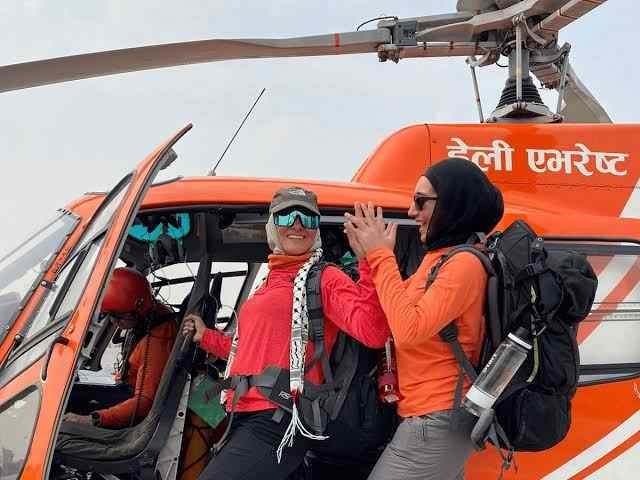
- The helicopter picks up the client from the nearest safe landing point, which may not be your exact location. On the Cho La side this is often Dzongla, Gokyo, or occasionally a clear stretch near Thangnak, wherever the pilot judges the landing safe.
- The client is flown either to Kathmandu directly or to a lower altitude airstrip first if the case is stable enough, with onward hospital transfer arranged from there.
- Your insurer or, if reimbursement based, you personally then handles the hospital admission and ongoing treatment costs, which is a separate claim process from the flight itself.
Every step in that sequence moves faster when your policy documents are already in your guide’s hands and your insurer’s number is already saved and tested before you fly to Lukla. This is not a theoretical planning exercise. It is the actual bottleneck in real rescues, and it is entirely within your control before the trek even starts.
Direct Billing Versus Reimbursement, and the Guarantee of Payment Problem
This is the single most expensive misunderstanding trekkers have about their insurance, and it deserves its own explanation separate from the rescue sequence above.
- Reimbursement based policies expect you, or someone on your behalf, to pay the helicopter operator and the hospital first, keep every receipt, and file a claim afterward for repayment. This works fine if you have several thousand dollars in immediately accessible funds and someone at home able to wire money fast.
- Direct billing, sometimes called a cashless arrangement or a guarantee of payment, means your insurer contacts the helicopter operator or hospital directly and confirms it will pay them, so no upfront cash changes hands from you or your family.
- Many helicopter operators in Nepal will not lift off without one of these two things settled first, either a confirmed guarantee of payment from an insurer they have worked with before, or a direct upfront payment. This is not the operator being difficult. Helicopter time in this terrain is genuinely expensive to run, and operators have been burned by unpaid rescues in the past.
- Based on current market figures we researched from Nepal based helicopter operators and rescue coordination guides, a rescue flight from the Cho La or Gokyo area down to Kathmandu commonly runs in the range of roughly 4000 to 6000 US dollars for a relatively straightforward case, climbing toward roughly 8000 to 12000 US dollars or more for a rescue triggered from Everest Base Camp, Kala Patthar, or another point above 5000 meters, with complex or extreme altitude cases sometimes reported higher still. These figures are estimates drawn from published rescue cost guides and operator pricing discussions, not a quote from any single operator, since actual cost depends heavily on helicopter type, weather, flight distance, and crew availability on the day.
- If hospitalization, ICU care, and international repatriation are added on top of the flight itself, total costs for a serious high altitude case have been reported to run well beyond 20000 US dollars in some cases, which is exactly why the evacuation coverage figure in your policy, not just the headline medical figure, needs to be high enough to absorb a worst outcome, not just an average one.
- Ask your insurer this exact question before you buy: will you guarantee payment directly to a Nepal based helicopter operator at the time of dispatch, or will I need to pay first and claim later. Get the answer in writing.
We tell every client the same thing on this point. A policy that only reimburses you later is still much better than no policy at all, but it puts real financial pressure on you or your family at the worst possible moment. A policy that offers a genuine direct billing or guarantee of payment arrangement removes that pressure entirely, and it is worth paying slightly more for that feature alone.
AMS, HAPE, HACE, and What Actually Triggers a Rescue on This Route
Understanding what altitude sickness actually looks like on this trek helps you understand what your insurer will and will not pay for, and it helps you and your guide make the descent decision early rather than late.
- Acute Mountain Sickness, AMS, is common and usually mild. Based on our own published Lake Louise Score data, roughly one in four trekkers arriving in Namche Bazaar at 3440 meters without prior acclimatization shows some AMS symptoms, typically headache, mild nausea, and poor sleep.
- High Altitude Pulmonary Edema, HAPE, is fluid building in the lungs. Warning signs include breathlessness even at rest, a persistent cough, and a bubbling or crackling sound in the chest. This is a genuine emergency.
- High Altitude Cerebral Edema, HACE, is fluid building around the brain. Warning signs include confusion, loss of balance and coordination, severe headache that does not respond to standard medication, and in advanced cases loss of consciousness. This is also a genuine emergency.
- Both HAPE and HACE are treated the same first way, immediate descent, and both may require helicopter evacuation if descent on foot is not fast enough or the client cannot walk safely.
- Our guides carry a pulse oximeter and check every client’s oxygen saturation and pulse daily from Namche Bazaar onward specifically to catch early warning signs before they become an emergency requiring a rescue at all.
- An insurer will generally want documentation of the diagnosis and the guide’s or a doctor’s assessment as part of any claim tied to altitude illness, which is another reason our guides keep a written daily log of oximeter readings during the trek.
A more detailed breakdown of symptoms, prevention, and our monitoring approach is available in our dedicated guide to altitude sickness on the Everest Base Camp Trek, which applies equally to the Gokyo Lake extension and the Cho La crossing since the same altitude physiology applies throughout.
Insurance Providers Trekkers Commonly Use for This Altitude
There is no single correct provider for every trekker, since the right choice depends on your nationality, your home country regulations, your existing health conditions, and how much you value direct billing versus a lower premium. Based on our research into providers trekkers on this route commonly buy from, here is a general picture of each, without specific pricing claims beyond what we found and noted above.
- World Nomads is widely used by independent travelers and is known for a straightforward online purchase process and a higher altitude tier that reaches around 6000 meters. Check their search and rescue exclusion wording carefully, since published policy language has drawn a distinction between evacuating a located traveler and searching for a missing one.
- True Traveller is commonly used by UK based trekkers and publishes clear cash figures for both medical coverage and search and rescue coverage on its extended packs, which some trekkers find easier to evaluate than vaguer wording elsewhere.
- Global Rescue operates closer to a membership and rescue coordination service than a classic claims based insurer, and is often chosen by trekkers who want a company whose core business is arranging the rescue itself, sometimes paired with a separate medical expense policy for the hospital bills afterward.
- IMG, International Medical Group, is a long established international provider often chosen by trekkers who want broader medical coverage that extends beyond the mountain portion of their trip, useful if your trip includes time in Kathmandu or elsewhere before and after the trek.
- Faye is a newer entrant that has published relatively high dollar figures for both medical coverage and evacuation coverage on its high altitude bundle, worth comparing directly against the more established names above.
- Several other specialist providers exist, particularly ones based in the UK and Europe that specifically market high altitude trekking cover up to 6000 meters or higher. If your home country has a well known specialist trekking insurer, compare it against the names above using the same checklist from earlier in this article rather than assuming a locally familiar brand automatically covers this specific altitude and activity profile.
Whichever provider you choose, run every single item from our earlier checklist against their actual policy wording document, not their marketing page. Then email us your shortlist at nexttripnepal@gmail.com or message us on WhatsApp at +977 9869225929 if you want a second opinion from a team that has actually coordinated rescues on this exact route before you commit to a purchase.
Costly Mistakes Trekkers Make With Insurance on This Trek
We see the same handful of mistakes repeat themselves year after year, and every one of them is fully avoidable with about twenty minutes of checking before departure.
- Buying a generic travel policy meant for a beach holiday or a city trip, which typically caps altitude coverage somewhere below 4000 meters, far below Namche Bazaar let alone Cho La Pass or Kala Patthar.
- Assuming a credit card’s built in travel insurance benefit is sufficient. These benefits are usually designed for flight delays, lost baggage, and basic trip cancellation, and very rarely include meaningful high altitude helicopter evacuation coverage at all.
- Buying the correct provider but the wrong tier, for example purchasing World Nomads or a similar provider’s standard plan without upgrading to the high altitude tier that actually reaches 6000 meters.
- Never actually reading the policy wording document, relying instead on a sales page summary that does not carry the same legal weight as the full terms.
- Not checking the specific altitude clause line by line against the actual altitude figures for this trek, namely 5420 meters at Cho La, 5364 meters at Everest Base Camp, and 5555 meters at Kala Patthar.
- Not confirming whether crampon, microspike, or roped glacier crossing use is covered, which matters directly for the Cho La Pass day.
- Not carrying a printed physical copy of the policy, the emergency contact number, and the policy number, and instead relying entirely on a phone that may run out of battery, lose signal, or break during the trek.
- Not telling the guide the policy details and emergency number in advance, meaning that in an emergency the guide is searching through a client’s phone or bags rather than already knowing who to call.
- Failing to confirm direct billing or guarantee of payment arrangements, then discovering during an actual emergency that the family must first wire several thousand dollars before a helicopter will move.
- Leaving preexisting conditions undeclared, risking a denied claim on the exact condition most likely to cause a problem at altitude.
- Buying insurance after arriving in Kathmandu rather than before leaving home, which sometimes limits provider choice and can leave a gap in trip cancellation coverage for the days already traveled.
Beyond the Helicopter: Trip Delay, Cancellation, and Gear Coverage Worth Having
A policy that nails the helicopter and medical evacuation clause but ignores everything else is only doing half its job on this particular trip. The Everest Base Camp with Gokyo Lake Trek depends on a small aircraft landing at a short mountain airstrip in Lukla, and that single fact creates a second, quieter category of risk that trekkers often forget to insure against until it costs them money.
- Lukla flights are cancelled or delayed by weather on a regular basis, sometimes for a single day and occasionally for several days in a row during the shoulder seasons. A policy with reasonable trip delay coverage can reimburse extra hotel nights in Kathmandu, meals, and in some cases a rebooked flight if the delay runs long enough to threaten your onward international connection.
- Trip cancellation coverage matters if illness, a family emergency, or a sudden travel restriction forces you to cancel before you even leave home. Given how far in advance many trekkers book this itinerary, a cancellation clause that actually pays out is worth checking rather than assuming.
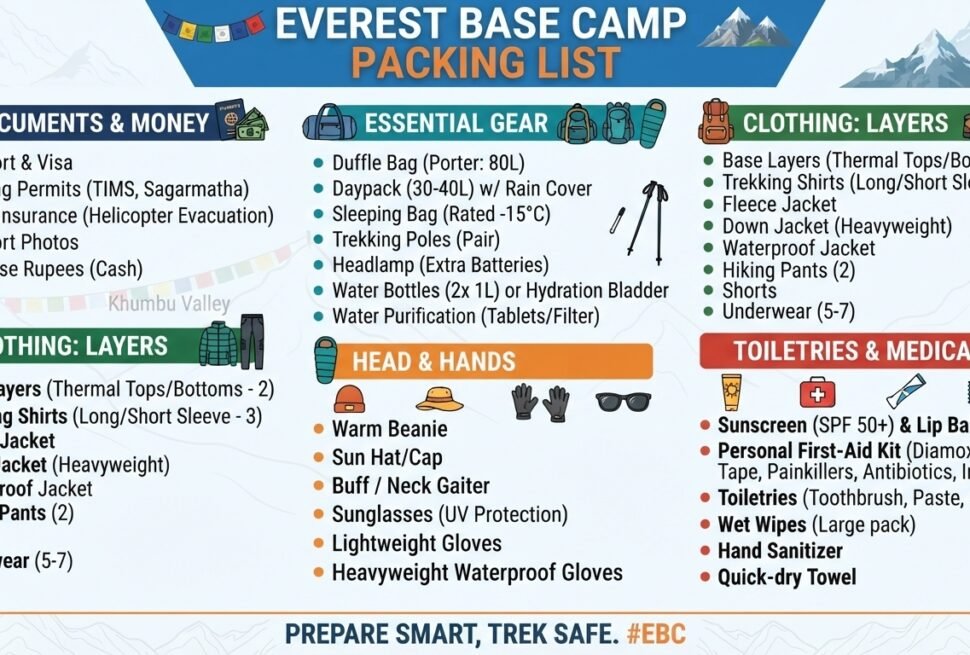
- Gear loss or damage coverage is relevant because a Cho La Pass crossing depends on functioning microspikes or crampons, solid trekking poles, and a proper sleeping system for nights above 4000 meters. If checked baggage goes missing on the international leg of your journey, a policy that reimburses emergency gear replacement in Kathmandu saves your itinerary rather than forcing a rushed and expensive last minute purchase.
- Trip interruption coverage is the cousin of cancellation coverage, covering the case where you have to cut the trek short partway through, for example descending early after a rescue and then being unable to complete the Gokyo Lake or Kala Patthar sections as planned. Some policies pay a prorated refund for the unused portion of the trip in this situation, and some do not, so check the wording rather than assume.
- Personal liability coverage rarely gets discussed for trekking, but it is worth a glance, since it covers you if your actions accidentally cause injury to another trekker or damage to property, which is a small but real possibility on a crowded pass day when many trekking groups cross Cho La within the same weather window.
None of these five items replace the core requirement of proper high altitude helicopter evacuation coverage, but a policy that offers all of them together, at a reasonable combined price, is usually a sign of a more thoughtfully built product overall. When you are comparing two otherwise similar policies and cannot decide between them, these secondary benefits are a reasonable tie breaker.
One more practical point on timing. Nepal issues a tourist visa on arrival at the airport, priced at 30 US dollars for 15 days, 50 US dollars for 30 days, and 125 US dollars for 90 days. Choose a visa length that comfortably covers your full 17 day itinerary plus a buffer of three to five days for possible Lukla delays in either direction, and make sure your insurance policy’s date range covers that same full window rather than the exact minimum number of days on the printed itinerary. A policy that expires two days before a delayed return flight actually lands you back in Kathmandu is a gap you do not want to discover by accident.
Documents to Actually Carry on the Trek
Paperwork sounds boring until it is the thing standing between your guide and a fast helicopter dispatch. Carry the following, in both physical printed form and as a saved digital copy on your phone.
- A printed copy of your full insurance policy document, not just a confirmation email summary.
- Your policy number and the insurer’s 24 hour emergency assistance phone number, written clearly on a separate card kept in an easily accessible pocket.
- A copy of your passport identification page and your Nepal visa page.
- A note of any preexisting medical condition, current medication, and dosage, in case you are unable to communicate this yourself during an emergency.
- Emergency contact details for someone at home who can act on your behalf, including access to funds if your policy requires any upfront payment before reimbursement.
- Our own office contact details, WhatsApp +977 9869225929 and email nexttripnepal@gmail.com, saved in your guide’s phone and your own, since we coordinate directly with hospitals and helicopter operators in Kathmandu on behalf of our clients during any emergency.
Before you fly to Lukla, hand your guide a copy of your insurance details directly. Do not assume they already have it. This single step removes one entire round of searching and confusion at the exact moment speed matters most.
A Simple Checklist Before You Book Your Policy
If you read nothing else in this article, work through this shortened version before you pay for any policy for this specific trek.
- Confirm the helicopter evacuation altitude ceiling is at least 6000 meters, comfortably above Kala Patthar’s 5555 meters.
- Confirm search and rescue is included, not just evacuation of an already located person.
- Confirm crampon, microspike, and guided glacier crossing use is covered, not excluded as mountaineering.
- Confirm the emergency medical coverage figure and the evacuation coverage figure separately, both in writing.
- Confirm whether the insurer offers direct billing or a guarantee of payment to Nepal based helicopter operators.
- Confirm how any existing medical condition is treated under the policy, and declare it honestly.
- Print the policy, save it digitally, and hand a copy to your guide before departure.
- If anything is unclear, contact us before you commit to a policy. We have coordinated enough real rescues on this route to tell you quickly whether a specific policy’s wording will actually hold up.
Frequently Asked Questions
Does travel insurance for this trek need to specifically mention Cho La Pass?
No policy names Cho La Pass by name. What matters is the altitude figure and the activity classification. Confirm the policy covers trekking, including crampon or microspike use, up to at least 6000 meters, and Cho La Pass at 5420 meters falls comfortably within that.
Is helicopter evacuation coverage above 5000 meters really necessary, or is that just a formality?
It is a genuine requirement, not a formality. Both Everest Base Camp at 5364 meters and Kala Patthar at 5555 meters sit above 5000 meters, and Cho La Pass at 5420 meters sits in the same range. This is exactly why our own trip listing for the Everest Base Camp with Gokyo Lake Trek requires it as a stated condition of joining the trip.
What does a helicopter rescue from near Cho La Pass or Gokyo actually cost?
Based on current published rescue cost information we researched from Nepal based helicopter operators, a rescue from this general altitude and area commonly falls somewhere in the range of roughly 4000 to 6000 US dollars for a straightforward case, and can run higher, sometimes reported in the 8000 to 12000 US dollar range or more, for a rescue triggered above 5000 meters or complicated by weather or a difficult landing site. These are estimates only, since actual cost depends on helicopter type, weather, distance, and crew availability on the day.
Will the helicopter fly immediately if I call for help?
Not always immediately. Weather and light conditions must allow safe flying, and many operators require a confirmed guarantee of payment from your insurer, or an upfront payment, before dispatch. This is why having your policy details and emergency number ready in advance matters so much for actual response speed.
Does my policy need to cover both medical treatment and the helicopter flight, or is one enough?
You need both figures to be adequate, and they are often listed separately in the policy. The evacuation figure pays for the flight and immediate transfer. The medical figure pays for hospital treatment once you arrive in Kathmandu. A policy strong in one area and weak in the other still leaves you exposed.
Are Diamox or other altitude medications covered by travel insurance?
Routine preventive medication such as Diamox is generally a personal medical expense, not a travel insurance claim, and you should buy it before departure or in Kathmandu with a prescription. Insurance becomes relevant once a condition such as HAPE or HACE develops and requires treatment or evacuation.
Do I need a separate policy for the guide and porter, or does that come with the trek?
Our package already includes emergency high altitude rescue insurance for our guide and porter staff, arranged and paid for by us as their employer. This is separate from your own personal travel and medical insurance, which remains your own responsibility to arrange before the trek.
Can I buy travel insurance after I arrive in Kathmandu?
Some providers allow this, but options narrow considerably, and any trip cancellation coverage for days already traveled is typically no longer available. Buying before you leave home is strongly preferable, and it gives you time to actually read the policy wording rather than rushing a purchase the night before flying to Lukla.
What is the Nepal visa fee, and does that affect my insurance planning?
Nepal issues a visa on arrival at 30 US dollars for 15 days, 50 US dollars for 30 days, and 125 US dollars for 90 days. This is unrelated to your insurance policy directly, but plan your visa duration around your actual trip length, including buffer days for possible Lukla flight delays, since your insurance policy dates should also cover that same full window plus buffer.
How do I know if a policy actually classifies Cho La Pass as trekking rather than mountaineering?
Read the activity definitions section of the policy wording document, and if it is not perfectly clear, email the insurer directly describing the specific trek, the altitude, and the use of microspikes or crampons on a guided, non technical glacier crossing, and ask for written confirmation of coverage before you purchase.
The Bottom Line for This Specific Trek
The Everest Base Camp with Gokyo Lake Trek is a genuinely rewarding 17 day route, and the Cho La Pass crossing at 5420 meters is one of its highlights precisely because it is a real high altitude mountain day, not a walk in the park. That same quality is exactly why your insurance policy needs to be checked line by line rather than bought on autopilot. A policy with a real 6000 meter helicopter evacuation ceiling, clear search and rescue inclusion, honest handling of any existing medical condition, and a genuine direct billing or guarantee of payment arrangement will do its job quietly in the background for the entire trek and, if you are unlucky enough to need it, will actually work when it matters at Cho La, at Gokyo, at Everest Base Camp, or at Kala Patthar.
If you want us to look over a specific policy before you buy it, or if you have questions about how our team manages altitude monitoring and emergency coordination on this exact route, reach us on WhatsApp at +977 9869225929 or by email at nexttripnepal@gmail.com. We would rather spend fifteen minutes reviewing your policy wording with you now than coordinate a preventable emergency later. You can review the full day by day itinerary, altitude profile, and inclusions for the trek itself on our Everest Base Camp with Gokyo Lake Trek trip page whenever you are ready to move from planning to booking.
\n
Related Reading
\n
- Lukla Flight Delays and the Everest Base Camp with Gokyo Lake Trek
- \n
- How to Book the Everest Base Camp with Gokyo Lake Trek With Next Trip Nepal
- \n
- Solo Female Trekkers on the Gokyo Lake and Cho La Pass Route
- \n
\n