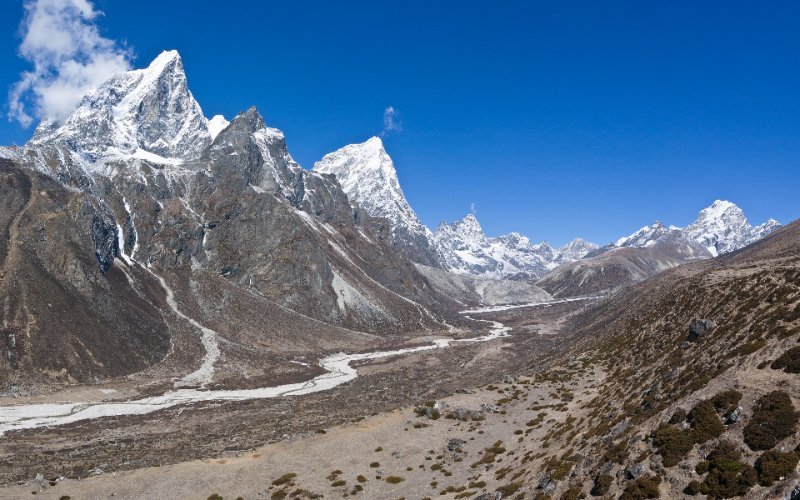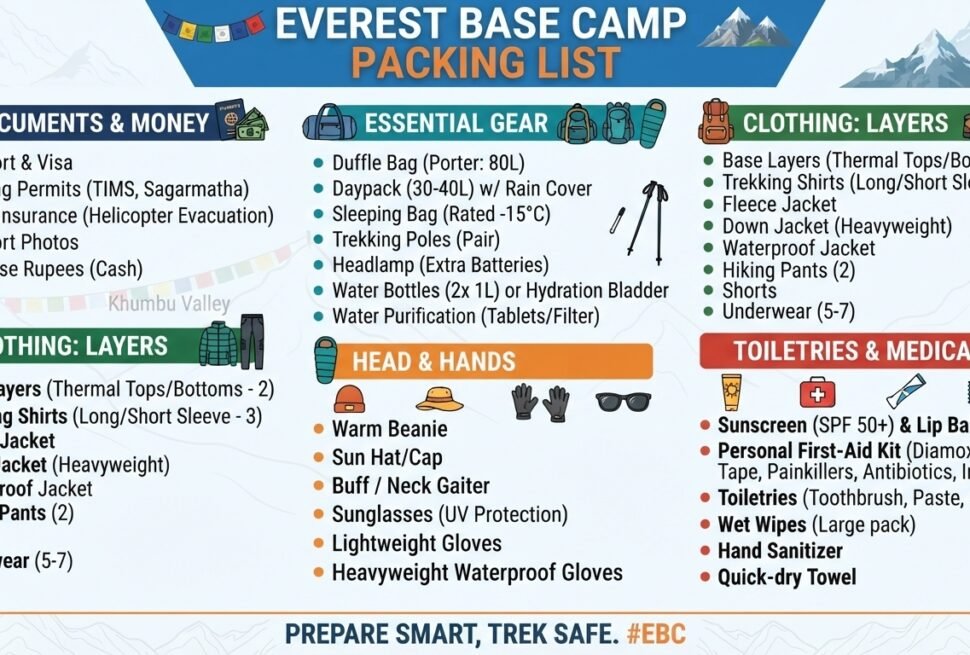
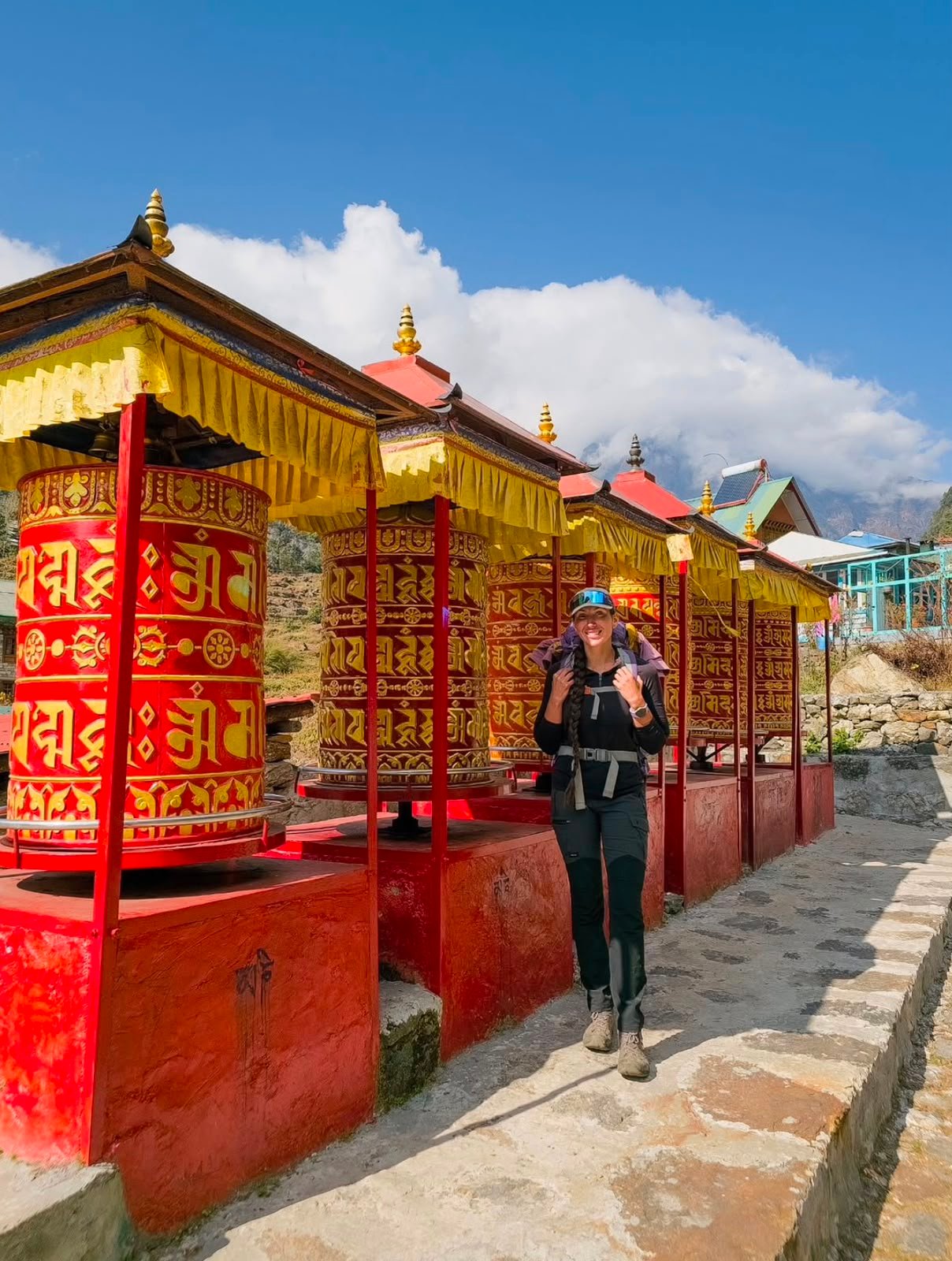
The single biggest mistake people make when planning for Everest Base Camp is picking dates without understanding how dramatically the Khumbu region’s weather shifts across the calendar. People book flights around holiday schedules or rough advice from a well-meaning friend, then arrive in Namche in July to find the mountain buried in cloud for a week straight. Others land in Kathmandu in January, completely unprepared for what -20°C (-4°F) nights feel like at 5,000 meters when you are sleeping in an unheated teahouse.
This same seasonal reasoning applies if you are considering the helicopter return version of this trek. Our month by month season guide for the Everest Base Camp Trek with Helicopter Return covers the same climate patterns for that itinerary.
Everest Base Camp sits at 5,364 meters above sea level. The trail from Lukla to base camp covers roughly 65 km one way, climbing through rhododendron forests, Sherpa villages, high alpine terrain, and the glaciated world above Gorakshep. The altitude means weather can turn against you at any time of year. But two specific windows make this route genuinely enjoyable, safe, and visually spectacular: spring, running from March through May, and autumn, running from September through November.
Those two windows are not the only times you can go. The route is accessible year round, technically speaking. But accessible and enjoyable are very different things. Monsoon, from June through August, brings relentless rain, leeches below 3,000 meters, and views blocked by cloud for most of each day. Winter, from December through February, brings extreme cold and closes many teahouses above Namche Bazaar.
This guide gives you a real picture of every month on the EBC trail. You will learn which month has the best weather, which months are too crowded, when to expect Lukla flight delays, how much permits cost, what to pack for each season, and which season suits your specific goals. Whether you are choosing dates for your first time on this route or considering a less conventional winter trip, this covers what you need to know before booking anything.
A few things worth stating up front: this guide focuses on the classic Everest Base Camp trek via Lukla and Gorakshep, but the seasonal advice applies equally well to route variants like the Three Passes Trek and the longer walk in from Jiri. The temperature data and crowd figures come from years of running groups on this trail across every season. The advice here is honest about the trade-offs, not designed to sell you a particular season.
One more thing: if you are early in the planning process and unsure about route options, reading up on choosing the right EBC trekking company before settling on dates is time well spent. The operator you choose affects how well your schedule is built around acclimatization and weather windows.
The Two Best Seasons for EBC Trek
Before anything else: if you can only go in spring or autumn, go. Both are exceptional. The question is which one fits your goals better. We cover that comparison in its own section below, but the core point is this: spring and autumn are when Nepal opens up, the skies clear, and the mountains reveal themselves in a way that justifies everything you went through to get there.
Spring (March to May): The Classic Choice
Spring is the most popular trekking season in the Everest region. The monsoon has been gone for months, the sky above Namche Bazaar stays blue until early afternoon on most days, and rhododendron forests below 3,000 meters burst into red and pink through March and April. The days are getting longer. The mountains are clear. And the trail comes alive with trekkers from around the world.
March: Temperature at Namche Bazaar (3,440 meters) averages 4°C to 10°C (39°F to 50°F) during the day. At Everest Base Camp itself, daytime highs reach around -5°C to 2°C (23°F to 36°F). Nights at Namche drop to around -5°C (23°F). This is the start of the trekking season. Trails are quieter than April. Snow is still possible on Khumbu Glacier and on high passes above 5,000 meters. The path from Namche to Tengboche passes through some of the most dramatic rhododendron forest on the route, and in mid-March those trees are just beginning to flower. Fewer people means easier teahouse bookings and a more solitary feel on the trail.
April: Peak season arrives. Daytime at Namche reaches 12°C to 16°C (54°F to 61°F). At base camp, temperatures climb to -3°C to 5°C (27°F to 41°F) on a good day. Daylight stretches to around 13 hours. April is also when Everest climbing teams begin moving up through base camp, which gives the entire upper Khumbu an electric atmosphere. If you want to see tents, fixed ropes, and expedition teams in action, April puts you right in the middle of it. The trail is busy above Namche, especially on the Namche to Tengboche and Tengboche to Dingboche sections. Book teahouses in Dingboche, Lobuche, and Gorakshep well ahead for any April trip.
May: The busiest month of the year on the EBC route. Summiting attempts on Everest peak in May, which means base camp and the surrounding area are at their maximum activity. Wildflower season is in full swing at lower elevations. The air is warmer, with Namche reaching up to 18°C (64°F) during the day. The trade-off: every teahouse above Namche is full. Some trekkers report a congested feel on the Lobuche to Gorakshep section. The advantages: the trail infrastructure is at its best, guides are plentiful, helicopter evacuations (if ever needed) happen frequently, and the summit route is fully active, giving the whole area an energy unlike any other time of year. May also sees the best wildflower bloom below the treeline.
Across the full spring window, the EBC route sees roughly 15,000 to 20,000 trekkers make the attempt. October alone draws 8,000 to 10,000.
| Factor | Spring (March to May) |
|---|---|
| Pros | Rhododendron bloom, long days, Everest climbing season atmosphere, all teahouses open, excellent morning visibility |
| Cons | Busiest months are April and May, afternoon clouds build above treeline in May, teahouses above Namche book out fast |
| Best for | Those who want the full Everest season experience, wildflower lovers, morning photographers |
| Crowds | High in April and May. March is significantly quieter and underrated. |
Autumn (September to November): Crystal Clear Views
The other prime window. After months of monsoon, the rain stops and the Khumbu region dries out quickly. The sky turns deep blue. The air is crisp and clean in a way that spring, with its dust and climbing season activity, cannot always match. Mountains appear sharp on the horizon. Ama Dablam (6,812 meters) looks like it has been cut from glass.
September: The first two weeks are often still affected by the tail end of monsoon. Rain falls intermittently, the lower trails below Phakding can be muddy, and leeches persist below 2,500 meters until mid-month. But from around September 15, conditions transform. The valleys go green and lush from months of rain. The high routes above Namche dry fast. Temperatures are mild: Namche averages 12°C to 17°C (54°F to 63°F) during the day, dropping to around 3°C (37°F) at night. At EBC, expect 2°C to 8°C (36°F to 46°F) by day. A solid choice for trekkers who want the post monsoon freshness with fewer crowds than October.
October: The single most popular month for EBC trekking. Conditions are close to perfect. Days are clear. Views extend for hundreds of kilometers on good days. Temperatures at Namche are comfortable: 10°C to 15°C (50°F to 59°F) during the day, dropping to 0°C to 3°C (32°F to 37°F) at night. At base camp, daytime temperatures hover around -5°C to 3°C (23°F to 37°F). The downside is crowd levels. Book accommodation above Namche ahead, especially for the last week of October when conditions peak and demand is highest. Teahouses in Dingboche and Lobuche fill by early afternoon.
November: The trail quiets significantly from mid-November onward. Daytime temperatures at Namche drop to 5°C to 10°C (41°F to 50°F). By late November, Gorakshep sees night temperatures of -15°C (5°F) or lower. Morning frost covers the trail from Lobuche to Gorakshep. But the mountain views in November are extraordinary. The air is dry and cold, there is almost no haze, and on clear days you can pick out individual ridgelines on peaks 80 km away. This is an excellent month for photographers who do not mind cold. Fewer trekkers means quieter teahouses, often a more personal experience with lodge owners, and a pace that feels unhurried.
| Factor | Autumn (September to November) |
|---|---|
| Pros | Clearest skies of the year, all facilities open, great afternoon visibility, fresh post-monsoon landscape, good crowd distribution across three months |
| Cons | October is the busiest single month of the year, early September has monsoon tail, November nights get sharply cold |
| Best for | Most trekkers, especially those prioritising mountain views, wide shots, and clear weather over multiple consecutive days |
| Crowds | High in October. September and November are significantly more relaxed. |
Month by Month Breakdown: Full Data Table
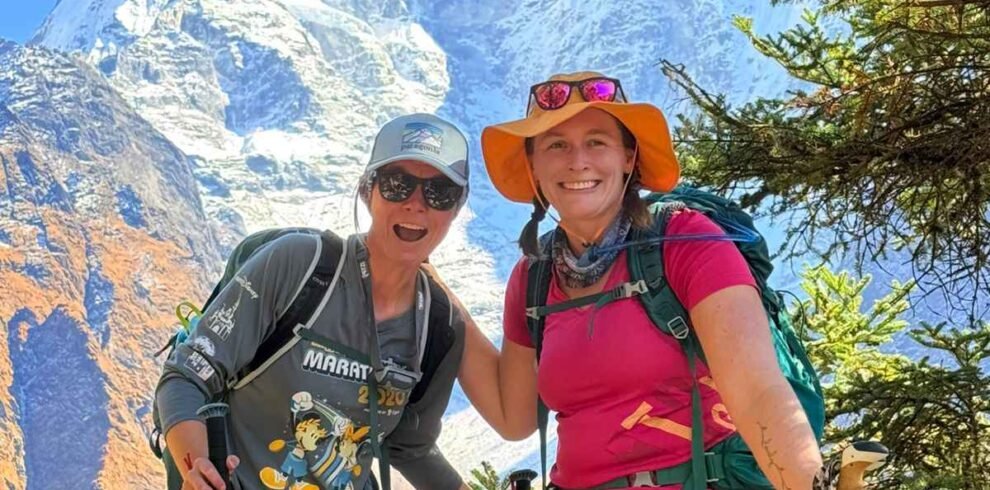
The table below covers every month of the year on the EBC route. Temperature figures are averages; actual conditions vary. Namche Bazaar (3,440m) and EBC (5,364m) are the two reference points used.
| Month | Avg Day Temp Namche | Avg Day Temp EBC | Rainfall | Trail Conditions | Crowd Level | Overall Rating |
|---|---|---|---|---|---|---|
| January | -2°C to 4°C (28°F to 39°F) | -12°C to -5°C (10°F to 23°F) | Very low | Hard snow and ice above Dingboche. Many teahouses closed above Namche. | Very low | Experts only |
| February | 0°C to 6°C (32°F to 43°F) | -10°C to -3°C (14°F to 27°F) | Very low | Cold, clear, icy above 4,500m. Some teahouses reopening late in month. | Very low | Experts only |
| March | 4°C to 10°C (39°F to 50°F) | -5°C to 2°C (23°F to 36°F) | Low | Good. Some snow on glacier. All teahouses open. | Low to moderate | Excellent |
| April | 12°C to 16°C (54°F to 61°F) | -3°C to 5°C (27°F to 41°F) | Very low | Excellent. Rhododendrons in full bloom. All teahouses open and busy. | High | Excellent |
| May | 14°C to 18°C (57°F to 64°F) | -1°C to 7°C (30°F to 45°F) | Low (afternoon showers possible) | Good. Busiest on trail. All open. Wildflowers at lower elevations. | Very high | Good to excellent |
| June | 15°C to 20°C (59°F to 68°F) | 4°C to 10°C (39°F to 50°F) | High (monsoon starts) | Muddy below 3,500m. Leeches active. Cloud blocks views most afternoons. | Very low | Not recommended |
| July | 15°C to 19°C (59°F to 66°F) | 5°C to 11°C (41°F to 52°F) | Very high | Heavy rain, slippery rock, leeches. Mountains rarely visible. | Minimal | Not recommended |
| August | 14°C to 18°C (57°F to 64°F) | 5°C to 10°C (41°F to 50°F) | High (monsoon fading late Aug) | Improving late in month. Still muddy. Better than July above 4,000m. | Very low | Poor to fair |
| September | 12°C to 17°C (54°F to 63°F) | 2°C to 8°C (36°F to 46°F) | Moderate early, low by mid-month | Good from Sept 15 onward. Green, fresh, uncrowded. | Low to moderate | Good to excellent |
| October | 10°C to 15°C (50°F to 59°F) | -5°C to 3°C (23°F to 37°F) | Very low | Near-perfect. All teahouses open and full. Advance booking essential. | Very high | Excellent |
| November | 5°C to 10°C (41°F to 50°F) | -8°C to -2°C (18°F to 28°F) | Very low | Good. Getting cold above 4,500m. Some teahouses close from mid-month. | Low to moderate | Very good |
| December | 0°C to 5°C (32°F to 41°F) | -12°C to -5°C (10°F to 23°F) | Very low | Cold, clear. Most teahouses above Namche closing. Gorakshep nights: -20°C to -25°C (-4°F to -13°F). | Very low | Experienced trekkers only |
Plan Your EBC Trek for the Perfect Season
Our team treks this route every season and can help you pick the exact dates that work for your schedule and fitness level.
WhatsApp Us Email UsThe Monsoon Season (June to August): What You Need to Know
Most trekking guides will tell you to skip monsoon entirely. For most people, that is the right call. But the reality on this route during June to August is more layered than a simple “do not go.”
Nepal receives approximately 80% of its annual rainfall during the monsoon season, which typically runs from early June to mid-September. The lower reaches of the EBC trail take the most punishment. From Lukla (2,840 meters) through Phakding (2,610 meters) and on up to Namche Bazaar (3,440 meters), trails become muddy and prone to minor slips in the forested sections. Below 3,000 meters, leeches are an active problem. They find their way into boots, socks, and trousers without warning, and while they pose no serious medical risk, the experience of discovering one mid-trek is off-putting for many people.
The biggest loss during monsoon is visibility. Clouds build from the south by late morning. By noon, Everest (8,849 meters), Ama Dablam (6,812 meters), and Lhotse (8,516 meters) are typically buried in cloud. Clear mornings do happen, sometimes spectacular ones, but you cannot build your itinerary around them. Many trekkers complete the full route to base camp during monsoon and never see the summit clearly.
Above 4,000 meters, the situation is more manageable. The rain shadow effect means that areas around Dingboche (4,360 meters) and Chhukung (4,730 meters) receive considerably less rainfall than the lower Dudh Koshi valley. Some experienced trekkers with solid waterproof gear and a flexible schedule do complete the route in monsoon, and they report it as rewarding in its own way. The landscape is intensely green. The trail is nearly empty. Some teahouses offer room discounts of 15 to 25%.
But for first-time trekkers, monsoon is genuinely not recommended. The combination of poor visibility, wet terrain, slippery rock, leeches below 3,000 meters, and the psychological weight of days without mountain views makes it a difficult introduction to high-altitude trekking. The physical demands are also higher than they look: wet trails slow progress, wet boots cause blisters faster, and cold rain at altitude drains energy quickly.
If your schedule forces a monsoon window, late August to very early September is the most workable slot. The monsoon weakens, conditions improve from day to day, and if you are lucky you catch the early clearing that marks the start of autumn season.
For those who want a high-altitude trek during Nepal’s summer months, the Mustang region north of the Annapurna range benefits from a strong rain shadow and stays relatively dry during monsoon. It is a different kind of trek but worth knowing as an alternative.
Winter Trekking (December to February): For the Brave
Winter on the EBC route is a fundamentally different experience. Fewer than 3% of annual visitors choose these three months. The numbers alone tell you something about the conditions, but they do not tell the full story, because for a specific type of trekker, winter has a real appeal.
December: The first half of December is still manageable for well-prepared trekkers. Namche Bazaar stays accessible and its teahouses remain open. Above Namche, temperatures drop sharply. Gorakshep (5,164 meters) sees daytime highs around -10°C to -5°C (14°F to 23°F) and nights that plunge to -20°C to -25°C (-4°F to -13°F). Many teahouses above Namche begin closing from the second week of December onwards. Kala Patthar (5,643 meters) is still reachable with the right equipment, but the ascent must happen in the morning window before wind picks up. The compensation is spectacular: snow-dusted peaks against a deep blue winter sky, no queues anywhere on the trail, and a quiet that is unlike any other time on this route.
January and February: The two coldest months. Temperatures at Gorakshep can hit -30°C (-22°F) at night in January. Water bottles freeze solid if left outside the sleeping bag overnight. Trekking poles need to be brought inside the sleeping bag at night to stop the mechanisms from locking up. Several teahouses above Namche close entirely by January, which limits acclimatization options and forces longer push days between rest stops. Some teahouses in Gorakshep and Lobuche do remain open specifically for winter trekkers, but confirm directly before departure since closures are not consistent year to year.
Water sources above 4,000 meters freeze. Trekkers need to carry significantly more water capacity than in spring or autumn. Streams that function as natural water stops in October are solid ice blocks in January.
Who should consider winter trekking? Experienced cold-weather trekkers who are genuinely comfortable with polar-style nighttime temperatures. Photographers who want stark, dramatic winter compositions with no other people in the frame. Those who have completed EBC before and want to see the route stripped back to its most raw and demanding state.
The risks are real and not to be minimized. Frostbite can develop within minutes at these temperatures if extremities are exposed. Hypothermia is a serious danger if wet weather combines with extreme cold, which can happen. Helicopter evacuations are available but take longer due to narrow weather windows. And the reduced number of open teahouses means there are fewer options if acclimatization does not go smoothly and you need to descend quickly.
Winter trekking is not for beginners, and it is not a budget option. Higher-quality gear is non-negotiable: an expedition-grade sleeping bag, insulated boots, heavy-duty gloves, and a full balaclava are minimum requirements, not suggestions. The cost of that gear alone often exceeds the savings from off-season teahouse prices.
How to Choose Between Spring and Autumn
Both seasons are excellent. The honest answer is that they suit different types of trekkers, and knowing which is right for you depends on what you actually want from the experience.
Budget: Autumn tends to be slightly cheaper overall. Spring coincides with the Everest climbing season from April to May, which increases demand for Lukla flights and teahouse beds in the upper Khumbu. Flight prices from Kathmandu to Lukla run $200 to $350 USD one way in both seasons, but availability is tighter in April than in October. Some teahouses above Namche informally charge a premium during May when expedition teams compete with trekkers for beds. September is frequently the most budget-friendly month in the good season windows.
Photography: Spring mornings often deliver crystal clear conditions before afternoon clouds build. If you are shooting mountains at dawn, heading up to Kala Patthar at 5am in April puts you at 5,643 meters watching Everest catch the first light with almost no haze. In autumn, afternoon clarity is generally better, which suits wide landscape shots and images of the full mountain panorama. November light is particularly valued by photographers: cold, dry air and low sun angles create long shadows and dramatic contrast that simply does not exist in the warmer months.
Experience level: Both spring and autumn are appropriate for all fitness levels. The trail itself does not become more difficult by season within these two windows. What changes is what you encounter on it. Spring means expedition teams, full teahouses with social energy, and the spectacle of Everest season in full swing. Autumn means better photography conditions, a quieter trail in September and November, and a freshness to the landscape that spring lacks.
Crowds: The quietest months in the good seasons are late March, late September, and all of November. If you genuinely want time on the trail without constant company, November is the best option of all the accessible months: weather is still fine by day, cold at night but manageable with proper gear, and you will have teahouses largely to yourself from the second week onwards. Some people specifically choose November for this reason alone.
Rhododendron blooms: Only in spring. The forests between Lukla and Namche, particularly around Jorsale (2,740 meters) and on the climb toward Tengboche (3,870 meters), turn red, pink, and white from mid-March through April. This is one of the most visually striking sections of any Himalayan trek during peak bloom. Autumn brings its own color palette, golden and amber grasses above the treeline and deep red shrubs on the moraines around Gorakshep, but it does not match the spring forest display at lower elevations.
Everest climbing season integration: If you find the idea of being near active expeditions exciting, spring is your season. Teams begin arriving at base camp from early April. You can watch helicopters shuttling loads to higher camps, see the Khumbu Icefall fixed ropes being established, and camp near climbers who are attempting the highest summit on earth. If that sounds crowded rather than inspiring, or if you came for wilderness rather than industry, go in autumn.
For trekkers considering a more challenging route, the Three Passes Trek follows a similar seasonal logic but with the added consideration that high passes like Kongma La (5,535 meters), Cho La (5,420 meters), and Renjo La (5,360 meters) can accumulate snow by November and are generally not recommended after mid-November. Spring from mid-March to early May is optimal for that route. Similarly, those combining EBC with Island Peak climbing will find April and October the best months for summit conditions on that 6,189-meter peak.
Weather Patterns on the EBC Route
Understanding how weather behaves on this specific trail helps you plan each day intelligently, not just the overall season.
The rain shadow effect: Namche Bazaar at 3,440 meters sits at roughly the transition point where the Himalayan rain shadow begins to have a real effect on weather. North of Namche, the high peaks of the Khumbu Himal block moisture-laden air moving in from the Bay of Bengal to the south. This means that even during monsoon, villages like Dingboche (4,360 meters), Chhukung (4,730 meters), and the area around Gorakshep receive considerably less rainfall than Lukla and the lower Dudh Koshi valley. During spring and autumn this effect is less dramatic but still relevant: if afternoon clouds build up, they thicken over the lower valleys first. Above Namche, you often get an extra hour or two of clear sky.
Morning clarity, afternoon cloud: This is the dominant weather pattern in both spring and autumn. Most mornings on the EBC route are clear. Most afternoons see cloud building from the south. The general rule among experienced trekkers here is to start walking no later than 7am. Arriving at your day’s destination by early afternoon means you have already got your fill of the morning views and are safely inside when weather deteriorates. At higher elevations above 4,500 meters, this pattern is more pronounced: what is a clear summit at 8am can be inside cloud by 1pm.
Wind: The strongest winds on the upper EBC route occur in October and November as the jet stream migrates south and begins to affect high elevations. At Kala Patthar (5,643 meters) and on the approach to base camp above Gorakshep, sustained gusts of 60 to 80 km/h are possible in October. These winds are not usually dangerous on their own but make early morning starts essential. By November, sustained wind at altitude becomes the main hazard, not temperature alone. Wind chill at 5,000 meters in a 60 km/h gust can bring effective temperature down by 15 to 20°C below the air temperature reading.
Lightning: The EBC route is not particularly prone to lightning, unlike some exposed ridgeline routes in other parts of Nepal. The trail spends most of its distance in deep valleys with significant terrain protection. The open stretches above Gorakshep carry some exposure. In May, electrical storms can develop over the high terrain in the afternoon. Starting early avoids the risk.
UV radiation: At 5,000 meters, ultraviolet radiation is roughly 40 to 50% more intense than at sea level, and this applies year round. In winter and early spring, fresh snow reflects UV back upward, creating exposure from below as well as above. Sunburn at altitude is faster and more severe than people expect, and snow blindness is a real risk without proper eye protection. Broad-spectrum sunscreen rated SPF 50 or higher, UV-blocking glacier glasses (not standard sunglasses), and a wide-brim hat are non-negotiable items regardless of season.
Flight Availability and Costs by Season
Getting to the trailhead is half the logistics battle on any EBC trip, and the Lukla flight situation deserves a dedicated section because it catches many trekkers off guard.
Kathmandu to Lukla: Flights operate on small turboprop aircraft, mostly de Havilland Twin Otters and Pilatus PC-12s, run by Buddha Air, Tara Air, and Sita Air. One-way fares run $200 to $350 USD per person depending on the airline and booking timing. Round-trip costs are typically $400 to $650 USD. There are no economy and business distinctions: you get one class on a small aircraft and approximately 35 minutes of flying through spectacular mountain terrain.
Booking ahead in peak season: In April and October, flights sell out weeks or even months ahead. For an April departure, book your Lukla seats at least 6 to 8 weeks in advance. October bookings should be confirmed 4 to 6 weeks out as a safe minimum. Missing your outbound Lukla flight due to overselling means scrambling for alternatives that can cost two to three times the regular fare, or sitting in Kathmandu for additional days waiting for a seat to open.
Shoulder season availability: In March, late September, November, and early December, flights are more available. You can often book 2 to 3 weeks out without trouble. Prices stay similar to peak season, but you have more flexibility on exact departure date.
The Ramechhap alternative: During peak spring season, the Nepal government periodically shifts some Lukla-bound flights from Kathmandu’s Tribhuvan International Airport to Manthali Airport in Ramechhap, which sits about 5 hours east of Kathmandu by road. Flights from Ramechhap to Lukla take only 20 minutes. The goal is to reduce congestion at Tribhuvan. If your departure is in April or May, check whether your airline operates from Ramechhap that year. You will need to leave Kathmandu at 1am or 2am by road to reach Manthali in time for a morning slot. It is inconvenient but workable, and many trekkers who travel with a guide have this arranged in advance.
Weather cancellations: Tenzing-Hillary Airport in Lukla has one of the most technically demanding approaches in aviation. It sits at 2,860 meters, uses a 527-meter upsloped runway, and operates exclusively under visual flight rules. The moment cloud or fog reduces visibility below the minimum, flights cancel. This is not rare. Cancellations happen throughout the year but peak during monsoon and in early spring when weather is still settling. The practical consequence: always build at least 2 to 3 buffer days into your itinerary at both ends of the trek. If you have a return flight from Kathmandu 12 days after you land in Lukla, you are taking a serious risk. A 2-day weather delay in Lukla on the return leg undoes the entire schedule.
Helicopter flights from the Khumbu area back to Kathmandu are available as an emergency option and cost roughly $500 to $1,500 USD per person depending on the departure point. They operate on weather-permitting windows and are generally used for medical evacuations, but private helicopter charters are also available for trekkers in a time crunch.
Teahouse Availability by Season
The teahouse network on the EBC route is one of the best-developed in any Himalayan trekking region. Accommodation exists at every major stop along the route from Lukla to Gorakshep. But availability varies significantly by month, and planning around these variations saves a lot of stress on the trail.
Spring (March to May): All teahouses from Lukla to Gorakshep are open from late February onward. From Dingboche upward, pre-booking is strongly advised in April and May. Teahouses in Lobuche and Gorakshep fill by early afternoon during peak April. Trekkers without bookings have been known to sleep in dining rooms or to walk an extra two hours to the next settlement because no beds were available. Working through an operator who has established relationships with specific lodges solves this. If you are going independently, contact teahouses directly at least 3 to 4 weeks ahead for April and May dates.
Autumn (October and November): All teahouses are open through October. From November 10 to 15 onwards, smaller lodges above Namche begin closing. By late November, Lobuche and Gorakshep are down to perhaps 2 or 3 operating establishments. These are enough for the reduced traffic, but confirm before heading up. October teahouses fill as quickly as spring; the same advance-booking advice applies.
Monsoon (June to August): Teahouses are open but quiet. Some owners reduce their menus significantly in monsoon. Room rates are often negotiable. Some operators offer discounts of 15 to 25% on room rates. If you are traveling as a group and comfortable negotiating, monsoon prices are the most affordable of the year, but you are trading comfort and views for that saving.
Winter (December to February): Most teahouses above Namche close by mid-December. A handful in Dingboche, Lobuche, and Gorakshep keep their doors open specifically for the small number of winter trekkers. Closures vary by year depending on how cold the season is and whether the owner decides it is worth staying. Confirm directly before you go. Below Namche, teahouses in Phakding and Lukla remain open throughout the year.
If you want to book your EBC trek for 2026 or 2027, locking in dates early lets your operator confirm teahouse bookings well ahead of peak demand. It also gives you more flexibility on acclimatization day scheduling, which is one of the most important factors in completing the trek successfully.
Permits and Costs by Season
Permit costs are the same regardless of when you go. There is no peak-season premium on government trekking permits at present, though this has been under discussion.
Sagarmatha National Park Entry Permit: NPR 3,000 per person, approximately $23 USD at current exchange rates. This is mandatory for all trekkers and covers entry into Sagarmatha National Park, which encompasses the entire upper Khumbu region. The permit is checked at the park gate in Monjo (2,835 meters) on the standard route from Lukla.
TIMS Card (Trekkers’ Information Management System): NPR 2,000 per person, approximately $15 USD. Issued in Kathmandu before departure, either at the Nepal Tourism Board office or through a registered trekking agency. Solo trekkers and those with a registered agency pay different rates, so confirm which category applies to you.
Khumbu Pasang Lhamu Rural Municipality Fee: NPR 2,000 per person, approximately $15 USD. This is a local municipality fee collected at a checkpoint near the start of the Khumbu region. It was introduced in recent years and some first-time trekkers are caught off guard by it. Budget for it from the start.
Total government permit costs come to roughly NPR 7,000, or approximately $53 USD per person. This does not include guide fees, porter fees, teahouse accommodation, food, equipment, flights, travel insurance, or the cost of a trekking package.
A note on future changes: the Nepal government has been discussing implementing a higher peak-season surcharge on EBC permits for upcoming years. As of the date this guide was last updated, no such surcharge has been formally enacted. Check the Nepal Tourism Board website or ask your trekking operator to confirm current permit prices before finalizing your budget.
For context on what the full EBC trek costs across different budget levels and seasons, the villages on the EBC route page breaks down what to expect at each stop in terms of food, accommodation, and daily spend.
What to Pack Based on Season
Packing for EBC is always a balance between covering yourself for the extreme cold at altitude and not carrying so much that the lower-elevation sections become exhausting. Season shifts what you need at the margins but the core list remains consistent.
Spring (March to May):
- Two sets of moisture-wicking base layers (top and bottom)
- Fleece mid-layer jacket
- Down jacket rated to at least -10°C (14°F) for mornings and evenings above Namche
- Lightweight packable waterproof jacket and trousers: afternoon showers are possible above the treeline in May
- Two pairs of trekking trousers, one pair convertible for lower elevations
- Light liner gloves for April and May; heavier insulated gloves for March above Namche
- Warm hat and neck gaiter
- UV-blocking sunglasses rated for glacial conditions
- SPF 50+ broad-spectrum sunscreen, sufficient for the full trip
- Trekking poles: especially helpful on the descent from Kala Patthar
- Headlamp with spare batteries and a backup set
- Three-season sleeping bag rated to -10°C (14°F): teahouse blankets exist but quality varies
Autumn (October and November):
- Everything in the spring list, plus:
- A heavier down jacket rated to at least -15°C (5°F) for November above 4,000 meters
- Gaiters: useful from October onward when light snow starts at higher elevations
- Warmer insulated gloves than spring, waterproof outer shell
- Thermal underlayer for legs (essential in November)
- Chemical hand warmers: useful for Kala Patthar summit in November mornings
- Microspikes or traction devices: optional but helpful if snow patches appear on the Gorakshep to Kala Patthar section from late October onward
Winter (December to February):
- Extreme-cold sleeping bag rated to -20°C (-4°F) or colder
- Balaclava covering full face and neck
- Heavy-duty insulated waterproof gloves with liner gloves inside
- Insulated mountaineering-style boots with crampons: not optional
- Multiple base layers (2 to 3 sets of thermal tops and bottoms)
- Two down jackets: one midweight for active walking, one expedition-grade for stationary periods
- Chemical hand warmers and toe warmers in bulk
- Neoprene face mask for high wind exposure
- Extra water capacity: two-liter minimum carry above 4,000 meters where water sources freeze
- Thermos flask for hot water storage
Monsoon (June to August):
- Quality full-length rain poncho: a cheap one will fail within two days
- Waterproof gaiters: essential below 3,000 meters
- Anti-leech socks: tight-knit socks worn pulled up over trouser legs
- Fast-dry synthetic clothing throughout: cotton holds moisture and increases cold risk
- Waterproof pack cover and dry bags for electronics and sleeping bag
- Camp sandals or water-friendly footwear for evenings
Frequently Asked Questions
What is the absolute best month to trek to Everest Base Camp?
For most trekkers, October stands out. Weather is stable, views are excellent, all teahouses are open, and the trail has a lively atmosphere with experienced trekkers from around the world. The full Himalayan panorama from Kala Patthar in October, with Everest, Nuptse, Lhotse, and Makalu all visible on a single clear day, is as good as high-altitude trekking gets anywhere in the world.
If you love spring wildflowers and the energy of Everest climbing season, April is a close and valid second choice. There is no objectively wrong answer between these two months. They deliver different experiences, not different quality. October gives you the cleaner air and calmer trail. April gives you the forest color and expedition atmosphere.
Can beginners trek EBC in winter?
Not recommended. Winter demands a level of cold-weather experience that goes beyond standard trekking fitness. The extreme nighttime temperatures at altitude, the risk of teahouses being closed when you need them for warmth and acclimatization, and the added physical demands of moving in heavy cold-weather clothing all combine to make winter a poor introduction to Himalayan trekking. Complete your first EBC trek in spring or autumn. Return in winter when you know the route, the logistics, and your own physical limits at altitude.
Is EBC doable during the monsoon?
Physically possible, but not enjoyable for most people. First-timers especially struggle with consecutive days of rain, invisible mountains, and the psychological weight of a major trek without the views that motivated the journey. Experienced trekkers with good waterproof gear and a flexible mindset can make it work, particularly in the upper Khumbu above Dingboche where the rain shadow provides some protection. If this is your first time on the route, wait for spring or autumn. Monsoon is a specialist choice, not a budget-saving one.
How far ahead should I book for peak season?
For April or October departures, plan 5 to 6 months ahead. Lukla flights are the critical booking. They sell out first, ahead of accommodation and guide arrangements. Package bookings through a trekking company, which typically cover Lukla flights, accommodation, and a licensed guide and porter, should be confirmed 3 to 4 months out. Individual travelers arranging their own logistics should secure Lukla seats as a first step, before anything else is organized.
Does altitude sickness risk change by season?
Not significantly. Acute Mountain Sickness depends on your acclimatization schedule, your individual physiology, and how fast you ascend. The season has no meaningful direct effect on susceptibility. The most protective thing you can do regardless of what month you go is follow a proper itinerary that builds in rest days at Namche Bazaar (3,440 meters) and again at Dingboche (4,360 meters). A 14 to 16-day itinerary gives your body the time it needs to adapt. Rushing the ascent in April is just as risky as rushing it in October. The trail will still be there if you take it slowly.
What is the altitude of Everest Base Camp, and how cold does it actually get there?
EBC sits at 5,364 meters above sea level. In spring, specifically April, daytime temperatures at base camp typically range from -3°C to 5°C (27°F to 41°F) during sunny hours. At night, the same location drops to -10°C to -15°C (14°F to 5°F). In autumn, specifically October, daytime highs at base camp reach -5°C to 3°C (23°F to 37°F), with nights around -12°C to -18°C (10°F to 0°F). These numbers assume you are in a teahouse with a sleeping bag. Exposed tenting, as the climbing expedition teams do, requires far more serious protection.
Are the villages along the route worth taking time for?
Absolutely. The villages on the EBC route each have distinct character that rewards a slower pace. Namche Bazaar is a surprisingly lively market town with bakeries, gear shops, and a Saturday market drawing traders from across the Khumbu. The Saturday market is one of the few places where you can see highlanders and lowland traders exchanging goods in a tradition that predates the tourism economy. Tengboche at 3,870 meters has one of the highest monasteries in Nepal. Dingboche is a quieter acclimatization stop with direct sight lines to Ama Dablam. For those with three weeks to spare, the EBC trek via Jiri adds days of walking through remote villages rarely visited by foreign trekkers, making it the richest version of the overall experience.
Our Recommendation by Trekker Type
Every trekker is different. The table below cuts through the seasonal debate and gives a direct recommendation based on what most matters to you.
| Trekker Type | Recommended Season | Why |
|---|---|---|
| First-time EBC trekker | October or April | Best weather, all facilities open, most guides experienced in those months, lowest risk of weather-related disruption |
| Experienced trekker seeking a challenge | November or December | Cold conditions, fewer trekkers, raw atmosphere on the route, tests cold-weather skills |
| Photographer | November for landscapes, April for morning portraits and expedition shots | November has the clearest, most dramatic light of any season; April has the energy and color |
| Budget traveler | Late September or early November | Slightly lower demand on flights and teahouses compared to peak October, same quality conditions |
| Crowd-averse trekker | Late March or November | Good conditions with a fraction of the October or April crowd numbers; teahouses quieter, trail more peaceful |
| Family with older children | April or October | Best weather, maximum teahouse availability for flexible acclimatization stops, plenty of other families on trail |
| Wildflower enthusiast | Mid-March to mid-April | Rhododendron forests in full bloom below 3,500 meters; unique to spring and not replicated in any other season |
| Trekker combining EBC with Island Peak | April or October | Best summit conditions on Island Peak (6,189m) in both seasons; April slightly preferred for fixed rope availability |
If you are combining EBC with the longer circuit, the same seasonal logic applies. The Three Passes Trek works in both spring and autumn but is sensitive to early season snow on the high passes in November. Spring from late March through early May is the most reliable window for all three passes.
Ready to Book Your Everest Base Camp Trek?
Next Trip Nepal has been running EBC treks since 2005. Get a personalised quote with your preferred dates and we will sort everything from Kathmandu airport to Kala Patthar and back.
WhatsApp Us Email Us