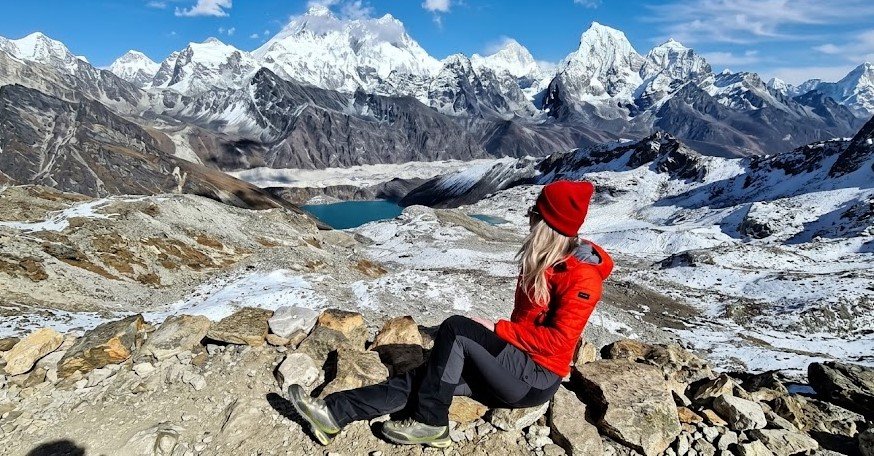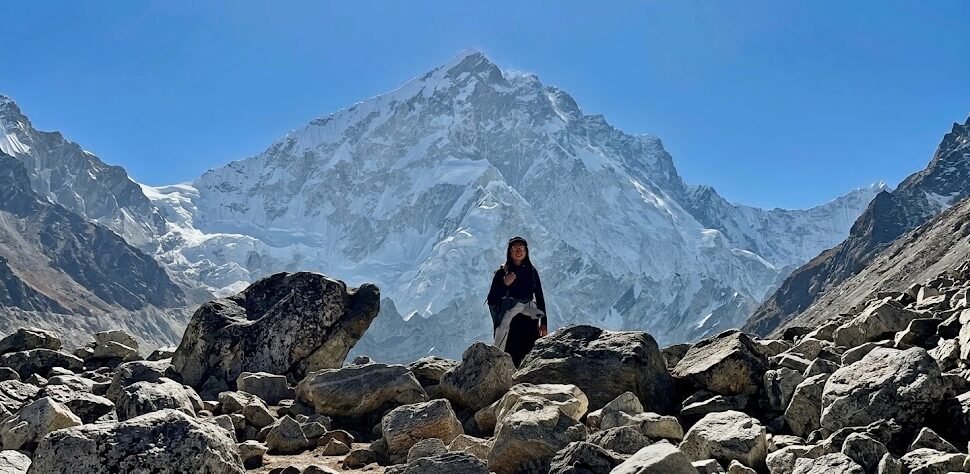
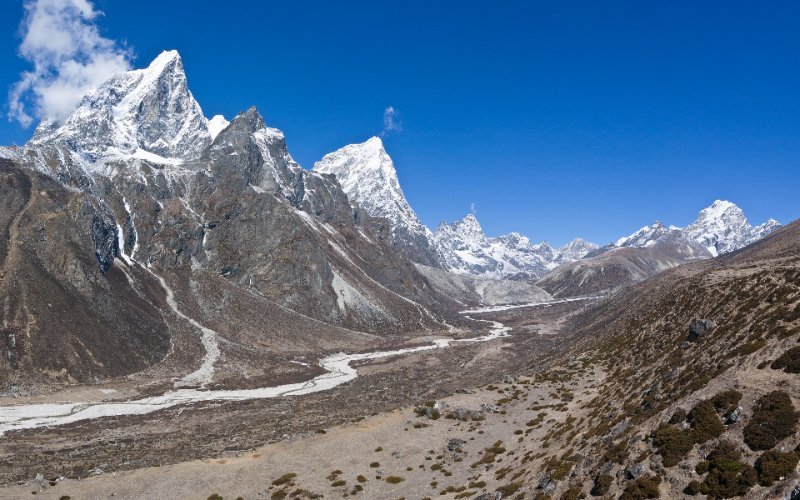
Sagarmatha National Park is a UNESCO World Heritage Site covering 1,148 square kilometers in the Khumbu region of northeastern Nepal. It encompasses the upper Dudh Koshi basin and includes the highest terrain on earth, with eight peaks above 7,000m and three above 8,000m: Everest (8,848m), Lhotse (8,516m), and Cho Oyu (8,188m). Every trekker on the Everest Base Camp Trek route passes through Sagarmatha National Park from the park entrance at Monjo (2,840m) to Base Camp (5,364m) and beyond. Understanding the park, its permit requirements, wildlife, and regulations helps you trek responsibly in one of the world’s most protected mountain environments.
Sagarmatha National Park Entry Permit (2026)
Every trekker entering Sagarmatha National Park must carry a valid entry permit. The permit costs NPR 3,000 per person (NPR 2,654.86 base fee plus 13% VAT = NPR 3,000, approximately USD 22). Permits are available from the Nepal Tourism Board (NTB) office in Kathmandu and also at the park entrance checkpoint at Monjo on the trail. Paying in Kathmandu before the trek is recommended: the Monjo checkpoint can have queues in peak season and requires exact NPR cash.
The Sagarmatha NP permit works in conjunction with the Khumbu Pasanglhamu Rural Municipality Tourism Fee (also NPR 3,000, approximately USD 22). Both are required. Total permit cost: NPR 6,000 per person (approximately USD 44). Both permits are valid for the entire EBC route including the Gokyo Lakes extension and Three Passes trek. There is no day limit on either permit.
Rangers check permits at the main park entrance gate at Monjo, at the Namche checkpoint, and periodically at teahouses above Namche. Trekkers found without valid permits are fined and turned back. Do not attempt to enter without permits.
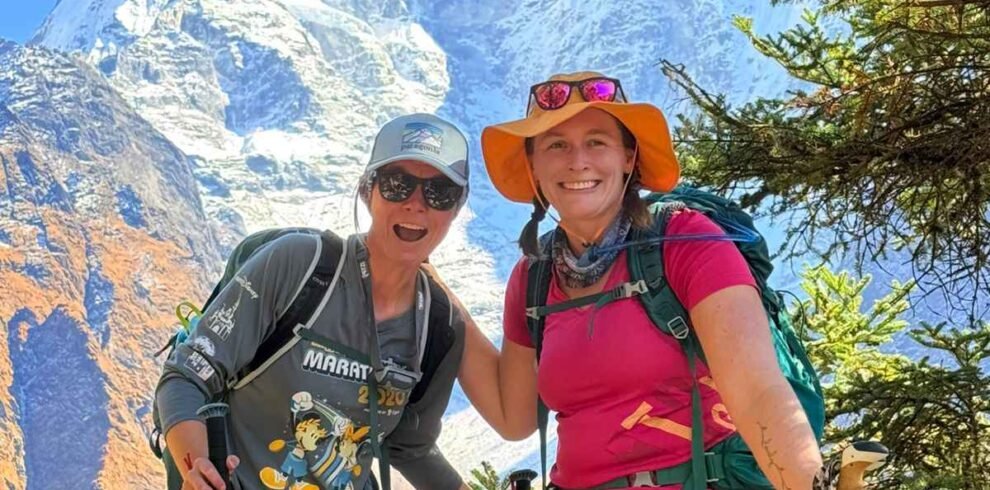
Everest Base Camp sits at 5,364 metres at the foot of Mount Everest (8,848.86m). Getting there takes 14 days of…
About Sagarmatha National Park
Sagarmatha National Park was established in 1976 and designated a UNESCO World Heritage Site in 1979 for its outstanding natural values including the highest peak on earth, unique high-altitude ecosystems, and rare wildlife species. The Sherpa communities who have lived in the Khumbu for centuries are integrated into the park’s management. The park is administered by the Department of National Parks and Wildlife Conservation (DNPWC) of Nepal.
The park spans altitudes from 2,845m at Monjo to 8,848m at the summit of Everest. This extreme elevation range supports multiple ecological zones from temperate forest (blue pine, fir, birch) at the lower elevations to sub-alpine scrub, alpine meadow, and permanent snow and ice at the highest points. The Ngozumba Glacier (36 km, Nepal’s longest) and the Khumbu Glacier both originate within the park.
Wildlife in Sagarmatha National Park
The park is home to a number of rare and endangered species. Wildlife sightings on the EBC trek range from frequent to extremely rare depending on the species.
Snow leopard (Panthera uncia): Probably the most sought-after sighting in the park. Snow leopards inhabit the high-altitude rocky terrain above 3,500m and prey primarily on Himalayan tahr and blue sheep. Population in the park is estimated at 20 to 30 individuals. Sightings by trekkers are rare but not unheard of, particularly in the upper Gokyo valley and on the ridges above Dingboche. Tracks and scrape marks in snow are more commonly spotted than the animals themselves.
Himalayan tahr (Hemitragus jemlahicus): A large, shaggy-coated wild ungulate that lives on steep rocky slopes between 2,500m and 5,000m. Himalayan tahr are frequently spotted on the rocky terrain above Namche and on the hillsides between Tengboche and Dingboche. Male tahrs are striking animals with golden-brown coats and swept-back horns. They are not endangered and are relatively comfortable around trekkers on established routes.
Red panda (Ailurus fulgens): The park’s lower elevations (below 3,500m) in the rhododendron and oak forest zones provide habitat for the red panda. Sightings below Namche and in the Phakding area are possible but uncommon. Red pandas are nocturnal and elusive.
Himalayan wolf (Canis lupus chanco): Wolves range through the upper valley systems and are occasionally spotted in the Gokyo valley and around Machhermo. Smaller and greyer than European wolves. Population data is limited for this species in the Khumbu.
Himalayan monal (Danphe): Nepal’s national bird and one of the most spectacular bird species in the park. The male monal is iridescent, with a blue-green head, copper back, and purple-blue wings. Commonly spotted in rhododendron forest zones between 3,000m and 4,500m. Frequently seen near Namche and Tengboche in the early morning.
Yellow-billed chough and red-billed chough: Common high-altitude corvids (crow family) that are the companion birds of almost every EBC trekker. They follow trekking groups looking for food scraps and are ubiquitous from Namche upward. At Gorak Shep they scavenge around the teahouses daily. Highly intelligent and entertaining birds.
Park Regulations for Trekkers
Sagarmatha National Park has specific regulations that all trekkers are required to follow. Rangers enforce these throughout the park.
- No plastic bottles: Single-use plastic water bottles are banned within the park. Carry a reusable bottle and fill from boiled water at teahouses or use a filter. Trekkers found carrying plastic bottles are fined. This regulation is enforced at the Monjo checkpoint on entry.
- No open fires: Open fires (campfires) are prohibited within the park. Cooking fires are permitted at designated teahouse cooking areas using approved fuels. Firewood collection is prohibited.
- No hunting or wildlife disturbance: Hunting and trapping are illegal within the park. Wildlife should not be approached closely or fed. Maintain a respectful distance from all wildlife.
- Waste management: All non-biodegradable waste must be carried out of the park. Teahouses have waste collection agreements but individual trekkers are responsible for their own packaging waste. Do not bury waste in the park.
- No plant collection: Collecting plants, flowers, and fungi from within the park is prohibited.
- Trail etiquette: Yield to yak trains on narrow sections of trail. Stand on the uphill side when yaks pass. Yaks can weigh 300 to 500 kg and can push a person off a narrow trail if they startle.
The Park Entrance at Monjo
The official park entrance is at the checkpoint in Monjo village (2,840m), above the confluence of the Bhote Koshi and Dudh Koshi rivers. This is where rangers check trekker permits and register entries. The checkpoint typically opens at 6 AM. Trekkers arriving before 6 AM must wait. The national park fee can be paid here if you have not already paid in Kathmandu, though queues in peak October season can be long. Have your permit (physical or digital proof) ready.
The second checkpoint is in Namche Bazaar, where rangers verify permits again in the office near the entrance to the village. A third verification occurs at the Sagarmatha National Park Visitor Centre and Museum above Namche, which is excellent for context on the park’s ecology, history, and the mountaineering heritage of the Khumbu.
Conservation Challenges in Sagarmatha National Park
Sagarmatha National Park faces significant conservation pressure from tourism volume, climate change, and waste management. Understanding these challenges helps trekkers contribute positively rather than negatively to the park’s future.
Glacial retreat: The Khumbu Glacier has retreated significantly in the past 50 years. The glacier snout has moved upward and the glacial lakes (including Imja Tsho near Island Peak base camp) are growing. Climate science projects ongoing significant glacial loss in the Khumbu over the coming decades. This affects both local water supply and the long-term ecology of the park.
Waste accumulation on Everest: The famous “world’s highest rubbish dump” on Everest’s upper slopes is a real issue though significantly improved by annual clean-up expeditions organized by the Nepal government, the Khumbu Climbing Center, and individual mountaineering teams. The summit area above 8,000m still contains abandoned equipment from decades of expeditions.
Fuelwood pressure: Despite the open fire ban, demand for firewood for teahouse cooking and heating puts pressure on the park’s lower forest zones. Kerosene and LPG subsidy schemes have helped shift some teahouses away from wood fuel.
Frequently Asked Questions
How much is the Sagarmatha National Park entry fee in 2026?
NPR 3,000 per person (approximately USD 22). This includes 13% VAT. The park permit works in combination with the Khumbu Pasanglhamu Rural Municipality Tourism Fee (also NPR 3,000). Total permit cost for the EBC trek: NPR 6,000 per person (approximately USD 44). Both permits are valid for Gokyo and Three Passes extensions. No day limit on either permit.
Where do I buy the Sagarmatha National Park permit?
From the Nepal Tourism Board (NTB) office in Kathmandu (recommended — get it before you fly to Lukla). Also available at the park entrance checkpoint at Monjo. Cash in NPR is preferred at Monjo. In Kathmandu, card payment may be available at the NTB office.
What animals can I see in Sagarmatha National Park?
Common sightings include Himalayan tahr, Himalayan monal (Nepal’s national bird), red-billed and yellow-billed choughs, and various raptors. Rarer sightings include snow leopard, red panda, and Himalayan wolf. The best wildlife areas are the lower valley forests below Namche and the upper rocky slopes above Dingboche.
Is Sagarmatha National Park a UNESCO World Heritage Site?
Yes. Sagarmatha National Park was inscribed as a UNESCO World Heritage Site in 1979 for its outstanding natural values including exceptional mountain scenery, unique high-altitude ecosystems, and rare wildlife species. It is one of the most iconic natural World Heritage Sites in Asia.
Everest Base Camp Trek: Complete Guide Series
Everything you need to plan your EBC trek:
Cost 2026 |
Best Time |
Difficulty |
Packing List |
Altitude Sickness |
Distance & Duration |
Training Plan |
Food on Trek |
Teahouses |
Travel Insurance |
Kala Patthar |
Gokyo Lakes |
Lukla Airport |
WiFi & Internet |
Sagarmatha NP |
Safety Guide