The trail feels different in November, and it changes as the month goes on. Step out of your teahouse in Dingboche in the first week and the morning air still carries some of October’s crowded energy, dining rooms busy, porters moving in steady lines toward Lobuche and Gokyo. Do the same walk in the last week of the month and the picture has shifted: your breath hangs visibly in air that has turned sharper, the dining room has half the tables it did three weeks earlier, and the light by four in the afternoon is already starting to fade toward evening. November on the Three Passes circuit is really about watching autumn tip into winter in real time, and knowing where you are in that shift matters for almost every practical decision you will make.
If three high passes is more commitment than you are looking for, our Everest Base Camp Trek with Helicopter Return reaches Base Camp itself in a much shorter window by flying you back instead of walking out.
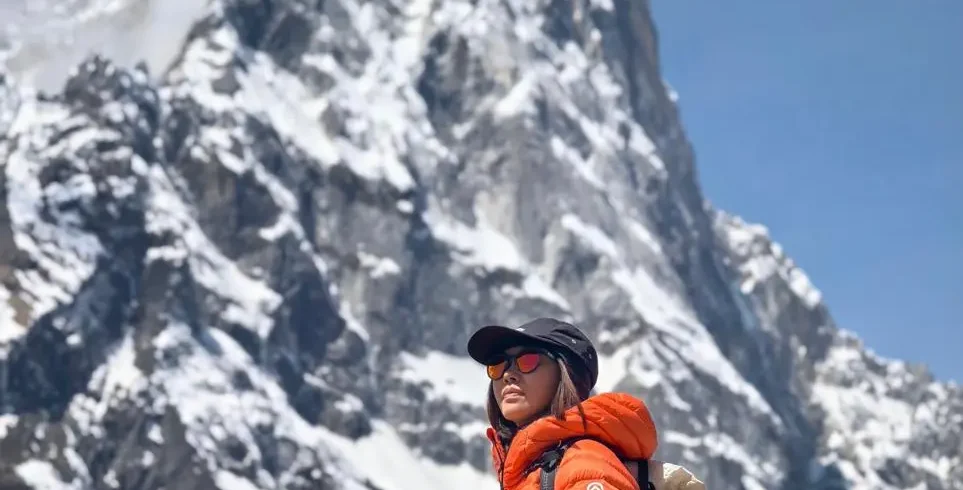
Watching Autumn Tip Into Winter
The first half of the month largely continues October’s pattern: clear skies, cold but manageable nights, and a trail still carrying meaningful traffic from trekkers who started their trip in late October. By the middle of the month, temperatures drop noticeably, and the final week brings conditions that start to resemble the deep winter character described in our February guide more than anything from earlier autumn. This is not a bad thing for a well prepared trekker. It is simply a different trip from the one you would have in mid October, and understanding that difference is the whole point of choosing November deliberately rather than by default on the Everest Three Passes Trek.
Temperature and Weather Through November
At Everest Base Camp elevation, early November daytime highs typically reach around 6°C, cooling to closer to 2 to 4°C by the final week, with overnight lows dropping from roughly minus 10°C early in the month to minus 15°C or colder by late November. Namche Bazaar stays noticeably milder throughout, though it too cools steadily as the month progresses. Skies remain among the clearest of the year, arguably rivaling or exceeding October by some measures, since November sees even less residual moisture in the atmosphere.
| Location | Early November Daytime | Late November Daytime | Overnight Range |
|---|---|---|---|
| Namche Bazaar (3,440m) | 8 to 12°C | 5 to 8°C | -5 to -8°C |
| Dingboche / Chhukung | 3 to 6°C | 0 to 3°C | -11 to -14°C |
| Gokyo (4,790m) | 1 to 4°C | -2 to 1°C | -12 to -15°C |
| Everest Base Camp area | 4 to 6°C | 1 to 3°C | -13 to -16°C |
Planning your Everest Three Passes Trek?
Snow Risk Building on the Three Passes
Kongma La, Cho La and Renjo La generally remain in good, stable condition through most of November, carrying forward the favorable state they were in during October. The risk that builds through the month is the increasing chance of an early winter storm system arriving and dropping fresh snow on one or more passes, a possibility that grows steadily from a low chance in early November to a real, planning relevant consideration by the final week. This is meaningfully less severe than the deep winter conditions of January or February, but it marks the beginning of that pattern rather than a continuation of October’s near total reliability.
Lukla Flights Late in the Diversion Window
November falls within the current peak season Ramechhap diversion policy, so Lukla flights operate through Manthali airport for most of the month rather than directly from Kathmandu. This diversion window generally runs through late November before flights typically return to Kathmandu as the peak autumn season winds down, though exact dates depend on the civil aviation authority’s seasonal decisions each year. Expect the standard 4 to 5 hour night drive to Ramechhap and short flight to Lukla for most of your November trip, and confirm current routing with your operator close to departure, since the exact transition date back to direct Kathmandu flights varies year to year. Our Lukla airport flights and weather guide covers current routing in detail.
Crowds Thinning as the Month Progresses
The opening days of the month still carry a meaningful tail of October’s peak season traffic, with trekkers who started their trip in the last days of October still moving through the route. By the second half of the month, numbers drop substantially, and the final week can feel close to the quiet, uncrowded character more typical of a shoulder season month. This makes late November an appealing window for trekkers who want autumn’s clear weather without autumn’s crowd levels, provided they are prepared for the colder temperatures that come with it.
Daylight Hours and the Shortening Day
Daylight shrinks steadily through November, moving from around 10.5 hours early in the month toward closer to 10 hours by the end, approaching the shortest days of the year around the December solstice. This shortening window pushes pass day schedules toward earlier starts than an October crossing would require, similar in spirit to the timing pressure described in our March guide, though not yet as severe as the deep winter constraints of a February departure.
Teahouse Availability as Demand Eases
Room availability improves steadily through November compared to October’s peak squeeze. Early November can still see busy nights at the most popular stops, particularly Gokyo and Dzongla, but by mid month booking pressure eases considerably, and by late November most teahouses have plenty of space without advance booking. Some of the smaller, higher altitude lodges begin reducing services or preparing to scale back for winter as the month closes, similar to the pattern described in our February guide, so confirming which specific teahouses are running in your target week remains worthwhile for a late November departure.
Packing for a Month That Gets Colder Fast
November packing needs to account for a genuine cold weather progression within a single trip, since a group starting in early November and finishing in early December experiences meaningfully different conditions across the trek. Our general Everest Base Camp packing list covers the fundamentals, with the table below highlighting November specific priorities.
| Category | November Recommendation | Reason |
|---|---|---|
| Insulation | Down jacket rated -15 to -20°C, warmer for late month departures | Overnight lows fall sharply through the month, reaching -15°C or colder late on |
| Sleep system | Sleeping bag rated -15 to -20°C | Unheated rooms match increasingly cold outdoor overnight temperatures |
| Traction | Microspikes, carried at all times above Dingboche late in the month | Rising chance of fresh snow on the passes as the month progresses |
| Hands and head | Liner gloves plus insulated mitts, warm hat and buff | Wind chill increases significantly on exposed pass sections late in November |
| Water | Insulated bottle covers or a vacuum flask | Standard bottles increasingly likely to freeze overnight as the month cools |
Acclimatization as Temperatures Drop
The fundamentals remain unchanged regardless of how cold it gets: gradual altitude gain, rest days at Namche and Dingboche, and the climb high, sleep low pattern wherever the itinerary allows. Colder, drier air increases fluid loss through breathing, similar to the effect described in our February guide, making a deliberate hydration schedule important even as cold temperatures suppress the sensation of thirst. This matters more by late November than early in the month, as temperatures approach genuine winter levels.
Planning your Everest Three Passes Trek?
Altitude Sickness and Rescue Access Late in the Season
Helicopter evacuation access remains generally good through most of November given continued clear weather, though it becomes somewhat more weather dependent by late in the month as the occasional early winter storm system passes through. The standard AMS warning signs, persistent headache, nausea, unusual fatigue and loss of appetite, apply regardless of month, and descent remains the correct response if symptoms do not improve with rest. Our altitude sickness guide covers AMS, HACE and HAPE in more depth.
Permits and Insurance for November
Permit requirements remain constant regardless of season: the Sagarmatha National Park entry permit at NPR 3,000 per foreign trekker and the Khumbu Pasang Lhamu Rural Municipality entry permit, also NPR 3,000 as of 2026, are both required, with no TIMS card needed in the Khumbu. See our Sagarmatha National Park permit guide for the application process. Travel insurance covering at least 6,000 meters with an explicit helicopter evacuation clause remains essential, and our travel insurance guide explains what to check for before buying a policy, particularly relevant given the increasing weather variability toward month end.
Advantages and Disadvantages of a November Crossing
| Advantages | Disadvantages |
|---|---|
| Among the clearest skies of the entire year, especially early in the month | Sharply falling temperatures, particularly by the final week |
| Crowds thin out substantially as the month progresses | Shortening daylight hours push pass days toward earlier starts |
| Easier teahouse booking than October, especially from mid month on | Rising chance of fresh snow on the passes late in the month |
| Passes generally in good condition, carrying forward October’s stability | Some smaller lodges begin reducing services toward month end |
| A genuine sense of watching the season change on the trail | Less predictable helicopter evacuation access late in the month |
Planning your Everest Three Passes Trek?
Sample Day by Day Itinerary for November
A standard guided itinerary runs 17 to 19 days anticlockwise, with late November departures sometimes carrying a small extra buffer similar to a winter schedule: fly Kathmandu to Lukla via Ramechhap and trek to Phakding, continue to Namche with an acclimatization day, trek through Tengboche to Dingboche with a second acclimatization stop, move to Chhukung, cross Kongma La to Lobuche, visit Everest Base Camp and Kala Patthar, continue to Dzongla, cross Cho La to Thagnak or Gokyo, rest and explore Gokyo Ri, cross Renjo La toward Lungden, descend through Thame back to Namche, and fly out from Lukla. Early November trips run closer to October’s schedule, while late November trips lean slightly toward the more cautious pacing of a winter itinerary.
The table below breaks that same route into a typical day by day structure with approximate elevations and walking times, so you can see where the longer and shorter days actually fall. Extra buffer days, when an operator builds them in, are usually held in reserve around the three pass crossings rather than fixed to one specific day, since that is where weather most often decides whether a group moves on schedule.
| Day | Route | Overnight Elevation | Approx. Walking Time |
|---|---|---|---|
| 1 | Fly Kathmandu to Lukla, trek to Phakding | 2,610m | 3 hours |
| 2 | Phakding to Namche Bazaar | 3,440m | 6 hours |
| 3 | Acclimatization day in Namche (side hike toward Khumjung or Everest View Hotel) | 3,440m | 4 hours |
| 4 | Namche to Tengboche | 3,860m | 5 hours |
| 5 | Tengboche to Dingboche | 4,410m | 5 hours |
| 6 | Acclimatization day in Dingboche (Nangkartshang viewpoint) | 4,410m | 4 hours |
| 7 | Dingboche to Chhukung | 4,730m | 3 hours |
| 8 | Chhukung to Lobuche via Kongma La | 4,940m | 8 to 9 hours |
| 9 | Lobuche to Gorak Shep, visit Everest Base Camp | 5,170m | 7 to 8 hours |
| 10 | Kala Patthar at dawn, continue to Dzongla | 4,830m | 7 to 8 hours |
| 11 | Dzongla to Gokyo via Cho La | 4,790m | 8 to 9 hours |
| 12 | Rest and exploration day at Gokyo, including Gokyo Ri | 4,790m | 3 to 4 hours |
| 13 | Gokyo to Lungden via Renjo La | 4,380m | 7 to 8 hours |
| 14 | Lungden to Thame | 3,820m | 4 to 5 hours |
| 15 | Thame to Namche Bazaar | 3,440m | 3 to 4 hours |
| 16 | Namche Bazaar to Lukla | 2,860m | 6 to 7 hours |
| 17 | Fly Lukla to Kathmandu | 1,400m | Flight only |
Difficulty Compared to the Standard EBC Trek
The Three Passes route remains considerably more demanding than the standard Everest Base Camp trek throughout November, since it still requires three separate crossings above 5,300 meters rather than a single high point at Kala Patthar. Early November, riding on October’s stability, is a reasonably approachable window for the harder route. Late November edges closer to the more demanding character of a winter crossing, and trekkers less comfortable with cold, potentially icy conditions might prefer to schedule their Three Passes attempt earlier in the month or wait for spring.
Cost Considerations for a November Booking
Easing demand through November can translate into more flexible pricing and availability compared to October’s peak, particularly for late month departures. For a detailed cost breakdown, see our Everest Three Passes Trek cost and itinerary guide, and for base camp only pricing context, our Everest Base Camp trek cost breakdown covers shared lower valley expenses.
Gokyo and the Renjo La Side in November
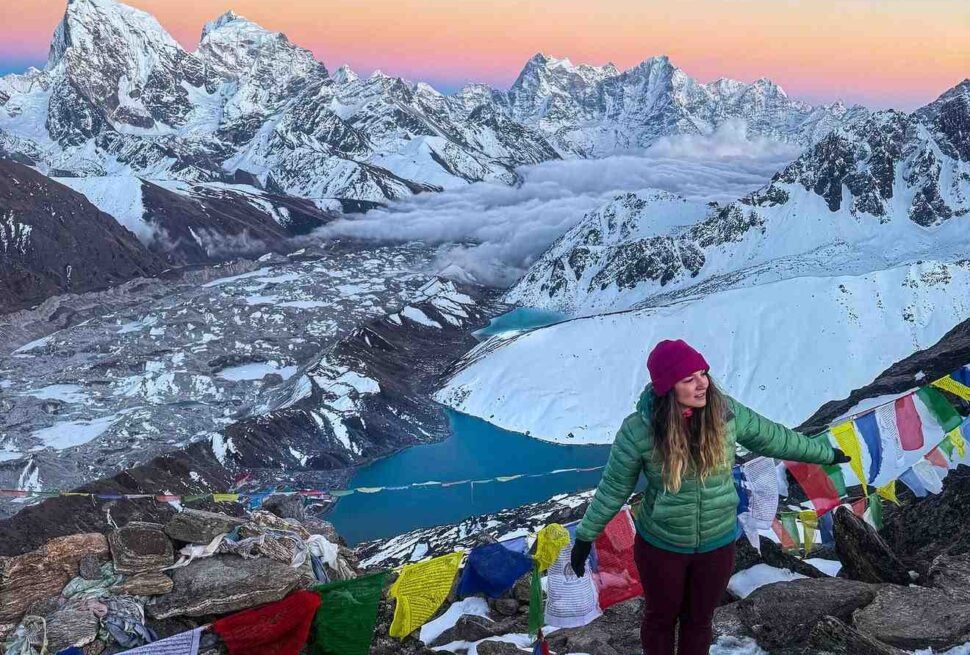
The Gokyo lakes begin showing early signs of freezing at their edges as November progresses, a visual marker of the season’s turn that October visitors do not see. Gokyo Ri continues to deliver excellent panoramic views through most of the month, with Everest, Cho Oyu and the lake system typically visible in sharp detail given the consistently clear skies. Trekkers interested specifically in the Gokyo side of the region without the full three pass circuit can find more detail in our Gokyo Lakes and Everest Base Camp combined route guide.
What a Pass Day Feels Like in November
An early November pass day starts much like an October one, a pre dawn breakfast followed by a steady climb through packed trail, scree and firmer ground near the summit, with clear skies and manageable cold. By late November, the same crossing starts before full light in earnest, similar to the pre dawn starts described in our February guide, and the cold at the top of Kongma La, Cho La or Renjo La bites harder, often accompanied by a stiffer wind than earlier in the season. The reward stays constant throughout the month: on a clear day, the view from any of the three passes, taking in Everest, Lhotse, Nuptse and Makalu, remains one of the most striking sights on the entire route, arguably even sharper in the drier, colder air of late November than in October.
Namche Bazaar Settling Down for the Season
Namche in November moves from October’s peak buzz toward a calmer rhythm as the month progresses. Early November retains real energy from the tail end of peak season, while by late November the town has noticeably quieted, with shops and bakeries still operating normally but without the crowded feel of a few weeks earlier. This makes late November a comfortable, unhurried place for an acclimatization day, retaining full services without peak season congestion.
Training and Fitness for a November Departure
Fitness preparation remains consistent regardless of season. Build a base of hiking with a loaded pack over varied terrain for at least two to three months before departure, prioritizing cardiovascular endurance for the six to nine hour efforts pass days demand. Trekkers booking a late November departure specifically benefit from some cold weather conditioning at home, if available, given the sharper temperatures they will encounter compared to an early month trip.
Photography in November
November frequently rivals or exceeds October for photography, since the air grows progressively drier and clearer as winter approaches, producing exceptionally sharp peak definition on many mornings. The trade off is working in colder conditions, which drains camera batteries faster and makes outdoor gear changes less comfortable, particularly by late in the month. Keeping spare batteries in an inner jacket pocket rather than an outer pack pocket helps maintain power through a long day of shooting at altitude, a small adjustment that makes a real difference once temperatures drop toward November’s colder later weeks.
Trail Conditions Below Namche in November
The Lukla to Namche section stays dry throughout November, with dust levels easing somewhat compared to peak October traffic as fewer trekkers use the route. Occasional icy patches can appear on shaded sections later in the month, particularly around bridges and north facing stretches that receive little direct sun, similar to the pattern described in our March guide but moving in the opposite seasonal direction. This section remains entirely manageable with standard trekking boots and reasonable care throughout November.
Water Sources and Hydration in November
Streams and taps run normally through most of November, with sections above Dingboche and Gokyo increasingly prone to overnight freezing as the month progresses, particularly by the final weeks. Boiled water from teahouses or a personal filter and purification tablets remain standard practice. Cold, dry air continues to suppress thirst even as fluid needs remain high, making a deliberate drinking schedule worthwhile, especially as November’s colder second half sets in.
Mobile Network and Charging in November
Ncell and NTC coverage remains generally reliable through the main villages up to Dingboche and Gokyo, thinning near the passes. Solar charging works reasonably well early in the month given clear skies, but becomes less efficient as days shorten and temperatures drop, reducing battery performance generally. A power bank kept in an inner pocket overnight to preserve its charge is a more dependable option than relying solely on solar, particularly for a late November trip.
Packing Checklist Summary for November
- Down jacket rated -15 to -20°C, warmer still for departures in the final week
- Sleeping bag rated -15 to -20°C, adequate for increasingly cold overnight temperatures
- Microspikes, increasingly important as the month progresses and snow risk rises
- Trekking poles with snow baskets fitted
- Liner gloves plus insulated mitts, warm hat and neck buff for sharpening wind chill
- Insulated water bottle covers or a vacuum flask to prevent freezing
- Headlamp with spare batteries kept warm overnight
- Hand and toe warmers as backup for the coldest late month mornings
- Personal power bank kept insulated to preserve charge in dropping temperatures
- Passport copies, permit paperwork and proof of travel insurance covering 6,000 meters
Guides and Group Sizes in November
Group sizes taper off through November as fixed departures wind down from October’s peak numbers. Early month groups can still be sizeable, while late November trips often run smaller and more flexible, similar to the pattern seen in shoulder season months. This can mean more personalized pacing, particularly valuable given how much conditions shift within the month itself. An experienced guide who tracks the specific way that particular November is developing, rather than relying on a generic seasonal script, remains the most important factor in a smooth trip.
Planning your Everest Three Passes Trek?
Emergency Evacuation as Conditions Shift
Helicopter evacuation infrastructure remains well staffed through most of November given the continuation of peak season operations, though weather dependent flying conditions become somewhat less reliable by late in the month as the occasional early storm system moves through. This mirrors, in a milder form, the reduced margin described in our February guide. A guide team carrying reliable communication equipment beyond standard mobile coverage remains a reasonable expectation for a late November departure specifically.
Thame and the Lower Khumbu in November
Thame, visited on the descent side of the anticlockwise route after Renjo La, retains its cultural significance throughout November as the birthplace of Tenzing Norgay and home to a long established monastery above the village. Traffic through Thame eases as the month progresses, with late November offering a genuinely peaceful visit compared to the earlier autumn weeks. The village and surrounding hillsides take on a starker, more wintry look by month end as vegetation dies back and the first hints of the coming cold season become visible in the landscape.
Why Guide Judgment Matters More Late in November
A guide who has led groups through many Novembers develops a clear sense of how this specific transitional month behaves, when an early snow event is likely enough to warrant extra caution on a pass crossing, and how much the daily schedule needs to shift as daylight continues shrinking through the month. We do not present any pass crossing as entirely risk free in November, particularly its final weeks, and an itinerary built with some flexibility around timing and pacing reflects a genuinely responsible approach to this specific transitional period on the route.
Comparing November Directly to October
Trekkers weighing November against October are typically balancing crowd levels against temperature comfort. October delivers milder conditions and the most reliable overall weather statistics of the year, while November, especially its second half, offers meaningfully quieter trails at the cost of colder nights and a rising, if still modest, chance of encountering fresh snow on a pass. Reading our dedicated Everest Three Passes Trek in October guide alongside this one helps clarify which trade offs matter most for your specific trip.
First Aid and Medication for November
A basic personal kit should include blister treatment, prescription medication in sufficient supply plus a buffer, general pain relief, rehydration salts, and any altitude related medication discussed in advance with a doctor familiar with high altitude travel. Cold temperatures in November mean some treatments, particularly adhesive blister plasters, stick less well to cold skin, so applying them during a warm rest stop rather than outdoors works better as the month gets colder. Lip balm and a basic moisturizer help manage the effects of increasingly dry, cold air on skin, particularly by late November.
Electricity and Charging Costs in November
Charging costs follow the usual pattern, rising with altitude and typically billed by the hour or by device. Demand for charging outlets eases as the month progresses and guest numbers drop, generally making it easier to charge devices promptly compared to October’s peak competition. A personal power bank remains a sensible backup regardless, particularly given reduced solar charging efficiency as days shorten toward the end of the month.
What Past November Trekkers Often Mention
Guides who lead groups through November repeatedly hear a consistent set of impressions afterward: genuine appreciation for how sharp and clear the mountain views were, particularly toward the end of a trip, occasional comments about how cold the final pass crossing felt compared to what trekkers expected, and frequent satisfaction at how quiet the trail felt compared to accounts from friends who trekked in October. This reflects a fairly consistent pattern across different years of November departures, useful context alongside checking conditions for your own specific dates.
Cultural Etiquette on a Thinning Trail
Lower visitor numbers as November progresses make it easier to engage respectfully and unhurriedly with local communities. Standard etiquette applies regardless of season, walking clockwise around mani walls and chortens, asking before photographing monasteries or residents, and moving quietly through religious sites. The quieter, more contemplative atmosphere of late November often makes these interactions feel more genuine than during the rushed pace of peak October.
Private Versus Group Departures in November
Fixed group departures remain available through November, generally with smaller numbers than October’s peak cohorts, particularly toward the end of the month. Private, custom scheduled trips offer full control over exact dates and pacing, an appealing option for trekkers specifically targeting the quieter final weeks of November who want flexibility in how they respond to whatever weather that particular year brings. Both options benefit from booking with enough lead time to secure your preferred dates.
Insurance and Booking Timing for November
Purchase travel insurance as soon as your November dates are confirmed, particularly for a late month departure where weather variability is somewhat higher than earlier in the season. This protects against a wider range of pre-trip disruptions on top of the standard altitude and evacuation cover this route requires regardless of month. Booking two to three months ahead remains sensible, though the intense pressure that defines October bookings generally eases through November.
Kongma La, Cho La and Renjo La: Specific Notes for November
Kongma La’s boulder field descent toward Lobuche, already a section requiring careful footing, becomes more demanding if an early frost or dusting of snow settles overnight, something more likely by late November than earlier in autumn. Cho La continues to be the pass most likely to require microspikes throughout the month, given its sheltered, north facing approach. Renjo La generally remains the most straightforward of the three through most of November, though its more exposed ridgeline can feel notably colder in the stiffer winds that begin appearing later in the month. None of this makes November crossings unsafe with proper preparation, but it does mean treating each pass with slightly more caution than you would in mid October.
Food and Teahouse Service as the Season Winds Down
Menus remain full through most of November, carrying forward October’s well stocked service. By late in the month, some of the smaller, higher altitude lodges begin trimming their offerings slightly as they prepare to reduce operations for winter, similar in spirit to what our February guide describes, though far less pronounced. Dal bhat, soups, porridge and a solid range of other dishes remain reliably available at nearly every open teahouse throughout the month.
Planning your Everest Three Passes Trek?
Choosing November Over December or January
Trekkers sometimes consider pushing a trip into December or January instead of November, reasoning that a slightly later date might mean even fewer crowds. In practice, December and January bring meaningfully colder temperatures and a real jump in pass closure risk compared to November, closer to the conditions described in our February guide. November occupies a genuine sweet spot for trekkers who want thinning crowds without stepping fully into deep winter conditions, making it a stronger choice than pushing later into the calendar for most trekkers weighing this specific trade off.
A Guide’s Honest Take on November
Ask a guide who has led this route through many Novembers and most will tell you it is a genuinely underrated month, provided you come prepared for real cold, particularly in the back half. The combination of clear skies, thinning crowds and passes still in generally good condition makes for one of the more rewarding versions of this trek available anywhere on the calendar. We would rather be honest that this comes with sharper temperatures and a bit less certainty than October than oversell it as a risk free alternative, since setting that expectation correctly from the start makes for a better trip.
Kala Patthar and Everest Base Camp in November
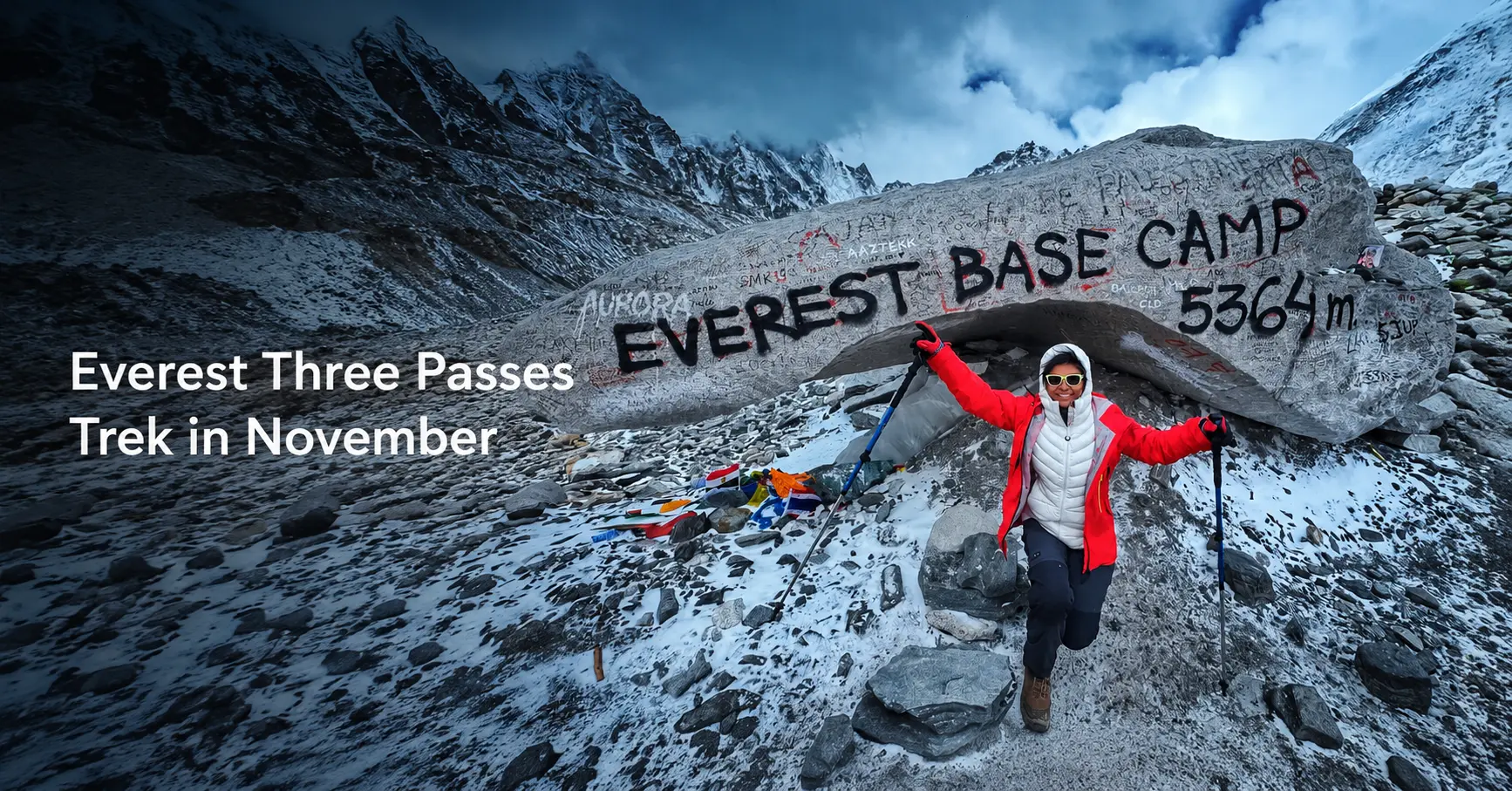
Kala Patthar, at just over 5,644 meters, continues to deliver exceptional panoramic views through November, with the drier, colder air often producing even sharper peak definition than earlier in autumn. The early morning ascent to catch sunrise is considerably colder than it would be in October, particularly by late in the month, making proper insulation for a stationary viewpoint stop genuinely important rather than optional. Base Camp itself, sitting lower at around 5,364 meters, remains a quieter, more contemplative visit by November, especially compared to the bustling October scene, since expedition activity is minimal outside the main spring climbing season.
Weather Monitoring as the Season Turns
Experienced guide teams pay closer attention to incoming weather systems as November progresses than they would earlier in autumn, watching for the first signs of the early winter storm patterns that will define December and beyond. This does not mean every late November trip encounters difficult conditions, many do not, but it does mean a responsible operator treats the back half of the month with a bit more caution and flexibility than the near automatic reliability of mid October, adjusting pacing and pass timing based on what that specific year’s weather is actually doing rather than a fixed assumption.
Final Thoughts on Timing Your November Trek
If you can only choose one window within November, the first two weeks offer the closest thing to October’s reliability with a genuine reduction in crowd levels already underway. If solitude matters more to you than milder temperatures, the final ten days deliver some of the quietest trail conditions available outside deep winter, provided you pack and prepare for real cold. Either choice puts you on a version of this trek that few trekkers experience compared to the October rush, watching the Khumbu settle toward winter one village at a time.
Sherpa Life and Winter Preparation in November
November is when many families in the higher Khumbu villages begin their own preparations for winter, moving livestock to lower pastures, stocking firewood and supplies, and in some cases closing up seasonal lodges before relocating to lower elevation homes for the coldest months. Trekkers passing through late in the month may notice this activity directly, a small but genuine window into how local life adapts to the same seasonal shift that shapes the trekking conditions described throughout this guide.
Choosing Your Season: November in Context
November’s position at the edge of winter makes it worth weighing carefully against the rest of the calendar. We cover the full trekking year in dedicated month by month guides:
| Month | General Character |
|---|---|
| February | Deep winter, quiet trails, real risk of a pass needing to be rerouted |
| March | Winter to spring transition, improving visibility, some snow still on passes |
| April | Peak spring, best mountain views, busiest teahouses |
| September | Post monsoon transition, improving weather through the month |
| October | Peak autumn, most stable weather, highest demand for permits and rooms |
Frequently Asked Questions About November
Is early or late November better for this trek?
Early November offers milder temperatures and conditions closer to October, while late November brings colder weather but noticeably thinner crowds. Trekkers prioritizing comfort should lean early, while those prioritizing solitude and don’t mind the cold often prefer the final week or two.
How cold does it actually get by late November?
Overnight lows at altitude commonly fall to minus 15°C or colder by the final week, approaching the conditions described in our February guide. Daytime temperatures remain more moderate, though noticeably cooler than early in the month.
Will Lukla flights still route through Ramechhap in November?
For most of the month, yes, under the current peak season diversion policy. The exact date flights return to direct Kathmandu routing varies year to year, so confirm current status with your operator close to departure, particularly for a late November trip.
Is snow a real concern for the passes in November?
Early in the month, snow risk is low and passes generally carry forward October’s stable conditions. By late November, the chance of an early winter storm adding fresh snow increases meaningfully, though it remains well below the deep winter risk level of January or February.
Are teahouses still fully open in late November?
Most are, though some of the smaller, higher altitude lodges around Chhukung, Dzongla and Gokyo begin reducing services or preparing to close for the winter season as the month ends. Confirming current status with your guide remains worthwhile for a very late November departure.
Planning Your November Three Passes Trek
November rewards trekkers who understand it as a month in motion rather than a fixed set of conditions. Book early in the month for a trip that closely resembles October’s reliability with somewhat lighter crowds, or aim for the final weeks if solitude and clear, cold air matter more to you than comfort. Either way, pack for genuine cold, confirm your Lukla routing close to departure, and travel with a guide team who tracks how the season is developing that particular year rather than assuming a fixed script. Our team can help you choose the right week within November for the Everest Three Passes Trek.