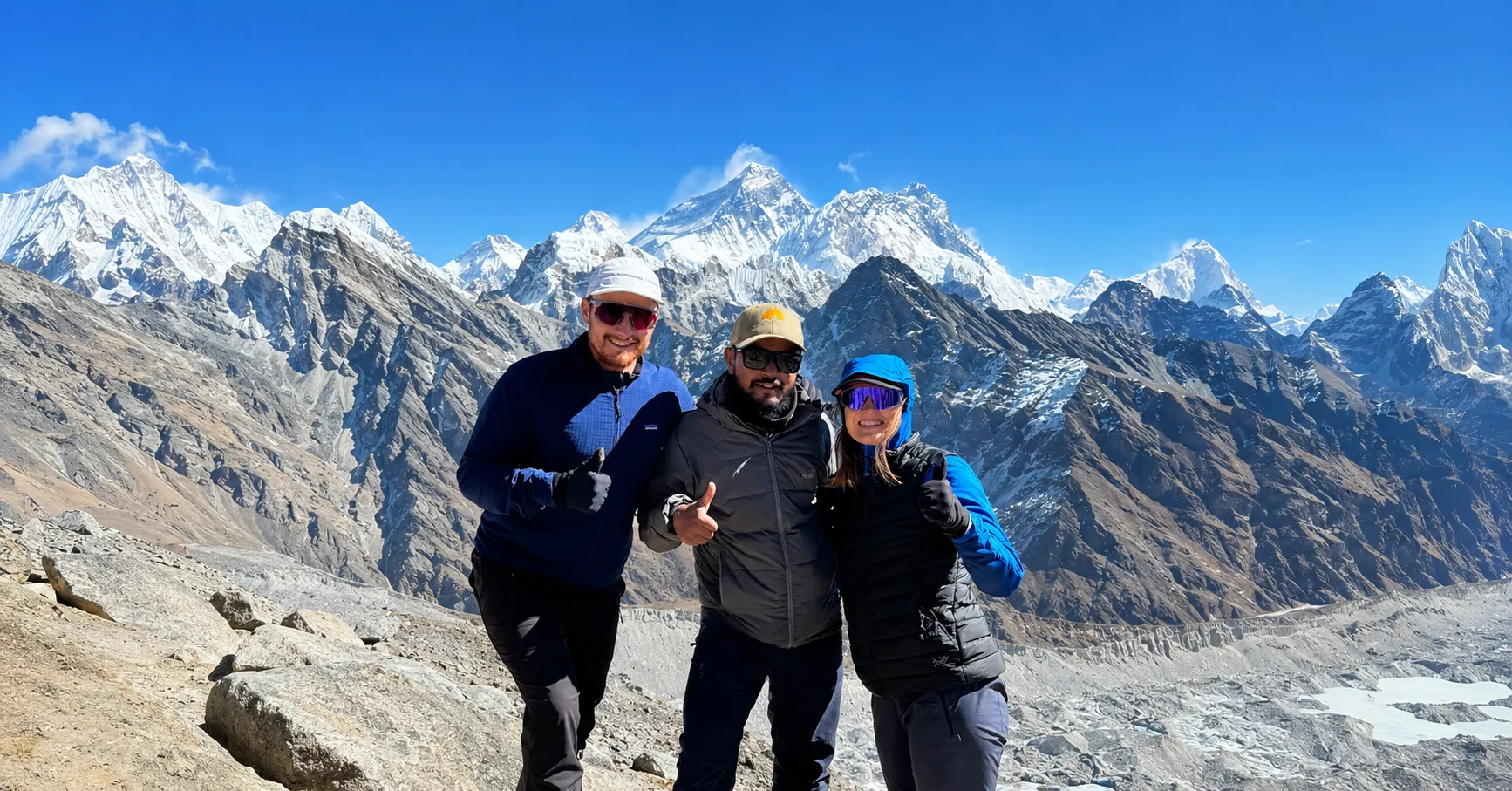
If you are looking seriously at April for the Three Passes circuit, the weather is rarely the deciding factor. Most years it delivers exactly what the brochures promise: clear mornings, warming temperatures, and the best mountain visibility of the spring season, conditions that make it the single most requested month for this route among trekkers who write to us asking when to go. The real question worth answering first is whether you have booked early enough to get a room where you need one, on the night you need it, because April is the single busiest month on this route and lodge capacity in villages like Chhukung, Dzongla and Gokyo does not expand to match demand. This guide covers what actually changes in April, from pass conditions to flight logistics to how far in advance you genuinely need to plan, drawing on years of guiding this specific circuit through its busiest month rather than a generic seasonal overview.
If you would rather skip the three passes and their crowds, our Everest Base Camp Trek with Helicopter Return reaches Base Camp directly in far less time.
Why April Books Up Faster Than Any Other Month
April sits at the intersection of several things at once: it is peak spring trekking season, it overlaps with the early weeks of the commercial Everest climbing season, and it offers the most reliable weather window of the year outside autumn. That combination pulls trekkers, expedition teams, and their combined support staff into the Khumbu at the same time, and the region’s teahouse infrastructure, built up gradually over decades, has a real ceiling on how many beds exist in each village. Fixed departures for the Everest Three Passes Trek in April frequently fill two to three months ahead of the date, and last minute bookings inside three or four weeks of departure face a genuinely higher risk of accommodation trouble at the smaller, higher altitude stops.
Temperature and Weather at Peak Spring
April brings the mildest daytime temperatures of the main trekking calendar. At Everest Base Camp elevation, daytime highs typically reach around 12°C, with overnight lows closer to minus 4°C, a substantial improvement over the numbers seen in February or even March. Namche Bazaar runs comfortably warmer still, often between 2°C and 15°C during the day. These milder temperatures are one of April’s biggest selling points, particularly for trekkers who found the idea of February’s cold uninviting.
| Location | Typical Daytime High | Typical Overnight Low |
|---|---|---|
| Namche Bazaar (3,440m) | 10 to 15°C | 0 to 3°C |
| Dingboche / Chhukung | 7 to 11°C | -6 to -9°C |
| Gokyo (4,790m) | 5 to 9°C | -7 to -10°C |
| Everest Base Camp area | 9 to 13°C | -4 to -8°C |
Planning your Everest Three Passes Trek?
Mountain Visibility: What to Expect
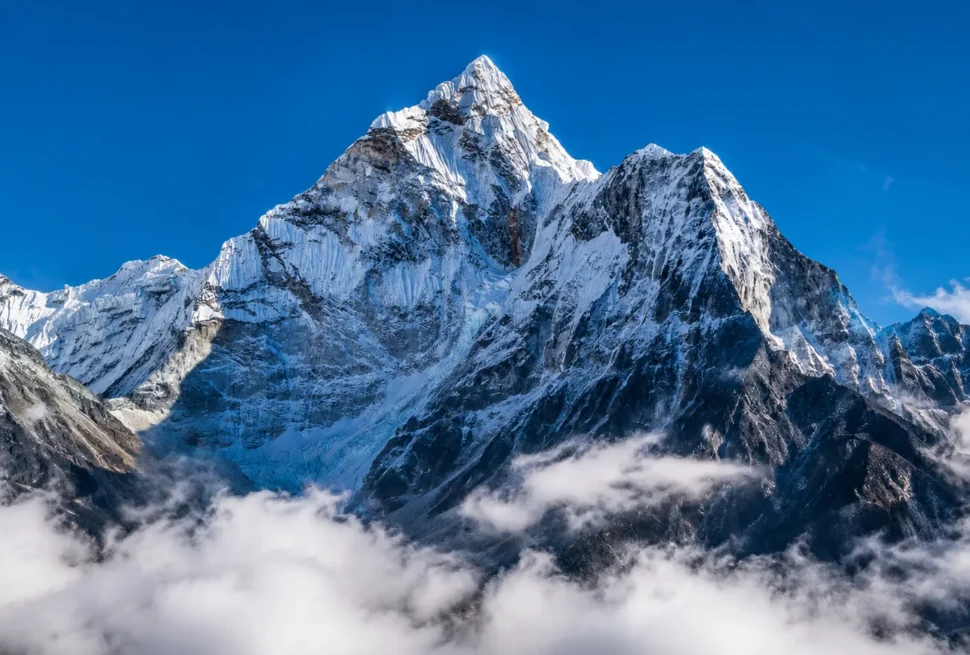
Morning visibility in April is generally excellent, with clear skies common through the first half of the day across most of the route. Afternoon cloud building is more frequent than in autumn, a product of stronger daytime heating pulling moisture up from the lower valleys, so summit style viewpoints like Kala Patthar and Gokyo Ri are still best attempted early. This pattern is consistent enough that most itineraries schedule these viewpoints for sunrise rather than leaving them to a flexible afternoon slot.
Snow Conditions on the Three Passes in April
By April, Kongma La and Renjo La have generally shed most of the deep winter snowpack, leaving trail conditions considerably more straightforward than in February or early March. Cho La again lags slightly behind the other two, and its more sheltered approach typically still holds packed snow and occasional ice on the final push to the top, so microspikes remain standard equipment for this pass even at the height of spring. None of the three passes should be treated as technical in April in a typical year, but conditions still depend on how much snow fell earlier in the season and whether any late spring storms have added fresh accumulation.
Lukla Flights and the Ramechhap Routing in April
April sits fully inside the peak season window when Lukla flights are diverted from Kathmandu to Manthali airport in Ramechhap, a policy the civil aviation authority applies to manage congestion during the busiest months. Expect a ground transfer of roughly 4 to 5 hours from Kathmandu to Ramechhap, with most departures leaving in the very early hours of the morning, followed by a short 15 to 20 minute flight into Lukla. Build this transfer time into your arrival plans, and treat both ends of your Lukla flight with at least one buffer day, since April’s high flight volume means any weather delay creates a backlog that takes longer to clear than it would in a quieter month. Our Lukla airport flights and weather guide covers this in full detail.
Teahouse and Room Demand Along the Circuit
This is the practical heart of April planning. Namche Bazaar has enough lodge capacity to absorb peak season demand without major issue, but Chhukung, Dzongla and the settlements around Gokyo are smaller, with a genuinely limited number of rooms between them. A guide team with an established network of lodge relationships books ahead by radio or phone as the group moves along the route, which is one of the clearest practical advantages of trekking with an experienced local operator during April specifically, rather than attempting to arrange rooms independently village by village.
Chhukung, Dzongla and Gokyo During Peak Season
These three stops see their highest guest numbers of the entire year in April. Dining rooms fill up in the evening, and the quieter, more contemplative atmosphere that defines these same villages in February or early March gives way to a livelier, more social trekking scene. Some trekkers enjoy this energy, meeting other groups from around the world at each stop. Others find it a trade off against the solitude that drew them to Himalayan trekking in the first place. Knowing which type of experience you want is worth considering honestly before choosing April specifically.
Namche Bazaar in Full Spring Swing
Namche in April is at its liveliest, with the Saturday market drawing large crowds, bakeries and cafes running at full capacity, and a genuine buzz around town from the mix of trekkers, expedition teams, and support crews passing through. It is a good place to acclimatize precisely because there is plenty to occupy a rest day, from the national park visitor center to the short hike toward the Everest View Hotel for an early look at the peaks.
Daylight Hours and Long Trekking Days
April offers close to 12.5 to 13 hours of daylight, among the longest windows of the trekking calendar, which gives pass day schedules considerably more flexibility than in winter. Guides still favor early starts on Kongma La, Cho La and Renjo La to beat the afternoon cloud pattern described earlier and to cross busier sections of trail before the day’s main flow of trekkers picks up, but the pressure of a shrinking daylight window that defines a February crossing simply does not apply in April.
Planning your Everest Three Passes Trek?
Crowds on the Trail: What “Busy” Actually Means
Busy on this route does not mean shoulder to shoulder crowds the way it might on a popular day hike elsewhere in the world. It means passing other groups regularly through the day, sharing dining rooms in the evening, and occasionally waiting a short time for a narrow suspension bridge or a technical section of a pass to clear. The trail itself is rarely uncomfortably congested, since groups naturally spread out at different paces, but the social atmosphere and the demand on infrastructure, particularly lodges, is noticeably higher than at any other point in the year.
Rhododendron Forests in Full Bloom
April is when the rhododendron forests below Namche reach their fullest bloom, turning entire hillsides shades of red, pink and white. This is purely a visual bonus rather than something that affects trek logistics, but it is one of the reasons photographers and general nature lovers specifically target this month over the otherwise similar conditions of late March or early May.
Packing for Warm Days and Cold Passes
April’s temperature range, from comfortably mild lower valley afternoons to still quite cold pass mornings, calls for a layering system that can flex significantly through a single day. Our general Everest Base Camp packing list covers the fundamentals, and the table below highlights where April specifically differs from deep winter packing.
| Category | April Recommendation | Reason |
|---|---|---|
| Insulation | Mid weight down jacket, -10 to -15°C rating | Milder than winter but still cold on early pass mornings |
| Sleep system | Sleeping bag rated -10 to -15°C | Overnight lows at altitude still regularly fall below freezing |
| Traction | Microspikes, mainly for Cho La | Kongma La and Renjo La are usually largely clear by April |
| Sun protection | High SPF sunscreen and glacier glasses | Stronger spring sun plus snow glare on the passes |
| Layering | Breathable mid layers for warmer lower valley afternoons | Daytime temperatures at Namche can approach 15°C |
Planning your Everest Three Passes Trek?
Acclimatization When the Trail Feels Crowded
A busier trail can create subtle social pressure to keep pace with other groups, which is worth actively resisting if your own itinerary calls for a slower ascent. The acclimatization principle, gaining altitude gradually with dedicated rest days at Namche and Dingboche, does not change because more people are on the trail around you. A good guide will keep your group on your own schedule regardless of how many other parties are moving through the same villages.
Altitude Sickness Risk During Peak Season
April’s busier trail does have one genuine safety advantage: more people around means more immediate support if something goes wrong, and better established medical posts along the route during peak season, including seasonal clinics that operate at higher capacity when demand is highest. That said, the fundamentals of AMS risk are unchanged by crowd levels. Persistent headache, nausea, unusual fatigue and loss of appetite are still the signs to take seriously, and descent remains the correct response if symptoms do not improve with rest. Our altitude sickness guide covers AMS, HACE and HAPE in more depth.
Permits and Insurance for April
Permit requirements remain the same regardless of season: the Sagarmatha National Park entry permit at NPR 3,000 per foreign trekker and the Khumbu Pasang Lhamu Rural Municipality entry permit, also NPR 3,000 as of 2026, are both required, with no separate TIMS card needed in the Khumbu. See our Sagarmatha National Park permit guide for the application process. Travel insurance covering at least 6,000 meters with helicopter evacuation cover is essential year round, and worth arranging as soon as your April dates are confirmed given how far ahead peak season bookings are typically made. Our travel insurance guide explains exactly what to look for.
Food, Water and Fuel During High Demand
Teahouse menus run at their fullest in April, with the widest selection of the year available at most stops, since lodges stock up heavily ahead of the season’s peak weeks. The trade off is slower kitchen service during the busiest evenings, when a single teahouse may be cooking for several groups at once. Ordering dinner promptly on arrival rather than waiting until later in the evening helps avoid a long wait, a small but genuinely useful practical tip specific to peak season travel. Boiled or treated water remains standard practice throughout.
Mobile Network and Charging in April
Ncell and NTC coverage through the main villages up to Dingboche and Gokyo is generally reliable in April, though network congestion can occur in the busiest villages simply because more people are trying to use it at once. Solar charging works well given longer daylight and generally clear mornings, though teahouse charging stations can queue during peak hours, so a personal power bank remains a useful backup regardless of season.
Guides, Porters and Group Sizes in Peak Season
April sees the largest fixed group departures of the year, alongside plenty of private and custom scheduled trips. Larger groups can mean a livelier, more social trip, but they also require more coordination around room allocation and pacing, particularly at the smaller high altitude stops. If you specifically want a smaller group dynamic during peak season, ask your operator directly about typical group sizes for April departures rather than assuming every company runs the same numbers.
Advantages and Disadvantages of an April Crossing
| Advantages | Disadvantages |
|---|---|
| Mildest temperatures of the main trekking season | Highest demand for rooms at Chhukung, Dzongla and Gokyo |
| Passes largely clear of deep snow, only Cho La regularly needs microspikes | Busiest trail and dining rooms of the year |
| Long daylight hours give pass days more flexibility | Fixed departures often fill two to three months ahead |
| Rhododendron forests in full bloom on the lower trail | Afternoon cloud more common than in autumn, mornings best for views |
| Strong medical and rescue infrastructure active for peak season | Higher overall trip cost in some cases due to peak season demand |
Sample Day by Day Itinerary for April
A standard guided itinerary runs 16 to 18 days anticlockwise in April, slightly shorter than a winter schedule since fewer contingency days are typically needed: fly Kathmandu to Lukla via Ramechhap and trek to Phakding, continue to Namche with an acclimatization day, trek through Tengboche to Dingboche with a second acclimatization stop, move to Chhukung, cross Kongma La to Lobuche, visit Everest Base Camp and Kala Patthar, continue to Dzongla, cross Cho La to Thagnak or Gokyo, rest and explore Gokyo Ri, cross Renjo La toward Lungden, descend through Thame back to Namche, and fly out from Lukla. Even with fewer built in contingency days than a February schedule, most operators keep at least one buffer day given April’s higher flight volume and correspondingly higher risk of a backlog if any single day sees delays.
The table below breaks that same route into a typical day by day structure with approximate elevations and walking times, so you can see where the longer and shorter days actually fall. Extra buffer days, when an operator builds them in, are usually held in reserve around the three pass crossings rather than fixed to one specific day, since that is where weather most often decides whether a group moves on schedule.
| Day | Route | Overnight Elevation | Approx. Walking Time |
|---|---|---|---|
| 1 | Fly Kathmandu to Lukla, trek to Phakding | 2,610m | 3 hours |
| 2 | Phakding to Namche Bazaar | 3,440m | 6 hours |
| 3 | Acclimatization day in Namche (side hike toward Khumjung or Everest View Hotel) | 3,440m | 4 hours |
| 4 | Namche to Tengboche | 3,860m | 5 hours |
| 5 | Tengboche to Dingboche | 4,410m | 5 hours |
| 6 | Acclimatization day in Dingboche (Nangkartshang viewpoint) | 4,410m | 4 hours |
| 7 | Dingboche to Chhukung | 4,730m | 3 hours |
| 8 | Chhukung to Lobuche via Kongma La | 4,940m | 8 to 9 hours |
| 9 | Lobuche to Gorak Shep, visit Everest Base Camp | 5,170m | 7 to 8 hours |
| 10 | Kala Patthar at dawn, continue to Dzongla | 4,830m | 7 to 8 hours |
| 11 | Dzongla to Gokyo via Cho La | 4,790m | 8 to 9 hours |
| 12 | Rest and exploration day at Gokyo, including Gokyo Ri | 4,790m | 3 to 4 hours |
| 13 | Gokyo to Lungden via Renjo La | 4,380m | 7 to 8 hours |
| 14 | Lungden to Thame | 3,820m | 4 to 5 hours |
| 15 | Thame to Namche Bazaar | 3,440m | 3 to 4 hours |
| 16 | Namche Bazaar to Lukla | 2,860m | 6 to 7 hours |
| 17 | Fly Lukla to Kathmandu | 1,400m | Flight only |
How Far Ahead You Should Book
For an April departure specifically, aim to confirm your booking at least two to three months ahead, and earlier still if you have specific date requirements tied to flights or other travel plans. This is not a scare tactic, it reflects the genuine mechanics of a route with a fixed number of teahouse beds in its smaller villages and a predictable spike in demand every April. Booking early also gives your operator more room to secure the flight seats and lodge arrangements that make a smooth trip possible, rather than scrambling to patch together a itinerary around whatever is left close to departure.
Difficulty Compared to the Standard EBC Trek
The Three Passes route remains considerably more demanding than the standard Everest Base Camp trek even in April’s friendlier conditions, since it still requires crossing three separate passes above 5,300 meters rather than a single high point at Kala Patthar. April is arguably the easiest month of the year to attempt the Three Passes route given the combination of clear conditions and largely snow free passes, but easier is relative. This is still one of the more physically demanding treks in Nepal, and fitness preparation matters regardless of how favorable the month is.
Cost Considerations During Peak Season
Peak season demand can push costs up slightly compared to shoulder months, particularly for last minute bookings or for trekkers who need private arrangements after fixed group departures have filled. For a detailed breakdown, see our Everest Three Passes Trek cost and itinerary guide, and for base camp only pricing context, our Everest Base Camp trek cost breakdown covers the shared lower valley expenses.
Gokyo and the Renjo La Side in April
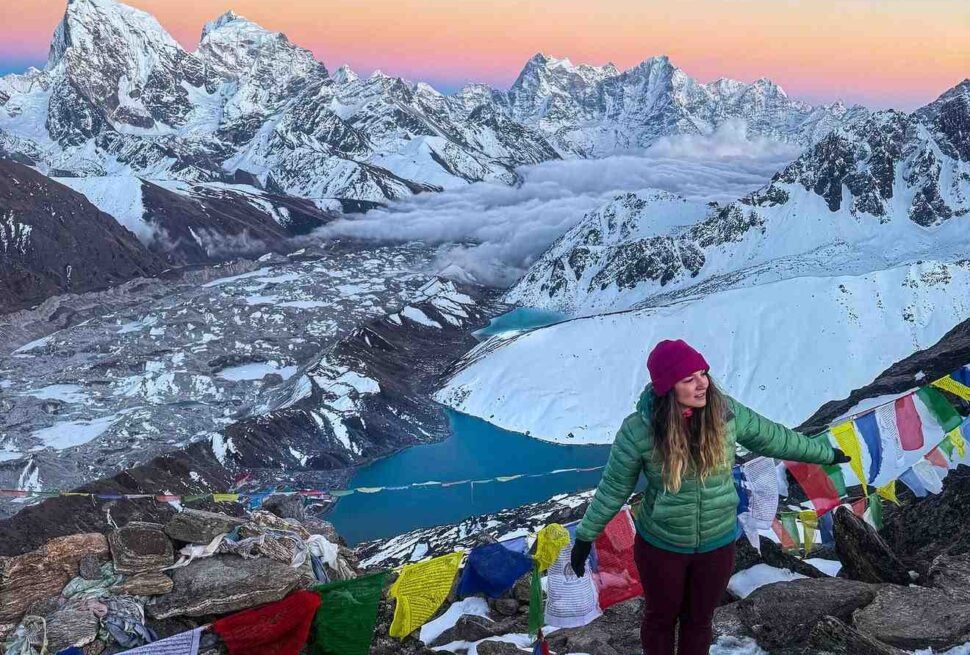
The Gokyo lakes are typically fully thawed by April, and Gokyo Ri delivers some of its most reliable panoramic views of the year during this month, taking in Everest, Cho Oyu, and the turquoise lake system in a single frame on a clear morning. Renjo La is usually the most straightforward of the three passes by April, generally clear enough that microspikes are more of a precaution than a necessity in a typical year. Trekkers interested specifically in the Gokyo side of the region without the full three pass circuit can find more detail in our Gokyo Lakes and Everest Base Camp combined route guide.
Climbing Season Traffic and What It Means for You
April overlaps with the build up to the main Everest, Lhotse and Nuptse climbing season, which means Base Camp itself hosts expedition tents and support infrastructure in addition to trekking visitors. This adds an interesting dimension to a Base Camp visit, since trekkers can see something of the scale of a commercial expedition, but it also means more foot and cargo traffic on the trail sections between Gorak Shep and Base Camp specifically, alongside more helicopter traffic overhead ferrying expedition supplies and occasional evacuations.
Planning your Everest Three Passes Trek?
What a Pass Day Feels Like in April
An April pass day typically begins in the pre dawn light rather than full darkness, since sunrise arrives earlier than in winter and the urgency around beating a short daylight window is gone. The climb still moves through familiar terrain, packed trail giving way to looser scree and then firmer ground near the top, but the effort feels different in the warmer air. Sweat management becomes more of a consideration than pure cold protection on the lower sections of the climb, while the summit area of each pass, especially Cho La’s icier northern side, still calls for care and often microspikes. Coming down the far side into afternoon sun, April crossings often feel more like a strenuous high altitude hike than the more committing winter undertaking described in our February guide, though the altitude itself demands the same respect regardless of season.
Everest Base Camp Atmosphere During Expedition Season
Visiting Base Camp in April means seeing it functioning as an actual expedition staging ground rather than an empty rocky plateau, with tents, prayer flags, and support staff visible across the site during the main climbing window. This adds genuine context to the visit for trekkers interested in mountaineering history and the scale of a modern commercial expedition, though it is worth remembering that Base Camp itself remains a working site during this period and trekkers should stay respectful of expedition teams’ space and equipment while visiting.
Training and Fitness for an April Departure
Fitness requirements for this route do not change with the season, though April’s milder conditions mean less of your preparation needs to focus on cold weather tolerance and more can focus on pure cardiovascular endurance and load carrying capacity. Build a base of hiking with a loaded pack over varied terrain for at least two to three months before departure, with stair or hill repeats to condition your legs for the sustained climbs on pass days. The goal is comfortably sustaining six to nine hours of movement at altitude on pass days rather than short bursts of intense effort.
Photography in April
April combines clear morning skies with genuinely varied scenery, from blooming rhododendron forests in the lower valley to the stark white and grey of the high passes, making it one of the more photogenic months on this route. The trade off is managing light and haze later in the day, since afternoon cloud and rising warm air can soften distant peak definition compared to the crisper air of autumn. Morning shots of Everest, Lhotse, Nuptse and Ama Dablam from Kala Patthar or Gokyo Ri remain the most reliable opportunities for the classic clear mountain photographs this region is known for.
Trail Conditions Below Namche in April
The Lukla to Namche section is generally dry and dusty by April, with the trail seeing heavy foot, porter and yak traffic during peak season. Dust becomes more noticeable than in March as the dry season progresses, and a buff or light scarf to cover your mouth and nose on busier sections of trail is a small but genuinely useful addition to your kit. Bridges and steeper switchback sections can also see brief bottlenecks during the busiest hours of the morning, when large numbers of trekkers move through at similar times after leaving Lukla.
Water Sources and Hydration in April
Streams and taps run freely through most of the route in April, with freezing overnight temperatures at altitude still occasionally affecting exposed pipes above Dingboche and Gokyo. Warmer daytime temperatures make it easier to remember to drink regularly compared to the cold suppressed thirst of winter, though the increased physical exertion from warmer, more strenuous days means fluid needs remain high regardless. Boiled water from teahouses or a personal filter and purification tablets both remain reliable options throughout the route.
Emergency Evacuation During High Season
Helicopter evacuation is generally more readily available in April than in winter months, both because weather conditions are more consistently flyable and because more helicopters operate in the region during peak season to support both trekking and expedition traffic. This does not mean evacuation is instant or guaranteed, weather and demand can still cause delays, but the overall infrastructure supporting emergency response is at its most robust during April specifically. Travel insurance with explicit helicopter evacuation cover to at least 6,000 meters remains essential regardless of how good the rescue infrastructure looks on paper.
Electricity and Charging Costs in April
Charging costs follow the same general pattern as any season, rising with altitude and typically charged by the hour or by device. Peak season demand can mean queues for charging outlets at the busiest lodges during the evening, so plugging in as soon as you arrive at a teahouse rather than waiting until after dinner tends to work better in April than in quieter months. A personal power bank remains a sensible backup for the same reason.
Group Departures Versus Private Trips in April
Fixed group departures offer the advantage of shared costs and a set schedule, which suits trekkers comfortable joining a larger cohort during the busiest month of the year. Private, custom scheduled trips cost more per person but offer full control over pacing, rest days and exact dates, an appealing option for trekkers who want to avoid the busiest fixed departure dates while still trekking in April’s favorable weather window. Both options require the same advance booking discipline given how quickly April fills up across the board.
Packing Checklist Summary for April
- Mid weight down jacket rated -10 to -15°C plus lighter layers for warm lower valley afternoons
- Sleeping bag rated -10 to -15°C, sufficient for altitude nights even as daytime warms
- Microspikes, primarily for Cho La, carried as a precaution for the other two passes
- Trekking poles with snow baskets for any remaining icy sections
- Glacier glasses and high SPF sunscreen for strong spring sun and snow glare
- A buff or light scarf for dust on the lower trail sections
- Both lightweight and midweight base layers for the day’s full temperature range
- Headlamp with spare batteries for early pass day starts
- Personal power bank as backup for busy charging stations
- Passport copies, permit paperwork and proof of travel insurance covering 6,000 meters
Thame and the Lower Khumbu in April
Thame, visited on the descent side of the anticlockwise route after Renjo La, carries the same cultural significance in April as any other month, as the birthplace of Tenzing Norgay and home to a long established monastery above the village. April traffic through Thame is noticeably higher than in the deep winter months described in our other seasonal guides, though it remains quieter than the main Namche to Base Camp corridor, since fewer trekkers include the full Renjo La side of the circuit compared to those doing a standard out and back Base Camp trip. The monastery remains open to respectful visitors, and this stretch of the route offers a good final cultural stop before the trek’s closing days back to Lukla.
Why Guide Quality Still Matters in Easy Conditions
It is tempting to assume that April’s friendlier weather makes guide experience less important than it is in February, but the busiest month of the year brings its own set of challenges that a strong guide team manages well: securing rooms in high demand villages, pacing a group through crowded trail sections without losing the benefits of a personalized itinerary, and reading which sections of Cho La still need caution even when conditions look straightforward from a distance. We do not present any pass crossing as entirely risk free in any month, and April’s easier reputation should not translate into complacency about altitude, weather, or terrain.
Planning your Everest Three Passes Trek?
First Aid and Medication for an April Trek
A basic personal kit should include blister treatment, any prescription medication in sufficient supply plus a buffer, general pain relief, rehydration salts and sun protection for the stronger spring sun. Any altitude related medication should be discussed in advance with a doctor familiar with high altitude travel, since dosing and suitability vary by individual. Warmer daytime temperatures make outdoor treatment of minor injuries more comfortable in April than in winter, though the same care around hygiene and infection prevention at altitude applies regardless of season.
What Past April Trekkers Often Mention
Guides who lead groups through April repeatedly hear a consistent set of impressions afterward: genuine satisfaction with how clear the mountain views were most mornings, occasional comments about how busy the dining rooms felt at Gokyo or Dzongla on the peak weeks, and frequent appreciation for the rhododendron forests on the lower trail, which surprise trekkers who expected the route to be all rock and snow. None of this replaces checking conditions for your specific dates, but it reflects a fairly consistent pattern across different years of April departures on this circuit.
Choosing Between April and May
Trekkers sometimes weigh April against May for this route. April generally offers more reliable clear weather and cooler, more comfortable trekking temperatures, while May brings the approach of monsoon season, with a higher chance of afternoon cloud and occasional early season rain building through the month. For trekkers focused specifically on pass conditions and mountain visibility, April remains the stronger choice of the two, with May better suited to trekkers who specifically want to avoid the crowd levels of peak April and are comfortable accepting less predictable weather in exchange.
Insurance Purchase Timing for Peak Season Trips
Buy travel insurance as soon as your April dates are confirmed rather than waiting until closer to departure. Some policies include cancellation or trip interruption cover that only applies to events occurring after the policy purchase date, so purchasing early protects you against a wider range of pre-trip disruptions, including sudden changes to flight schedules or travel restrictions, alongside the core altitude and evacuation cover this route requires regardless of when you buy.
Cultural Etiquette During a Busy Season
With more trekkers moving through Sherpa villages in April, it is worth being especially mindful of local customs: walking clockwise around mani walls and chortens, asking before photographing monasteries or local residents, and respecting quieter moments at religious sites even amid a busier trail season. These small courtesies matter in any month, but the higher volume of visitors in April makes them more visible and more appreciated by the communities who host trekkers throughout the Khumbu.
Choosing Your Season: April in Context
April is the most reliable weather window of spring, but it is not automatically the right choice for every trekker. We cover the rest of the calendar in dedicated month by month guides so you can weigh April against the alternatives:
| Month | General Character |
|---|---|
| February | Deep winter, quiet trails, real risk of a pass needing to be rerouted |
| March | Winter to spring transition, improving visibility, some snow still on passes |
| September | Post monsoon transition, improving weather through the month |
| October | Peak autumn, most stable weather, highest demand for permits and rooms |
| November | Cold, clear, thinning crowds as the month progresses |
Stream Crossings and Trail Infrastructure in April
Warmer April days accelerate snowmelt at higher elevations, and this shows up as increased water flow in the side streams that cross the trail between Namche and the upper valleys. Most crossings are on permanent bridges, wood plank sections or well placed stepping stones that porters and yak trains use daily, so the trail itself is not hazardous in a typical April. The difference from winter is mainly volume and noise: streams that are a trickle in December can be running fast and audible by mid afternoon once the sun has been on the snowfields above for several hours. Early morning crossings are calmer since overnight freezing slows the melt, which is one more reason guides often plan long uphill stretches for the first part of the day.
Suspension bridges near Larja Dovan and around the approach to Namche see heavy footfall during April given the volume of trekkers, porters and yak trains sharing the same crossings. It is common to wait a short while for a loaded yak train to clear a bridge before crossing, and guides generally ask trekkers to stand aside and let animal trains pass rather than trying to cross alongside them. None of this adds meaningful time to a daily itinerary, but it is a small, real detail that first time trekkers do not always expect, and it is worth knowing so a brief wait at a bridge does not feel like an unplanned delay.
Frequently Asked Questions About April
Is April really the best month for the Three Passes Trek?
It is one of the two best months, alongside October, for weather reliability and pass conditions. Whether it is the best choice for you personally depends on how you weigh mild temperatures and clear passes against crowd levels and the need to book well ahead.
How far ahead do I need to book an April departure?
At least two to three months ahead is a sensible minimum, and earlier if you have fixed travel dates. Fixed group departures for popular weeks can fill up faster than that, particularly in the second half of the month.
Will I need microspikes in April?
Generally yes for Cho La, which holds snow longer than the other two passes. Kongma La and Renjo La are usually clear enough by April that microspikes become more of a precaution than a strict necessity, though conditions vary by year.
How crowded are the passes themselves in April?
Busier than any other month, but not congested in a way that meaningfully slows a crossing. Groups naturally spread out through the day, and the shared experience of crossing a pass alongside other trekkers is, for many people, part of the appeal of peak season travel.
Does the Ramechhap flight diversion apply for the whole of April?
Yes, April falls entirely within the current peak season diversion window, so Lukla flights operate through Manthali airport rather than directly from Kathmandu throughout the month.
Is April a good choice for a first Himalayan trek?
The weather and pass conditions make April the friendliest month for this specific route, but the Three Passes circuit remains demanding regardless of season. First time high altitude trekkers should still come with realistic fitness expectations, and may want to consider the standard Everest Base Camp trek as an introduction before attempting the full pass circuit.
Planning Your April Three Passes Trek
April offers the most forgiving combination of weather and pass conditions you will find on this route outside of October, and for many trekkers that trade off against crowd levels is an easy one to make. The practical work is mostly logistics: book early, confirm your Lukla routing and buffer days, and travel with a guide team that has strong lodge relationships in the smaller villages where room availability genuinely matters. Do that, and April rewards you with some of the clearest, most comfortable conditions available anywhere on the Everest Three Passes Trek.