Food on the Langtang trek is better than many people expect and cheaper than most destinations of comparable remoteness. Every lodge along the route serves meals from a printed or handwritten menu. The range is reasonable — not urban variety, but enough to eat well and stay fueled for long walking days. Understanding what’s reliably good and what to avoid above certain altitudes makes a real difference to your experience.
Dal Bhat: The Staple That Actually Works
Dal bhat is rice served with lentil soup, usually accompanied by a vegetable curry, a small piece of pickle (achar), and sometimes a papad or greens. It costs NPR 500–700 on the Langtang trail and comes with unlimited rice and lentil refills. Tell your server you want more and they’ll bring it. There’s no extra charge.
This isn’t marketing — it’s genuinely the best meal on the menu for trekking purposes. High in carbohydrates, warm, filling, and properly sized for the caloric demand of walking 1,000m of elevation gain in a day. Nepali porters and guides eat it twice a day throughout a trek. That’s not tradition for tradition’s sake — it’s because it works.
The lentil soup (dal) also keeps you hydrated. At altitude, you need to drink more than you think. A bowl of watery dal bhat is contributing meaningfully to your daily fluid intake alongside whatever water you’re drinking separately.
| Dish | Available At | Price Range |
|---|---|---|
| Porridge (oats) | All teahouses | $2–$5 |
| Tibetan bread with jam / honey | All teahouses | $2–$4 |
| Eggs (fried, boiled, scrambled, omelette) | All teahouses | $3–$6 |
| Pancakes with honey / jam | Most teahouses below 3,500 m | $3–$6 |
| Muesli with milk / curd | Syabrubesi, Lama Hotel, Kyanjin | $3–$5 |
| Tsampa porridge (roasted barley) | Langtang Village, Kyanjin | $3–$5 |
| Dish | Available At | Price Range |
|---|---|---|
| Dal Bhat (rice + lentil soup + veg curry + pickle) | All teahouses | $4–$10 |
| Fried rice with egg or vegetables | All teahouses | $4–$9 |
| Pasta with tomato or cheese sauce | Most teahouses | $4–$9 |
| Noodle soup (Tibetan / chow mein) | All teahouses | $3–$7 |
| Thukpa (Tibetan noodle soup) | Langtang Village and above | $4–$8 |
| Momo (steamed or fried dumplings) | Most teahouses below 3,500 m | $4–$8 |
| Vegetable curry with chapati | Lower teahouses | $4–$7 |
| Macaroni with tomato sauce | Most teahouses | $4–$8 |
| Garlic soup | All teahouses | $3–$6 |
Planning a Langtang Valley Trek? Contact our local team for expert advice and trip planning.
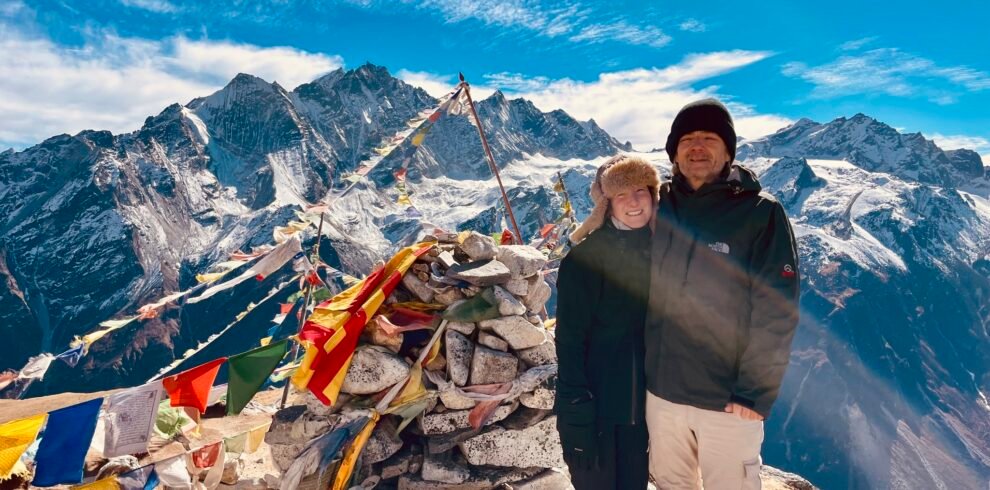
Trek the Langtang Valley with Next Trip Nepal. 8-day package from USD 650, covering all permits, guide, porter and teahouse accommodation. Langtang National Park, Kyanjin Gompa and Tserko Ri viewpoint included.
The Full Menu: What’s Available Where
Below Lama Hotel (Syabrubesi area), menus are the most varied. Breakfast options include porridge, eggs in multiple preparations, Tibetan bread with jam and butter (thick, pan-fried flatbread — surprisingly good), chapati, and instant noodle soup. Lunch and dinner expand to fried rice, fried noodles, thukpa (Tibetan noodle soup with vegetables), momo (dumplings), and pizza in a few places with the kitchen ambition to try it.
At Lama Hotel (2,470m) the menu contracts slightly. Momos become less common. The reliable options: dal bhat, thukpa, fried rice, fried noodles, eggs, Tibetan bread, and the ever-present instant noodles. Apple pie appears at some lodges — it’s often better than it sounds, particularly in autumn when apples are in season lower in the valley.
At Langtang Village (3,430m), the menu is similar to Lama Hotel. Some lodges add tsampa porridge — roasted barley flour mixed with hot water or tea, very traditional, and genuinely warming at altitude.
At Kyanjin Gompa (3,870m), the menu is broadly the same but with one addition worth noting: yak products. Yak cheese, yak butter for tea, and occasionally yak meat (jerky or fresh) appear on menus here. The fresh yak meat is fine at this altitude because the animals are local — no long transport chains. The cheese is genuinely the trail’s food highlight.
Trek the Langtang Valley with Next Trip Nepal. 8-day package from USD 650, covering all permits, guide, porter and teahouse accommodation. Langtang National Park, Kyanjin Gompa and Tserko Ri viewpoint included.
Yak Cheese from the Kyanjin Gompa Cheese Factory
The cheese factory at Kyanjin Gompa is a Swiss-aid project that has been operating in various forms since the 1950s. It produces yak milk cheese using traditional methods and sells it at the factory gate and through local lodges. The cheese is firm, slightly salty, with a flavor somewhere between young cheddar and parmesan — simple, good, and nothing like the processed cheese you’d find in Kathmandu.
Prices run NPR 800–1,500 for a good block depending on size and age. It keeps well in a pack for the trek back and makes a worthwhile gift or snack. Many trekkers buy one block to eat on the trail and one to bring home. Buy it at the factory for the freshest option and to ensure the money goes directly to the producers.
Butter Tea (Po Cha): An Acquired Taste Worth Trying
Butter tea — known locally as po cha — is made from strong black tea, yak butter, and salt, churned together until emulsified. It’s thick, rich, slightly oily, and salty rather than sweet. The first cup is often a shock. By the third, many trekkers understand why it’s been the warming drink of choice in Himalayan communities for centuries.
At altitude in cold temperatures, butter tea provides calories and warmth in a way that regular tea doesn’t. It’s available at most lodges in Kyanjin Gompa and some in Langtang Village for NPR 150–250 per cup. Order it at the lodge after arriving cold from a morning hike and it makes sense immediately.
Sweet milk tea (chai) is also available everywhere if butter tea isn’t for you. Most lodges have passable instant coffee as well — it’s not great, but it’s coffee at 3,870m.
| Drink | Notes | Price Range |
|---|---|---|
| Milk tea (chiya) | Standard Nepali tea with milk and sugar — excellent in the cold | $0.50–$2.50 |
| Black tea / lemon tea / ginger tea | All widely available; ginger tea especially good for nausea | $0.50–$3 |
| Butter tea (Tibetan style) | Available at Langtang Village and Kyanjin; salty, high-calorie, an acquired taste | $1.50–$3 |
| Coffee (instant Nescafé) | Widely available; filter coffee rare above Lama Hotel | $1–$4 |
| Bottled mineral water (1L) | Expensive above Lama Hotel; see alternative below | $0.50–$4 |
| Hot lemon with honey | Good for sore throats and altitude headaches; highly recommended | $1.50–$3 |
| Soft drinks (Coca-Cola, Sprite, Fanta) | Available at major stops; expensive at altitude | $1–$5 |
| Beer (Everest, Tuborg) | Available below 3,500 m; limit above that for acclimatisation | $2–$8 |
| Item | Syabrubesi / Bamboo | Lama Hotel | Langtang Village | Kyanjin Gompa |
|---|---|---|---|---|
| Dal Bhat (vegetarian) | 350–450 | 450–600 | 600–750 | 700–900 |
| Fried rice / noodles | 300–400 | 400–550 | 500–650 | 600–800 |
| Pasta / spaghetti | 350–450 | 450–600 | 550–700 | 650–850 |
| Omelette (2 eggs) | 200–300 | 300–400 | 350–450 | 400–550 |
| Porridge / muesli | 200–300 | 300–400 | 350–450 | 400–500 |
| Tibetan bread | 150–250 | 200–300 | 250–350 | 300–400 |
| Chapati with jam/honey | 150–200 | 200–300 | 250–350 | 300–400 |
| Hot lemon / ginger tea | 100–150 | 150–200 | 200–250 | 200–300 |
| Milk tea (chai) | 80–120 | 100–150 | 150–200 | 200–250 |
| Black coffee | 150–200 | 200–250 | 250–300 | 300–400 |
| Canned soft drink | 200–300 | 250–350 | 350–500 | 500–700 |
| Boiled water (1 litre) | 100–150 | 150–200 | 200–250 | 200–300 |
| Snickers / energy bar | 200–300 | 250–350 | 350–450 | 450–600 |
| Yak cheese (Kyanjin) | — | — | — | 400–600 per piece |
What Not to Order Above Lama Hotel
Meat dishes — chicken, pork, buffalo — become increasingly unreliable above Lama Hotel. At lower elevations, meat arrives by road and can be refrigerated. Above 2,470m, refrigeration depends on solar-powered systems that aren’t consistent, and meat travels far on porter loads. Food poisoning at altitude is significantly more miserable than at sea level and complicates your acclimatization entirely.
The practical rule: stick to eggs, dal bhat, vegetables, and Tibetan bread above Lama Hotel. At Kyanjin Gompa specifically, fresh yak products are the exception — yak cheese and yak meat at lodges where the animals are local are generally safe.
Some guides extend this caution to fish. You won’t find much fish on the menu anyway at this altitude, but if you do, skip it.
Dietary Restrictions on the Trail
Vegetarians: You’ll eat very well on the Langtang trail. Dal bhat, vegetable curries, egg dishes, fried rice with vegetables, noodle soups, Tibetan bread — the core menu is almost entirely vegetarian. No special requests required.
Vegans: Harder but manageable. Dal bhat without the ghee (clarified butter often added to the rice) and without egg is available if you ask. Avoid momos (often made with butter) and check what oil is used for fried rice. Communicate clearly at each lodge — the kitchen staff are used to dietary questions from international trekkers.
Gluten-free: Dal bhat (rice) is naturally gluten-free. Thukpa noodles are usually wheat-based. Fried rice is generally fine. Ask specifically about soy sauce in fried dishes — some lodges use it.
Nut allergies: Peanuts appear occasionally in sauces. If you have a serious allergy, communicate it clearly. The trail isn’t equipped for anaphylaxis — make sure you carry your epinephrine injector.
Planning a Langtang Valley Trek? Contact our local team for expert advice and trip planning.
Trek the Langtang Valley with Next Trip Nepal. 8-day package from USD 650, covering all permits, guide, porter and teahouse accommodation. Langtang National Park, Kyanjin Gompa and Tserko Ri viewpoint included.
Drinking Water: What’s Safe and What Costs Extra
Tap water from guesthouse taps on the Langtang trail comes from mountain streams and springs. It is not treated. Drinking it untreated carries risk — giardia is the main concern, not bacterial contamination, but both are possible.
Options:
- Bottled water: Available everywhere, costs NPR 100–200 per liter (rising with altitude). Creates significant plastic waste that has to be carried out of the park.
- Water purification tablets: Cheap (about NPR 100 for a pack in Kathmandu), effective against bacteria and some parasites, slight chemical taste. Add a vitamin C tablet to neutralize the taste if needed.
- SteriPen or UV purifier: Effective, fast, no taste. Costs USD 30–60 in Kathmandu outdoor shops, worth it if you’re doing multiple treks.
- Filter bottle (LifeStraw, Sawyer, etc.): Most versatile option. Fill from any tap or stream and drink directly through the filter. Removes bacteria, protozoa, and sediment. Works for the entire trek from a single purchase.
The environmental and economic case for a filter bottle is strong. A liter of bottled water at NPR 200 over 7 days at 2 liters per day costs NPR 2,800 (USD 21) in plastic that gets partially buried near the trail or carried out on porters. A filter bottle bought once in Kathmandu for NPR 2,000–3,000 lasts for years and creates no plastic waste.
Planning a Langtang Valley Trek? Contact our local team for expert advice and trip planning.
Trek the Langtang Valley with Next Trip Nepal. 8-day package from USD 650, covering all permits, guide, porter and teahouse accommodation. Langtang National Park, Kyanjin Gompa and Tserko Ri viewpoint included.