Compare any month on the Everest Three Passes circuit against October and October usually wins on paper. February offers solitude but real pass closure risk. March and September both carry genuine weather uncertainty tied to their transitional position in the calendar. April comes close, but October edges it out on rainfall odds and overall visibility statistics built up over years of guiding this route. November matches October’s clarity but loses out on daylight hours and warmth. October is, by most measures that matter for a high pass crossing, the strongest single month of the year for this trek, and that is exactly why it is also the most crowded, the most expensive to book late, and the hardest month to secure last minute accommodation in the smaller villages along the way.
Why October Consistently Outperforms Other Months
October benefits from a specific meteorological window: the monsoon has fully retreated, atmospheric moisture is low, and the pre winter storm systems that begin arriving in November have not yet established themselves. This combination produces the driest, clearest air of the year across the Khumbu, with morning visibility that regularly holds through the afternoon in a way that April, for all its other advantages, typically cannot match. The Everest Three Passes Trek depends heavily on clear conditions at three separate high points rather than one, which makes October’s consistency particularly valuable for this specific route compared to a standard base camp trek.
Temperature and Weather Through October
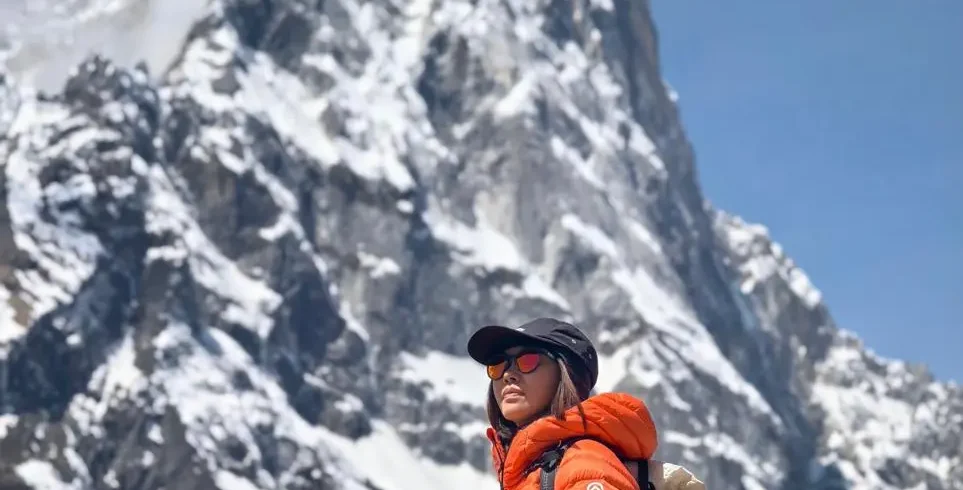
At Everest Base Camp elevation, October daytime highs typically reach around 6°C, with overnight lows near minus 10°C, cooling steadily as the month progresses from early to late October. Namche Bazaar runs considerably milder. Rainfall is minimal to nonexistent through most of the month, a sharp contrast to September’s lingering monsoon risk, and skies are clear on the large majority of mornings.
| Location | Early October Daytime | Late October Daytime | Overnight Range |
|---|---|---|---|
| Namche Bazaar (3,440m) | 10 to 14°C | 6 to 10°C | -3 to -6°C |
| Dingboche / Chhukung | 6 to 10°C | 3 to 6°C | -8 to -11°C |
| Gokyo (4,790m) | 4 to 8°C | 1 to 4°C | -9 to -12°C |
| Everest Base Camp area | 6 to 9°C | 3 to 6°C | -10 to -13°C |
Snow Conditions on Kongma La, Cho La and Renjo La
All three passes are typically at their most stable and predictable in October, having shed the last of any lingering monsoon season snow while not yet accumulating the fresh winter snowfall that starts building through November and December. Kongma La and Renjo La are generally straightforward in a normal October, with Cho La again the pass most likely to hold some ice on its northern approach, though even this is usually manageable with microspikes rather than requiring the more cautious approach needed in February or early March. Early winter storms occasionally arrive ahead of schedule and dust the passes with fresh snow, which is why even in October a guide checks current conditions before committing to a crossing rather than assuming automatic clear passage.
Lukla Flights and the Ramechhap Bottleneck
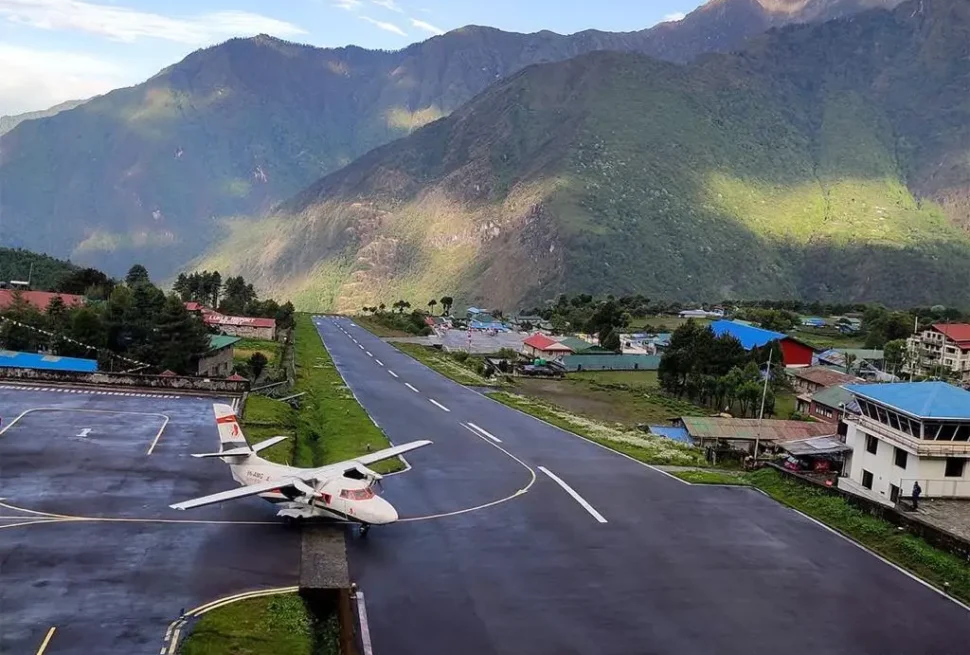
October sits at the peak of the peak season flight diversion, with Lukla flights operating through Manthali airport in Ramechhap rather than directly from Kathmandu for the entire month under the current civil aviation policy. This is also the month when the diversion system faces its heaviest real world test, since passenger volume through Ramechhap peaks alongside overall trekking demand. Expect a 4 to 5 hour night drive to Ramechhap, very early departures, and a short flight to Lukla, but also expect that any weather delay during October creates a larger backlog than the same delay would in a quieter month, simply because more flights and more passengers are competing for the same limited daily flying window. Build generous buffer days into your schedule on both ends of an October trip. Our Lukla airport flights and weather guide covers this in detail.
Accommodation Demand at Its Annual Peak
Booking last minute accommodation is hardest of any month right now, since October is in Chhukung, Dzongla and around Gokyo. These villages have a genuinely fixed number of beds, and October demand routinely fills them, particularly in the first three weeks when weather is most reliable and demand is highest. An operator with established lodge relationships books ahead as your group moves along the route, and this single factor is arguably the most important practical difference between a smooth October trip and a frustrating one.
Permit Planning During Peak Demand
Permit requirements themselves do not change with demand: the Sagarmatha National Park entry permit at NPR 3,000 per foreign trekker and the Khumbu Pasang Lhamu Rural Municipality entry permit, also NPR 3,000 as of 2026, remain the same fees regardless of month, with no TIMS card needed in the Khumbu. What does change in October is processing volume at the permit checkpoints themselves, with longer queues at busy entry points during the peak weeks. Arriving at checkpoints earlier in the day and having documentation ready in advance helps minimize delays. See our Sagarmatha National Park permit guide for the full process.
Pass Traffic: What Crossing During Peak Week Looks Like
Expect other groups on Kongma La, Cho La and Renjo La during an October crossing, sometimes several parties spread across the ascent and descent at once. This rarely causes real congestion, since parties naturally spread out at different paces, but narrow technical sections, particularly the icier stretches of Cho La, can see brief queues while individual trekkers navigate a tricky step with guide assistance. Guides account for this by timing departures to avoid clustering with other large groups where possible, part of the route planning value an experienced local operator brings specifically during October’s busiest weeks.
Daylight Hours and a Shrinking Window
Daylight in October runs from around 11.5 hours early in the month down toward 11 hours by the end, a steady decline from the long days of September and August. This remains comfortable for pass day scheduling, and early starts in October are driven more by a desire to beat the crowds and catch the clearest morning light than by any genuine shortage of daylight, unlike the tighter margins of a February crossing.
Booking Requirements: How Far Ahead for October
Few months reward early booking the way October does. Aim for three to four months ahead for the most popular weeks, particularly the first three weeks of the month when weather reliability peaks alongside demand. Trekkers booking within four to six weeks of an October departure face a significantly higher chance of settling for a less ideal itinerary, whether that means a different departure date, a private trip at a higher cost after fixed groups fill, or more compromise on room quality at the busiest stops.
Packing for Cold, Clear Conditions
October’s combination of cold mornings and consistently clear skies calls for solid insulation and strong sun protection at once. Our general Everest Base Camp packing list covers the fundamentals, with the table below highlighting October specific priorities.
| Category | October Recommendation | Reason |
|---|---|---|
| Insulation | Down jacket rated -15 to -20°C | Overnight lows at altitude regularly fall below -10°C, colder late in the month |
| Sleep system | Sleeping bag rated -15°C or colder | Unheated teahouse rooms match outdoor overnight temperatures |
| Traction | Microspikes, mainly for Cho La | Occasional ice on the northern approach even in stable conditions |
| Sun protection | High SPF sunscreen, lip balm, glacier glasses | Intense UV exposure under consistently clear October skies |
| Layering | Full range from base layers to insulated shell | Wide swing between cold mornings and mild midday sun |
Acclimatization During the Busiest Month
A crowded trail can create subtle pressure to keep pace with other groups, and October, more than any other month, tests whether your itinerary genuinely protects your own acclimatization schedule. Rest days at Namche and Dingboche should stay fixed regardless of how many other parties are moving through at the same time, and the climb high, sleep low principle applies exactly as it would in a quiet month. A guide who focuses on your group’s pace rather than matching the general flow of trail traffic is one of the clearer signs of a responsible operator during peak season.
Altitude Sickness Risk and Medical Support in October
October’s high trekker volume means seasonal medical posts and rescue infrastructure operate at their fullest capacity of the year, a genuine safety advantage. This does not reduce individual AMS risk, which remains driven by rate of ascent regardless of season. Persistent headache, nausea, unusual fatigue and loss of appetite remain the signs to take seriously, with descent as the correct response if symptoms do not improve. Our altitude sickness guide covers AMS, HACE and HAPE in more depth.
Food and Teahouse Service During Peak Demand
Menus run at their fullest in October, with lodges stocked for the season’s highest demand weeks. Kitchen service can slow during the busiest evenings when a single teahouse cooks for several groups simultaneously, so ordering promptly on arrival rather than waiting until later helps avoid a long wait for dinner. Boiled or treated water remains standard practice throughout the route regardless of season.
Advantages and Disadvantages of an October Crossing
| Advantages | Disadvantages |
|---|---|
| Most stable, clearest weather of the entire year | Highest demand for rooms in Chhukung, Dzongla and Gokyo of any month |
| Passes generally at their most predictable and straightforward | Fixed departures and popular weeks fill three to four months ahead |
| Fullest seasonal medical and rescue infrastructure active | Busiest trail and pass traffic of the year |
| Minimal rainfall risk compared to September | Longer queues possible at permit checkpoints during peak weeks |
| Reliable, well stocked teahouse service | Kitchen service can be slower on the busiest evenings |
Sample Day by Day Itinerary for October
A standard guided itinerary runs 16 to 18 days anticlockwise: fly Kathmandu to Lukla via Ramechhap and trek to Phakding, continue to Namche with an acclimatization day, trek through Tengboche to Dingboche with a second acclimatization stop, move to Chhukung, cross Kongma La to Lobuche, visit Everest Base Camp and Kala Patthar, continue to Dzongla, cross Cho La to Thagnak or Gokyo, rest and explore Gokyo Ri, cross Renjo La toward Lungden, descend through Thame back to Namche, and fly out from Lukla. Most operators still build in at least one buffer day given October’s flight volume and the knock on effect any delay has during the year’s busiest month.
The table below breaks that same route into a typical day by day structure with approximate elevations and walking times, so you can see where the longer and shorter days actually fall. Extra buffer days, when an operator builds them in, are usually held in reserve around the three pass crossings rather than fixed to one specific day, since that is where weather most often decides whether a group moves on schedule.
| Day | Route | Overnight Elevation | Approx. Walking Time |
|---|---|---|---|
| 1 | Fly Kathmandu to Lukla, trek to Phakding | 2,610m | 3 hours |
| 2 | Phakding to Namche Bazaar | 3,440m | 6 hours |
| 3 | Acclimatization day in Namche (side hike toward Khumjung or Everest View Hotel) | 3,440m | 4 hours |
| 4 | Namche to Tengboche | 3,860m | 5 hours |
| 5 | Tengboche to Dingboche | 4,410m | 5 hours |
| 6 | Acclimatization day in Dingboche (Nangkartshang viewpoint) | 4,410m | 4 hours |
| 7 | Dingboche to Chhukung | 4,730m | 3 hours |
| 8 | Chhukung to Lobuche via Kongma La | 4,940m | 8 to 9 hours |
| 9 | Lobuche to Gorak Shep, visit Everest Base Camp | 5,170m | 7 to 8 hours |
| 10 | Kala Patthar at dawn, continue to Dzongla | 4,830m | 7 to 8 hours |
| 11 | Dzongla to Gokyo via Cho La | 4,790m | 8 to 9 hours |
| 12 | Rest and exploration day at Gokyo, including Gokyo Ri | 4,790m | 3 to 4 hours |
| 13 | Gokyo to Lungden via Renjo La | 4,380m | 7 to 8 hours |
| 14 | Lungden to Thame | 3,820m | 4 to 5 hours |
| 15 | Thame to Namche Bazaar | 3,440m | 3 to 4 hours |
| 16 | Namche Bazaar to Lukla | 2,860m | 6 to 7 hours |
| 17 | Fly Lukla to Kathmandu | 1,400m | Flight only |
Difficulty Compared to the Standard EBC Trek
The Three Passes route remains significantly more demanding than the standard Everest Base Camp trek even during October’s favorable conditions, since it still requires three separate crossings above 5,300 meters rather than one high point at Kala Patthar. October’s stable weather makes it arguably the best month of the year to attempt the harder route, but the physical and technical demands of crossing three passes remain regardless of how cooperative the weather is.
Cost During the Highest Demand Month
October demand can push costs toward the higher end of the range, particularly for last minute private arrangements after fixed group departures fill. For a full breakdown, see our Everest Three Passes Trek cost and itinerary guide, and for base camp only pricing context, our Everest Base Camp trek cost breakdown covers shared lower valley expenses.
Gokyo and the Renjo La Side in October
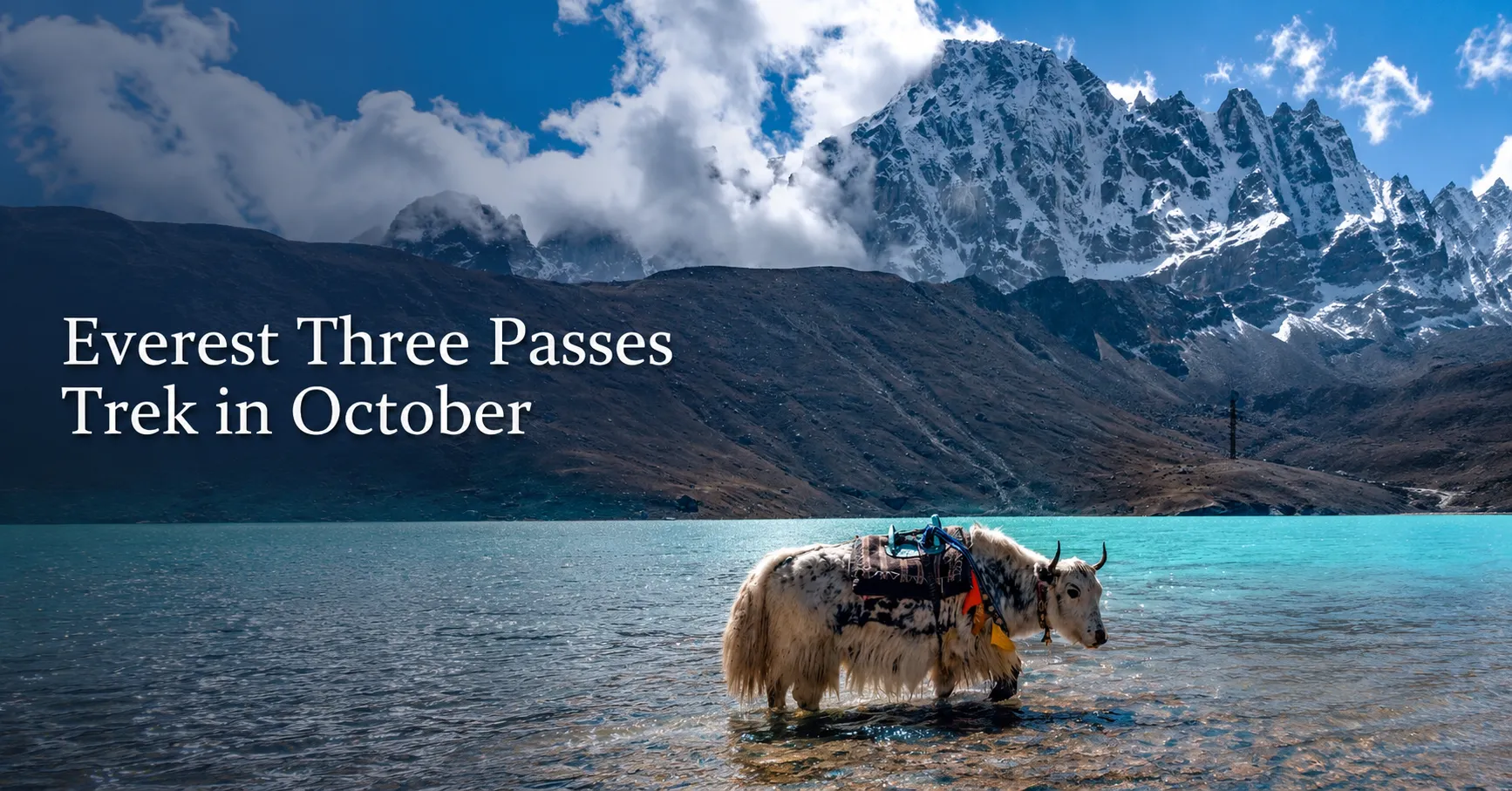
The Gokyo lakes and Gokyo Ri deliver some of their most reliable panoramic views of the year in October, with Everest, Cho Oyu and the turquoise lake system typically visible in sharp detail on clear mornings. Renjo La is usually one of the more straightforward crossings of the three passes by this point in the season, generally requiring less caution than Cho La. Trekkers interested specifically in the Gokyo side of the region without the full three pass circuit can find more detail in our Gokyo Lakes and Everest Base Camp combined route guide.
What a Pass Day Feels Like in October
An October pass day typically starts before sunrise, both to beat the cold and to get ahead of other groups on the busiest sections. The climb moves through the now familiar mix of packed trail, loose scree and firmer ground near the summit, with October’s dry, cold air making footing generally predictable compared to the icier surprises of a winter or early spring crossing. The view from the top on a clear October morning, with Everest, Lhotse, Nuptse, and Makalu visible in sharp, dust-free detail, is widely considered the best available at any time of year. Groups typically do not linger long at the summit given the cold and wind, moving into the descent fairly quickly once photos are taken.
Namche Bazaar at Its Liveliest
Namche is busier in October than in any other month, with the Saturday market drawing large crowds, every bakery and cafe running at full capacity, and a genuine buzz from the sheer volume of trekkers and support staff passing through. This can feel energizing for trekkers who enjoy a social atmosphere, or overwhelming for those who came specifically for solitude. Either way, Namche has enough lodge capacity to absorb this demand without the acute room shortages seen in the smaller villages higher up the route.
Training and Fitness for an October Departure
Fitness requirements remain constant regardless of season. Build a base of hiking with a loaded pack over varied terrain for at least two to three months before departure, prioritizing cardiovascular endurance for the sustained six to nine hour efforts required on pass days. October’s stable conditions mean less of your preparation needs to focus on managing unpredictable weather delays, freeing you to focus purely on physical readiness for the demanding terrain itself.
Photography in October
Photographers widely regard October as the best month on this route, combining dry, dust-free air with consistently clear skies for the sharpest possible peak definition. Morning light across the high peaks is reliable enough that photographers can plan shots in advance with reasonable confidence, a contrast to the more improvisational approach needed in September or April. The main practical challenge is crowds at the most popular viewpoints, particularly Kala Patthar and Gokyo Ri at sunrise, where you will likely be sharing the spot with other photographers and trekkers.
Trail Conditions Below Namche in October
The Lukla to Namche section is dry and increasingly dusty through October as the dry season continues, with heavy foot, porter and yak traffic during the busiest weeks. A buff or light scarf for dust protection is a worthwhile addition to your kit, and bridges or narrow switchback sections can see brief bottlenecks during peak morning hours when large numbers of trekkers move through together after leaving Lukla. Underfoot conditions themselves remain straightforward and require no special equipment beyond sturdy, broken in trekking boots.
Water Sources and Hydration in October
Streams and taps run reliably through most of the route in October, with freezing overnight temperatures at altitude affecting exposed pipes above Dingboche and Gokyo, particularly later in the month. Boiled water from teahouses or a personal filter and purification tablets remain the standard options. Dry air at altitude increases fluid loss through breathing more than trekkers often expect, making a deliberate drinking schedule worthwhile even when the cool temperatures do not create an obvious sensation of thirst.
Mobile Network and Charging in October
Ncell and NTC coverage through the main villages up to Dingboche and Gokyo is generally reliable, thinning near the passes. Network congestion can occur in the busiest villages during peak October weeks, simply due to high usage. Solar charging works reasonably well given consistently clear skies, though charging stations at popular lodges can see queues during the evening rush, making a personal power bank a sensible backup.
Guides, Porters and Group Sizes in October
Fixed group departures peak in October, alongside the highest overall guide and porter demand of the year. Established operators secure their staffing and lodge arrangements well ahead of the season, while less prepared companies can struggle to find available guides and porters during the busiest weeks. This is worth asking about directly when booking an October trip, since staffing quality directly affects both safety and the overall experience of your trek.
Emergency Evacuation During Peak Season
Helicopter evacuation infrastructure operates at its fullest capacity in October given the high volume of both trekkers and expedition adjacent traffic requiring support. Clear, stable weather also means fewer weather-related delays to emergency flights than in winter or the more variable shoulder months. This combination makes October one of the more reassuring months from a rescue access standpoint, though travel insurance with explicit helicopter evacuation cover to at least 6,000 meters remains essential regardless of how favorable the infrastructure looks on paper.
Packing Checklist Summary for October
- Down jacket rated -15 to -20°C, colder toward the end of the month
- Sleeping bag rated -15°C or colder for unheated teahouse rooms
- Microspikes, primarily for Cho La, carried for the other two passes as a precaution
- Trekking poles with snow baskets fitted
- Glacier glasses and high SPF sunscreen for intense clear sky UV exposure
- A buff or light scarf for dust on the lower trail sections
- Full layering system from base layers to insulated shell for the day’s temperature range
- Headlamp with spare batteries
- Personal power bank for backup charging during busy periods
- Passport copies, permit paperwork and proof of travel insurance covering 6,000 meters
Thame and the Lower Khumbu in October
Thame, visited on the descent side of the route after Renjo La, carries its usual significance as the birthplace of Tenzing Norgay and home to a long established monastery. October traffic through Thame is higher than in quieter months but generally remains well below the crowd levels of the main Namche to Base Camp corridor, since fewer trekkers include the full Renjo La side of the circuit compared to standard out and back Base Camp trips. The monastery remains open to respectful visitors, and this stretch offers a good, comparatively peaceful final cultural stop before the trek’s closing days.
Dashain and Tihar Festival Considerations
Nepal’s two biggest festivals, Dashain and Tihar, often fall during or close to October depending on the lunar calendar, and this can affect staffing availability for guides and porters who travel home to celebrate with family. Booking through an established operator who plans staffing around these dates in advance helps avoid any disruption to your itinerary. Trekkers on the trail during these festivals may also notice local celebrations in the villages they pass through, an interesting cultural dimension to an October trip beyond the trekking itself.
Why Experienced Guiding Matters Most During Peak Season
It might seem like October’s favorable conditions reduce the importance of guide experience compared to a challenging February crossing, but the busiest month of the year brings its own distinct set of challenges: securing rooms in high demand villages, managing group pacing on a crowded trail, and navigating the logistics of the Ramechhap flight system at its highest volume. We do not present any pass crossing as entirely without risk in any month, and October’s easier reputation on paper should not translate into complacency about altitude, weather, or the genuine effort required to cross three passes above 5,300 meters.
First Aid and Medication for October
A basic personal kit should include blister treatment, prescription medication in sufficient supply plus a buffer, general pain relief, rehydration salts and sun protection for the intense clear sky UV exposure typical of October. Any altitude related medication should be discussed in advance with a doctor familiar with high altitude travel. Dry, dusty trail conditions in the lower valley can lead to minor skin irritation or chapped lips faster than trekkers expect, making lip balm and a basic moisturizer worthwhile small additions to your kit.
Electricity and Charging Costs in October
Charging costs follow the usual pattern of rising with altitude, typically billed by the hour or by device. October’s high guest numbers mean genuine competition for charging outlets at the busiest lodges during evening hours, so plugging in promptly on arrival works better than waiting until after dinner. A personal power bank remains a sensible backup given this competition for shared charging infrastructure.
What Past October Trekkers Often Mention
Guides who lead groups through October repeatedly hear a consistent set of impressions afterward: genuine awe at how consistently clear the mountain views were, occasional comments about how busy the dining rooms felt at the smaller stops, and frequent gratitude for having booked well ahead once trekkers see how full the villages are during peak weeks. This reflects a fairly consistent pattern across different years of October departures, useful context alongside checking current conditions for your own specific dates.
Comparing October Directly to April
October and April are the two strongest months on this circuit, and trekkers choosing between them are usually weighing slightly different priorities. October generally edges out April on rainfall probability and overall visibility consistency, while April brings milder temperatures and blooming rhododendron forests that October cannot match. Crowd levels are comparably high in both months, so neither offers a meaningful advantage there. Reading our dedicated Everest Three Passes Trek in April guide alongside this one can help you weigh the specific trade offs for your travel dates.
Cultural Etiquette During Peak Season
With the highest visitor numbers of any month passing through Sherpa villages in October, mindful behavior matters more than ever: walking clockwise around mani walls and chortens, asking before photographing monasteries or residents, and respecting quieter moments at religious sites even amid a bustling trail season. These small courtesies help preserve the welcoming atmosphere that makes this region special, and they are especially appreciated by local communities managing the pressure of hosting October’s peak visitor volume.
Insurance Purchase Timing for October
Purchase travel insurance as soon as your October dates are confirmed rather than waiting until closer to departure, particularly given how far ahead October bookings are typically made. Early purchase protects against a wider range of pre-trip disruptions, including sudden flight schedule changes, on top of the core altitude and evacuation cover this route requires in any month. Our travel insurance guide explains exactly what a policy needs to include for this specific trek.
Private Versus Group Departures in October
Fixed-group departures in October offer shared costs and the appeal of a lively, social trekking atmosphere, though popular dates fill up quickly given overall demand. Private, custom scheduled departures cost more per person but offer full control over exact dates and pacing, an option worth considering for trekkers who want October’s reliable weather without competing for space on the most in-demand fixed group dates. Both options benefit equally from booking well ahead of the season.
Food Sourcing and Supply Chains During Peak Demand
Supplying teahouses at October’s peak demand levels requires a steady chain of porters and yak trains carrying goods up from Lukla throughout the season, a logistical operation that scales up considerably compared to quieter months. This generally works smoothly given how established the supply routes are, though it does mean prices for food and basic goods climb noticeably with altitude, reflecting the real cost of transport rather than simple profit taking. Understanding this helps put teahouse menu prices in context for trekkers unfamiliar with how remote mountain logistics work.
A Guide’s Perspective on October
Guides who have led this route across many Octobers tend to describe the month with genuine enthusiasm tempered by practical realism: the mountain views are consistently the best of the year, but the logistics of getting rooms, managing a crowded trail, and navigating peak season flight congestion require real skill and established relationships built up over multiple seasons. We would rather set that expectation clearly than oversell October as effortless, since a well-managed October trip is genuinely excellent, while a poorly managed one can mean real frustration over accommodation and flights.
Early October Versus Late October
Early October, roughly the first two weeks, tends to be slightly milder and can still carry a trace of transitional weather left over from September in some years, though this is generally minimal. Late October brings cooling temperatures, occasionally approaching November’s sharper cold by the final days of the month, alongside a modest thinning of crowds compared to the absolute peak weeks in the middle of the month. Trekkers wanting the single most reliable stretch of weather typically target the middle two weeks of October, while those hoping to split the difference between October’s clarity and slightly lower crowd levels sometimes lean toward the final week.
Expedition Support Traffic and Helicopter Noise
October sees less climbing expedition activity than the main spring season, since most commercial Everest expeditions run in April and May, but helicopter traffic supporting trekking logistics, cargo delivery and occasional evacuations remains a regular feature of the soundscape, particularly around Lukla, Namche and Base Camp itself. This is a normal part of the region’s infrastructure rather than a sign of anything unusual, though trekkers seeking complete quiet should understand that some helicopter noise is a realistic expectation at the busier stops along the route during October.
Final Thoughts on Timing Your October Trek
If your schedule allows any flexibility within October, the middle two weeks of the month typically offer the strongest overall balance of weather reliability and manageable, if still busy, trail conditions. Booking that window requires acting well ahead of your travel dates given how consistently it fills, but the pay off is genuinely the most dependable version of this trek available anywhere on the calendar. Weigh that against your own tolerance for crowds and cost, and choose accordingly.
Weather Monitoring Even in a Reliable Month
Even during October’s generally stable weather, experienced guide teams continue monitoring conditions actively rather than assuming automatic clear passage on any given day. Early winter storm systems occasionally arrive ahead of schedule, and a guide who stays alert to changing conditions rather than coasting on the month’s reputation is exactly the kind of judgment worth looking for when choosing an operator, in October as in any other month on this route.
Kala Patthar and Everest Base Camp in October
Kala Patthar, at just over 5,644 meters, delivers what many consider the single best mountain panorama of the entire trek in October, with Everest, Nuptse and the surrounding peaks typically visible in sharp, unobstructed detail at sunrise. Base Camp itself sits lower at around 5,364 meters and does not offer a direct view of Everest’s summit due to the surrounding terrain, something worth knowing in advance so the visit is appreciated for what it actually offers, proximity to the mountain and the historic staging ground, rather than a view it was never going to provide. Both stops are typically visited on the same push from Gorak Shep, an early, cold start that October’s clear skies make consistently worthwhile.
Choosing Your Season: October in Context
October’s strengths are clear, but they are not the whole story. We cover the rest of the trekking calendar in dedicated month by month guides so you can weigh October against the alternatives on your own terms:
| Month | General Character |
|---|---|
| February | Deep winter, quiet trails, real risk of a pass needing to be rerouted |
| March | Winter to spring transition, improving visibility, some snow still on passes |
| April | Peak spring, best mountain views, busiest teahouses |
| September | Post monsoon transition, improving weather through the month |
| November | Cold, clear, thinning crowds as the month progresses |
Frequently Asked Questions About October
Is October really the best month for this trek?
By most weather and pass condition measures, yes, alongside April. The trade off is crowd levels and booking pressure, both at their highest in October. Whether it is the best choice for you depends on how much you value guaranteed clear conditions against the appeal of a quieter trail.
How far ahead should I book an October departure?
Three to four months ahead is a sensible minimum for the most popular weeks, particularly the first three weeks of the month. Later bookings are possible but carry real risk of settling for a less ideal date or itinerary.
Will my Lukla flight definitely go through Ramechhap in October?
Yes, October sits fully within the current peak season diversion window, so flights operate through Manthali airport rather than directly from Kathmandu for the entire month.
How crowded are the teahouses in October compared to other months?
Guest numbers at Chhukung, Dzongla and around Gokyo peak in October, higher than any other month. Rooms can fill by mid afternoon on the busiest days, which is why advance booking through an operator with established lodge relationships matters more this month than any other.
Do I still need microspikes if the passes are usually clear in October?
Yes, particularly for Cho La, which can hold ice on its northern approach even during a typical stable October. Carrying microspikes remains standard practice regardless of how favorable conditions look.
Is October a good choice for a first Himalayan trek?
The weather makes October the most forgiving month for this route from a conditions standpoint, but the Three Passes circuit remains demanding regardless of season. First-time high altitude trekkers may want to consider the standard Everest Base Camp trek as an introduction before attempting the full pass circuit.
Planning Your October Three Passes Trek
October offers the most dependable weather window of the entire year for this route, and for many trekkers that reliability is worth the trade off against crowds and booking pressure. The practical work is almost entirely logistics: book three to four months ahead, confirm your Ramechhap routing and buffer days, and travel with a guide team with strong lodge relationships in the smaller villages where October competition for rooms is fiercest. Get that right, and October delivers some of the clearest, most rewarding conditions available anywhere on the Everest Three Passes Trek.