

Choosing the right agency for the Annapurna Circuit comes down to a lot more than just finding someone to book your teahouses and carry your bags. While the trail isn’t technical, taking you from the valley floors near Dharapani up to 5,416 meters at Thorong La Pass makes altitude management and timing very real concerns. A rushed schedule that cuts out rest days in Manang or ignores the harsh late-morning winds at the pass can quickly turn a dream trip into a dangerous emergency. With hundreds of operators registered across Kathmandu and online, here is how to cut through the marketing noise and pick a legitimate, safety-focused team for your trek.
Why the Agency You Choose Matters More on This Specific Trek
The Annapurna Circuit Trek is not a technical climb, but it is a genuinely serious high-altitude trek. The route climbs from around 1,860 m at Dharapani to 5,416 m at Thorong La Pass in roughly a week, which means acclimatization is not optional background information; it is the single factor that most affects whether your trek finishes safely and on schedule. A rushed itinerary that skips or shortens the compulsory rest day at Manang (3,519 m) is one of the most common reasons trekkers develop altitude sickness severe enough to force a descent partway through the trip.
The pass crossing itself adds a second layer of risk that has nothing to do with fitness. Afternoon winds at Thorong La regularly reach 50 to 60 km/h, and conditions on the pass deteriorate quickly after late morning. Every experienced operator on this route builds the itinerary around an early, pre dawn departure from High Camp or Thorong Phedi specifically so the group is at or past the pass before roughly 09:30 to 10:00 am. An agency that does not understand or does not enforce this timing is not a small inconvenience, it is a real safety gap.
Add to this the practical realities of a multi day trek through a remote region: permit checkpoints at Ghasa, Manang, Muktinath and Jomsom that require your original documents, teahouse capacity that genuinely tightens during the October and April peaks, and the fact that a serious altitude emergency at High Camp needs a guide who can recognize the difference between manageable symptoms and a situation requiring immediate descent or evacuation. None of this is meant to be alarming. Thousands of trekkers complete the Annapurna Circuit safely every season. It is meant to explain, honestly, why the company organizing your trek is not a detail you should treat the same way you would treat picking a hotel for a beach holiday.
The Real Criteria for Judging a Best Annapurna Circuit Trek Company
Every agency will tell you it offers “expert guides” and “the best service.” Those words are not verifiable, so they are not useful. The criteria below are things you can actually check before you pay anything.
1. Government Registration and Trekking Agency Licensing
A genuine trekking company in Nepal is registered as a legal business with the Office of the Company Registrar, holds a PAN tax registration with the Inland Revenue Department, and, separately from basic company registration, holds a trekking agency license issued by the Department of Tourism along with registration with the Nepal Tourism Board. This second layer is the part that is easy to miss. A website can register a generic company name without ever obtaining the specific tourism industry licensing required to legally operate treks or process permits. Ask any agency to name its trekking agency license and Nepal Tourism Board registration directly, not just describe itself as “government registered” in passing.
2. TAAN or NMA Membership You Can Check Independently
The Trekking Agencies Association of Nepal, known as TAAN, and the Nepal Mountaineering Association, known as NMA, are established Nepali tourism bodies that maintain their own membership records. A legitimate agency does not mind you verifying its membership with these organizations directly rather than only taking the claim at face value on a website. If an agency lists TAAN or NMA membership, it should be able to give you enough detail, company name and membership status, for you to confirm it independently.
3. Licensed Guides With Real Wilderness and Altitude Training
The single biggest safety variable on this trek is not the itinerary on paper, it is the judgment of the guide leading your group at 4,900 m when someone starts feeling unwell. A government licensed trekking guide certificate from the Department of Tourism confirms basic professional standing. Formal wilderness first aid and high altitude safety training on top of that license is what actually prepares a guide to recognize early acute mountain sickness, use a pulse oximeter correctly, and make the call to descend before a manageable symptom becomes a genuine emergency. Ask an agency directly whether its guides carry this training and whether a pulse oximeter is standard kit on every departure, not an optional extra.
4. An Itinerary Built Around Acclimatization, Not Around Squeezing the Trip Shorter
A properly paced Annapurna Circuit itinerary treats the Manang rest day as compulsory, follows the general rule of no more than 300 to 400 m of net sleeping elevation gain per night above 3,000 m, and times the Thorong La crossing for an early morning arrival at the pass. An itinerary that compresses this into an aggressively short trip to undercut competitors on price is not a bargain, it is a shortcut with real consequences for the people walking it. When comparing quotes, look at the actual day by day pacing between Manang and the pass, not just the total number of days advertised.
5. Transparent, Itemized Pricing
The best agencies publish exactly what a quoted price includes and excludes: accommodation type and nights, which meals are covered, permit fees, guide and porter costs, equipment loan, and what is charged separately, typically things like Kathmandu and Pokhara lunches and dinners, travel insurance, tipping and personal expenses. A price that looks unusually low compared to every other quote you have received is worth a direct question about what has been left out, since permits, a licensed guide, and porter insurance cost roughly the same amount no matter which company you book with. The difference usually shows up somewhere in the fine print.
6. Fair Treatment and Insurance for Porters
Porter welfare is not a marketing detail, it is a genuine ethical and safety issue on this route, and it is one of the clearer ways to judge an agency’s actual standards rather than its marketing copy. Look for a stated porter carrying weight limit, typically around 20 kg per porter, a reasonable porter to trekker ratio, and confirmation that porters carry accident and rescue insurance the same way guides do. Agencies aligned with International Porter Protection Group style guidelines will usually say so directly.
7. Real, Checkable Reviews Across More Than One Platform
A handful of glowing testimonials on an agency’s own website are the easiest thing in the industry to write. Independent review platforms such as TripAdvisor are harder to manipulate at scale and let you read the full review history, not just the quotes a company chose to feature. When you are comparing agencies, look at total review count and rating together, not just a headline score, and read a handful of the actual reviews rather than only the star average.
8. A Real Local Team You Can Name, Not Anonymous Stock Photography
An agency willing to publish its founder’s name, its guides’ names, and a real Kathmandu office address has less to hide than one that hides behind a contact form and generic “our team” stock photos. This also matters practically: if something goes wrong on your trek, you want to know there is a real, accountable business behind the booking rather than a website that could disappear overnight.
Red Flags That Suggest an Agency Is Not What It Claims to Be
A few warning signs come up repeatedly with agencies that turn out to be unregistered resellers rather than genuine operators.
- No verifiable company registration or trekking agency license, or vague language like “fully licensed” with no license number, registration body, or document you could actually check.
- A price dramatically below every other quote for what is supposedly the same itinerary, permits, guide and accommodation standard, with no clear explanation of what has been cut to reach that number.
- No named guides or staff, only generic descriptions like “our professional team” with stock photography that could belong to any company.
- Reviews that exist only on the company’s own website, with no presence at all on an independent platform like TripAdvisor.
- Reluctance to answer direct questions about registration, guide certification, or what happens in a medical emergency, before you have paid a deposit.
- An itinerary that compresses acclimatization days to make the trip shorter and cheaper without explaining the added risk.
- No clear porter policy, or an unwillingness to say how much weight a porter carries or whether porters are insured.
None of these signs alone proves an agency is dishonest, but two or three of them together are a genuine reason to keep asking questions before you commit.
The Three Types of Agencies You Will Encounter
Almost every company selling the Annapurna Circuit falls into one of three broad categories, and understanding the difference makes comparing quotes far easier than reading marketing copy alone.
| Agency type | Who actually runs your trek | Typical registration transparency | Typical price pattern |
|---|---|---|---|
| International booking platform | A local Nepal based company the platform subcontracts to, often unnamed until after booking | Usually strong at the platform level, but the actual ground operator is rarely named or independently checkable | Highest, since the platform adds its own margin on top of the local operator’s rate |
| Unregistered budget reseller | Frequently unclear, sometimes a different company entirely from the one you paid | Weak or unverifiable, often just a website with no named license or registration number | Lowest advertised price, but often with hidden exclusions or a compressed, less safe itinerary |
| Registered local Kathmandu operator | Its own employed or directly contracted guides and porters | Strong, with a checkable trekking agency license, TAAN or NMA membership and named staff | Mid range, reflecting real permit, guide, porter and insurance costs without an added resale margin |
None of these categories is automatically wrong for every trekker, and plenty of international platforms work with genuinely good ground operators. The point of this table is simply that the price you see on a booking page often tells you less about safety and quality than which of these three structures sits behind it, which is exactly why the verification questions in this guide matter more than the sticker price.
A short, real world example illustrates why the guide sitting across from you at 4,900 m matters more than anything printed in an itinerary. A trekker developing a mild headache and slightly reduced appetite at Thorong Phedi could be experiencing ordinary, harmless altitude adjustment, or the earliest stage of acute mountain sickness that needs to be watched closely overnight. A guide with real wilderness training checks blood oxygen with a pulse oximeter, asks specific follow up questions rather than a general “how do you feel,” and knows the difference between “monitor and continue in the morning” and “descend now, do not wait.” An undertrained guide, or one under pressure from an agency to keep a group moving on a fixed schedule, is far more likely to miss that distinction. This is the entire reason licensing and training criteria matter more than they might seem to on paper.
Questions to Ask Before You Pay a Deposit
A short, direct set of questions tends to separate a confident, established operator from a reseller who cannot answer specifics.
| Question | What a strong answer sounds like |
|---|---|
| What is your trekking agency license number and which body issued it | A specific answer naming the Department of Tourism or Nepal Tourism Board, not a vague “we are fully licensed” |
| Are you a member of TAAN or NMA | A clear yes or no, with enough detail for you to check independently |
| Will the same company that I am paying actually run my trek, or will it be subcontracted | A direct answer naming who leads the trek, ideally the same company’s own guides |
| What acclimatization days are built into the itinerary between Manang and Thorong La | A specific description of the rest day at Manang and the elevation pacing through Yak Kharka and High Camp |
| Do your guides carry a pulse oximeter and wilderness first aid training | Yes, described as standard practice, not an optional add on |
| What is included and excluded in the quoted price | A clear, itemized answer covering accommodation, meals, permits, guide, porter and equipment |
| How much weight does a porter carry and are porters insured | A specific weight limit, typically around 20 kg, and confirmation of accident and rescue insurance |
| What happens if someone develops altitude sickness at High Camp | A described protocol involving descent, radio or satellite communication and helicopter evacuation partnerships, not a vague reassurance |
How to Verify a Trekking Company’s Registration Yourself
You do not have to take any agency’s word for its own legitimacy, including ours. A few practical steps work for verifying almost any company operating in Nepal.
Ask directly for the company’s registration number, PAN number, trekking agency license, and TAAN or NMA membership details, and be specific about wanting document names rather than general reassurance. A company with nothing to hide will answer this quickly. Email or WhatsApp the agency with a specific question naming one document, since a fast, specific reply is itself a useful signal. Where possible, cross check TAAN or NMA membership with those organizations directly rather than only relying on the agency’s own claim. Finally, look for a real, named office address in Kathmandu or Pokhara rather than only a contact form, and check whether the same company appears consistently across independent review platforms, not only on its own site.
How Next Trip Nepal Measures Up Against Every Criterion Above
We built the section above as an honest framework for judging any Annapurna Circuit trek company, not only us, and we would rather you apply it to us directly than take a marketing paragraph at face value. Here is where our own documentation and team stand against it.
Registration and licensing. Next Trip Nepal Treks and Expedition Pvt. Ltd. is registered as a private limited company in Nepal, holds a PAN tax registration with the Inland Revenue Department, and holds a trekking agency license issued by the Department of Tourism along with registration with the Nepal Tourism Board. We also hold a restricted area trekking authorization from the Department of Immigration, the specific layer of licensing required to legally arrange treks in restricted regions such as Manaslu. We publish scanned copies of these documents, not just a written claim, on a dedicated government registration and licensing so that trekkers, partner agencies and search engines can check them directly.
TAAN and NMA membership. We are an active member of the Trekking Agencies Association of Nepal and are affiliated with the Nepal Mountaineering Association. Both memberships are independently checkable rather than only stated on our own website.
Licensed, trained guides. Our lead guides hold government issued trekking guide licenses from the Department of Tourism, along with wilderness first aid and high altitude safety training completed through a recognized trekking and mountaineering training institute. A pulse oximeter and a first aid kit travel with every guide as standard equipment, not an optional upgrade, and blood oxygen monitoring on the Annapurna Circuit begins at Manang as a routine part of how we run the trek.
An itinerary built around acclimatization. Our standard Annapurna Circuit itinerary treats the Manang rest day as compulsory, follows the same 300 to 400 m per night guideline described above once above 3,000 m, and has a standing rule, not a suggestion, that every group crosses Thorong La before roughly 09:30 to 10:00 am. You can see the full day by day breakdown, cost and inclusions on our Annapurna Circuit Trek.
Transparent pricing. Our published group rates for the 13 day Annapurna Circuit package run from 1,445 US dollars for a solo traveler down to 975 US dollars per person for a group of 13 or more, with the exact figures set out by group size below. The package includes 3 nights of 3 star hotel accommodation in Kathmandu, 1 night in Pokhara, 9 nights of teahouse accommodation on the trek itself, all trekking meals, private transfers, the Jomsom to Pokhara mountain flight, a licensed guide and porter, equipment loan, both required permits, a first aid kit and pulse oximeter, and emergency support.
| Group size | Price per person (USD) |
|---|---|
| 1 traveler | 1,445 |
| 2 travelers | 1,375 |
| 3 to 5 travelers | 1,275 |
| 6 to 8 travelers | 1,175 |
| 9 to 12 travelers | 1,075 |
| 13 or more travelers | 975 |
Costs not covered include lunch and dinner while staying in Kathmandu and Pokhara, the Nepal visa fee, travel and medical insurance, international flights, personal expenses, optional extras on the trek such as hot showers and wifi, and tipping, which is customary though not mandatory. Full detail sits on the same Annapurna Circuit Trek cost and inclusions.
Porter welfare. Our standard porter ratio is one porter per two trekkers, with a 20 kg carrying capacity, and our guides and porters are covered by accident and rescue insurance while working on our treks, aligned with International Porter Protection Group guidelines.
Real, checkable reviews. As of this writing, Next Trip Nepal has 237 reviews on TripAdvisor with an average rating of 5.0, covering treks and tours across the Everest, Annapurna, Manaslu and Langtang regions. You can read them directly on our reviews or on TripAdvisor itself, rather than only on curated testimonials embedded in a sales page.
A real, named team. Next Trip Nepal was founded by Kiran Basnet, who leads a team of named trekking guides, including several with years of specific experience on the Annapurna, Everest, Manaslu and Langtang routes, alongside dedicated office, driver and accounts staff based at our Thamel, Kathmandu office. Our full team is listed with names and roles rather than generic stock photography.
We say this plainly rather than as a sales pitch: we would rather you check every one of these facts independently than simply believe them because we wrote them here. That is the entire point of publishing our documents, our reviews, and our team openly in the first place.
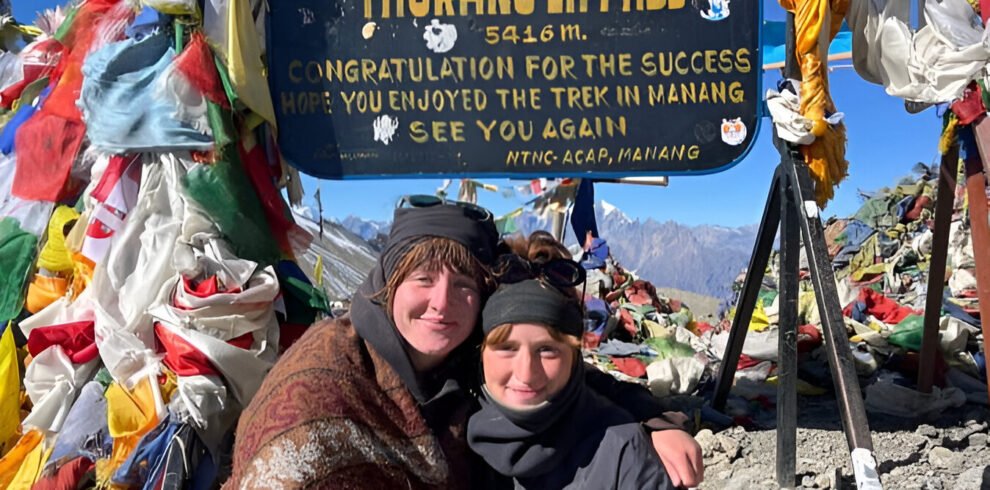
What a Properly Paced Annapurna Circuit Itinerary Actually Looks Like
Beyond checking an agency’s credentials, it helps to know what a genuinely well paced itinerary looks like on paper, so you can compare it against any quote you receive.
| Day | Route | Notes |
|---|---|---|
| 1 | Arrival in Kathmandu | 3 star hotel, trip briefing |
| 2 | Kathmandu to Dharapani by private jeep | 8 to 9 hour drive |
| 3 | Dharapani to Chame | 14 to 15 km, roughly 810 m elevation gain |
| 4 | Chame to Upper Pisang | 14 to 15 km, roughly 630 m elevation gain |
| 5 | Upper Pisang to Manang via Ghyaru and Ngawal | 16 km, the higher, more acclimatization friendly route variant |
| 6 | Manang, compulsory acclimatization day | Optional hike to roughly 3,900 m, return to sleep at 3,519 m |
| 7 | Manang to Yak Kharka | 10 to 11 km, roughly 510 m elevation gain |
| 8 | Yak Kharka to Thorong Phedi or High Camp | 6 to 7 km, roughly 400 to 800 m elevation gain |
| 9 | Cross Thorong La Pass (5,416 m) to Muktinath | Early pre dawn departure, long descent day |
| 10 | Muktinath to Jomsom | 16 to 17 km, roughly 1,080 m net descent |
| 11 | Jomsom to Pokhara | 20 minute mountain flight |
| 12 | Pokhara to Kathmandu | 6 to 7 hour tourist bus, or a short flight |
| 13 to 14 | Buffer day and departure | Built in flexibility for flight delays |
If a quoted itinerary compresses this into significantly fewer days without removing the buffer or road travel days, ask exactly which walking day has been shortened or combined, since the answer usually points straight to the acclimatization schedule. You can read the full version of this itinerary, along with route variants and what to pack, on our Annapurna Circuit Trek itinerary and our detailed Annapurna Circuit Trek packing list.
Permits and the Guide Question, Answered Honestly
Two permits are mandatory for every foreign trekker on the standard Annapurna Circuit route, regardless of which company you book with: the Annapurna Conservation Area Permit, costing NPR 3,000 per trekker, and the TIMS card, costing NPR 2,000 per trekker. Both are arranged through a registered trekking agency, and checkpoints verifying these permits sit at Ghasa, Manang, Muktinath and Jomsom, where original documents are required.
It is worth being precise about something a number of agencies blur for marketing reasons: unlike Kanchenjunga or Upper Mustang, the standard Annapurna Circuit route from Dharapani through to Jomsom via Thorong La does not legally require a licensed guide for independent trekkers. We think it is more honest to say this plainly than to imply a legal requirement that does not exist on this specific route. What we will say directly is why we still run every departure with a licensed guide and porter as standard practice: acclimatization monitoring with a pulse oximeter, navigation through a route that changes character by the day, logistics across teahouses and permit checkpoints, and experienced judgment on pass day timing when the afternoon wind pattern genuinely matters. That is a genuine safety and service argument, not a legal one, and we would rather make it honestly.
Best Time to Book, and Where to Read the Full Seasonal Detail
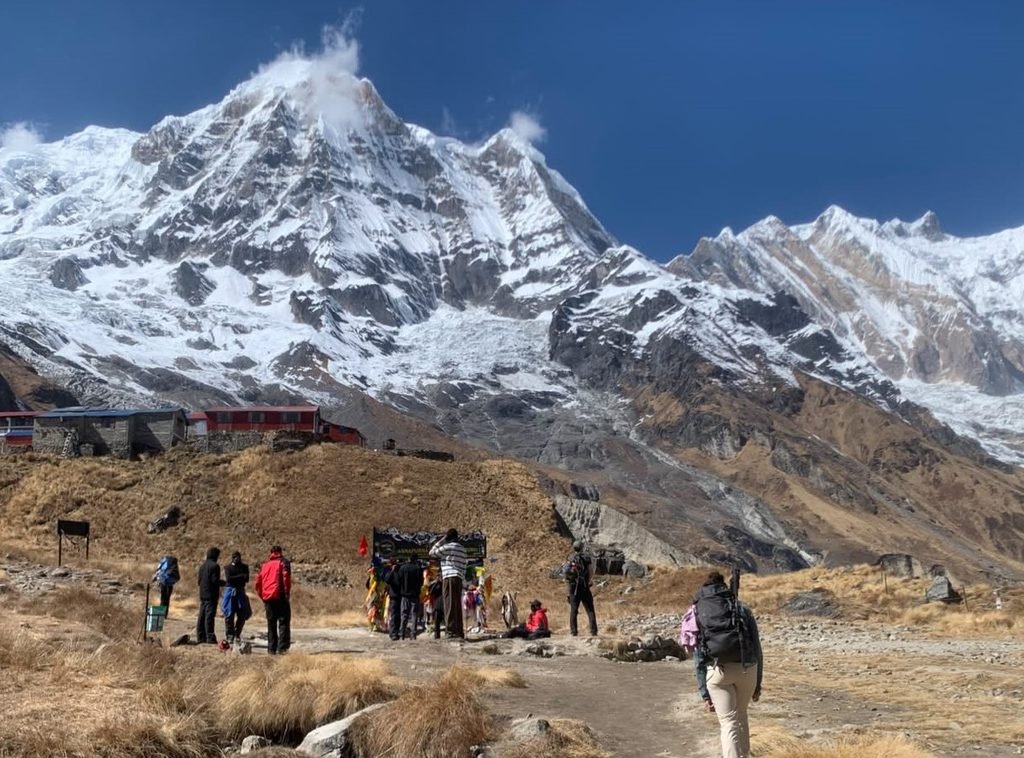
Choosing the right company matters, but so does choosing the right month, since weather and crowd levels genuinely shift the experience on this specific route. Autumn, September through November, is the single most reliable window of the year, with October being the busiest month on the trail. Spring, March through May, is the second best season, with clear skies and the rhododendron bloom lining the Chame to Pisang forest sections in April. We have written a full, honest, month by month breakdown for each of these six months, covering weather, the rain shadow effect that keeps the Manang and Mustang side of the route drier than the lower approach, crowd levels and route conditions in detail:
- Annapurna Circuit Trek in September
- Annapurna Circuit Trek in October
- Annapurna Circuit Trek in November
- Annapurna Circuit Trek in March
- Annapurna Circuit Trek in April
- Annapurna Circuit Trek in May
If the altitude or the length of the full circuit feels like more than you want on this trip, it is worth knowing that a shorter 6 Day Annapurna Base Camp Trek and the lower altitude Ghorepani Poon Hill Trek or Mardi Himal Trek exist in the same region and can be genuinely better first trek choices for some travelers. For readers weighing safety across Nepal’s major routes more broadly, our guide to the 5 safest treks in Nepal covers how the Annapurna Circuit compares to other well known routes on exactly this question.
Frequently Asked Questions
What actually makes a company the best Annapurna Circuit trek company?
Verifiable government registration and trekking agency licensing, licensed guides with real wilderness and altitude training, an itinerary genuinely built around acclimatization rather than compressed for a lower price, transparent itemized pricing, fair porter treatment and insurance, and real reviews you can check on an independent platform. No single feature proves an agency is the best choice, but an agency that can answer all of these clearly is a genuinely safer bet than one that cannot.
Is Next Trip Nepal a legitimate, registered trekking company?
Yes. Next Trip Nepal Treks and Expedition Pvt. Ltd. is registered as a private limited company in Nepal, holds a trekking agency license from the Department of Tourism, is registered with the Nepal Tourism Board, and is an active member of TAAN with an NMA affiliation. All of this documentation is published on our government registration and licensing for independent verification.
How do I check if any trekking agency is really registered in Nepal?
Ask directly for the company’s registration number, trekking agency license and TAAN or NMA membership details, and cross check membership with those organizations where possible. Look for a real, named office address and named guides rather than a contact form and stock photography.
Do I legally need a guide for the Annapurna Circuit Trek?
Not on the standard route. Unlike Kanchenjunga or Upper Mustang, the Annapurna Circuit from Dharapani to Jomsom via Thorong La does not legally require a licensed guide for independent trekkers, though the Annapurna Conservation Area Permit and TIMS card remain mandatory regardless. Most trekkers still book with a guide for acclimatization monitoring, navigation and safety, particularly on the Thorong La crossing.
How much does it cost to trek the Annapurna Circuit with a good company?
Expect a genuine, fully inclusive package with a licensed guide, porter, permits, teahouse accommodation and meals during the trek to run roughly 975 to 1,445 US dollars per person, depending mainly on group size. A price significantly below this range for a supposedly equivalent itinerary is worth a direct question about what has been left out.
What is the difference between a trekking company and a trekking agent or reseller?
A trekking company holds its own trekking agency license, employs or directly contracts its own guides and porters, and runs the trek itself. A reseller collects a booking and passes it on to a third party local operator, sometimes without disclosing this. Asking directly whether the company you are booking with actually runs your trek is one of the most useful questions you can ask.
Are TripAdvisor reviews a reliable way to judge a trekking company?
They are more reliable than testimonials curated on a company’s own website, since you can read the full review history rather than a selected handful. Look at total review count alongside the average rating, and read a sample of the actual reviews rather than only the star score.
What should I ask about safety before booking?
Ask what acclimatization days are built into the itinerary, whether guides carry a pulse oximeter and wilderness first aid training, and what the company’s protocol is if someone develops altitude sickness at High Camp or on the pass itself. A specific, confident answer to all three is a strong sign.
Is a locally owned Kathmandu based company better than an international booking platform?
Not automatically, but a locally owned, licensed company that runs its own treks with its own named guides tends to give you more direct accountability and often a lower price than an international platform that adds its own margin on top of a local operator’s rate. The registration and licensing checks above matter regardless of which type of company you are considering.
How do I know if the guide leading my trek is actually qualified?
Ask whether your guide holds a government issued trekking guide license from the Department of Tourism and whether they have completed wilderness first aid or high altitude safety training. A reputable agency will answer this specifically, often naming the guide assigned to your group in advance.
What is a fair porter to trekker ratio and carrying weight on this trek?
A common, fair standard is one porter per two trekkers with a carrying capacity of around 20 kg per porter, alongside accident and rescue insurance for porters the same as for guides. An agency that cannot answer this clearly is worth a follow up question.
Should I book directly with a Nepal based company or through a foreign travel agent?
Both can work, but if you book through a foreign travel agent, it is worth asking directly which licensed Nepal based company will actually run your trek on the ground, and applying the same registration and safety checks to that company, not just to the agent who took your payment.
Can I verify Next Trip Nepal’s TAAN and NMA membership myself?
Yes. We are an active member of the Trekking Agencies Association of Nepal and are affiliated with the Nepal Mountaineering Association, and we encourage trekkers to confirm this independently with those organizations rather than relying only on our own statement.
What is the difference between the Annapurna Conservation Area Permit and the TIMS card?
The Annapurna Conservation Area Permit, costing NPR 3,000 per foreign trekker, is specific to entering the conservation area itself. The TIMS card, costing NPR 2,000 per foreign trekker, is a separate trekker information and safety tracking document. Both are mandatory for every foreign trekker on the standard route and are checked at Ghasa, Manang, Muktinath and Jomsom, so a genuine agency will always arrange both, not just one.
Why do some quotes for the same itinerary vary by several hundred dollars?
The most common reasons are group size, since per person pricing drops as group size grows, the accommodation standard in Kathmandu and Pokhara, whether an international platform’s margin is included on top of the local operator’s rate, and whether acclimatization days, guide licensing and porter insurance have genuinely been budgeted for rather than quietly cut to reach a lower number.
Final Verdict: How to Actually Choose
There is no single “best Annapurna Circuit trek company” that is objectively correct for every trekker, and any page that claims otherwise without giving you a way to check its claims is asking for trust it has not earned. What you can do, with any agency including us, is apply the same criteria consistently: verifiable registration and licensing, licensed and properly trained guides, an itinerary built around real acclimatization rather than a shorter price tag, transparent costs, fair porter treatment, and reviews you can check independently rather than only curated testimonials.
We built this guide around those criteria because we think a trekker who asks the right questions ends up safer and better served, whoever they eventually book with. If you have checked the boxes above and want to see exactly how our own itinerary, pricing and team hold up, our Annapurna Circuit Trek has the full day by day plan and current pricing, and our registration and licensing has every document referenced in this article for you to check yourself.


