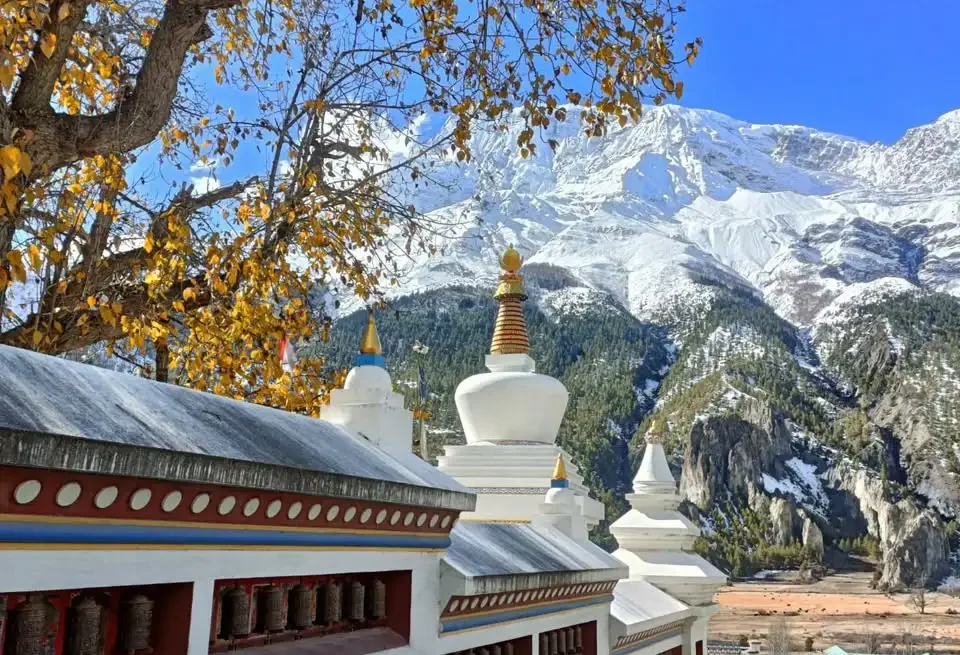
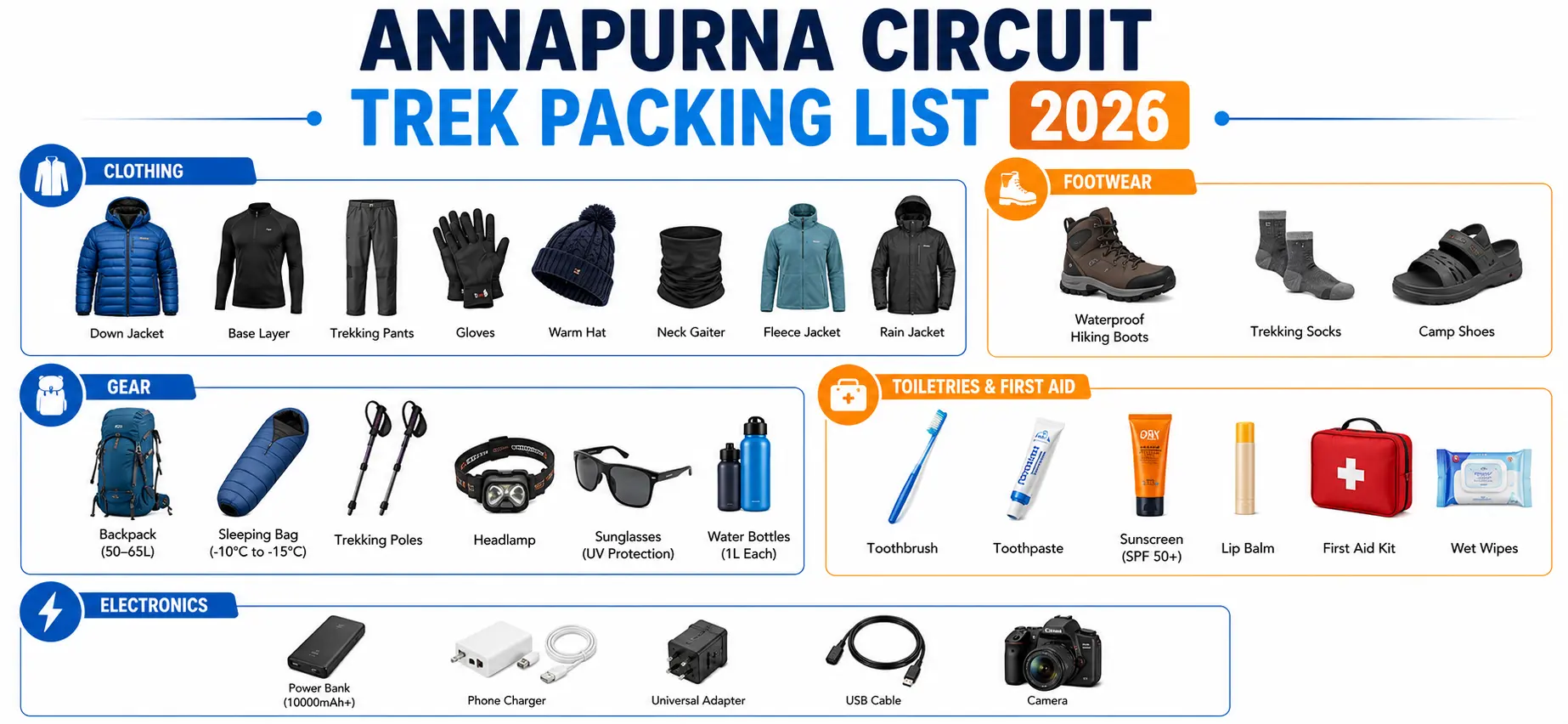
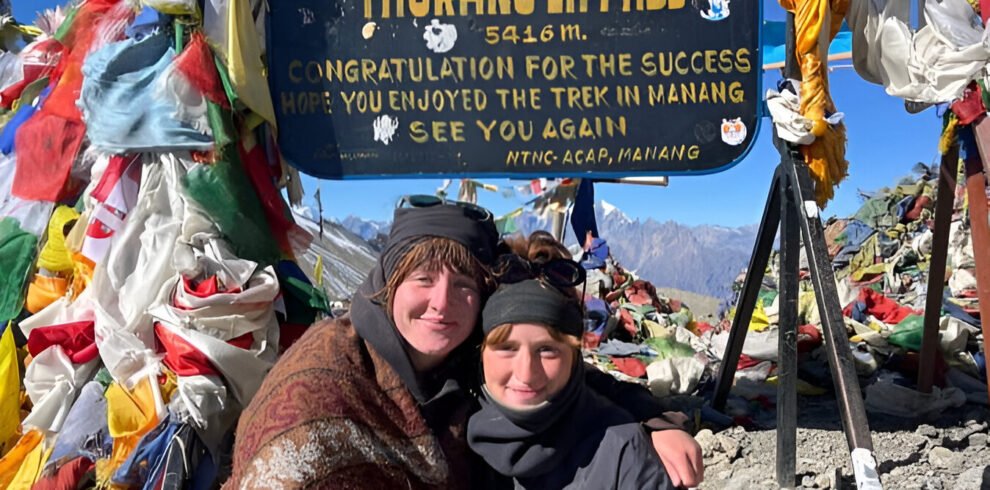
The Annapurna Circuit Trek packing list is the one thing most first-time trekkers get wrong. You carry too much, wear the wrong base layer at 5,000 meters, and end up paying a porter extra to haul items you never opened. This guide is built from real experience on the trail: 13 days, 800 meters to 5,416 meters, warm subtropical valleys to the frozen pre-dawn crossing of Thorong La Pass. If you are booking the Annapurna Circuit Trek with Next Trip Nepal, this is everything you need to bring, exactly what to leave at home, and a day by day clothing guide so you are never under or overdressed at any point on the route.
The Kanchenjunga Circuit Trek takes you around the base of the world's third highest mountain in the far eastern corner…
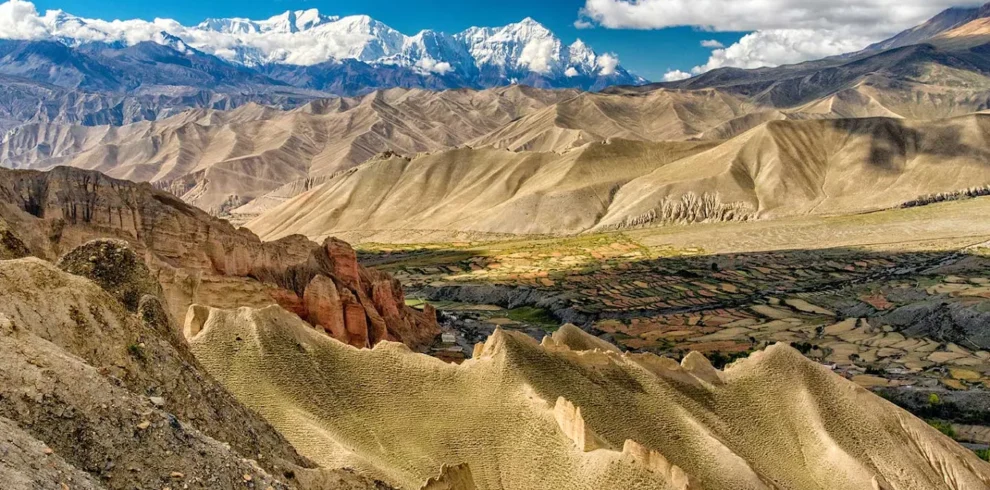
Upper Mustang Trek — Complete Guide 2026 Few places on earth stop you in your tracks the way Upper Mustang…
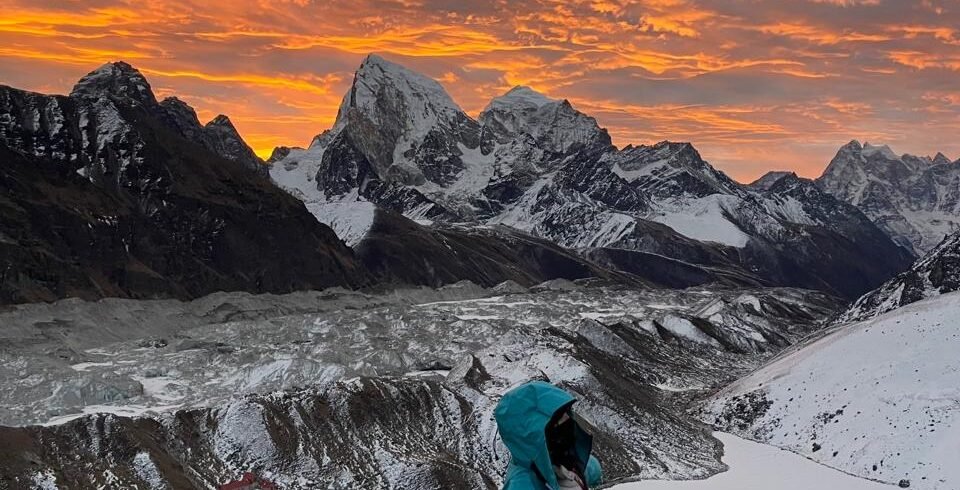
The Everest Base Camp with Gokyo Lake Trek combines two iconic Khumbu experiences in one 17-day journey. Cross Cho La Pass (5,420 m), summit Gokyo Ri (5,360 m) for views of four eight-thousanders, reach Everest Base Camp (5,364 m), and witness Everest sunrise from Kala Patthar (5,555 m). Book with Next Trip Nepal — no advance payment required.
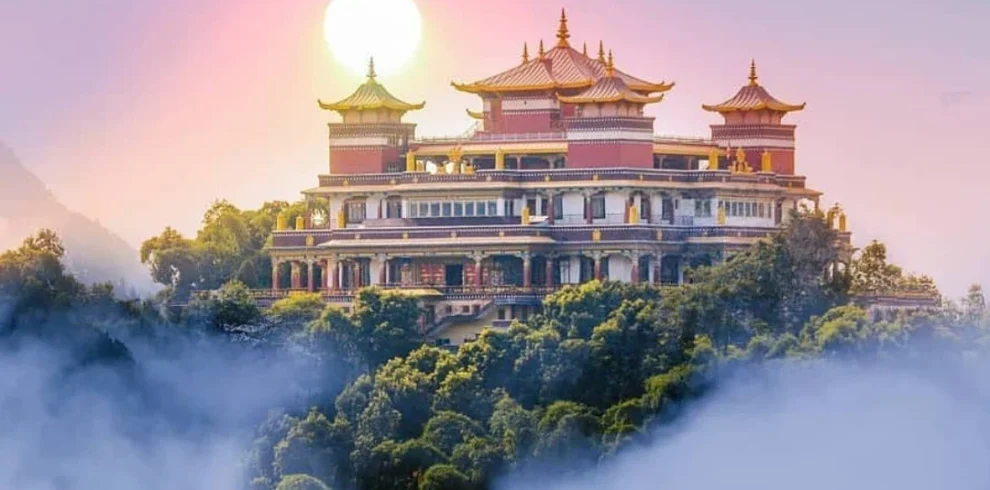
Tour at a GlanceDuration: 1 Day (6 to 7 hours)Sites: Kopan Monastery, Boudhanath, SwayambhunathStart and End: Your Kathmandu hotelDeparture: 8:30…
Why Packing Right Matters More on the Annapurna Circuit
The Annapurna Circuit is one of the most climatically diverse treks in the world. You start in Besisahar at 800 meters where midday temperatures hit 28°C, and you finish the high point at Thorong La Pass at 5,416 meters where pre-dawn temperatures can reach minus 15°C in winter and minus 4°C even in the stable autumn season. Within a single week, you move through subtropical jungle, dry Tibetan plateau terrain, and a glaciated high mountain pass.
No single outfit works across all of it. The layering system is not optional; it is the technical solution to a temperature swing of 35 to 40 degrees Celsius across the same trek. Every item in your bag either earns its weight or becomes a burden your porter carries for you at additional cost. Weight also matters practically: most reputable Nepal trekking agencies limit the porter bag to 15 kilograms. Exceeding that means additional porter fees or carrying the extra yourself.
Day by Day Weather and Clothing Guide: Annapurna Circuit 13 Days
The table below covers a standard autumn (October to November) or spring (March to May) departure. Temperatures shift by season, with winter adding 8 to 12 degrees of cold at every elevation and monsoon (June to September) bringing rain gear requirements at lower altitudes.
| Day | Location | Altitude | Daytime Temp | Night Temp | Clothing to Wear |
|---|---|---|---|---|---|
| Day 1 | Besisahar | 800m | 25 to 30°C | 15 to 18°C | Lightweight moisture-wicking t-shirt, trekking trousers, sun hat, sunglasses |
| Day 2 | Bahundanda | 1,310m | 22 to 27°C | 12 to 15°C | T-shirt or light long sleeve, trekking pants, light fleece for evening |
| Day 3 | Chamje | 1,410m | 20 to 25°C | 10 to 14°C | T-shirt, trekking pants, light fleece or softshell after sunset |
| Day 4 | Dharapani | 1,960m | 18 to 22°C | 8 to 12°C | Long sleeve base layer, trekking pants, fleece for evenings |
| Day 5 | Chame | 2,710m | 14 to 18°C | 4 to 8°C | Base layer plus mid layer fleece, warm hat and gloves for morning start |
| Day 6 | Pisang | 3,300m | 10 to 15°C | 0 to 4°C | Full base layer, mid fleece, down jacket for evening and morning |
| Day 7 | Manang | 3,519m | 8 to 14°C | -2 to 2°C | Thermal base layers, fleece, down jacket, beanie, trekking gloves |
| Day 8 | Manang (rest) | 3,519m | 8 to 14°C | -2 to 2°C | Same layering as Day 7 for acclimatization hike; down jacket all day |
| Day 9 | High Camp | 4,500m | 2 to 8°C | -8 to -12°C | Full thermal base layers, fleece, down jacket, insulated gloves, neck gaiter, beanie |
| Day 10 | Thorong La Pass then Muktinath | 5,416m to 3,800m | -4 to 2°C at pass | Pre-dawn start at -8 to -15°C | All layers worn at once: thermals, fleece, down jacket, windproof shell, balaclava or buff, insulated gloves or mittens, gaiters for snow |
| Day 11 | Jomsom | 2,720m | 14 to 20°C | 4 to 8°C | Mid layer and fleece; remove heavy insulation. Strong afternoon wind common. |
| Day 12 | Pokhara (flight or drive) | 820m | 24 to 28°C | 14 to 18°C | Light t-shirt, trekking trousers |
| Day 13 | Kathmandu | 1,400m | 22 to 26°C | 12 to 16°C | Light layers, casual clothing |
Note: Winter trekkers (December to February) should add 8 to 12°C of cold to every row above. Thorong La at night in December can reach minus 25°C at High Camp. Monsoon trekkers (June to August) should add full waterproof rain gear to every day from Day 1.
The Layering System: How It Works on the Annapurna Circuit
Every experienced trekker and mountain guide recommends the same three-layer clothing system for high altitude trekking. On the Annapurna Circuit it is not just advice: it is the practical answer to a route that spans five climate zones.
- Base layer (moisture management): Sits directly against your skin. Its job is to pull sweat away and keep you dry. Merino wool or synthetic fabrics (polyester, polypropylene) work. Cotton does not. Wet cotton holds moisture, which leads to rapid heat loss at altitude. Pack two base layer tops and two base layer bottoms so you always have a dry set.
- Mid layer (insulation): Traps warm air close to your body. A 200 to 300 weight fleece jacket is standard for most of the trek. For the high section (above 4,000 meters), a down or synthetic insulated jacket is added on top of the fleece.
- Outer layer (wind and waterproof shell): Blocks wind, rain, and snowfall. A Gore-Tex or similar waterproof breathable jacket is the top layer for the pass crossing and for any wet weather. The shell alone does not insulate; it works with the layers underneath.
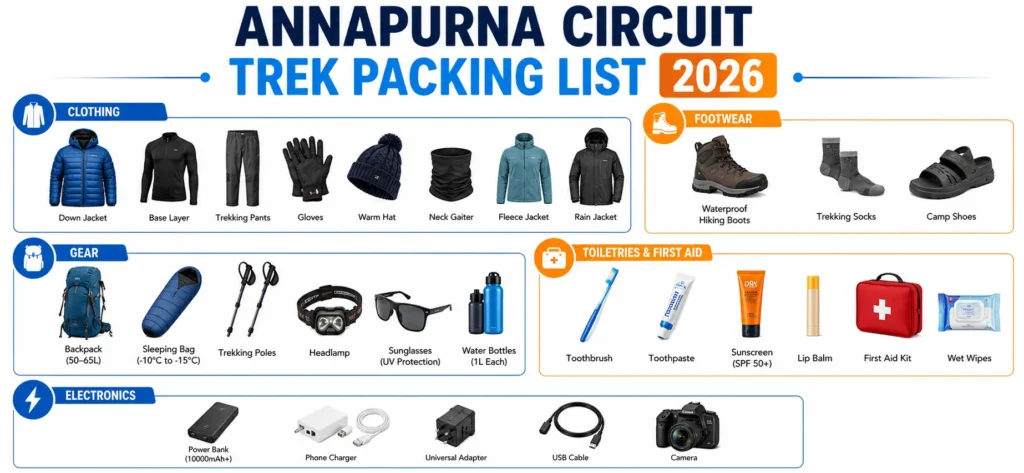
Complete Annapurna Circuit Packing List
Clothing: Upper Body
- 2 to 3 moisture-wicking t-shirts (synthetic or merino wool, never cotton)
- 2 long-sleeve base layer tops (lightweight to midweight, merino or synthetic)
- 1 fleece jacket (200 to 300 weight; used from Day 4 onward)
- 1 down jacket (600 to 800 fill power; critical from Day 6 onward and for the pass crossing)
- 1 waterproof hardshell jacket (Gore-Tex or equivalent; blocks wind and precipitation)
- 1 softshell jacket (optional; useful between Chame and Manang for dry but cold conditions)
Clothing: Lower Body
- 2 pairs of trekking trousers (zip-off convertible trousers are useful at lower altitudes)
- 1 pair of lightweight thermal leggings (base layer for below Manang and essential above it)
- 1 pair of warm trekking pants or insulated trousers (for Thorong La crossing and High Camp)
- 1 pair of waterproof shell trousers (for the pass crossing and snow; can skip in dry spring season)
- 3 to 4 pairs of merino wool or synthetic trekking socks
- 2 to 3 pairs of lightweight liner socks (worn inside trekking socks to prevent blisters)
- 2 pairs of moisture-wicking underwear (merino preferred)
Head, Hands, and Face
- 1 warm beanie or fleece hat (covers ears; essential above 3,000 meters)
- 1 sun hat with brim (for lower altitudes and direct sun exposure on open trail)
- 1 balaclava or fleece buff (for the Thorong La pass crossing in pre-dawn cold)
- 1 pair of lightweight liner gloves
- 1 pair of insulated trekking gloves or mittens (waterproof outer shell; critical for the pass)
- UV-rated sunglasses with side protection (UV index at 5,400 meters causes serious eye damage)
- 1 neck gaiter or warm buff (adds significant warmth at High Camp and on the pass)
Footwear
- Waterproof trekking boots: The single most important gear choice on the Annapurna Circuit. Must be waterproof (Gore-Tex lining), have solid ankle support, and be completely broken in before you arrive in Nepal. Blisters from new boots on Day 3 can end a trek. Brands like Salomon, Scarpa, La Sportiva, and Merrell all have suitable options.
- Camp sandals or lightweight crocs: For wearing inside teahouses, crossing streams where you want to keep boots dry, and resting feet at the end of long days. Adds 200 to 400 grams but saves your feet over 13 days.
- Gaiters: Optional for autumn and spring; strongly recommended for winter trekking and the Thorong La crossing if snow is present. Keeps snow and mud out of boot tops.
Trekking Equipment: What Goes in the Pack
Backpack
- Main trekking pack: 50 to 65 liters. Should have padded hip belt, internal frame, and rain cover. This goes with the porter. Pack only what you need; the 15-kilogram porter limit is real and exceeding it costs extra.
- Day pack: 20 to 30 liters. Carried by you every day while the porter carries the main bag. Holds water, snacks, camera, extra layer, sunscreen, headlamp, and your documents.
- Headlamp with spare batteries: Non-negotiable. The Thorong La crossing starts at 4:00 to 5:00 AM in darkness. Power outages at teahouses are common. LED headlamps with 200 to 300 lumens are more than enough.
- Trekking poles: Two poles significantly reduce knee impact on long descents, especially from the 5,416-meter pass down to Muktinath (a 1,600-meter descent in a single day). Collapsible aluminum or carbon fiber poles. Wrist straps essential.
Sleeping
- Sleeping bag: Down or synthetic, rated to at least minus 10°C. Teahouse blankets exist but are thin and sometimes damp. Your own sleeping bag guarantees warmth at Thorong Phedi (4,500m) and High Camp. A liner adds 3 to 5°C of additional warmth and keeps hygiene levels up in shared rooms.
- Inflatable pillow: Teahouse pillows are universally uncomfortable. A 60-gram inflatable pillow is worth every gram.
Water and Hydration
- 2 x 1-liter water bottles: Standard Nalgene or similar hard bottles. Useful at Thorong La where hydration packs freeze in pre-dawn cold.
- Insulated thermos: One liter. Fill with hot tea or boiled water at teahouses for warmth on cold mornings. Worth having from Day 5 onward.
- Water purification: Iodine tablets or a SteriPen UV purifier. A filter or purifier reduces boiled water costs on the upper circuit.
- Electrolyte sachets: Altitude causes increased urination and electrolyte loss. Oral rehydration salts help maintain hydration balance above 3,500 meters.
Health, Safety, and Medical Kit
The Annapurna Circuit reaches genuine high altitude. Acute Mountain Sickness (AMS) affects a percentage of trekkers above 3,000 meters regardless of fitness level. The acclimatization day in Manang (Day 8) is built into the standard itinerary specifically to reduce this risk. Your medical kit should reflect the altitude environment, not just standard travel first aid.
- Diamox (Acetazolamide): Prescription altitude sickness medication. Consult your doctor before the trek. Many trekkers take it prophylactically from Pisang onward.
- Ibuprofen and paracetamol: For headaches (extremely common at altitude), muscle pain, and fever management
- Blister kit: Compeed or moleskin, surgical tape, needle for drainage, antiseptic. Blisters are the number one minor injury on the trail
- Antiseptic cream and wound dressings: Cuts at altitude heal slowly due to low oxygen environment
- Anti-diarrhea medication: Imodium and oral rehydration sachets for gastric issues common at lower altitude teahouses
- Throat lozenges: The dry cold air above 4,000 meters causes severe throat irritation
- Eye drops: Dust and UV-exposed dry air causes eye irritation above the treeline
- Pulse oximeter: Measures blood oxygen saturation. Below 80% at altitude is a warning sign requiring descent. Costs USD 15 to 30 and weighs almost nothing.
Electronics and Documents
- Passport (original): Required at ACAP permit checkposts and for police checks on the circuit
- Travel insurance documents: Ensure your policy covers helicopter evacuation to at least 5,500 meters. This is essential on the Annapurna Circuit.
- Camera or smartphone: The Annapurna range from Pisang, the dawn crossing of Thorong La, and the view from Poon Hill on a side trip are among the most photographed landscapes in Nepal.
- Power bank (10,000 to 20,000 mAh): Electricity is available at teahouses but charging fees apply above Manang. A power bank prevents device death on the high section.
- Offline maps: Download the Annapurna Circuit route on Maps.me or Gaia GPS before arriving. Mobile signal is unreliable above Chame.
Personal Hygiene and Toiletries
Keep this category to a minimum. Teahouses provide basic toilets and some have hot showers for an additional fee.
- Biodegradable soap and shampoo
- Toothbrush and toothpaste
- Toilet paper and a lighter (pack it out or burn; do not leave on trail)
- Hand sanitizer (use before every meal; contaminated hands cause most gastric illness)
- Sunscreen SPF 50 or higher (UV radiation at altitude is severe; reapply every 2 hours)
- Lip balm with SPF (lips burn and crack at altitude; a severely overlooked item)
- Wet wipes (shower substitutes on rest days and at High Camp where showers do not exist)
- Small travel towel (microfiber; teahouses rarely provide towels above Manang)
Food and Trail Snacks
Teahouses provide three meals per day at every stop on the main Annapurna Circuit route. However, energy-dense snacks are important for the 4:00 AM start on pass day when the kitchen is not yet open.
- Energy bars, nut and seed bars, or protein bars (8 to 10 for the trek)
- Trail mix (nuts, dried fruit, chocolate): calorie-dense and lightweight
- Instant noodles or porridge sachets for High Camp breakfast
- Dark chocolate: morale item and calorie source
- Rehydration sachets with glucose
What You Can Rent or Buy in Nepal
Thamel in Kathmandu and Lakeside in Pokhara have dozens of gear rental shops. The following can be rented or purchased locally at reasonable prices:
- Sleeping bag: Rental from USD 1 to 3 per day.
- Down jacket: Rental from USD 1 to 2 per day.
- Trekking poles: Rental from USD 1 per day per pair.
- Waterproof jacket and trousers: Rental available; quality varies so inspect before renting.
- Trekking boots: Purchase in Thamel is possible but break-in time is critical.
- Duffel bag: Standard porter bags are available to rent or buy from agencies in Kathmandu.
What to Leave at Home
- Heavy cotton clothing of any kind
- Denim jeans (heavy, slow to dry, no insulation when wet)
- Full-size shampoo, conditioner, or body wash bottles
- Laptop computers (use your phone for photos and navigation)
- Hard-sided luggage (completely impractical on mountain trails)
- More than 3 t-shirts (you wash and air dry overnight at teahouses)
Porter Bag vs Day Pack: How to Divide Your Gear
Your guide and porter deliver the main bag to the next teahouse. Your day pack stays on your back all day.
| Porter Bag (Main Pack) | Day Pack (With You Always) |
|---|---|
| Sleeping bag and liner | Passport and permits |
| Down jacket (carry in day pack for pass crossing) | Water bottles and thermos |
| Spare clothing and extra layers | Snacks and energy bars |
| Camp sandals | Headlamp and spare batteries |
| Toiletries and hygiene kit | Sunscreen and lip balm |
| Extra trekking socks | Camera and power bank |
| Rental gear | Medical kit and warm hat, gloves, neck gaiter |
Permits and Documents Checklist
- Passport (original, valid for at least 6 months beyond trek date)
- Nepal visa (obtained on arrival at Tribhuvan International Airport or pre-applied online)
- ACAP (Annapurna Conservation Area Permit): NPR 3,000 per person (approximately USD 22)
- TIMS Card (Trekkers Information Management System): NPR 2,000 per person (approximately USD 15)
- Travel insurance documents with helicopter evacuation cover
- 4 passport-size photos (for permits and any unexpected requirements)
All permits for the Annapurna Circuit are handled by your trek agency. Next Trip Nepal includes ACAP and TIMS in the package cost for the Annapurna Circuit Trek.
Packing for Different Seasons: What Changes
Autumn (September to November)
The most popular season. Weather is stable, skies are clear, and the mountain views are at their best. Pack exactly as described in the main list above.
Spring (March to May)
Similar gear requirements to autumn. Rhododendron forests are in bloom from Day 1 to Day 4. Expect afternoon cloud buildup from April; the waterproof shell becomes more important than in October.
Winter (December to February)
Add: heavier down jacket (800 fill power minimum), expedition-weight base layers, thick insulated gloves or mittens rated to minus 20°C, gaiters, and a balaclava that covers the face. Some trekkers add hand warmers for High Camp night.
Monsoon (June to August)
Add: lightweight rain poncho or full waterproof jacket worn daily, waterproof gaiters from Day 1, dry bags or pack liners for every item in your porter bag, and antifungal powder for feet.
Side Trips from the Annapurna Circuit
The Annapurna Circuit connects to several side trek options. The Ghorepani Poon Hill Trek is a popular short addition from Pokhara for trekkers finishing the circuit, and the Annapurna Base Camp Trek can be combined for a longer itinerary. The Mardi Himal Trek is a quieter alternative that starts from the same Pokhara base.
Master Packing Checklist
| Category | Item | Essential? | Can Rent in Nepal? |
|---|---|---|---|
| Clothing | Moisture-wicking t-shirts (x2 to 3) | Yes | Yes |
| Clothing | Long sleeve base layer (x2) | Yes | Yes |
| Clothing | Fleece jacket | Yes | Yes |
| Clothing | Down jacket (600+ fill) | Yes | Yes |
| Clothing | Waterproof hardshell jacket | Yes | Yes |
| Clothing | Trekking trousers (x2) | Yes | Yes |
| Clothing | Thermal leggings | Yes | Yes |
| Clothing | Trekking socks (x3 to 4) | Yes | No |
| Clothing | Moisture-wicking underwear (x2 to 3) | Yes | No |
| Head and Hands | Warm beanie | Yes | Yes |
| Head and Hands | Sun hat with brim | Yes | Yes |
| Head and Hands | Balaclava or buff | Yes | Yes |
| Head and Hands | Insulated gloves or mittens | Yes | Yes |
| Head and Hands | UV-rated sunglasses | Yes | No |
| Footwear | Waterproof trekking boots | Yes | Yes (buy own is better) |
| Footwear | Camp sandals | Yes | Yes |
| Equipment | Main trekking pack (50 to 65L) | Yes | Yes |
| Equipment | Day pack (20 to 30L) | Yes | Yes |
| Equipment | Sleeping bag (-10°C rated) | Yes | Yes |
| Equipment | Trekking poles (pair) | Yes | Yes |
| Equipment | Headlamp with spare batteries | Yes | No |
| Hydration | Water bottles (2 x 1L) | Yes | No |
| Hydration | Water purification | Yes | No |
| Medical | Diamox (prescription) | Recommended | Available in Kathmandu pharmacies |
| Medical | Blister kit | Yes | No |
| Medical | Pulse oximeter | Recommended | Available in Kathmandu |
| Electronics | Power bank (10,000 mAh+) | Yes | No |
| Documents | Passport | Yes | No |
| Documents | ACAP permit and TIMS | Yes | No |
| Documents | Travel insurance documents | Yes | No |
Final Packing Tips from the Trail
- Pack your sleeping bag liner and down jacket in a compression sack to reduce volume in the porter bag
- Put all electronics and documents in waterproof zip-lock bags inside your day pack regardless of weather
- Break in your boots for at least 6 to 8 weeks before arriving in Nepal
- Leave valuables you do not need on the trail in your hotel safe in Kathmandu
- Bring USD 300 to 500 in Nepali rupees for the trail (ATMs stop at Chame; carry enough cash for the full circuit above that point)
- At High Camp the night before the pass crossing, keep your boots inside your sleeping bag. Frozen boots at 4:30 AM are a common and serious problem
Every item on this list was chosen because it earns its weight over 13 days at altitude. Pack what you need, rent what you can, and leave everything else behind. Your knees on the descent from Thorong La will thank you for every kilogram you did not bring.
Ready to book? The full 13-day itinerary, cost breakdown, and booking details are on the Annapurna Circuit Trek page. For a shorter Annapurna experience, the Annapurna Base Camp Trek reaches the glacier at 4,130 meters in 11 days with a much simpler packing requirement and no pass crossing.