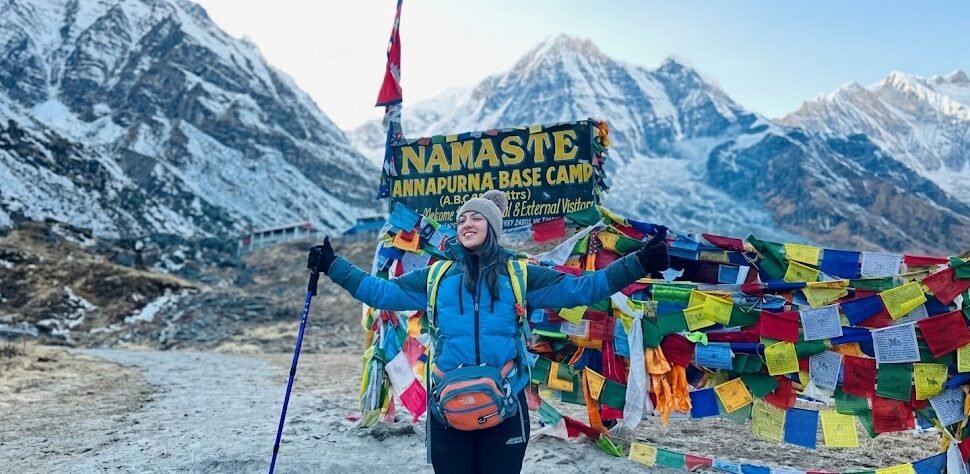

The Annapurna Circuit Trek in May is a genuinely good idea, with one real caveat attached to the back half of the month. Early and mid May carry forward nearly all of April’s clear, stable spring conditions, cool nights, warm days and generally reliable skies. Late May is when the lower approach starts to feel the first build up of pre monsoon humidity, hazier afternoons and the occasional short shower. The Manang and Mustang side of the route, protected by the rain shadow of the Annapurna and Dhaulagiri massifs, keeps trekking comfortably dry and clear well after the lower valley starts to feel heavy. Booked with the right week in mind, May remains one of the stronger windows of the year on this particular route, not a fallback choice.
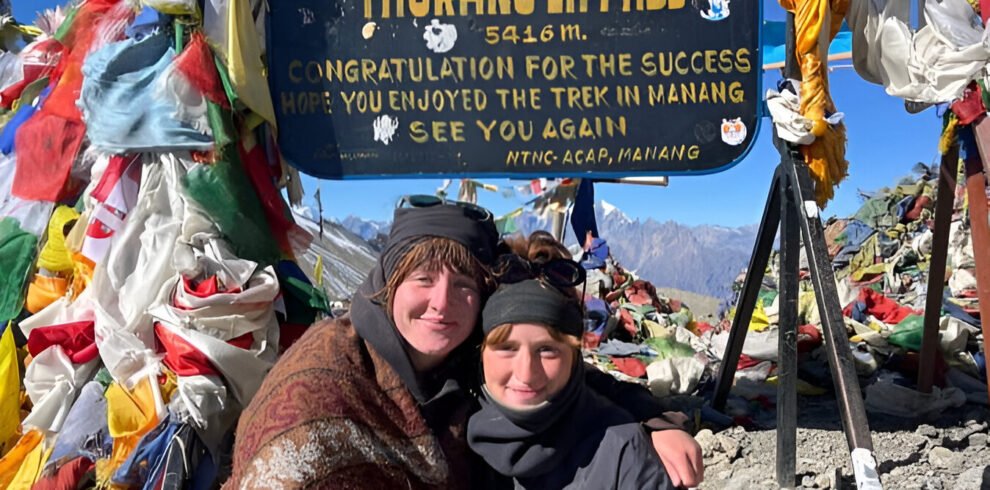
Next Trip Nepal runs the Annapurna Circuit Trek as a 13 to 14 day package, starting and ending in Kathmandu and crossing Thorong La Pass at 5,416 m at the high point of the route. May sits at the closing edge of spring, generally regarded as the second best season of the year on this trek after autumn, and this guide breaks the month down week by week so a reader can decide exactly which part of May suits their own travel dates rather than treating “May” as one uniform block of weather.
The single most useful thing to understand before booking this month is that the route does not behave as one weather zone. The lower approach between the Dharapani and Chame side of the valley can pick up building humidity and the odd afternoon cloud by the third week of May. The upper half of the circuit, from Upper Pisang through Manang, Yak Kharka, Thorong Phedi, over the pass and down into Muktinath, Kagbeni and Jomsom, sits in the rain shadow of the Annapurna and Dhaulagiri ranges and stays noticeably drier and clearer through the same dates. That contrast, explained in detail further down this guide, is the real reason late May still works well on this trek even as early monsoon signals start to appear elsewhere in Nepal.
Anyone weighing this trip against the neighboring months should also read the operator’s guide to trekking the Annapurna Circuit in April, since April and early May share close to identical conditions on most of the route.
Weather on the Annapurna Circuit in May: Lower Valley Versus the Manang and Mustang Side
May sits at the top of spring’s temperature range across Nepal. Daytime conditions on the lower and middle sections of the trail are the warmest of the spring season, while nights at altitude, particularly around Manang, Thorong Phedi and the pass itself, still drop close to or below freezing. Rainfall is the real variable that separates the two halves of the route this month, and the table below treats the lower approach and the upper Manang and Mustang side as the two genuinely different weather zones they are.
| Aspect | Lower approach (Dharapani to Chame area) | Upper Manang and Mustang side (Upper Pisang to Jomsom) |
|---|---|---|
| Daytime temperature | Roughly 18 to 24 degrees Celsius | Roughly 12 to 20 degrees Celsius, cooler again at Thorong Phedi and the pass |
| Night temperature | Roughly 10 to 14 degrees Celsius | Freezing or just below at Manang and Yak Kharka, well below freezing at High Camp and the pass before dawn |
| Rainfall | Generally dry early in the month, brief afternoon showers becoming more likely by the last week of May | Minimal, protected by the rain shadow effect, occasional light afternoon cloud but rarely sustained rain |
| Cloud cover | Increasing humidity and haze building through the month, more noticeable by late May | Generally clear mornings, some cloud building most afternoons, clearing again overnight |
| Snow at the pass | Not applicable | Minimal to none by this point in spring, prior winter snow largely melted off the main trail |
| Wind at Thorong La | Not applicable | Afternoon winds regularly reach 50 to 60 km/h, the same pattern that holds in every month of the year |
| Visibility | Good in the morning, hazier by mid afternoon toward the end of May | Generally strong, some afternoon haze building lower down but usually clear at altitude |
The practical read on this table is simple. A trekker walking the Dharapani to Chame stretch in the last week of May should expect noticeably warmer, more humid conditions than the same stretch in early April, with a real chance of a brief afternoon shower on any given day. The same trekker reaching Upper Pisang and Manang a day or two later will generally find drier air, clearer skies and a more comfortable trekking temperature than the valley they just left. This is not a coincidence, and it is the defining weather feature of trekking this particular route in the closing weeks of spring.
Wind remains the one constant across the whole month at altitude. The 50 to 60 km/h afternoon gusts on Thorong La are a year round pattern, not something specific to May, and they are the practical reason every group on this route, in every season, aims to be over the pass well before mid morning.
Understanding the Rain Shadow Effect in May
The rain shadow effect is the single most useful piece of local knowledge for anyone trying to decide how late into spring they can safely book this trek, and it deserves a proper explanation rather than a passing mention.
The Annapurna and Dhaulagiri massifs form a wall of peaks well above 7,000 and 8,000 m running along the southern and western side of the upper Manang and Mustang valleys. Moisture moving north from the Indian subcontinent, whether it is ordinary pre monsoon humidity building through May or the first genuine monsoon systems arriving in June, has to climb over or around this wall before it can reach the country on the far side. Most of that moisture drops as rain or cloud on the southern, windward side of the range, which is precisely where the Dharapani, Chame and lower Marsyangdi valley sections of the trek sit. By the time any residual weather system crosses the ridge line into the Manang and Mustang side, it has already lost most of its moisture. The result is a genuinely drier climate on the northern, leeward side of the range, the same mechanism that makes Tibet and the upper Mustang plateau far drier than the Kathmandu side of the Himalaya.
For a trekker on this route in May, that translates into something very specific and very practical. From Upper Pisang onward, through Manang, Braga, Yak Kharka, Thorong Phedi or High Camp, over Thorong La, and down through Muktinath, Kagbeni and Jomsom, conditions stay comparatively dry and clear even in the same week that the lower approach around Dharapani and Chame is turning hazy and humid. This is not a small stylistic detail. It means a trekker can genuinely book a late May departure with reasonable confidence in the pass day forecast, provided they understand that the lower two or three days of the itinerary carry the bulk of whatever pre monsoon rain risk exists that particular week.
It is worth being precise about the limits of this effect too, since overstating it would do a reader no favors. The rain shadow reduces rainfall on the Manang and Mustang side, it does not eliminate weather risk entirely. An unusually early or unusually strong monsoon onset can still push moisture further north than normal, and the lower approach roads and trail sections remain exposed to ordinary pre monsoon and early monsoon risk regardless of what is happening 20 or 30 km further up the valley. The honest summary is that the rain shadow makes the upper half of this trek meaningfully more weather resilient than the lower half in May, not weatherproof.
This is also one of the genuine structural differences between this trek and a route like the Kanchenjunga Circuit Trek, which does not benefit from the same scale of rain shadow protection and consequently loses its late spring reliability earlier in the season than the Annapurna Circuit does.
Early, Mid and Late May on the Annapurna Circuit
Treating May as three separate windows, rather than one block of weather, is the only honest way to plan around it. Each third of the month has a genuinely different character on this route.
| Period | Lower approach conditions | Manang and Mustang side conditions | Practical note |
|---|---|---|---|
| Early May (days 1 to 10) | Close to April conditions, generally dry, warm days, cool clear nights | Clear, stable, minimal wind beyond the usual afternoon pattern at the pass | Effectively the tail end of peak spring reliability |
| Mid May (days 11 to 20) | Warmer, first noticeable humidity build up, still mostly dry with occasional cloud | Still largely clear and dry, benefiting fully from the rain shadow | A strong, slightly quieter alternative to early May |
| Late May (days 21 to 31) | Warmest, most humid part of the month, short afternoon showers more likely | Noticeably drier and clearer than the lower valley on the same dates | Book with an itinerary that moves through the lower valley efficiently |
Early May is, for practical purposes, still spring at its best. Skies are generally clear, daytime temperatures are comfortable for walking, and the lower valley has not yet picked up the humidity that builds later in the month. A trekker choosing the first ten days of May is choosing something very close to April’s reliability, with the advantage of noticeably thinner crowds on the trail and in Manang’s teahouses than the true peak of the season.
Mid May holds up well. Daytime temperatures climb a little further, which most trekkers experience as a genuinely pleasant change from the cooler mornings of March and early April, particularly in the lower and middle sections of the route. Humidity starts to build in the valley air, visible as a slight haze on longer views by the afternoon, but rain remains the exception rather than the rule on most days. This is arguably the best kept secret window of the month, since crowd levels are noticeably lower than April’s peak while conditions remain close to it.
Late May is where a trekker needs to plan with a little more intention. The lower approach, roughly the Dharapani to Chame stretch and the road sections at either end, is the part of the itinerary most exposed to building pre monsoon humidity and the occasional short, sharp afternoon shower. This is normal seasonal behavior, not a sign that the trek should be avoided, but it is the point in the month where good itinerary design matters. Next Trip Nepal’s standard package moves through this lower section efficiently on the way up, which limits total exposure to the least reliable few days of the whole trip, before the rain shadow effect takes over for the majority of the remaining itinerary from Upper Pisang onward.
Route Conditions by Elevation in May
Conditions change meaningfully as the trail climbs, and May adds its own seasonal texture on top of the usual elevation pattern.
| Section | Elevation | Conditions in May | What to expect |
|---|---|---|---|
| Lower valley, Dharapani to Chame | Roughly 1,860 to 2,710 m | Warm, increasingly humid, occasional afternoon shower by late May | Green forest, terraced fields, the most rain exposed section of the whole route this month |
| Chame to Upper Pisang | Roughly 2,710 to 3,300 m | Cooler, drier air begins here as the valley opens up | Pine and fir forest giving way to more open country, dramatic views of the Annapurna range appearing |
| Manang acclimatization zone (Upper Pisang to Manang) | Roughly 3,300 to 3,519 m | Clear, dry, benefiting fully from the rain shadow, cold at night | Wide valley views, the compulsory rest day, the Himalayan Rescue Association’s daily AMS talks in season |
| Yak Kharka to Thorong Phedi or High Camp | Roughly 4,018 to 4,925 m | Dry, clear days, cold nights well below freezing at High Camp | Thinning vegetation, exposed alpine terrain, noticeably harder breathing at rest |
| Thorong La Pass | 5,416 m | Clear mornings, strengthening wind by late morning, minimal snow underfoot by this point in spring | The trek’s high point, a long, cold, early departure crossing |
| Muktinath to Jomsom, Mustang side | Roughly 2,720 to 3,760 m | Dry, often notably sunny, some afternoon wind funneling up the Kali Gandaki valley | Arid Mustang landscape, the 108 water spouts at Muktinath, Kagbeni’s medieval streets |
The lower valley is genuinely the most changeable section of the itinerary in May. It is also the shortest exposure in terms of days, since the operator’s route moves through Dharapani, Chame and Upper Pisang relatively quickly on the way toward the acclimatization stop at Manang. Once the trail climbs past Upper Pisang, the character of the trek changes noticeably, both in terms of scenery, opening from forest into wide alpine valley, and in terms of weather reliability, thanks to the rain shadow discussed above.
Muktinath and the Mustang side deserve a specific mention for May trekkers. This is arid, high desert country by the time the trail descends from the pass, a landscape that looks and feels closer to the Tibetan plateau than to the forested lower valley the trek started in. Kagbeni, a medieval walled town marking the entrance to the restricted Upper Mustang area, sits at roughly 2,590 m and is a natural point to pause and consider whether the Upper Mustang Trek might be worth adding on a future trip, since the standard Annapurna Circuit itinerary does not extend into that separately permitted zone.
How Difficult Is the Annapurna Circuit Trek in May
The Annapurna Circuit is graded moderate to strenuous, and May does not meaningfully change that grading, though it does change which specific challenges dominate on any given day.
Daily walking time runs 5 to 7 hours on most days, with individual stages ranging from around 6 km on shorter acclimatization or transition days up to 20 km on the longer descent days after the pass. The steepest single elevation gain day is Dharapani to Chame, roughly 810 m over 14 to 15 km, and the psychologically hardest day of the entire trip is the Thorong La crossing itself, an ascent of 566 to 966 m from High Camp or Phedi to the pass followed immediately by a descent of roughly 1,616 m down to Muktinath, all inside a single long day above 4,000 m.
Altitude, not distance, is what actually makes this trek hard. The route climbs from roughly 1,860 m at Dharapani to 5,416 m at the pass in a matter of days, and the body needs deliberate time to adjust. The Manang rest day, day 6 of the operator’s itinerary, is compulsory rather than optional specifically for this reason, and it follows the standard climb high, sleep low approach, with an optional hike up to roughly 3,900 m before returning to sleep at Manang’s lower 3,519 m. Guides monitor blood oxygen with a pulse oximeter starting at Manang, and a reading under 80 percent triggers a mandatory extra acclimatization day, while a reading under 70 percent triggers immediate descent. Above 3,000 m, the general rule guides follow is no more than 300 to 400 m of net sleeping elevation gain per night, which is the actual logic behind the itinerary’s pacing through Yak Kharka and up to Thorong Phedi or High Camp.
Thorong La itself adds a second layer of difficulty specific to timing rather than terrain. Afternoon winds on the pass regularly reach 50 to 60 km/h, and conditions deteriorate quickly after late morning, which is why every group needs to be at or past the pass before roughly 09:30 to 10:00 am. Next Trip Nepal’s standing rule is to have every group across Thorong La before that window without exception, which means a genuinely early departure from High Camp, commonly in the 3:00 to 4:30 am window, walking the first hour or more by headlamp in cold that can still sit well below freezing even in a mild spring month. None of this requires technical climbing, fixed ropes or crampons in normal May conditions, but it does require sustained high altitude walking stamina and a realistic pre trip fitness level, roughly the ability to sustain 6 hours of continuous walking at sea level without distress before attempting the trek.
Some trekkers discuss a preventative course of Diamox (acetazolamide), typically 125 to 250 mg twice daily, with their doctor before departure. It is worth being clear that this is a discussion for a physician, not a substitute for the acclimatization schedule itself, and Next Trip Nepal’s guides build the itinerary around proper acclimatization regardless of whether an individual trekker chooses to use it. Anyone wanting the full breakdown of what makes this route demanding, month by month, can read more in the operator’s notes on Annapurna Circuit Trek difficulty alongside the day by day itinerary.
Annapurna Circuit Trek Cost in May
Pricing for this trek does not change by calendar month, since it is driven by group size, services and itinerary length rather than season, though it is worth noting upfront that May’s teahouse availability is typically easier than the true October peak, which can occasionally give a group slightly more flexibility on room choice at busy stops like Manang. The figures below are Next Trip Nepal’s own published group rates for the 13 day package and should be read alongside the caveat that final cost always depends on group size, chosen services and any add on days.
| Group size | Price per person (USD) |
|---|---|
| 1 traveler | 1,445 |
| 2 travelers | 1,375 |
| 3 to 5 travelers | 1,275 |
| 6 to 8 travelers | 1,175 |
| 9 to 12 travelers | 1,075 |
| 13 or more travelers | 975 |
The package includes 3 nights of 3 star hotel accommodation in Kathmandu, 1 night of 3 star hotel accommodation in Pokhara, and 9 nights of teahouse accommodation on the trek itself, on a twin sharing basis. All trekking meals, breakfast, lunch and dinner, are included once the group leaves Kathmandu. Also included: private vehicle transfers including airport pickup and the jeep to the trailhead, the one way Jomsom to Pokhara mountain flight, a licensed English speaking guide and porter (one porter per two trekkers, 20 kg carrying capacity), equipment loan (down jacket, sleeping bag rated to minus 15 degrees Celsius, duffel bag, trekking map and a t shirt), both required permits, a first aid kit and pulse oximeter carried by the guide, emergency support, and a trek completion certificate.
Costs not covered by the package include lunch and dinner while staying in Kathmandu and Pokhara, since only breakfast is typically included in those city hotel stays, the Nepal visa fee (roughly USD 30 to 125 depending on duration, obtainable on arrival), travel and medical insurance, international flights, personal expenses such as laundry and souvenirs, optional extras on the trek such as alcoholic drinks, hot showers, device battery charging and wifi in some teahouses, and tipping for the guide, porter and driver, which is customary though not mandatory. Full detail on what is and is not included sits on the operator’s own Annapurna Circuit Trek cost and inclusions page.
What to Pack for the Annapurna Circuit Trek in May
Packing for May means preparing for genuine warmth on the lower trail and genuine cold at the pass, sometimes within the same 24 hour period. The list below is trimmed to what actually earns space in a duffel bag for this specific month, not a generic year round packing list.
- Clothing: lightweight breathable trekking shirts for the warm lower valley days, a fleece or light insulated mid layer for Manang and above, the operator provided down jacket for High Camp and the pass, a light waterproof shell for the possibility of an afternoon shower on the lower approach, trekking trousers, and a warm hat and gloves for the pre dawn pass crossing.
- Footwear: broken in waterproof trekking boots, camp shoes or sandals for evenings at teahouses, and wool blend trekking socks in enough pairs to rotate through a two week trip.
- Sleep: the operator supplied sleeping bag rated to minus 15 degrees Celsius covers the coldest nights at High Camp comfortably; a silk liner is a useful lightweight extra for teahouse hygiene lower down.
- Rain and sun protection: a compact rain jacket or poncho for the lower valley’s building humidity, sun hat, high factor sunscreen and lip balm for the strong high altitude sun near the pass, and sunglasses rated for glare and UV exposure at altitude.
- Documents: passport with sufficient validity, passport photos for permit paperwork, travel and medical insurance details, and printed or digital copies of permit confirmations, since ACAP and TIMS originals are required at every checkpoint.
- First aid: personal medications, a basic blister and small wound kit, oral rehydration salts, and any altitude medication discussed with a doctor before departure.
- Electronics: a headlamp with spare batteries for the pre dawn pass departure, a portable power bank since charging is a paid extra in most teahouses, and a basic camera or phone protected from dust on the drier Mustang side of the route.
For a fuller category by category breakdown specific to this exact trek, the operator’s own Annapurna Circuit Trek packing list is a genuinely useful companion to this guide and worth reading alongside it before a May departure.
Permits and Guide Requirements for May
Two permits are mandatory for every foreign trekker on this route, regardless of month, and May changes nothing about the requirement itself. The Annapurna Conservation Area Permit (ACAP) costs NPR 3,000 per foreign trekker, roughly USD 22, and the TIMS card (Trekkers’ Information Management System) costs NPR 2,000 per foreign trekker, roughly USD 15. Both are arranged through a registered trekking agency, and checkpoints verifying these permits sit at Ghasa, Manang, Muktinath and Jomsom. Original documents are required at each checkpoint, photocopies are not accepted, so keeping permits accessible and undamaged through the trek matters in practice, not just on paper.
It is worth being precise about the guide question, since it is genuinely different on this trek than on some of Nepal’s other major routes. Unlike Kanchenjunga or Upper Mustang, the standard Annapurna Circuit route from Dharapani through to Jomsom via Thorong La does not require a licensed guide by law for independent trekkers, though ACAP and TIMS remain mandatory either way. Next Trip Nepal runs every departure with a licensed, English speaking guide and porter as standard practice, not because the law demands it on this particular stretch, but because a guide provides real, practical value here: acclimatization monitoring with a pulse oximeter, navigation through a route that changes character by the day, logistics across teahouses and permit checkpoints, and experienced judgment on pass day timing when the afternoon wind pattern genuinely matters. The guides working this route are experienced local professionals with deep, specific familiarity with its seasonal variability, including exactly how the lower valley and the Manang and Mustang side diverge in a month like May.
One area beyond the standard route worth flagging for planning purposes: continuing past Kagbeni into Upper Mustang proper requires a separate, additional restricted area permit, outside the scope of the standard Annapurna Circuit itinerary described in this guide. Anyone interested in seeing more of that side of the region on a future trip can read about the requirements on the operator’s Upper Mustang Trek page. For the standard circuit itself, permit logistics, checkpoints and everything covered above are handled as part of Annapurna Circuit Trek permits included in the operator’s package.
Choosing the right operator matters as much as choosing the right month. If you want a full breakdown of what to check before booking with any Annapurna Circuit trek company, including registration, guide licensing and transparent pricing, see our guide to choosing the best Annapurna Circuit trek company.
Advantages and Disadvantages of Trekking in May
No month is without trade offs on this route, and May’s are specific enough to lay out plainly rather than gloss over.
| Advantages | Disadvantages |
|---|---|
| Warm, comfortable daytime temperatures on most of the route | Building humidity and haze on the lower approach by late May |
| Minimal to no snow remaining on the trail or at the pass | Occasional afternoon showers possible on the lower valley in the final third of the month |
| Rain shadow keeps the Manang and Mustang side notably drier than the lower valley | Long views can lose some clarity on hazier lower valley afternoons |
| Noticeably thinner crowds than the October and April peaks | Not the single most reliable window of the year, that remains autumn |
| Easier teahouse availability at busy stops like Manang | Trekkers need to plan the lower valley days with the shower risk in mind |
| Still well within the window Next Trip Nepal considers safe and worthwhile | Right at the edge before the monsoon window begins in June |
The pattern across this table is consistent with everything else in this guide. May’s disadvantages cluster almost entirely on the lower approach and toward the back end of the month, while its advantages, particularly the rain shadow protected upper half of the route, hold up well right through to the final days before June.
April Versus May Versus June: The Decision
Choosing between the last three months of the season worth actively considering comes down to a genuine trade off between reliability, warmth and crowd levels, and it is worth laying out honestly rather than simply declaring one month the winner.
| Factor | April | May | June |
|---|---|---|---|
| Overall reliability | Very high, peak spring conditions | High, especially first three weeks and on the Manang/Mustang side all month | Declining sharply as the month progresses |
| Rainfall risk, lower approach | Low | Low early, building by late month | Dry and warm early, sharply increasing afternoon showers as monsoon establishes toward month end |
| Rainfall risk, Manang/Mustang side | Very low | Low throughout, rain shadow protected | Rising through the month as monsoon systems strengthen |
| Crowd levels | Second busiest month of the year | Moderate, noticeably quieter than April | Low, but for the wrong reasons |
| Rhododendron bloom | Peak bloom in the lower and middle forest sections | Bloom fading at lower elevations, largely finished by late May | Finished |
| Overall recommendation | Best all round choice for reliability and scenery | Strong choice, especially for warmth and lighter crowds | Not recommended beyond the first week or two |
April wins on outright reliability and on the rhododendron bloom that lines the Chame to Pisang forest sections of the route, which is the reason it sits alongside October as one of the two busiest months of the year on this trek. May wins on warmth, on noticeably thinner crowds at Manang and around the pass compared to April’s peak, and on offering a genuinely close approximation of April’s weather quality on the Manang and Mustang side specifically, thanks to the rain shadow effect. June is the month to be honest about rather than talk around: daytime temperatures climb to a genuinely pleasant 20 to 28 degrees Celsius early in the month and the route can still work in the first week or two, but afternoon showers increase sharply as the month goes on and the monsoon properly establishes, at which point the lower approach roads carry real landslide risk and the whole trip stops being a reliable booking.
The honest recommendation by traveler type: a trekker whose dates are flexible and who wants the single most reliable, most scenic booking window should lean toward April, ideally reading the operator’s Annapurna Circuit Trek in April guide alongside this one. A trekker who wants warm days, a quieter trail and teahouses, and is comfortable planning around a slightly higher chance of a lower valley shower in the final third of the month should book May with confidence, ideally in its first three weeks. A trekker only able to travel in June should aim for the very first days of the month at the latest, and should treat anything past roughly the second week as a genuine gamble against an early monsoon onset.
Final Verdict: Is the Annapurna Circuit Trek in May Worth It?
Yes, the Annapurna Circuit Trek in May is worth booking, and for most of the month it is a genuinely strong choice rather than a compromise squeezed in before the rains. Early and mid May trekkers get conditions close to April’s reliability with noticeably lighter crowds. Late May trekkers get a route that splits cleanly in two: a lower valley that needs sensible planning around building humidity and the odd shower, and a Manang and Mustang side, protected by the rain shadow of the Annapurna and Dhaulagiri massifs, that stays clear and dry enough to make the pass crossing and the arid Mustang landscape beyond it feel like a different season entirely from the valley below.
The trekkers who should look elsewhere are those who want the single most bulletproof weather window of the year with zero rain risk anywhere on the itinerary, since that distinction still belongs to autumn, specifically October and November. Everyone else, particularly anyone who values warm days, thinner crowds than April and a genuinely fascinating firsthand look at how a rain shadow actually works on the ground, has good reason to book our Annapurna Circuit Trek itinerary for a May departure.
Frequently Asked Questions
Is May a good month to trek the Annapurna Circuit?
Yes. Early and mid May are close to April’s peak spring reliability, and even late May stays workable, particularly on the Manang and Mustang side of the route where the rain shadow effect keeps conditions notably drier than the lower valley.
Does it rain during the Annapurna Circuit Trek in May?
Some rain risk exists, concentrated mainly on the lower approach between Dharapani and Chame and mostly in the final third of the month, as pre monsoon humidity builds. The upper Manang and Mustang side, from Upper Pisang onward through the pass to Jomsom, stays comparatively dry throughout the month thanks to the rain shadow of the Annapurna and Dhaulagiri ranges.
Is Thorong La Pass safe to cross in May?
Yes, under normal conditions, with the same discipline that applies year round: an early, pre dawn departure from High Camp or Phedi, and being at or past the pass before roughly 09:30 to 10:00 am, since afternoon winds regularly reach 50 to 60 km/h and conditions worsen quickly after late morning. By May, snow at the pass is minimal to none, which removes one of the bigger risk factors present earlier in spring.
How cold is Thorong La Pass in May?
Overnight and pre dawn temperatures at High Camp and the pass itself still drop well below freezing, even though daytime temperatures elsewhere on the route feel like genuine spring warmth. A warm down jacket, gloves and a proper hat for the early departure remain essential regardless of how mild the lower valley felt the day before.
Is May or April better for the Annapurna Circuit?
Both are strong choices. April wins on outright reliability and on the rhododendron bloom in the Chame to Pisang forest sections, and it is one of the two busiest months of the year on this trek as a result. May wins on warmer temperatures and noticeably lighter crowds, while still offering a genuinely close approximation of April’s weather quality on the Manang and Mustang side specifically.
Should I trek the Annapurna Circuit in late May?
Yes, with realistic expectations about the lower valley. Late May carries a genuine but manageable chance of an afternoon shower between Dharapani and Chame, and the humidity there is noticeably higher than earlier in the month. The Manang and Mustang side of the same itinerary stays considerably drier and clearer on the same dates, which is the trek’s real saving grace this late in spring.
What is the rain shadow effect and does it really matter in May?
The rain shadow effect is the pattern by which the Annapurna and Dhaulagiri massifs block most southbound moisture from reaching the Manang and Mustang side of the route, keeping that side of the trek markedly drier than the lower approach. It matters a great deal in May specifically, since it is the reason the upper half of the trek, from Upper Pisang through Thorong La to Jomsom, stays reliable even as the lower valley starts trending toward the monsoon.
Are there leeches on the Annapurna Circuit in May?
Leech activity on this route is mainly a monsoon season issue, tied to sustained wet ground in June through August. May’s drier conditions, especially on the higher sections of the route, mean leeches are not a significant concern for most of the month, though the lower forested valley can start to feel slightly more humid underfoot toward the very end of May.
How crowded is the Annapurna Circuit in May?
Noticeably quieter than April and well below the October peak. Teahouse availability at busy stops such as Manang is typically easier to manage in May than during either of those two peak windows, without the trek feeling empty either.
Do I need a guide for the Annapurna Circuit Trek in May?
Not strictly by law on this specific route. Unlike Kanchenjunga or Upper Mustang, the standard Annapurna Circuit itinerary from Dharapani to Jomsom via Thorong La does not legally require a licensed guide for independent trekkers, though the ACAP and TIMS permits remain mandatory regardless. Next Trip Nepal runs every group with a licensed guide and porter as standard practice for acclimatization monitoring, navigation and safety on pass day, not because the law requires it here.
What permits do I need for the Annapurna Circuit Trek in May?
Two permits, required in every month of the year: the Annapurna Conservation Area Permit (ACAP) and the TIMS card. Both are arranged through a registered trekking agency and checked at Ghasa, Manang, Muktinath and Jomsom, with original documents required at each checkpoint.
Can I still see rhododendrons on the Annapurna Circuit in May?
Only at the margins. Peak bloom in the forest sections between Chame and Pisang belongs to March and especially April, and by May the flowering is generally fading at lower elevations and largely finished by the back half of the month. A trekker whose main priority is the bloom itself should look at the operator’s April trekking guide instead.