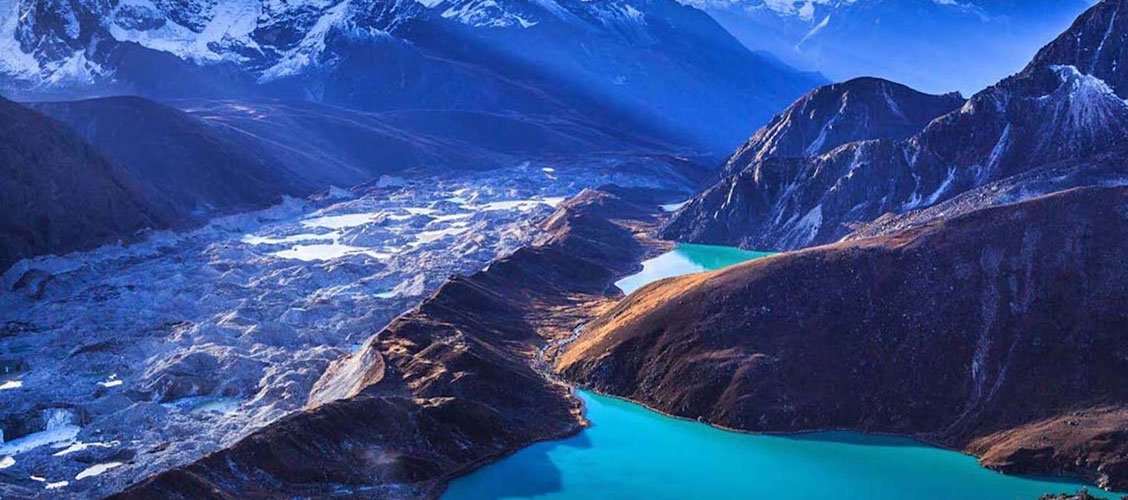
Why the Same Trek Costs a Different Amount for Every Trekker
Every week our team at Next Trip Nepal gets some version of the same question by WhatsApp or email. A trekker has been quoted one price by a friend who went with three people, another price by a blog post about solo trekking, and a third price from a big group tour they saw online. They assume someone is lying to them. Nobody is. The Everest Base Camp with Gokyo Lake Trek genuinely costs a different amount per person depending on how many people are on the booking, and once you understand the mechanics behind that, the whole pricing structure stops looking confusing and starts looking exactly like what it is: simple operator math.
This article is a full breakdown of how pricing actually works for this specific 17 day trek, which combines Gokyo Lakes, the Gokyo Ri summit at 5360 meters, Cho La Pass at 5420 meters, Everest Base Camp itself at 5364 meters, and a sunrise climb of Kala Patthar at 5555 meters. We are going to walk through the real 2026 and 2027 group size pricing, show you where the money in each package actually goes, and give you the tools to compare our quote against any other company’s quote fairly, without guessing.
The Official 2026 and 2027 Group Size Pricing
Below is the current per person pricing for the Everest Base Camp with Gokyo Lake Trek. These are the real rates we quote, not a discounted teaser price that gets adjusted once you start asking questions.
| Group Size | Price Per Person (USD) | Typical Booking Type |
|---|---|---|
| 1 person, solo | 1865 | Private departure, dedicated guide and porter |
| 2 to 3 people | 1715 | Small private group or friends booking together |
| 4 to 9 people | 1615 | Mid size group, private or joined departure |
| 10 to 14 people | 1515 | Larger group, often a club, company trip, or family reunion |
| 15 or more people | Custom rate on inquiry | Large group departure, negotiated as a block |
A few practical points about how this table works in real life:
- No advance payment is required to secure any of these rates. You can book now and pay in full after you land in Kathmandu, once you have met your guide and seen your itinerary in writing.
- The price per person drops as the headcount rises, but it does not drop forever. Past a certain group size the savings per person become small because guide to trekker ratios, extra porters, and teahouse room availability start adding real costs back in.
- Every tier includes the exact same trek, the same route through Gokyo and Everest Base Camp, the same permits, and the same standard of teahouse and guide service. Group size changes the price. It does not change what you get on the mountain.
That last point matters more than it looks. A lot of trekkers assume a cheaper per person rate means a stripped down version of the trip. It does not. What changes between a solo booking and a 12 person booking is how fixed costs get divided, not the quality of the trek itself.
What Is Actually Included at Every Single Price Tier
Before we get into the cost mechanics, it is worth being precise about what your money buys, because this is the same list regardless of whether you are traveling alone or with 13 other people.
- Airport pickup and drop off in Kathmandu by private vehicle.
- Two nights in a 3 star Kathmandu hotel on twin sharing basis with breakfast included.
- Kathmandu to Lukla and Lukla to Kathmandu flights, with a 10 kilogram luggage allowance.
- Three meals a day while on the trek, breakfast, lunch, and dinner.
- Teahouse accommodation for every night on the trail.
- An English speaking guide who is licensed by the Nepal government.
- One porter for every two trekkers, each porter carrying up to 25 kilograms, roughly 10 kilograms of which is your personal gear.
- Full wages, equipment, insurance, and daily allowances for both guide and porter staff.
- Sagarmatha National Park entry permit.
- Khumbu Pasang Lhamu Rural Municipality entry fee.
- TIMS card, the trekker information management system registration required in this region.
- Emergency high altitude rescue insurance for your guide and your porter, not just for you.
- A pulse oximeter carried on the trek to monitor your blood oxygen levels daily.
- A first aid kit carried by the guide.
- All applicable government taxes.
And here is what is not included, again regardless of group size:
- International airfare to and from Nepal.
- Your Nepal visa fee, which is 30 US dollars for 15 days, 50 US dollars for 30 days, or 125 US dollars for 90 days, paid on arrival.
- Personal travel and medical insurance, which must specifically cover helicopter evacuation above 5000 meters. This is not optional for this route and we will come back to why.
- Personal trekking gear such as your sleeping bag, down jacket, or trekking poles if you do not already own them.
- Excess baggage charges on the Lukla flight beyond the 10 kilogram allowance.
- Lunch and dinner in Kathmandu, since only breakfast is bundled with the hotel nights.
- Alcoholic drinks and soft drinks on the trek.
- Hot showers, device charging, and wifi at teahouses, which are almost always paid separately to the lodge owner.
- Tips for your guide and porters, which are customary and expected even though they are not built into the package price.
- Any extra nights in Kathmandu caused by flight delays or early arrival.
- Helicopter rescue costs not covered by your personal insurance policy.
- General personal expenses and anything arising from force majeure events such as weather closures or political disruption.
Keep this included and excluded list in mind for later in this article, because it is the single most useful tool you have when comparing our price against a competitor’s price.
Why Group Size Actually Changes the Price: The Real Mechanics
This is the part most travel blogs skip over because they have never actually run a trek. There is nothing mysterious about why the per person price falls as group size rises. It comes down to the difference between fixed costs and variable costs, and how each one behaves as headcount changes.
Fixed Costs Get Divided Among More People
A fixed cost is an expense the company pays once per trip departure, no matter if there is one trekker on it or twelve. As more people join that same departure, each person’s share of that fixed cost shrinks. The main fixed or semi fixed costs on this trek are:
- Guide wages and daily allowance. A licensed guide is paid a set daily rate for the full 17 days whether they are guiding one client or ten. One client absorbs the entire cost. Ten clients split it ten ways.
- Permit processing and paperwork time. Filing the Sagarmatha National Park permit, the rural municipality fee, and the TIMS card involves office staff time in Kathmandu that takes roughly the same effort for a booking of two people as it does for a booking of eight, since it is largely one batch of paperwork.
- Airport and ground transport coordination. A private vehicle pickup for one or two people costs close to the same as for four or five, since it is usually one vehicle either way, up to a certain group size where a second vehicle becomes necessary.
- Lukla flight booking and coordination. Our staff spend time confirming manifests, checking weather delays, and rebooking when Lukla flights get cancelled, which is a fixed administrative cost per departure rather than per seat.
- Office overhead tied to running the departure. Communication with the government liaison office, insurance paperwork for staff, and general trip planning labor is largely a fixed cost of running that specific departure at all.
None of these costs double just because a second or third trekker joins the booking. They stay roughly flat across a wide range of group sizes, which is exactly why the per person share keeps falling as the group grows, at least up to a point.
Variable Costs Stay Roughly the Same Per Person
A variable cost is the opposite. It scales directly with the number of people, so it does not create any savings when the group grows. On this trek the main variable costs are:
- Teahouse beds and meals. Every trekker eats three meals a day and sleeps in a bed. A group of ten needs ten beds and thirty meals a day just as surely as ten solo trekkers would need the same total.
- Porter capacity. Since porters are assigned at a ratio of one porter per two trekkers, adding people adds porters in almost direct proportion, so porter wages do not get diluted the way guide wages do.
- Individual permit fees. The Sagarmatha National Park entry fee and municipality fee are charged per person by the authorities, so this line item is genuinely per head with no group discount available to us as the operator.
- Insurance premiums for staff. Rescue insurance for guides and porters is typically calculated per staff member assigned, and staffing scales with group size.
So when you look at our pricing table and see the number drop from 1865 dollars for a solo trekker to 1515 dollars for someone in a group of ten to fourteen, what you are really seeing is the fixed cost slice shrinking while the variable cost slice per person stays almost flat. The total trip cost for the company does rise with more people, just not nearly as fast as it would if every single cost scaled per head.
Why the Discount Slows Down Above a Certain Group Size
You might notice the price drops by 150 dollars going from solo to a group of two or three, then by 100 dollars going from there to a group of four to nine, then by only 100 dollars again to reach the ten to fourteen tier. It does not keep falling in a straight line, and there is a real operational reason for that.
- Once a group passes a certain size, a second guide or assistant guide often becomes necessary for safety and pacing reasons, especially through technical sections like Cho La Pass, which reintroduces a cost that had been shrinking.
- Larger groups need more porters in direct proportion, so that variable cost simply keeps growing and eats into what would otherwise be pure savings.
- Teahouse room availability at altitude is limited. A group of twelve sometimes needs two teahouses booked in the same village during peak season, which adds coordination cost back in.
- Lukla flight seats are limited per aircraft. A very large group may need to be split across two or three flights on the same day or across two days, adding scheduling complexity that a small group never faces.
This is exactly why the fifteen or more tier on our table becomes a custom quote rather than a fixed number. Past that size, every group is different enough in staffing needs, flight logistics, and teahouse arrangements that a single flat rate would either overcharge some groups or lose money on others.
Cost Anatomy: Where Your Money Actually Goes
Trekkers often ask us directly what proportion of their payment goes toward flights, staff, food, or company margin. We will not pretend to give you our exact internal accounting, since that varies by season and by group, but we can give you a realistic and honest picture of how a typical package price for this trek is generally distributed. Think of these as reasonable operator level proportions rather than a precise invoice.
| Cost Category | Approximate Share of Package Price | What It Covers |
|---|---|---|
| Lukla flights | 15 to 20 percent | Round trip Kathmandu to Lukla seats for the trekker, plus coordination and rebooking buffer for weather delays |
| Guide and porter wages, insurance, equipment | 25 to 30 percent | Daily wages, high altitude allowance, rescue insurance premiums, and gear for staff |
| Teahouse lodging and trail meals | 20 to 25 percent | Seventeen days of beds and three meals a day at teahouses that get more expensive the higher you climb |
| Permits, TIMS, and municipality fees | 5 to 8 percent | Sagarmatha National Park permit, Khumbu Pasang Lhamu Rural Municipality fee, and TIMS registration |
| Kathmandu hotel nights | 3 to 5 percent | Two nights on twin sharing at a 3 star hotel with breakfast, plus airport transfers |
| Company margin, office overhead, and logistics management | 15 to 20 percent | Staff planning time, government liaison work, insurance administration, emergency support availability, and business overhead |
A few honest notes on that breakdown:
- The margin line is not pure profit sitting in a drawer. It funds the office staff who monitor weather and reroute groups when Lukla closes, the emergency communication system used if a trekker needs evacuation, and the insurance and licensing costs of running a legal trekking company in Nepal.
- The Lukla flight share is often larger than people expect, because these flights are genuinely expensive to operate on a short mountain runway with limited daily windows, and prices for that route have risen steadily over recent years.
- The guide and porter share is the one line item we consider non negotiable no matter how a competitor tries to cut their price, because these are the two people responsible for getting you up and down the mountain safely.
How Booking Timing Interacts With Group Size Pricing
Group size is only half of the pricing story. When you book and when you actually travel also change how easily you can reach a lower price tier, because both season and lead time affect how many other trekkers are moving through the Everest region at the same time as you.
- Peak season, roughly March through May and September through November. These months carry the heaviest trekker traffic in the Khumbu, which is exactly when scheduled group departures fill fastest. A solo trekker who books early in this window has a strong chance of joining others and landing in the small or mid size group rate.
- Shoulder season, early spring and late autumn edges. Trekker numbers thin out, so fixed departures take longer to fill. If you need a guaranteed group rate during these weeks, it often helps to book several weeks ahead so our team has time to combine your dates with other inquiries.
- Winter, December through February. Fewer trekkers attempt Gokyo Ri and Cho La Pass in winter conditions, so solo private departures are more common in this window and a group rate is harder to guarantee without forming your own party in advance.
- Monsoon, June through August. This is the quietest period for this specific route because Cho La Pass and the high passes carry more risk in wet conditions. Group departures are rare in these months, so most bookings default to the private solo or small private group rate.
None of this changes the published price table itself. The table stays the same all year. What changes is how realistic it is to expect other trekkers on your exact dates, which is the real variable behind whether a solo booking becomes a joined group booking. If your dates are flexible, ask our team which upcoming departures already have a few confirmed trekkers, since shifting your start date by even a few days can sometimes move you into a cheaper tier without any other change to your plans.
Solo, Small Group, Mid Group, or Large Group: The Real Tradeoffs
Group size is not just a pricing decision. It changes the actual texture of your trek. Here is an honest look at what each tier really means beyond the number on the invoice.
Solo Booking at 1865 US Dollars
Booking as a single traveler on the Everest Base Camp with Gokyo Lake Trek gets you a private departure with a guide and porter dedicated entirely to you.
- Advantages: total flexibility on daily pace, no waiting on slower group members, a guide who can adjust the itinerary around your fitness level, and no need to coordinate travel dates with anyone else.
- Disadvantages: you pay the full share of every fixed cost by yourself, so this is the highest per person price on the table.
- Best for: trekkers with a fixed window of vacation time who cannot wait for a scheduled departure to fill up, or anyone who strongly prefers a private experience.
Small Group of 2 to 3 People at 1715 US Dollars
This is the most common booking type we see, usually couples, close friends, or small family units traveling together.
- Advantages: a meaningful price drop from solo, still small enough to feel private, and easy to coordinate since it is usually people who already know each other and are traveling on the same schedule.
- Disadvantages: you still need at least one other person willing to travel with you on the same dates to qualify for this rate.
- Best for: couples and small friend groups who want company on the trail without joining strangers.
Mid Size Group of 4 to 9 People at 1615 US Dollars
This tier often includes families, university friend groups, or small groups of solo travelers who joined an existing scheduled departure.
- Advantages: a lower per person price, a social atmosphere on the trail, and often a second support guide once numbers climb toward the upper end of this range.
- Disadvantages: pacing has to work for the whole group, and personal schedule flexibility is somewhat reduced compared to a private booking.
- Best for: groups that already know they want to trek together, or solo travelers comfortable joining a fixed departure date to reach this price bracket.
Larger Group of 10 to 14 People at 1515 US Dollars
This is typically a company retreat, a club trip, a large family reunion, or a group event organized well in advance.
- Advantages: the lowest fixed per person rate on the table, plus a strong group dynamic and shared experience.
- Disadvantages: teahouse room allocation needs more advance planning, pacing differences across a large group are more noticeable, and Lukla flight seats need to be booked early to keep everyone together.
- Best for: organized groups with a group leader who books well ahead of the season.
Groups of 15 or More People, Custom Rate
At this size we quote every group individually rather than using a flat published rate, because staffing ratios, teahouse bookings, and flight logistics genuinely differ from group to group. If you are organizing something this large, reach out directly by WhatsApp at +977 9869225929 or by email at nexttripnepal@gmail.com and we will build a proper quote around your exact numbers and dates.
Solo Traveler Wanting the Group Rate: How to Actually Do It
A lot of solo trekkers do not want to pay the solo rate but also do not have a travel partner lined up. There is a real solution to this that many trekkers never think to ask about.
- Instead of booking a private solo departure, ask us about our scheduled group departures on the Everest Base Camp with Gokyo Lake route. These are set dates where other trekkers, often solo travelers themselves, are already booked or actively booking.
- Joining a scheduled departure with two or more other confirmed trekkers immediately moves you into the small group rate of 1715 dollars per person, or lower if the departure grows past three people.
- Ask our team for the current confirmed headcount on any upcoming departure date before you commit, so you know roughly which price tier you will land in.
- If you have flexible travel dates, ask which departures are closest to filling up. A departure that already has three or four confirmed trekkers is much more likely to hit the mid size group rate by the time it departs.
- If no suitable scheduled departure exists for your travel window, you can still ask us to actively try to match you with other solo trekkers who have inquired about similar dates, since we often have several solo inquiries in the same season that can be combined.
This is genuinely one of the most useful things a solo trekker can do before booking, and it costs nothing to ask. Message us on WhatsApp at +977 9869225929 with your preferred travel window and we will tell you honestly whether joining an existing departure is realistic for your dates, or whether a private solo booking is simply your best option.
Private Departure Versus Fixed Group Departure: What Actually Differs
These are two different booking structures and it helps to understand both before you decide which one fits you.
Private Departure
- You choose your own start date, and the trip runs on that date regardless of whether anyone else joins.
- Your itinerary can be adjusted, for example adding an extra acclimatization day or a rest day in Namche Bazaar if you want one.
- Pricing follows the group size table based only on the number of people in your private party.
- Good for trekkers with rigid vacation dates or those traveling with a specific group of friends or family who want the schedule built around them.
Fixed Group Departure
- The trip runs on a preset calendar date that we publish in advance for the season.
- Other trekkers who booked separately, sometimes solo, sometimes in pairs, are combined into one group for that date.
- The itinerary is fixed and generally not adjusted for individual preferences, since it needs to work for the whole assembled group.
- Pricing benefits from combined headcount, which is exactly how a solo trekker can reach a lower group rate without personally recruiting travel partners.
- Good for solo trekkers who want the social experience and lower price of a group without needing to organize one themselves.
Neither option is objectively better. A private departure buys you control over your dates and itinerary. A fixed group departure buys you a lower price and instant travel companions. Tell us which matters more to you and we will point you toward the right structure.
Why Some Competitors Advertise a Much Lower Price
If you search online for Everest Base Camp and Gokyo pricing, you will find headline numbers well below what we quote, sometimes by several hundred dollars. Before assuming those companies are simply more efficient, it is worth understanding what commonly gets removed to hit that lower number on a route this technical and this high in elevation.
- No rescue insurance for guide or porter staff. This is one of the most common and most serious corners cut. If a guide or porter gets injured or falls seriously ill above 5000 meters and has no rescue insurance, the financial and human cost of that emergency often falls onto the trekking party or gets ignored entirely, sometimes leaving an injured worker without proper evacuation.
- Unlicensed or informally trained guides. A government licensed guide has completed formal mountain training and first aid certification. Some budget operators use unlicensed helpers who are cheaper to hire but far less prepared to make a real medical or weather related decision on a pass like Cho La at 5420 meters.
- No pulse oximeter monitoring. Daily blood oxygen checks are one of the simplest and most effective early warning tools for altitude sickness. Skipping this device saves an operator almost nothing in real terms, yet it is one of the first things removed from a stripped down package.
- Cheaper teahouses with weaker food hygiene standards. Not every teahouse along this route maintains the same kitchen hygiene or food storage standards, especially at higher elevation where supply logistics are harder. Budget operators sometimes route trekkers to the cheapest available lodge rather than one with a track record of clean food handling, which raises the risk of stomach illness at exactly the altitude where you cannot afford to be sick.
- Insufficient porter support. Some cut rate packages reduce the porter to trekker ratio well below one porter per two trekkers, meaning you either carry more weight yourself at altitude or your group moves slower because porters are overloaded.
- No dedicated emergency high altitude rescue insurance built into the package for staff, and vague or unclear language about what happens if a helicopter evacuation becomes necessary.
- Hidden extra charges that appear once you are already in Nepal, such as additional fees for permits that should have been included from the start, or a demand for extra payment for a porter that was quietly left out of the original quote.
None of this means every lower priced competitor is dangerous. Some are simply smaller operators with lower overhead. But on a route that reaches 5555 meters at Kala Patthar and crosses a genuine high altitude pass at Cho La, the specific items on that exclusion list above are not places we are willing to cut, and you should ask directly whether any quote you are comparing against ours has cut them.
How to Compare Quotes From Different Companies Fairly
The only fair way to compare two trekking company quotes is to compare what is actually included, not just the total number at the bottom. Use this checklist on any quote you receive, including ours.
- Ask directly whether the guide is government licensed, and ask to see or confirm their license number if you want extra assurance.
- Ask whether rescue insurance is provided for the guide and porter, not just for you as the client.
- Ask about the porter to trekker ratio. One porter for every two trekkers is the standard we use, and anything noticeably lower should raise a question.
- Ask whether a pulse oximeter and first aid kit are actually carried on the trek, not just listed on a webpage.
- Ask exactly which permits are included by name. This route requires the Sagarmatha National Park permit, the Khumbu Pasang Lhamu Rural Municipality fee, and a TIMS card. If a quote is vague about permits, ask for specifics.
- Ask whether Lukla flights are included in the quoted price or added separately afterward.
- Ask how many nights in Kathmandu are included and whether breakfast is part of that.
- Ask what the teahouse standard is on the higher sections of the route, since food and lodging quality can vary sharply above Namche Bazaar.
- Ask what happens financially if a Lukla flight is delayed by weather for multiple days, since this happens often enough that every serious operator should have a clear policy.
- Ask for the total cost including everything you would need to add on top, such as visa fees, tips, and personal insurance, rather than comparing bare package prices against each other.
If you run any competing quote through this list and it holds up point for point against ours, you are comparing fairly. If it does not, at least you now know precisely what the lower number is leaving out, and you can decide whether that tradeoff is one you are willing to accept on a trek that reaches above 5500 meters.
Full Worked Example: A Couple Booking Together
Numbers are easier to trust when you see them worked through completely. Here is a realistic full cost picture for two people booking the 17 day Everest Base Camp with Gokyo Lake Trek together, starting from the base package and adding every realistic extra cost on top.
Step One: Base Package Cost
- Group size: 2 people, which qualifies for the 2 to 3 person rate of 1715 US dollars per person.
- Total base package cost for the couple: 1715 multiplied by 2, equals 3430 US dollars.
Step Two: Visa Fee
- Assuming a 15 day tourist visa is not long enough for a 17 day trek plus arrival and departure days, most trekkers on this itinerary choose the 30 day visa at 50 US dollars per person.
- Total for two people: 100 US dollars.
Step Three: Personal Travel and Medical Insurance
- This must specifically cover helicopter evacuation above 5000 meters given that Kala Patthar sits at 5555 meters and Gokyo Ri at 5360 meters.
- A realistic estimate for a policy with proper high altitude helicopter coverage for a trip of this length runs roughly 100 to 150 US dollars per person, depending on home country and provider.
- Total for two people at an average of 125 dollars each: 250 US dollars.
Step Four: Tips for Guide and Porters
- Customary tipping on this trek runs 100 to 150 US dollars for the guide and 50 to 80 US dollars total for the porters, per trekking party, not per individual trekker.
- Using the midpoint figures, that is roughly 125 dollars for the guide and 65 dollars for the porters, totaling 190 US dollars for the couple’s whole trip.
Step Five: Personal Trail Spending
- This covers hot showers, device charging, wifi, bottled or boiled drinking water, snacks, and any soft drinks or alcohol along the trail.
- Budget guidance is 1500 to 3000 Nepali rupees per person per day. Remember that cash only works above Namche Bazaar since there are no ATMs past that point, so this cash needs to be withdrawn in Kathmandu or Namche before continuing up.
- Using a reasonable midpoint of 2200 rupees per person per day across 17 days: 2200 multiplied by 17 equals 37400 rupees per person, or roughly 280 US dollars per person at typical exchange rates.
- Total for two people: approximately 560 US dollars.
Step Six: Kathmandu Lunch and Dinner
- Only breakfast is included with the two Kathmandu hotel nights, so lunch and dinner in the city need a separate budget.
- A reasonable estimate for two meals a day in Kathmandu across two nights is around 15 to 25 US dollars per person per day, so budget roughly 40 US dollars per person, or 80 US dollars for the couple across the stay.
Full Cost Summary for the Couple
| Cost Item | Amount in US Dollars |
|---|---|
| Base package, 2 people at 1715 each | 3430 |
| Nepal visa, 30 day, 2 people at 50 each | 100 |
| Personal travel and medical insurance, 2 people | 250 |
| Tips for guide and porters, whole trip | 190 |
| Personal trail spending, 2 people, 17 days | 560 |
| Kathmandu lunch and dinner, 2 people | 80 |
| Approximate total for the couple, excluding international flights | 4610 |
That works out to roughly 2305 US dollars per person once every realistic extra cost is added on top of the base package rate, before international airfare into Kathmandu is even considered. This is the number we encourage every trekker to calculate for themselves before comparing agencies, since the headline package price alone tells you very little about your true total cost.
How This Trek Compares to Related Routes We Run
The Gokyo and Everest Base Camp combination is not the only way to experience this region, and it is worth knowing how it stacks up against the other itineraries we operate, so you can confirm it is genuinely the right trip for you.
- The Standard Everest Base Camp Trek runs 12 to 14 days, reaches the same maximum altitude of 5555 meters at Kala Patthar, and is rated moderate to challenging rather than fully challenging. It is our recommendation for a first Everest region trip if you want the core Base Camp and Kala Patthar experience without the added Gokyo Lakes and Cho La Pass section.
- The Gokyo Lake Trek Only option runs 12 to 14 days, tops out at 5360 meters on Gokyo Ri, and is rated moderate. If you are drawn to the turquoise lakes and the Gokyo Ri viewpoint but do not need to physically stand at Everest Base Camp, our full Gokyo Lakes trek guide explains that quieter alternative in detail.
- The Everest Three Passes Trek runs a full 20 days, reaches 5535 meters, and is rated strenuous. It covers the complete Khumbu circuit including all three major passes and is built for experienced trekkers who want the most complete version of the region beyond what even the Gokyo and Base Camp combination offers.
- The Everest Base Camp with Island Peak Climbing option runs 19 days and reaches 6189 meters, since it adds an actual technical mountain climb on top of the trekking route, making it a fundamentally different and more technical undertaking.
The 17 day Everest Base Camp with Gokyo Lake Trek sits in the middle of this range deliberately. It gives you the complete standard Base Camp and Kala Patthar experience plus the Gokyo Lakes and Cho La Pass section that the standard trek skips, without extending all the way to the full three pass circuit or adding a technical climb. That is exactly why we describe it as the complete Khumbu experience for trekkers who want more than the standard route but do not need the full three passes commitment.
Frequently Asked Questions About Pricing
Why is the solo price so much higher than the group price for the same trek?
Because a solo trekker absorbs the full fixed cost of the departure alone, including the entire guide wage, all permit processing effort, and the full private vehicle transfer cost, none of which gets shared with anyone else. The trek itself is identical. Only the division of fixed costs changes.
Can I get the group rate if I book alone but join a scheduled departure?
Yes. This is exactly how solo trekkers commonly access the small or mid size group rate without organizing their own travel partners. Contact us by WhatsApp at +977 9869225929 or by email at nexttripnepal@gmail.com and we will tell you which scheduled departures in your travel window already have other confirmed trekkers.
Does a lower per person price mean a lower quality trek?
No, not within our own pricing table. Every tier includes the identical route, permits, licensed guide, porter ratio, insurance for staff, and teahouse standard. The price difference reflects fixed cost sharing, not a reduced service level. This is different from comparing our price against a competitor whose lower price may reflect actual cuts to safety items.
Do I need to pay anything in advance to lock in my group’s price tier?
No advance payment is required at all. You can book now and pay the full amount after you arrive in Kathmandu, once you have confirmed your itinerary and met your guide in person.
Personal travel and medical insurance with genuine helicopter evacuation coverage above 5000 meters. Many general travel insurance policies do not automatically cover high altitude rescue, and this route reaches 5555 meters, so a policy without that specific coverage is effectively useless in a real emergency.
Why do some other companies quote hundreds of dollars less for what looks like the same trek?
Usually because something has been removed from the package that is not obvious from a quick glance at a website, most often rescue insurance for guide and porter staff, a licensed guide requirement, the pulse oximeter, or the full porter to trekker ratio. Always ask a competing company to confirm each of these items specifically rather than assuming a lower number means a better deal.
How much should I actually budget for tips?
Customary tipping on this route is 100 to 150 US dollars for the guide and 50 to 80 US dollars total for the porters, calculated per trekking party rather than per individual person in most cases, though larger groups sometimes tip proportionally more.
Is there an ATM on the trail if I run out of cash?
No. There are no ATMs above Namche Bazaar, and everything past that point runs on cash only. Budget 1500 to 3000 Nepali rupees per person per day for trail spending and withdraw or exchange that cash before you leave Namche Bazaar or earlier in Kathmandu.
What happens if my Lukla flight is delayed?
Weather delays on the Lukla route are common and are treated as a force majeure situation. Any extra Kathmandu hotel nights caused by such a delay are not included in the package price, so it is worth budgeting a small buffer for this possibility, particularly if your travel dates are during the shoulder seasons.
Is the fifteen or more group rate always cheaper per person than the ten to fourteen tier?
Not necessarily by a large margin. Past fourteen people, staffing ratios, extra porters, teahouse room availability, and Lukla flight seat limits all start adding real cost back in, which is why we quote groups of this size individually rather than publishing one flat number.
Getting a Quote Built Around Your Actual Group
Pricing for the Everest Base Camp with Gokyo Lake Trek is not a mystery once you see the mechanics behind it. Fixed costs like guide wages, permit processing, and transport coordination get divided among however many people are on the booking, while costs like teahouse beds, meals, and individual permits stay roughly constant per person. That single fact explains the entire pricing table, from the 1865 dollar solo rate down to the 1515 dollar rate for larger groups.
What we would encourage you to do next is simple:
- Decide honestly whether you are traveling solo, as a couple, in a small group, or organizing a larger party, since that determines which price tier applies to you.
- If you are solo and want a lower rate, ask us about joining a scheduled departure rather than automatically booking a private solo trip.
- Run any competing quote through the comparison checklist in this article before deciding based on price alone.
- Calculate your full realistic total cost, not just the base package number, using the worked example above as a template.
When you are ready, message us directly on WhatsApp at +977 9869225929 or email nexttripnepal@gmail.com with your preferred dates and group size, and we will give you a clear, honest quote for the exact Everest Base Camp with Gokyo Lake Trek departure that fits your plans, with nothing hidden and no surprise additions once you land in Kathmandu.
\n
Related Reading
\n
- How to Book the Everest Base Camp with Gokyo Lake Trek With Next Trip Nepal
- \n
- Everest Base Camp with Gokyo Lake Trek vs Standard Everest Base Camp Trek
- \n
- Why Trek the Gokyo Lake and Cho La Pass Route With Next Trip Nepal
- \n
\n