Long before Kala Patthar became the name every trekker in the Khumbu recognizes, guides in the Gokyo valley already knew where the real show was. Gokyo Ri, a 5360 meter hill rising directly above Gokyo village, was the original viewpoint of choice for anyone who wanted to see Everest without ropes, ladders, or technical climbing skill. Pasang Sherpa, lead guide for Next Trip Nepal, has taken clients up this summit 19 times, and he still calls it his favorite sunrise in the entire Khumbu region, not because it is dramatic in the way Kala Patthar is dramatic, but because of how much sky it opens up at once.
This guide is about that one climb. Not the full 17 day itinerary, not the passes, not the acclimatization schedule, just the mechanics, the timing, the views, and the decisions that matter on the single morning you spend hiking from Gokyo village to the summit of Gokyo Ri and back. This climb sits on Day 8 of our Everest Base Camp with Gokyo Lake Trek, and if you are researching it, you are probably trying to decide whether it is worth the extra days on your itinerary compared to a straight run to base camp. Short answer: yes, and by the end of this article you will understand exactly why.
What the Climb From Gokyo Village Actually Involves
Gokyo village sits at 4790 meters on the shore of Dudh Pokhari, the third of the six Gokyo Lakes. The summit of Gokyo Ri sits at 5360 meters. That is a vertical gain of roughly 570 meters, which sounds modest on paper and feels considerably less modest at that altitude, on that terrain, in the dark, with maybe six hours of broken sleep behind you.
Here is what the ground actually does under your boots, broken into the three rough sections most people notice on the way up:
- Lower section, from the village to the base of the ridge: a steady, unglamorous climb on a wide dirt and rock trail that switches back through loose scree. This is the section where your body is still waking up and your legs have not yet found rhythm. It is not steep enough to need hands, but steep enough that you will be breathing hard within ten minutes.
- Middle section, the main ridge: narrower trail, more exposed rock, occasional sections where you place your feet more carefully because the drop to one side is real, though never anything requiring a rope or fixed line. Snow and ice can sit on this section from November through February and after fresh snowfall at any time of year, which is where trekking poles and, occasionally, microspikes earn their weight.
- Summit section, the last 15 to 20 minutes: the trail flattens out somewhat as it approaches a series of cairns and prayer flags marking the top. This is also the most psychologically demanding part, because the air is thinnest here and the false summits along the ridge have already tested your patience.
Realistic timing for the climb itself, separate from any camp to trailhead walking:
- Ascent from Gokyo village to the summit: two to three hours for most trekkers in reasonable trekking fitness, closer to three and a half hours for slower groups or anyone still adjusting to altitude.
- Time spent at the summit for photography, warming hands, and simply looking around: 30 to 45 minutes, longer if the light is good and colder if the wind is strong.
- Descent back to Gokyo village: one to one and a half hours, since gravity helps but loose scree and tired legs slow the pace.
- Total round trip including summit time: four to five hours for most people.
Compare that to Kala Patthar, which involves a similar vertical gain from Gorak Shep but at a higher starting elevation and higher finishing elevation, and you start to see why guides treat the two climbs as related but distinct challenges rather than interchangeable versions of the same experience.
Why This Climb Happens Before Dawn
Every guide who has led this route more than a handful of times will tell you the same thing: you climb Gokyo Ri in the dark not for tradition, but because the mountain weather in this part of the Khumbu follows a predictable daily pattern, and predawn is the only reliable window to beat it.
The reasons stack up quickly once you have seen it happen a few times:
- Cloud buildup starts by mid morning. Moisture rising from the valleys below condenses against the high peaks as the day warms, and by 9 or 10 in the morning, Everest, Lhotse, Makalu, and Cho Oyu are frequently wrapped in cloud that will not clear again until the following dawn.
- Wind is calmer before sunrise. The thermal winds that build through the Khumbu valleys tend to pick up through the morning and afternoon. A calm predawn summit is a far more comfortable and safer place to stand than the same summit at noon.
- The light itself is the point. Sunrise light on snow and ice does something that midday light cannot. The angle is low, the color temperature is warm, and the shadows on the ridgelines of Everest and Lhotse carve out detail that flattens out entirely once the sun is higher.
- It fits the day’s schedule. Climbing before dawn means you are back in Gokyo village in time for a proper breakfast and still have the full day ahead for rest, acclimatization, or the walk to Thangnak the following morning.
None of this is unique to Gokyo Ri. It is the same logic that governs the Kala Patthar climb later in the trek, and honestly it is the same logic that governs dawn photography anywhere in the high Himalaya. But knowing the reason makes the 4 in the morning wake up call easier to accept when your body is telling you to stay in the sleeping bag.
Summit Morning Hour by Hour
What follows is the timeline Pasang and the other Next Trip Nepal guides actually run on a typical Gokyo Ri morning, adjusted slightly for season. Sunrise in the Khumbu falls around 6:00 to 6:15 in peak spring and autumn trekking months, slightly later in winter.
- 4:00 to 4:15 am, wake up call. Your guide knocks, or you have already set an alarm because sleep at 4790 meters is thin and fragmented anyway. Tea is usually offered in the dining room within minutes, since a warm drink before moving in the cold matters more than most trekkers expect.
- 4:15 to 4:40 am, layering up and gear check. This is done in a warm room if possible, not outside. Headlamp batteries get checked here, not on the trail, because nothing kills morale faster than a dead headlamp at 5100 meters in the dark.
- 4:40 to 4:50 am, depart Gokyo village. The first ten minutes are cold enough that most people are still shivering, headlamps cutting small cones of light across the frozen ground, other groups’ lights visible ahead and behind on the same trail.
- 4:50 to 6:00 am, main ascent in the dark. This is the bulk of the climb, done entirely or mostly by headlamp. Conversation tends to drop off here. Breathing gets the attention. The cold is at its most biting during this window, typically well below freezing, and any wind adds a real chill factor on exposed sections of the ridge.
- 6:00 to 6:15 am, the sky starts to change. This is the moment every guide watches for. The blackness overhead turns to a deep blue, then the horizon behind you, to the east, starts to show a thin band of orange and pink. Headlamps usually get switched off around here, or at least dimmed, since there is enough ambient light to see the trail.
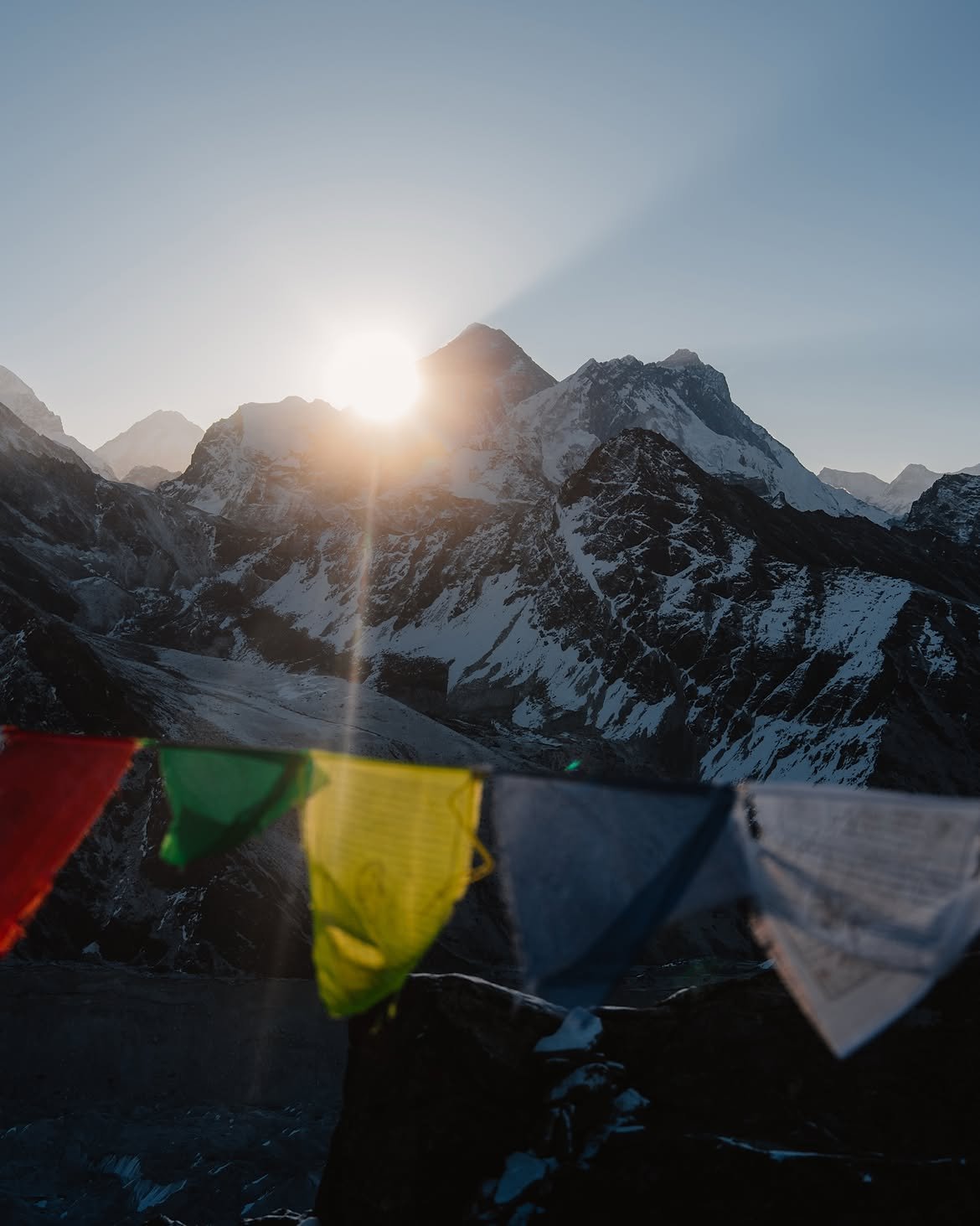
- 6:15 to 6:30 am, first direct light hits the highest peaks. This is the moment that gives this climb its reputation. The summits of Everest, Lhotse, Makalu, and Cho Oyu catch the first sun while the valleys below are still in shadow, turning the snow and rock a deep gold and then a bright pink for a few short minutes.
- 6:30 to 6:45 am, best photography window. The light is still low and warm, the shadows on the mountain faces are still long and sculptural, and by now most people have arrived at the summit cairn if they left on schedule. This is the window you do not want to miss, and it is also the window that a late start or a slow ascent can cost you entirely.
- 6:45 to 7:15 am, full daylight settles in. The light flattens, colors shift toward white and blue, and this is generally when groups start their descent back toward Gokyo village for breakfast.
- 7:15 to 8:30 am, descent and return to the lodge. Faster on the way down, though still deliberate on the loose upper sections. Breakfast at the lodge is usually the reward waiting at the bottom, and by this point in the morning most trekkers are ravenous.
The one variable that shifts this whole schedule is departure time relative to your own pace. Guides who have run this route many times, like Pasang, generally push slower groups out the door 20 to 30 minutes earlier than faster groups, precisely so everyone arrives at the summit for that same golden window rather than watching the best light disappear while still climbing.
What You Actually See From the Top, and Where to Look
This is the section that separates Gokyo Ri from almost every other viewpoint in the Everest region. From this one summit, on a clear morning, you see four of the world’s eight thousand meter peaks in a single field of view, along with an entire glacial lake system and Nepal’s longest glacier laid out below you. No other easily accessible viewpoint on this side of the Khumbu offers that particular combination.
Here is what you are looking at and roughly where to find it once you are standing at the cairn:
- Everest, 8848.86 meters, to the east and slightly south. From Gokyo Ri, Everest does not dominate the frame the way it does from Kala Patthar. It sits further back, partially screened at times by Nuptse, recognizable by its distinctive dark pyramid shape and the plume of snow that the jet stream often blows off its summit ridge.
- Lhotse, 8516 meters, just to the right of Everest. The fourth highest mountain on earth, and from this angle its long summit ridge is genuinely one of the more striking shapes on the horizon, arguably more visually dramatic from here than Everest itself.
- Makalu, 8485 meters, further to the southeast. A sharp, isolated pyramid standing well apart from the Everest and Lhotse massif, distinct enough that guides use it as a reference point when orienting first time visitors to the panorama.
- Cho Oyu, 8188 meters, to the northwest. This one is closer and more immediate feeling than the other three, a broad white massif that also happens to be the same peak reflected in Dudh Pokhari on calm mornings back down in the village.
- The Ngozumpa Glacier, directly below to the south. Nepal’s longest glacier, stretching roughly 36 kilometers, a river of grey ice and rubble that looks almost lunar from this height, and which formed and continues to feed the entire Gokyo Lakes system you just walked through.
- The Gokyo Lakes themselves, scattered below and to the west. From the summit you can pick out several of the six lakes in the chain, ice edged in the cold months, a startling turquoise in warmer periods, sitting in a protected wetland system that is internationally recognized for its ecological value.
- Beyond the immediate panorama, on an exceptionally clear day, the wider ridgeline of peaks stretching toward Rolwaling and the Tibetan border gives a genuine sense of scale to the whole Khumbu region that ground level walking never quite delivers.
The thing photographs and descriptions never quite convey is the width of it. You are not craning your neck to see one mountain framed against the sky. You are turning your whole body, slowly, taking in a full horizon that includes four separate eight thousand meter giants without moving your feet. That is the specific, singular thing Gokyo Ri does better than any other viewpoint on this trek, and arguably better than any other non technical viewpoint in the entire Everest region.
Best Time of Year for a Clear Gokyo Ri Sunrise
Timing your trek to the right season matters more for this specific climb than almost any other day on the route, since a Gokyo Ri sunrise with cloud sitting on the peaks is a fundamentally different, lesser experience than the same climb under a clear sky. Here is how the main trekking windows compare, based on years of guiding this exact route.
- Late March through May, spring season. Generally excellent visibility in the early morning hours, with afternoon cloud building up as the season warms toward the pre monsoon period in late May. Rhododendron blooms lower in the valley add color to the trek even though Gokyo itself sits above the tree line. This is one of the two most reliable windows for a clear summit morning.
- Late September through November, autumn season. Widely considered the single best window for this climb. Post monsoon air is clean, humidity is low, and morning skies are consistently clear across the Khumbu. Temperatures at the summit are cold but manageable with proper layering. If your schedule allows only one shot at this trek, this is the season most guides, Pasang included, would choose first.
- December through February, winter season. Skies are frequently very clear, arguably even clearer than autumn on average, but the cold at 5360 meters before dawn is significantly more severe, and snow on the upper ridge sections is more likely, occasionally calling for microspikes. Fewer trekkers on the trail is a genuine upside for anyone who prefers a quieter summit experience.
- June through early September, monsoon season. Not recommended for this climb. Cloud cover and precipitation are common through most mornings, and a clear sunrise becomes far less likely, though not impossible on a lucky day between rain systems.
Our own trip logs bear this out in practice. Groups traveling in autumn see a clear or mostly clear Gokyo Ri sunrise on close to nine mornings out of ten, spring runs slightly behind that, winter is close to autumn in clarity but far colder, and monsoon season success rates drop substantially. If a clear sunrise over four eight thousand meter peaks is the whole reason you are booking this trek, autumn departures are worth prioritizing when you talk to our team about dates.
Gokyo Ri Versus Kala Patthar: Two Different Dawns on the Same Trek
Trekkers doing our 17 day Everest Base Camp with Gokyo Lake Trek get both of these sunrise climbs, five days apart, and by the end most of them tell us the two mornings barely felt like the same kind of experience. They are both predawn climbs to just above 5300 meters, and that is roughly where the similarities end.
The core difference is angle of view versus intimacy of view. Gokyo Ri gives you breadth: four eight thousand meter peaks spread across a wide horizon, plus a glacier and a lake system most trekkers never expected to see from a summit. Kala Patthar gives you proximity: a single, close, overwhelming framing of Everest’s south face and the Khumbu icefall, with less peripheral scenery competing for attention.
Here is a side by side comparison that we use with clients trying to understand what each morning will actually feel like:
| Feature | Gokyo Ri | Kala Patthar |
|---|---|---|
| Summit elevation | 5360 meters | 5555 meters |
| Starting point and elevation | Gokyo village, 4790 meters | Gorak Shep, 5164 meters |
| Approximate vertical gain | 570 meters | 391 meters |
| Typical round trip time | Four to five hours | Three to four hours |
| Eight thousand meter peaks visible | Four: Everest, Lhotse, Makalu, Cho Oyu | Effectively one dominant peak: Everest, with Nuptse and Lhotse nearby |
| Character of the view | Wide panorama, glacier and lake system included | Close, dramatic single mountain framing |
| Where it sits on this itinerary | Day 8 | Day 13 |
| Altitude adjustment by this point in the trek | Earlier in the acclimatization schedule, feels harder relative to fitness | Later, body is somewhat more adjusted but starting elevation is higher |
The practical takeaway is that neither climb replaces the other, and this is exactly why the combined route matters so much as a design choice. A trekker who only does Gokyo Ri walks away with the wide panorama but never sees Everest’s south face up close or reaches base camp itself. A trekker who only goes to Kala Patthar and base camp gets the dramatic close framing but never sees Cho Oyu, never crosses the Ngozumpa Glacier area, and never stands above the Gokyo Lakes. Doing both, on one trip, across the same acclimatization schedule, is genuinely the more complete way to see this part of the Himalaya.
How Hard Is Gokyo Ri Compared to the Rest of the Trek
Trekkers ask us this constantly during the planning stage, usually phrased as some version of “is this the hardest day.” The honest answer is no, not in raw physical terms, but it carries a specific kind of difficulty that catches some people off guard.
Here is how it stacks up against the other demanding days on the route:
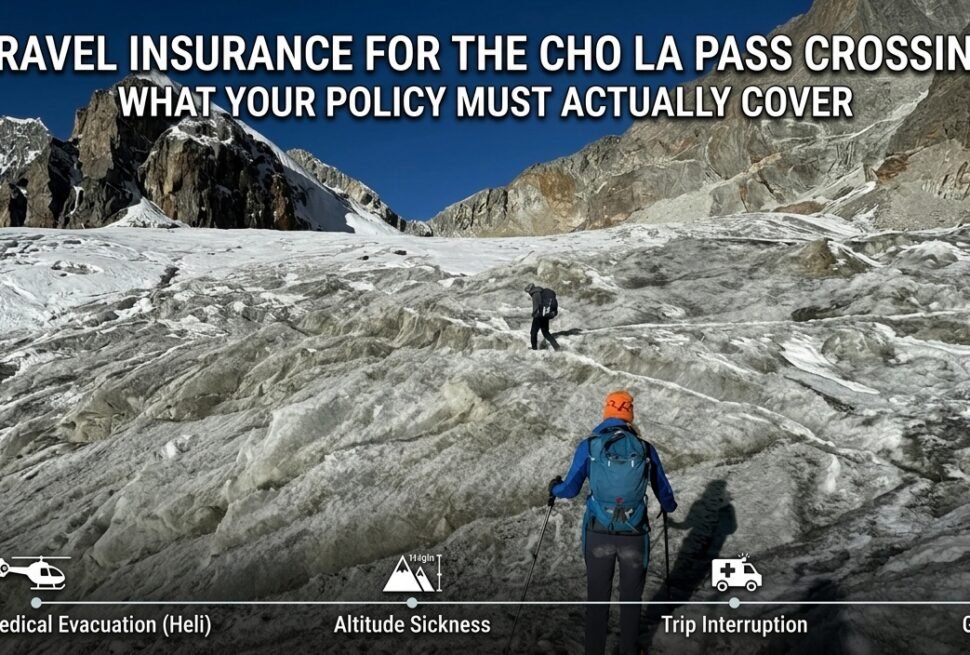
- Physically, it is moderate rather than extreme. Four to five hours of hiking with 570 meters of gain is well within range for anyone who has trained reasonably for a Himalayan trek. It is nowhere near as long or as technically demanding as the Cho La Pass crossing that follows a couple of days later, which we cover in detail in our guide to the three passes route including Cho La.
- The altitude makes it feel harder than the numbers suggest. At 5360 meters, oxygen availability is roughly half of what it is at sea level. Even fit trekkers find themselves stopping to breathe on sections that would barely register at lower elevation.
- The early start and the cold add a fatigue factor that is not purely physical. Waking at 4 am after a poor night’s sleep at 4790 meters, then climbing in near freezing temperatures, is mentally taxing in a way that a similar climb at a reasonable hour and moderate temperature would not be.
- It is genuinely easier, in most respects, than the later Kala Patthar climb, mainly because you start Gokyo Ri from a lower camp elevation, even though the summit itself sits slightly lower than Kala Patthar as well.
- It is far easier than Cho La Pass, which involves a longer day, a genuine high pass crossing with rock and sometimes ice underfoot, and a more serious commitment once you start, since turning back partway across a pass is a much bigger undertaking than turning back partway up Gokyo Ri.
In short, treat Gokyo Ri as a serious but achievable climb for anyone who has done reasonable preparation and is following a sensible acclimatization schedule, which is exactly what our full Everest Base Camp with Gokyo Lake Trek itinerary is built around. It is not a day to underestimate, but it is also not the day that should worry you most on this route.
Altitude at 5360 Meters: What to Expect and How the Two Dawn Climbs Compare
By Day 8, when you climb Gokyo Ri, your body has already spent a week acclimatizing on the way up through Namche, Dole, Machhermo, and Gokyo village itself. That gradual gain matters enormously, but 5360 meters is still high enough that most trekkers notice something, even those who feel strong.
Common and normal symptoms at this elevation include:
- Noticeably faster breathing on any uphill section, even gentle ones.
- A mild headache that responds to hydration, rest, and time, and is not accompanied by confusion, loss of coordination, or vomiting.
- Reduced appetite the night before or morning of the climb.
- Cold hands and feet that take longer than usual to warm up once moving.
- A sense that the summit push is slower than it should be, even for otherwise fit trekkers.
- Slightly disturbed sleep the night before, which is extremely common at Gokyo village and not itself a warning sign.
Symptoms that are not normal, and that your guide is trained to watch for and act on immediately, include a headache that does not respond to rest and basic medication, confusion, loss of balance not explained by terrain, a persistent dry cough that worsens, or any sign of fluid on the lungs or brain. This is precisely why every Next Trip Nepal itinerary includes trained guides who monitor the group throughout the climb, not just at camp.
How does this compare to Kala Patthar five days later? By the time trekkers reach Kala Patthar, most have adapted somewhat to functioning at extreme altitude, since the intervening days at Thangnak, Dzongla, and Lobuche keep the body working in thin air. However, Kala Patthar’s summit sits close to 200 meters higher than Gokyo Ri, and Gorak Shep, the starting point, already sits above Gokyo Ri’s own summit elevation. In practical terms, most guides find that clients who struggled on Gokyo Ri tend to also find Kala Patthar difficult, while clients who handled Gokyo Ri comfortably usually manage Kala Patthar as well, provided the acclimatization schedule in between has been respected and not rushed.
What to Wear and Carry for Summit Morning
This is specifically about the kit for the climb itself, not a full trek packing list. You will already have most of this gear with you by Day 8, so the real task on the morning of the climb is choosing correctly from what you already packed.
- Base layer, top and bottom. A moisture wicking thermal layer against the skin, since you will sweat on the ascent even in freezing temperatures and then need it to keep you warm once you stop moving at the summit.
- Insulating mid layer. A fleece or light down jacket over the base layer, adjustable as your body temperature changes through the climb.
- Heavy down jacket for the summit itself. The temperature at the top before sunrise is well below freezing, often somewhere between minus 10 and minus 15 degrees Celsius with wind chill, and you will be standing relatively still for photos and views. This is the single most important item you can get right.
- Windproof and water resistant outer shell. Wind on the exposed ridge sections can be sharp even on an otherwise calm morning.
- Insulated trekking pants, or thermal leggings under trekking trousers. Legs get cold fast on a predawn climb and warm slowly once the sun is up.
- Warm hat covering the ears, plus a neck gaiter or buff. Heat loss through the head and neck is significant at this temperature.
- Two layers of gloves. A thin liner glove for handling a camera or phone, and a heavier insulated glove or mitten over the top for the actual walking. Fumbling with a phone in bare hands at the summit for even a minute in that cold is uncomfortable enough that most trekkers only do it once.
- Sturdy, broken in trekking boots with warm socks, ideally a thin liner sock under a thicker wool sock.
- Headlamp with fresh batteries, plus a spare set in a warm inner pocket. Cold drains batteries faster than usual, and spares kept close to body heat perform far better than spares left in an outer pocket.
- Trekking poles. Genuinely useful on the loose scree sections and on any icy patches, and they save your knees on the descent.
- A full water bottle, insulated if possible, or a thermos of warm tea. Water can freeze in exposed bottles at this temperature, which is a detail first time high altitude trekkers rarely anticipate.
- Sunglasses, carried in an easily accessible pocket. You will not need them on the way up, but once the sun clears the horizon the glare off snow becomes intense within minutes.
- Camera or phone, kept warm inside a jacket layer until you actually need it. Batteries drain rapidly in cold air, and a phone that has been sitting in an outer pocket may shut down entirely right when you want to shoot the best light.
- A few high energy snacks in an easily reachable pocket. Appetite is often low at this altitude, but a small amount of sugar helps on the final push.
None of this is exotic gear, and most trekkers already own everything on this list by the time they reach Gokyo village on Day 7 of the trek. The mistake to avoid is packing it away too deep in your duffel the night before. Lay it out before you sleep, in the order you will put it on, so the 4 am wake up call does not turn into a stressful search through a dark room by headlamp.
Photographing Gokyo Ri at Sunrise
This viewpoint rewards a bit of planning more than most, mainly because the window of best light is short and the cold makes fumbling with settings genuinely difficult. A few pieces of practical advice from guides who have watched hundreds of trekkers try to capture this morning:
- Get your camera settings sorted before the sun starts changing the light. Once the color show starts around 6:15, you do not want to be scrolling through a menu.
- Shoot wide first, then go for detail. The single biggest mistake photographers make here is zooming straight in on Everest and missing the fact that the real story on this summit is the width of the panorama, with all four eight thousand meter peaks in one frame.
- Use the prayer flags and cairn as foreground interest. A totally empty sky and mountain shot is fine, but including the summit marker gives scale and a sense of place that a pure landscape frame does not.
- Keep spare batteries warm against your body, not in your camera bag. Cold kills battery performance fast, and a dead battery at 6:20 am is not something you get a second chance at that same morning.
- Shoot the lakes and glacier too, not just the peaks. The Ngozumpa Glacier and the Gokyo Lakes below catch beautiful early light of their own, and this is a genuinely unique angle that trekkers who only visit Kala Patthar never get to photograph.
- If you want people in your shots with good light on their faces, position them with the eastern sky behind the camera, not behind them, otherwise you end up with silhouettes rather than portraits.
- Bracket your exposures if your camera allows it. The dynamic range between the bright snow on Everest and the still dark valley floor below is extreme, and a single exposure often loses detail on one end or the other.
- Do not spend the entire 30 minutes at the summit looking through a viewfinder. Guides who have led this climb nearly twenty times, like Pasang, generally tell first time visitors the same thing: put the camera down for at least a few minutes and actually look at it with your own eyes, because that memory outlasts most photographs anyway.
If the Weather Does Not Cooperate
Mountain weather in the Khumbu is generally reliable in the main spring and autumn trekking seasons, but it is never guaranteed, and a percentage of groups every season reach the summit of Gokyo Ri to find cloud sitting on Everest, wind driving spindrift across the ridge, or a complete white out. Here is how this is realistically handled.
- The standard 17 day itinerary does not build in a dedicated second attempt day at Gokyo. The schedule moves on to Thangnak the following morning to keep the acclimatization and pass crossing plan on track, since delaying at Gokyo pushes every subsequent day back and can affect flight bookings out of Lukla at the end of the trip.
- Guides make a judgment call at departure time. If conditions look genuinely poor from the village before setting out, an experienced guide like Pasang may delay departure by 30 to 60 minutes to see if a weather window opens, since Khumbu mornings can shift quickly.
- A partial view is still usually worth the climb. Even on a partly clouded morning, the lower peaks, the lakes, and the glacier are frequently visible even when the highest summits are obscured, and cloud patterns in this region often clear or shift within the hour.
- Trekkers on a private or custom itinerary have more flexibility. If you are booking a private departure with Next Trip Nepal rather than joining a fixed group date, we can build an extra buffer night into the Gokyo schedule specifically to allow a second attempt, which is something worth raising with us directly when planning your trip.
- Kala Patthar later in the trek offers a second chance at a similar dawn experience. While it is not the same view, a poor morning on Gokyo Ri is genuinely softened by knowing you still have Kala Patthar ahead of you on Day 13, with a different but equally compelling panorama centered on Everest’s south face.
- Realistic statistics from our own trip logs put a fully clear Gokyo Ri sunrise at roughly seven to eight mornings out of ten during peak spring and autumn seasons, dropping somewhat during the tail ends of those seasons or during the summer monsoon months, which is one more reason we generally steer clients toward the main March through May and September through November windows for this specific trek.
If you want to build in a genuine contingency buffer for this exact scenario, message us on WhatsApp at +977 9869225929 or email nexttripnepal@gmail.com before you book, and we can adjust the standard schedule to protect your summit morning specifically.
Why Doing Both Gokyo Ri and Kala Patthar Matters
This is really the central argument for choosing the longer combined route over either a Gokyo only trek or a base camp only trek, and it is worth being direct about it rather than dancing around the sales pitch.
- A Gokyo only trek gives you the wide panorama and the lakes, but never reaches Everest Base Camp itself, which for many trekkers is the symbolic destination they came to Nepal for in the first place. Our Gokyo Lakes trek guide covers that shorter option in detail if that is genuinely all you want from the trip.
- A base camp only trek gives you Kala Patthar and the base camp itself, but skips the Gokyo Lakes system entirely, meaning you never see Cho Oyu, never stand above the Ngozumpa Glacier, and never get the four peak panorama that Gokyo Ri offers.
- The combined route lets you compare two genuinely different dawn experiences on the same trip, which almost every past client tells us was one of the most memorable parts of the whole trek, precisely because the two mornings felt so different from each other despite being only five days apart.
- Crossing Cho La Pass between the two viewpoints adds a proper high altitude mountaineering feel to the middle of the trip, turning what could be two separate treks into one connected journey across the heart of the Khumbu, rather than an out and back walk to a single destination.
- From a pure value perspective, doing both in one trip is more efficient than two separate trips, since you only pay for one set of flights, one trekking permit process, and one acclimatization schedule, rather than repeating the lower valley walking twice across two different trips in two different years.
- The itinerary is specifically built around this comparison. Reaching Gokyo village on Day 7, climbing Gokyo Ri on Day 8, crossing to Thangnak on Day 9, then over Cho La Pass to Dzongla on Day 10, through Lobuche on Day 11, to Everest Base Camp and Gorak Shep on Day 12, and finally Kala Patthar at sunrise on Day 13 is a deliberately sequenced route that maximizes what you see for the number of days you spend walking.
If this combined structure appeals to you, our Gokyo Lakes and Everest Base Camp trek page covers the broader route logic in more depth, while the full day by day breakdown lives on our main Everest Base Camp with Gokyo Lake Trek itinerary page, including current pricing and departure dates.
Trip Pricing for This Route
Since Gokyo Ri only makes sense in the context of the full trek that gets you there, here is the current 2026 and 2027 per person, all inclusive pricing for the 17 day Everest Base Camp with Gokyo Lake Trek:
- 1 person: USD 1865
- 2 to 3 persons: USD 1715 per person
- 4 to 9 persons: USD 1615 per person
- 10 to 14 persons: USD 1515 per person
Pricing includes the guiding, permits, accommodation, and logistics that make this whole route work as a single continuous trip rather than a patchwork of separately booked segments. For a group quote, a custom departure date, or questions about the acclimatization schedule around Gokyo Ri specifically, reach out on WhatsApp at +977 9869225929 or by email at nexttripnepal@gmail.com and we can walk you through the options.
Frequently Asked Questions About Climbing Gokyo Ri
Is Gokyo Ri harder than Kala Patthar?
Not dramatically. Gokyo Ri involves slightly more vertical gain from Gokyo village than Kala Patthar involves from Gorak Shep, but Kala Patthar’s summit sits close to 200 meters higher and its starting point at Gorak Shep is already higher than Gokyo village. Most trekkers find the two climbs comparable in overall difficulty, with the deciding factor usually being how well acclimatized you are by the time you reach each one.
Do I need a guide to climb Gokyo Ri?
It is not a technical climb and the trail is well marked, but a guide adds real value here, from managing pace so you arrive for the best light, to monitoring for altitude symptoms, to simply knowing the terrain in the dark. Every Next Trip Nepal itinerary includes trained guides for this exact reason.
What time should I start climbing to catch the sunrise?
Departure from Gokyo village around 4:40 to 4:50 am typically gets most groups to the summit in time for the best light between roughly 6:15 and 6:45 am, depending on season and pace. Slower groups should start closer to 4:15 or 4:30 am.
How cold is it at the summit before sunrise?
Expect temperatures well below freezing, commonly somewhere between minus 10 and minus 15 degrees Celsius including wind chill, particularly in the peak winter months. Even in the more moderate spring and autumn seasons, predawn temperatures at 5360 meters are genuinely cold enough to demand proper layering.
Can I see Everest Base Camp itself from Gokyo Ri?
No. Gokyo Ri and Everest Base Camp sit in different valleys separated by the Ngozumpa Glacier and the Cho La Pass area. You see Everest’s summit clearly from Gokyo Ri, but not the base camp site itself, which you reach later in the trek on Day 12.
What happens if it is cloudy on summit morning?
The standard itinerary does not build in an automatic second attempt day, since the schedule needs to keep moving toward Cho La Pass and beyond. Guides may adjust departure timing if conditions look marginal, and a private or custom booking can include a buffer night specifically for this. A poor Gokyo Ri morning is also softened by the fact that Kala Patthar offers a second sunrise opportunity later in the trek.
How many of the eight thousand meter peaks can I actually see from the summit?
Four, in a single field of view: Everest at 8848.86 meters, Lhotse at 8516 meters, Makalu at 8485 meters, and Cho Oyu at 8188 meters. This is the specific feature that distinguishes Gokyo Ri from most other viewpoints in the region.
Is altitude sickness a real risk on this specific climb?
At 5360 meters, mild symptoms such as faster breathing, a dull headache, or reduced appetite are common and expected. Serious altitude illness is a real risk anywhere above 5000 meters, which is why the acclimatization schedule leading up to Day 8, including the nights spent at Dole, Machhermo, and Gokyo village itself, matters as much as the climb itself. Guides trained to recognize warning signs are present throughout.
Do I need crampons or technical climbing gear for Gokyo Ri?
No technical gear is required for the standard route. Trekking poles are strongly recommended, and in icy conditions after fresh snowfall, lightweight microspikes can help on specific sections, but this is a trekking climb, not a technical mountaineering objective.
How does Gokyo Ri compare to trekking only to Everest Base Camp without Gokyo?
A base camp only trek skips the entire Gokyo Lakes system, the wide four peak panorama, and the view over the Ngozumpa Glacier. Trekkers who add Gokyo Ri to their itinerary consistently tell us it was one of the highlights of the trip, distinct enough from the base camp and Kala Patthar experience that it never feels repetitive.
Final Word From the Trail
Every guide who has stood on that summit as many times as Pasang has will tell you the same thing in slightly different words: Gokyo Ri is the view that made this valley famous long before anyone outside Nepal had heard the name Kala Patthar. Standing there at 5360 meters with four eight thousand meter peaks spread across the horizon, the Ngozumpa Glacier stretching south below your feet, and the Gokyo Lakes catching the first light behind you, is not a warm up act for the rest of the trek. It is one of the two genuine headline moments of the entire route, and it deserves to be treated that way when you plan your trip.
If you are ready to put this on your calendar, reach out to us directly. WhatsApp +977 9869225929 or email nexttripnepal@gmail.com, and our team will walk you through dates, group sizes, and the full day by day plan for the 17 day Everest Base Camp with Gokyo Lake Trek, so your own sunrise on Gokyo Ri is one you get to plan for properly rather than leave to chance.
\n
Related Reading
\n
- Food and Nutrition on the Everest Base Camp with Gokyo Lake Trek
- \n
- The Namche Bazaar Acclimatization Day on the Gokyo and Cho La Route
- \n
- Everest Base Camp with Gokyo Lake Trek vs Standard Everest Base Camp Trek
- \n
\n