Every trip page for the Everest Base Camp Trek with Helicopter Return includes the same short line: travel insurance is required and must cover helicopter evacuation. That single sentence hides a surprising amount of complexity, and it is the source of more confusion, and more denied claims, than almost any other part of trip planning for this specific itinerary. This guide breaks down exactly what your insurance actually needs to cover, how the scheduled helicopter return differs from emergency evacuation coverage, and how to avoid the most common and costly mistakes.
Why This Trek Has Two Separate Insurance Questions, Not One
Most trekkers assume there is a single insurance requirement for this trek. In reality, there are two distinct scenarios your policy needs to address, and conflating them is where most confusion starts.
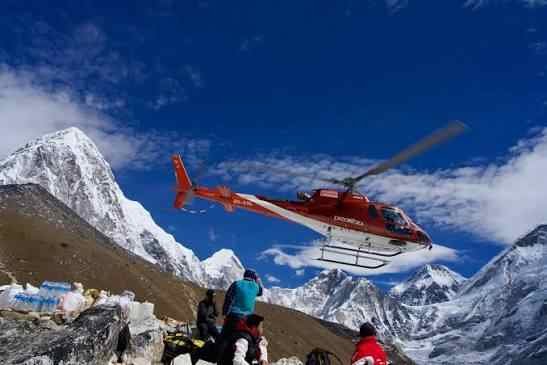
- Scenario one: your planned, scheduled helicopter return. This is the helicopter flight built into your itinerary from the start, taking you from Gorakshep or a similar point back to Kathmandu as a normal part of your booked trip.
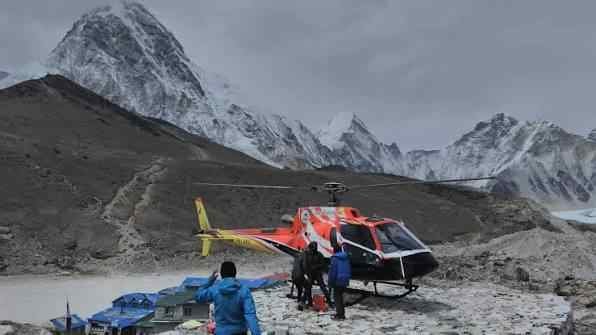
- Scenario two: an emergency medical evacuation. This is an unplanned helicopter flight required because you or someone in your group has a medical emergency, most commonly severe altitude sickness, requiring urgent descent regardless of your original itinerary.
These two scenarios are often covered very differently by insurance policies, and assuming your policy handles both the same way is a mistake that can leave you with an enormous unexpected bill.
How Scheduled Helicopter Return Coverage Typically Works
- Since this is a planned, non emergency part of your itinerary, it is generally treated as a standard travel activity, similar to an included transfer or domestic flight, rather than a medical event.
- Most standard travel insurance policies that cover trekking and high altitude activities up to the altitude of Everest Base Camp will cover this scheduled flight without issue, as long as your policy explicitly covers activities and altitudes at this level.
- The key risk here is not whether the flight itself is covered, but whether your policy covers trekking at the altitudes involved in reaching Everest Base Camp in the first place, which some basic travel insurance policies do not.
How Emergency Evacuation Coverage Typically Works
- This is a distinct category of coverage, often listed separately in a policy as emergency medical evacuation or medical repatriation coverage.
- Reputable policies for high altitude trekking specify a minimum coverage amount for helicopter evacuation, and it is essential this figure is high enough, since a single emergency helicopter evacuation from this region can cost several thousand dollars.
- Some policies require evacuation to be medically necessary and confirmed by a licensed doctor or your trekking guide’s assessment before costs are covered, meaning a voluntary early descent for comfort rather than medical necessity may not be reimbursed.
Coverage Comparison Table
| Factor | Scheduled Return Flight | Emergency Evacuation |
|---|---|---|
| Trigger | Planned as part of your booked itinerary | Unplanned, due to a medical emergency |
| Typical policy category | General trip coverage or activity coverage | Emergency medical evacuation coverage |
| Cost if uninsured | You would simply pay the operator’s standard fee, similar to any other paid extra | Potentially several thousand dollars, billed directly by the operator |
| Documentation needed for a claim | Booking confirmation and receipt, in the rare case a claim is needed | Medical assessment, incident report, and often direct coordination between insurer and evacuation operator |
| Common minimum coverage recommended | Generally not a separate minimum, covered under general trip cost protection | USD 100,000 or higher is a commonly recommended minimum for high altitude trekking |
What to Actually Check in Your Policy Before You Buy
- Altitude limit. Confirm your policy explicitly covers trekking at altitudes up to at least 5,550 meters, since Kala Patthar, a common side excursion on this itinerary, reaches roughly this height, and some policies cap coverage well below this.
- Activity classification. Trekking is sometimes classified separately from mountaineering or climbing. Make sure your policy explicitly lists trekking, not just general adventure travel, as a covered activity.
- Helicopter evacuation limit. Look for a specific dollar figure for helicopter evacuation coverage, and be wary of vague language that does not specify an amount.
- Search and rescue coverage. This is sometimes a separate line item from evacuation coverage and covers the cost of locating a trekker in an emergency, which is a distinct service from the evacuation flight itself.
- Repatriation coverage. This covers the cost of returning you to your home country if a medical situation requires it, a different and additional cost beyond a domestic Nepal evacuation flight.
- Trip interruption and cancellation. Check whether your policy reimburses costs if your scheduled helicopter return is cancelled by weather and you incur additional unplanned expenses as a result, such as extra hotel nights or a missed international connecting flight.
Common Insurance Mistakes Trekkers Make
| Mistake | Consequence |
|---|---|
| Buying a generic travel insurance policy without checking the altitude limit | Claims denied for any incident above the policy’s covered altitude, which can be lower than Everest Base Camp itself |
| Assuming the trekking company’s own liability insurance covers you personally | Company insurance typically covers their operational liability, not your personal medical or evacuation costs |
| Not disclosing pre existing medical conditions | Claims can be denied entirely if a condition relevant to the incident was not disclosed at the time of purchase |
| Buying insurance after symptoms have already started | Most policies exclude coverage for conditions that began before the policy was purchased |
| Confusing trip cancellation insurance with medical evacuation insurance | These are different products, and having one does not mean you have the other |
How Payment for Emergency Evacuation Actually Works in Practice
This is an area where expectations and reality often differ, and it is worth understanding clearly before you need it.
- Some operators require payment guarantee before departure. In an emergency, helicopter operators in Nepal sometimes require confirmation of payment, either through direct insurer coordination or a credit card guarantee, before they will dispatch a flight for a non life threatening situation.
- Insurers with direct evacuation coordination are valuable. Some insurance providers maintain direct relationships with evacuation coordinators in Nepal and can arrange payment guarantees quickly. Others require you to pay upfront and seek reimbursement later, which can be a significant financial burden during an already stressful situation.
- Keep your insurance details accessible at all times. Your guide should have a copy of your policy number and emergency contact information, and you should carry a physical copy as well, since phone battery and signal cannot be relied upon in an emergency.
- Your guide’s role in the process. Guides are typically experienced in coordinating emergency evacuations and will contact the operator and your insurer’s emergency line on your behalf if you are not able to do so yourself.
What Happens if You Do Not Have Adequate Insurance
If a medical evacuation becomes necessary and you do not have coverage, or your coverage does not meet the operator’s requirements, you are personally responsible for the full cost of the flight, which can run from roughly 2,000 to 5,000 US dollars or more depending on distance and conditions. Some operators may request payment or a payment guarantee before dispatching a non critical flight if insurance cannot be confirmed, which can delay a needed evacuation during an already difficult moment. This is precisely why adequate coverage is not a formality but a genuinely important part of preparing for this trek.
How Insurance Interacts With the Scheduled Flight Specifically
Since the scheduled helicopter return is paid for as part of your trip package, most trekkers do not interact with insurance for this leg at all under normal circumstances. Where insurance becomes relevant for the scheduled flight is specifically around disruption: if weather delays your return beyond your remaining trip dates, causing additional hotel costs or a missed international flight, a policy with trip interruption coverage can reimburse these secondary costs. Without this coverage, an extended weather delay becomes a cost you absorb personally, on top of the inconvenience itself.
Recommended Coverage Levels for This Specific Trek
| Coverage Type | Recommended Minimum |
|---|---|
| Emergency medical evacuation | USD 100,000 |
| Medical treatment abroad | USD 50,000 |
| Repatriation to home country | Included as standard in most comprehensive policies |
| Trip cancellation and interruption | Equal to your total trip cost, including flights |
| Altitude coverage limit | At least 5,550 meters, to cover Kala Patthar |
Questions to Ask Before You Purchase a Policy
- Does this policy specifically name Nepal and high altitude trekking as covered, rather than relying on general adventure travel language?
- What is the exact altitude limit, and does it clearly cover Kala Patthar at approximately 5,550 meters, not just Everest Base Camp at roughly 5,364 meters?
- Does the policy cover both a scheduled helicopter return and an unplanned emergency evacuation, and are these clearly distinguished in the policy documentation?
- Is there a 24 hour emergency assistance line, and does the insurer have experience coordinating evacuations specifically in Nepal?
- What documentation will I need to provide to file a claim, and is this realistic to obtain from a remote mountain location with limited connectivity?
How to Read a Policy Document Without Getting Lost
Insurance documents are often long and full of language that is not written for easy comprehension. Focus your reading time specifically on these sections rather than trying to read every page.
- The list of covered activities, checking specifically for trekking and the altitude range.
- The emergency medical and evacuation coverage limits, usually presented as a specific dollar figure.
- The exclusions section, checking for any language about pre existing conditions or altitude related exclusions.
- The claims process section, to understand what documentation and contact steps are required.
Frequently Asked Questions
Does my credit card’s travel insurance cover this trek?
Rarely adequately. Credit card travel insurance is generally designed for trip disruption and basic medical needs, not high altitude trekking or helicopter evacuation at the levels required for this itinerary. Verify specific altitude and activity coverage directly with your card issuer before relying on it.
Is the scheduled helicopter return itself dangerous enough to require special insurance?
The flight itself is a standard commercial operation with an established safety record. The insurance concern is less about the flight being dangerous and more about ensuring you have appropriate coverage if weather disruption or an unrelated medical issue arises during your trip.
Can I buy insurance after I arrive in Nepal?
Some providers allow this, though it is strongly preferable to arrange comprehensive coverage before you depart your home country, since availability, pricing, and coverage terms are often better when purchased in advance.
Does insurance cover a missed international flight if my helicopter return is delayed?
This depends specifically on whether your policy includes trip interruption or delay coverage, which is separate from medical evacuation coverage. Check this specifically if your itinerary has little buffer before an international departure.
What if I already have a chronic health condition?
Disclose it fully when purchasing your policy. Non disclosure is one of the most common reasons claims are denied, and many insurers do offer coverage for trekkers with pre existing conditions, sometimes with an additional premium.
Do I need separate insurance for the trekking portion and the helicopter portion?
No, a single comprehensive policy that explicitly covers trekking at the required altitude and includes appropriate evacuation coverage should address both aspects of this itinerary.
A Real World Claims Scenario Walkthrough
Understanding insurance in the abstract only goes so far. Here is how an actual emergency evacuation claim tends to unfold for a trekker on the Everest Base Camp route, based on how these situations typically play out with reputable insurers.
A trekker develops symptoms of high altitude pulmonary edema at Lobuche, roughly 4,900 meters. The guide recognizes the warning signs, a persistent cough, extreme fatigue, and confusion, and immediately contacts the trekking company office in Kathmandu. The office contacts the trekker’s insurance provider using the 24 hour emergency assistance number printed on the policy, or held in the trekking company’s own records as a backup.
The insurer’s assistance team asks a series of questions: the trekker’s exact location, symptoms, policy number, and the treating guide or medical professional’s assessment. If the insurer is satisfied that evacuation is medically necessary, they issue what is called a guarantee of payment directly to the helicopter operator. This step matters enormously, because it means the trekker does not need to produce cash or a credit card on the mountain to secure the flight.
| Step | What Happens | Typical Timeframe |
|---|---|---|
| Symptom recognition | Guide identifies signs of altitude illness and begins descent protocol if possible | Immediate |
| Assistance call | Trekking company or trekker contacts insurer emergency line | Within 30 minutes |
| Guarantee of payment | Insurer confirms coverage directly with helicopter operator | 30 minutes to 2 hours, weather permitting |
| Evacuation flight | Helicopter collects trekker from landing zone nearest their location | Same day if weather allows |
| Hospital treatment | Trekker admitted to a Kathmandu hospital for observation and recompression | 1 to 3 days typically |
| Claim documentation | Hospital and helicopter operator submit invoices directly to insurer, or trekker pays and claims reimbursement | Weeks to months for reimbursement path |
Two payment models exist in practice. Under the direct billing model, the insurer pays the helicopter operator and hospital directly, and the trekker pays nothing out of pocket beyond any policy excess. Under the reimbursement model, the trekker or the trekking company pays upfront and submits receipts afterward for repayment. Direct billing is far less stressful, and it is worth asking your insurer specifically whether they offer it for Nepal evacuations before you travel, since not every policy does.
What can delay or complicate this process in real cases includes poor phone signal at high altitude, unclear policy documentation that the assistance team must verify before authorizing payment, and weather windows that ground helicopters regardless of how quickly the paperwork is sorted. None of these delays are within an insurer’s control, but they illustrate why having your policy details easily accessible, and your guide briefed on your coverage, matters as much as the coverage itself.
If you already know you are booking the shared helicopter return rather than a private charter, or vice versa, your insurance considerations shift slightly. This distinction matters enough that it deserves its own comparison, separate from the emergency evacuation discussion above.
| Factor | Shared Helicopter Return | Private Helicopter Return |
|---|---|---|
| Insurance classification | Usually treated as scheduled air transport, similar to a domestic flight | Same classification, though some insurers ask for the operator name and aircraft type |
| Trip interruption coverage | Weather delay affects your seat and possibly other passengers sharing costs | Weather delay affects your booking alone, sometimes with more flexible rebooking |
| Cancellation refund complexity | Refund policies may depend on how many seats were filled | Refund policies are typically simpler since you control the whole booking |
| Value at risk if trip is cut short | Generally lower, since per person cost is lower | Generally higher, since the charter cost is concentrated in fewer or one traveler |
| Documentation needed for a claim | Standard flight or transport receipt from operator | Charter agreement plus payment receipt, sometimes requested by insurers for higher value claims |
Because a private charter often represents a larger single expense, it is worth confirming your trip interruption or cancellation limit actually covers the full charter cost, not just a generic transport allowance. A policy that caps transport related claims at a modest figure may leave a meaningful gap if you have paid for an exclusive private flight and it cannot be rescheduled within your travel window.
For shared helicopter returns, the financial exposure per person is lower, but you should still confirm whether your policy considers a shared helicopter a form of covered transport at all, since some policies distinguish between commercial passenger aircraft and smaller shared charter aircraft in ways that are not always obvious from the wording.
Documents to Carry With You on the Mountain
Having the right coverage means little if the information is not accessible when you need it most. Based on how claims and evacuations actually unfold, carry the following with you at all times during the trek, not left behind in Kathmandu luggage storage.
- A printed copy of your insurance policy summary, including the policy number and the 24 hour emergency assistance phone number
- A photo of your policy documents saved offline on your phone, in case you lose the paper copy or your phone has no signal to load it from email
- Your passport photo page and Nepal visa page, since hospitals and evacuation coordinators may ask for identification during an emergency
- A note of your travel insurance provider’s claims email address, for submitting documentation once you are safely back in Kathmandu
- Contact details for someone at home who can act on your behalf if you are incapacitated, since some insurers accept next of kin authorization for claims coordination
- A basic written note, in your own language and if possible in simple English, listing any pre existing medical conditions and current medications, which can speed up treatment decisions if you cannot communicate clearly yourself
Guides on the Everest Base Camp Helicopter Return trek are generally experienced in coordinating with insurers, but they cannot do so effectively without your policy number and emergency contact number. Share this information with your guide at the start of the trek rather than assuming it will not be needed.
More Questions Trekkers Ask About Insurance
Can I buy travel insurance after I have already started the trek?
Almost never for the purpose that matters. Insurers require the policy to be active before the trip begins, and most explicitly exclude claims for conditions or incidents that occurred before the policy was purchased. Buy your policy before departure, not as an afterthought once you are already on the trail.
Does travel insurance cover the cost of the helicopter return if I simply prefer not to walk down?
No. The helicopter return built into this itinerary is a planned, pre booked part of your trip, not an insurance claim. Insurance only becomes relevant if you need an unplanned emergency evacuation for medical reasons, or if your scheduled flight itself is cancelled or delayed by circumstances your policy covers.
What if my insurer refuses to pay for a helicopter evacuation after the fact?
This does happen, usually because the policy excluded the altitude reached, excluded trekking as an activity, or because the evacuation was judged not medically necessary by the insurer’s reviewing physician. This is precisely why confirming altitude limits and activity classifications before you travel, rather than after an incident, is the single most protective step you can take.
Is annual multi trip insurance suitable for this trek?
Sometimes, but check carefully. Many annual policies cap altitude coverage well below Everest Base Camp’s roughly 5,364 meters, and some exclude trekking with a guide entirely. An annual policy bought for general travel may not automatically extend to a high altitude trek unless you have specifically added that coverage.
Do children or older trekkers need different coverage?
Age limits and health screening questions vary by insurer. Older trekkers in particular should expect to answer detailed medical history questions, and some insurers apply age based premium increases or exclusions for certain pre existing conditions. Always disclose your full medical history accurately, since an inaccurate disclosure can void a claim entirely.
Can I add evacuation coverage separately if my main travel policy does not include enough?
Yes. Standalone medical evacuation and rescue memberships exist specifically for this purpose, and some trekkers carry one of these alongside a standard travel insurance policy that handles cancellation, baggage, and general medical costs. This combination can be more cost effective than searching for a single all in one policy with sufficiently high evacuation limits.
Comparing Typical Insurance Provider Offerings
Insurance products vary widely, and the following table summarizes the kind of features worth comparing across providers when you shop for a policy for this trek. These are illustrative categories rather than an endorsement of any single company, since availability and pricing change by country of residence and by season.
| Feature | Basic Travel Policy | Adventure Travel Policy | Standalone Evacuation Membership |
|---|---|---|---|
| Altitude limit | Often 3,000 to 4,000 meters or excluded entirely | Usually 5,500 to 6,000 meters, sometimes higher | Not altitude limited, based on rescue need |
| Trekking with a guide | Frequently excluded without an add on | Included as standard | Included as standard |
| Helicopter evacuation limit | Low, sometimes under 20,000 US dollars | Higher, often 100,000 US dollars or more | Very high or unlimited within membership terms |
| Trip cancellation and interruption | Included | Included | Not typically included |
| Cost relative to basic policy | Lowest | Moderately higher | Varies, often a flat annual membership fee |
| Best suited for | Low altitude sightseeing trips | This specific trek and similar high altitude treks | Frequent trekkers wanting evacuation certainty regardless of base policy |
The practical takeaway is that a policy marketed simply as travel insurance, without any adventure or trekking specific language, is the category most likely to leave a gap for this particular trip. Reading the product name is not enough. Read the policy wording itself for the words altitude, trekking, mountaineering, and helicopter, and confirm the specific numbers attached to each.
How Weather Related Flight Delays Interact With Your Insurance
The scheduled helicopter return on this itinerary is genuinely more prone to weather delay than a hospital based emergency evacuation, simply because the flight is scheduled for a specific morning window and mountain weather in the Khumbu region can be unpredictable even in the main trekking seasons. It helps to separate two distinct outcomes here.
The first outcome is a short delay of a few hours, where the helicopter still flies later the same day once weather clears. This is common and typically does not trigger any insurance claim at all, since the flight ultimately happens as booked, just later than planned.
The second outcome is a full day cancellation, where the helicopter cannot fly at all and the return must either happen the next day, or the group must walk out instead. This is where your trip interruption or travel delay coverage becomes relevant, particularly if the delay causes you to miss a connecting international flight home. Reputable trekking companies build a buffer day into the itinerary specifically to absorb this risk, but if your personal schedule is tight, a delay coverage benefit that reimburses rebooking fees or an unplanned hotel night in Kathmandu is genuinely useful.
- Confirm whether your policy’s travel delay benefit requires a minimum number of hours delayed before it pays out
- Confirm whether missed connection coverage applies specifically to delays caused by weather affecting a helicopter transport, not only commercial airline delays
- Keep any written confirmation from your trekking company of the delay and the reason for it, since insurers will ask for this when you file a claim
Why This Trek Specifically Raises the Insurance Stakes
It is worth stepping back and explaining, in plain terms, why insurance deserves this much attention for the Everest Base Camp Helicopter Return trek compared with a lower altitude holiday. Three factors combine here in a way that is unusual even among popular trekking routes.
First, the altitude itself is genuinely high. Base Camp sits at roughly 5,364 meters, and the trek passes through Kala Patthar viewpoint at around 5,545 meters for those who choose to include it. These figures sit above the altitude thresholds written into many standard travel policies, which is the single most common reason claims are contested or denied on this route.
Second, the terrain and remoteness mean that if something does go wrong, a helicopter is very often the only realistic way to reach advanced medical care quickly. Unlike a road accident in a city, where an ambulance can reach a hospital within minutes, a medical emergency near Gorakshep or Lobuche may be many hours from the nearest road, and ground evacuation on a stretcher over difficult terrain is slow and physically demanding for the patient.
Third, this itinerary already includes one helicopter flight as a planned part of the trip. That planned flight is not an insurance matter, but it does mean helicopter transport is already part of your mental model for this trek, which makes it a natural moment to also think clearly about the unplanned, emergency use of a helicopter, and to make sure your coverage matches both possibilities rather than only the pleasant one.
None of this is intended to be alarming. Thousands of trekkers complete this exact itinerary safely every season. The purpose of clear eyed insurance planning is simply to remove one source of stress and financial risk from a trip that should otherwise be enjoyable, scenic, and well within reach of a reasonably fit and well prepared trekker.
A Short Checklist Before You Buy
Use this as a final pass before purchasing a policy for the Everest Base Camp Helicopter Return trek.
- Confirm the altitude limit meets or exceeds 5,550 meters
- Confirm trekking with a licensed guide is explicitly included, not excluded
- Confirm helicopter evacuation is named specifically, with a clear dollar limit you find acceptable
- Confirm search and rescue costs are included, not only medical treatment once you reach a hospital
- Confirm repatriation coverage exists if you needed to be flown home for further treatment
- Confirm whether the insurer offers direct billing to the helicopter operator, or only reimbursement after you pay
- Confirm the 24 hour emergency assistance number works from Nepal and is saved somewhere you can access it without needing an internet connection
- Confirm trip cancellation and interruption limits realistically cover your non refundable trekking package cost, including the helicopter flight itself
Working through this list before you buy takes perhaps twenty minutes, and it is twenty minutes that can make an enormous difference if you are ever the trekker standing at Lobuche waiting for a helicopter, wondering whether the bill will be handled directly or whether you will need to find a way to pay for it yourself first.
What Our Team Recommends
Based on years of running this trek for trekkers from many different countries, our practical recommendation is straightforward. Choose a policy explicitly marketed for adventure travel or trekking, not a generic travel policy, and set the altitude limit requirement at 6,000 meters even though Base Camp itself is lower, since this gives you headroom and avoids any dispute about summit or viewpoint elevations along the way. Ask directly, in writing if possible, whether the helicopter return flight is treated as scheduled air transport for insurance purposes, and keep that written answer with your other trip documents.
We also recommend sharing your policy number and emergency number with your guide on the first day of the trek, not halfway through when a problem might already be developing. Our guides are experienced in coordinating with insurers and helicopter operators, and the process moves faster when they already have your information in hand rather than needing to ask you for it while you may be unwell.
Finally, treat the cost difference between a basic policy and a proper adventure travel policy as a small, sensible expense relative to the overall investment you are already making in flights, permits, and the trek itself. The premium difference is typically a modest sum, while the protection it provides against a five figure evacuation bill is substantial.
Final Word
Insurance for this specific trek is not a single checkbox but two related questions: does your policy cover trekking at the altitudes involved, and does it provide adequate emergency evacuation coverage if something goes wrong. Read your policy carefully, confirm the altitude limit explicitly covers Kala Patthar, and keep your documentation accessible throughout your trip. The scheduled helicopter return itself is routine, but being genuinely prepared for the unplanned scenario is what separates an inconvenience from a financial and medical crisis.