Trip pages describe the helicopter return in a single line: fly back to Kathmandu from Gorakshep after reaching Everest Base Camp. What actually happens on that day, from the moment you wake up to the moment you land, involves a lot more detail than that sentence suggests. This guide walks through the entire day in order, based on how it typically unfolds for trekkers completing the Everest Base Camp Trek with Helicopter Return.
The Night Before
- Where you sleep. Most itineraries have you spend your final night before the flight at Gorakshep, the last settlement before Everest Base Camp itself, sitting at roughly 5,140 meters.
- How well you actually sleep. Be honest with yourself about this in advance. Sleep at this altitude is often light and interrupted, and many trekkers wake several times during the night. This is normal and does not mean something is wrong.
- Your guide’s evening briefing. The night before, your guide typically walks you through the next day’s plan, including your wake up time, the approximate weather outlook, and what to have ready.
- Packing the night before, not the morning of. Since flight timing depends on weather and can shift earlier than expected, most guides recommend having your bag fully packed and ready before you go to sleep.
The Wake Up Call
Helicopter flights in the Khumbu operate almost exclusively in the morning, for a very specific reason: mountain weather in this region reliably deteriorates through the day as rising warm air creates cloud and wind, while mornings are typically calm and clear. This means your wake up call is early, often between 4:30 and 6:00 in the morning, sometimes even earlier if your guide anticipates a narrow weather window.
- Expect a knock on your door or a call through the thin teahouse walls well before sunrise.
- Temperatures at this hour are at their coldest point of the entire trek, often well below freezing inside unheated rooms.
- A quick, simple breakfast is usually available, though appetite is often reduced at this altitude and hour. Eating something, even if you do not feel hungry, is worth the effort.
Getting to the Landing Point
| Step | What Happens |
|---|---|
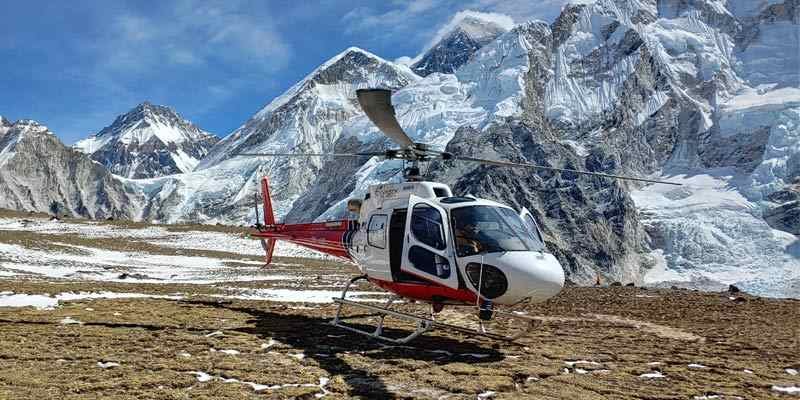
| 1 | You gather your packed bag and walk a short distance from your teahouse to the designated helipad, usually a flat, cleared area near Gorakshep. |
| 2 | Your guide confirms your booking details with the ground coordinator or radio operator managing helicopter traffic that morning. |
| 3 | You wait, sometimes for a short period and sometimes for an hour or more, depending on how many flights are scheduled ahead of yours and current weather conditions. |
| 4 | Your bag is weighed, and any excess beyond your allowance is flagged for discussion on the spot. |
The Waiting Period: What It Actually Feels Like
This is the part almost nobody describes accurately in advance. The wait can be genuinely uncomfortable: cold, exposed, and uncertain. You may see other groups’ helicopters arrive and depart before yours, which can create anxiety even when everything is proceeding normally. Guides are generally good at managing expectations here, but it helps enormously to know in advance that waiting, sometimes for an hour or two, is a normal part of the process and not a sign of a problem.
- Bring an extra warm layer specifically for this waiting period, since standing still in the cold feels very different from walking.
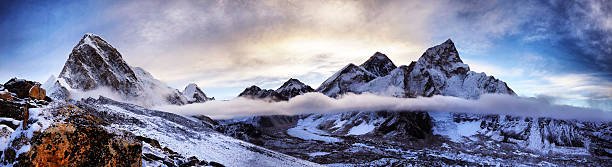
- Use the time to take photographs. The early morning light at this altitude, with Everest and surrounding peaks catching the first sun, is often extraordinary.
- Stay near your guide and listen for updates, since boarding can happen with relatively short notice once the aircraft arrives.
Boarding the Helicopter
- The aircraft lands, usually briefly, with the rotors often kept running to save time and fuel given the altitude.
- Ground crew or your guide directs you to approach from the correct angle, always from the front or side, never from behind the tail rotor.
- You board quickly, find your seat, and secure your harness or seatbelt as instructed.
- Your luggage is loaded either alongside you in the cabin or in a small external compartment, depending on the aircraft and total weight.
- The entire boarding process, from approach to takeoff, often takes only a few minutes once the aircraft is actually on the ground.
The Flight Itself: What You Actually See
This is the part everyone remembers. The flight from Gorakshep to Kathmandu typically takes 45 minutes to just over an hour, depending on your exact route and any stop in Lukla or Ramechhap for refueling or passenger transfers.
| Approximate Phase | What You See |
|---|---|
| First few minutes | A rapid rise above Gorakshep, with Everest, Nuptse, and the Khumbu Icefall visible from an angle almost no trekker sees on foot |
| Mid flight, over the upper Khumbu | Ama Dablam, Lhotse, and the terraced villages of Pheriche and Dingboche passing below |
| Descending toward Lukla or Namche area | The dramatic terrain shift as you drop from high alpine landscape into forested hillsides |
| Final approach into Kathmandu | The valley opening up, with the density of the city forming a stark contrast to the mountains you just left |
Cabin noise is significant on most helicopters used for this route, and conversation is difficult without a headset. Many trekkers describe the experience as almost meditative for this reason, since you spend much of the flight simply looking out the window rather than talking.
Photography Tips for the Flight
- Keep your camera or phone accessible before boarding, not buried in a packed bag, since the best views often come in the first few minutes.
- Avoid using a flash or shooting directly into reflective cabin windows when possible, and try to keep your lens close to the glass to reduce glare.
- A wide angle lens or setting captures the scale of the mountains better than a zoomed in shot in most cases.
- If you get motion sickness easily, alternate between looking out the window and resting your eyes on a fixed point, similar to advice for car or boat travel.
What Happens if Weather Delays the Flight
Weather is the single most common reason for delay on this route, and it is worth understanding what actually happens rather than assuming the worst.
- Short delays, typically an hour or two, are common and usually resolve as morning cloud clears or wind settles.
- Same day rescheduling often happens if conditions improve later in the morning, though afternoon flights become progressively less likely as the day goes on.
- Full day delays occasionally occur, in which case you spend an additional night at altitude, and your guide will typically have contingency food and lodging arrangements in place.
- Multi day delays are rare but possible in genuinely severe weather, and this is precisely why travel insurance and flexible onward travel plans matter for this itinerary.
Landing in Kathmandu
- You land at a helicopter facility, sometimes near the main international airport and sometimes at a dedicated helipad elsewhere in the valley.
- A representative from your trekking company is typically waiting to greet you and arrange transport to your hotel.
- The contrast is immediate and often disorienting in a good way: warm air, city noise, and the sudden absence of the thin, cold atmosphere you have been living in for over a week.
- Many trekkers describe a strange mix of relief and mild sadness at this point, since the trek that defined their last week or two has just ended abruptly rather than fading gradually the way a multi day walk down allows.
The Emotional Adjustment Nobody Warns You About
Because the standard trek includes several days of walking down, there is a natural emotional decompression period built into the itinerary. Trekkers gradually process the experience while their bodies also physically recover. The helicopter return compresses this into less than an hour. Many trekkers report feeling a kind of whiplash, part exhilaration from the flight and part a strange emptiness at how quickly the trek concluded. This is a completely normal reaction, and simply knowing it is common in advance helps many people process it more comfortably. Some trekkers find it helpful to plan a quiet afternoon in Kathmandu rather than jumping straight into sightseeing, giving themselves permission to simply rest and absorb what they just experienced.
What to Do With Your First Hours Back in Kathmandu
- A hot shower is usually the first priority for most trekkers, and it is worth savoring after over a week without one.
- Eat a proper meal. Appetite often returns quickly once you are back at lower altitude with more oxygen available.
- Rest before making plans for the rest of your day. Even without the physical demand of walking down, the early wake up and adrenaline of the flight itself is genuinely tiring.
- Charge your devices and back up your photographs, since this is often the point where trekkers realize how many photos they took throughout the trip.
A Checklist for Flight Day Specifically
| Item | Why It Matters |
|---|---|
| Packed bag from the night before | Flight timing can shift earlier than expected |
| Extra warm layer for the wait | Standing still in cold morning air feels colder than walking |
| Charged camera or phone | Best views often come in the first minutes of the flight |
| Snack or light breakfast eaten | Low appetite at altitude should not mean skipping fuel entirely |
| Confirmed weight allowance understood | Avoids surprises or last minute repacking at the helipad |
| Patience for possible delay | Weather dependent scheduling is normal, not a sign of a problem |
Frequently Asked Questions
How long is the actual flight from Gorakshep to Kathmandu?
Typically 45 minutes to a little over an hour, depending on the exact route and whether there is a stop for refueling or passenger transfer along the way.
What if I feel unwell the morning of the flight?
Tell your guide immediately. They are trained to assess symptoms of altitude sickness and will make decisions about your fitness to fly or the need for a different plan based on your condition, not your schedule.
Can I request a window seat?
You can ask, and operators will accommodate this when possible, though final seating is determined by weight and balance requirements the pilot must respect.
Is the helicopter flight scarier than people expect?
Most trekkers describe it as thrilling rather than frightening, though some initial nervousness during takeoff and landing is common, especially for first time helicopter passengers.
Do I need noise cancelling headphones?
Most operators provide basic headsets for communication and hearing protection. Personal noise cancelling headphones are not necessary but can add comfort if you already own a pair.
What if the flight is delayed multiple days?
Your guide and trekking company will manage lodging and food arrangements at altitude during the delay. This is why building a buffer day or two into your overall Nepal itinerary, separate from the trek days themselves, is a wise precaution.
How the Season Changes Your Flight Day Experience
| Season | Typical Morning Conditions | Delay Likelihood | What You See From the Air |
|---|---|---|---|
| Spring (March to May) | Generally clear early, building cloud by mid morning | Low to moderate | Rhododendron blooms on lower slopes, sharp mountain contrast |
| Autumn (September to November) | Consistently clear and stable | Low, the most reliable season | The clearest, most photogenic conditions of the year |
| Winter (December to February) | Cold but often very clear | Moderate, wind can be an issue | Snow covered peaks and villages, dramatic but colder waiting periods |
| Monsoon (June to August) | Frequently cloudy even in early morning | High, this season is generally avoided for this itinerary | Limited visibility, flights more likely to be delayed or rescheduled |
Different Pickup Locations and How They Change the Day
Not every trekker departs from exactly the same point, and your specific itinerary determines which of the following applies to you.
| Pickup Location | Altitude | Typical Scenario |
|---|---|---|
| Gorakshep | Approximately 5,140 meters | Most common pickup point, directly after reaching Everest Base Camp and Kala Patthar |
| Pheriche | Approximately 4,240 meters | Used on some itineraries as a lower, slightly less weather exposed pickup point |
| Syangboche | Approximately 3,780 meters | Sometimes used for itineraries that include an extra day of walking down before flying |
Flying from a lower point such as Syangboche generally means slightly more reliable weather and a shorter, calmer flight, at the cost of an extra day or two of walking before you reach the helicopter. This tradeoff is usually built into your itinerary in advance, but it is worth understanding why your specific package is structured the way it is.
The Technology and Safety Systems at Play
Modern helicopters used on this route are equipped with instrumentation specifically suited to mountain flying, and understanding a little about this can ease first time nerves.
- GPS and terrain awareness systems help pilots navigate precisely in a landscape where landmarks can look deceptively similar and where cloud can obscure visual reference points quickly.
- Weather monitoring networks across the Khumbu region, including ground stations at various altitudes, feed real time information to pilots and dispatchers before a flight is cleared to depart.
- Radio communication between the aircraft, ground coordinators at the pickup point, and air traffic control in Kathmandu ensures continuous contact throughout the flight.
- Conservative go or no go decision making is standard practice among reputable operators, meaning a flight is more likely to be delayed out of caution than to proceed in marginal conditions.
What the Pilot Is Actually Doing During the Flight
From the passenger seat, the flight can feel almost effortless, but the pilot is continuously managing a demanding set of variables specific to high altitude mountain flying.
- Constantly monitoring engine performance, since aircraft systems behave differently in thin air than at sea level.
- Watching for localized wind patterns around ridgelines and valleys, which can change rapidly and unpredictably in mountainous terrain.
- Maintaining awareness of alternate landing points along the route in case conditions change mid flight.
- Communicating with ground stations and other aircraft that may be operating in the same airspace that morning.
Sound, Vibration, and the Physical Sensation of the Flight
Passengers who have never flown in a helicopter before are often surprised by how physical the experience feels compared to a fixed wing aircraft.
- Vibration from the rotor system is noticeable throughout the flight, more so than the smoother sensation of a commercial jet.
- Sound inside the cabin is loud enough that most operators provide headsets, and conversation without them is difficult.
- Movement during takeoff and landing is more dynamic than passengers expect, with a distinct sensation of the aircraft lifting almost vertically rather than the gradual acceleration of a runway takeoff.
- Temperature inside the cabin is usually reasonably comfortable once the doors are closed, though the initial boarding process in the cold morning air can feel harsh.
Luggage Handling: What Actually Happens to Your Bags
Depending on your specific booking, your main duffel bag may not travel with you on the helicopter at all.
- If you are on the shared helicopter option, strict weight limits often mean your porter carried bag is sent down separately, either walked out by your trekking crew or transported on a later cargo flight, and delivered to your Kathmandu hotel within a day or two.
- If you are on a private charter with more generous weight allowance, your full bag may be able to travel with you directly, though this should be confirmed with your operator in advance rather than assumed.
- Essential items should always travel with you, in your daypack, regardless of what happens to your main bag, including medication, travel documents, and any valuables.
Common Reactions Trekkers Report
While every trekker’s experience is personal, certain reactions come up repeatedly enough to be worth mentioning in advance.
- A rush of adrenaline during takeoff, even among trekkers who described themselves as generally unafraid of flying.
- A sense of awe at seeing the scale of the Himalaya from above after spending days looking up at it from the trail.
- Mild disorientation upon landing, given how quickly the environment changes from high alpine cold to the warm, crowded Kathmandu valley.
- An unexpected wave of emotion, sometimes tears, as the significance of completing the trek sets in during the quiet moments of the flight.
If You End Up Walking Instead
In the rare case of an extended weather delay that makes flying impossible within your remaining schedule, most trekking companies have a contingency plan to walk down on foot, typically to Lukla, where a fixed wing flight to Kathmandu can be arranged instead. This is not the outcome anyone plans for, but understanding that a backup plan exists reduces anxiety if weather does not cooperate. Reputable companies build this contingency into their planning and communicate it clearly rather than leaving trekkers stranded without options.
An Hour by Hour Sample Timeline
No two flight days are identical, since weather and group coordination introduce variability, but the timeline below reflects a fairly typical sequence of events for a trekker departing from Gorakshep.
| Approximate Time | What Is Happening |
|---|---|
| 4:30 to 5:00 AM | Wake up call, final packing, and a light breakfast attempt |
| 5:15 to 5:45 AM | Short walk to the designated helipad area near Gorakshep |
| 6:00 to 7:30 AM | Waiting period, weight check of luggage, and weather monitoring by ground staff |
| 7:00 to 8:30 AM | Aircraft arrival and boarding, timing dependent on flight schedule and weather clearance |
| Flight duration | 45 minutes to just over an hour in the air, sometimes with a brief stop en route |
| Landing time, typically mid morning | Arrival in Kathmandu, greeting by company representative, transfer to hotel |
| Remainder of the day | Rest, shower, meal, and gradual adjustment to being back at low altitude |
Keep in mind this timeline can shift by hours in either direction depending on conditions on the day, and building flexibility into any plans for the rest of that day in Kathmandu is strongly advised.
Staying in Touch With Family During Flight Day
If you are traveling with family or friends back home following your progress, it helps to set expectations about communication before you even start the trek.
- Limited connectivity at Gorakshep. Mobile signal and WiFi at this altitude are unreliable at best, meaning you may not be able to notify anyone that your flight is delayed or has departed until you land in Kathmandu with better connectivity.
- Set expectations in advance. Tell family before you leave that flight day communication may go quiet for several hours, so a delay in hearing from you is not automatically a sign of a problem.
- A single message on landing goes a long way. Most trekkers find that a short message sent as soon as they reach Kathmandu, even before showering or resting, reassures anyone tracking their trip anxiously.
- Satellite communicators as a backup. Some trekkers carry a small satellite messaging device specifically for sending brief updates from areas without normal signal, which can be a worthwhile investment for family peace of mind.
How This Compares to Walking Down: A Direct Comparison
| Aspect | Helicopter Return | Walking Down |
|---|---|---|
| Time required | Under an hour | 4 to 5 days |
| Physical demand | Minimal, mostly sitting and waiting | Significant, particularly on the knees during descent |
| Weather dependency | High, flights can be delayed or cancelled | Low, walking is rarely fully prevented by weather |
| Emotional pacing | Abrupt, fast transition back to normal life | Gradual, more time to process the experience |
| Views experienced | Aerial perspective, a different but equally memorable view | Ground level views of villages and terrain already passed on the way up |
| Cost | Additional fee for the helicopter segment | Included in the base trek cost, no extra charge |
Practical Tips From Trekkers Who Have Done This Flight
- Bring a small ziplock bag or dry sack for your phone or camera, since condensation can form quickly when moving between the cold exterior air and the aircraft cabin.
- Use the restroom before you leave your teahouse, since facilities at the helipad waiting area are extremely basic or nonexistent.
- Keep your down jacket on until the aircraft doors close, since the cabin takes a few minutes to warm up once the doors are shut.
- If you wear glasses, be prepared for them to fog briefly during the temperature transition on boarding.
- Do not rush the moment. Many trekkers regret being so focused on logistics that they forget to simply look out the window and absorb the experience during the flight itself.
Additional Frequently Asked Questions
Is there a bathroom available during the waiting period at Gorakshep?
Facilities are extremely basic at best. Use the toilet at your teahouse before walking to the helipad rather than expecting anything at the pickup point itself.
Can I bring a drone to film the flight?
Drone use in this region is heavily restricted and often requires specific permits. Do not plan to fly a drone without confirming current regulations with your trekking company well in advance, and never operate one near an active helicopter.
What should I wear on the actual flight?
Your regular trekking layers are fine. You do not need to change into anything special, though removing your bulkiest outer layer once seated and settled can improve comfort during the flight.
Will I feel sick from the sudden altitude change?
Most people do not experience issues from the descent itself, since your body is moving from lower oxygen to higher oxygen availability, which is generally easier to tolerate than the reverse. Some people feel a brief lightheadedness or ear pressure change, similar to a commercial flight descent, which usually resolves quickly.
Usually four or five, matching the seating capacity of the standard aircraft used on this route, though exact numbers vary by operator and specific flight.
Do I get a certificate or confirmation of completing the trek and flight?
Many trekking companies provide a completion certificate as part of their standard package, sometimes presented at a farewell dinner in Kathmandu rather than on the day of the flight itself.
What Your Guide Is Doing Behind the Scenes
While you are waiting at the helipad, your guide is actively managing several things on your behalf, even if it is not always visible to you.
- Communicating by radio or phone with the operator’s dispatch office to track your aircraft’s status and estimated arrival time.
- Monitoring your physical condition, particularly if anyone in your group showed signs of altitude related symptoms in the preceding days.
- Coordinating with porters regarding your main luggage, whether it is being walked down separately or arranged for a later transfer.
- Managing group logistics if you are part of a larger trekking party with staggered flight times.
- Handling any last minute paperwork or confirmation required by the helicopter operator before boarding.
What Happens if You Are the Only Passenger That Day
Occasionally, particularly outside peak season, a shared flight booking may end up with fewer passengers than expected, sometimes just one or two. In this situation, most operators will either proceed with the flight as scheduled, effectively giving you a private experience at the shared price, or coordinate a slight schedule adjustment to combine with another group’s timing. This is generally good news for the trekker involved, though it does mean flight departure times can be less predictable in the shoulder seasons when trekker numbers are lower.
Evaluating Operators Specifically for Flight Day Service Quality
Not all trekking companies manage this day equally well, and the difference often comes down to details rather than the aircraft itself, since most operators in the region use similar equipment.
| What to Look For | Why It Matters |
|---|---|
| Clear communication about weight limits before departure from Kathmandu | Avoids stressful surprises at the helipad on flight day |
| A named contact or dispatch office trekkers can reach if plans change | Reduces uncertainty during weather delays |
| Transparent pricing with no hidden fees added on the day | Protects against last minute cost surprises when you have little leverage to negotiate |
| Experienced guides familiar with the specific helipad and operator procedures | Smoother coordination and less waiting around due to miscommunication |
| A clear contingency plan communicated in advance for weather delays | Reduces anxiety if your flight does not go as originally scheduled |
A Few Honest Words About Expectations
It is worth saying plainly that flight day rarely goes exactly as pictured in marketing photographs of clear blue skies and perfect mountain views. Weather in the high Himalaya is genuinely variable, and even in the best season, some flights depart into partial cloud cover or with visibility that is good but not postcard perfect. This does not diminish the experience, but arriving with realistic expectations, rather than assuming a guaranteed perfect view every time, leads to less disappointment and more appreciation for whatever the day actually brings.
Making the Most of a Delay if It Happens to You
If your flight is pushed back by a few hours or even a full day, there are ways to make the wait more worthwhile rather than simply sitting anxiously.
- Use the extra time to walk a short distance for a different photography angle of Everest or Nuptse that you may not have had time for during your original itinerary.
- Chat with other trekkers waiting in the same situation, since shared uncertainty often creates good conversation and even lasting friendships.
- Journal about your trek while the details are still fresh, something many trekkers intend to do but rarely find quiet time for during the busier trekking days.
- Rest deliberately. An unplanned extra day at altitude is still tiring, and treating it as a genuine rest day rather than restless waiting helps you feel better for the eventual flight.
Do I need to tip anyone specifically on flight day itself?
Any tipping for your trekking guide and porter is usually handled at the farewell dinner in Kathmandu rather than at the helipad. A small optional tip for the helicopter crew, as discussed in other guides on this site, is a separate and entirely optional gesture.
What if I want to change my flight date after arriving at Gorakshep?
This is very difficult to arrange on short notice given how bookings and aircraft scheduling work. Any changes are best requested through your trekking company as early as possible rather than at the helipad itself.
Read through this guide once before your trek and again the night before your expected flight day, since having the sequence of events fresh in your mind makes the early morning, the waiting, and the flight itself far less stressful and far more enjoyable when it finally happens.
Flight day is short in duration but dense with sensation, from the coldest hour of your entire trip to one of the most visually spectacular short flights available anywhere on earth. Treat it with the same respect and preparation you gave the trekking days themselves, and it will likely become one of the most vividly remembered parts of your entire Everest experience.
Final Word
The helicopter return day is unlike any other day of the trek, combining an early cold start, genuine uncertainty around weather, and one of the most visually dramatic short flights available anywhere in the world. Knowing what to expect, from the pre dawn wake up to the disorienting rush of landing in a warm, noisy city less than an hour later, helps you enjoy the experience fully rather than being caught off guard by its pace and intensity.