February on the Everest Three Passes circuit is the month most trekking companies quietly discourage and a small number of experienced trekkers specifically choose. Kongma La, Cho La and Renjo La all sit above 5,300 meters, and by February each one is carrying whatever snow the winter has deposited since December. Some years that snow is manageable with microspikes and a competent guide. Other years one or more passes become genuinely unsafe to cross and the itinerary has to change on short notice. This guide sets out exactly what February means for this specific route, not a general Everest region overview, so you can decide whether a winter crossing fits what you are looking for.
What February Actually Looks Like on the Circuit
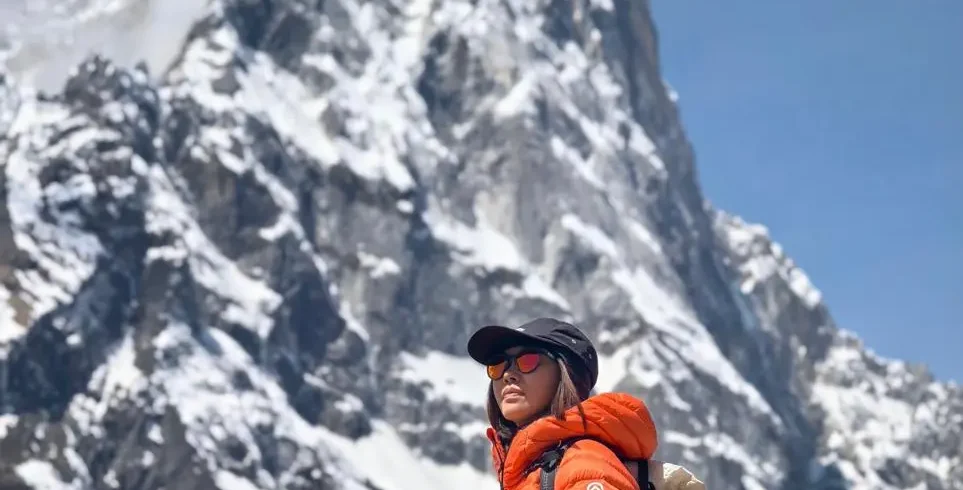
Below Namche, February looks close to what you would expect from a Himalayan winter at moderate elevation: cold mornings, strong sun once it clears the ridgeline, and trails that are quiet compared to any other month of the year. Above Dingboche and Chhukung, conditions shift fast. Wind picks up in the afternoons, water sources freeze overnight, and the three passes themselves can hold anywhere from a light dusting to well over a meter of snow depending on how the preceding weeks went. This is not a trek where you can look at one general seasonal description and assume it applies evenly along the whole route, and it is worth weighing these differences before you commit to a date on the Everest Three Passes Trek. The lower two thirds behaves like a cold, clear winter trek. The upper third, especially the three pass crossings, behaves like a different undertaking entirely and needs to be treated that way when you plan.
Temperature and Weather Through February
Daytime temperatures at Everest Base Camp elevation typically reach a maximum of around 6°C in direct sun, falling to roughly minus 12°C overnight. Namche Bazaar, sitting almost 2,000 meters lower, runs noticeably milder, with daytime highs often in the low single digits and nights well below freezing. Gokyo and Dzongla, both close to or above 4,700 meters, feel closer to the base camp numbers than to Namche. Skies in February are frequently clear and stable for days at a time, which is one of the trek’s underrated advantages this month, but temperature swings between direct sun and shade can exceed 15°C within the same afternoon.
| Location | Typical Daytime High | Typical Overnight Low |
|---|---|---|
| Namche Bazaar (3,440m) | 3 to 7°C | -6 to -9°C |
| Dingboche / Chhukung (4,350 to 4,730m) | 0 to 4°C | -12 to -15°C |
| Gokyo (4,790m) | -1 to 3°C | -13 to -16°C |
| Everest Base Camp area (5,364m) | 2 to 6°C | -12 to -18°C |
| Pass crossings (5,360 to 5,535m) | -2 to 4°C in sun, colder in wind | Not overnighted on passes |
These figures move around from year to year and even week to week, since a single storm system can drop temperatures well below these averages for several days. Treat this table as a planning baseline, not a forecast, and check conditions with your guide team in the days immediately before each pass crossing.
Snow Depth on Kongma La, Cho La and Renjo La
January and February are the months when snow accumulation on the three passes tends to be at its deepest, with some seasons bringing one to three meters of settled snow across the higher sections. Kongma La, at roughly 5,535 meters, and Renjo La, at around 5,360 meters, both face this risk, while Cho La at approximately 5,420 meters sits in between and often collects wind loaded snow on its western approach. None of this means the passes are automatically closed in February. Many winters see long stretches of stable, dry cold with only moderate snow cover that a fit trekker with microspikes and trekking poles can manage under a guide’s direction. The honest answer is that February pass conditions vary more from year to year than any other month on this circuit, and nobody can guarantee in advance which kind of winter you will get.
Route Changes and Reroute Options When a Pass Is Blocked
A responsible operator plans a February departure with contingencies already built in, because any of the three passes can become impassable after a fresh snowfall or in high wind, sometimes with very little warning. If Kongma La is judged unsafe, the standard workaround is to approach Lobuche via the Thukla route instead of crossing from Chhukung, which keeps the itinerary moving without forcing a dangerous crossing. If Cho La cannot be crossed safely, groups typically skip the Dzongla detour and continue toward Gokyo by a lower, longer trail instead. If Renjo La is the one that is blocked, the usual solution is to exit through the Gokyo valley itself, descending through Machhermo and Dole toward Phortse Thanga and back to Namche rather than pushing over the pass. None of these changes ruin the trip. They do mean that a February booking should always be described to you as flexible on the exact route rather than fixed, and any guide who promises all three passes regardless of conditions is not being straight with you.
Daylight Hours and Your Daily Schedule
February sits closer to the winter solstice than to the equinox, so daylight runs shorter than at almost any other point in the trekking calendar, typically around eleven hours between sunrise and sunset at this latitude. That shapes the whole day on pass crossing sections. Guides generally start walking well before sunrise so the group is over the technical sections of Kongma La, Cho La or Renjo La while the snow is still firm from the overnight freeze, and so there is enough daylight in hand if the crossing takes longer than expected. An early alarm on pass days is not a stylistic choice, it is a direct response to how little daylight February gives you and how much rockier and more dangerous the descent becomes if you are still on exposed terrain after the light starts to fade.
Lukla Flights in February
One practical detail that surprises a lot of trekkers researching this month: February sits outside the peak season window that forces flight diversion to Manthali airport in Ramechhap. That diversion policy currently applies from mid March through late May and again from late September through late November, when passenger volume through Kathmandu’s domestic terminal is at its highest. In February, flights to Lukla generally operate directly out of Kathmandu, which means no 4 to 5 hour night drive to a secondary airport. The trade off is that February brings its own flight risk in the form of morning fog and cloud building over the Khumbu valleys, which can delay or cancel flights on short notice regardless of how clear the forecast looked the day before. Build at least one buffer day into your schedule on both ends of the trip, and read our Lukla airport flights and weather guide before you lock in international connections.
Namche and the Lower Villages in Winter
Namche Bazaar in February is a genuinely different place from the Namche of October. Shops and bakeries stay open, because enough climbing expedition staff, local trade, and the small trickle of winter trekkers keep the economy moving, but the crowded, market day energy of peak season is gone. Rooms are easy to find without booking ahead in almost every case, which is one of the clearest advantages of a winter trip. Phakding and the villages below Namche see even less traffic, and some smaller lodges reduce their operating hours or close rooms they do not expect to need, so it is worth confirming with your guide or agency which specific teahouses are open on a given week rather than assuming every listed lodge on a map is running normally.
Teahouse Availability in Chhukung, Dzongla and Gokyo
This is where February requires the most caution. Chhukung, Dzongla and the settlements around Gokyo see a fraction of their peak season guest numbers in winter, and a portion of the smaller lodges close entirely between December and late February because there simply is not enough demand to justify keeping staff and fuel stocked at that elevation. The lodges that do stay open tend to be the larger, better established ones, and they are usually enough to accommodate the modest number of winter parties on the route, but this is not a month where you can arrive without a plan and expect five options for dinner. An experienced local operator will know, week to week, which specific lodges are running in each village and will route your itinerary around that reality rather than around a generic map of the region.
Gear That Actually Matters in February
A winter Three Passes kit looks different from the packing list you would build for October. Some items that are optional in autumn become close to mandatory in February, and a few items worth carrying in autumn become dead weight in winter because conditions make them unnecessary. Our general Everest Base Camp packing list is a useful starting point for the base layer and documentation side of your kit, but the passes themselves call for a more specific winter setup.
| Category | February Specific Item | Why It Matters This Month |
|---|---|---|
| Insulation | Down jacket rated to at least -20°C | Overnight lows at Gokyo and Base Camp regularly fall below -13°C |
| Sleep system | Four season sleeping bag, -20°C or colder comfort rating | Teahouse rooms are unheated and can match outdoor overnight temperatures |
| Traction | Microspikes, carried at all times above Dingboche | Ice forms on stone steps and pass approaches even on clear days |
| Trekking poles | Adjustable, with snow baskets | Stability on packed snow and loose scree sections |
| Eyewear | Category 3 or 4 UV glacier glasses | Snow glare on the passes is intense even under thin cloud |
| Hands and head | Liner gloves plus insulated mitts, a warm hat and a buff | Wind chill on exposed pass sections drops the effective temperature sharply |
| Water | Insulated bottle covers or a vacuum flask | Standard bottles and hose systems can freeze solid overnight |
Microspikes, Crampons and When You Need Them
In a typical February, microspikes are enough for all three passes, since the terrain is steep snow and ice rather than glaciated ground requiring rope work. In a heavier snow year, guides sometimes ask trekkers to carry light crampons as a backup, particularly for the northern side of Cho La where a short, steeper icy section can form. What you should not expect is a technical mountaineering crossing. The three passes on this circuit do not require ice axes, harnesses, or roped travel in normal conditions. What they do require is trekkers who are comfortable moving carefully on uneven snow and ice for several hours with a loaded pack, and a guide who checks conditions on the ground before committing the group to a crossing rather than following a fixed schedule regardless of what the pass looks like that morning.
Acclimatization in Cold, Dry Winter Air
Cold, dry winter air increases fluid loss through breathing more than the humid air of monsoon season, which means dehydration compounds altitude stress faster than trekkers expect. The acclimatization principle does not change with the season: gain altitude gradually, keep rest days at Namche and Dingboche in the schedule, and follow the climb high, sleep low pattern whenever the itinerary allows it. What does change in February is the temptation to drink less water because cold weather suppresses thirst, and the difficulty of forcing fluids when everything in your bottle wants to freeze. Making a deliberate habit of drinking on a schedule rather than waiting to feel thirsty is one of the simplest, most effective things a February trekker can do for both comfort and altitude safety.
Altitude Sickness Risk in February
Altitude sickness risk on this route is driven primarily by rate of ascent and individual physiology rather than by calendar month, so February is not inherently more dangerous for AMS than any other season. What winter does change is the margin for error. Fewer trekkers on the trail means fewer other parties nearby if something goes wrong, and a smaller number of teahouses open at altitude means fewer immediate rest and shelter options if you need to descend quickly. This makes it more important, not less, to take the standard warning signs seriously: persistent headache, nausea, unusual fatigue, and loss of appetite that do not improve with rest and fluids. Descend rather than push through symptoms, and confirm before you travel that your guide team carries a pulse oximeter and knows the nearest realistic descent or evacuation point from every stage of the route. Our altitude sickness guide for Nepal treks covers AMS, HACE and HAPE symptoms and response in more depth.
Food, Water and Fuel Availability in Winter
Menus shrink somewhat in February compared to peak season, since lodges that are running on lower guest numbers keep a tighter, more efficient kitchen rather than stocking a full autumn style menu. Dal bhat, noodle soups, porridge, and basic pasta dishes remain reliably available at nearly every open teahouse, and hot drinks are, if anything, more central to the day than in warmer months. Boiled or treated water is standard practice; a steripen, tablets, or a filter designed to work in near freezing temperatures are all reasonable choices, since some filter cartridges can crack if they freeze solid overnight, so keep any filter inside your sleeping bag at night rather than in an outer pocket.
Mobile Network and Electricity in February
Ncell and NTC coverage reaches most of the main villages up to around Dingboche and Gokyo with reasonable reliability, though signal thins out noticeably near and on the passes themselves. Cold temperatures reduce battery life faster than trekkers expect, so keeping a phone or power bank inside an inner jacket pocket during the day preserves considerably more charge than leaving it in an outer pack pocket exposed to the cold. Solar charging, which works well in October, is markedly less reliable in February given shorter days and more frequent cloud, so a plug in charging bank or paying for a teahouse charging service is a more dependable plan for this month.
Guides and Porters for a Winter Crossing
A February departure is not the trip to attempt without an experienced local guide, and this is not a sales line, it is a direct reflection of how quickly conditions on the three passes can change and how much local, current knowledge affects the decision to cross or reroute on any given day. A guide who has crossed these passes in winter before will read fresh snow, wind loading, and visibility in a way that a generic itinerary cannot. Porters working in February also need appropriate winter clothing and footwear themselves, which is worth confirming with your operator, since this is as much a duty of care question as a comfort one.
Permits and Paperwork for a Winter Departure
Permit requirements do not change by season. You will need the Sagarmatha National Park entry permit, currently set at NPR 3,000 per foreign trekker, and the Khumbu Pasang Lhamu Rural Municipality entry permit, also NPR 3,000 per foreign trekker as of 2026. A TIMS card is not required for treks within the Khumbu region, since the local municipality permit replaced it for this area. Fees are periodically revised, so confirm current rates with your operator before departure, and see our Sagarmatha National Park permit guide for the full application process and required documents. Travel insurance with cover to at least 6,000 meters and an explicit helicopter evacuation clause is expected practice on this route regardless of month, and increasingly checked at the permit counter itself. Our travel insurance guide for Everest region trekking explains what a policy needs to include.
Advantages and Disadvantages of a February Crossing
| Advantages | Disadvantages |
|---|---|
| Extremely quiet trails and teahouses, easy to get rooms without booking ahead | Some lodges at Chhukung, Dzongla and Gokyo are closed for the season |
| Long stretches of clear, stable weather between storm systems | Pass conditions are the least predictable of any month, with real closure risk |
| Direct Lukla flights from Kathmandu, no Ramechhap transfer required | Shortest daylight hours of the year force very early starts on pass days |
| Sharp, clean mountain views with minimal haze | Coldest overnight temperatures of any trekking month |
| A genuinely different, solitary experience of a route that is crowded most of the year | Requires winter specific gear and a guide experienced with winter pass crossings |
Thame and Sherpa Culture in Winter
Thame, visited on the descent side of the anticlockwise route after Renjo La, is one of the more culturally significant villages in the Khumbu, known as the birthplace of Tenzing Norgay and home to a long established monastery perched above the village. In February, Thame feels distinctly local rather than tourist oriented, since most of the year’s trekking traffic has moved on and the village settles into its own winter rhythm of animal herding and household work. Trekkers passing through this time of year often describe it as one of the more memorable, least touristic stops on the entire circuit, precisely because so few outside visitors see it in this season. The monastery is generally open to respectful visitors, and a local guide can help arrange an appropriate visit.
Training and Fitness for a February Departure
Physical preparation for this route does not change dramatically by season, but winter conditions reduce your margin for being underprepared. Aim to build a base of hiking with a loaded pack on varied terrain for at least two to three months before departure, including some stair or hill repeats to condition your legs for the steep, sustained climbs on pass days. Cardiovascular fitness matters more than raw strength, since the goal is being able to sustain six to nine hours of steady movement at altitude rather than short bursts of exertion. If you have access to cold weather hiking or winter mountaineering conditions at home, even at modest elevation, that experience translates directly into comfort and competence on a February crossing of Kongma La, Cho La or Renjo La.
What a Typical Pass Day Actually Feels Like
A pass day in February typically starts in full darkness, often around 4 to 5 in the morning, with a quick breakfast eaten in a cold dining room before headlamps come out for the initial climb. The first hour or two is usually the coldest part of the day, since the sun has not yet reached the trail and overnight temperatures are still settling into the rock and snow underfoot. As the group gains height, the pace slows to match the thinner air and the terrain, which shifts from packed trail to loose scree to, near the top, hard packed snow or ice that calls for microspikes and careful foot placement. The summit of each pass is rarely a place to linger long in February, given the wind and cold, so photos and a short rest happen quickly before the descent begins. Afternoon light and warmer temperatures on the far side of the pass make the second half of the day noticeably more comfortable than the first.
Comparing February to a Summer Monsoon Departure
Trekkers sometimes ask whether a quiet month means the same thing in February as it does in July or August, since both are off peak. The two are not comparable. Monsoon season brings daily rain, leeches at lower elevations, and low cloud that frequently blocks mountain views for days at a time, along with a higher risk of trail damage and landslide on the lower sections. February brings none of that. Precipitation falls as snow rather than rain and mostly affects the higher passes rather than the whole route, skies are frequently clear, and the lower valley trail stays in good, dry condition throughout. If your primary goal is a quiet trek with reliable mountain visibility, February is a substantially better choice than the monsoon months, even though both sit outside the two main peak seasons.
Emergency Evacuation and Communication in Winter
Helicopter evacuation remains available in February and is used throughout the winter season for genuine emergencies, but weather dependent flying conditions mean it is somewhat less reliably immediate than in clear autumn weather. Low cloud, wind, or an incoming storm can delay a rescue flight by hours in a way that rarely happens during the settled weather of October. This is another reason winter trekkers are advised to travel with a guide who carries reliable communication equipment, since mobile signal alone cannot always be counted on near the passes. Most reputable operators carry a satellite phone or equivalent device as backup on winter departures specifically because of this reduced margin, and it is a reasonable question to ask any company you are booking with.
Photography and Mountain Views in February
Clean, dust free air is one of February’s genuine highlights for photography. Without the haze that builds up over a busy trekking season and without monsoon humidity in the atmosphere, distant peaks including Everest, Lhotse, Nuptse, Ama Dablam and Cho Oyu often stand out with unusually sharp definition against a deep blue sky. Snow cover on the lower ridgelines and rooftops of Namche and Khumjung adds a visual character to the villages that does not exist later in the year. The trade off is working in the cold, which shortens battery life and makes changing lenses or memory cards outdoors uncomfortable, so many photographers carry spare batteries in an inner pocket and limit outdoor gear changes to the warmest part of the day.
Packing Checklist Summary for February
- Down jacket rated to at least -20°C and a lighter insulated layer for lower villages
- Four season sleeping bag rated -20°C or colder, ideally with a liner for extra warmth
- Microspikes carried from Dingboche onward, with light crampons as backup in heavy snow years
- Adjustable trekking poles with snow baskets fitted
- Category 3 or 4 glacier glasses for snow glare on the passes
- Liner gloves plus insulated outer mitts, warm hat, neck buff or balaclava
- Insulated water bottle covers or a vacuum flask to prevent freezing
- Headlamp with spare batteries kept warm in an inner pocket overnight
- Hand and toe warmers as backup for the coldest pass mornings
- Full documentation including passport copies, permit paperwork and proof of travel insurance
Why Local Experience Matters More in February
Every month on this circuit benefits from an experienced operator, but February raises the stakes on that choice. Decisions about whether to cross a pass that day, which alternative route to take if conditions look marginal, and how to pace a group against a shorter daylight window all depend on judgment built from actually guiding this specific route in winter conditions, not just from general Himalayan trekking experience. We do not claim that any crossing is risk free or that weather can be guaranteed in advance, because neither claim would be honest. What we can offer is a guide team that has made these calls before, current information on which villages and lodges are operating in a given week, and an itinerary built with enough flexibility to respond to whatever the mountain does that season.
A Sample Day by Day Overview for February
Most operators run this circuit anticlockwise across roughly 18 to 20 days in winter, slightly longer than the peak season minimum, to build in extra buffer for weather and pass conditions. A representative outline looks like this: fly Kathmandu to Lukla and walk to Phakding, continue to Namche Bazaar with an acclimatization day, trek through Tengboche to Dingboche with a second acclimatization stop, move to Chhukung, cross Kongma La to Lobuche, visit Everest Base Camp and Kala Patthar, continue to Dzongla, cross Cho La to Thagnak or Gokyo, take a rest and exploration day around the Gokyo lakes and Gokyo Ri, cross Renjo La toward Lungden, descend through Thame back to Namche, and fly out from Lukla. In a heavy snow year this same outline flexes around whichever pass needs a workaround, which is exactly why winter itineraries are built with spare days rather than a tight fixed schedule.
The table below breaks that same route into a typical day by day structure with approximate elevations and walking times, so you can see where the longer and shorter days actually fall. Extra buffer days, when an operator builds them in, are usually held in reserve around the three pass crossings rather than fixed to one specific day, since that is where weather most often decides whether a group moves on schedule.
| Day | Route | Overnight Elevation | Approx. Walking Time |
|---|---|---|---|
| 1 | Fly Kathmandu to Lukla, trek to Phakding | 2,610m | 3 hours |
| 2 | Phakding to Namche Bazaar | 3,440m | 6 hours |
| 3 | Acclimatization day in Namche (side hike toward Khumjung or Everest View Hotel) | 3,440m | 4 hours |
| 4 | Namche to Tengboche | 3,860m | 5 hours |
| 5 | Tengboche to Dingboche | 4,410m | 5 hours |
| 6 | Acclimatization day in Dingboche (Nangkartshang viewpoint) | 4,410m | 4 hours |
| 7 | Dingboche to Chhukung | 4,730m | 3 hours |
| 8 | Chhukung to Lobuche via Kongma La | 4,940m | 8 to 9 hours |
| 9 | Lobuche to Gorak Shep, visit Everest Base Camp | 5,170m | 7 to 8 hours |
| 10 | Kala Patthar at dawn, continue to Dzongla | 4,830m | 7 to 8 hours |
| 11 | Dzongla to Gokyo via Cho La | 4,790m | 8 to 9 hours |
| 12 | Rest and exploration day at Gokyo, including Gokyo Ri | 4,790m | 3 to 4 hours |
| 13 | Gokyo to Lungden via Renjo La | 4,380m | 7 to 8 hours |
| 14 | Lungden to Thame | 3,820m | 4 to 5 hours |
| 15 | Thame to Namche Bazaar | 3,440m | 3 to 4 hours |
| 16 | Namche Bazaar to Lukla | 2,860m | 6 to 7 hours |
| 17 | Fly Lukla to Kathmandu | 1,400m | Flight only |
How February Compares to a Standard Everest Base Camp Trek
If the pass conditions described above sound like more commitment than you want in winter, the standard Everest Base Camp trek is a meaningfully gentler winter option, since it stays below 5,650 meters at Kala Patthar and avoids technical pass terrain entirely. The Three Passes route is the harder, more committing version of a Khumbu winter trip, built for trekkers who specifically want the passes and the Gokyo side of the region rather than an out and back to base camp. Both routes share the same permits, the same lower valley infrastructure, and much of the same winter weather pattern, so the choice comes down to how much technical winter terrain you actually want to take on.
Cost Considerations for a February Booking
Winter trips are not automatically cheaper than peak season ones, even though flights and teahouses are quieter, because a responsible winter departure needs a smaller group ratio, a guide with genuine winter pass experience, and built in contingency days that add to the overall trip length. For a full breakdown of what a Three Passes booking typically includes, see our Everest Three Passes Trek cost and itinerary guide, and for the base camp only comparison, our Everest Base Camp trek cost breakdown is useful context.
Gokyo and the Western Side of the Circuit in Winter
The Gokyo lakes themselves are partially frozen for much of February, which is a striking sight but also a reminder of how cold this side of the valley gets overnight. Gokyo Ri, at just over 5,357 meters, offers one of the clearest panoramic views on the entire circuit when weather cooperates, taking in Everest, Cho Oyu, and the lakes below in a single frame. Trekkers combining Gokyo with base camp rather than the full three pass circuit can find more detail in our Gokyo Lakes and Everest Base Camp combined route guide, which covers the shared trail sections in more depth.
Who Should Actually Book a February Departure
February suits trekkers who have already done at least one high altitude trek, who are comfortable with cold weather camping or winter hiking in their home country, and who value solitude enough to accept real uncertainty about whether all three passes will go as planned. It is a poor fit for a first Himalayan trek, for anyone who needs a fixed guaranteed itinerary for work or travel connection reasons, or for anyone uncomfortable with the idea that a guide may reroute the trip around a closed pass with only a day or two of notice. Being honest about which category you fall into before booking saves a lot of frustration on the ground.
Choosing Your Season on the Three Passes Circuit
February is one of six months worth understanding in detail before you commit to a date, since conditions on this route change enough month to month that the right choice depends heavily on what you personally want from the trip. We have written a dedicated guide for each of the following months, covering weather, pass conditions, flights and crowd levels specific to that window:
| Month | General Character |
|---|---|
| March | Winter to spring transition, improving visibility, some snow still on passes |
| April | Peak spring season, best mountain views, busiest teahouses |
| September | Post monsoon transition, improving weather through the month |
| October | Peak autumn season, most stable weather, highest demand for permits and rooms |
| November | Cold, clear, thinning crowds as the month progresses |
Frequently Asked Questions About the February Crossing
Is it actually possible to complete all three passes in February?
In many years yes, with an experienced guide, proper winter gear and flexible dates. In heavier snow years one pass, most often Kongma La or Renjo La, may need to be rerouted. Nobody can promise all three passes in advance for a winter date, and any itinerary should be built with that uncertainty in mind.
Do I need previous high altitude trekking experience for a February crossing?
It is not an absolute requirement but it is strongly recommended. Trekkers attempting this route in winter benefit from already knowing how their body responds above 4,000 meters and from being comfortable moving in cold, sometimes icy conditions before adding a Himalayan winter pass crossing to the mix.
How cold does it get on the passes themselves?
Air temperature on the passes in direct sun during a crossing often sits between minus 2 and plus 4°C, but wind chill can push the effective temperature well below that, particularly on Cho La’s more exposed sections. Crossings are timed for the calmer early morning hours specifically to avoid the stronger afternoon winds.
Are Lukla flights more reliable in February than in monsoon season?
Generally yes, since February lacks the heavy monsoon cloud buildup of summer, but morning fog and occasional winter storm systems still cause delays and cancellations. Flights operate directly from Kathmandu in February rather than through the Ramechhap diversion used in peak spring and autumn months.
Will I have teahouses to myself in February?
Along the main Namche to Dingboche corridor you will share space with a modest number of other winter trekkers and expedition support staff, but nothing like peak season crowds. In Chhukung, Dzongla and around Gokyo, open lodges can feel genuinely quiet, sometimes with your group as the only guests for the night.
What happens if a pass has to be skipped because of snow?
Your guide reroutes around it using one of the established alternative trails described earlier in this guide, and the trip continues rather than being cancelled. You will still see the majority of the route’s highlights, including Everest Base Camp, Kala Patthar and the Gokyo valley, even if one specific pass is not crossed that season.
Is travel insurance with helicopter evacuation cover really necessary in February?
Yes, and this applies regardless of season. Standard travel insurance often excludes altitude above 4,000 meters entirely, while this route reaches over 5,300 meters at each pass. A policy covering at least 6,000 meters with an explicit helicopter evacuation clause is the accepted standard for this trek.
Planning Your February Three Passes Trek
February will not suit every trekker, and it should not be sold as though it does. What it offers is a genuinely quiet version of one of Nepal’s most demanding treks, clear cold air, and a real sense of having the Khumbu largely to yourself between storm systems. What it demands in return is winter specific gear, a flexible attitude toward the exact route, and a guide team with real experience reading snow and weather on these three specific passes. If that trade works for you, this is one of the most rewarding times of year to take on the Everest Three Passes Trek, and our team can talk you through current conditions and realistic dates before you book.