If you are searching for the best Everest Base Camp trek with helicopter return company, you are looking at one of the smartest ways to experience the Himalayas without giving up ten or more days of your life walking back down the same trail you just climbed up. At Next Trip Nepal we run the Everest Base Camp trek with helicopter return regularly, and this guide walks through everything a trekker actually needs to know before choosing a company for this specific style of trek, based on what our guides and clients experience on the ground season after season.
We cover what the Everest Base Camp trek with helicopter return actually involves, why the helicopter return matters, ten honest reasons trekkers choose Next Trip Nepal for this trip, the full itinerary, permits, cost, fitness requirements, safety, packing, and the questions people ask most often before booking. Everything here reflects real information from our own package and current 2026 conditions in the Khumbu region, not generic filler.
What Is The Everest Base Camp Trek With Helicopter Return
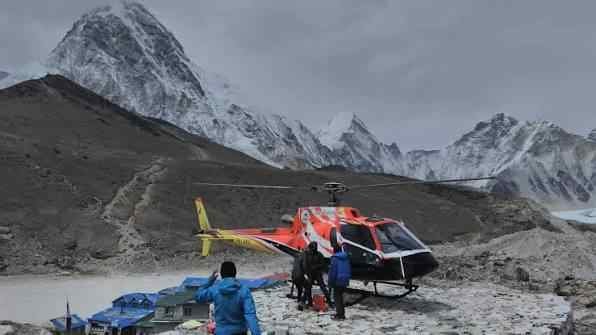
The Everest Base Camp trek with helicopter return is exactly what it sounds like. You trek up through the Khumbu valley the normal way, on foot, through Namche Bazaar, Tengboche, Dingboche and Lobuche, all the way to Everest Base Camp and Kala Patthar. Instead of turning around and walking the same route back down to Lukla, you board a helicopter at Gorakshep and fly directly back to Kathmandu.
This single change transforms the trip. A standard Everest Base Camp trek typically takes around fourteen days including the walk back down. With a helicopter return, our package runs ten days total, since the descent that would normally take three to four days on foot becomes a ninety minute flight instead.
You still get the full trekking experience going up, the same views, the same villages, the same sense of achievement standing at Everest Base Camp and watching sunrise from Kala Patthar. What changes is only the way you come back, and for many trekkers with limited vacation time, that difference is exactly what makes the Everest Base Camp trek with helicopter return possible in the first place.
Many of our clients tell us the same thing after they book, that they had been putting off Everest Base Camp for years simply because they could not justify two full weeks away from work or family. The helicopter return version removes that obstacle without cutting a single day of actual trekking. You are not skipping any part of the climb to Base Camp or the sunrise at Kala Patthar. You are only skipping the long walk back down through villages you have already seen on the way up.
Why The Helicopter Return Matters More Than People Expect
Most first time trekkers assume the helicopter return is simply a shortcut, a way to save a few days. It is that, but it is also genuinely one of the best parts of the entire trip. The flight from Gorakshep to Kathmandu passes directly over the Khumbu Glacier, Namche Bazaar and the Solukhumbu valleys, with Everest, Lhotse, Nuptse, Ama Dablam and Pumori visible from the air in a way that simply is not possible from the ground.
There is also a practical safety and comfort dimension. By the time trekkers reach Gorakshep and Kala Patthar, legs are tired, knees have taken a beating from the ascent, and the idea of another three or four days walking downhill on rocky trail is not appealing to everyone. The helicopter removes that entire portion of physical strain, which matters especially for trekkers who are older, recovering from minor injuries, or simply want to protect their knees for the rest of their trip.
Finally, there is the simple matter of time. Ten days instead of fourteen means trekkers who cannot take three full weeks off work, including travel days, can still complete the full Everest Base Camp experience without compromising on any of the actual trekking or the summit day at Kala Patthar.
There is also an emotional side to the flight that is easy to underestimate until you experience it. After nine days of climbing steadily higher, watching the mountains grow closer step by step, seeing that same landscape from above in a matter of minutes gives trekkers a completely different sense of scale. Guides who have flown this route hundreds of times still describe watching first time flyers go quiet as Everest, Lhotse and Ama Dablam pass beneath the helicopter, a reaction that never seems to fade no matter how many groups they have guided.
Ten Reasons Next Trip Nepal Is The Best Company For The Everest Base Camp Trek With Helicopter Return
There are a lot of companies in Kathmandu offering some version of the Everest Base Camp trek with helicopter return, and it is fair to ask why one company should be trusted over another. Here are ten honest, specific reasons trekkers choose us for the Everest Base Camp trek with helicopter return.
One, no advance payment is required. You can confirm your trip and your dates without sending any money upfront. Payment happens only after you arrive in Nepal, which removes the anxiety many international trekkers feel about wiring money to a company overseas before ever meeting anyone in person.
Two, the booking process is genuinely hassle free. You choose your dates, confirm your trip through WhatsApp, email, or our booking form, and our team handles permits, teahouse arrangements, guide assignment and helicopter coordination from there. There is no confusing paperwork or endless back and forth before you get a clear answer.
Three, our pricing is genuinely competitive for what is included. The package price covers permits, domestic flights, guide, porter, teahouse accommodation, meals during the trek, and the helicopter flight itself, so there are no hidden costs waiting to surprise you once you are already on the trail.
Four, booking is easy from anywhere in the world. Whether you are messaging us from Europe, North America, Australia or elsewhere in Asia, our team responds quickly and clearly, in plain language, without pushing you toward decisions before you are ready.
Five, our guides are licensed, experienced and genuinely know the Khumbu region. This is not a generic guide assigned at random. Our guides have led trekkers through this exact route for years, know how to read altitude symptoms early, and know the trail conditions in each season firsthand.
Six, we have strong, reliable helicopter connections. We work with established helicopter operators using CAAN certified aircraft, and we know how to manage the timing and coordination of the Gorakshep flight so it happens smoothly rather than becoming a stressful, uncertain wait at high altitude.
Seven, we bring years of direct experience running this specific trip. This is not a package we added recently to catch a trend. Our team has coordinated the trek and helicopter logistics together long enough to know exactly where delays tend to happen and how to plan around them.
Eight, our itineraries include real acclimatization days, not just a checklist. The Namche Bazaar and Dingboche rest days are built into the schedule specifically because they matter for safety, not simply to pad the itinerary.
Nine, we stay honest about weather and helicopter limitations. Helicopter flights depend on clear weather, and we tell clients this directly rather than making promises we cannot guarantee. If a flight needs to be delayed for safety, we explain why and manage the situation transparently.
Ten, our support does not end when the trek does. From the moment you land in Kathmandu to the moment you fly home, our team stays reachable, whether you have a question about your itinerary, need help with a delayed flight, or simply want advice on what to do with an extra day in Kathmandu.
Taken together, these are not abstract marketing claims. They reflect how we actually operate the Everest Base Camp trek with helicopter return, season after season, and they are the reasons repeat clients and referrals make up a meaningful share of our bookings for this exact package.
We would also add an eleventh reason, even though the request was for ten. We are genuinely responsive before you book, not only after. Trekkers researching this trip often message several companies at once to compare answers, and we consistently hear back that our replies are clearer, faster and more specific than what they get elsewhere. That responsiveness before you have paid a single dollar tells you a lot about how a company will treat you once you are actually on the trail with them.
Full Itinerary For The Ten Day Trek
Day one, arrival in Kathmandu at around 1,400 meters, with a welcome meeting and trek briefing. Day two, a scenic thirty five minute flight from Kathmandu to Lukla at 2,840 meters, followed by a short trek to Phakding at 2,610 meters. Day three, trek from Phakding to Namche Bazaar at 3,440 meters, the main Sherpa trading hub of the Khumbu. Day four, acclimatization day in Namche Bazaar, with an optional short hike for better adaptation to altitude.
Day five, trek from Namche Bazaar to Tengboche at 3,860 meters, home to the largest monastery in the Khumbu region, with Ama Dablam rising directly behind it. Day six, trek from Tengboche to Dingboche at 4,410 meters. Day seven, a second acclimatization day at Dingboche, again with an optional acclimatization hike.
Day eight, trek from Dingboche to Lobuche at around 4,940 meters. Day nine, trek from Lobuche to Gorakshep at 5,140 meters, with a side trip to Everest Base Camp itself at 5,364 meters. Day ten, an early climb to Kala Patthar at 5,555 meters for sunrise views of Everest, followed by the helicopter flight from Gorakshep back to Kathmandu.
This structure gives trekkers a genuinely gradual ascent profile with two dedicated rest days, while still completing the entire out and back journey to Everest Base Camp and Kala Patthar in ten days rather than the fourteen a standard walking itinerary requires.
We do build a small buffer day into the overall booking window as well, separate from the ten trekking days themselves, to account for the possibility of a delayed Lukla flight at the start of the trip or a delayed helicopter flight at the end. Mountain weather in the Khumbu can occasionally push these flights back a day, and our team explains this clearly at the time of booking so nobody is caught off guard by it once they are already in Nepal.
Best Time Of Year For The Everest Base Camp Trek With Helicopter Return
Spring, from March through May, and autumn, from late September through November, are the two most reliable windows for both trekking conditions and helicopter flying weather in the Khumbu. Skies tend to be clearer, temperatures are more manageable, and helicopter operators have the best visibility for the Gorakshep to Kathmandu flight during these months.
Winter trekking, from December through February, is possible and can offer wonderfully clear skies, though temperatures at Gorakshep and Kala Patthar drop well below freezing, and trekkers need to be genuinely prepared for cold. Monsoon season, from June through August, brings cloud cover and rain that can complicate both trail conditions and helicopter visibility, so we generally advise against this window for anyone specifically counting on the helicopter portion of the trip.
Whatever season you choose, our team builds a small amount of flexibility into the schedule around the helicopter flight itself, since even in the best months, mountain weather can shift quickly and a flight occasionally needs to wait for a clear window.
Permits And Documents Required
Two main permits are required for the Everest Base Camp trek with helicopter return in 2026. The Sagarmatha National Park Entry Permit costs around 3,000 Nepali rupees, roughly 25 US dollars, for foreign nationals, and covers entry into the protected national park that includes the entire Everest region.
The Khumbu Pasang Lhamu Rural Municipality Entry Permit costs around 2,000 Nepali rupees, roughly 20 US dollars, and covers entry into the local municipality area through which the trekking route passes. Both permits are arranged for you as part of our package, and we handle the paperwork so you do not need to navigate the process yourself.
A valid passport with at least six months of remaining validity, passport sized photographs, and comprehensive travel insurance covering high altitude trekking and helicopter evacuation are also essential. We ask every client to confirm their insurance covers altitude up to at least 6,000 meters and includes helicopter rescue coverage before departure.
Permit rules and fees can shift slightly year to year, and our team always checks current rates before your trip so you are never quoted an outdated figure. We handle the actual permit purchase in Kathmandu and at the relevant checkpoints along the trail, so you simply carry your passport and let your guide manage the paperwork at each entry point.
Cost Breakdown And What Is Included
Our Everest Base Camp trek with helicopter return package is priced at 2,100 US dollars per person for group departures, with seasonal discounts often bringing the price down further depending on your dates. This includes both domestic flights, the Sagarmatha National Park and Khumbu Pasang Lhamu permits, a licensed guide, porter service, teahouse accommodation throughout the trek, three meals a day while on the trail, and the helicopter flight itself from Gorakshep to Kathmandu.
Costs not included typically involve your international flight to and from Nepal, Nepal visa fees, travel insurance, personal expenses such as bottled drinks and snacks, hot showers and battery charging at teahouses where these carry a small local fee, and tips for your guide and porter, which are customary and genuinely appreciated given the physical demands of their work.
A private helicopter option is also available for trekkers who prefer their own dedicated flight rather than a shared helicopter with three or four other passengers, at an additional cost depending on group size and timing. Our team can walk you through this option directly if you are interested.
We are also upfront that prices can shift slightly with fuel costs, domestic flight fares and seasonal demand, and we always confirm the exact current price at the time you book rather than letting an old number sit on a page indefinitely. What we do not do is add surprise charges once you are already on the trail. If something is included in your package, it stays included, full stop.
Physical Fitness And Preparation
The Everest Base Camp trek with helicopter return is a genuinely demanding trek despite the shortened return, since you are still walking six to seven hours a day at increasing altitude for the first nine days. A solid base of cardiovascular fitness built over two to three months before departure makes a significant difference to how enjoyable the trip feels.
Regular hiking with a loaded daypack, stair climbing, and general cardio training such as running, cycling or swimming all help prepare your body for sustained daily walking at altitude. You do not need prior mountaineering experience, but a reasonable level of everyday fitness and some multi day hiking experience make the trek considerably more comfortable.
Because the return happens by helicopter rather than on foot, this itinerary can also suit trekkers with minor knee or joint concerns who want to avoid the repeated downhill impact of a full walking descent, provided the ascent itself is still manageable for them.
Simple training walks with a daypack loaded to roughly the weight you plan to carry each day are one of the most useful things you can do before arriving in Nepal. Your body adapts not just to distance but to carrying weight uphill repeatedly, and trekkers who arrive having done this consistently tend to find the daily walking noticeably more comfortable than those who show up without any hill training at all.
Acclimatization And Altitude Safety
Altitude sickness risk depends primarily on ascent rate rather than fitness level alone, which is why our itinerary builds in two full acclimatization days, one at Namche Bazaar and one at Dingboche. These days follow the standard climb high, sleep low principle, with an optional short hike to a higher point followed by a return to the same overnight elevation.
Many trekkers choose to carry Diamox as a preventive measure against altitude sickness, a decision that should always be discussed with a doctor before travel. Our guides are trained to recognize early symptoms of acute mountain sickness and will adjust the pace or, if genuinely necessary, arrange an early descent or evacuation if a client’s condition requires it.
Staying properly hydrated throughout each day, eating enough even when appetite drops at altitude, and communicating honestly with your guide about how you are feeling are the three simplest and most effective things any trekker can do to reduce their own risk on this route.
Every guide we send on this trek carries a pulse oximeter and checks oxygen saturation and heart rate at key points along the route, particularly above Dingboche. This is not about creating alarm, it is a simple, quick habit that gives an early, objective signal if something needs attention before it becomes serious, and it is one of the small operational details that separates careful trip planning from companies that treat altitude safety as an afterthought.
Helicopter Flight Details And Safety
The helicopter departs from Gorakshep at 5,140 meters in the early morning, typically between seven and nine, right after your Kala Patthar sunrise hike, when visibility tends to be best. The flight to Kathmandu takes around ninety minutes and passes directly over the Khumbu Glacier, Namche Bazaar and the Solukhumbu valleys.
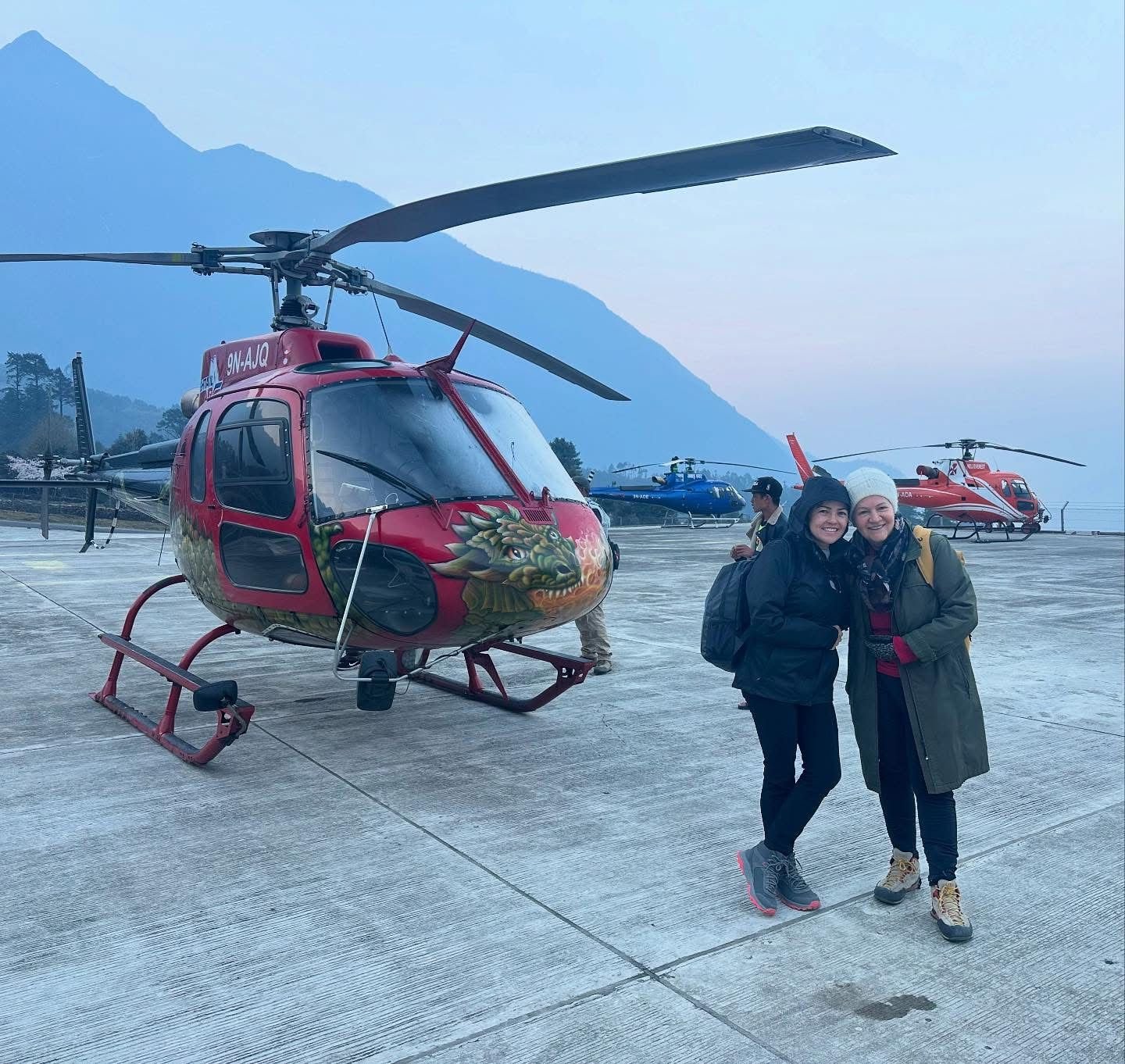
The aircraft used are B3 Eurocopter, also known as Airbus H125, or AS350 helicopters, both certified by the Civil Aviation Authority of Nepal for operations in the Himalayas. All operators we work with hold valid CAAN licenses and have extensive experience flying in the Khumbu region specifically, which matters given how quickly weather and visibility can change at this altitude.
Shared helicopters typically carry four to five passengers and depart once the group is assembled and ready, making them a cost effective option included in the standard package price. Private helicopters offer four to five seats exclusively for your own group and depart according to your own schedule, at an additional cost, and tend to suit trekkers who want more control over exact timing or who are traveling as a smaller private group.
Baggage on the helicopter is limited, generally to your daypack and a small duffel, since the aircraft has a maximum weight capacity that must account for passengers, fuel and altitude performance together. Our team explains the exact weight allowance before departure so you can pack accordingly, and any larger bags are typically sent ahead separately by our staff so they are waiting for you back in Kathmandu.
What To Pack For The Everest Base Camp Helicopter Return Trek
- A warm down jacket suitable for temperatures well below freezing at Gorakshep and Kala Patthar
- Insulated gloves plus a lighter pair for warmer, lower elevation days
- A sleeping bag rated to at least minus fifteen to minus twenty degrees Celsius
- Sturdy, well broken in trekking boots with good ankle support
- Layered clothing to handle the wide temperature range across the trek
- Strong sun protection, since UV exposure at altitude is intense even on cool days
- A headlamp with spare batteries, and water purification tablets or a filter
- A comprehensive first aid kit including altitude sickness medication
- Trekking poles for stability on the steady climbs and descents
- A camera or phone with extra battery power, since cold drains batteries quickly
Most technical gear can be rented in Thamel in Kathmandu before your trek begins, which is a practical option for trekkers who do not want to fly with heavy cold weather equipment from home. Our team can point you toward reliable rental shops once you arrive.
Food And Accommodation Along The Route
Teahouses along the Everest Base Camp route offer simple but comfortable rooms, usually twin share, with shared bathroom facilities at most stops. Dining rooms are heated with a central stove and become the social heart of each village in the evenings, especially during the busier trekking seasons.
Meals typically include dal bhat, the traditional Nepali lentil, rice and vegetable meal, along with soups, noodles, momos and a range of simpler Western style dishes at the lower elevation teahouses. Portions are generally generous, and dal bhat in particular usually comes with free refills, which matters given how many calories a trekking day at altitude actually burns.
Hot showers and device charging are available at most teahouses for a small additional fee, which increases somewhat at the higher elevations given the cost of running generators or solar systems that far up the valley.
Drinking water can be purchased bottled at most teahouses, though we generally encourage trekkers to bring a reusable bottle along with purification tablets or a filter instead, since plastic waste is a genuine problem in the Khumbu given how difficult it is to transport rubbish out of the region. Boiled water is also available for a small fee at almost every stop and is a reliable, simple alternative.
Group Departures Versus Private Treks
Fixed group departures run regularly throughout the main trekking seasons and are a good option for solo trekkers or small groups who want to share the trail and the shared helicopter flight with other travelers, often at a lower overall cost. Group discounts are also frequently available depending on your dates.
Private treks give you full control over your daily pace, start times and rest stops, and can be paired with a private helicopter departure for complete flexibility around your own schedule. Families, couples and trekkers with specific pacing needs often prefer this option, and our team is happy to build a private itinerary around your exact dates.
Corporate and friend groups occasionally book this trek together as well, and we can accommodate larger private parties with additional guides and porters assigned so that the guide to trekker ratio stays comfortable throughout. If you are organizing a group of six or more, reach out early, since Lukla flight seats and helicopter availability during peak season can fill up several weeks ahead of your travel dates.
Frequently Asked Questions About The Everest Base Camp Trek With Helicopter Return
Do I need previous trekking experience for the Everest Base Camp trek with helicopter return? No, though a reasonable level of cardiovascular fitness and some prior multi day hiking experience make the trek considerably more enjoyable and reduce the physical strain of the ascent.
What happens if the helicopter cannot fly due to weather? Flights depend on clear conditions, and if weather prevents departure on your scheduled day, our team manages the situation directly, whether that means waiting for the next available window or arranging alternative transport, and we communicate clearly throughout.
Is the helicopter return safe? Yes, we work only with CAAN certified operators using aircraft suited to high altitude Himalayan flying, and pilots have extensive experience with this specific route between Gorakshep and Kathmandu.
Do I need to pay anything in advance to book? No, you can confirm your trip and your dates without any advance payment. Payment happens after you arrive in Nepal, once everything has been confirmed to your satisfaction.
How difficult is this trek compared to the standard fourteen day version? The trekking difficulty going up is identical, since you follow the same route to Everest Base Camp and Kala Patthar. The only difference is how you return, which removes several days of downhill walking rather than changing the difficulty of the ascent itself.
Can solo trekkers join this trip? Yes, solo trekkers are welcome on our group departures and are matched with other trekkers heading to Everest Base Camp on similar dates, and a licensed guide accompanies every group throughout.
What is the best age range for this trek? There is no strict age limit, and we have guided trekkers ranging from teenagers to people in their seventies successfully, provided they arrive with a reasonable level of fitness and realistic expectations about the demands of high altitude walking.
What if I get altitude sickness partway through the trek? Your guide monitors symptoms daily and will adjust pace, recommend rest, or if needed arrange a safe descent or helicopter evacuation earlier than planned. Client safety always takes priority over sticking rigidly to the original schedule.
Can I extend my trip with additional days in Kathmandu or elsewhere in Nepal? Yes, many trekkers add a few extra days before or after the trek to explore Kathmandu, visit Chitwan National Park, or relax in Pokhara, and our team is happy to help arrange these additions around your main trekking dates.
How This Package Compares To A Standard Everest Base Camp Trek
If you are still deciding between the Everest Base Camp trek with helicopter return and our standard Everest Base Camp Trek, the honest answer depends on your priorities. The standard walking itinerary takes around fourteen days and gives you the experience of descending through the same villages a second time, seeing familiar places from a different angle and pace, which some trekkers genuinely value.
The helicopter return version saves roughly four days, protects your knees from the repeated downhill impact, and adds the genuinely spectacular experience of seeing the entire Everest range from the air on your way back to Kathmandu. For trekkers with limited vacation time or who simply want the aerial experience as part of their trip, it is very hard to beat.
For trekkers who want the aerial Everest experience without the multi day trek at all, our Everest Base Camp Helicopter Tour covers the full route by air in a single day, landing near base camp itself, which suits travelers with very limited time or those unable to trek at altitude for physical reasons.
Booking Your Everest Base Camp Trek With Helicopter Return
Choosing the right company for the Everest Base Camp trek with helicopter return matters more than many trekkers realize going in, since it affects everything from how smoothly your permits and logistics are handled to how confidently your guide manages altitude and how reliably your helicopter flight is coordinated. We have built our approach around genuine experience with this exact route, transparent pricing with no advance payment required, and a team that stays reachable throughout your trip, not just before you book.
If you are ready to see Everest Base Camp and Kala Patthar for yourself, and return to Kathmandu with one of the most memorable helicopter flights available anywhere in the world, reach out to our team to check availability for your dates. You can view full pricing, included services and upcoming departure dates on our Everest Base Camp Trek with Helicopter Return package page.
Whatever draws you to this trip, whether it is the shorter timeframe, the chance to protect your knees on the way down, or simply the thrill of flying over the world’s highest mountains, we are ready to help you plan it properly. Get in touch, confirm your dates, and let our team handle the details so you can focus on the climb ahead of you.
Our guides have watched hundreds of trekkers complete this exact journey, and the moment a group lifts off from Gorakshep, tired but genuinely proud after reaching Everest Base Camp and Kala Patthar, watching the entire Khumbu unfold beneath the helicopter, never gets old for us either. We would be glad to help make that moment part of your own trip.
The Kanchenjunga Circuit Trek takes you around the base of the world's third highest mountain in the far eastern corner…
Upper Mustang Trek — Complete Guide 2026 Few places on earth stop you in your tracks the way Upper Mustang…
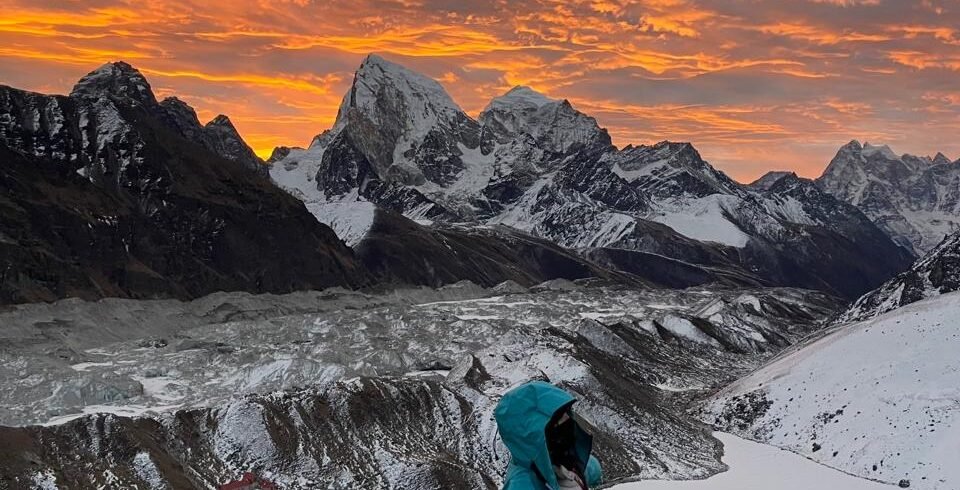
The Everest Base Camp with Gokyo Lake Trek combines two iconic Khumbu experiences in one 17-day journey. Cross Cho La Pass (5,420 m), summit Gokyo Ri (5,360 m) for views of four eight-thousanders, reach Everest Base Camp (5,364 m), and witness Everest sunrise from Kala Patthar (5,555 m). Book with Next Trip Nepal — no advance payment required.
Tour at a GlanceDuration: 1 Day (6 to 7 hours)Sites: Kopan Monastery, Boudhanath, SwayambhunathStart and End: Your Kathmandu hotelDeparture: 8:30…