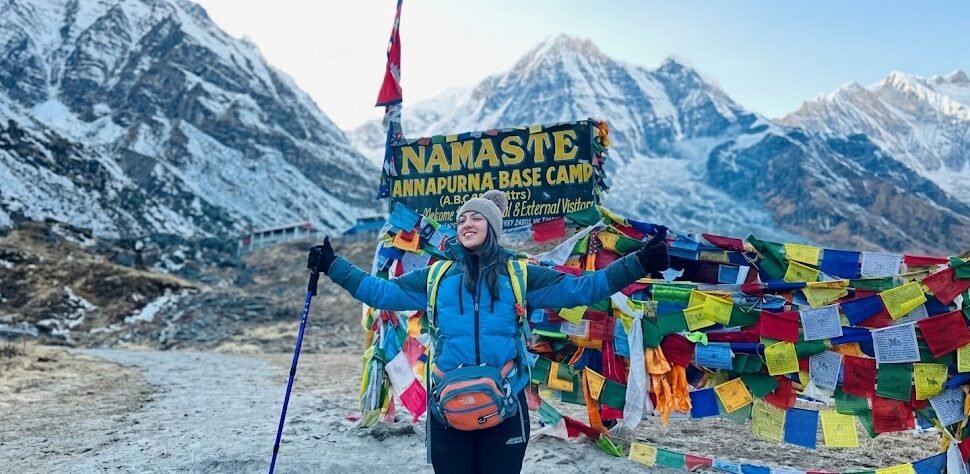

Yes, October is the single best month of the year to trek the Annapurna Circuit, and it is not a close call. Skies over the Marsyangdi valley and the Manang basin run clear and stable through nearly the entire month, Thorong La typically crosses without a snow related delay, and daytime temperatures across the route stay comfortable for walking at almost every elevation. The trade off is crowds: October is also the busiest month on this trail by a wide margin, and teahouses at Manang, Yak Kharka, Thorong Phedi and High Camp fill up fast. If you can plan around that one drawback, October is the month every other month on this route gets measured against.
This guide covers the full picture for an Annapurna Circuit Trek in October: what the weather actually does across the lower valley and the rain shadow protected upper section, how the route feels in early, middle and late October, what it costs, what to pack, and how October compares honestly against September on one side and November on the other.
Annapurna Circuit Trek in October at a Glance
| Category | What to expect in October |
|---|---|
| Daytime temperature | Roughly 10 to 24 degrees Celsius at lower and middle elevations, dropping toward freezing above Manang |
| Night and pass temperature | Freezing or below at Thorong Phedi, High Camp and the pass, commonly minus 10 degrees Celsius or colder at the top |
| Rainfall | Minimal; occasional leftover monsoon moisture only in the first few days of the month on the lower approach |
| Skies and visibility | Widely described as crystal clear, the most reliable mountain visibility of the entire year |
| Crowd level | Peak season, the busiest month of the year on this specific route |
| Permit note | ACAP and TIMS both mandatory year round, checked at Ghasa, Manang, Muktinath and Jomsom |
| Overall rating | Excellent, the highest reliability window of the year, tempered only by crowd management |
That combination, near guaranteed clear weather plus heavy foot traffic, is the defining character of the Annapurna Circuit Trek in October. Nothing else on the calendar offers the same reliability, and nothing else brings the same volume of trekkers to Manang and the approach to Thorong La at the same time.
Weather on the Annapurna Circuit in October
October sits firmly inside the autumn window (September through November), which independent trekking sources and Next Trip Nepal’s own guides agree is the single most reliable stretch of the year for this route. But “reliable” does not mean identical everywhere along the trail. The lower approach through Dharapani and Chame behaves differently from the upper Manang and Mustang side, because that upper section sits in the rain shadow of the Annapurna and Dhaulagiri massifs. The mountains themselves block most of the moisture arriving from the south, so once you climb past Upper Pisang the air runs noticeably drier and the skies noticeably clearer than on the lower valley floor.
| Metric | Lower approach (Dharapani to Chame) | Upper Manang and Mustang side (Pisang onward to Jomsom) |
|---|---|---|
| Daytime temperature | Roughly 15 to 24 degrees Celsius | Roughly 10 to 18 degrees Celsius, colder again above Manang |
| Night temperature | Roughly 5 to 12 degrees Celsius | Freezing or below at Manang and colder still at Thorong Phedi, High Camp and the pass |
| Rainfall | Occasional light residual moisture only in the first few days of the month | Essentially dry for the entire month thanks to the rain shadow effect |
| Cloud and visibility | Generally clear, some morning mist in forested sections | Crystal clear on most days, the best mountain visibility of the year |
| Wind | Light to moderate, calmer in the mornings | Calm in the morning, rising sharply on Thorong La in the afternoon, commonly 50 to 60 km/h |
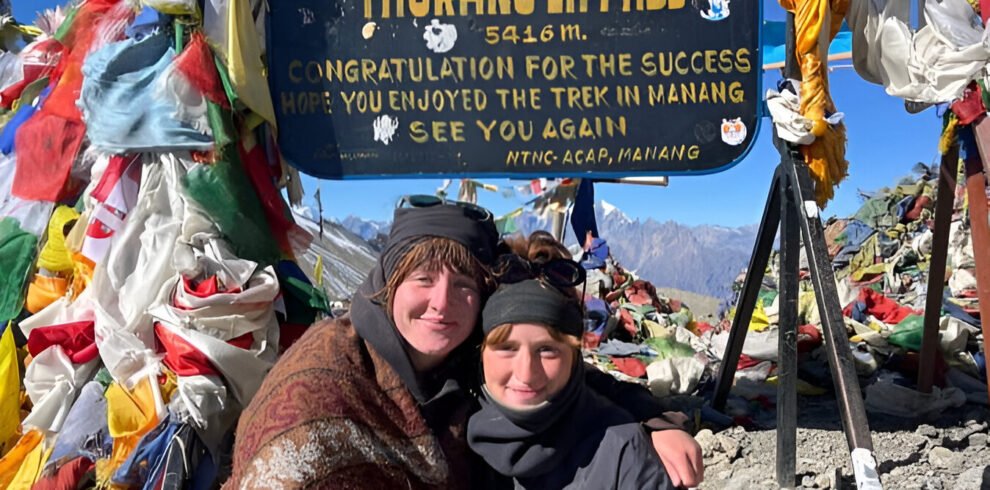
That wind pattern on the pass is not unique to October, it holds true in every month of the year, but it matters most in October precisely because October is when the greatest number of people are attempting the crossing on the same handful of mornings. Next Trip Nepal’s standing rule, applied without exception, is that every group must be at or past Thorong La before roughly 09:30 to 10:00 am, since afternoon winds regularly reach 50 to 60 km/h and conditions on the pass deteriorate quickly after late morning. In October that means a genuinely early, often pre dawn, departure from Thorong Phedi or High Camp, commonly in the 3:00 to 4:30 am window, timed partly around the weather and partly around simply beating the crowd of trekkers making the same crossing that day.
Snow at the pass itself is rarely a serious obstacle in October. Leftover snow from the tail end of monsoon season can occasionally linger at High Camp in the first few days of the month, but it is generally light and does not require any special gear beyond good boots and trekking poles. Fresh snowfall events severe enough to close the pass are unusual in October, unlike in winter, when heavy snow at Thorong La and High Camp is common and multi day closures happen.
Early, Middle and Late October on the Trail
Treating October as one uniform month misses the real texture of the trek. The route, the crowd density and even the daily rhythm of the walk shift noticeably across the four weeks.
| Period | Trail and weather conditions | Crowd level |
|---|---|---|
| Early October (1st to 10th) | The very last traces of monsoon moisture can still show up as brief afternoon cloud on the lower approach; the upper Manang and Mustang side is already essentially dry and clear | Building quickly, still somewhat manageable compared to mid month |
| Middle October (11th to 20th) | Peak clarity across the entire route, stable high pressure typically dominates, this is generally regarded as the most reliable ten day stretch of the entire trekking calendar | Highest of the year, teahouses at Manang and Thorong Phedi routinely full |
| Late October (21st to 31st) | Still excellent and clear, nights noticeably colder, first light dustings of snow possible at High Camp and the pass toward month end | Still very busy but beginning to thin slightly as the month closes |
Early October is a genuine sweet spot for trekkers who want October’s reliability without quite the same volume of people on the trail in the first week or so. By the middle of the month the route is at its fullest, both in terms of weather quality and in terms of foot traffic, and this is when advance planning for teahouse space matters most. Late October keeps almost all of the same clear weather advantage while temperatures at night begin edging toward what November delivers more fully, so packing for genuine cold at altitude becomes more important as the month closes out.
Annapurna Circuit Route Conditions by Elevation in October
Conditions change meaningfully as you climb, and October’s clear skies do not mean uniform temperature or difficulty from Dharapani to Muktinath.
| Zone | Elevation | Conditions in October |
|---|---|---|
| Lower valley (Dharapani to Chame) | Roughly 1,860 to 2,710 m | Warm days, cool nights, forest trail largely dry, easiest walking of the route |
| Chame to Manang via the high route | Roughly 2,710 to 3,519 m | Clear, increasingly dry air, dramatic mountain views open up around Upper Pisang and Ghyaru, cooler nights than the lower valley |
| Manang and the acclimatization zone | 3,519 m and the acclimatization hike to roughly 3,900 m | Cold mornings, strong daytime sun, very clear views of Gangapurna and Annapurna III, this is where SpO2 monitoring begins |
| Thorong Phedi, High Camp and the pass | 4,450 to 5,416 m | Freezing or below overnight, calm at dawn, wind rising through the morning, clear skies with minimal snow underfoot in a typical October |
| Muktinath and the Mustang side | Roughly 2,590 to 3,760 m descending toward Jomsom | Dry, windy in the afternoon (the Kali Gandaki valley funnels strong winds from roughly late morning), clear light, notably different landscape from the Manang side |
That last zone deserves a specific note. Beyond Muktinath the trail drops into the Kali Gandaki valley toward Kagbeni and Jomsom, one of the deepest gorges on the planet, and this stretch is known for a strong afternoon wind funnel almost regardless of season. Combined with the general Thorong La wind pattern, the practical lesson for the whole second half of an October crossing is the same one guides repeat constantly: walk the exposed high sections in the morning, and treat afternoons as a time to already be somewhere sheltered.
Annapurna Circuit Difficulty in October
The Annapurna Circuit is graded moderate to strenuous, and October does not change the underlying physical demands of the trek, it simply removes weather as an added variable. The difficulty comes from four sources working together, not from any single obstacle.
First, sustained walking time. Most days on Next Trip Nepal’s Annapurna Circuit itinerary run 5 to 7 hours of actual trekking, and several days combine that walking time with meaningful elevation gain, such as the roughly 810 m gained between Dharapani and Chame or the 630 m gained on the push to Upper Pisang.
Second, altitude itself. Manang sits at 3,519 m and the trek continues climbing well beyond that to Yak Kharka at roughly 4,018 m, Thorong Phedi at 4,450 m, High Camp at 4,925 m and finally the pass at 5,416 m, the highest point of the entire route. Guides follow the general wilderness medicine guideline of no more than 300 to 400 m of net sleeping elevation gain per night once above 3,000 m, which is exactly why the Manang rest day exists as a compulsory, not optional, part of the itinerary.
Third, the acclimatization protocol itself adds a layer of discipline to the trek that a first time high altitude trekker should understand going in. Blood oxygen monitoring with a pulse oximeter begins at Manang; a reading under 80 percent triggers a mandatory extra acclimatization day, and a reading under 70 percent triggers immediate descent, no exceptions. This is a safety system, not a formality, and it occasionally means a group’s schedule shifts by a day if someone is not acclimatizing well.
Fourth, and specific to October, is the pass day timing itself. Thorong La is not technically difficult, no ropes, no crampons and no climbing skill are required in normal conditions, but it is long, cold and high, and the operator’s hard rule of crossing before roughly 09:30 to 10:00 am, before the afternoon wind builds toward 50 to 60 km/h, means a pre dawn start from High Camp that many trekkers find is the single toughest few hours of the whole trip, purely from cold and early wake time rather than technical demand. In October, arriving at High Camp or Thorong Phedi in the crowded pass season also means a genuinely early night’s sleep is harder to get, since dining rooms and dormitories are fuller and turnover happens earlier to let everyone queue for breakfast before their 3:00 to 4:30 am departure.
Crowds and Teahouse Booking on the Annapurna Circuit in October
This is the section that genuinely separates the Annapurna Circuit’s October experience from many other Himalayan treks, including Next Trip Nepal’s own Kanchenjunga Circuit, which stays comparatively quiet even at the height of its own October season. The Annapurna Circuit is one of the most heavily trekked long routes in Nepal, and October crowding here is a materially different story from a remote route like Kanchenjunga. Expect a genuinely social trail: shared teahouse dining rooms, queues for hot water in the morning, and a real sense of a route in full operation rather than a quiet mountain path.
Manang is the single busiest node on the route in October, partly because it is the compulsory acclimatization stop and partly because every itinerary variant, whether starting from Dharapani, Ngadi or Bhulbhule, converges there before the push toward the pass. Thorong Phedi and High Camp see the same bottleneck effect on pass crossing days, since nearly everyone in the valley below is aiming for the same narrow pre dawn departure window described above.
The practical implications for a trekker planning an October departure:
- Book your trek and your operator well ahead of your travel dates; last minute October bookings run a real risk of squeezed accommodation, since independent trekkers without a booking agent sometimes find themselves without a room at Manang or High Camp on the busiest nights
- Traveling with an organized group, as with Next Trip Nepal’s small, capped size groups, generally means guaranteed teahouse space is arranged ahead of arrival rather than negotiated on the spot
- Expect a livelier, more social atmosphere at teahouses than in quieter months, which many trekkers genuinely enjoy, particularly solo travelers who want company on the trail
- Give yourself extra buffer time on pass crossing morning, since a crowded trail toward Thorong La can move slower than an empty one, even though the walking itself is no more technically demanding
- Consider early or very late October if avoiding peak crowds matters more to you than trekking in the single busiest window; middle October is when the volume peaks hardest
None of this makes October a poor choice, it simply means October rewards a trekker who plans ahead rather than one hoping to arrange everything on arrival in Kathmandu.
September, October and November on the Annapurna Circuit: The Comparison
Autumn on the Annapurna Circuit runs September through November, and each month has a genuinely different character rather than being interchangeable “autumn” months.
| Factor | September | October | November |
|---|---|---|---|
| Weather reliability | Improving through the month, early days can still carry leftover monsoon moisture on the lower approach | The most reliable window of the entire year, crystal clear skies dominate | Excellent early, cooling and slightly less stable by late month |
| Crowd level | Moderate, building toward the end of the month | Peak, the busiest month of the year on this route | Busy early, thinning out noticeably by late November |
| Thorong La conditions | Generally clear and passable by mid to late month | Very reliable, minimal snow, wind still the main hazard in the afternoon | Still generally reliable early, rising snow risk and colder temperatures as the month closes |
| Best for | Trekkers seeking September’s lower crowds who are comfortable with slightly more uncertainty on the lower approach in the first week or two | Trekkers who want the single most dependable weather window and can plan and book well ahead of a busy trail | Trekkers who want autumn clarity with meaningfully fewer people, especially in the first half of the month |
September wins on lower crowds and a genuine sense of the trail waking up after monsoon, but it carries real, if fading, residual monsoon risk on the lower approach roads and trail sections in its first week or two, since the rain shadow protecting Manang and the Mustang side does not extend to the Besisahar through Chame corridor. Read the full picture in our guide to the Annapurna Circuit Trek in September if an earlier autumn departure interests you.
October wins outright on weather reliability. Nothing else on the calendar matches its combination of clear skies, stable temperatures and minimal snow risk at the pass. Its one real weakness is the crowd, and specifically the logistics of booking teahouse space and managing a busier pass crossing morning around that hard 09:30 to 10:00 am safety cutoff.
November wins on the balance between weather quality and crowd size, particularly in its first half, when conditions remain close to October’s quality but with meaningfully fewer people sharing the trail and the teahouses. By late November, though, night temperatures at the pass and High Camp begin dropping further and snow risk starts to rise, a trade off explored fully in our guide to the Annapurna Circuit Trek in November.
The honest verdict for someone choosing among the three: pick October if reliable weather is your top priority and you are comfortable planning and booking ahead of a busy trail. Pick September if you want to trek slightly earlier and lighter crowds matter more to you than a small amount of residual lower valley uncertainty. Pick November, especially its first half, if you want autumn’s clear skies with noticeably more breathing room at Manang and around the pass.
Annapurna Circuit Trek Cost in October
Trekking cost depends on group size, itinerary length, season and the specific services included, and prices genuinely do vary between operators and between departures. What follows is Next Trip Nepal’s own published group pricing for the standard 13 day Annapurna Circuit package, which applies the same way in October as in any other month, since permit fees and core logistics do not change seasonally.
| Group size | Price per person (USD) |
|---|---|
| 1 traveler | 1,445 |
| 2 travelers | 1,375 |
| 3 to 5 travelers | 1,275 |
| 6 to 8 travelers | 1,175 |
| 9 to 12 travelers | 1,075 |
| 13 or more travelers | 975 |
The package includes 3 nights in a 3 star Kathmandu hotel, 1 night in a 3 star Pokhara hotel and 9 nights of twin sharing teahouse accommodation on trek, all trekking meals (breakfast, lunch and dinner), private vehicle transfers including the jeep to the trailhead, the one way Jomsom to Pokhara mountain flight, a licensed English speaking guide and porter (one porter per two trekkers, 20 kg carrying capacity), equipment loan covering a down jacket, a sleeping bag rated to minus 15 degrees Celsius, a duffel bag, a trekking map and a t shirt, both required permits, a first aid kit and pulse oximeter carried by the guide, and a trek completion certificate.
Not included: lunch and dinner while staying in Kathmandu and Pokhara (breakfast only is covered in those city hotel stays), the Nepal visa fee (roughly USD 30 to 125 depending on duration, obtainable on arrival), travel and medical insurance, international flights, personal expenses such as laundry and snacks, optional extras on trek such as hot showers, alcoholic drinks, device charging and wifi in some teahouses, and tipping for guide, porter and driver, which is customary though not mandatory.
One October specific note worth flagging on cost: because October is peak season, book your dates and confirm your group early. Full Annapurna Circuit Trek cost and inclusions details and current departure dates are available on the main trip page, and a larger group booking together is genuinely the most effective way to bring the per person price down, since the tiered pricing above rewards group size directly.
Permits and Guide Requirements for October
Two permits are mandatory for every foreign trekker on the Annapurna Circuit, in October and in every other month of the year. The Annapurna Conservation Area Permit (ACAP) costs NPR 3,000 (roughly USD 22), and the TIMS card (Trekkers’ Information Management System) costs NPR 2,000 (roughly USD 15). Both are arranged through a registered trekking agency, and checkpoints verifying them sit at Ghasa, Manang, Muktinath and Jomsom. Carry originals at every checkpoint; photocopies are not accepted.
Beyond Kagbeni, the route toward Upper Mustang proper requires a separate restricted area permit entirely outside the scope of the standard Annapurna Circuit itinerary. If that region interests you as an add on or a future trip, our Upper Mustang Trek covers it directly.
On the question of a guide: unlike Kanchenjunga or Upper Mustang, the Annapurna Circuit as far as the standard route (Dharapani to Jomsom via Thorong La) does not require a licensed guide by law for independent trekkers, though ACAP and TIMS remain mandatory regardless. Next Trip Nepal runs the trek with a licensed guide and porter as standard practice, not because the law requires it on this particular stretch, but because a guide adds real, practical value specifically in October’s conditions: continuous acclimatization monitoring with the pulse oximeter from Manang onward, navigation and pacing through a genuinely crowded trail and teahouse system, and, most importantly, disciplined timing on pass crossing day around the hard 09:30 to 10:00 am safety cutoff. Groups are kept small and personal, with roughly one guide per group and the porter ratio described above, rather than run as large tourist batches.
Choosing the right operator matters as much as choosing the right month. If you want a full breakdown of what to check before booking with any Annapurna Circuit trek company, including registration, guide licensing and transparent pricing, see our guide to choosing the best Annapurna Circuit trek company.
What to Pack for the Annapurna Circuit in October
October’s cold nights at altitude combined with warm, sunny days at lower elevation mean layering is the entire packing strategy. Full detail lives on our dedicated Annapurna Circuit Trek packing list, but here is what matters most specifically for an October departure.
Clothing
- Lightweight breathable shirts for warm lower valley days
- A fleece or midweight insulating layer for Manang and above
- A proper down jacket for evenings above Manang and for the pass crossing itself (included as loan equipment in Next Trip Nepal’s package)
- Windproof and waterproof outer shell, mainly for wind protection on the pass and the Kali Gandaki valley section rather than for rain
- Thermal base layers, top and bottom, for High Camp and the pass morning
- Warm hat, sun hat, and a buff or scarf for wind and dust protection near Jomsom
- Insulated gloves plus a lighter liner pair for camera and phone use in the cold
Footwear
- Broken in, waterproof trekking boots with good ankle support
- Wool trekking socks, several pairs, plus a warmer pair for the pass day
- Camp shoes or sandals for evenings at teahouses
- Gaiters, a genuinely useful extra if any early season leftover snow is present at High Camp
Sleep
- A sleeping bag rated to at least minus 15 degrees Celsius (provided as loan equipment on Next Trip Nepal’s package), since teahouse rooms above Manang are unheated
- A silk or cotton sleeping bag liner for hygiene and a small amount of extra warmth
Sun and weather protection
- High SPF sunscreen and lip balm, since October’s clear skies mean strong UV exposure at altitude
- Quality sunglasses with real UV protection, essential above Manang and mandatory feeling on the pass itself
Documents
- Passport with at least 6 months validity and passport photos for permit paperwork
- Printed and digital copies of your ACAP and TIMS permits
- Travel and medical insurance details, including evacuation coverage
First aid and health
- A personal first aid kit with basic medication, blister treatment and any personal prescriptions
- Diamox (acetazolamide) discussed with your doctor ahead of departure as a preventative option, though it is not a substitute for the itinerary’s built in acclimatization days
- Water purification tablets or a filter as a backup to bottled or boiled water
Electronics
- A power bank, since charging in teahouses above Manang is often a paid extra and can be unreliable
- Headlamp with spare batteries, essential for the pre dawn pass departure
- Camera with extra batteries, since cold drains batteries faster than usual and October’s visibility rewards carrying a real camera rather than relying on a phone alone
Advantages and Disadvantages of Trekking the Annapurna Circuit in October
| Advantages | Disadvantages |
|---|---|
| Most reliable weather window of the entire year | Busiest month of the year, teahouses and dining rooms genuinely crowded |
| Crystal clear mountain views on the great majority of days | Advance booking of your operator and dates is close to essential |
| Minimal snow risk at Thorong La in a typical year | Pass day mornings are more crowded, which can slow the walk toward the top |
| Comfortable daytime temperatures across most of the route | Prices and demand for guides, porters and flights all peak alongside crowd levels |
| Lively, social teahouse atmosphere, appealing to many solo trekkers | Less solitude on the trail than in quieter shoulder months |
| Dry conditions on both the lower approach and the rain shadow protected upper route | Jomsom to Pokhara flights can face their own queues on the busiest mornings |
Is October the Best Month for the Annapurna Circuit? Final Verdict
For weather reliability alone, October is the best month of the year to trek the Annapurna Circuit, and this is not really a contested point among operators or independent trekking sources. Skies run clear, the rain shadow keeps the upper Manang and Mustang side dry, and Thorong La crosses in a typical year without the snow risk that colors winter and can still show up at the edges of March. If your main question is “will the weather cooperate”, October answers it about as well as any month can.
The honest caveat is crowding. October is genuinely the busiest month on this specific route, a real point of difference from a quieter route like the Kanchenjunga Circuit, and that busyness shapes the practical experience: fuller teahouses, earlier turnover for the pass day breakfast queue, and a trail that feels social and populated rather than remote. If solitude matters to you as much as weather, November’s first half or September’s later weeks are both genuinely strong alternatives, trading a small amount of weather certainty for real breathing room on the trail.
Who should choose October specifically: first time high altitude trekkers who want the most forgiving weather conditions to learn on, photographers who want the highest odds of clear mountain views across the whole two week trip, and anyone whose travel dates are fixed and who wants the best possible chance the weather simply is not a variable they need to worry about. Who should look elsewhere: trekkers who specifically want a quieter, more solitary trail experience and are willing to trade a little weather certainty for it, who are better served by early September or by trekking the Annapurna Circuit in November instead.
Whichever window you choose, the fundamentals of the route do not change: a compulsory acclimatization day at Manang, a hard pre dawn departure rule for the pass, and permits that must be arranged through a registered agency before you start walking. Ready to lock in dates, book the Annapurna Circuit Trek with Next Trip Nepal well ahead of the October rush, since this is the month where early planning genuinely pays off.
Frequently Asked Questions: Annapurna Circuit Trek in October
Is October the best month to trek the Annapurna Circuit?
For weather reliability, yes. October offers the clearest skies, driest conditions and lowest snow risk at Thorong La of any month in the year. Its main drawback is that it is also the busiest month on the route, so the trade off is crowd management rather than weather risk.
How crowded is the Annapurna Circuit in October?
Very crowded by this route’s own standards, and this is genuinely different from a quiet route like Kanchenjunga. Manang, Thorong Phedi and High Camp all see peak foot traffic in October, with middle October typically the single busiest stretch of the entire year.
Do I need to book teahouses in advance in October?
It is strongly recommended. Independent trekkers without arranged accommodation sometimes struggle to find rooms at Manang or High Camp during the busiest October weeks. Trekking with an organized operator that arranges teahouse space ahead of time removes this uncertainty.
What is the weather like at Thorong La Pass in October?
Cold but clear. Overnight and early morning temperatures at the pass regularly drop to minus 10 degrees Celsius or lower, and afternoon winds commonly reach 50 to 60 km/h, but snowfall severe enough to threaten the crossing is uncommon in a typical October.
How cold does it get at Manang and High Camp in October?
Manang nights typically fall close to or below freezing. High Camp, at 4,925 m, runs colder still, commonly well below freezing overnight, which is why the loaned sleeping bag rated to minus 15 degrees Celsius matters as much as any other piece of gear on the trip.
Is a guide required for the Annapurna Circuit in October?
Not by law on this specific route, unlike Kanchenjunga or Upper Mustang. ACAP and TIMS permits are mandatory for every trekker, but a licensed guide is not a strict legal requirement here. Next Trip Nepal still runs every group with a guide and porter as standard practice, mainly for acclimatization monitoring and disciplined pass day timing.
What permits do I need for the Annapurna Circuit in October?
Two: the Annapurna Conservation Area Permit (ACAP) and the TIMS card. Both are arranged through a registered agency and checked at Ghasa, Manang, Muktinath and Jomsom. Originals are required at every checkpoint.
How much does the Annapurna Circuit Trek cost in October?
Next Trip Nepal’s published group rate for the 13 day package ranges from USD 1,445 for a solo traveler down to USD 975 per person for a group of 13 or more, with several tiers in between depending on group size. Pricing does not change seasonally, so October rates match the rest of the year.
Can beginners trek the Annapurna Circuit in October?
Yes, with genuine preparation. Trekkers should be able to sustain roughly 6 hours of continuous walking at sea level without distress before attempting this trek. October’s stable weather makes it one of the more forgiving months for a first time high altitude trekker, since weather uncertainty is largely removed from the equation.
Is early October or late October better?
Both are strong. Early October carries slightly lower crowds with a small chance of residual monsoon moisture on the very first days of the month. Late October keeps excellent weather but brings colder nights and a small rising chance of early snow at High Camp toward month end. Middle October is the busiest but also the most weather stable period of the whole year.
How does October compare to November on the Annapurna Circuit?
October offers slightly more dependable weather and the single highest odds of a clean pass crossing, but it is considerably busier. November, particularly its first half, offers weather quality close to October’s with noticeably fewer people on the trail, though conditions cool and snow risk rises again by late November.
What is the difference between the lower approach and the upper Manang side in October?
The lower approach through Dharapani and Chame can still carry a trace of leftover monsoon moisture in the first few days of the month, while the upper Manang and Mustang side sits in the rain shadow of the Annapurna and Dhaulagiri massifs and stays reliably dry and clear for essentially the whole month.
Still deciding between seasons? Compare this month against the shoulder windows in our Annapurna Circuit Trek in September guide and our Annapurna Circuit Trek in November guide, or explore alternatives on the same range such as the shorter 6 Day Annapurna Base Camp Trek, the lower altitude Ghorepani Poon Hill Trek, or the quieter Kanchenjunga Circuit Trek for a genuinely different crowd experience in the same season.