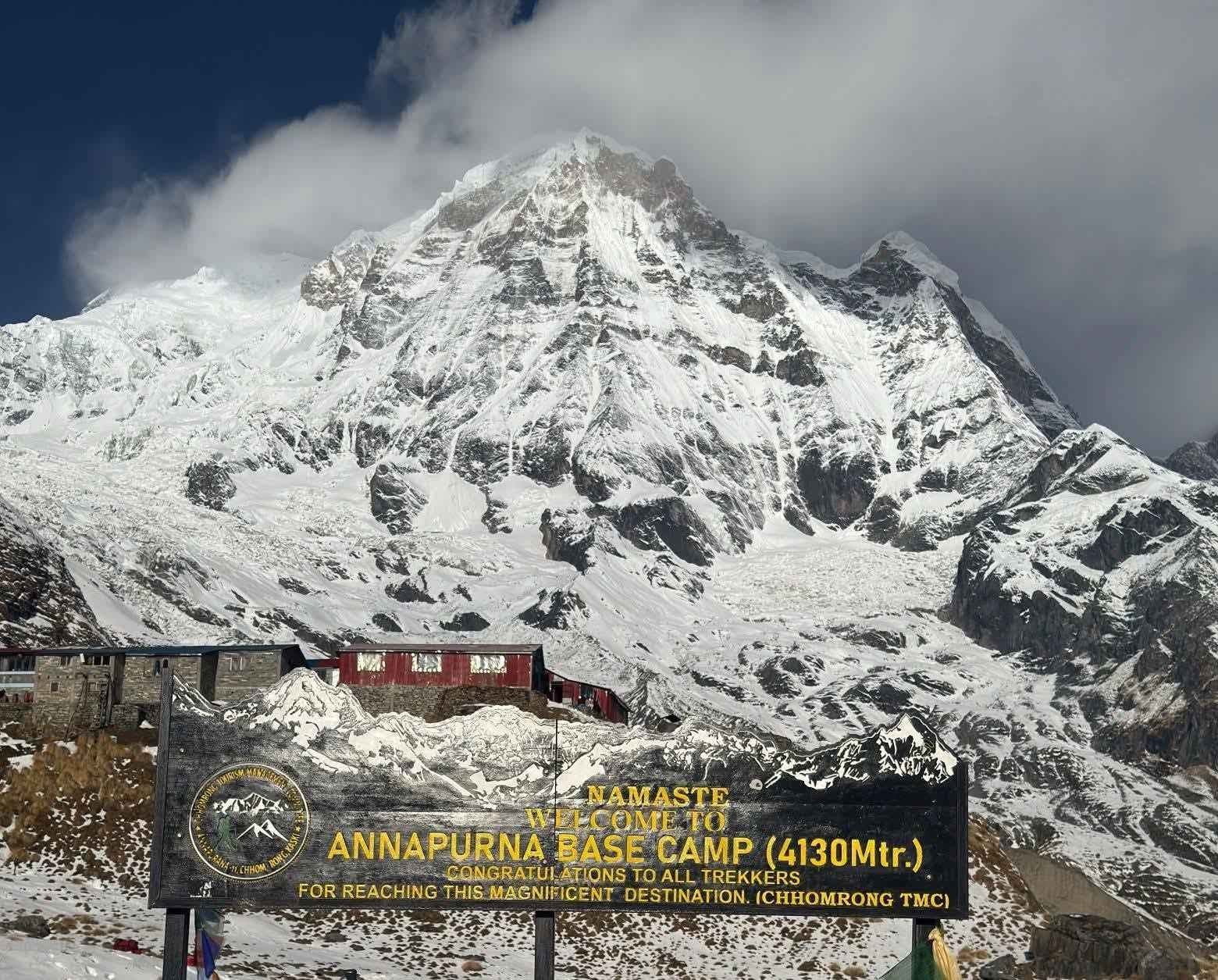
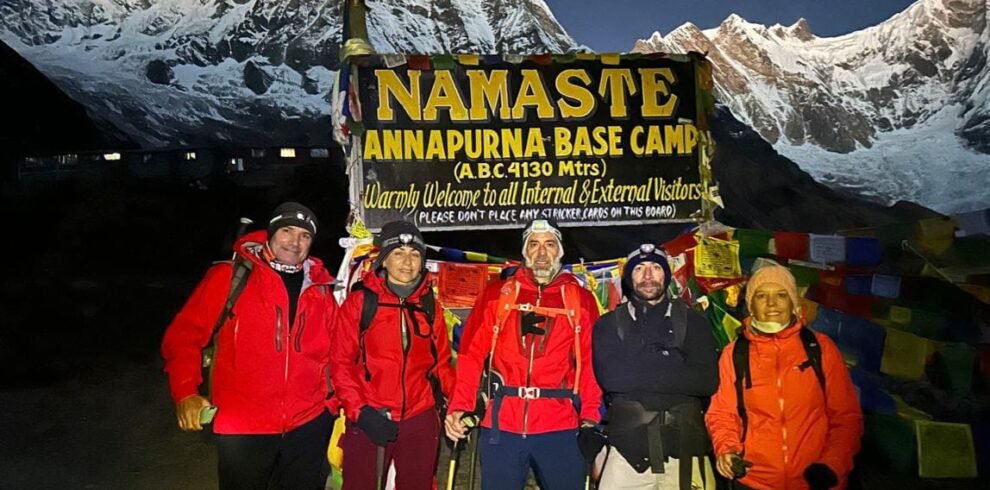
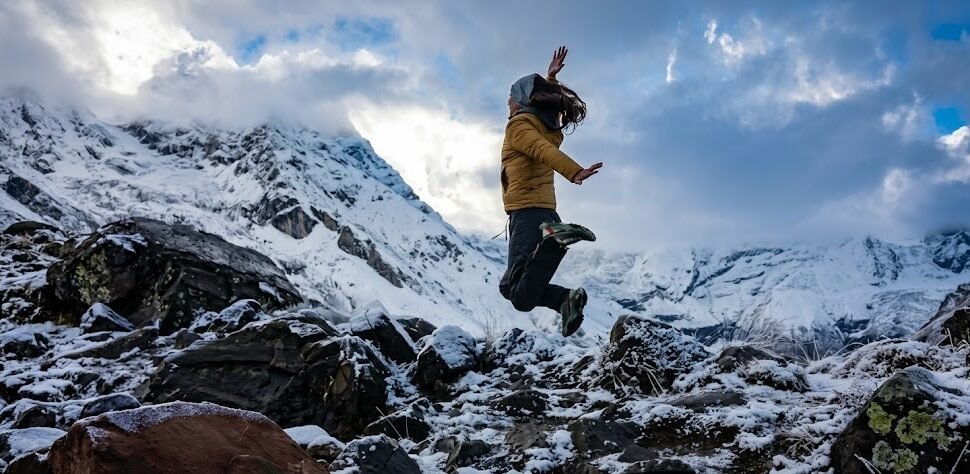
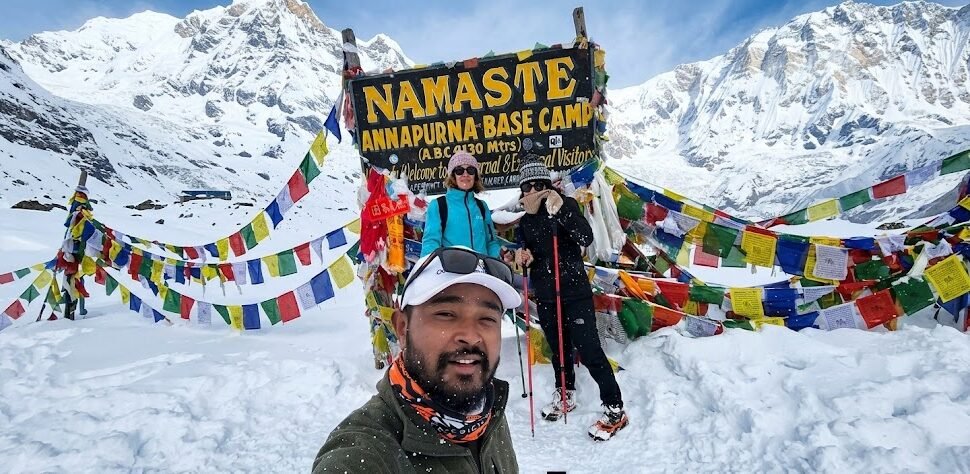
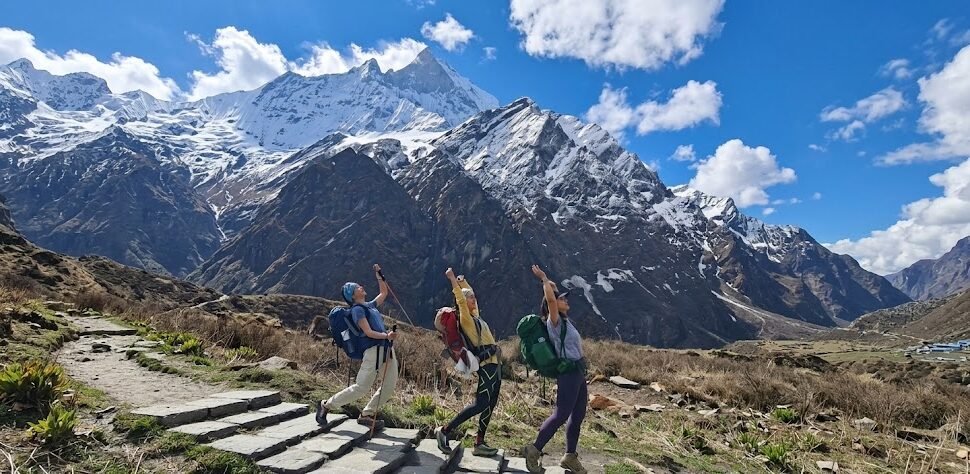
August is the second month of the monsoon peak on the Annapurna trail. Conditions are similar to July: daily rainfall, active leeches at lower elevations, limited mountain visibility, and challenging trail conditions in the gorge sections. August differs from July in that the second half of the month begins to show the first signs of the monsoon weakening, with occasional multi-day clear windows that are rarer in the deep monsoon of July. For most trekkers, September or October remain better alternatives. This guide is for those whose dates fall in August.
Annapurna Base Camp Trek in August: At a Glance
Season
Late monsoon (slight improvement over July by month-end)
Recommended?
Not recommended for most trekkers; possible for experienced ones
ABC Temperature Range
1°C to +12°C at 4,130m
Pokhara Rainfall
350 to 600mm — slight improvement over July
Trail Conditions
Wet and muddy; leeches active below 2,500m
Mountain Views
Limited; late August shows first seasonal improvement
Teahouse Availability
Open; similar to July at reduced capacity
Trekker Numbers
Very few — near-solitude on the trail
Difficulty Rating
Hard (monsoon conditions; better toward month-end)
August on the Annapurna Base Camp trail is the second month of the monsoon and shares most characteristics with July: heavy rainfall, active leeches throughout the lower route, limited mountain visibility, slippery trails, and very few trekkers. Where August differs meaningfully from July is in its second half, when the monsoon begins its seasonal retreat and occasional multi-day windows of clearer weather start to appear. These windows are not reliable enough to plan around, but their existence makes late August marginally better for mountain views than the full peak monsoon of July.
Trekkers with fixed dates in August should approach the trek with the same mindset as June and July: prioritise the landscape experience and the solitude, use the morning view windows that do occur without counting on them, and be prepared for sustained wet conditions throughout the lower route. With the right expectations and preparation, August delivers a complete ABC trek with a very different character from the dry-season versions.
August Weather
August rainfall at Pokhara averages 350 to 600mm, slightly below the July maximum but still among the highest of the year. The daily rainfall pattern is similar to July: rain can fall at any time, the mornings are the most likely to be at least partially clear, and the afternoons are consistently overcast. The key change that begins to emerge in the second half of August is the occasional break in the monsoon pattern that brings a day or two of clear weather before the cloud re-establishes.
Location
Night Low
Day High
August Conditions
Pokhara (827m)
23°C
29°C
Heavy rain daily, some improvement late August
Ghorepani (2,860m)
10°C
18°C
Cloud and mist, occasional clear morning
Chhomrong (2,170m)
14°C
22°C
Rain most days, leeches active, lush green
Himalaya (2,920m)
8°C
16°C
Frequent mist, clearer in late August
Deurali (3,230m)
4°C
12°C
Cloud most of day, occasional clear breaks
MBC (3,700m)
0°C
9°C
Cold, frequently in cloud
ABC (4,130m)
-2°C
7°C
Cloud most of day; pre-dawn and late August may bring clear windows
August vs July vs September
August sits between the most difficult month (July) and one of the better months for an off-season trek (September). In practical terms, early August (August 1 to 15) is nearly identical to July in conditions. Late August (August 16 to 31) begins to transition toward September, with occasional multi-day clear spells that are rare in July.
If your dates allow flexibility, choosing late August over early August is a meaningful improvement. If you have a choice between September and August for the same type of experience, choose September, which has progressively improving conditions through the month and often finishes with near-October clarity in the final week. August cannot match September’s trajectory toward improvement, but it is slightly better than July for those specifically in the late part of the month.
August Trail Conditions
Trail conditions in August mirror July with the same landslide risk, leech activity, slippery stone steps, and wet gorge sections. The structural trail damage from the monsoon accumulates through August, meaning that by late August some sections may have minor washouts or damage compared to the start of the season. Your guide checks for any closures or trail diversions at each stage.
Leeches remain active throughout August at all elevations below 2,500m. The leech population typically begins declining in late September, so August sees the same intensity as June and July. Full leech protection (leech socks or full gaiters, salt for removal) is non-negotiable for the lower route in August.
Teahouses in August
Teahouse availability in August is similar to July. The main lodges are open; some secondary stops may be reduced or closed. The same principles apply: confirm with your guide before departure, do not expect full peak-season menus, and bring extra provisions (snacks, energy foods from Kathmandu or Pokhara) as a buffer in case a planned lunch stop is closed. The high-altitude teahouses at MBC and ABC are the most likely to remain fully operational since they cater to the small but consistent monsoon trekker flow.
August packing is identical to July: maximum waterproofing throughout, leech protection for the lower route, high-camp cold weather gear (down jacket, sleeping bag to minus 15°C), and quick-dry fabrics for all trekking layers. Do not reduce the cold-weather kit for ABC because of the warm and wet conditions at low elevation. The sanctuary at night in August is cold regardless of the monsoon season.
Permits and Costs in August
Permit requirements are unchanged: ACAP permit NPR 3,000 (USD 22) and TIMS Card NPR 2,000 (USD 15). Both obtained in Kathmandu or Pokhara before the trek. Guide and porter costs may be at their most negotiable in August due to low demand, but maintaining minimum wage for your crew is both ethical and practical. Total budget for a 10-day guided August ABC trek: USD 700 to 950.
AMS risk is unchanged in August. The same acclimatisation schedule and monitoring applies. The additional dehydration risk from heat at low elevation present in May and June is less severe in August since temperatures are similar but lower on average than June. Maintain 3 to 4 litres of water per day regardless. Helicopter evacuation in monsoon season is weather-dependent; the same principle applies in August as in July: descend early if AMS symptoms appear rather than waiting for conditions to improve.
Frequently Asked Questions: ABC Trek in August
Is August better or worse than July for the ABC trek?
Marginally better, particularly in the second half of August when the monsoon begins its seasonal retreat. Early August is essentially identical to July in conditions. Late August shows the first signs of improvement that become much more pronounced in September. For the specific purpose of mountain views, late August gives a slightly higher probability of a clear window at ABC than mid-July. For trail conditions and leech activity, the difference is minimal.
Should I wait until September instead of August?
If you have the flexibility to shift your dates to September, do so. September sees progressively improving conditions and the final week often delivers near-October weather quality. The leech season begins to wind down in mid-September. Trail conditions improve as the monsoon weakens. The mountain views become more reliable. September is a significantly better option than August for all of these reasons. August is the choice when your dates are fixed in August.
What makes August trekking different from October?
The contrast is as extreme as any two months on the Himalayan calendar. October has the clearest mountain views of the year, dry trails, no leeches, comfortable temperatures at all elevations, and full teahouse service with hundreds of other trekkers on the route. August has heavy rain, limited views, leech-active lower trails, wet and challenging conditions, and near-solitude. They are the same mountain route experienced in completely different dimensions. For some experienced trekkers, having done both months is part of understanding the full character of the Annapurna region.
Is there any risk of the trail being closed in August?
Sections of the trail can be temporarily blocked by rockfall, washouts, or minor landslides in August. These closures are typically local and brief, with diversions available. A complete route closure requiring abandonment of the trek is rare but possible if a major landslide closes a critical gorge section. Your guide monitors ACAP and local trail reports and will know of any active closures before you reach them. The main ABC route has multiple access points and is generally passable even during active monsoon damage to specific sections.
August in Context
August is not the month most trekkers would choose for ABC. It shares the challenges of the full monsoon without the specific appeal of the intense solitude that characterises July (August has slightly more trekkers than July) or the improving trajectory of September. Its best feature is that it sits at the cusp of change: a late August trek that catches a clear window in the final days can deliver some of the most dramatic post-storm views anywhere in the Himalaya, with freshly washed peaks and the first hints of autumn clarity emerging after the monsoon rain.
Go in August if you must. Go prepared. And if the weather gives you a clear morning at ABC in the final days of the month, you may see the Annapurna sanctuary with a combination of monsoon green in the valley below and post-storm sharp peaks above that is entirely unique to this transitional moment in the mountain year.
Planning an August ABC Trek?
Next Trip Nepal can organise August ABC treks with experienced monsoon guides who know the current trail conditions and can advise on the best week within August for your dates. Contact us to discuss your August options.
WhatsApp UsEmail Us
Kiran Basnet is a trekking guide and tour operator with hands on experience across the Everest, Annapurna, Manaslu, and Langtang regions. He started his career as a porter and spent years working on the trail, gaining strong knowledge of routes, altitude, and trekking conditions in Nepal.
He later became a guide and now plans and manages treks based on real field experience. He holds a master degree in adventure tourism and continues trekking each season to stay updated with trail conditions.