Why Food Strategy Matters More on This Route Than on a Short Trek
The Everest Base Camp with Gokyo Lake Trek is not a quick out and back walk to a viewpoint. It is a 17 day loop through the Khumbu that pushes above 5000 meters five separate times, crosses a glaciated pass at Cho La, and adds several extra nights in the Gokyo Valley that a standard base camp only itinerary never sees. We have guided hundreds of trekkers through this exact route, and the pattern is always the same. The people who arrive at Everest Base Camp and Kala Patthar strong are almost never the fittest looking people in the group. They are the ones who ate on schedule, drank enough water, and treated food as fuel rather than as a chore to get through when appetite allowed.
This guide is written specifically for the route described on our own Everest Base Camp with Gokyo Lake Trek page, following the real villages, real elevations, and real teahouse kitchens you will actually sit in. It is not a general Nepal food article. It is the food and nutrition brief we wish every client read before flying into Lukla.
Before we get into menus and meal plans, a few numbers worth keeping in mind for the whole trek:
- Lukla sits at 2840 m, and by day three you are already in Namche Bazaar at 3440 m.
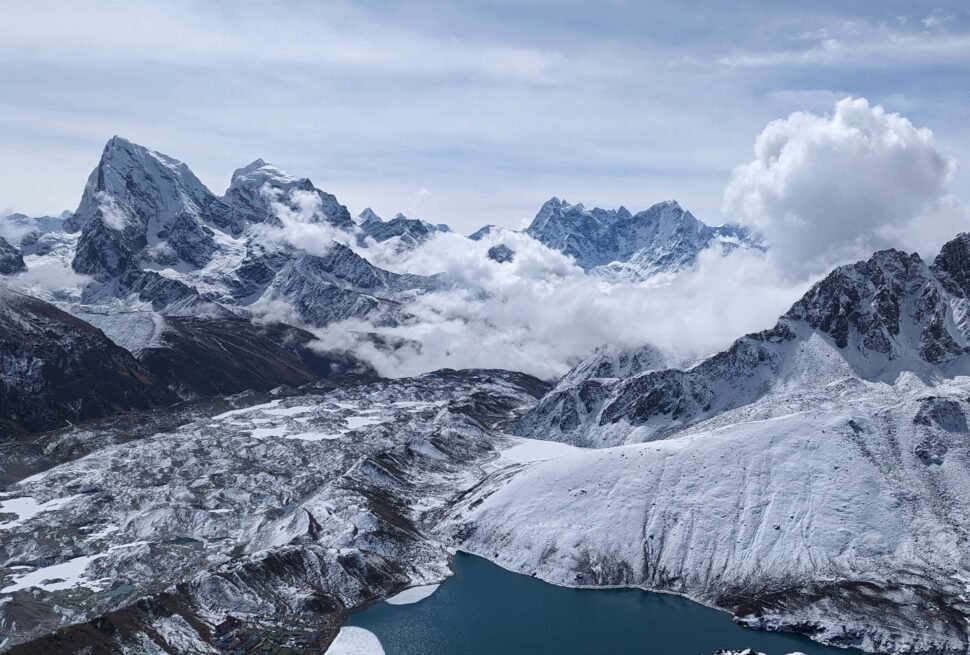
- Gokyo, reached through Phortse Thanga (3680 m) and Machhermo (4470 m), sits at 4790 m, with the Gokyo Ri viewpoint above it at 5360 m.
- After the Gokyo Valley days, the route crosses Cho La Pass at 5420 m, dropping to Dzongla (4710 m) before climbing again through Lobuche (4910 m) to Everest Base Camp itself at 5364 m.
- Gorak Shep, the last village before base camp, sits at 5164 m, and Kala Patthar above it reaches 5555 m, the highest point of the entire trip.
- The return path drops back through Dingboche and Tengboche before the final descent to Lukla.
Every one of those numbers matters for what ends up on your plate, because kitchen capacity, ingredient supply, and your own appetite all shift as the trail climbs.
What Is Actually Included In Your Meals On This Trek
Our package on the Everest Base Camp with Gokyo Lake itinerary covers three meals a day throughout the trek, breakfast, lunch, and dinner, along with teahouse accommodation for every night on the trail. This is the standard and sensible way to trek in the Khumbu, since it removes the need to carry food or worry about running short of cash for basic meals in a region where prices climb with every hour of walking.
What is not included is just as important to plan around:
- Alcoholic beverages are excluded, and honestly should be avoided anyway above 3000 m because alcohol worsens dehydration and masks the early symptoms of altitude sickness.
- Energy drinks and soft drinks are excluded from the package. Trekkers who want a cola or a canned energy drink pay for it themselves on the trail.
- In Kathmandu, the two hotel nights bookending the trek do not include lunch or dinner. Breakfast at the hotel is typically covered, but you are free to explore Thamel restaurants for other meals in the city, which is honestly one of the highlights of the trip food wise.
Everything else, the dal bhat at Phakding, the garlic soup at Dzongla, the fried noodles at Gorak Shep, is part of what you already paid for. That matters for budgeting your daily cash, which we cover below.
How The Teahouse Menu Changes As You Climb, Village By Village
One of the most common surprises for first time Khumbu trekkers is how dramatically menu size and quality shrink as elevation rises. Lower villages have road or mule access to bigger supply hubs, more competition between lodges, and better storage. Higher villages depend on porters and yaks carrying everything up on their backs, which means fewer ingredients, higher prices, and simpler cooking. Below is a realistic breakdown of what you can expect at each stage of this specific route.
Lukla and Phakding (2840 m and 2610 m)
- Wide menus with pizza, burgers, spring rolls, and even attempts at continental breakfast items like pancakes and French toast.
- Fresh vegetables are more common here since supply lines from Kathmandu are shortest.
- Bakeries with cinnamon rolls and apple pie style desserts show up in a few lodges.
- This is the easiest place on the whole trek to eat something that reminds you of home, so enjoy it while it lasts.
Namche Bazaar (3440 m)
Namche is the commercial hub of the whole Khumbu and by far the most food diverse stop on the route. For a full picture of what the town offers beyond food, our Namche Bazaar guide covers the acclimatization day activities in detail. On the food side alone, expect:
- German style bakeries with genuinely good cakes, cookies, and fresh bread.
- Italian style pizza and pasta, some of it surprisingly decent given the altitude.
- Yak steak and yak burgers on several menus, though we generally advise caution with meat this high due to storage and hygiene variability.
- A proper coffee shop or two with espresso machines, a rare comfort above 3000 m.
- Full dal bhat sets, momos, thukpa, and fried rice at every lodge as the reliable backbone options.
Phortse Thanga (3680 m) to Machhermo (4470 m)
- Menus narrow noticeably here. Pizza mostly disappears or becomes a thin approximation of the real thing.
- Dal bhat, noodle soups, fried rice, and momos remain the core offerings.
- Porridge, eggs in several styles, chapati, and Tibetan bread are the standard breakfast lineup.
- Machhermo is also known among guides as a common spot for the first clear signs of appetite change in trekkers, since it sits close to 4500 m.
Gokyo (4790 m)
- This is a genuine highlight village for scenery but a limited one for food. Expect a short, simple menu focused on dal bhat, garlic soup, noodle soup, and basic fried dishes.
- Fresh vegetables are rare and expensive, since everything above Namche travels by porter or yak for days.
- Hot drinks and snack items like biscuits and chocolate bars cost noticeably more here than lower down.
- The upside is that dal bhat here is still cooked fresh and still comes with refills, which counts for a great deal at this elevation.
Thangnak, Dzongla, and Lobuche (4700 m, 4710 m, and 4910 m)
- These are some of the smallest, most basic lodges on the entire route, and food choice narrows to the essentials.
- Garlic soup, dal bhat, instant noodle soup, plain fried rice, and porridge make up most of the menu.
- Meat dishes are best avoided this high given supply chain length and storage conditions.
- Portions are still generally adequate, but variety is close to zero, so mental preparation matters as much as physical preparation here.
Gorak Shep (5164 m) and Everest Base Camp Day
- Gorak Shep is the last inhabited stop before base camp and the launch point for Kala Patthar. Food here is as basic as it gets on the trail, dal bhat, noodle soup, garlic soup, fried rice, and hot drinks.
- There is no lodge at Everest Base Camp itself. Trekkers eat at Gorak Shep before and after the base camp walk, so timing your meals around that push matters, which we cover in a later section.
- Prices here are the highest on the whole route, since everything has traveled the farthest by the longest, hardest carry.
Dingboche and Tengboche on the Return
- Coming back down, menus widen again. Dingboche has several well stocked lodges with bakery items and a wider vegetable selection than anything above Lobuche.
- Tengboche, close to the famous monastery, has simple but decent food and a noticeably calmer, more relaxed dining room than the crowded high camps.
- Most trekkers report their appetite returning strongly once they drop below about 4500 m on the way down, which is a good sign your body is recovering from the thinner air.
Village by Village Food and Price Reference
The table below gives a realistic snapshot of what to expect at each stage, based on what we have watched thousands of clients order over the years. Prices are approximate in Nepali rupees and can shift with season and lodge.
| Village and Elevation | Typical Menu Highlights | Approx Hot Drink Price (NPR) | Variety Level |
|---|---|---|---|
| Phakding (2610 m) | Dal bhat, momos, pizza, pancakes, fresh vegetables | 150 to 250 | High |
| Namche Bazaar (3440 m) | Bakery items, pizza, yak dishes, dal bhat, real coffee | 200 to 350 | Highest on trail |
| Machhermo (4470 m) | Dal bhat, thukpa, fried rice, porridge, eggs | 250 to 400 | Moderate |
| Gokyo (4790 m) | Dal bhat, garlic soup, noodle soup, basic fried dishes | 300 to 450 | Limited |
| Lobuche (4910 m) | Dal bhat, garlic soup, plain noodles, porridge | 350 to 500 | Very limited |
| Gorak Shep (5164 m) | Dal bhat, noodle soup, fried rice, garlic soup | 400 to 500 | Most limited on route |
This matches our published guidance of roughly NPR 200 to 500 per hot drink on the trail and a personal daily budget of NPR 1500 to 3000 for snacks, extra drinks, and small treats beyond your included three meals. Bring more cash than you think you need, since above Namche there are no ATMs and every teahouse from that point runs strictly on cash.
The Daily Staples You Will Eat Again and Again
Across seventeen days, your diet on this trek settles into a fairly short rotation of dishes. Understanding what each one actually gives your body helps you choose wisely rather than just ordering out of boredom.
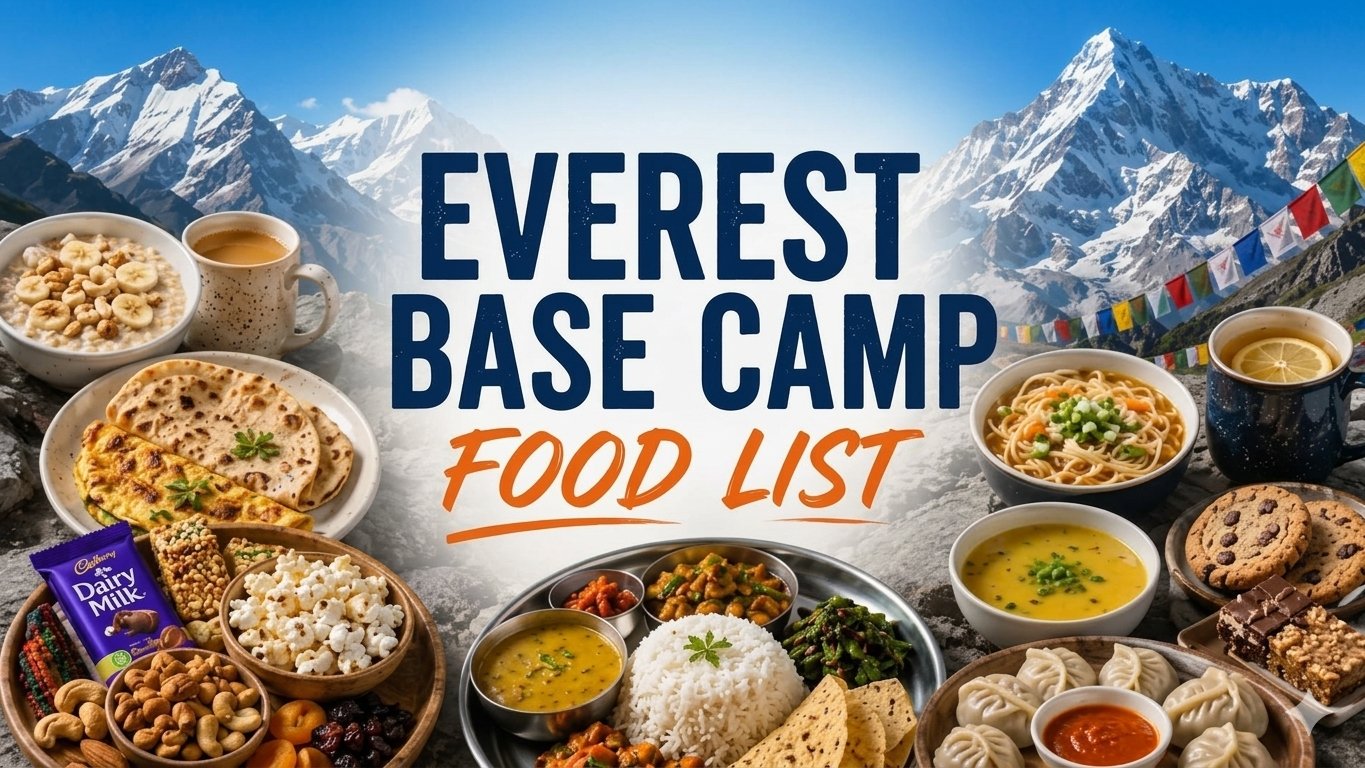
- Dal bhat. Steamed rice, lentil soup, a vegetable curry, and often a pickle or greens. The single most important dish on this trek, discussed in full below.
- Thukpa. A hearty Tibetan style noodle soup with vegetables and sometimes egg or meat. Warm, filling, and easy to digest, a good choice on cold evenings.
- Momos. Steamed or fried dumplings filled with vegetables, cheese, or occasionally meat. Great lower down, best treated with caution above Namche where filling quality and freezer storage become less reliable.
- Fried rice. A dependable, calorie dense option available almost everywhere, usually with egg and vegetables mixed in.
- Garlic soup. A thin, warming broth heavy on garlic, treated by many guides and trekkers as something close to a folk remedy for altitude discomfort.
- Porridge. Oats cooked with milk or water, sometimes with apple or honey, a gentle breakfast that sits well on an uneasy stomach.
- Eggs. Boiled, fried, scrambled, or in an omelet, a reliable protein source available at nearly every lodge from Lukla to Gorak Shep.
- Chapati and Tibetan bread. Flatbreads that pair well with eggs, honey, or jam, and travel well if you want to save half for later in the day.
- Potatoes. Boiled, fried, or turned into a simple curry, a cheap and effective source of carbohydrate that grows locally even at high elevation.
Notice how heavily this list leans on carbohydrate and simple, easily digested food. That is by design. At altitude your body burns through carbohydrate stores faster and digests fat and heavy protein less efficiently, so the food available on this route lines up well with what your body actually needs, even if it feels repetitive by day ten.
Why Dal Bhat Is The Smart Choice At Altitude
If you take one piece of advice from this whole guide, make it this one. Order dal bhat as your default dinner and lunch choice whenever you are unsure what to eat. There are specific, practical reasons guides push this dish so hard on every trip we run.
- Unlimited refills. Nearly every teahouse on this route offers free second and third servings of rice, lentil soup, and vegetables with dal bhat. No other dish on the menu comes with this option, which matters enormously when appetite is unreliable one day and ravenous the next.
- Balanced macronutrients. A full dal bhat plate combines complex carbohydrate from rice, protein and fiber from lentils, and vitamins from the vegetable curry, all in one meal. It comes closer to a complete, balanced plate than any other single dish on Khumbu menus.
- Cooked fresh, every time. Because it is the most ordered dish in the region, kitchens make it in large batches close to serving time rather than reheating old stock, which lowers the risk of stomach upset compared with dishes that sit around.
- Simple ingredients, lower contamination risk. Rice, lentils, and cooked vegetables involve less handling of raw meat or dairy than pizza, momos, or yak dishes, an important consideration the higher you climb and the less reliable refrigeration becomes.
- Consistent across the whole route. Whether you are in Phakding or Gorak Shep, dal bhat is on the menu and cooked in a familiar way, which removes decision fatigue on days when your brain is running slow from thin air.
Our guides, who are first aid trained and carry a pulse oximeter to monitor oxygen levels throughout the trek, consistently steer tired or nauseated clients toward dal bhat over anything richer or heavier. It works, and it is one of the simplest food decisions you can make on this entire trip.
Garlic Soup and Its Reputation on the Trail
Ask any long time Khumbu guide about garlic soup and you will get a small, knowing smile. This thin, watery broth loaded with garlic has become something close to folklore among trekkers as a remedy for altitude discomfort, and while the science is not fully settled, there are real, practical reasons it keeps appearing on our recommendation list.
- Garlic has mild natural properties that some studies associate with improved blood circulation, which trekkers and guides alike link, rightly or wrongly, to feeling better at altitude.
- The soup itself is hot, easy to sip slowly, and gentle on a stomach that is not handling solid food well.
- It adds fluid intake without forcing down another liter of plain water, which helps on days when drinking feels like a chore.
- It is cheap and available at every single lodge on this route, including the most basic ones at Lobuche and Gorak Shep.
- Psychologically, having a familiar ritual, a bowl of garlic soup at altitude, gives many trekkers a sense of doing something proactive about how they feel, which matters for morale during the harder stretches of the trip.
We tell clients honestly that garlic soup is not a medical treatment for acute mountain sickness. It is a warming, hydrating, easy to digest addition to your daily intake that costs little and helps on the margins. Order it as a starter most evenings above Namche and you will be in good company on the trail.
Hydration Matters More Than Food Volume At Altitude
If there is a single nutrition mistake we see more than any other on this route, it is trekkers focusing entirely on food while quietly under drinking for days at a time. Our own trek materials are direct about this point, and it is worth repeating clearly here: staying properly hydrated, targeting roughly 4 liters of water a day during active trekking days, is one of the most effective things you can do to reduce your risk of altitude sickness on this trip. For a full breakdown of how altitude sickness develops and what symptoms to watch for on this specific route, see our detailed altitude sickness guide for the Everest Base Camp trek.
A few reasons hydration deserves more attention than most trekkers give it:
- The air above 3000 m is drier and thinner, and your breathing rate increases even at rest, both of which speed up fluid loss through your lungs without you noticing.
- Dehydration on its own produces headaches, fatigue, and poor sleep, symptoms that overlap heavily with early acute mountain sickness and make it harder to tell what is actually happening in your body.
- If you are taking Diamox, acetazolamide, as a preventive measure, it significantly increases urination, and you need to increase your fluid intake further to compensate or you will end up more dehydrated, not less.
- Adequate hydration supports digestion, which directly affects how well your body absorbs the calories from all that dal bhat and porridge you are eating.
A practical daily hydration and hot drink strategy that has worked for our groups for years:
| Time of Day | Fluid Target | Practical Tip |
|---|---|---|
| Waking up | 1 large mug of hot tea or lemon ginger honey drink | Drink before you even get out of your sleeping bag if possible |
| Breakfast | Half a liter of water plus a hot drink | Fill your bottle immediately after breakfast for the walk ahead |
| Mid morning walking | Half a liter sipped steadily | Small regular sips beat large infrequent gulps |
| Lunch stop | Half a liter plus soup or a hot drink | Garlic soup counts toward your fluid total here |
| Afternoon walking | Half a liter to one liter depending on distance | Longer days like Cho La or Gokyo Ri need the higher end |
| Evening at lodge | One liter plus two or three hot drinks | Tea, hot lemon, or hot chocolate all count, alternate for variety |
Total that out and you land close to the 4 liter target the company recommends for active trekking days. On rest and acclimatization days you can ease off slightly, but never drop far below 3 liters even on a short walking day.
Safe Drinking Water Practices on This Route
Water quality is not a minor detail on this trek. Getting it wrong is one of the fastest ways to lose two or three days to a stomach bug at exactly the altitude where you can least afford to feel weak. There are three realistic options for water on this route, and most trekkers end up using a mix of all three.
- Boiled water from the teahouse. Nearly every lodge on this route sells boiled water by the liter, and it is generally the safest option since it has been brought fully to a boil, which kills the organisms that cause most traveler stomach illness. It costs more than tap or stream water but less than bottled water, and it supports the local lodge economy directly.
- Purification tablets or drops. Chlorine dioxide or iodine based tablets are lightweight, cheap, and effective against bacteria and viruses when used correctly, following the contact time printed on the packaging. Many trekkers fill from a tap or stream and treat it themselves as a backup to boiled water.
- A pump or gravity filter. Heavier than tablets but reusable across the whole trip without ongoing cost, and effective against the larger organisms that can slip past simple chemical treatment. Pair a filter with tablets for a genuinely reliable combination on longer days.
Beyond the water itself, a few habits protect your stomach for the whole seventeen days:
- Avoid raw, unpeeled vegetables and salads above Namche. Refrigeration is limited, washing water quality above 3000 m is inconsistent, and raw produce is one of the more common sources of stomach trouble on this route.
- Stick to fruit you can peel yourself, oranges and bananas travel reasonably well up to Namche, and avoid unpeeled fruit at the higher villages entirely.
- Be cautious with dairy products above Namche, since milk storage without reliable refrigeration is a genuine risk the higher you climb.
- Avoid bottled water where possible. Plastic bottles create a serious waste problem in a region with no real disposal infrastructure, and boiled water or a filter achieves the same safety result at lower environmental cost.
- Wash your hands or use sanitizer before every meal, a simple habit that prevents a large share of the stomach illness we see on the trail, most of which comes from hand contact rather than the food itself.
Managing Appetite Loss From Altitude
Appetite loss and mild nausea are two of the most common symptoms of acute mountain sickness, and our own data shows that roughly one quarter of trekkers arriving in Namche without prior acclimatization experience some form of AMS. Losing your appetite at 4000 or 5000 meters is common, expected, and manageable, but only if you respond to it correctly. For the full picture of how AMS develops and what to do about it beyond food, our altitude sickness guide is essential reading before you fly to Lukla.
On the food side specifically, here is what actually works when your appetite disappears:
- Eat small amounts often rather than forcing large meals. Five small servings across the day digest far more easily than three large ones when your gut is already working harder in thin air.
- Treat eating as a task, not a feeling. Your body still needs the calories even when your brain sends no hunger signal. Set a rough schedule, eat something every two to three hours while awake, and follow it regardless of appetite.
- Lean on plain, starchy food when nausea rises. Plain rice, boiled potatoes, dry chapati, and crackers sit better than fried, spicy, or rich food when your stomach is unsettled.
- Bring familiar snack food from home. A packet of your usual trail mix or a chocolate bar you recognize can prompt an appetite response that unfamiliar teahouse food sometimes cannot.
- Do not skip meals to avoid nausea. An empty stomach at altitude often makes nausea worse, not better. A small amount of bland food usually settles things faster than eating nothing.
- Tell your guide if your appetite disappears for more than a day. This is exactly the kind of symptom our guides are trained to track alongside your oxygen saturation readings, and it can be an early signal worth acting on before it becomes something more serious.
There is also a psychological piece worth naming directly. Many trekkers describe a strange mental resistance to eating at altitude, food looks fine, smells fine, but simply holds no appeal. Recognizing this as a known, common effect of altitude rather than a sign that something is deeply wrong helps most people push through it and keep their calorie intake from collapsing during the highest days of the trek.
Snack Packing List for the Long Stretches Between Gokyo and Cho La
The section of this route between the Gokyo Valley and the Cho La Pass crossing, through Thangnak and Dzongla, is where teahouses thin out the most and the walking days stretch longer between proper meal stops. This is exactly where a well packed snack bag earns its weight. We recommend buying most of this in Kathmandu before you fly to Lukla, since prices and selection are both far better there than anywhere on the trail.
- Energy bars or protein bars, six to ten of your preferred brand, since these become genuinely expensive and hard to find above Namche.
- Dried fruit such as apricots, mango, or raisins, light to carry and useful for a quick sugar lift on the Cho La climb.
- Nuts or trail mix, a dependable source of fat and protein that does not spoil.
- Electrolyte powder or tablets to mix into your water bottle, especially useful on the Cho La and Kala Patthar days when sweat and altitude both drain your salt levels.
- Instant soup sachets, a genuine morale booster on a cold evening in a sparse Thangnak or Dzongla lodge with a thin menu.
- A few chocolate bars, partly for calories and partly because a familiar taste helps enormously on a day when appetite is fading.
- Rehydration salts, useful if you experience any stomach upset and need to replace lost fluid and salt quickly.
- Biscuits or crackers, easy to eat in small amounts throughout a long walking day without needing to stop for a full meal.
- Instant coffee sachets if you have a strong preference, since coffee above Namche is often instant only and not everyone likes the local brand available.
- An insulated water bottle or thermos, which keeps your drinking water from freezing on the coldest mornings around Gorak Shep and Dzongla, and lets you carry a hot drink for the trail itself.
Pack these in a small stuff sack you can reach without digging through your full duffel, since the whole point is fast, easy access during a long day on the trail, particularly the Cho La crossing where stopping for long breaks is not always practical.
Dietary Restrictions on This Specific Route
Ingredient availability narrows sharply above Namche, which makes dietary restrictions genuinely harder to manage the higher you climb. Planning ahead with your guide and with us before departure makes a real difference.
- Vegetarian. This is by far the easiest restriction to manage on this route. Dal bhat, thukpa without meat, momos with vegetable filling, fried rice, and porridge cover you at every single lodge from Lukla to Gorak Shep without difficulty.
- Vegan. More challenging, since ghee and milk appear in many dishes including some versions of dal bhat and most porridge. Ask specifically for dal bhat cooked without ghee and porridge made with water rather than milk, which most kitchens can accommodate with advance notice from your guide.
- Gluten intolerant or coeliac. Rice based dal bhat, plain boiled potatoes, and rice noodles in some thukpa variations are your safest options. Chapati, bread, and most cakes contain wheat, and cross contamination in small kitchens with limited separate prep space is a real risk, so pack your own gluten free snack backup for the higher villages where options shrink further.
- Dairy intolerant. Avoid milk tea, hot chocolate made with milk, and creamy dishes. Black tea, black coffee, and garlic soup are safe defaults, and most kitchens can make porridge with water instead of milk on request.
- Nut allergies. Momo fillings and some sauces occasionally include nut based pastes, so always ask directly rather than assuming, particularly in the more elaborate Namche menus where dishes are more complex.
- Spice sensitivity. Dal bhat can be requested mild, and most kitchens are happy to adjust spice level for a foreign guest if you ask clearly at the time of ordering.
Tell us about any dietary restriction when you book so your guide can flag it to lodge kitchens ahead of arrival where possible. A quick message to us on WhatsApp at +977 9869225929 or by email at nexttripnepal@gmail.com before your trek gives our team time to plan around it properly rather than improvising on the trail.
Coffee, Tea, and Hot Drink Culture on the Trail
Hot drinks are as much a part of the daily rhythm on this trek as the meals themselves, and they matter for both morale and hydration. Here is what to expect and what things realistically cost.
- Black tea and milk tea are available everywhere on the route, the most affordable hot drink option at roughly NPR 150 to 250 lower down and NPR 300 to 400 near Gorak Shep.
- Instant coffee is the standard above Namche, generally a simple Nescafe style sachet mixed with hot water, priced similarly to tea.
- Real espresso coffee is genuinely available in Namche Bazaar, a small comfort worth paying for during your acclimatization day there, and covered in more detail in our Namche Bazaar guide.
- Hot lemon with honey and ginger is a trail favorite, warming, easy on the stomach, and a good way to add fluid without caffeine before bed.
- Hot chocolate shows up on most menus and is a popular treat during the coldest evenings around Dzongla and Gorak Shep, usually priced at the higher end of the hot drink range given the powdered chocolate has to be carried up.
- Garlic soup, while technically a food item, functions as a hot drink for many trekkers and deserves a spot in your evening rotation for the reasons covered earlier.
A realistic daily hot drink budget across the seventeen days averages toward the higher end of our NPR 1500 to 3000 daily personal expense guidance once you are consistently above 4000 m, since you will likely want three or four hot drinks a day on the coldest stretches around Gokyo, Lobuche, and Gorak Shep.
The Gokyo Valley Days and Managing Food Monotony
This particular itinerary spends noticeably more time in the Gokyo Valley than a standard Everest Base Camp only trek, adding the walk up through Phortse Thanga and Machhermo, exploring Gokyo and climbing Gokyo Ri, before continuing over Cho La Pass rather than simply retracing steps back down. This is one of the best reasons to choose this specific route over the shorter version, but it does mean more consecutive days eating from the smaller, simpler menus found above Namche.
A few honest points worth knowing in advance:
- By the time you reach Gokyo, you will likely have eaten dal bhat, thukpa, or fried rice in some combination for five or six days already, and the Gokyo Valley section adds several more days of the same short menu before you even reach the higher, harder stretch toward Cho La and base camp.
- Food monotony is completely normal on this extended route and does not mean anything has gone wrong with the trip or with your appetite. Expect it and it bothers you far less than if it catches you by surprise.
- Bring a few extra snack items specifically to break up this stretch, a favorite chocolate bar, a packet of your preferred instant soup, or dried fruit you enjoy, since a small variation in taste does a lot for morale during a repetitive food stretch.
- Use the extra time in Gokyo to rest properly rather than only sightseeing, since digestion and appetite both tend to improve with a slightly slower pace and a full rest day built into the schedule.
- Remind yourself that the payoff for this longer route, the turquoise lakes, the view from Gokyo Ri, and the Cho La crossing itself, is exactly what most standard base camp only itineraries miss entirely. The food trade off is a small price for a considerably richer trip.
Trekkers who plan for this mentally, rather than expecting Namche level variety all the way through, consistently report a better overall experience than those who arrive expecting every meal to match the wide menus of the lower villages.
Eating Strategy for the Two Hardest Days: Cho La Pass and Kala Patthar
Every group we run through this route faces the same two demanding days, the Cho La Pass crossing and the Kala Patthar sunrise climb. Both call for a specific approach to food and fluid that differs from an ordinary trekking day.
Cho La Pass Crossing Day
- This is typically the longest single day on the entire trek, crossing glaciated terrain at 5420 m between Dzongla and the far side toward Thangnak or on to Lobuche, and it starts early, often before sunrise.
- Eat a substantial breakfast before departure, porridge plus eggs plus chapati if your appetite allows, rather than a light meal, since there is no reliable lunch stop partway across the pass itself.
- Carry a full complement of snacks from your packed list, energy bars, dried fruit, and chocolate, since you will be eating on the move rather than sitting down for a proper meal during the crossing.
- Fill your bottle with warm water if possible before departure, since plain water can approach freezing temperature on the pass itself, which makes drinking regularly less appealing exactly when you need to keep drinking.
- Sip water and eat small amounts every hour rather than waiting until you feel hungry or thirsty, since both signals become unreliable at this elevation and on a physically demanding day.
- Expect a late, well earned meal on the far side, and treat it as your main recovery meal for the day, ideally dal bhat if the lodge on the other side offers it.
Kala Patthar Sunrise Day
- This climb from Gorak Shep typically starts in full darkness, often around four or five in the morning, to reach the summit for sunrise, which means eating properly before a very early departure.
- A light but real pre dawn meal works best, porridge, a boiled egg, or toast with honey, something your stomach can handle in the cold and dark without much appetite to guide you.
- Carry a thermos of hot water or tea and a couple of quick energy snacks in your jacket pocket where they stay accessible and do not freeze solid.
- The temperature at the summit before sunrise can be severely cold, so keep any water you carry insulated, and be ready for the fact that thirst signals often disappear entirely in extreme cold, which is exactly when you need to drink on a schedule rather than by feel.
- After returning to Gorak Shep, eat a full, substantial breakfast or early lunch, since the climb burns significant energy and you still have a walking day ahead back toward Lobuche or beyond.
Guides on this route watch closely for appetite and energy changes on both of these specific days, using the pulse oximeter checks built into the daily routine to catch any early sign of trouble before it becomes serious.
Common Food Related Mistakes on This Trek
After running this exact itinerary many times, a handful of food mistakes show up again and again among first time Khumbu trekkers. Our broader guide to common mistakes on the Everest Base Camp trek covers the full list beyond food, but these are the ones tied directly to eating and drinking on the trail.
- Skipping meals when appetite drops instead of switching to smaller, more frequent portions.
- Under drinking water because cold weather suppresses natural thirst signals, then arriving at the next stop with a headache mistaken for tiredness rather than dehydration.
- Ordering meat or dairy heavy dishes above Lobuche and Gorak Shep, where storage conditions carry more real risk than the menu listing suggests.
- Running short of cash above Namche, forgetting that every teahouse from that point runs on cash only with no ATM access anywhere higher on the route.
- Trying unfamiliar rich or heavy food for the first time on a hard walking day rather than sticking with tested, familiar dishes when it matters most.
- Not telling the guide about appetite loss or nausea early, waiting until it becomes a bigger problem instead of flagging it the first day it appears.
- Packing too few snacks for the Gokyo to Cho La stretch, then relying entirely on thin, expensive high altitude menus during the most demanding days of the trip.
A Sample Daily Eating and Hydration Plan for This Trek
To pull everything together, here is a realistic daily rhythm we recommend for most days on this route, adjusted slightly higher up the trail as menus shrink and the air thins.
- Wake up and drink a hot tea or hot lemon before breakfast, even before getting out of your sleeping bag if the lodge allows a flask at your bedside.
- Eat a full breakfast, porridge or eggs with chapati or Tibetan bread, plus fruit where available lower down the trail.
- Fill your water bottle to capacity immediately after breakfast for the morning walk.
- Snack on something small, nuts, a bar, or dried fruit, roughly every ninety minutes to two hours during the walk regardless of hunger level.
- Stop for lunch, ideally dal bhat, with a hot drink or soup alongside it.
- Continue the same snack and sip pattern through the afternoon walking session.
- Arrive at the lodge and drink a full mug of hot water or tea before doing anything else.
- Eat dinner, again dal bhat as the default safe choice, with garlic soup as a starter above Namche.
- Have one more hot drink before bed, hot lemon or herbal tea work well since they are gentle and support a final fluid boost before a long, cold night.
- Keep a water bottle within reach overnight and take a few sips if you wake up, since overnight dehydration is common at altitude and easy to correct with small effort.
Adjust portion sizes upward on the two demanding days, Cho La and Kala Patthar, and downward slightly on rest and acclimatization days, but never skip the basic rhythm of small frequent intake paired with steady fluid throughout the day.
Frequently Asked Questions About Food and Nutrition on This Trek
Is the food included in the trek package enough to keep me properly fueled?
Yes, the three included meals a day, breakfast, lunch, and dinner, are generally sufficient for the physical demands of this trek when you choose calorie dense options like dal bhat, fried rice, and porridge. Most trekkers supplement with a moderate amount of personal snacks for variety and convenience rather than out of genuine necessity.
How much extra cash should I carry specifically for food and drinks?
Budget NPR 1500 to 3000 per day for personal trail expenses, which covers extra snacks, hot drinks beyond your three included meals, and the occasional treat like a bakery item in Namche. Remember that above Namche there are no ATMs, so carry enough cash for the entire higher section of the trek before you leave that town.
Why does everyone recommend dal bhat so strongly on this route?
Dal bhat offers unlimited refills at almost every lodge, a balanced mix of carbohydrate and protein, and consistently fresh preparation across the whole route from Phakding to Gorak Shep. It is simply the most reliable, nutritionally sound option available at every stage of the trip.
Will I lose my appetite at altitude, and is that dangerous?
Appetite loss is a common symptom of acute mountain sickness, affecting roughly one quarter of trekkers who reach Namche without prior acclimatization. It is not inherently dangerous on its own, but it should be managed with small frequent meals and reported to your guide if it persists for more than a day or comes with other symptoms like headache or nausea.
Is the drinking water on the trail actually safe?
Boiled water sold by teahouses is generally safe, and combining it with purification tablets or a filter for water from taps or streams gives an extra layer of protection. Avoid untreated water from any source, and be cautious with raw vegetables and unpeeled fruit above Namche where washing water quality is less reliable.
What should I eat before the Cho La Pass crossing?
Eat a full, substantial breakfast before departure, since there is no reliable lunch stop during the crossing itself. Carry snacks and warm water to sip and eat steadily throughout the day rather than waiting for a proper meal stop on the far side.
Can vegetarian or gluten intolerant trekkers manage comfortably on this route?
Vegetarian trekkers manage very comfortably, since dal bhat, vegetable momos, and fried rice are available everywhere. Gluten intolerant trekkers should lean on rice based dal bhat and boiled potatoes, and should pack a gluten free snack backup for the higher villages where wheat based bread and cake dominate the limited menu.
How does food change once we pass Namche Bazaar?
Menus shrink sharply. Bakery items, pizza, and yak dishes largely disappear, replaced by a smaller set of dal bhat, noodle soup, garlic soup, fried rice, and porridge that repeats at every lodge from Machhermo through Gokyo, Lobuche, and Gorak Shep, with prices rising steadily at each stage.
Does the extra time in the Gokyo Valley on this itinerary mean more repetitive food than a standard base camp trek?
Yes, the additional days through Phortse Thanga, Machhermo, and Gokyo before crossing Cho La Pass do add more consecutive days eating from the smaller high altitude menu compared with a standard base camp only itinerary. Packing a few extra personal snacks for this stretch helps considerably with food monotony.
Should I take Diamox, and does it change how much I need to drink?
Diamox, acetazolamide, is a personal medical decision to discuss with your doctor before the trip, but it is worth knowing that it significantly increases urination. If you use it, you need to increase your fluid intake further beyond the standard 4 liter daily target to avoid becoming more dehydrated rather than less.
Final Practical Notes Before You Go
Food on this trek is simple, repetitive at times, and genuinely one of the more manageable parts of a demanding seventeen day route once you understand the pattern. Dal bhat as your default, steady hydration all day, small frequent meals when appetite fades, and a well packed personal snack bag for the Gokyo to Cho La stretch will carry you through comfortably from Lukla to Kala Patthar and back.
Our guides carry a pulse oximeter and are first aid trained specifically to watch for the early signs of altitude trouble, including the appetite and hydration changes covered throughout this guide, across the full Everest Base Camp with Gokyo Lake Trek. If you have questions about menus, dietary restrictions, or how to plan your personal snack budget before booking, reach our team directly on WhatsApp at +977 9869225929 or by email at nexttripnepal@gmail.com, and we will help you plan a food strategy that matches your specific needs before you ever set foot on the trail.
\n
Related Reading
\n
- \n
- The Namche Bazaar Acclimatization Day on the Gokyo and Cho La Route
- Climbing Gokyo Ri at Sunrise: The Complete Guide
- Travel Insurance for the Cho La Pass Crossing
\n
\n
\n
\n