If you have spent any time researching Everest, you have probably come across the term Everest Base Camp helicopter tour return trek and wondered exactly what it means. It sounds like a hybrid, and it is one. You walk into the Khumbu on foot, reach Everest Base Camp under your own power, and then fly back to Kathmandu by helicopter instead of retracing eight or nine days of trail. For some travelers, this is the obvious choice. For others, it is the wrong fit entirely. The honest answer depends on how many days you have, how your knees and lungs handle altitude, and how much you actually want to be out on the trail versus simply standing at 5,364 meters and getting the photo.
I have organized treks in the Khumbu region for years, and the questions I get about the helicopter return option are almost always the same. How many days does it actually save? Is it safe to rely on a helicopter when the weather in the Himalayas is famously unreliable? What happens if the flight gets delayed and you have an international connection booked two days later? These are fair questions, and most marketing pages skip past them in favor of dramatic photos of a helicopter parked in front of Everest.
This guide is written from the operational side, the side that deals with permit paperwork, Lukla flight manifests, and phone calls to helicopter companies when the clouds roll in early. It covers what the Everest Base Camp helicopter tour return trek actually entails, how to choose a trekking company that will handle it properly, a realistic itinerary and cost breakdown, and the weather and safety factors that determine whether your flight departs on schedule. By the end you should be able to decide, with real information rather than sales language, whether this is the right way for you to reach Everest Base Camp.
What Is an Everest Base Camp Helicopter Tour Return Trek?
An Everest Base Camp helicopter tour return trek is a version of the classic Everest Base Camp trek in which you walk in through the Khumbu valley in the normal way, reach Base Camp on foot, and then fly out by helicopter instead of walking back down to Lukla. It is not the same product as an Everest Base Camp helicopter tour, which is a single day sightseeing flight from Kathmandu that never involves any trekking. It is also not the full round trip trek, where you walk both directions. It sits between the two.

The Everest Base Camp Trek with Helicopter Return is a 10-day adventure designed for trekkers who want to experience the…
The Walking Portion
The walking days are identical to a standard Everest Base Camp trek. You fly from Kathmandu (or Manthali during peak season, more on that later) into Lukla, then walk north through Phakding, Namche Bazaar, Tengboche, Dingboche, Lobuche, and Gorak Shep before reaching Base Camp itself. The acclimatization schedule, altitude gain, teahouses, and daily walking hours are the same as on the standard trek. Nothing about the ascent is shortened or rushed simply because a helicopter is booked for the return.
The Flight Portion
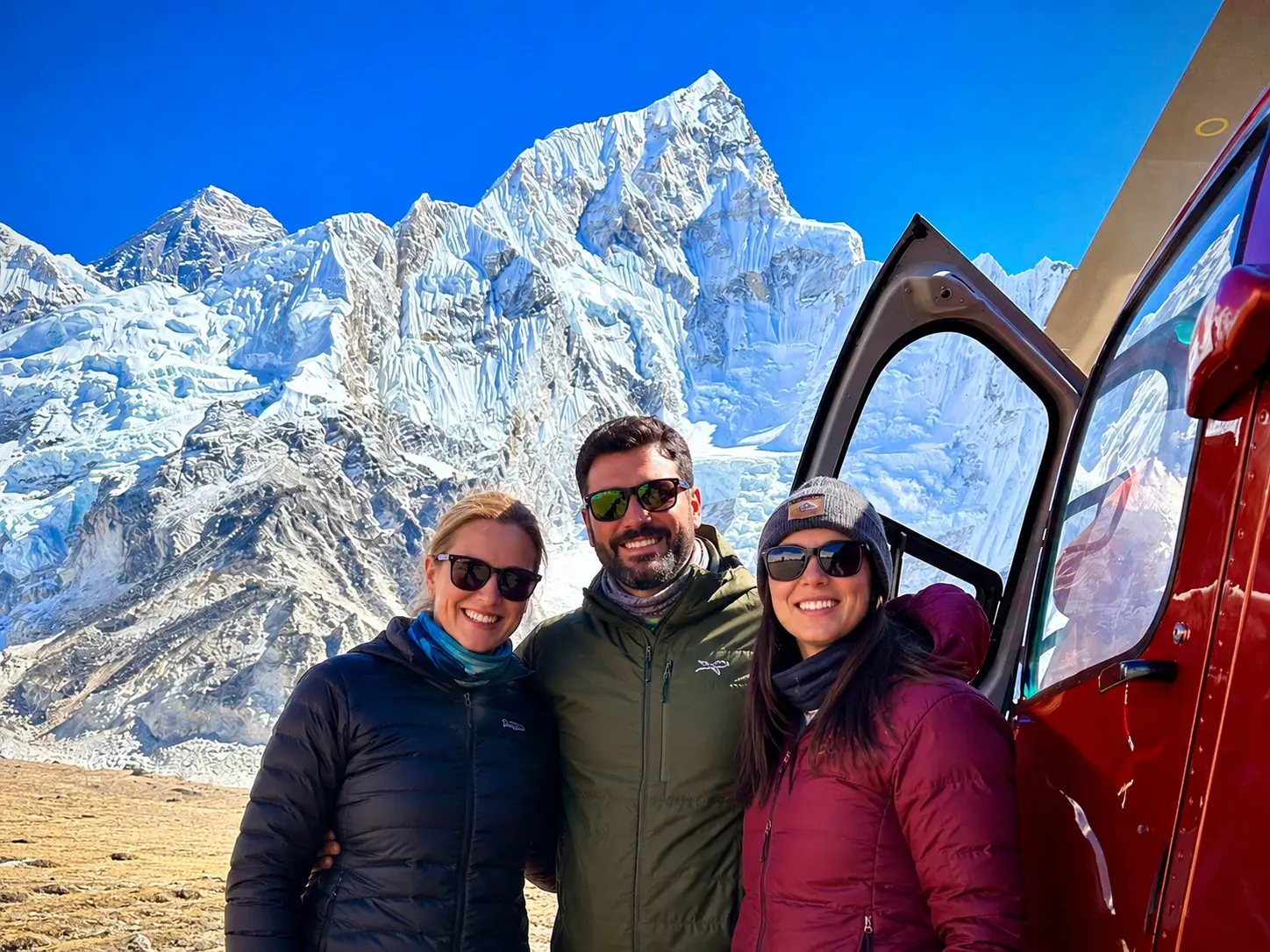
Once you have reached Everest Base Camp and typically also climbed Kala Patthar for the sunrise view of Everest, the helicopter picks you up, usually from Gorak Shep or occasionally Pheriche depending on operational conditions that day, and flies you back toward Lukla and on to Kathmandu. Some itineraries include a landing stop at the Everest View Hotel near Syangboche for breakfast with a mountain panorama before continuing to Kathmandu. This single flight typically replaces six to eight days of walking that would otherwise be needed to descend back to Lukla.
Why This Option Exists
The honest reason this product exists is that a large number of travelers who want the base camp experience simply do not have four weeks free, or their knees and joints are not up to descending 130 kilometers of rocky Khumbu trail after already climbing it. An Everest Base Camp trek with helicopter return solves a real scheduling and physical problem without removing the part of the experience that most people actually came for: the walk in, the acclimatization process, the Sherpa villages, and standing at Base Camp, having earned it on foot.
It is worth being clear about one thing from the start: this is not a shortcut to Base Camp. You still need the same fitness level and acclimatization schedule as a full trekker, because you are walking the same distance and gaining the same altitude on the way in. The time and physical savings come entirely from skipping the walk back down, not from skipping any part of the ascent.
How to Choose the Best Everest Base Camp Helicopter Tour Return Trek
Choosing well comes down to two decisions: picking the right itinerary structure for your fitness and time, and choosing a trekking company that can reliably deliver the helicopter portion. Most disappointing experiences with this trip come from the second issue, not the first.
Match the Itinerary to Your Fitness, Not Just Your Calendar
It is tempting to view the helicopter return trek purely as a time-saving option and try to compress the walking days as much as possible. Resist that instinct. The altitude gain from Lukla to Base Camp is the same whether you are flying back or not, and rushing the acclimatization days to shave off one more night in the mountains is the single most common way trekkers end up sick, exhausted, or unable to continue. A good itinerary keeps both standard rest days, at Namche Bazaar and at Dingboche, intact. If a company offers you an Everest Base Camp helicopter tour return trek that compresses the ascent to under nine days, ask directly which acclimatization day has been removed and why.
Ask How the Helicopter Segment Actually Works
There are two very different products being sold under similar names in Kathmandu. One is a shared helicopter seat, where you fly out with other trekkers, usually four to five passengers plus the pilot, and departure timing depends on the whole group being ready and weather cooperating for everyone. The other is a private charter, where the helicopter is yours alone and departs on your schedule within weather limits. Shared flights are considerably cheaper. Private charters are more flexible and often more comfortable, particularly if you want to land at Kala Patthar or the Everest View Hotel rather than take a direct flight back. Ask your agency which one you are booking, because vague answers here are a warning sign.
Check Who Is Actually Flying the Helicopter
Your trekking company almost certainly does not own the helicopter. Nepal has a small number of helicopter operators, and trekking agencies subcontract the flight. That is completely normal and not a red flag by itself. What matters is whether your agency has a direct, established working relationship with a specific, licensed operator, or whether they are simply promising a flight and figuring out the details later. Ask which helicopter company will operate your flight. A trekking company with real experience in this specific product will answer that question immediately, by name, without hesitation.
Look at How the Company Handles Weather Contingencies
This is the single most important factor in choosing between competing offers, and it is covered in detail further down in the safety and weather section. For now, the short version: ask, in writing, what happens if the helicopter cannot fly on your scheduled day. A company with real experience running this trip will have a clear answer involving rescheduling within a buffer window, not a vague reassurance that it usually works out.
The Everest Base Camp Trek with Helicopter Return is a 10-day adventure designed for trekkers who want to experience the…
Compare What Happens Before and After the Flight
A quality Everest Base Camp trek with helicopter return should feel like one continuous, well organized trip, not two separate products stitched together. Check whether airport transfers on both ends are included, whether someone from the company meets you when the helicopter lands in Kathmandu, and whether your hotel booking accounts for an early or late arrival depending on how the flight day unfolds.
Choosing the Right Trekking Company: A Practical Checklist
Beyond the helicopter specific questions above, the fundamentals of choosing any Nepal trekking company still apply, and they matter more, not less, when a complex logistics chain like a helicopter flight is involved.
- Licensed trekking agency. Confirm registration with the Department of Tourism and membership in Nepal’s trekking associations such as TAAN. This is not a formality. It affects your legal protection if something goes wrong.
- Experienced Everest guides. Ask how many times your specific guide has completed the Everest Base Camp route, not just how many years the company has existed.
- Government registered company. A registered company has a tax number and a physical office you can visit in Kathmandu before your trek starts, not just a website.
- Clear helicopter arrangements. As covered above, get the operator’s name, the shared-versus-private status, and the planned pickup point in writing.
- Transparent pricing. A detailed quote should separate the trekking cost, the helicopter cost, permits, and any optional extras like a Kala Patthar landing.
- Permit arrangements. Confirm the Sagarmatha National Park permit and the local rural municipality entry permit are included and who is responsible for obtaining them.
- Insurance requirements. The company should ask to see proof of insurance that specifically covers helicopter evacuation and high altitude trekking above 5,000 meters, not just general travel insurance.
- Emergency procedures. Ask what the company’s actual protocol is if a trekker develops altitude sickness symptoms partway through the trek.
- Altitude experience. A company that has operated in the Khumbu for years will talk about altitude naturally and specifically, not in vague marketing terms.
- Accommodation standards. Ask which specific teahouses are used at Namche, Tengboche, Dingboche, Lobuche, and Gorak Shep, since quality varies significantly between lodges at the same village.
- Porter arrangements. Confirm whether a porter is included, what the weight limit is, and how many trekkers share one porter.
- Group size. Ask how many trekkers will be in your group and whether the helicopter allocation is confirmed for that exact number.
- Airport transfers. Both the domestic Lukla flight and the return helicopter landing should include transfers to your hotel.
- Communication before the trek. A responsive company that answers detailed questions clearly before you pay a deposit is a strong signal of how they will handle problems on the trail.
- Cancellation and weather policies. Get the rebooking and refund policy for helicopter delays in writing before you book, not verbally on a phone call.
- Reviews from previous trekkers. Look specifically for reviews mentioning the helicopter return segment, since a company can have excellent trekking reviews but limited helicopter experience.
- What is actually included in the price. Compare line by line rather than trusting a single headline number, since two quotes that look similar on the surface can differ by a thousand dollars once you check what is and is not included.
No single company can honestly claim to be the safest or the best in Nepal. What you are looking for is a company that answers every item on this list specifically and without hesitation. Vague, reassuring answers to specific questions are the clearest warning sign in this entire process.
10 Reasons to Choose an Everest Base Camp Helicopter Tour Return Trek
Each of these reasons comes with a practical limitation attached because an honest comparison matters more than a sales pitch.
1. It saves real time compared with the full round trip trek. A standard Everest Base Camp trek runs 12 to 14 days, including buffer days. The helicopter return version typically runs 8 to 10 days for the same base camp experience. The limitation: you still need the same number of acclimatization days on the way up, so the time saved comes entirely from the descent, not from rushing the ascent.
2. It removes the physical toll of the long walk back down. Descending from Base Camp involves repeated steep downhill sections that are genuinely hard on knees and ankles, especially after nine days of accumulated fatigue. The limitation: if you enjoy trekking for its own sake, you lose the chance to revisit villages like Tengboche and Namche a second time at a more relaxed pace.
3. It still gives you the full on foot Base Camp experience. You are not skipping the walk in. You earn Base Camp the same way every trekker does, through the same acclimatization process and the same trail. The limitation: this means the walking portion is not easier or shorter, so this option does not suit someone hoping to avoid multi day trekking altogether.
4. It offers aerial views most trekkers never get. The helicopter route over the Khumbu Glacier, past Ama Dablam and Nuptse, and down through the Dudh Koshi valley shows the region from an angle no trail ever provides. The limitation: this view is entirely weather dependent, and on a cloudy day you may see very little beyond the inside of the cabin.
5. It works well for travelers with limited holiday time. If you have two weeks total including international flights, an 8 to 10 day trek fits far more comfortably than a full 14 to 16 day itinerary once you account for travel days on both ends. The limitation: a tight overall schedule leaves little room for a Lukla flight delay, which is common, so build in a buffer day regardless.
6. It combines two distinct kinds of adventure in one trip. Multi day trekking and a mountain helicopter flight are different experiences, and doing both means you are not choosing one over the other. The limitation: this also means the trip has more moving logistical parts than a simple trek, and more parts means more that can be affected by weather.
7. It lets you spend your remaining Nepal time elsewhere instead of repeating the trail. Trekkers who fly back often use the days they saved to visit Chitwan, Pokhara, or simply rest properly in Kathmandu before flying home. The limitation: if this is your only trip to the Khumbu, you do give up the chance to see the lower valley villages again on the way out, which some trekkers find they wanted more than expected.
8. It suits travelers who want a genuinely shorter overall trekking programme without cutting the destination. Unlike itineraries that shorten the trek by removing acclimatization days, a properly built helicopter return itinerary shortens the trip only by removing the redundant second walk of the same trail. The limitation: this only holds true if the company has not also compressed the ascent, so verify the itinerary structure carefully.
9. It adds flexibility when planning a broader Nepal itinerary. Because the trip is shorter, it is easier to combine with an Annapurna trek, a Chitwan safari, or a cultural tour of the Kathmandu Valley within a single visit. The limitation: combining multiple activities into one trip means more coordination and more potential points of schedule conflict, particularly around the Lukla flight.
10. It offers a genuinely different way to experience the same destination. Reaching Base Camp on foot and leaving by air gives you two contrasting perspectives on the same landscape within a matter of hours. The limitation: some trekkers who complete this option later say they wish they had walked out too, simply for the sense of closure the return journey provides. This is a personal preference question, not a practical one, and worth thinking about honestly before you book.
Everest Base Camp Helicopter Tour Return Trek Itinerary
A realistic Everest Base Camp helicopter trek package typically runs 9 to 11 days from Kathmandu to Kathmandu, depending on how many buffer days are included for Lukla flight delays and how the company structures the acclimatization schedule. Below is a sample itinerary built the way we would actually run it, not a compressed version designed to look shorter on a website.
Sample Day-by-Day Breakdown
Day 1: Arrival in Kathmandu (1,400m). Transfer to your hotel, equipment check, and a briefing covering the trek, the helicopter segment, and what to expect at altitude.
Day 2: Fly to Lukla (2,860m), trek to Phakding (2,610m). The 30- to 40-minute flight into Tenzing Hillary Airport is one of the more memorable mountain flights anywhere in the world. From Lukla, it is a short two- to three-hour walk to Phakding along the Dudh Koshi River.
Day 3: Trek to Namche Bazaar (3,440m). A five- to six-hour walk that includes the steep, switchbacked final climb into Namche, the trading hub of the Khumbu.
Day 4: Acclimatization day in Namche. A short hike up to the Everest View Hotel at 3,880 meters helps the body adjust before continuing higher. This day is not optional and should never be cut from any legitimate itinerary.
Day 5: Trek to Tengboche (3,860m). The walk descends to the Dudh Koshi before climbing through rhododendron forest to Tengboche, home to the region’s most significant monastery and one of the best unobstructed views of Ama Dablam on the entire route.
Day 6: Trek to Dingboche (4,410m). The trail opens up above the treeline into wider, more exposed high altitude terrain.
Day 7: Second acclimatization day in Dingboche. A hike toward Nangkartshang at around 5,000 meters gives the body a second chance to adjust before the final push. Skipping this day is the most common reason trekkers develop altitude symptoms above Dingboche.
Day 8: Trek to Lobuche (4,910m). The walk passes the Thukla Memorial, a quiet and moving stop before continuing along the Khumbu Glacier moraine.
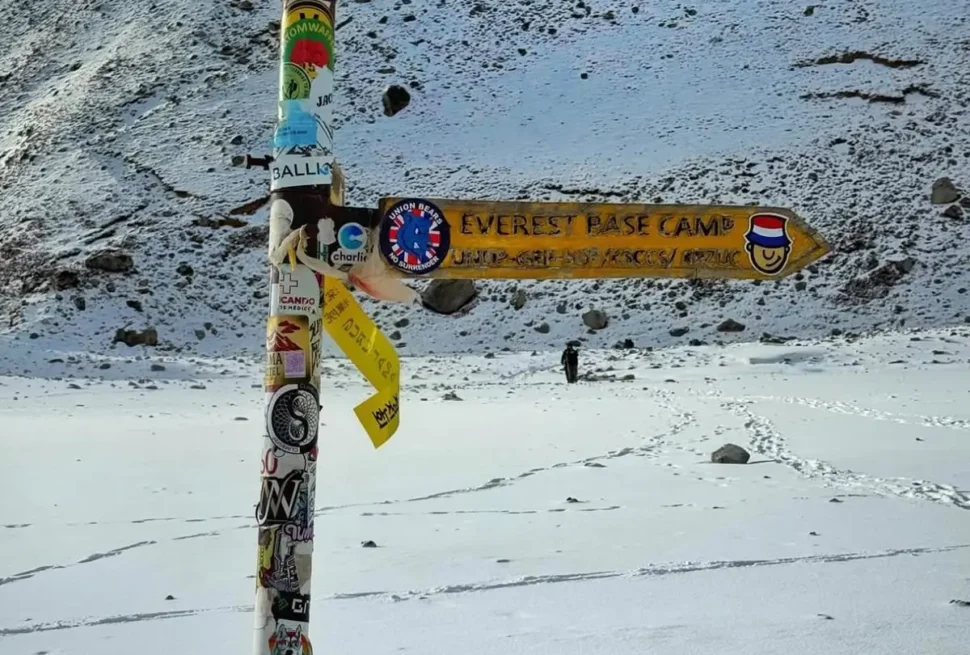
Day 9: Trek to Gorak Shep (5,164m), continue to Everest Base Camp (5,364m), return to Gorak Shep. The single biggest day of the trip. Everest’s summit itself is not visible from Base Camp, hidden behind the West Ridge, but the Khumbu Icefall and the glacier landscape are dramatic and worth every step.
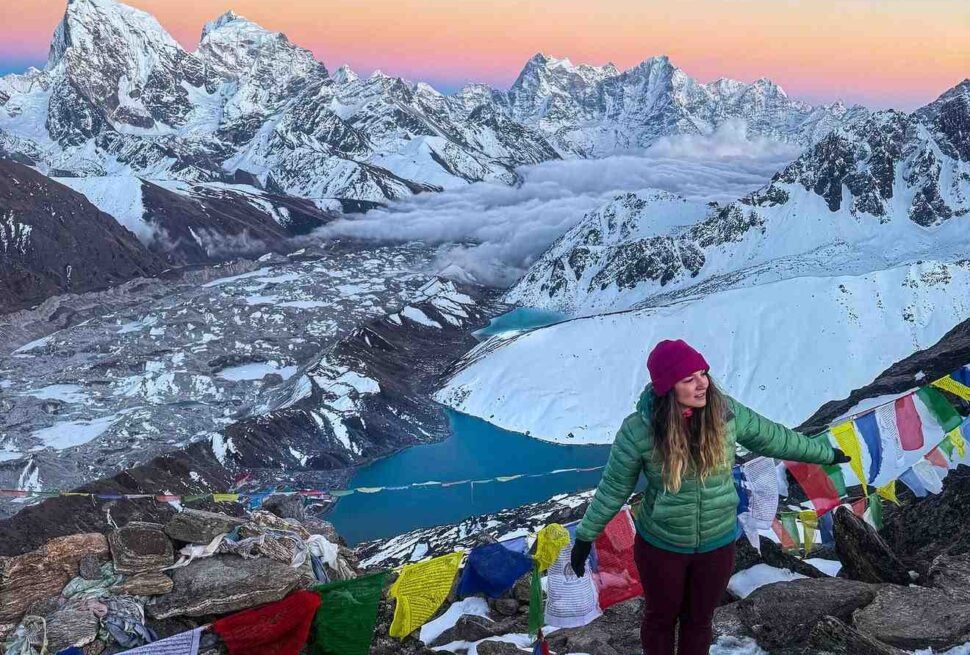
Day 10: Hike to Kala Patthar (5,545m) for sunrise, then helicopter flight to Kathmandu. This is where the return method departs from the standard trek. After the sunrise viewpoint, most itineraries have the helicopter meet you at or near Gorak Shep. The flight back typically takes under an hour compared with the six to eight days a full walk out would require, and it often includes a landing near the Everest View Hotel for breakfast before continuing to Kathmandu.
Day 11: Departure or buffer day. A buffer day here absorbs any Lukla or helicopter delays earlier in the trip without threatening your international flight home.
Why Itinerary Length Varies
Some companies advertise this trip in as few as eight days, and others extend it to eleven or twelve. The variation usually comes down to three things: whether a second acclimatization day is built in at Dingboche, whether a dedicated buffer day is included near the end for weather delays, and whether the itinerary starts trekking the same day as the Lukla flight or gives you a rest day beforehand. An itinerary that looks shorter on paper because it has removed a buffer day is not actually a better trip. It is a riskier one for your international connections.
Cost of Everest Base Camp Helicopter Tour Return Trek
Pricing for an Everest Base Camp helicopter tour return trek varies more than pricing for the standard trek, largely because the helicopter component itself fluctuates with season, fuel prices, and whether you are on a shared or private flight. As a rough range, most travelers should expect to budget between USD 2,500 and USD 5,000 per person for a properly organized trip, with private helicopter charters, solo trekking, and peak season dates pushing toward the higher end, and shared flights with a small group pushing toward the lower end.
Treat any number you see online, including the range above, as a starting point for a conversation with an agency rather than a fixed price. Costs move with the season, with fuel prices, with helicopter availability on your specific dates, and with group size.
What Drives the Price
| Cost Factor | Why It Affects the Price |
|---|---|
| Helicopter flight | Aircraft type, route length, shared versus private seating, and same day availability all change the fare significantly |
| Trek duration | More walking days mean more nights of accommodation, meals, and guide fees |
| Guide | An experienced, government licensed guide costs more than an unlicensed one, and that difference is worth paying for |
| Porter | Optional but recommended, typically charged per day and per trekker or shared between two trekkers |
| Permits | Sagarmatha National Park entry and the local rural municipality permit are both required and priced in Nepali rupees |
| Accommodation | Standard teahouses cost less than the handful of upgraded lodges available at Namche and a few other stops |
| Meals | Prices rise with altitude since everything above Lukla arrives by porter or yak |
| Transportation | Kathmandu airport transfers and, in peak season, the additional road transfer to Manthali airport for the Lukla flight |
| Group size | Private treks and private helicopter charters cost more per person than joining a shared group |
| Season | Spring and autumn carry higher demand and higher prices than winter or monsoon dates |
A Practical Note on Helicopter Pricing Specifically
The helicopter segment is priced very differently depending on whether you join a shared flight with other trekkers, typically four to five passengers per aircraft, or charter the helicopter privately for your own group. Shared flights bring the per person cost down substantially but depend on enough trekkers being ready to fly on the same day, which can mean waiting for a full group before departure. A private charter guarantees your schedule but costs several times more per person. Ask your agency to quote both options separately so you can compare honestly rather than being shown only the cheaper shared price and then finding out later that a private charter was actually what was booked.
Best Time for Everest Base Camp Helicopter Tour Return Trek
Season affects two separate things on this trip: trekking conditions on the ground, and helicopter flying conditions in the air. They do not always move together, which is worth understanding before you pick your dates.
| Season | Weather | Visibility | Trekking Conditions | Helicopter Considerations |
|---|---|---|---|---|
| Spring (March to May) | Mild and warming through the season, occasional afternoon cloud buildup | Generally good, strongest in March before pre monsoon haze increases | Excellent, rhododendrons in bloom at lower elevations, busiest season of the year on the trail | Strong flying season, though afternoon cloud can delay departures, so early morning flights are preferred |
| Summer / Monsoon (June to August) | Frequent rain, especially in the lower valleys | Poor, persistent cloud cover common at altitude | Trails are wet, leeches present below Namche, landslide risk on some sections | Weakest flying season of the year, frequent cancellations and delays, generally not recommended for this trip |
| Autumn (September to November) | Stable and clear following the monsoon | Excellent, often the best of the year, particularly in October | Ideal conditions, second busiest season, teahouses fill up so book ahead | Strongest and most reliable flying season, the preferred window for most helicopter operators |
| Winter (December to February) | Cold, especially above Dingboche, occasional snowfall | Often very good on clear days, air is dry | Quiet trails, fewer trekkers, teahouses less crowded but colder | Flying is often good on clear days but snow can close Lukla and complicate ground transfers |
Spring and Autumn in More Detail
Autumn, particularly late September through November, is generally considered the strongest window for this specific trip because it combines stable ground conditions with the most reliable helicopter flying weather of the year. Spring runs a close second and has the advantage of rhododendron blooms in the lower valley, though early afternoon cloud buildup is more common than in autumn, which is why helicopter departures in spring are more often scheduled for the early morning.
Both seasons are peak season, which means higher prices, busier trails, and the need to book Lukla flights and teahouses well in advance. If crowds are a concern, winter offers a much quieter trail with genuinely good visibility on clear days, at the cost of colder nights and a slightly higher chance of a Lukla closure due to snow.
Safety, Altitude and Helicopter Weather Considerations
This is the section most marketing pages gloss over, and it deserves the most direct treatment.
Altitude Does Not Care About Your Fitness Level
Altitude sickness has very little to do with how fit you are. We have guided marathon runners who struggled above Dingboche and first time trekkers in their sixties who acclimatized without issue. The determining factor is ascent rate and how carefully your body is given time to adjust, not your resting heart rate or how many times a week you go to the gym.
Why Namche Bazaar Matters So Much
Namche sits at 3,440 meters, right around the altitude where the body starts needing real time to adjust. The acclimatization day here, which involves a short hike higher followed by a return to the same sleeping altitude, is built on the climb high, sleep low principle that underlies safe high altitude trekking everywhere in the world.
Common Altitude Sickness Symptoms, in Plain Language
Mild symptoms include headache, loss of appetite, and difficulty sleeping. These are common and, on their own, not usually dangerous if you rest at the same altitude rather than continuing up. More serious symptoms, including confusion, loss of coordination, or breathlessness at rest, mean immediate descent, not rest, and should never be pushed through. This is general awareness information, not medical guidance, and any specific symptoms should be assessed by your guide and, where appropriate, a doctor, not managed based on an article you read online.
Why Rest Days Are Non Negotiable
Every acclimatization day removed from an itinerary to make the trip look shorter increases risk. A properly run Everest Base Camp helicopter tour and trek keeps both standard rest days intact regardless of how the return leg is arranged, because the walk in is identical to the standard trek and carries the same altitude risk.
Why Experienced Guides Monitor Trekkers Daily
A good guide checks in daily, sometimes using a pulse oximeter to track blood oxygen saturation, and watches for changes in behavior or coordination that a trekker might not notice in themselves. This is one of the clearest reasons an experienced, licensed guide is worth the extra cost over a budget unguided arrangement.
When a Trekker Should Descend
The general rule used across the industry is straightforward: if moderate symptoms do not improve with rest at the same altitude, or if any severe symptoms appear, descend immediately rather than waiting to see if they pass. This decision should never be delayed in the hope that a helicopter can simply be called in as a shortcut around it.
Helicopters Are Not a Guaranteed Emergency Safety Net
This point matters enormously and gets stated too casually in most marketing material. A helicopter cannot always fly, regardless of how urgent the situation is. Cloud cover, wind, and low visibility in the Khumbu can ground aircraft for hours or occasionally days, even during an emergency. Evacuation availability should never be treated as a guarantee, and it should never factor into a decision about whether to push through worsening symptoms at altitude. Proper travel insurance covering high altitude helicopter evacuation is essential, but insurance pays for a flight that weather still has to permit.
The Practical Reality of Helicopter Flights in the Khumbu
Mountain weather in this region changes fast, often within a single hour. Morning skies are frequently clear while afternoon cloud builds against the peaks, which is exactly why almost all helicopter departures from Base Camp and Gorak Shep are scheduled for early morning. Wind at altitude, particularly around the passes and near Kala Patthar, can also ground flights even on an otherwise clear day. Airport operating conditions at Lukla itself add another layer, since the runway sits on a steep gradient in a narrow valley and closes quickly in poor visibility.
Availability is the other practical constraint. There are a limited number of helicopters actively operating in the Everest region on any given day, shared across multiple trekking companies and multiple purposes including cargo runs and medical evacuations. A helicopter cannot simply fly whenever a traveler wants it to, and a company that promises an exact departure time weeks in advance, with no acknowledgment of weather dependency, is not being fully honest with you.
Build Flexibility Into Your Plans
The single most useful thing you can do to protect your trip is build at least one buffer day into your itinerary near the end, ideally on both the Lukla flight and the helicopter return legs, and avoid booking an international departure flight for the same day your trek is scheduled to finish. Weather delays are common enough in this region that treating them as a possibility rather than an exception will save you a great deal of stress.
What Is Included and What Should You Check Before Booking
Package inclusions vary more between companies on this specific trip than on a standard trek, because the helicopter component is often quoted separately or with different assumptions about shared versus private seating. Before paying a deposit, work through this checklist directly with your agency.
☐ Is the trekking agency legally registered with Nepal’s Department of Tourism? ☐ Is the guide experienced specifically on the Everest Base Camp route, not just the Annapurna or Langtang regions? ☐ Are the Sagarmatha National Park permit and local municipality permit included in the quoted price? ☐ Is the helicopter flight clearly explained, including the operator name and pickup location? ☐ Is the return flight shared with other passengers or private to your group? ☐ What happens, specifically, if the helicopter cannot fly because of weather on your scheduled day? ☐ Are teahouse accommodation and daily meals included for the full trekking portion? ☐ Are airport transfers included on both the Lukla flight and the helicopter return in Kathmandu? ☐ Is travel insurance covering high altitude helicopter evacuation required before departure? ☐ Is a proper two day acclimatization plan, at Namche and Dingboche, built into the itinerary? ☐ What is the cancellation policy, and does it differ for the trekking portion versus the helicopter portion? ☐ What happens to the itinerary and the cost if a delay pushes the trip beyond its planned length?
Why Each of These Matters in Practice
The weather contingency question deserves special attention because it is where most disputes happen after the fact. A trustworthy company will explain, before you book, that a weather delay typically means rescheduling the flight for the next viable window, potentially adding a night in Kathmandu or at a lower altitude teahouse, with additional costs specified in advance rather than negotiated under pressure once you are already stranded at Gorak Shep. If an agency cannot answer this question specifically, that alone is a reason to look elsewhere.
The insurance question matters just as much. Standard travel insurance frequently excludes high altitude trekking above 4,000 or 5,000 meters and often excludes helicopter evacuation entirely unless a specific rider is added. A company that does not ask to verify this before your trek starts is not doing its job properly, regardless of how good the rest of the package looks.
Who Should Choose an Everest Base Camp Helicopter Tour Return Trek?
The honest answer is that this option suits a specific kind of traveler, not everyone, and it is worth being direct about who benefits most.
A Realistic Comparison of the Three Main Options
| Factor | Full Everest Base Camp Trek | Everest Base Camp Helicopter Tour Return Trek | Everest Base Camp Helicopter Tour Only |
|---|---|---|---|
| Duration | 12 to 16 days | 8 to 11 days | 1 day |
| Walking requirement | Full round trip, approximately 130km | One way walking in, approximately 65km | None |
| Altitude experience | Gradual, two full acclimatization days built around a slow ascent and matching descent | Same gradual ascent and acclimatization as the full trek | Rapid altitude exposure with no acclimatization, landing directly at high elevation |
| Scenery | Full trail experience in both directions, including a second pass through villages | Trail experience one way plus an aerial view of the same terrain on return | Aerial views only, brief ground time at high viewpoints |
| Cost level | Moderate | Higher than the full trek due to the helicopter fare | Lower than either trekking option in most cases |
| Physical demand | High, sustained over the full trip | High for the ascent, none for the return | Minimal |
| Time required | Most, two full weeks or more with travel days | Moderate, just over a week including travel days | Minimal, can be done in a single day from Kathmandu |
| Best suited for | Trekkers with ample time who want the complete on foot experience in both directions | Trekkers who want the full ascent experience but have limited time or want to avoid the physical toll of walking back down | Travelers with very limited time, mobility limitations, or no interest in multi day trekking |
Who Benefits Most From the Helicopter Return Option
Travelers with roughly ten days available rather than two full weeks, trekkers who want the complete acclimatized ascent experience but are concerned about knee or joint strain on a long descent, and anyone combining the Everest region with other parts of Nepal within a single trip all tend to get strong value from this option. It also suits trekkers who have already done a full round trip Everest trek previously and want to reach Base Camp again without repeating the entire route on foot.
Who Is Probably Better Served by a Different Option
Trekkers who genuinely want the full trail experience in both directions, including revisiting villages like Namche and Tengboche on the way out, are often happier with the standard round trip trek. And travelers who want the Everest experience without any multi day walking at all, whether due to time constraints, mobility, or simply preference, are better matched to a straightforward Everest Base Camp helicopter tour with no trekking component. Neither of these is a lesser choice. They are simply built for a different kind of trip.
Frequently Asked Questions
How many days does the Everest Base Camp helicopter return trek take? Most properly built itineraries run 9 to 11 days from Kathmandu to Kathmandu, including two acclimatization days and at least one buffer day for weather delays. Versions advertised at 7 or 8 days have usually removed a buffer day, which is worth asking about directly.
How much does an Everest Base Camp helicopter return trek cost? Budget between USD 2,500 and USD 5,000 per person as a starting range, depending on whether the helicopter seat is shared or private, the season, and group size. Get a detailed, itemized quote rather than relying on a single advertised number.
Is the Everest Base Camp helicopter return trek safe? The trekking portion carries the same altitude related risks as the standard Everest Base Camp trek, which are manageable with proper acclimatization and an experienced guide. The helicopter portion adds a separate set of weather dependent considerations, and reputable operators maintain strong safety records, but no operator can guarantee a flight will depart exactly on schedule regardless of conditions.
Can beginners do the Everest Base Camp helicopter return trek? Yes, with realistic preparation. No technical climbing skills are required for the walking portion. What matters more than prior trekking experience is a sensible training period beforehand and a guide who monitors you properly for altitude symptoms throughout.
What is the best month for the trek? Late September through November and March through May are generally the strongest windows, combining good trekking conditions with the most reliable helicopter flying weather of the year.
Does the helicopter fly from Everest Base Camp directly to Kathmandu? The pickup point is typically Gorak Shep rather than Base Camp itself, since Base Camp’s terrain is not suited to helicopter landings during the trekking season. Many itineraries include a stop near the Everest View Hotel for breakfast before continuing on to Kathmandu.
What happens if the helicopter cannot fly because of bad weather? A properly run company will reschedule for the next viable weather window, which may mean an additional night in the mountains or in Kathmandu. Ask your agency to explain this process and any associated costs before you book, not after a delay happens.
Do I need travel insurance? Yes, and specifically insurance that covers high altitude trekking above 5,000 meters and helicopter evacuation. Many standard travel insurance policies exclude both unless a specific rider is added, so read your policy wording carefully before you buy it.
How difficult is the trekking portion? It is rated moderately challenging to challenging, primarily due to sustained altitude exposure rather than technical difficulty. No ropes, crampons, or climbing experience are required at any point on the standard route.
Do I need a guide for Everest Base Camp? A licensed guide is strongly recommended for both safety monitoring at altitude and for coordinating the helicopter logistics, which involve more moving parts than a standard trek. Independent trekking without a guide is possible but removes an important layer of altitude monitoring and weather decision making.
What permits are required? The Sagarmatha National Park entry permit and the local Khumbu Pasang Lhamu Rural Municipality permit are both required for anyone trekking into the region, regardless of whether the return leg is by foot or helicopter.
Is the helicopter return better than trekking back to Lukla? Neither is objectively better. The helicopter return saves time and spares your joints the descent, while walking back gives you a second, more relaxed look at the villages and a stronger sense of having completed the full journey on foot. The right choice depends on your time, your body, and what kind of experience you are actually looking for.
Conclusion
Choosing the right Everest Base Camp helicopter-return trek comes down to a handful of honest questions rather than picking the package with the most dramatic photos. How much time do you actually have, and does the itinerary you are looking at protect both acclimatization days, rather than compressing them to make the itinerary look shorter? What is your realistic budget once permits, guide fees, porter costs, and the specific helicopter arrangement, shared or private, are all added together rather than judged by a single headline price? Is your fitness and altitude tolerance suited to the same ascent every other Everest Base Camp trekker completes, since the helicopter only changes the way you come down, not the way you go up?
Beyond your own preparation, the quality of your trekking company determines almost everything else. A company with real experience running this specific trip will talk about weather contingencies, helicopter operators, and acclimatization schedules specifically and without hesitation, because they have handled the delays and the edge cases before. One that speaks only in reassurances and marketing language has probably not.
Build flexibility into your dates, verify your insurance covers helicopter evacuation before you leave home, and choose a guide and company that treat altitude and mountain weather with the seriousness they deserve. Get those decisions right, and an Everest Base Camp helicopter tour return trek is one of the more efficient, genuinely memorable ways to stand at the base of the world’s highest mountain and see the Khumbu from both the ground and the air in a single trip.
Related reading: Everest Base Camp Trek, Everest Base Camp Trek with Helicopter Return, Everest Three Passes Trek, Everest Base Camp Trek Cost, How Long Is the Everest Base Camp Trek, Everest Base Camp Trek Safety Guide, How to Book the Everest Base Camp Trek, Everest Base Camp Trek Villages Route Guide