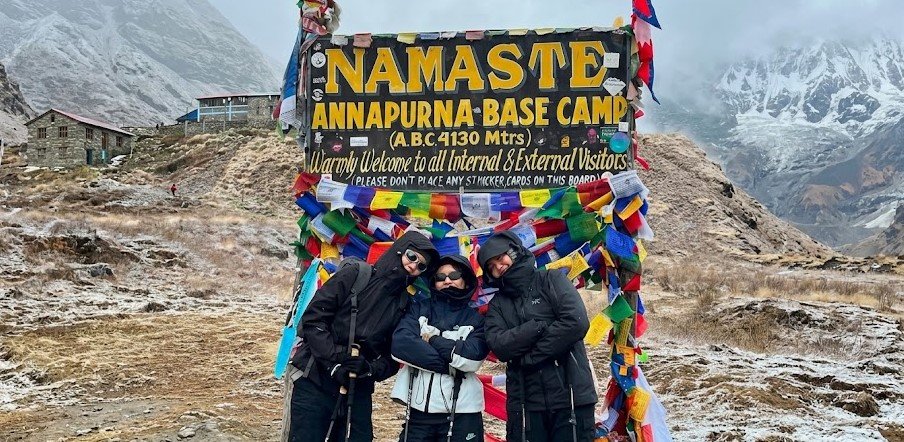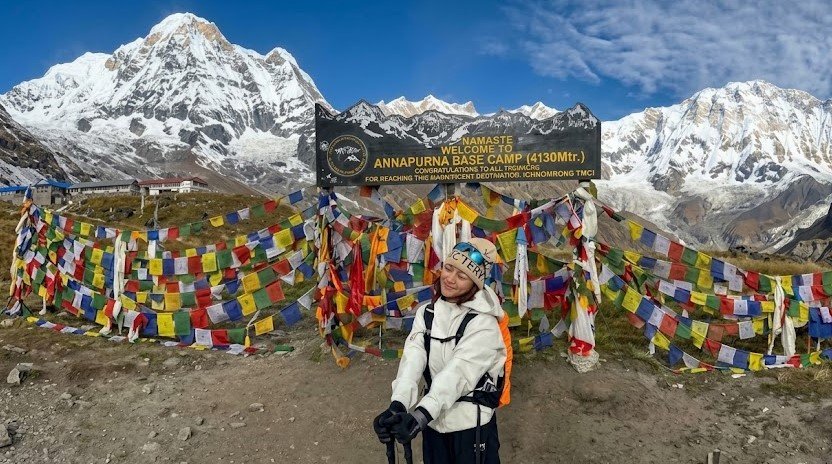
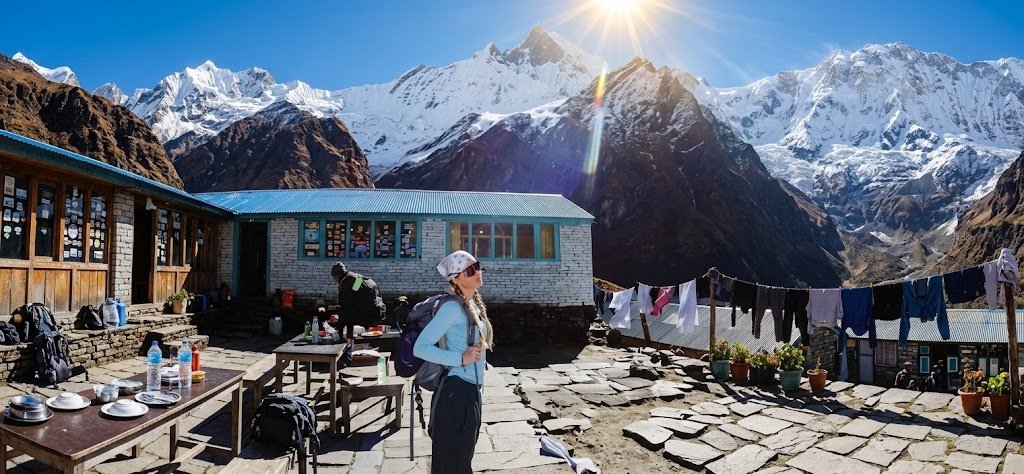
I have guided trekkers into the Annapurna Sanctuary in every month of the year, and December is the one I get asked about the most and recommend the least often, though not for the reasons people assume. Annapurna Base Camp sits at 4,130m, and in December the sanctuary drops to night temperatures around -12°C to -15°C with days that can still climb into positive numbers under clear sun. The real story of December is not the cold. It is the winter closure of teahouses at the sanctuary itself, which changes the entire logistics of the trek in a way no other month does.
December ABC Trek at a Glance
| Season | Early winter |
| Recommended for | Experienced cold weather trekkers only |
| ABC Temperature Range | -15°C to +3°C at 4,130m |
| Pokhara Temperature | 7°C to 22°C |
| Trail Conditions | Dry and clear below 3,000m, ice above |
| Teahouse Availability | Sanctuary teahouses close between late November and mid December, confirm before departure |
| Crowds | Lowest of the year |
| Guide Required | Yes, and I mean it more in December than any other month |
| Overall Difficulty | Hard, cold management and limited teahouse support |
What December Actually Feels Like on the Trail
The lower trail, from Nayapul through Tikhedhunga up to Ghorepani, is dry and pleasant in December. The monsoon is a distant memory by this point, there is no mud, no leeches, and the forest has a stripped, quiet look with bare branches on the deciduous trees. I actually enjoy guiding this section in December because the light is low and golden through most of the day, and the terraced fields around Ghandruk take on a completely different character than the green they show in April.
Above 3,000m the character changes fast. Ice forms overnight on the stone steps between Himalaya and Deurali, and I always carry microspikes for the group from December onward regardless of forecast, because a clear evening can still leave frost that turns those steps dangerous by 7am before the sun reaches them. The final push from Deurali through MBC to ABC crosses open moraine that holds snow through the winter, and after any fresh snowfall this section requires real caution and sometimes full crampons rather than microspikes.
December Weather Table by Location
| Location | Night Low | Day High | Conditions |
|---|---|---|---|
| Pokhara (827m) | 7°C | 22°C | Clear and dry, cool mornings |
| Tikhedhunga (1,540m) | 3°C | 18°C | Clear, bare winter forest |
| Ghorepani (2,860m) | -3°C | 10°C | Cold, frost on the ground, superb Poon Hill air clarity |
| Chhomrong (2,170m) | 2°C | 14°C | Pleasant days, cold nights |
| Himalaya (2,920m) | -4°C | 8°C | Icy mornings, sharp daytime clarity |
| Deurali (3,230m) | -8°C | 4°C | Cold, ice on the steps, snow possible |
| MBC (3,700m) | -12°C | 1°C | Very cold, snow on the ground |
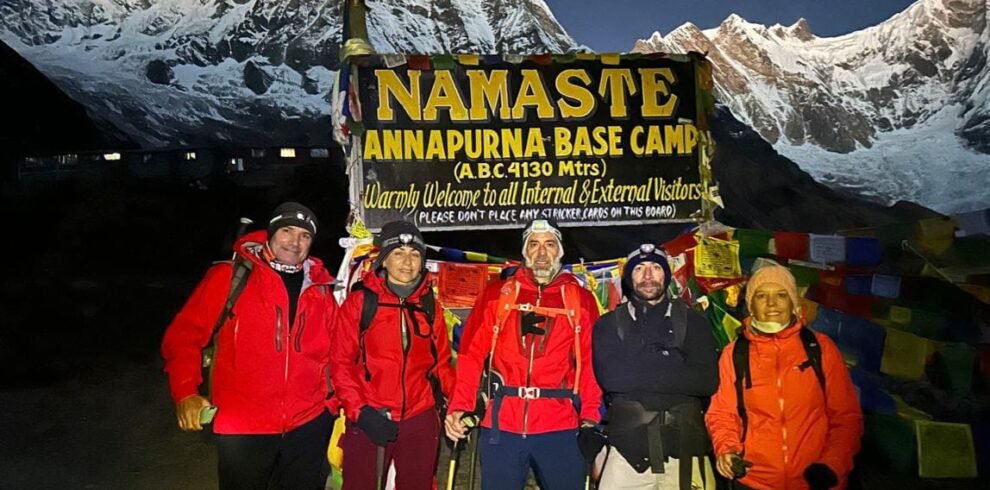
| ABC (4,130m) | -15°C | 3°C | Extreme cold at night, the clearest mountain air of the year |
What this table does not fully capture is the swing within a single day at altitude. I have stood at ABC at 6am in December wearing every layer I own with the thermometer reading -14°C, then been down to a base layer by 1pm in direct sun with almost no wind. That swing of nearly 18°C in a single day is the single hardest thing to prepare mentally for on a December trek, more than the absolute cold itself.
The Teahouse Closure Question, and Why It Matters More Than the Cold
This is the section that actually determines whether your December ABC trek reaches Base Camp at all. Every year, the sanctuary teahouses at ABC itself, and often at MBC, close for the winter season sometime between late November and mid December. There is no fixed date. In some years a teahouse at ABC stays open through December 10. In other years every teahouse above Deurali is shuttered by December 1. This is a decision made by individual teahouse owners based on their own read of demand and weather, not a schedule anyone publishes in advance.
What this means practically is that I will not confirm a December ABC departure without calling the teahouse operators directly in the days before we leave Pokhara. If the ABC teahouses are closed on your dates, we adjust the plan, either turning the trek into an MBC trek if that teahouse is open, or a Deurali trek if it is not. I would rather tell you honestly before you fly to Nepal that ABC itself may not be reachable in early December than let you discover a locked teahouse door at 4,130m in the dark.
The lower and middle sections of the route do not have this problem. Teahouses from Tikhedhunga through Chhomrong and into the gorge at Bamboo and Himalaya operate through the winter because they serve local traffic as well as trekkers. Deurali usually has at least one operator open through December, which is your last confirmed stop before the uncertain zone begins.
December Trail Conditions in Detail
Below 2,500m the trail is in its best possible state in December. No mud, no leeches, firm dry stone steps the entire way from Nayapul to Chhomrong. This is honestly an underrated month for that lower section alone, and I have guided December trekkers who never intended to push past Chhomrong originally, purely wanting the dry conditions and quiet trail, then decided to continue once they saw how manageable the weather actually was.
The gorge section between Sinuwa and Deurali is where ice becomes a daily reality rather than an occasional hazard. The stone steps here sit in shadow for much of the morning, and overnight temperatures well below freezing turn any residual moisture on the stone into a genuine slip hazard. I brief every December group on foot placement through this section specifically, and I do not let anyone walk it without microspikes once we are past Himalaya.
Above MBC, the trail crosses open moraine toward ABC with minimal tree cover and full wind exposure. A western disturbance, which is the meteorological term for the winter storm systems that periodically move across Nepal from the west, can deposit 20cm to 50cm of snow on this section within 24 to 48 hours. These systems arrive roughly once or twice a month through December, meaning a 10 day December trek has a real chance, somewhere between 40 and 50 percent by my own rough tally over the years, of encountering at least one significant snowfall event during the trip.
What I Tell Trekkers About Western Disturbances
A western disturbance is not something to panic about, but it is something to plan buffer time around. These systems typically pass within a day and a half to two days, and I can usually read the early signs, a particular kind of high cirrus cloud moving in from the west, a drop in the barometric pressure my guides track, a change in the wind direction at Deurali, a day or so before the snow actually arrives. That gives us time to either push ahead of it to ABC and back down, or hold at a lower, warmer teahouse until it passes.
What I do not recommend is booking a December ABC trek with a tight return flight the same day you come off the trail. Build one extra buffer day into your Pokhara return schedule. It has saved more than one December trip of mine from turning into a stressful sprint to the airport.
December Packing List: What I Will Not Let You Skip
December is the coldest version of this trek, and the gear list reflects that. A sleeping bag rated to -20°C is not optional for the ABC and MBC nights. I have seen trekkers arrive with a -10°C bag thinking a few extra blankets from the teahouse will make up the difference, and it does not, not at -15°C with wind. If you only own a -10°C bag, rent or buy a proper winter bag in Kathmandu or Pokhara before you go up, both cities have reliable rental gear shops.
| Category | Item | Why It Matters in December |
|---|---|---|
| Sleep system | Sleeping bag rated -20°C | ABC and MBC nights drop below -12°C regularly |
| Insulation | 800+ fill down jacket, knee length preferred | Standing around camp at dawn requires serious warmth |
| Base layers | Heavyweight merino or synthetic thermal top and bottom | Midweight layers are not enough this month |
| Hands | Liner gloves plus heavyweight outer mitts | Frostbite risk on exposed fingers at dawn photography stops |
| Head | Balaclava plus insulated hat | Wind exposure on the open moraine above MBC |
| Feet | Insulated waterproof boots rated to -10°C, two sock layers | Standard three season boots are inadequate above Deurali |
| Traction | Microspikes, full crampons if snow has fallen | Ice on the gorge steps is a daily feature, not occasional |
| Eyes | Glacier rated sunglasses | Snow reflection at altitude causes photokeratitis within hours without protection |
Permits and Costs in December
Permit requirements do not change by season. You need the ACAP permit, which costs NPR 3,000, about USD 22, and the TIMS Card, NPR 2,000, about USD 15. Both are arranged in Kathmandu or Pokhara and I handle this for every guest before we leave the city, no exceptions and no chasing paperwork on the trail.
December guide and porter rates tend to sit at or slightly below what you would pay in November, reflecting lower demand. A guide runs USD 30 to 40 per day, a porter USD 22 to 28 per day. Accommodation is the variable that swings most in December. If the sanctuary teahouses are running full service, rates are standard. If they are operating limited service, which sometimes happens in the early winter transition, prices can run higher per night to cover the cost of keeping the place heated and stocked. Budget USD 800 to 1,150 per person for a 10 day guided December trek, all inclusive.
We run a no advance payment booking policy on both Manaslu Treks and Expedition and Next Trip Nepal, meaning you do not send money to secure a December date. We confirm logistics, including that critical teahouse availability check, before any payment changes hands.
Altitude Sickness in Cold Conditions
AMS risk in December is the same underlying physiological risk as any month, but cold complicates how you read it. Cold makes people sluggish and slow to respond even without altitude involved, and this can mask or blend with early AMS symptoms like poor coordination and mental fog. I tell my December guides to be more conservative than usual about calling a descent, because you cannot always trust that a trekker’s slowness is purely the cold talking.
Helicopter evacuation, if it comes to that, is weather dependent everywhere in Nepal, but December adds the specific risk of a western disturbance grounding flights for 24 to 48 hours right when you might need one. This is one more reason I keep December groups small and closely watched, and why I am quick to recommend descent on foot rather than waiting for an evacuation that weather might delay.
Who Should Trek ABC in December
I recommend December to trekkers who have done at least one cold weather trek or camping trip above 3,500m before, who own or are willing to rent proper -20°C rated gear, who are traveling with a guide who has actually worked December seasons on this specific route, and who build schedule flexibility into their trip rather than a tight in and out window. If that describes you, December offers something October and November genuinely cannot: near total solitude in the sanctuary and mountain light that has a stark, low angle quality unlike any other season.
I do not recommend December to first time Himalayan trekkers, to anyone without confirmed proper cold weather gear, to solo trekkers without a guide, which is not permitted under current ACAP regulations regardless of season, or to anyone whose travel dates cannot absorb a weather delay.
What You Actually Get in December
For the right trekker, December delivers something I genuinely love guiding. The winter sun sits lower in the sky, throwing longer shadows across the Annapurna faces and giving the peaks a depth of colour that the flatter overhead light of October cannot produce. There is more fresh snow on the summit faces than in autumn, which photographers specifically travel for. And the sanctuary in December silence, with no other trekking groups sharing the teahouse dining room, is a different experience entirely from the crowded October version of the same room.
I have taken December groups of four through the entire round trip without passing more than a handful of other parties on the trail. That kind of solitude on a route this famous is genuinely rare and it is the single strongest argument for December among trekkers who already know they can handle the cold.
December Compared to November and January
November still has open sanctuary teahouses in most years and milder cold, roughly -10°C at ABC compared to December’s -15°C, making it the easier choice for a first cold season attempt. January, on the other side of December, is colder still and the closure situation at the sanctuary is usually fully resolved one way or the other by then, meaning you know in advance whether ABC itself is reachable rather than facing December’s genuine uncertainty. December sits in an awkward middle position: colder than November, but with less predictable closure timing than January. That said, early December, specifically the first ten days of the month, often threads the needle well, with teahouses more likely still open and cold that is serious but not yet at its coldest.
The Best Window Within December
If you have flexibility within the month, I steer trekkers toward December 1 to 10. Sanctuary teahouses are most likely to still be operating, the trail has not yet accumulated a full month of winter snowfall, and the cold, while serious, has not reached its January and February extremes. By December 20 onward, I am much more cautious about promising ABC access at all, and I set expectations accordingly before anyone books.
Poon Hill in December: An Underrated Highlight
If I had to pick one specific moment on this route that December handles better than any other month, it is the Poon Hill sunrise. The winter air at 3,210m in December is the clearest of the entire year, with none of the residual autumn atmospheric moisture that can soften October’s views. Dhaulagiri at sunrise in December light has a crispness and a depth of shadow that October simply does not produce. And you will very likely have the viewpoint to yourself, or close to it, rather than sharing it with the busloads of October crowds. Pre dawn temperature at Poon Hill in December runs around -5°C to -8°C, cold but entirely manageable with a proper down jacket and hat.
A Guide’s Honest Take on December
People sometimes ask me why I do not simply discourage December trekking altogether given the uncertainty around teahouse access. My answer is that some of the most memorable treks I have guided happened in December, precisely because the trekkers who choose this month tend to be the ones who have done their homework, packed properly, and come with realistic expectations rather than a fixed idea of exactly what the trip must include. If ABC itself is closed on your dates and we turn the trip into an MBC trek instead, you still stand within sight of Annapurna South and Machhapuchhre at 3,700m in near total winter silence, which is its own remarkable experience even without the final push to 4,130m.
Booking a December Trek With Us
When someone books a December ABC trek with Next Trip Nepal, I personally confirm sanctuary teahouse status through our local network in the week before departure, not weeks in advance when the picture can still change. Your Kathmandu arrival includes a stay at the Moonlight Hotel in Thamel as part of the package, and every guest receives an NTC SIM card on arrival so you can stay in contact with family while we are on the trail and to receive updates from me directly about any weather related plan changes. We do not ask for advance payment to hold your December date, we confirm the logistics first.
December Day by Day Itinerary
I run December departures on a slightly slower schedule than the standard 10 day itinerary, giving the group more buffer around the sanctuary section where teahouse status and weather can change plans. Here is how a typical December trek with me actually unfolds.
| Day | Route | Altitude | Notes |
|---|---|---|---|
| 1 | Pokhara to Tikhedhunga | 827m to 1,540m | Dry, clear lower valley walking |
| 2 | Tikhedhunga to Ghorepani | 1,540m to 2,860m | 3,600 stone steps, cold but manageable |
| 3 | Poon Hill sunrise, on to Chhomrong | 2,860m to 2,170m | Best Poon Hill air clarity of the year |
| 4 | Chhomrong to Himalaya | 2,170m to 2,920m | Entering the gorge, ice begins appearing |
| 5 | Himalaya to Deurali | 2,920m to 3,230m | Last confirmed open teahouse before the uncertain zone |
| 6 | Deurali to MBC, confirm ABC status | 3,230m to 3,700m | Decision point on whether ABC teahouses are open |
| 7 | MBC to ABC and back to MBC, or full day at MBC if ABC is closed | 3,700m to 4,130m | Coldest night of the trip regardless of which option |
| 8 | Descend to Himalaya or Bamboo | 3,700m to 2,600m | Fast descent once past the ice sections |
| 9 | Continue to Jhinu Danda | 2,600m to 1,780m | Hot spring by the river, a genuine relief after a week in the cold |
| 10 | Jhinu Danda to Nayapul, drive to Pokhara | 1,780m to 827m | Trek concludes |
Notice Day 6 and 7 are written with a built in contingency rather than a fixed plan. This is deliberate. I do not promise a December group that ABC itself is reachable until I have confirmed it, and the itinerary structure reflects that honestly rather than papering over the uncertainty.
What a December Morning at ABC Actually Involves
If you do reach ABC in December, the morning routine is different from any other season. You wake in a cold room, the water in your bottle sometimes has a skin of ice on it, and stepping outside before the sun clears the ridge means facing that -14°C to -15°C air directly. I tell every December group to dress fully inside the teahouse before stepping out, not to rely on a quick dash outside and back. The sunrise itself, when the first light hits Annapurna I’s summit snowfields, turns the mountain gold within minutes, and the temperature swing that follows as the sun reaches the sanctuary floor is genuinely dramatic, sometimes 8°C to 10°C of warming within the first hour after sunrise.
Renting Winter Gear in Kathmandu and Pokhara
Not everyone owns a -20°C sleeping bag or a full winter down system, and that is fine. Both Kathmandu’s Thamel district and Pokhara’s Lakeside have reliable trekking gear rental shops carrying genuine winter rated equipment, not the thin three season gear sometimes passed off as adequate. A -20°C sleeping bag rents for roughly USD 1 to 2 per day, a heavy down jacket similarly. I help arrange this for guests during our Kathmandu briefing before departure, checking the actual gear rather than trusting a shop’s rating claim on faith, since I have seen bags labeled -20°C that clearly were not.
Photography Considerations in December
December draws a specific kind of trekker who comes primarily for photography, and I understand why. Batteries drain much faster in extreme cold, so I tell photographers to keep spare batteries inside an inner jacket pocket against body heat rather than in a cold camera bag. Condensation is a real risk moving a cold camera into a warm teahouse, so let the camera acclimatise inside a sealed bag for 20 to 30 minutes before opening it in a warm room. The low winter sun angle gives roughly two extended golden hour windows each day rather than the compressed dawn and dusk light of summer months, which is a genuine advantage for anyone serious about capturing the peaks.
Do I need travel insurance specifically for a December trek?
Yes, and confirm it explicitly covers high altitude trekking and emergency helicopter evacuation up to at least 4,500m. Standard travel insurance policies often exclude trekking above 3,000m or specifically exclude helicopter rescue, which matters more in December given the additional weather related evacuation risk.
Will I get proper wifi and phone signal in December?
Yes, the NTC mobile signal reaches most of the route including the sanctuary in clear conditions, and every guest receives an NTC SIM card on arrival in Kathmandu. Signal can be intermittent above Deurali during snowfall, which is one more reason I keep in direct contact with the office during any December departure.
How December Compares to a Monsoon Trek
Trekkers sometimes ask me to rank December against the monsoon months of July and August, since both are considered off season with lower crowds. The comparison surprises people. Monsoon trekking means near daily rain, leeches on the lower trail, and clouds that frequently obscure the peaks entirely for days at a time, though the rain itself is not cold. December means dry, clear conditions with reliable mountain visibility but genuine cold and the sanctuary closure risk. If I had to choose between the two for a trekker who wanted guaranteed mountain views, I would choose December every time despite the cold, because at least you can see what you came for. Monsoon trekking, by contrast, can mean a full week without a clear view of Annapurna at all.
Group Size and December Departures
I keep December groups smaller than peak season departures, usually four to six trekkers rather than the eight to ten I might run in October. Smaller groups move faster through the ice sections, are easier to keep warm and accounted for at rest stops, and give me more direct oversight if weather forces a change of plan partway through. If you are booking as a solo traveler, we pair you with our existing December departures rather than sending a single trekker with just one guide, both for safety and for the shared experience of a small group navigating winter conditions together.
What Past December Trekkers Tell Me Afterward
The feedback I hear most consistently from December groups afterward is surprise, specifically that the cold was more manageable than they feared and the solitude was more valuable than they expected. Several trekkers who had done October previously told me the December version felt like an entirely different trek on the same trail, not just a colder version of the same experience. The absence of crowds changes the pace, the conversations with teahouse owners who have more time to talk, and the overall rhythm of each day in a way that is hard to describe until you have experienced both versions yourself.
Is travel insurance more expensive for a December trek?
Generally no, the premium is based on altitude and activity rather than season. What matters is confirming the policy covers your specific maximum altitude and includes helicopter evacuation, regardless of which month you travel.
Can I combine a December ABC trek with a Kathmandu cultural tour?
Yes, and I recommend it. December is an excellent month for Kathmandu sightseeing with clear skies and comfortable daytime temperatures in the valley, a pleasant contrast before or after the cold of the mountains.
What should I do if I am not confident about the cold once I am on the trail?
Tell your guide immediately. I would always rather adjust a December itinerary, turning back a day early or stopping at a lower elevation, than push a trekker who is genuinely struggling with the cold toward a summit that is not worth a cold injury.
Food and Water in December
The menu at teahouses does not change dramatically by season, but the practical experience of eating and drinking does. Dal bhat remains the most reliable, filling option at every stop, and I encourage December trekkers to lean into it more than they might in warmer months, since the extra carbohydrates and calories genuinely help with cold tolerance. Hot drinks, ginger tea, garlic soup, hot lemon, are not just comfort in December, they are a real part of staying warm through the evening. Water bottles left outside a teahouse room overnight will freeze solid, so I tell every guest to bring their bottle inside the sleeping bag with them, which also means you wake up to water that has not turned to ice.
Water purification tablets can work more slowly in near freezing water, so allow extra contact time before drinking, or better, ask the teahouse to boil water directly, which is available at every stop on the route for a small charge.
Physical Preparation Specific to December
Beyond the general fitness needed for any ABC trek, December specifically rewards trekkers who have practiced walking in cold conditions before arriving, even something as simple as regular cold weather hikes at home in the weeks before departure. Cold muscles are more prone to strain, and the mental discipline of layering correctly before you feel cold, rather than after, is a habit worth building before you are relying on it at 4,130m. I also recommend a few practice sessions wearing your full glove and mitt system to make sure you can still manage zippers, camera controls, and trekking pole straps with them on, since fumbling with frozen fingers on the trail is both frustrating and genuinely risky.
Drive and Flight Logistics Around a December Trek
Getting to the trailhead for ABC does not involve the flight uncertainty that affects Everest region treks, since Nayapul is reached by road from Pokhara in under an hour, and Pokhara itself is connected to Kathmandu by both a scenic mountain flight of about 25 minutes and a longer 6 to 7 hour road journey. December road conditions on the Kathmandu to Pokhara highway are generally good, dry and clear, though early morning fog in the Kathmandu valley can occasionally delay the first flights of the day by an hour or two. I build this into the schedule by avoiding the very first flight slot where possible, giving a small buffer before the trek itself begins.
On arrival in Kathmandu, your stay at the Moonlight Hotel in Thamel is included as part of the standard package, giving you a comfortable, centrally located base for the pre trek briefing, permit processing, and any last minute gear checks before heading to Pokhara.
Frequently Asked Questions
Are the ABC teahouses open in December?
Sometimes, but not reliably. The sanctuary teahouses close for winter somewhere between late November and mid December most years, with the exact date varying by operator. I confirm directly with teahouse owners in the days before departure rather than assuming access based on the calendar alone.
Is December safe for the ABC trek?
Yes, with proper gear and an experienced guide. The primary risks are cold injury, ice on the gorge steps, and western disturbance snowfall events. All three are manageable with preparation and conservative decision making, but December is not the month to attempt underprepared or without a guide who knows this specific season on this specific route.
What is the best time within December for ABC?
The first ten days of December give the best balance of still open teahouses and manageable, rather than extreme, cold. By late December the closure picture is less predictable and the cold intensifies further.
Is the Poon Hill sunrise worth doing in December?
Yes, arguably the best version of it all year. Winter air clarity is unmatched, the viewpoint is nearly empty, and the low angle winter light on Dhaulagiri and the Annapurna range is genuinely spectacular.
How cold does it get at Annapurna Base Camp in December?
Night temperatures at ABC in December regularly reach -15°C, with days climbing to around +3°C in direct sun. The swing between the two within a single day is often close to 18°C.
Do I need crampons for the ABC trek in December?
Microspikes are essential above 3,000m for the whole month. Full crampons become necessary specifically after a fresh snowfall on the moraine section between MBC and ABC.
What happens if the ABC teahouses are closed when I arrive?
We adjust the itinerary to the highest point with confirmed open accommodation, usually MBC at 3,700m or Deurali at 3,230m if MBC is also closed. This is decided before you leave Pokhara, not discovered on the trail.
Can beginners trek ABC in December?
I generally do not recommend December for first time Himalayan trekkers. The combination of extreme cold, ice, and uncertain teahouse access is better suited to trekkers who already have cold weather experience.
How many other trekkers will I see in December?
Very few. December is the quietest month of the year on this route. It is common to go a full day without passing another trekking group above Chhomrong.
What is a western disturbance and should I worry about it?
It is a winter storm system that periodically crosses Nepal from the west, bringing one to three days of snowfall at altitude. They occur roughly once or twice a month in December. Build a buffer day into your return schedule rather than worrying about it directly, since an experienced guide can usually read the early signs and plan around it.
Annapurna Base Camp Trek: Complete Monthly Guide
Use these month by month guides to plan your ABC trek around the exact conditions you want, or visit the Annapurna Base Camp Trek package page for the full itinerary, cost and booking details. Trek in January, February, March, April, May, June, July, August, September, October, November, or December.
Other Annapurna Region Treks Worth Considering
If a shorter trip suits your schedule better, our 6 Day Annapurna Base Camp Trek compresses the route for fitter trekkers with less time. For those who want the Poon Hill sunrise without continuing to the sanctuary, the standalone Ghorepani Poon Hill Trek is a shorter alternative. Trekkers seeking a different angle on the Annapurna range without the full ABC distance often choose the Mardi Himal Trek, and those with extra time in Pokhara can add the two day Australian Base Camp Trek.
If Poon Hill is part of your plan, read our guide on choosing the best Ghorepani Poon Hill trek company before you book.