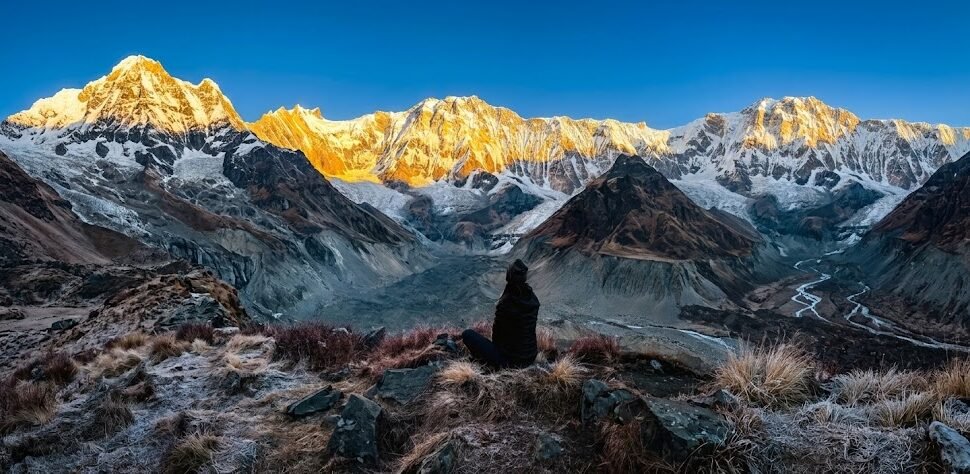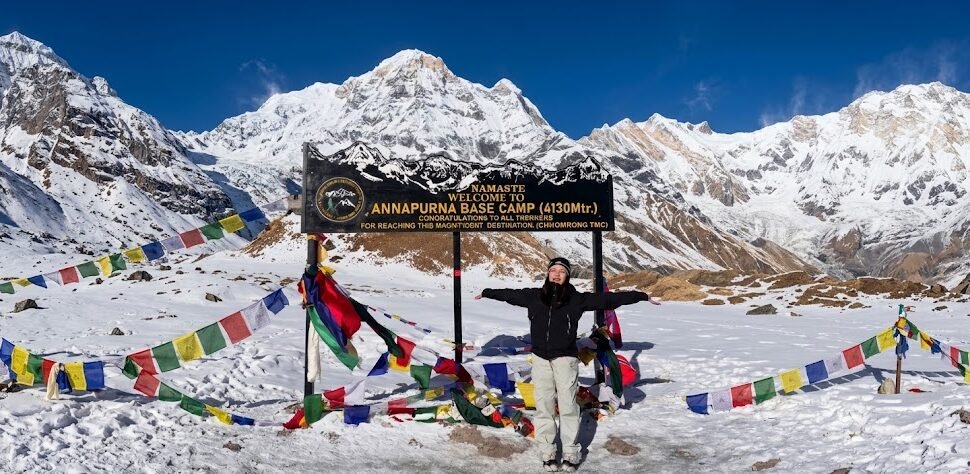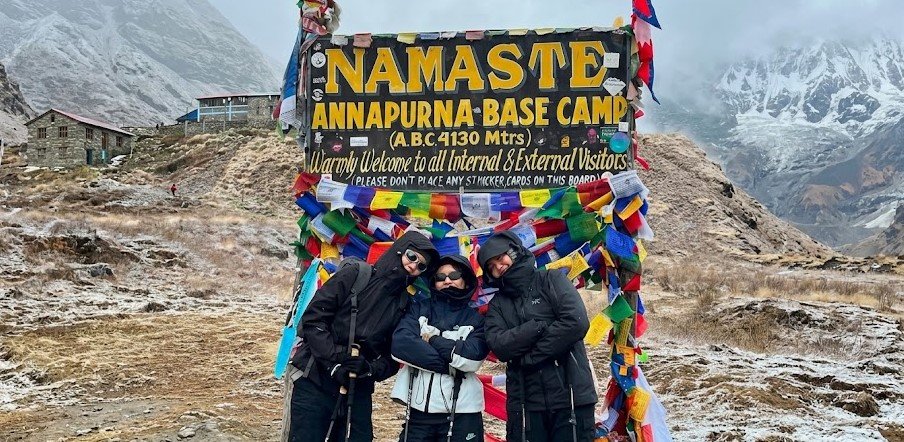
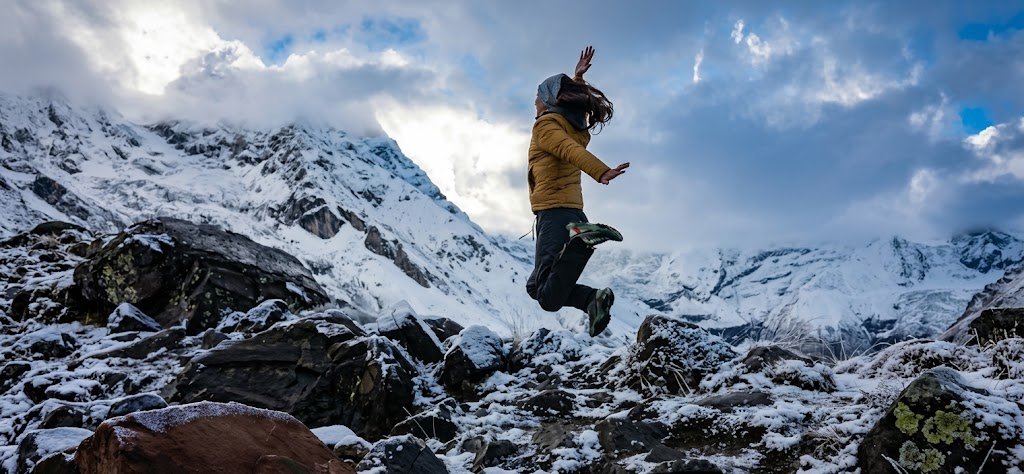
April is the month I point photographers and flower lovers toward before any other, and after guiding it for years I still catch myself stopping mid trail to look at a rhododendron slope I have walked past a hundred times before. Annapurna Base Camp sits at 4,130m, and in April the sanctuary sees night temperatures around -10°C with days reaching about +5°C, while the forest between 1,800m and 3,500m explodes into one of the most dramatic rhododendron displays anywhere in the Himalaya. This is peak spring season on the ABC route, and the conditions genuinely rival October for reliability while offering something October cannot, the bloom itself.
April ABC Trek at a Glance
| Season | Peak spring trekking season |
| Recommended for | All trekkers, ideal conditions across the board |
| ABC Temperature Range | -10°C to +5°C at 4,130m |
| Pokhara Temperature | 19°C to 31°C |
| Trail Conditions | Excellent throughout, no snow on the main trail |
| Rhododendrons | Peak bloom between 1,800m and 3,500m |
| Teahouse Availability | Fully open, advance booking recommended for ABC and MBC |
| Trek Duration | 7 to 10 days Pokhara to Pokhara |
| Guide Required | Yes, mandatory under ACAP regulations |
| Overall Difficulty | Moderate, some of the best conditions of the year |
April Weather Table by Location
| Location | Night Low | Day High | Conditions |
|---|---|---|---|
| Pokhara (827m) | 19°C | 31°C | Hot and humid, possible afternoon showers |
| Tikhedhunga (1,540m) | 14°C | 26°C | Warm, rhododendrons at peak, occasional afternoon cloud |
| Ghandruk (1,940m) | 10°C | 22°C | Warm, green, good mountain views |
| Ghorepani (2,860m) | 5°C | 17°C | Perfect trekking weather, rhododendrons in full bloom |
| Chhomrong (2,170m) | 8°C | 20°C | Comfortable, clear mornings, afternoon cloud |
| Bamboo and Sinuwa (2,310m) | 6°C | 17°C | Dense rhododendron forest, the best bloom section of the route |
| Himalaya (2,920m) | 2°C | 13°C | Cool and clear, good visibility |
| Deurali (3,230m) | -1°C | 10°C | Trail clear of snow, morning frost possible |
| MBC (3,700m) | -5°C | 7°C | Cold nights, spectacular peak views, clear mornings |
| ABC (4,130m) | -10°C | 5°C | Cold nights, warm afternoons in the sun, snow patches remain |
What stands out to me most in this table is how comfortable the middle elevations are. Between 1,800m and 2,900m, April daytime temperatures sit in a genuinely pleasant range, and this is exactly the band where the rhododendron forest is putting on its best show. I tell guests planning an April trek that the middle days of the itinerary, not the summit day, are often the ones people remember most vividly afterward.
The Rhododendron Bloom in Detail
Nepal’s national flower, the rhododendron, grows in genuine forest density along the lower and middle sections of the ABC route, and April is the peak of the bloom. The colour progression follows elevation, lower slopes around 1,800m to 2,200m bloom first, typically flowering through late March into early April, while higher elevations up toward 3,000m and 3,500m bloom later, often peaking in mid to late April. This means an April trek frequently catches the bloom at two or even three different elevation bands simultaneously, giving a genuinely layered display as you climb.
The colours themselves range from deep crimson red through pink to white, sometimes on trees standing right beside each other on the same slope. The stretch between Bamboo and Sinuwa, and the forest below Ghorepani through Tikhedhunga and Ulleri, are the two sections I consider the strongest for pure density of bloom. I have guided April groups who stopped every few minutes for photographs through these sections, and honestly I do too, even after years of walking the same trail.
Trail Conditions in April
April trail conditions are excellent throughout the route, with no snow on the main trail below the sanctuary itself. The stone steps are dry, and the trail has none of the mud that defines the monsoon months. Above 3,500m near ABC, patches of old snow can remain on shaded sections into April, particularly in a year with a heavier winter, but this rarely requires more than careful footing rather than specialised gear. Occasional afternoon cloud builds up as April progresses toward the pre monsoon transition, sometimes bringing a brief shower at lower elevations, though this is typically short lived and does not disrupt the trekking day.
April Day by Day Itinerary
Day 1: Pokhara to Tikhedhunga (1,540m). A short drive to Nayapul, then walking through the Bhurungdi Khola valley past terraced farms. The lower rhododendron bloom is often already visible on this first day. Walking time 4 to 5 hours.
Day 2: Tikhedhunga to Ghorepani (2,860m). The 3,600 stone step climb through Ulleri, walking directly through some of the densest rhododendron forest on the entire route. This is genuinely one of my favourite days of the year to guide. Walking time 5 to 6 hours.
Day 3: Poon Hill sunrise, on to Chhomrong (2,170m). The 4am climb to Poon Hill rewards with a sunrise over Dhaulagiri and the Annapurna range, framed by blooming rhododendron on the approach. After breakfast we descend through Tadapani to Chhomrong. Total day around 8 to 9 hours.
Day 4: Chhomrong to Himalaya (2,920m). Descending to the Chhomrong Khola then climbing through Sinuwa and Bamboo, arguably the single best rhododendron stretch of the whole trek in April. Walking time 5 to 6 hours.
Day 5: Himalaya to Deurali (3,230m). A shorter acclimatisation day through Dovan, with the forest thinning as elevation increases and the bloom giving way to the cooler alpine zone. Walking time 3 to 4 hours.
Day 6: Deurali to Annapurna Base Camp (4,130m) via MBC. The signature day through the upper gorge, reaching MBC at 3,700m before the final ascent across moraine to ABC. Walking time 5 to 6 hours.
Day 7: Full day at Annapurna Base Camp (4,130m). Sunrise on Annapurna I’s summit snowfields, a morning exploring the moraine trails, and rest through the intense midday sun before an early dinner.
Day 8: ABC to Bamboo (2,310m). Descending back through MBC and Deurali into the gorge, walking back through the rhododendron forest a second time, often with new blooms having opened since the ascent days earlier. Walking time 6 to 7 hours.
Day 9: Bamboo to Jhinu Danda (1,760m). Continuing down through Sinuwa and Chhomrong to the natural hot spring at Jhinu Danda. Walking time 4 to 5 hours plus hot spring time.
Day 10: Jhinu Danda to Pokhara. The final walk to Nayapul, 3 to 4 hours, then the drive back to Pokhara.
Teahouses in April
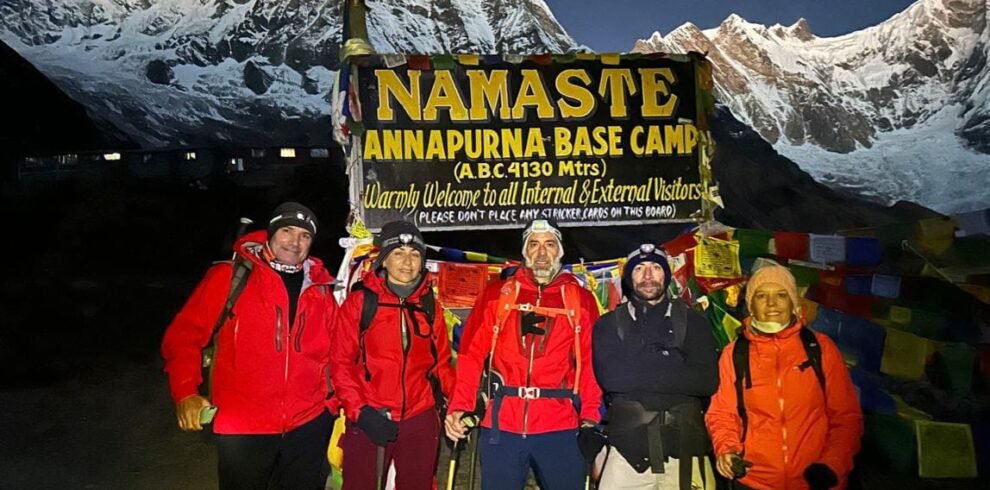
Every teahouse on the route is fully open in April, with no seasonal closures to worry about anywhere along the trail. Advance booking is genuinely recommended for ABC and MBC specifically, since April is a peak month and the sanctuary’s limited room capacity fills on the busiest weeks, particularly around the main bloom period in the second and third weeks of the month. Ghorepani similarly gets busy given its dual role as both the ABC route staging point and the Poon Hill viewpoint access, so I book ahead through our local network rather than relying on walk in availability.
Packing for April
| Category | Item | Notes |
|---|---|---|
| Warmth | Down jacket, 700+ fill power | Essential for ABC and MBC nights |
| Warmth | Sleeping bag rated -15°C | ABC nights regularly reach -10°C |
| Layers | Light breathable base layers | Lower elevations run warm in April |
| Rain | Light waterproof jacket | Occasional pre monsoon afternoon showers |
| Sun protection | SPF 50+ sunscreen | Strong UV exposure at altitude, even on cloudy days |
| Footwear | Waterproof, well broken in boots | Some residual snow patches possible near ABC |
| Photography | Extra memory cards and batteries | The bloom generates far more photo opportunities than most seasons |
Permits and Costs in April
Permit requirements are unchanged year round, the ACAP permit at NPR 3,000, about USD 22, and the TIMS Card at NPR 2,000, about USD 15. April is peak season pricing, similar to October. Guide rates run USD 35 to 50 per day, porter rates USD 28 to 35 per day. Accommodation runs USD 5 to 20 per room, higher at the sanctuary itself. Budget USD 900 to 1,400 per person for a 10 day guided April trek, all inclusive. We do not require advance payment to hold your April date, both Manaslu Treks and Expedition and Next Trip Nepal confirm the itinerary and teahouse bookings first.
Altitude Sickness in April
The same acclimatisation principles apply regardless of season. The rest day at ABC and the shorter day between Himalaya and Deurali remain essential and should not be shortened, even though April’s pleasant conditions can make the trail feel deceptively easy. Helicopter evacuation is reliably available in April given the generally stable weather, and I still recommend descent on foot as the first response to mild or moderate AMS rather than waiting on an evacuation. Diamox, hydration of 3 to 4 litres a day, and honest communication with your guide about how you are feeling remain the core of managing this risk in any month, April included.
April Compared to October
Both months represent peak conditions, but for different reasons. October offers slightly clearer, drier air and the most reliable mountain visibility of the year. April offers the rhododendron bloom, which October cannot match, along with generally comparable trail conditions and similar crowd levels. Temperatures at ABC are broadly similar, though April nights can run marginally colder given the higher likelihood of residual winter influence. If mountain photography and clear peaks are your absolute priority, October edges ahead. If you want that plus a genuinely spectacular forest, April is very hard to beat, and it is the month I most often recommend to guests who ask me to choose for them without a strong preference either way.
A Guide’s Perspective on April
I have guided April ABC treks more times than I can easily count, and the bloom never gets old for me. There is something different about walking through a forest genuinely alive with colour rather than the bare winter version of the same trail, and I notice it changes the mood of every group I guide this month, people talk more, stop more, take more photos, and generally seem to enjoy the walking itself rather than just pushing toward the destination. If I had to pick one single month to recommend to a first time trekker who also loves nature and photography, April would be it, ahead even of October.
Wildlife and Birdlife in April
April’s warmer temperatures and blooming forest bring out significantly more wildlife activity than the colder months. Himalayan langur monkeys are commonly spotted in the forest sections, particularly around Chhomrong and Sinuwa, and birdlife is at its most active, with numerous species of Himalayan pheasant and sunbird visible in the rhododendron canopy for anyone walking quietly enough to notice. I always tell guests to keep their eyes up in the canopy as well as on the trail during April, since the forest is genuinely more alive this month than at almost any other point in the year.
Booking Your April Trek
April dates, particularly through the peak bloom weeks, fill up well in advance. Every guest booking with Next Trip Nepal starts with an included stay at the Moonlight Hotel in Thamel and receives an NTC SIM card on arrival in Kathmandu. I handle ABC and MBC teahouse bookings directly through our local network ahead of departure. As always, there is no advance payment required to hold your April date, we confirm the plan first.
Annapurna Base Camp Trek: Complete Monthly Guide
Use these month by month guides to plan your ABC trek around the exact conditions you want, or visit the Annapurna Base Camp Trek package page for the full itinerary, cost and booking details. Trek in January, February, March, April, May, June, July, August, September, October, November, or December.
Other Annapurna Region Treks Worth Considering
If a shorter trip suits your schedule better, our 6 Day Annapurna Base Camp Trek compresses the route for fitter trekkers with less time. For those who want the Poon Hill sunrise without continuing to the sanctuary, the standalone Ghorepani Poon Hill Trek is a shorter alternative. Trekkers seeking a different angle on the Annapurna range without the full ABC distance often choose the Mardi Himal Trek, and those with extra time in Pokhara can add the two day Australian Base Camp Trek.
What a Typical April Day Looks Like
Mornings in April start around 6am with a simple breakfast, porridge, eggs, or Tibetan bread with honey, before we set off by 7am to make the most of the cooler early hours before the afternoon warmth builds at lower elevations. Through the forest sections, I deliberately build in extra time for photography, since April groups genuinely want to stop and take in the bloom rather than rush through it. Lunch is usually dal bhat at a teahouse along the route, and we aim to reach the overnight stop by mid afternoon, leaving time to rest, explore the village, and enjoy the mountain views before an early dinner and an early night ahead of the next day’s climb.
Photography Tips for the April Bloom
The rhododendron forest photographs best in the soft light of early morning or late afternoon rather than the harsher overhead light of midday, so I try to time our walk through the densest bloom sections, particularly Bamboo to Sinuwa and the climb through Ulleri, for these golden hour windows where the schedule allows. A polarising filter helps cut glare on the waxy rhododendron leaves and deepens the red and pink tones of the flowers themselves. Wide shots capturing entire hillsides in bloom are dramatic, but I also encourage guests to get close to individual blossoms, since the detail and colour saturation up close often produces the most striking images from the whole trek.
The Pre Monsoon Transition Through April
April sits in the transition window between the dry winter and spring season and the onset of the monsoon, which typically arrives in Nepal around early June. Early April feels closer to March, drier and slightly cooler, while late April begins showing the first signs of the approaching monsoon, more frequent afternoon cloud buildup and occasional brief showers, particularly at lower elevations. This is rarely disruptive to the trek itself, but I do mention it to guests planning late April departures so the possibility of an afternoon shower does not come as a surprise.
Group Size and April Departures
April departures with us typically run eight to ten trekkers on scheduled group trips, similar to our October volume given the comparable popularity of the month. Private and custom departures are available at any group size, and April is a particularly popular month for photography focused small groups who want more flexibility to stop and shoot without holding up a larger party. Solo travellers are placed into a scheduled departure to satisfy the ACAP guide requirement and to share the experience with fellow trekkers.
What Past April Trekkers Tell Me
Guests who trek in April consistently tell me the forest itself was as memorable as reaching Base Camp, which is not something I hear as often from other months. Several photographers who have done both October and April with me specifically say April produced their favourite images from the trip, not because the mountain views were better, but because the rhododendron forest gave them something genuinely unique to work with beyond the standard peak shots every trekker captures regardless of season.
Flight and Road Logistics in April
Getting to the trailhead follows the same reliable pattern as other peak months, Nayapul is a short drive from Pokhara, and the Kathmandu to Pokhara connection, whether the 25 minute flight or the 6 to 7 hour road journey, runs smoothly in April’s generally stable weather. Late April can occasionally see afternoon thunderstorm activity build up as the pre monsoon transition approaches, which very occasionally affects afternoon flights, so I favour morning departures for the Kathmandu to Pokhara leg during the second half of the month.
Is April a good time for a family trek with children?
Yes, April’s comfortable temperatures at lower and middle elevations make it one of the better months for families with reasonably fit children or teenagers, and the rhododendron bloom gives younger trekkers something visually engaging to look forward to each day beyond just the distance covered.
Do I need travel insurance for an April trek?
Yes, we require it for every guest regardless of season, covering trekking up to at least 4,500m and helicopter evacuation.
Physical Preparation for April
The fitness demands for an April trek match any other season, roughly six to seven hours of daily walking on stone steps with a net elevation gain of over 3,300m from Pokhara to the sanctuary. I recommend building up to comfortably walking three to four hours continuously on hilly terrain in the two to three months before departure. April’s warmer lower elevation temperatures mean hydration matters even more on the early days of the trek than it does in cooler months, and I make a point of checking that every guest is drinking enough water even before we reach altitude, since the combination of exertion and warmth at 1,500m to 2,000m can catch people off guard if they are used to cooler trekking conditions.
The Ghandruk Alternative Route in April
Some April itineraries route through Ghandruk village at 1,940m rather than the standard Tikhedhunga to Ghorepani approach, and I sometimes recommend this variation specifically for the bloom season. Ghandruk is one of the larger and more established Gurung villages on the route, with excellent close up views of Annapurna South and Machhapuchhre from the village itself, and the surrounding forest carries its own strong rhododendron presence in April. This route adds roughly a day to the standard itinerary but gives a deeper look at local Gurung culture alongside the natural scenery, which some guests specifically request when booking their April trek with us.
Food and Hydration in April
The teahouse menu remains consistent across seasons, dal bhat, noodles, pasta, soups, eggs and pancakes, and April’s warmer lower elevation weather makes fresh vegetables and fruit more readily available at the lower teahouses than in the colder months. I encourage guests to eat well and consistently through the trek rather than skipping meals when the warmer weather reduces appetite compared to cold weather trekking, since the caloric demands of the walking itself do not change regardless of how comfortable the temperature feels. Water purification remains essential throughout, either tablets, a filter, or requesting boiled water at teahouses, which is available at every stop for a small charge.
Mobile Signal and Charging in April
NTC mobile coverage reaches most of the route including the sanctuary in clear conditions, and every guest receives an NTC SIM card on arrival in Kathmandu. Charging is available at every teahouse for a small fee, typically NPR 200 to 500 per device, and I recommend a power bank as backup for the busier April dates when demand for charging outlets at popular stops like ABC and Ghorepani can be high given the season’s popularity.
Jhinu Danda Hot Spring in April
By the time an April group reaches Jhinu Danda on the descent, the natural hot spring by the Modi Khola river offers a genuinely welcome contrast after the cooler nights at altitude. Entry costs around NPR 300, and I build real time into the schedule here, often an hour or more, since it is one of the moments guests consistently mention as a highlight distinct from the mountain views themselves. The warmer April air makes lingering by the river afterward particularly pleasant compared to the cooler evenings of autumn or winter departures.
What is the elevation gain on the April ABC trek?
Roughly 3,300m net gain from Pokhara at 827m to Annapurna Base Camp at 4,130m, spread across the ascent days with two built in acclimatisation stops in the standard 10 day itinerary.
Can I combine an April ABC trek with other Nepal destinations?
Yes, April is an excellent month throughout Nepal, and many guests combine the ABC trek with time in Chitwan National Park for wildlife viewing or Kathmandu and Bhaktapur for cultural sightseeing, both of which have pleasant April weather.
How far in advance should I book an April trek?
I recommend booking at least two months ahead for April dates, particularly for the peak bloom weeks in the second and third weeks of the month, since ABC and MBC teahouse capacity genuinely sells out during this period.
The View From Poon Hill in April
Poon Hill at 3,210m is a highlight in any season, but April adds a dimension the colder months cannot offer. The approach path itself, climbed in the dark with headlamps at 4am, passes through rhododendron forest that frames the trail on both sides, and I have had guests tell me the walk up is nearly as memorable as the sunrise itself once they see the blooms catching the very first hints of light before the sun properly clears the horizon. Dhaulagiri at 8,167m dominates the view to the northwest, with the full Annapurna range stretching east, and April’s clear morning air generally delivers the same quality of visibility as October, sometimes better once the pre monsoon haze has not yet built up for the day.
How April Crowds Compare to October
April draws a genuinely large number of trekkers, though the crowd composition differs somewhat from October. October tends to see more general trekkers drawn by the post monsoon clarity and the Dashain and Tihar festival period, while April specifically attracts photographers and nature enthusiasts targeting the bloom, alongside the general trekking crowd drawn by the excellent conditions. In practice this means similar overall numbers on the trail and at the key teahouses, and I apply the same crowd management strategies I use in October, early starts, advance teahouse booking, and favouring mid week departures where guest schedules allow.
A Note on Leeches in April
Trekkers sometimes ask whether leeches, a genuine concern during the monsoon months, appear at all in April. The honest answer is rarely, though the very end of April, as the pre monsoon transition brings occasional rain, can very occasionally see the first few appear at the lower, more humid elevations below Chhomrong. This is nothing like the monsoon experience and generally not something guests need to prepare for specifically, though I do carry salt in my first aid kit as standard practice on any April departure just in case.
What should I do with my passport and valuables during the trek?
I recommend leaving passports and anything not needed on the trail in the hotel safe in Kathmandu or Pokhara, carrying only a photocopy plus your trekking permits, which reduces what you need to manage at altitude.
Is April warmer than March at Annapurna Base Camp?
Generally similar or slightly milder by day, though nights at ABC can still be genuinely cold in both months. The bigger difference between the two months is the extent of the rhododendron bloom rather than temperature.
What I Tell First Time April Trekkers
Every April, I get guests who have seen photographs of the rhododendron bloom online and want to know if the reality lives up to the images. My honest answer is that it genuinely does, provided you time your trek within the right window and the season has not run unusually early or late that particular year, which does happen occasionally depending on the preceding winter. I stay in close contact with teahouse owners and local guides throughout the region in the weeks before any April departure specifically to track how the bloom is progressing that year, since a slightly early or late spring can shift the peak by a week or more in either direction. This is one advantage of booking through a guide who lives and works the route year round rather than relying purely on a generic calendar date.
Clothing Layers for the April Temperature Swing
April’s wide temperature range, from over 30°C in Pokhara to below freezing at ABC, means the layering strategy matters more this month than almost any other. I advise guests to think in terms of three distinct systems rather than one uniform kit, a light, breathable set for the warm lower valley days, a mid weight layer for the cooler forest sections between 2,000m and 3,000m, and a full down and thermal system reserved specifically for the two nights at MBC and ABC. Trying to use one kit for the entire range of conditions this month typically means either overheating on the lower days or being genuinely cold at altitude, neither of which is necessary with proper planning.
Are there any specific health precautions for April given the warmer lower elevations?
Sun exposure and dehydration are the main considerations at lower elevations in April, given the warmer temperatures. I recommend sunscreen and a hat from Day 1, not just once you reach altitude, along with consistent water intake even before the cooler, higher sections where altitude related hydration advice typically begins.
Tipping and Budgeting Extras for April
Beyond the core trek cost, guests should budget for tipping, drinks, snacks, and charging fees along the way. Tipping guides and porters is customary though not mandatory, a general guideline is USD 8 to 12 per day for a guide and USD 5 to 8 per day for a porter, typically pooled and shared at the end of the trek. Bottled water, hot drinks, snacks, and device charging along the route can add USD 10 to 20 per day depending on personal habits, and I encourage guests to bring sufficient Nepali rupees withdrawn in Pokhara before departure, since there are no ATMs once you leave the city.
Is there an age limit for the April ABC trek?
No strict limit. I have guided both children over ten and trekkers well into their seventies through April successfully, with pacing and itinerary adjusted to genuine fitness level rather than age alone.
What is the single biggest mistake trekkers make planning an April bloom trek?
Booking too rigidly around a fixed date months in advance without any flexibility, then finding the bloom has peaked slightly earlier or later than expected that particular year. Where possible, I recommend a few days of flexibility around your target dates, and staying in contact with a local guide who can advise on how the season is tracking closer to your departure.
Does the rhododendron bloom affect the trail difficulty in any way?
No, the trail itself is unaffected. The bloom is purely a visual feature of the forest sections and does not change the underfoot conditions, steepness, or elevation gain of any given day.
My Closing Thought on April
Every guiding season eventually blurs together somewhat in memory, one October climb into another, one December sunrise into the next. April does not blur the same way for me. Each year the specific slope of rhododendron somewhere between Bamboo and Sinuwa looks slightly different, a little earlier or later, a little more red or more pink depending on the winter that preceded it, and I find myself genuinely curious each year to see what that particular season’s bloom will look like. If you want a trek that gives you the mountains and something entirely separate from the mountains at the same time, April is the answer, and I say that after considering every month on this route fairly.
Should I choose April or May if I want warm weather with the bloom?
April generally offers the stronger bloom of the two, while May trends slightly warmer at lower elevations as the pre monsoon season progresses further. For the best combination of clear weather and peak flowering, April remains my primary recommendation over May.
Is the trail muddy at all in April?
No, April trail conditions are firm and dry throughout, well before the monsoon rains that create mud from June onward. This is one of the reasons April sits alongside October as a top tier month for underfoot conditions.
Frequently Asked Questions
Is April a good month for the ABC trek?
Yes, one of the two best months of the year alongside October. April combines excellent trail conditions with the added highlight of peak rhododendron bloom between 1,800m and 3,500m.
When exactly do the rhododendrons bloom in April?
Lower elevations around 1,800m to 2,200m bloom first, often from late March into early April. Higher elevations toward 3,000m to 3,500m bloom later, typically peaking in mid to late April, meaning an April trek can catch multiple elevation bands blooming at once.
How cold does it get at Annapurna Base Camp in April?
Nights reach around -10°C with days warming to about +5°C in direct sun. A sleeping bag rated to -15°C is what I recommend for comfortable ABC and MBC nights this month.
Is April busy on the trail?
Yes, comparable to October’s crowd levels, particularly during the peak bloom weeks. Advance teahouse booking for ABC and MBC is genuinely necessary rather than optional this month.
Will there be snow on the trail in April?
Generally no on the main trail below the sanctuary. Occasional patches of old winter snow can remain on shaded ground near ABC itself, but this rarely requires more than careful footing.
Is April better than March for the rhododendron bloom?
April generally offers a fuller, more widespread bloom across more elevation bands than March, where the flowering is still concentrated at lower elevations and beginning its ascent up the mountain.
Can beginners trek ABC in April?
Yes, April is an excellent choice for first time trekkers given the stable conditions, comfortable temperatures at most elevations, and forgiving trail underfoot.
Do I need special gear for the rhododendron forest sections?
No special gear is needed for the forest itself. I do recommend extra camera batteries and memory cards given how many photo stops the bloom tends to generate.
What is the best week within April for peak bloom?
The second and third weeks of April typically offer the widest simultaneous bloom across the elevation range, though this varies somewhat year to year depending on the specific winter and early spring conditions.
I am Kiran Basnet, founder of Next Trip Nepal and a licensed guide based in Kathmandu. April is the month I find myself genuinely excited to guide every single year, the forest simply does not look the same in any other season. Message me directly on WhatsApp and I will help you time your April trek for the best possible bloom on your specific dates.
Plan your trip on the Annapurna Base Camp Trek package page, or compare conditions with our guides to ABC in March, ABC in October, and ABC in May. See also our complete Annapurna Base Camp Trek guide and costly mistakes to avoid before booking.