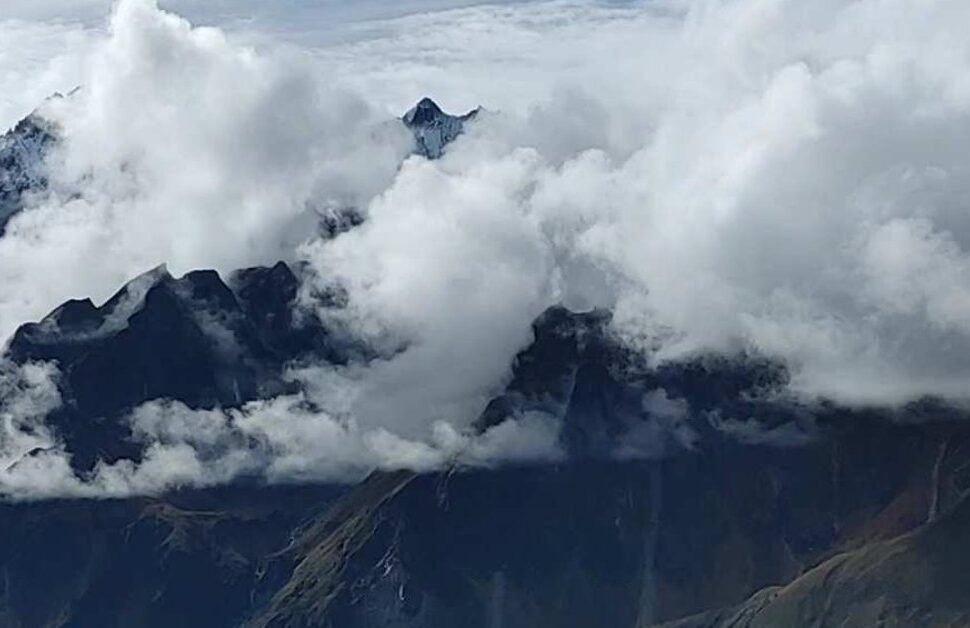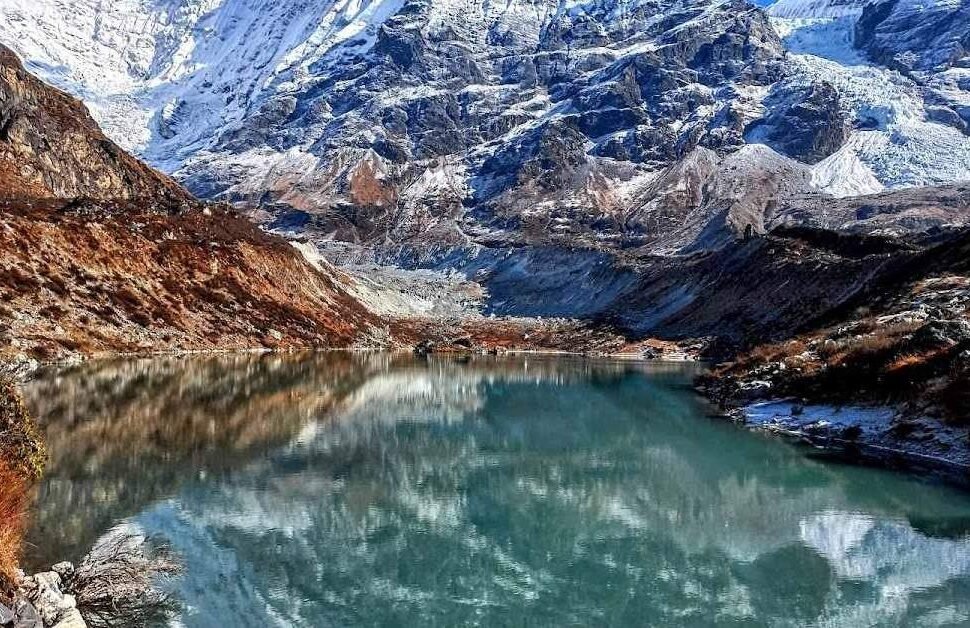
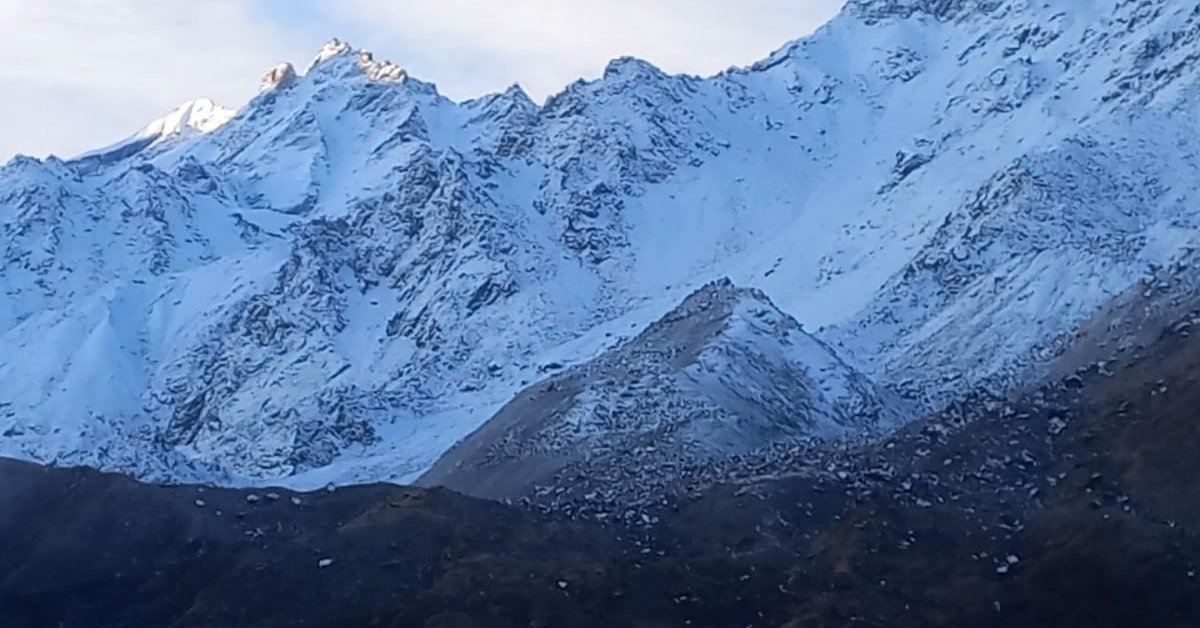
On April 25, 2015, a 7.8-magnitude earthquake struck Nepal. The epicenter was near Barpak in Gorkha district, but the damage radiated outward across the country. In the Langtang Valley, the consequences were catastrophic in a specific and terrible way: the earthquake triggered a massive avalanche from the flanks of Langtang Lirung that buried the original Langtang Village almost entirely. An estimated 350 people died — around 100 were local residents, and the rest were trekkers and porters who were in the village when the snow and ice came down.
The scale of what happened in Langtang was different from the general earthquake damage elsewhere in Nepal. Most villages damaged in the earthquake had collapsed structures — tragic and devastating, but recoverable. Langtang Village was buried. The debris that covered it was meters deep. Recovery of bodies continued for months. Some were never found.
Trek the Langtang Valley with Next Trip Nepal. 8-day package from USD 650, covering all permits, guide, porter and teahouse accommodation. Langtang National Park, Kyanjin Gompa and Tserko Ri viewpoint included.
What Happened on April 25, 2015
The earthquake struck at 11:56am local time. In Kathmandu, buildings collapsed and thousands died across the city and surrounding valleys. In the Langtang Valley, the shaking triggered ice and rock that had been destabilized on the upper slopes of Langtang Lirung to release. The resulting avalanche — carrying snow, ice, rock, and the debris of the mountain itself — traveled at tremendous speed down the narrow valley and struck the original Langtang Village.
Witnesses who survived described a wall of wind and debris arriving within seconds of the shaking beginning. The compression wave from the avalanche blew structures apart. The snow and ice that followed buried everything beneath it. Trekkers at lodges in the village at lunchtime, local families, kitchen staff, porters resting between loads — all were caught without warning.
The number 350 deaths is the figure most commonly cited, though exact counts were complicated by the difficulty of confirming how many trekkers were registered in the village at the time. Foreign trekkers from Japan, South Korea, and Europe were among those who died. Rescue operations — hampered by aftershocks and the remote location — began within days but were extremely difficult.
Planning a Langtang Valley Trek? Contact our local team for expert advice and trip planning.
The Trail Was Reopened Within Five Months
Nepal’s response to the earthquake’s impact on trekking was faster than many observers expected. The Langtang trail was officially reopened to trekkers in October 2015 — five months after the earthquake. This was driven partly by the economic dependence of Langtang communities on trekking income, and partly by a genuine recognition that the valley itself was still intact and the trail was still walkable.
The reopening in October 2015 coincided with the autumn trekking season. Visitor numbers were a fraction of pre-earthquake levels — many trekkers were understandably hesitant, and international coverage of the disaster had created a perception that Nepal’s mountains were generally unsafe. This perception wasn’t accurate, but it took several seasons to correct. By 2017–2018, Langtang trekking numbers had largely recovered.
The community that organized the reopening and the early trekking seasons after 2015 did so with purpose. Many of the teahouse owners who rebuilt were survivors of the disaster — people who had lost family members, homes, and everything they’d built over decades. The decision to rebuild and reopen was an act of economic and personal resilience, not a simple business decision.
The New Village: Built 400m from the Original Site
The original Langtang Village cannot be rebuilt on its original site. The debris that covers it is meters deep in places, and the ground is geologically unstable in ways it wasn’t before. The new Langtang Village was constructed approximately 400 meters from the original location, on ground assessed to be safer from future avalanche risk.
Walking through the new village, you pass newer construction — lodges and houses built from 2015 onward with earthquake-resistant design specifications. The village has a different character from the original: it feels more deliberate, less organically grown over decades, because it is. The community had to start again with little of what they’d built before.
The new village’s teahouses are generally better constructed than the older lodges lower on the Langtang trail. The rebuilding coincided with outside assistance — NGOs, government programs, and individual donations — that enabled better materials and design than would have been possible through community resources alone.
The Memorial Stupa and the Old Village Debris
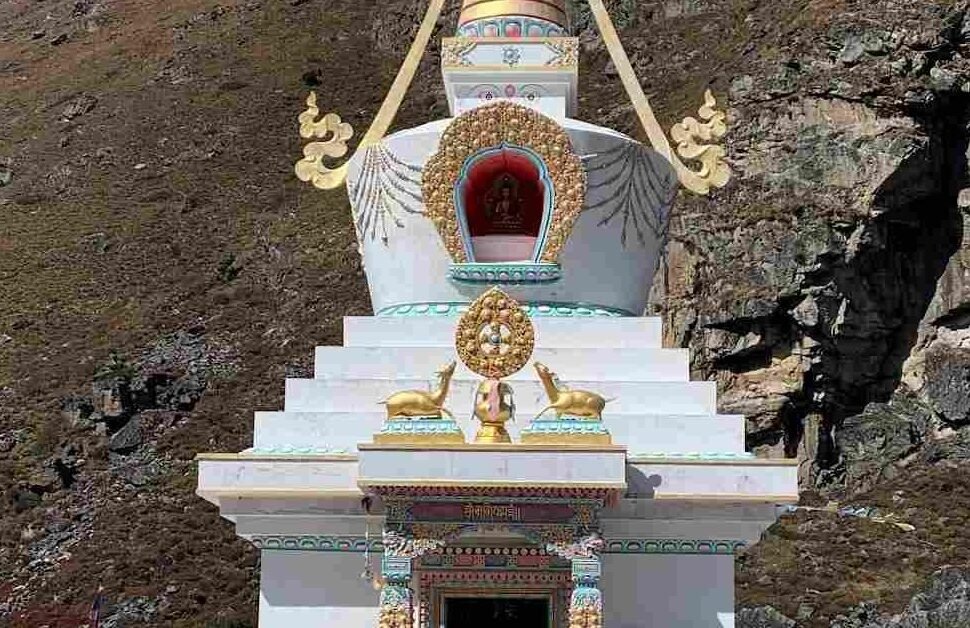
At the entrance to the new village, a memorial chorten (Buddhist stupa) was built to honor those who died in the avalanche. The chorten is the most visible marker of what happened, and it’s a significant site — both for Nepali Buddhists who lost family members and for international trekkers who want to pay respects. Prayer flags surround it. It’s treated with quiet reverence by locals and most visiting trekkers.
From the new village, you can see the debris field where the original village stood. The mounded surface of compressed snow, ice, and rock — which has slowly settled over the years since 2015 — is visible from the main trail. Some remnants of the original village structures are occasionally exposed at the debris edge as the snow pack slowly shifts. It’s an unsettling sight if you know what you’re looking at.
The original monastery site is gone. A new monastery has been established in the new village. The Kyanjin Gompa monastery at the valley head — which sits on the opposite side of the valley from where the main avalanche debris landed — survived with relatively minor damage.
Is the Langtang Valley Safe to Trek Now?
Yes. The Langtang Valley trek is safe and fully operational. The trail has been in continuous use since October 2015. Hundreds of thousands of trekkers have walked it since the earthquake without incident. The specific avalanche risk that caused the 2015 disaster was an extreme seismic event that destabilized a normally stable slope — not an ongoing hazard that makes the valley inherently dangerous to visit.
Langtang National Park has the same risk profile as comparable high-altitude trekking destinations worldwide. There are avalanche-prone slopes in the valley — as there are on any Himalayan trek — but the route itself does not pass through areas identified as high-risk in normal conditions.
Seismic activity continues in Nepal as part of the Indian subcontinent’s ongoing collision with the Eurasian plate. Nepal will have more earthquakes. The 2015 event does not make future earthquakes more or less likely on any specific timeline. Standard earthquake preparedness advice — have an emergency plan, know how to get to open ground quickly, register with your embassy — applies to any visit to Nepal regardless of where you’re trekking.
Planning a Langtang Valley Trek? Contact our local team for expert advice and trip planning.
The Community Today
Ten years after the earthquake, the Langtang community has rebuilt. The teahouses are running, the trails are maintained, and the cheese factory at Kyanjin Gompa is producing yak cheese again. Trekking income has returned to something close to pre-earthquake levels in good seasons. The community remains changed — there are gaps where people were, names on the memorial that represent relationships and histories that ended abruptly — but daily life and the economy have been reconstructed.
Trekking through Langtang today is, among other things, a direct economic contribution to a community that built itself back from a catastrophic loss. The teahouse owners who serve you dal bhat in Langtang Village or Kyanjin Gompa are, in most cases, people who were directly affected by 2015. They rebuilt their businesses and reopened their doors deliberately and with purpose.
That context doesn’t make the trek somber or heavy. The Langtang Valley is still one of Nepal’s most beautiful trekking regions. But it adds a layer of meaning to the experience that’s worth being aware of.
The Memorial and Respectful Visiting
When you reach the new Langtang Village, take a few minutes at the memorial chorten. You don’t need to perform any religious ritual — simply stopping, reading the plaques, and acknowledging what happened there is appropriate for visitors of any background.
Photography at the memorial site should be handled with sensitivity. The debris field of the old village should not be treated as a curiosity or a backdrop for casual photos. The same standards you’d apply to any memorial site apply here.
Local guides from the Langtang Valley community are worth hiring for this trek specifically. They can tell you things about the history, the people, and the recovery that no printed guide can — including personal accounts that put the scale of what happened in human rather than statistical terms. Hiring locally also keeps trekking income within the community that rebuilt.
Planning a Langtang Valley Trek? Contact our local team for expert advice and trip planning.
Trek the Langtang Valley with Next Trip Nepal. 8-day package from USD 650, covering all permits, guide, porter and teahouse accommodation. Langtang National Park, Kyanjin Gompa and Tserko Ri viewpoint included.