
January is one of the quietest months on the Manaslu Circuit Trek, and also one of the coldest. If you are looking at a map of Nepal trekking routes right now wondering whether a winter attempt makes sense, the short answer is yes for the right trekker, and this guide from Next Trip Nepal walks through exactly what a January trek on this route actually looks like, based on what our guides see on the ground year after year.
We have sent trekkers up the Budhi Gandaki valley in every month of the year, and January has its own personality. The lower villages stay pleasant during the day. The high camps near Samdo and Dharamsala turn into a different world entirely. Larkya La, the 5,106 meter pass that defines this whole route, spends most of January under snow. None of that means the trek is closed. It means the trek needs to be planned with a clear head and the right gear.
Why Some Trekkers Choose January for the Manaslu Circuit
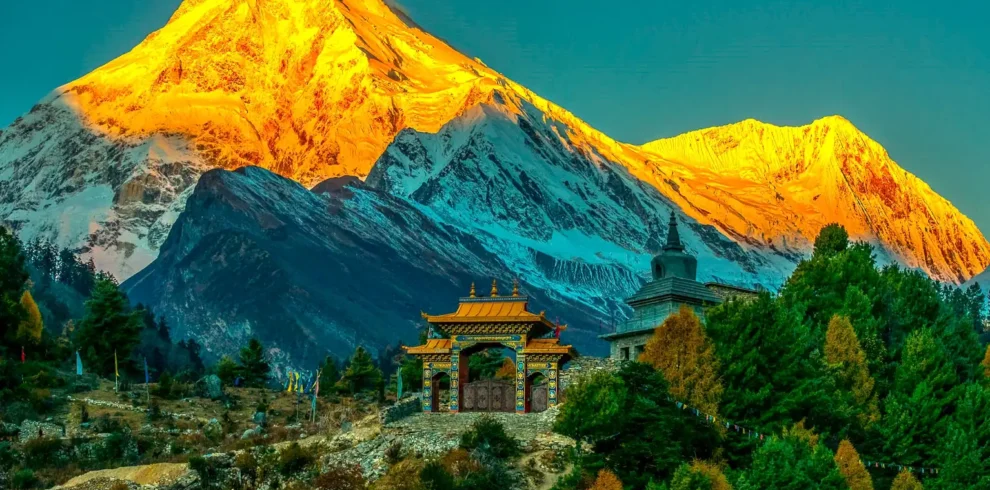
Most trekking companies steer clients toward spring and autumn, and for good reason, since those seasons carry the least risk. But a small and growing group of trekkers ask us specifically about January, and their reasons usually fall into three camps. First, the trail is empty. You can walk for hours through Jagat, Philim and Deng without meeting another foreign trekker, and teahouse owners have time to sit and talk instead of managing a full dining room. Second, the air is exceptionally clear. Cold winter air holds less moisture and dust, so on a clear January morning the view of Manaslu itself, along with Himalchuli and Peak 29, can be sharper than anything you will see in a hazier October sky. Third, January often lines up with school holidays and the lull after the New Year in western countries, so trekkers with limited vacation windows sometimes have no other choice.
None of this means January is easy. It is a cold weather expedition dressed up as a normal trek, and it should be treated that way from the first day of planning.
Weather and Temperature on the Manaslu Circuit in January
Temperature swings from the start of the trail to the top of the pass are dramatic in January. Down at Soti Khola and Machha Khola, around 700 to 900 meters, daytime temperatures usually sit somewhere between 8 and 18 degrees Celsius, and a fleece jacket is often enough while walking in direct sun. By the time you reach Samagaon at roughly 3,530 meters, that comfort disappears once the sun drops behind the ridge, typically around three in the afternoon in midwinter. Nights in Samagaon regularly fall to minus 10 or lower.
At the highest camps, Samdo and Dharamsala, and on the pass itself at 5,106 meters, January nighttime readings commonly sit between minus 15 and minus 8 degrees Celsius, and wind chill on the pass can push the felt temperature much lower. Daytime highs at that altitude rarely climb above freezing. What this means in practice is that your down jacket, sleeping bag rating, and boot choice are not optional upgrades, they are the difference between a trek that goes smoothly and one that turns into an emergency.
The upside of cold dry air is stability. January storms tend to be shorter and more predictable than the unpredictable cloud buildup you get in pre monsoon months like May. When the sky is clear in January, it tends to stay clear for several days at a stretch.
Larkya La Pass Conditions in January
This is the section every serious inquiry about a January trek eventually comes back to. Larkya La sits at 5,106 meters and is the technical and physical crux of the entire circuit. In January, snow accumulation on the northern approach from Dharamsala and on the steep drop toward Bimtang is common, and in a heavy snow year the pass can become genuinely dangerous due to avalanche risk on the slopes above the trail.
Our policy at Next Trip Nepal, and the policy of any responsible operator, is that the crossing decision gets made on the ground by the lead guide on the morning of the attempt, not weeks earlier from an office in Kathmandu. Guides check overnight snowfall, wind direction, and the condition of the route from Dharamsala before committing. If conditions look unsafe, the group waits a day, and occasionally two, at Dharamsala rather than pushing through. This is normal mountain practice, not a sign that something has gone wrong with your trip.
Trekkers heading out in January should build at least one buffer day into the schedule specifically for this reason. A nine day itinerary with zero flexibility is not a good match for winter conditions. A slightly longer itinerary that allows for a weather delay at Dharamsala is a much safer plan.
Trail Conditions From Machha Khola to Samagaon
The lower and middle sections of the trail behave very differently from the high pass. Between Machha Khola, Jagat, Philim and Deng, the trail follows the Budhi Gandaki river through subtropical and then temperate forest, and in January this section is dry, dusty in places, and genuinely pleasant to walk. There is no monsoon mud and no leech activity, which makes January one of the more comfortable months for this lower stretch specifically.
Above Namrung, as the trail climbs toward Lho and Samagaon, patches of old snow start appearing on shaded sections of trail, particularly after a storm. Local staff and mule trains keep the main path packed down fairly quickly after fresh snowfall, so the trail itself rarely becomes impassable at these mid altitudes, it just gets slower and requires more careful footing, especially with a loaded pack.
Crowd Levels and Teahouse Availability
January is the single quietest month on this route along with December and February. Where an October teahouse in Samagaon might be full with twenty or more foreign trekkers on a peak night, the same teahouse in January might host two or three groups total, sometimes fewer. This has real practical benefits. Rooms are easy to secure without advance booking, food orders come out faster since kitchens are not overwhelmed, and lodge owners often have more time to talk about the region, which is part of what makes a winter trek feel more personal.
The tradeoff is that some smaller teahouses at higher altitude reduce their operating hours or close entirely for the coldest stretch of winter, since running a lodge at minus 15 with almost no guests is not economically worthwhile for the owners. Our guides keep an updated list of which lodges are open in any given week and route the group accordingly, which is one of the practical reasons to trek with a guide rather than attempt this section independently in winter.
Permits and Paperwork for a January Manaslu Trek
The permit system for Manaslu does not change with the seasons in terms of process, only in price. Trekkers need three permits for this route: the Restricted Area Permit, the Manaslu Conservation Area Permit, and the Annapurna Conservation Area Permit for the section beyond the pass toward Dharapani.
Because January falls outside the September to November peak season, the Restricted Area Permit fee is lower during this window, currently around 75 US dollars for the first week and 10 US dollars per additional day per person, compared with the higher autumn rate. The Manaslu Conservation Area Permit and Annapurna Conservation Area Permit each cost roughly 3,000 Nepali rupees for foreign nationals. As of the March 2026 update from Nepal’s Department of Immigration, the old rule requiring a minimum of two foreign trekkers to obtain a Restricted Area Permit has been removed, so solo trekkers can now apply as well, though a licensed guide is still mandatory for this route and all permits must be processed through a registered trekking agency such as ours.
What to Pack for a January Trek
Packing for January on the Manaslu Circuit is closer to packing for a winter expedition than for a standard trek. A sleeping bag rated to at least minus 15 to minus 20 degrees Celsius is essential, since teahouse rooms above Samagaon have no heating and the walls are often thin plywood. A down jacket rated for genuinely cold conditions, not a light three season jacket, makes a real difference at the high camps.
Layering matters more than any single item. A moisture wicking base layer, a mid weight fleece or synthetic insulation layer, and a windproof and waterproof outer shell together handle the swing from a sunny lower valley to a windy high camp far better than one thick jacket alone. Insulated and waterproof trekking boots are worth the investment for this month, along with gaiters if there has been recent snowfall. Bring liner gloves plus a heavier insulated outer glove or mitten, a warm hat that covers the ears, sunglasses with strong UV protection for the snow glare near the pass, and hand warmers as backup for the coldest mornings.
Microspikes or light crampons are worth carrying if fresh snow has fallen before your pass crossing, and trekking poles are genuinely useful for balance on packed snow sections. We provide a full gear checklist to every client booking a January departure and can arrange rental gear in Thamel for anything you would rather not fly with.
Physical Training and Fitness Preparation for a January Trek
Winter conditions on the Manaslu Circuit ask a bit more of your body than the same route in a warm season, simply because cold weather adds fatigue on top of the normal demands of walking six to seven hours a day at increasing altitude with a daypack. We recommend at least six to eight weeks of dedicated preparation before a January departure. This does not need to involve technical mountain training, but it should include regular cardio work such as hiking, running, or stair climbing, combined with strength training for the legs, hips, and core to protect your knees on the long descents from Larkya La toward Bimtang.
Practice hikes carrying a loaded daypack, ideally on hilly or uneven terrain, help your body adapt to the exact kind of movement you will do for two weeks straight. If you have access to a stair machine or a local hill, climbing with your actual trekking boots on a few times before departure will also reveal any fit problems with your boots while you still have time to fix them, rather than discovering a blister issue on day three of the trek itself. Trekkers who arrive with a reasonable fitness base handle the cold noticeably better than those who arrive unprepared, since a tired body loses heat faster than a well conditioned one.
Cost Breakdown for a January Manaslu Circuit Trek
Trekkers often ask how a winter departure compares financially to peak season. The permit costs are genuinely lower outside the September to November window, and teahouse owners are sometimes more flexible on pricing when the trail is quiet, though this varies lodge by lodge. Below is a rough breakdown of what a January trek typically involves on the cost side, in addition to your international flights.
| Item | Approximate Cost |
|---|---|
| Restricted Area Permit (December to August rate) | US $75 first week plus US $10 per extra day |
| Manaslu Conservation Area Permit | Around NPR 3,000 |
| Annapurna Conservation Area Permit | Around NPR 3,000 |
| Licensed guide, daily rate | Included in most package prices |
| Porter, daily rate | Included in most package prices |
| Teahouse room | Often free or very low cost with meals purchased on site |
| Meals on the trail, per day | Roughly US $20 to $30, rising with altitude |
| Cold weather gear rental in Thamel | Varies by item, ask our office for a current list |
Package pricing that bundles permits, guide, porter, accommodation, and most meals tends to work out simpler and often cheaper than trying to arrange everything piece by piece, and it removes the permit paperwork burden entirely, since our office handles that before you land in Kathmandu.
Food and Accommodation Along the Trail in Winter
Teahouses along the Manaslu Circuit serve fairly consistent menus throughout the year, built around dal bhat, the traditional Nepali meal of rice, lentil soup, and vegetable curry, along with noodle soups, fried rice, and simple pasta dishes at lower elevations. In January, kitchens lean more heavily on the dal bhat and soup end of the menu, since these dishes are hot, filling, and practical to prepare with the more limited fresh vegetable supply that reaches the higher villages during winter months.
Rooms are basic twin share setups with a wooden bed frame and a foam mattress, and heating is generally limited to a wood or dung burning stove in the shared dining room, not in individual bedrooms. This is exactly why sleeping bag quality matters so much in January, since the dining room stove keeps the common area comfortable in the evening, but your bedroom will be close to outdoor temperature once you retire for the night. Hot water for washing is usually available for a small extra fee, heated over the same stove, and in the coldest weeks some lodges above Samdo limit hot water availability to conserve fuel.
Photography and the Winter Light on Manaslu
If photography is part of why you are considering this trip, January genuinely delivers something the busier months cannot. Cold winter air carries far less haze and dust than the air in spring or even in autumn, so distant peaks appear with sharper edges and deeper color contrast, particularly in the hour after sunrise and the hour before sunset. Fresh snow on Manaslu itself, Himalchuli, and the peaks around Samdo and the pass adds a clean visual quality that photographers specifically travel for.
Cold weather does create technical challenges for camera gear. Batteries drain much faster in freezing temperatures, so carrying two or three spares kept warm inside an inner jacket pocket is standard practice for our winter groups. Condensation forms quickly when a cold camera is brought into a warm dining room, so letting equipment adjust gradually inside a camera bag before opening it indoors helps avoid moisture damage to lenses and electronics. A lens cloth, a small tripod for early morning and evening shots, and a fully charged headlamp for pre dawn starts toward the pass round out a solid winter photography kit.
Getting to the Trailhead From Kathmandu
Most January departures begin with a drive from Kathmandu to Machha Khola or Soti Khola, which takes roughly seven to nine hours depending on road conditions, since this stretch of road is not fully paved and can be slower after recent rain or snow in the hills. Some itineraries split this into two shorter driving days with an overnight stop, which we generally recommend for winter trips since it reduces fatigue before the trekking portion even begins.
We ask clients to arrive in Kathmandu at least one full day before the trek starts, both to allow time for a final gear check and briefing at our office, and to build in a buffer against any winter flight delays into Kathmandu itself. A short additional day in Kathmandu before or after the trek is also a good opportunity to visit Swayambhunath, Boudhanath, or Pashupatinath, and to pick up or return any rental gear from Thamel.
Travel Insurance for a Winter Himalayan Trek
Travel insurance is not optional for the Manaslu Circuit in any month, and in January it deserves extra attention. Your policy needs to specifically cover trekking above 5,000 meters, since many standard travel policies cap altitude coverage well below the height of Larkya La, and it needs to include helicopter evacuation, since this is a restricted area with limited road access and any serious medical situation at altitude would likely require an air evacuation rather than a ground based rescue.
We also strongly encourage checking that your policy covers weather related trip delays, since a pass closure that adds an extra night or two at Dharamsala can occasionally affect onward flight connections. Providers commonly used by our past clients include World Nomads, Battleface, True Traveller, and Global Rescue for dedicated evacuation coverage, though we recommend reading the specific altitude and activity clauses of any policy carefully rather than assuming general travel insurance will cover a Himalayan trek automatically.
Acclimatization and Altitude Safety in Cold Season
Altitude sickness risk on the Manaslu Circuit does not disappear in winter, and cold weather adds its own complications, since dehydration happens faster in cold dry air even though you may feel less thirsty than in warm weather. Our guides build the same gradual ascent profile into January itineraries as in any other month, with the acclimatization day at Samagaon kept firmly in place regardless of how good the weather looks.
Drinking enough water is genuinely harder in cold weather because your body signals thirst less reliably, so we ask trekkers to drink on a schedule rather than waiting to feel thirsty. Many trekkers also discuss preventive Diamox with a travel doctor before departure, which is worth raising at a pre trip medical consultation regardless of season. Watching for headache, nausea, or unusual fatigue above Samagaon remains just as important in January as in October, and our guides are trained to recognize early symptoms and adjust the schedule immediately if anyone in the group shows signs of trouble.
The Manaslu Base Camp Side Trip in Winter
Trekkers spending an acclimatization day at Samagaon often ask about the optional side trip toward Manaslu Base Camp, sometimes combined with a visit to Pungen Gompa on the way. In January this side trip is genuinely rewarding for the views, since the base camp area sits in full sight of the southern face of Manaslu with none of the haze that can dull the view in busier months, but it is also more physically demanding than in warmer seasons, since snow depth on the approach trail can be significant after a recent storm.
Our guides make the call on the day based on overnight snowfall and how the group is handling the altitude so far. Some groups reach a viewpoint short of the full base camp rather than pushing the entire distance, which still delivers dramatic views of the mountain without adding unnecessary risk on a day that is meant to help your body adjust, not exhaust it. If reaching the full base camp specifically matters to you, mention that when booking so we can plan the itinerary with extra time built in for this side trip.
Culture and Festivals You Might Encounter in January
The Manaslu region is home to Nubri and Tsum communities with strong Tibetan Buddhist roots, and winter is when village life slows down and turns inward, which gives trekkers a more genuine look at daily life than the busier trekking months. In Tsum valley specifically, the Dhachyang archery festival often takes place around this time of year, a traditional community event with archery competitions alongside Buddhist rituals, and trekkers who happen to pass through during the celebration are usually welcomed to watch.
Because exact festival dates follow the Tibetan lunar calendar and shift from year to year, we recommend checking with our office close to your travel dates if timing a festival visit matters to you. Monasteries at Lho and in the Tsum valley remain open to respectful visitors throughout the winter, and with fewer trekkers around, monks often have more time to talk about the history of these gompas.
Sample Itinerary Adjustments for January
For a January departure, we generally recommend our fourteen day itinerary over the shorter nine day version, purely to build in that extra buffer day at Dharamsala for pass conditions. The extra days also allow more conservative acclimatization, with a slower ascent profile above Namrung. Groups booking the shorter route in winter should understand going in that a weather delay is a real possibility, not a remote one, and travel insurance and onward flight bookings should be planned with that in mind.
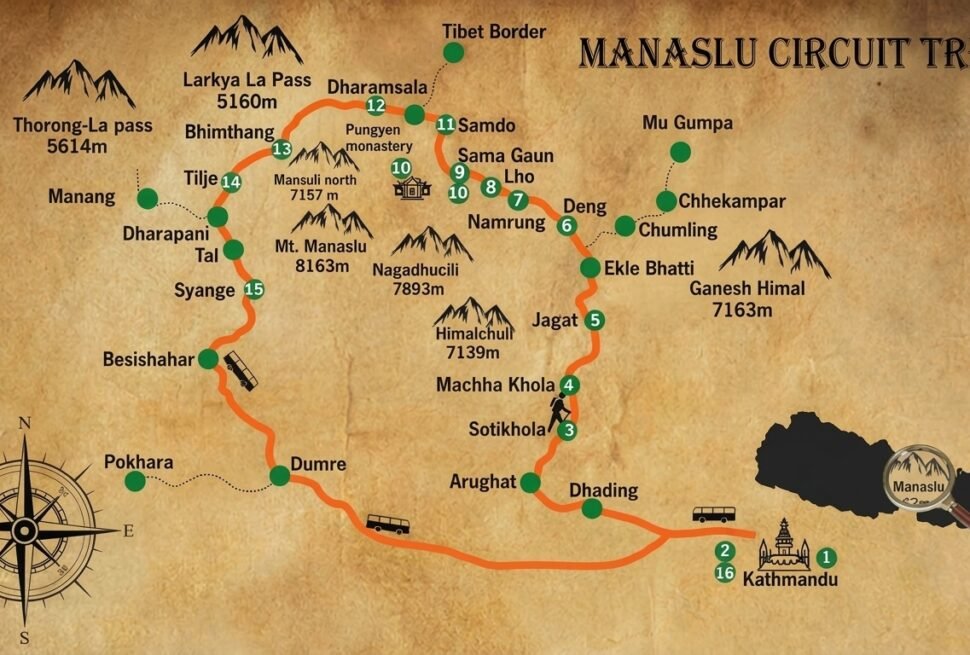
A rough January itinerary looks like this: fly or drive to Machha Khola, walk to Jagat, then Deng, then Namrung, then Lho or straight to Samagaon, spend an acclimatization day at Samagaon with an optional side trip toward Manaslu Base Camp, continue to Samdo, then Dharamsala, cross Larkya La to Bimtang with a built in weather buffer, descend to Tal or Dharapani, then drive back to Kathmandu.
Health and Hygiene on the Trail in Winter
Staying healthy on a two week winter trek comes down to a handful of simple habits that matter more in January than in warmer months. Hand sanitizer and regular hand washing before meals cut down significantly on the stomach illnesses that occasionally affect trekkers, since cold weather does nothing to reduce the risk of contaminated food or water. Only drink water that has been boiled, filtered, or treated with purification tablets or a UV device, even though the cold makes bottled or boiled water less appealing than it would be in warm weather.
Sun protection remains important despite the cold, since UV exposure at altitude is intense and snow reflects additional light back at your face and eyes. A broad spectrum sunscreen, lip balm with SPF, and good sunglasses are as necessary in January as they would be in the middle of summer. Basic foot care also deserves attention, since cold feet inside wet boots are a fast route to blisters and, in serious cases, frostbite on the toes. Changing into dry socks at the end of each walking day and keeping a spare pair of insoles are small habits that prevent bigger problems later in the trek.
Manaslu Circuit in January Versus Other Months
| Factor | January | October | May |
|---|---|---|---|
| High altitude night temperature | Minus 15 to minus 8 C | Minus 5 to 5 C | Minus 2 to 8 C |
| Crowd level | Very low | Very high | Moderate |
| Pass conditions | Often snow covered, weather dependent | Usually clear and stable | Generally open, occasional showers |
| Visibility | Excellent on clear days | Excellent, most consistent | Good mornings, cloudier afternoons |
| Teahouse availability | Wide open, some closures higher up | Can fill up, book ahead | Generally available |
Pros and Cons of Trekking the Manaslu Circuit in January
The clear advantages of January are the empty trail, the sharp cold weather visibility on good days, and a more personal experience with teahouse owners and local communities who have far more time to spend with a small number of guests. Photographers in particular tend to love this month, since clean cold air and fresh snow on the peaks make for dramatic images that a hazier autumn sky cannot match.
The clear drawbacks are the cold itself, the real possibility of a weather delay at the pass, a shorter usable daylight window each day, and the need for more expensive cold weather gear. This is not a month for a first time trekker with no cold weather experience, and it is not a month to attempt without a licensed guide who knows current pass conditions.
Weigh these factors against your own priorities before booking. If your main goal is simply to stand on Larkya La and see Manaslu up close with the least possible crowding, and you are comfortable investing in proper cold weather gear, January delivers an experience that few other trekkers in Nepal will share with you that same week. If your priority is the highest possible certainty of a smooth crossing on a fixed schedule, October or November remain the safer choice.
Tips From Our Guides for a Successful January Trek
Start each day as early as reasonably possible, since daylight is limited in January and you want to reach your destination lodge well before the temperature drops sharply in the late afternoon. Keep a water bottle inside your jacket or sleeping bag at night so it does not freeze solid before morning. Eat a full dinner and breakfast even if your appetite drops at altitude, since your body is burning significant extra calories just staying warm.
Trust your guide’s read of the pass on crossing day rather than pushing for a summit push mentality. A delayed crossing by a day is a minor inconvenience. A crossing attempted in unsafe conditions is not. Finally, bring a physical book, a deck of cards, or a fully charged power bank, since evenings at high camps in January are long, dark, and cold, and there is little to do besides sit around the kitchen stove.
Frequently Asked Questions About the January Manaslu Trek
Is the Manaslu Circuit Trek open in January
Yes, the route stays open, and trekking agencies continue to run departures, but the crossing of Larkya La depends on weather and snow conditions on the day, so schedules need built in flexibility.
How cold does it get on Larkya La in January
Nighttime temperatures at the high camps near the pass commonly fall between minus 15 and minus 8 degrees Celsius, with wind chill making it feel colder still on exposed sections of the crossing.
Do I need a guide for a January Manaslu trek
Yes, a licensed guide is legally required for this restricted area route in every month of the year, and in January a guide’s knowledge of current snow and pass conditions is especially valuable for safety.
Is January cheaper than October for this trek
The Restricted Area Permit fee is lower in the December to August window than in the September to November peak season, and teahouse prices can be more flexible with fewer trekkers on the trail, so overall costs can come in somewhat lower.
What happens if Larkya La is closed when we arrive at Dharamsala
Groups wait at Dharamsala until conditions improve, usually one to two extra days, which is exactly why we recommend booking a slightly longer itinerary for a January departure rather than the tightest possible schedule.
Can beginners trek the Manaslu Circuit in January
We generally recommend January to trekkers with some prior cold weather or high altitude hiking experience, since the combination of cold temperatures and altitude is more demanding than a first time trekker’s introduction to the Himalaya should probably be. Spring and autumn remain better starting points for complete beginners.
Booking a January Manaslu Circuit Trek with Next Trip Nepal
A January trek on the Manaslu Circuit rewards trekkers who come prepared, both physically and with the right gear, and it delivers a version of this route that most visitors to Nepal never see, quiet trails, sharp winter light on the peaks, and villages moving at their own unhurried winter pace. If you want to talk through dates, gear rental, or how a fourteen day winter itinerary compares with a standard autumn booking, our team at Next Trip Nepal is happy to walk through the details and help you decide whether January is the right window for your own trip.
We have guided trekkers up this valley for years and every winter season teaches us something new about how the pass behaves, which villages are open, and which gear choices actually hold up in the cold. That ongoing experience is what we bring to every itinerary we plan, whether you are booking a January departure or simply comparing months to find the trip that fits your own schedule and comfort level best.
Explore Other Months
Curious how the Manaslu Circuit Trek compares at a different time of year? Read our guide to trekking Manaslu in December or trekking Manaslu in February, or see our full Manaslu Circuit Trek overview for general route details, difficulty and highlights.