Yes, a Kanchenjunga Trek in November is still a good idea, and for the first two or three weeks of the month it may be the clearest, most stable trekking window of the entire year. But November is not one uniform month on this route. Early November is a continuation of peak autumn conditions with thinner crowds than October. Late November is genuinely different: colder nights, shorter days, a real chance of fresh snow closing or complicating the Sele La, Sinion La, Mirgin La and Sinelapche La crossing, and teahouses along the highest stretches beginning to think about closing for winter. This guide explains exactly where that line falls, why it moves every year, and how to plan around it.
We run the Kanchenjunga Circuit Trek out of Kathmandu and this article reflects what we actually tell clients booking a November departure, not a generic seasonal overview copied across every trek in Nepal. If you want the operational detail behind the season, our Kanchenjunga Circuit Trek itinerary has the full day by day breakdown this article refers back to throughout.
Kanchenjunga Trek in November at a Glance
| Factor | Early November | Late November |
|---|---|---|
| Daytime temperature | 8 to 15°C at mid elevation | 2 to 10°C at mid elevation |
| Night temperature at Lhonak and Ramche | Minus 5 to minus 10°C | Minus 12 to minus 18°C, colder in a cold spell |
| Rainfall | Very low | Very low, snow risk instead |
| Snow risk on Sele La crossing | Low but not zero | Real and rising through the month |
| Visibility | Excellent most mornings | Excellent when clear, can close in fast with a storm |
| Crowd level | Low, tail end of the autumn season | Very low, some teahouses beginning to close |
| Daylight | Around 10.5 hours | Under 10 hours |
| Overall rating for a fixed date booking | Excellent | Good, but plan for contingency |
Why November Is the Closing Window, Not a Single Season
Every trek writeup treats autumn as one block: late September through November, stable and clear. That framing works for October. It stops working for November about halfway through the month, and this is the single most important thing to understand before you commit to a Kanchenjunga Trek in November departure.
The physical reason is simple. Kanchenjunga sits at the far eastern edge of Nepal, closer to the Bay of Bengal weather systems and higher on average than the Annapurna or Everest regions at the point where you cross from the north side of the circuit to the south. The Sele La complex, that string of four passes between Ghunsa and Cheram, sits around 4,200 to 4,660 meters depending on which of the four you are counting. Once genuine winter cold sets in at that elevation, any fresh snowfall sits and compacts rather than melting off within a day or two the way an October flurry usually does.
There is no fixed calendar date when this happens. Some years the passes stay clean and walkable well into early December. Other years an early cold snap in mid November leaves enough snow on the ridge that guides reroute, wait out a contingency day, or in rare cases turn a group back toward Ghunsa rather than push the crossing in poor footing. We cannot tell you in advance which year you will get. What we can tell you is that the odds shift steadily against you as the month goes on, and that is exactly why a weather buffer day is built into the standard itinerary before the Sele La crossing, giving a group one full spare day to let a storm pass or let fresh snow settle and firm up before attempting the pass.
Kanchenjunga Weather in November
The operator wide autumn range for this region is daytime temperatures of 8 to 16°C and night temperatures from minus 5°C up to 8°C, with generally stable, clear conditions after the monsoon withdraws. November sits inside that range on paper, but it occupies the coldest end of it, and the gap between early and late November within the month is bigger than the gap between September and October combined.
| Element | What to expect in November |
|---|---|
| Daytime temperature, lower trail (Sekathum to Ghunsa) | 10 to 16°C, pleasant for walking in a fleece or light jacket |
| Daytime temperature, high altitude (Kambachen, Lhonak, Ramche) | 2 to 8°C in direct sun, noticeably colder the moment the sun drops behind a ridge |
| Night temperature, Ghunsa | Minus 2 to minus 6°C, mild by comparison to the higher camps |
| Night temperature, Lhonak and Ramche | Minus 8°C in early November, minus 15 to minus 18°C or lower by late November in a cold spell |
| Rain | Essentially none, the monsoon has long since withdrawn from the eastern hills |
| Snow | Uncommon in early November, a genuine and rising possibility on the Sele La complex from mid November on |
| Wind | Generally light in the mornings, can pick up sharply in the afternoon at Lhonak and on the pass ridgelines |
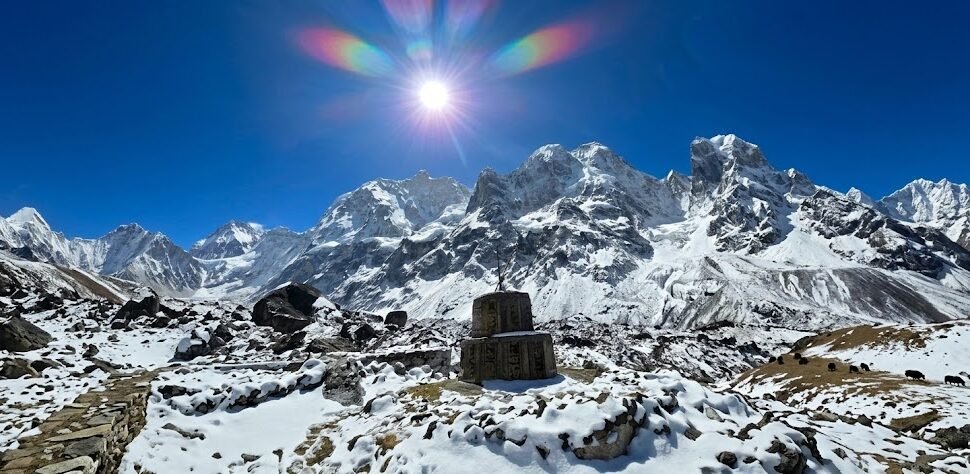
| Cloud and visibility | Clear, sharp mornings are typical, with the best mountain visibility of the whole year in the first half of the month |
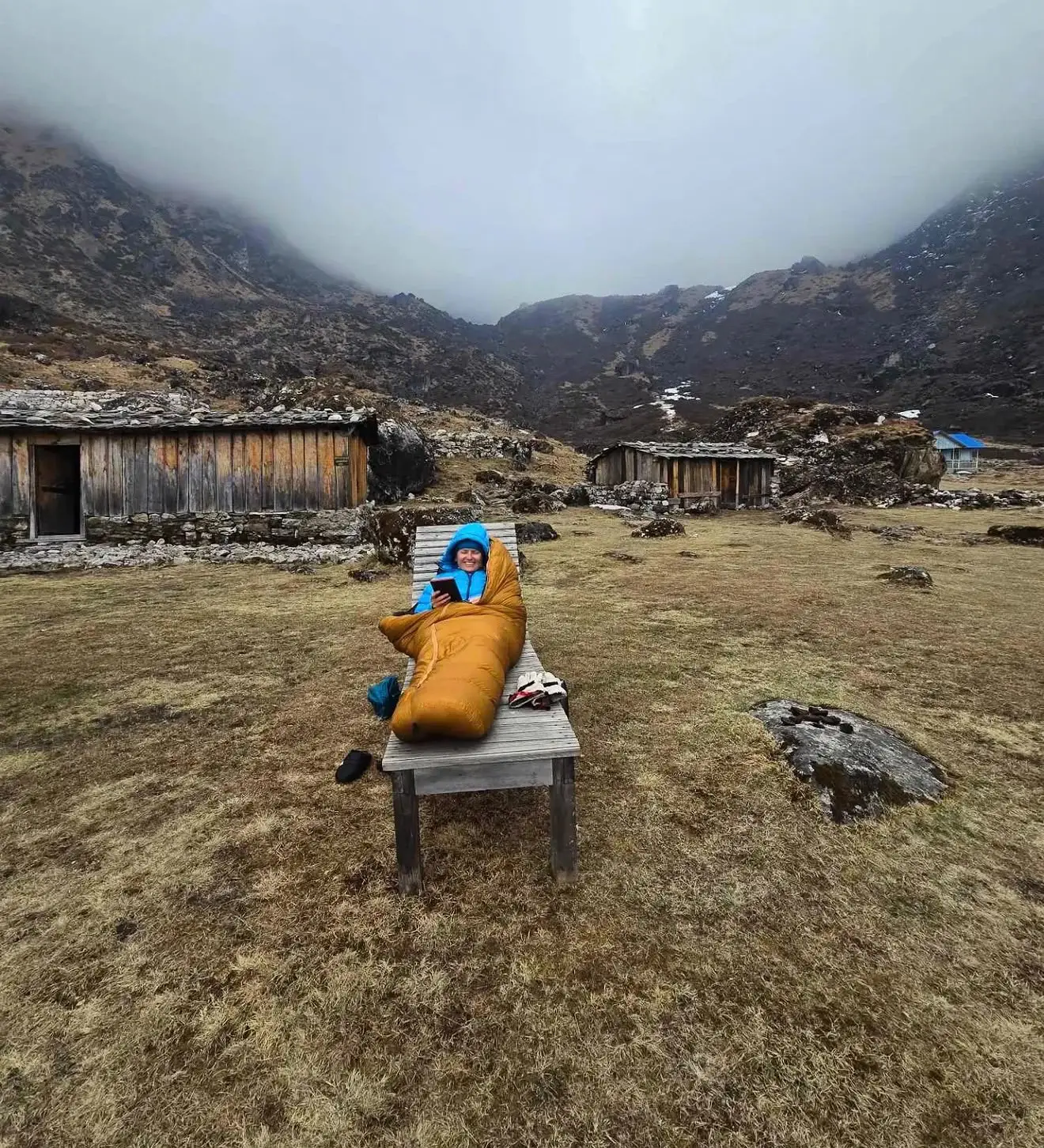
The Kanchenjunga November temperature story really is two stories. If a trekker asks us for a single number, we tell them to plan for daytime comfort similar to October at lower elevation, and for night cold that is meaningfully closer to winter once they are above Kambachen, especially in the second half of the month. A four season sleeping bag rated to at least minus 15°C is not optional gear for a November trip on this route, it is the baseline.
Early, Middle and Late November on the Trail
Treating November as one block hides the detail that actually matters for planning. Here is how the month genuinely divides.
| Period | Conditions | Practical implication |
|---|---|---|
| Early November (1st to 10th) | Effectively the tail of peak autumn. Skies are often at their clearest all year, daytime temperatures are comfortable, nights are cold but manageable, and the Sele La crossing is usually clean. | The best window in the month for a first time high altitude trekker on this route, and arguably the strongest air clarity of the entire trekking calendar. |
| Middle November (11th to 20th) | Still generally reliable, but the first cold fronts of the season start to arrive. A dusting of snow on the passes becomes plausible rather than unlikely. Crowds thin out noticeably as October departures finish. | Still a strong choice, but pack as though a short delay at the weather buffer day is a real possibility, not a formality. |
| Late November (21st to 30th) | Night temperatures at Lhonak, Ramche and Sele La Kharka regularly drop well below the autumn average given above, approaching winter values. Snow on the pass complex is a genuine planning risk. Some of the more basic seasonal teahouses above Ghunsa begin closing for winter. | Workable, and some years turn out beautifully, but this is not the segment to book if your return flight home is fixed and inflexible. Build slack into your schedule. |
A Kanchenjunga Trek early November departure and a Kanchenjunga Trek late November departure are close to two different trips wearing the same itinerary. We say this plainly to clients rather than smoothing it over, because the decision genuinely matters for how you plan flights, insurance and expectations.
The Sele La Crossing in November, in Detail
This is worth its own section because it is the one part of the itinerary where November’s character actually changes the trek, not just the temperature on the thermometer. The Sele La, Sinion La, Mirgin La and Sinelapche La are crossed in a single long day, typically 8 to 10 hours with heavy undulation, at elevations mostly between 4,170 and 4,660 meters. There is no village, no teahouse and very little shelter along most of that stretch. It is a serious mountain day in good conditions.
In good November conditions, which is most years for most of the month, this day is spectacular: hard packed trail, sharp cold air, and views across to Jannu and the Kanchenjunga massif that many guides rate among the best on the whole circuit. In poor conditions, meaning fresh snow that has not yet consolidated, the same crossing becomes slow, exhausting and in the worst cases temporarily impassable, particularly on the steeper sections between the individual passes where a covered trail is hard to read.
Three things reduce the risk without eliminating it. First, the built in weather buffer day before the crossing, which exists specifically for this scenario, giving a guide the option to wait a day for snow to settle rather than push through it. Second, a licensed guide with current, on the ground knowledge of that week’s snow line, which is one more reason this is not a route to attempt informally. Third, flexibility on your own end: a traveler with a day or two of slack in their return schedule has real options that a traveler flying out the next morning does not.
Kanchenjunga November snow on this specific section is the honest headline risk of a late month booking. We are not going to tell you it never happens, because it does, and we would rather a client read that plainly here than discover it for the first time at Sele La Kharka.
Kanchenjunga November: October, November and March Compared
Trekkers researching this route often ask us to rank the autumn and spring windows against each other. The honest comparison set is October, November and March, and deliberately not December through February. December to February is a genuinely different, high risk cold season on this specific route, with night temperatures regularly below minus 10°C even at mid elevation and a real chance of the high passes being snowed in for extended periods. It is not a season we recommend to trekkers without real winter mountaineering experience, and it sits outside the scope of this comparison for that reason. If you want the full picture of that shoulder on the other side of winter, our colleagues cover it in the Kanchenjunga Trek in March guide.
October and November are the two ends of the autumn window, and March is the opening edge of spring on the other side of winter. Treating these three as the real comparison set, rather than pretending every autumn or spring month is interchangeable, gives a more honest picture than most seasonal guides offer.
| Month | Wins on | Loses on |
|---|---|---|
| October | The most reliably stable weather window of the year, freshest post monsoon greenery, widest teahouse availability, most established trail conditions on the Sele La complex | The busiest month on the circuit relative to the rest of the season, though still very quiet compared with Everest or Annapurna |
| November | Even lower crowds than October, arguably the sharpest mountain visibility of the year in the first half of the month, easier permit and teahouse booking at short notice | Colder nights that intensify through the month, rising snow risk on Sele La from mid month, some teahouses beginning to close by late month |
| March | Rhododendron forests coming into bloom lower down, lengthening daylight hours, a genuinely fresh feeling start to the season after winter | Passes can still be carrying leftover winter snow early in the month, afternoon cloud tends to build faster than in autumn |
Our short version for someone choosing between the three: October is the safest bet if your dates are fixed and you want the highest odds of a clean pass crossing with no drama. Early to mid November genuinely rivals it on visibility and beats it on solitude, provided you go in the first half of the month or build a buffer into a later date. March rewards patience with forest color and lengthening days but starts the season with more snow uncertainty on the pass than a well timed November trip carries. Readers weighing the spring side of that comparison in more depth should see our full Kanchenjunga Trek in October guide alongside the March article linked above for the complete three way picture.
Route Conditions by Elevation in November
| Section | Elevation | November conditions |
|---|---|---|
| Lower trail: Sekathum to Ghunsa | Approximately 1,650 to 3,450 m | Comfortable walking temperatures, dry trail, forest still holding some autumn color early in the month, fading to bare branches by late November |
| Middle section: Ghunsa to Kambachen | Approximately 3,450 to 4,050 m | Noticeably colder mornings, occasional light frost on the trail, still generally dry and clear underfoot |
| High altitude: Kambachen to Lhonak | Approximately 4,050 to 4,780 m | Cold, thin air, sparse vegetation giving way to moraine, night temperatures dropping sharply after sunset, the coldest camps on the whole circuit |
| North base camp area: Lhonak to Pang Pema | Approximately 4,780 to 5,140 m | Exposed, windswept, spectacular clear morning views of the north face in good conditions, best attempted early in the day before any afternoon wind builds |
| Sele La complex: Ghunsa to Cheram via the four passes | Approximately 4,200 to 4,660 m | Reliable in early to mid November, the section most affected by late month snow risk described above |
| South base camp area: Ramche to Oktang | Approximately 4,580 to 4,730 m | Cold and clear on a good day, close views of the south face and Kanchenjunga south flank, a shorter day trip that is usually walkable even when the pass crossing above it carried snow |
A note on terminology here, since it comes up often in search: a Kanchenjunga Base Camp November trip usually refers to a shorter package that visits only Pang Pema on the north side, while the Kanchenjunga Circuit Trek November itinerary we run continues over the Sele La complex to reach Oktang on the south side as well, making it a genuine circuit rather than an out and back. If snow does complicate the pass crossing in a given year, the north side base camp portion to Pang Pema is typically the part of the trek least affected, since it does not depend on the Sele La at all.
Difficulty of the Kanchenjunga Circuit Trek in November
The Kanchenjunga Circuit is graded challenging to strenuous in any month, and November does not soften that. Daily walking runs 5 to 9 hours, the trail holds above roughly 3,400 meters for several consecutive days from Ghunsa onward, and the Sele La crossing day alone runs 8 to 10 hours over repeated altitude gain and loss. None of that changes with the calendar.
What November adds on top is cold as a genuine additional load. Colder starts mean more time spent in insulated layers, colder nights mean less restful sleep at altitude, which in turn can make the following day’s exertion feel harder than the same walking distance would in October. Shorter daylight compresses the window in which a long day like the pass crossing has to be completed, which is one more reason guides prefer starting Sele La Kharka departures before first light in November rather than the slightly later starts that are comfortable in early autumn.
This is not a beginner’s route in any month. Two dedicated acclimatization days are built into the standard itinerary, one at Ghunsa and one at Kambachen, and we do not recommend Kanchenjunga as a first ever high altitude trek regardless of season. Prior multi day trekking experience at altitude is genuinely useful preparation, not a box ticking requirement. If you are still building that experience, our Everest Base Camp Trek or the shorter Annapurna Base Camp Trek are more forgiving routes to cut your teeth on before attempting Kanchenjunga.
Daylight Hours and Teahouse Availability Late in the Season
Daylight is one of the quieter factors trekkers underestimate when booking a November date. Early in the month you get roughly 10.5 hours of usable daylight; by late November that has slipped under 10 hours, and it keeps shrinking toward the winter solstice. On a long day like the Sele La crossing, that difference is not trivial. Guides push start times earlier as the month goes on specifically to keep the group off the high ridgeline before the light fades and before the afternoon cold really sets in.
Teahouse and guide availability follows a similar late season taper. Ghunsa keeps the widest range of options open right through November since it is the hub village of the whole circuit and stays reasonably busy with trekkers passing through in both directions. Higher up, at Kambachen, Lhonak, Sele La Kharka, Cheram and Ramche, facilities are already basic and sometimes seasonal even in peak autumn, and by the back half of November some of the more marginal, family run teahouses at these upper stops begin closing for the winter, since the owners themselves often move down to warmer villages once trekking traffic drops off. This does not mean you will find nothing open, agencies booking in this window confirm current status village by village before departure, but it does mean late November travelers should not assume the same range of choice that an October group enjoys.
Kanchenjunga Trek Cost in November
Kanchenjunga Trek cost in November follows Next Trip Nepal’s standard published group pricing for the 22 day Kanchenjunga Circuit Trek, since the package itself does not change by season, only conditions do.
| Group size | Price per person |
|---|---|
| 1 traveler | USD 2,095 |
| 2 to 4 travelers | USD 1,995 |
| 5 to 8 travelers | USD 1,895 |
| 9 to 13 travelers | USD 1,795 |
This typically covers permits, a licensed guide and porter, teahouse accommodation and meals on trek, and the domestic flight and jeep transfers described in the itinerary. Always confirm exactly what is and is not included before booking, since packages across different agencies vary.
Beyond the package price, budget roughly USD 90 to 130 per person for the Restricted Area Permit and Conservation Area Permit combined, USD 130 to 200 per sector for the Kathmandu to Bhadrapur flight, USD 3 to 10 per night for basic teahouse accommodation, and USD 4 to 10 per dish for meals on trek, rising toward the upper end of that range above Ghunsa where everything has to be carried in. November does not typically push these figures up compared with October, since the route infrastructure and permit fees are the same, but it is worth budgeting a small contingency for the possibility of an extra buffer night at Sele La Kharka if weather requires it, which is exactly what the built in buffer day is designed to absorb without derailing the rest of your schedule.
Solo trekking without a licensed guide is not legally possible on this restricted area route, so there is no realistic unguided budget figure to quote here, in any month. See the full Kanchenjunga trek cost and inclusions breakdown for the complete picture before you book.
Permits and Guide Requirements for a November Departure
Permit requirements for Kanchenjunga are the same in November as any other month, but timing your paperwork matters more when your window for the pass crossing is narrower, so it is worth being organized early.
- Kanchenjunga Restricted Area Permit: USD 20 per person per week for the first four weeks, USD 25 per person per week beyond that, arranged only through a registered trekking agency in Kathmandu, not available to independent applicants.
- Kanchenjunga Conservation Area Permit: currently around NPR 2,000 per foreign national on our own live pricing, though some other sources quote NPR 3,000, so confirm the exact current fee with your agency rather than treating either figure as fixed.
- TIMS card, arranged by the agency alongside the other two permits.
- A licensed trekking guide is mandatory on this route, in every month, with no exception.
- As of a March 2026 update from Nepal’s Department of Immigration, solo foreign trekkers can now obtain a restricted area permit for Kanchenjunga without the old requirement of a minimum of two foreign trekkers in the group. This does not mean trekking without a guide; a licensed guide and an agency booking remain mandatory regardless of group size.
Since permits are processed in Kathmandu before departure, your agency needs your passport details and photographs with several working days of lead time at minimum. For a late November date, we recommend submitting these earlier than you might for an October trip, simply so there is no paperwork related pressure added on top of a schedule that may already need a buffer day at Sele La Kharka. See our Kanchenjunga trek permits page for the current requirements before you book flights.
What to Pack for a November Kanchenjunga Trek
Packing for November means packing for the colder end of the autumn range described above, not the mild early autumn conditions that October travelers can get away with. A late November booking in particular should lean toward the winter capable end of every category below.
Clothing
- Insulated down jacket rated for temperatures well below freezing
- Fleece or soft shell mid layer, ideally two so one can dry while the other is worn
- Thermal base layers, top and bottom, synthetic or merino wool
- Windproof and waterproof outer shell jacket and trousers
- Insulated trekking trousers or fleece lined pants for the higher camps
- Warm hat covering the ears, plus a lighter hat or buff for lower elevation
- Insulated gloves plus a thin liner glove pair for dexterity at camp
- Wool or synthetic trekking socks, several pairs, plus a warm pair for sleeping
Footwear
- Broken in, waterproof trekking boots with ankle support and a solid sole for uneven, potentially icy ground on the pass complex
- Gaiters, genuinely useful in November given the real possibility of fresh snow on the high sections
- Camp shoes or insulated sandals for teahouse evenings
Sleep
- Four season sleeping bag rated to at least minus 15°C
- Sleeping bag liner for added warmth and hygiene
- Inflatable sleeping pad for extra insulation from cold floors at the higher, more basic teahouses
Sun and Weather Protection
- High factor sunscreen and lip balm with sun protection, since November sun at altitude is still strong despite the cold air
- UV protective sunglasses, ideally with side coverage for glare off any snow on the pass
- Wide brim sun hat for lower, warmer sections early in the trek
Documents
- Passport with several months of validity remaining and spare passport photographs for permits
- Printed and digital copies of your restricted area permit, conservation area permit and TIMS card
- Travel insurance documents confirming cover for high altitude trekking to at least 5,500 to 6,000 m plus helicopter evacuation, commonly recommended at USD 100,000 or more of medical and evacuation cover
First Aid and Health
- Personal first aid kit including blister care, altitude sickness medication as advised by your doctor, and any personal prescriptions
- Water purification tablets or a personal filter as backup to boiled water from teahouses
- Basic cold and flu remedies, since colder camps and communal teahouse living make minor illness more likely to circulate
Electronics
- Power bank, since charging becomes increasingly solar dependent and unreliable above Ghunsa
- Headlamp with spare batteries, more important than usual given the shorter November daylight and early starts on the pass crossing day
- A basic offline map or GPS app as backup, given patchy mobile coverage; NTC generally has the better signal reputation in this eastern region, though expect long stretches with none at all
If you want a broader packing reference to cross check against, our Annapurna Circuit Trek packing list covers similar high altitude gear logic, though Kanchenjunga in November should be packed toward the colder, more remote end of that spectrum given the lighter teahouse infrastructure above Ghunsa.
Advantages and Disadvantages of Trekking Kanchenjunga in November
| Advantages | Disadvantages |
|---|---|
| Some of the clearest, sharpest mountain visibility of the entire year, especially in the first half of the month | Night temperatures at Lhonak, Ramche and Sele La Kharka drop sharply as the month goes on, approaching winter values by late November |
| Noticeably lower crowds than October, even on an already quiet route | Rising risk of fresh snow complicating or delaying the Sele La, Sinion La, Mirgin La and Sinelapche La crossing from mid month onward |
| Easier last minute permit and booking availability compared with the October peak | Shorter daylight hours compress the window for long days, especially the pass crossing |
| Guides and teahouse owners generally have more time and attention for a smaller number of groups | Some of the more basic, seasonal teahouses above Ghunsa begin closing toward the back half of the month |
| Dry, stable weather at lower and middle elevation throughout the month | Not the ideal choice for travelers with fixed, inflexible return flight dates, particularly for a late November booking |
Is November the Best Month for the Kanchenjunga Circuit Trek?
For a Kanchenjunga Trek in November, the honest verdict depends almost entirely on which half of the month you are asking about. Early to mid November, roughly the first two to three weeks, genuinely rivals October for reliability and beats it outright on solitude and mountain clarity. If your dates fall in that window and you can build even one or two days of flexibility around your return flight, book with confidence.
Late November is a different conversation. It can still deliver a beautiful, smooth trip, and many years it does. But the safety margin on the Sele La crossing narrows as the month goes on in a way that October and early November simply do not carry, and travelers with genuinely fixed, inflexible dates, no room to absorb a buffer day, should think carefully before locking in a late November departure on this specific route. If that describes your situation, an early November date, or a shift to October, gives you meaningfully better odds of a clean pass crossing with no schedule disruption. Readers weighing the spring alternative on the other side of winter should also read our companion guide to the Kanchenjunga Trek in March for the full picture of that window.
Whichever week you choose, we build the contingency day before Sele La Kharka into every November departure by default, and our guides make the call on the ground based on that week’s actual snow conditions rather than a fixed date on a calendar. That is the honest way to run this route in its closing autumn window, and it is how we would want a trip run if we were the ones booking it. You can review the complete day by day plan on our Kanchenjunga trek difficulty and itinerary page before deciding on your dates.
Frequently Asked Questions
Is November too late to trek the Kanchenjunga Circuit?
No, not as a blanket rule. Early and mid November are excellent, arguably among the best conditions of the whole year for visibility and solitude. Late November is workable in most years but carries a genuinely higher chance of snow affecting the Sele La crossing than October or early November, so it suits flexible travelers better than those with fixed, inflexible dates.
What is the temperature on Kanchenjunga in November?
Daytime temperatures generally run 8 to 16°C at lower and middle elevation, dropping to 2 to 8°C at the highest camps in direct sun. Nights range from minus 2 to minus 6°C at Ghunsa up to minus 8°C at Lhonak and Ramche early in the month, and can fall to minus 15°C or colder at those same high camps by late November in a cold spell.
Is the Sele La pass reliably open in November?
Most years, yes, particularly in the first half of the month. There is no fixed date when the passes close, since it depends entirely on that year’s specific snowfall rather than the calendar. The risk rises steadily through November, which is why a weather buffer day is built into the itinerary before the crossing.
What is the difference between early November and late November on this trek?
Early November, roughly the first ten days, still behaves like peak autumn: clear skies, manageable cold, low snow risk. Late November brings sharply colder nights at the high camps, shorter daylight, a real rise in snow risk on the pass complex, and some seasonal teahouses beginning to close for winter.
Does it snow on the Kanchenjunga Base Camp trek in November?
It can, particularly on the higher, more exposed sections and on the Sele La complex from around mid November onward. The Pang Pema north base camp side is somewhat less affected than the pass crossing itself, since it does not depend on that specific high ridge.
Are teahouses open along the route in all of November?
Most are, especially at Ghunsa, which stays well supplied through the month as the hub village of the circuit. Some of the more basic, family run teahouses at the higher, more seasonal stops such as Lhonak, Sele La Kharka and Ramche can begin closing toward the back half of November as owners move down for winter, so agencies confirm current status before a late month departure.
How many daylight hours are there on a Kanchenjunga trek in November?
Around 10.5 hours early in the month, dropping to under 10 hours by late November. This is one reason guides push earlier starts on long days like the Sele La crossing as the month progresses.
Does the Kanchenjunga Trek cost more in November?
No, the package price is the same across seasons on our standard group pricing. What can add a small contingency cost is the possibility of an extra buffer night around the Sele La crossing if weather requires it, which the built in buffer day is designed to cover.
Should I choose October or November for the Kanchenjunga Circuit?
October offers the most reliably stable conditions of the year and the widest teahouse availability. November, especially the first half, offers comparable or better visibility with noticeably fewer people on the trail. Choose October if your dates are completely fixed and you want the lowest possible weather risk; choose early to mid November if you value solitude and can accept slightly more cold.
Should I choose November or March for the Kanchenjunga Circuit?
Both sit at the edges of the viable trekking calendar around the winter closure. November tends to offer sharper visibility and a genuine sense of an emptying trail; March brings rhododendron bloom lower down and lengthening daylight, but can still be carrying leftover snow from winter on the pass early in the month. Neither is flatly better, it depends on whether you value late autumn clarity or early spring color more.
What happens if the passes are snowed in during my November trek?
Your guide uses the built in weather buffer day to wait for conditions to settle before attempting the crossing. In most cases this resolves the delay within a day or two. In rare, more serious snow years, a guide may adjust the plan further, which is one more reason a licensed, experienced guide and a flexible schedule both matter more in November than in October.
Do I need different gear for November compared to October on Kanchenjunga?
Yes, lean toward the colder end of everything: a four season sleeping bag rated to at least minus 15°C, a genuinely insulated down jacket, gaiters for possible snow on the pass, and a reliable headlamp given the shorter daylight. October gear that is merely adequate can feel underprepared at Lhonak or Ramche in late November.