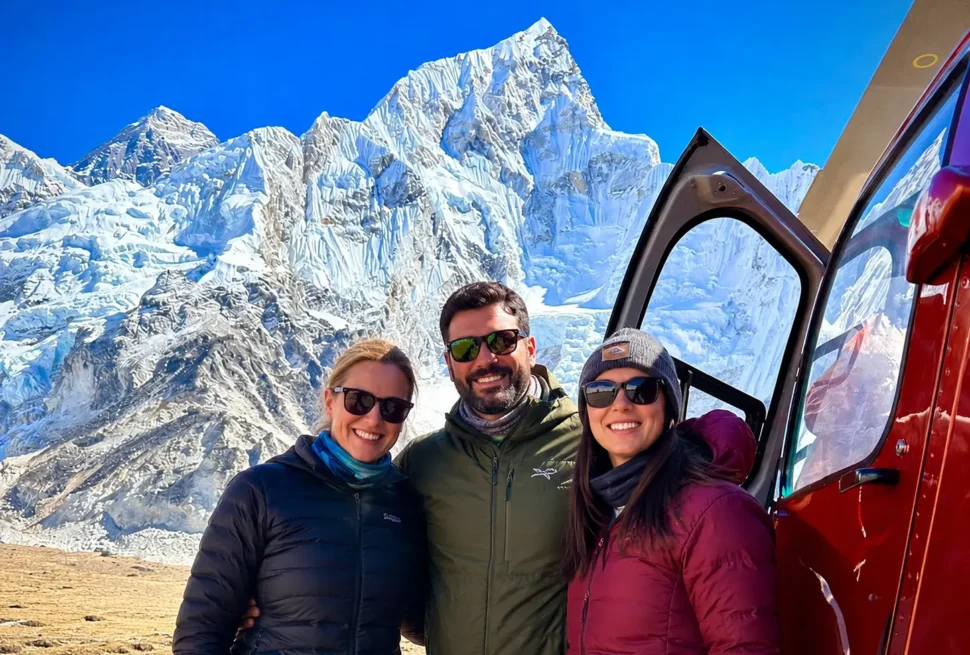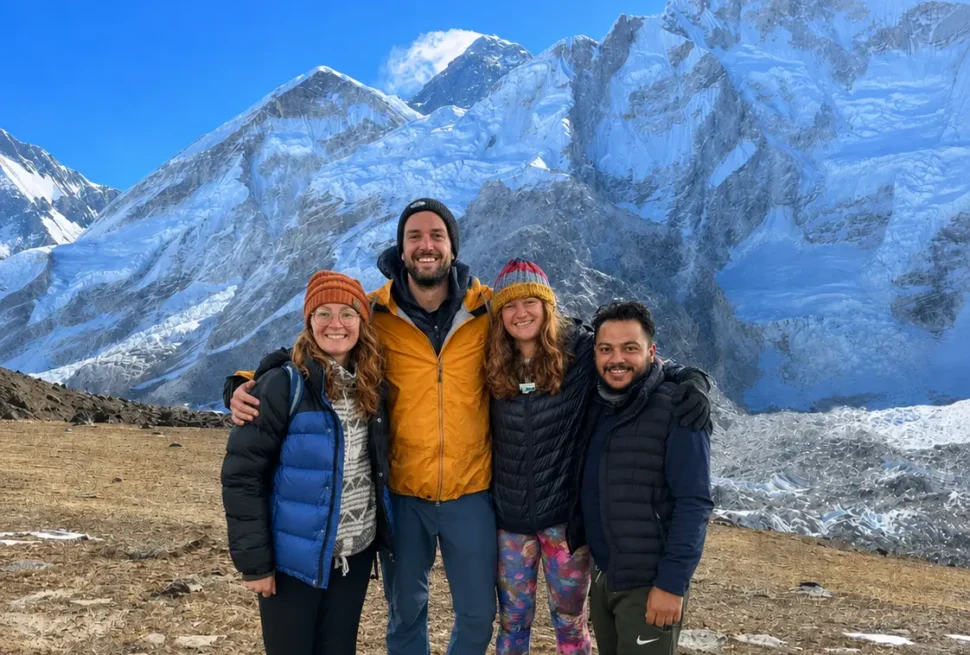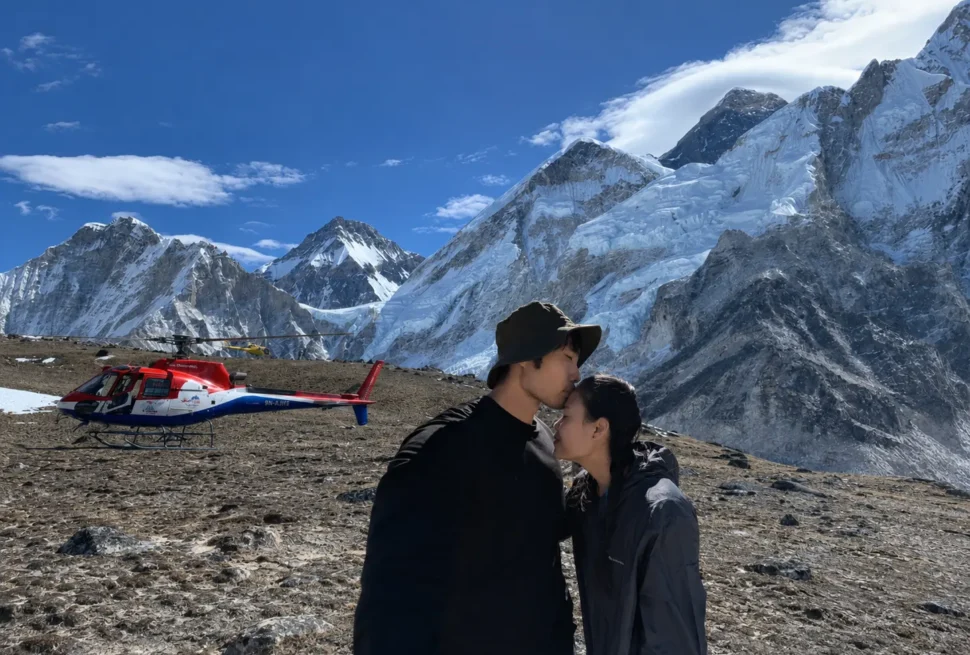
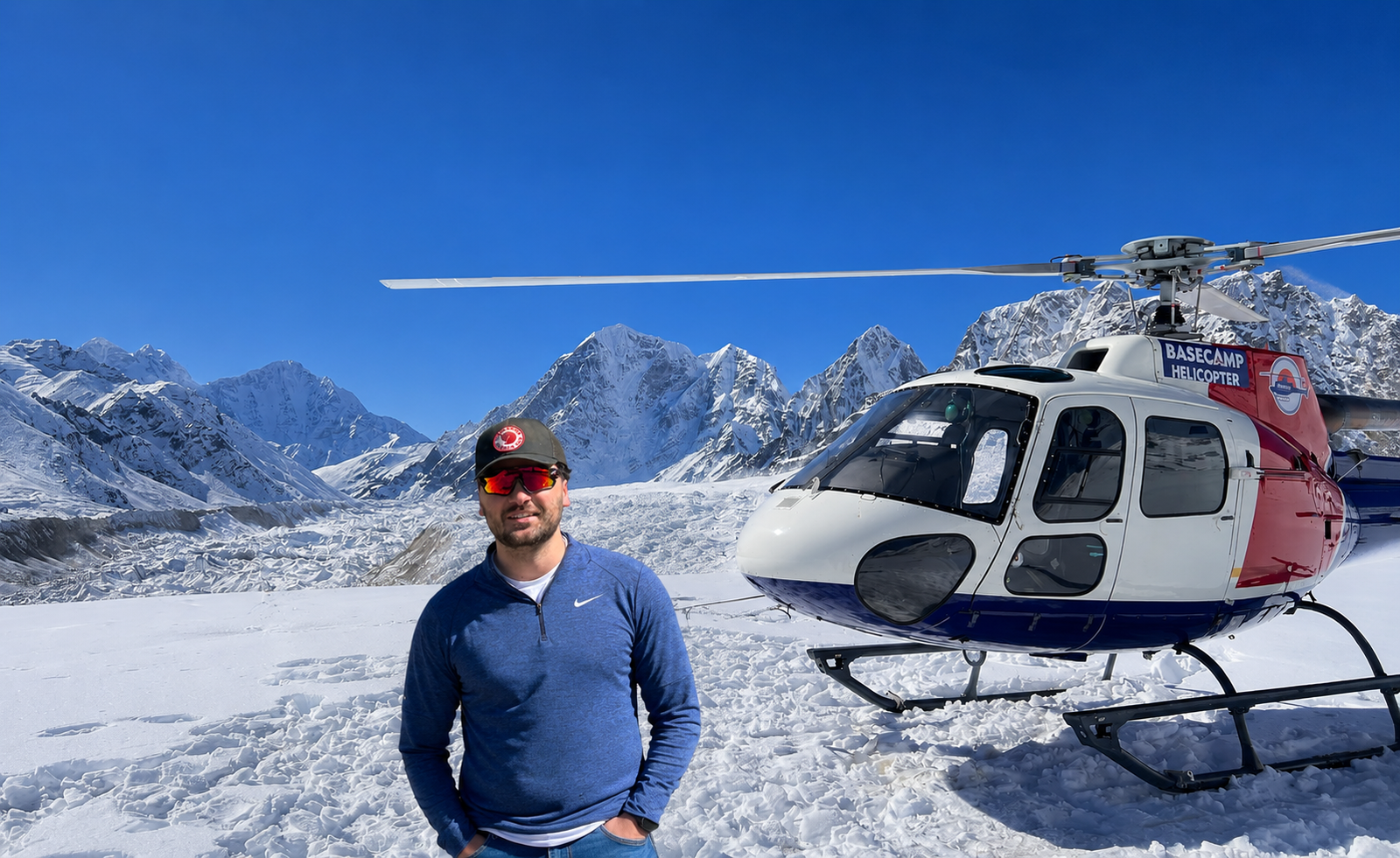
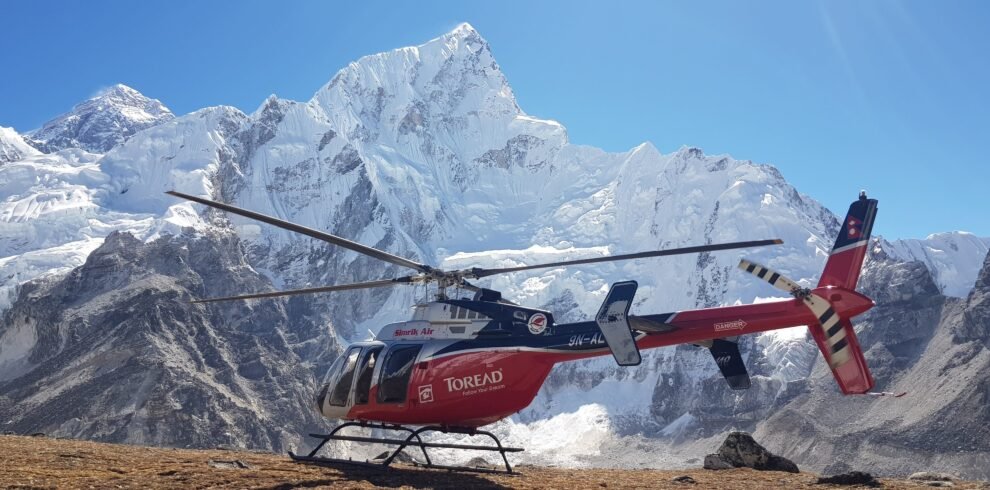
An Everest Base Camp helicopter tour packing list is short compared to a full trekking kit, but every item matters when you are stepping out at 5,545 meters. The tour begins at 5:00 AM in Kathmandu and ends before noon. In those hours, you go from a Kathmandu hotel room at 1,400 meters to the Kala Patthar ridge at 5,545 meters, spend 10 to 15 minutes at the highest point of the tour, breakfast at Hotel Everest View at 3,880 meters, and return to Kathmandu. The preparation for this tour is specific, because what you need for three very different altitude environments in a single morning is not the same as what you need for a day of sightseeing in the city.
This packing advice is specific to the single day helicopter tour. If you are instead considering walking in and flying out, our Everest Base Camp Trek with Helicopter Return combines both, and our shared versus private helicopter comparison covers the same flight decision for that longer itinerary.
Book the Everest Base Camp Helicopter Tour and then use this guide to prepare properly.
The Three Environments You Will Experience in One Morning
| Location | Altitude | Temperature Range (April/Oct) | What You Need |
|---|---|---|---|
| Kathmandu at departure | 1,400m | 12C to 20C | Layers you can remove, light jacket |
| Inside helicopter (flight) | Varies | Enclosed cabin, relatively warm | Comfort layers, easy to remove items |
| Kala Patthar ground stop | 5,545m | -5C to -18C plus wind chill | Full cold weather kit, down jacket, gloves, hat |
| Hotel Everest View breakfast | 3,880m | 0C to 8C | Down jacket and mid layer |
| Return to Kathmandu | 1,400m | 15C to 25C | Light layers again |
The practical implication: you dress in layers, wearing everything to the airport, keeping your down jacket and gloves accessible during the warm cabin portions, and putting everything on before the Kala Patthar landing. The helicopter is small and there is limited space for a large bag, so everything you bring goes on your body or fits in a small daypack.
Planning your Everest Helicopter Tour?
What to Wear: Full Clothing List by Layer
- Base layer top: Merino wool or synthetic thermal long sleeve. Merino is ideal because it manages moisture and retains warmth even if slightly damp from perspiration. Lightweight merino for April, midweight for October and November, heavyweight for winter months.
- Base layer bottom: Thermal leggings or base layer pants under your outer trekking trousers. Not essential for April but important for October, November, and winter months.
- Mid layer: Fleece jacket or light down sweater. This is the layer that goes under your main down jacket at Kala Patthar and functions as your primary warm layer at Hotel Everest View during breakfast.
- Outer jacket: A proper down jacket rated for mountain cold, not a city puffer coat. The insulation needs to be at least 600 fill power, preferably 700 to 800 fill power, and the jacket should cover your hips and have a hood. Avoid fashion down jackets; they are not designed for -15 degree C wind chill.
- Outer trousers: Trekking trousers with wind resistance for the Kala Patthar stop. Softshell material is good. Jeans are not appropriate for 5,545m cold.
- Socks: Merino wool trekking socks. Cold ground at Kala Patthar will come through thin cotton socks immediately.
- Footwear: Insulated trekking or hiking boots. Trail runners are not warm enough for the Kala Patthar stop in cold months. Good trail runners can work in April and May but warm socks are essential.
- Hat: Warm beanie that covers the ears. The wind on the Kala Patthar ridge will make an uncovered head extremely uncomfortable regardless of air temperature.
- Gloves: Insulated gloves rated for outdoor use in cold conditions. Liner gloves plus outer mittens is the warmest combination if you want to use your phone camera without removing the outer layer.
- Neck gaiter or balaclava: Optional for April and May, recommended for October and November, essential for December through February.
- Sunglasses: Polarized UV400 sunglasses. The UV intensity at 5,545 meters is significantly higher than at sea level and snow or ice reflection adds to this.
What to Bring in Your Daypack
The helicopter has limited cargo space. Most operators allow a small daypack (15 to 20 liters maximum) per person. Bring only what you need for one morning.
- Camera or smartphone: Your primary photography device. Have it charged the night before and keep it in an inside pocket close to body heat at Kala Patthar to preserve battery in the cold.
- Extra battery/power bank: Cold kills phone and camera batteries at altitude. If your camera or phone battery is not new, bring a spare.
- Memory cards: Have empty memory cards ready. You will take more photos than you expect.
- Sunscreen SPF 50: Apply before departure. UV at altitude is intense and the reflection from snow and ice compounds it.
- Lip balm: Cold dry air at altitude chaps lips quickly. Apply before the Kala Patthar stop.
- Small snack: Nuts, energy bar, or chocolate is useful if you have a sensitive stomach and the early departure makes you feel queasy without food. The Hotel Everest View breakfast follows within an hour of the Kala Patthar stop.
- Water bottle: Small 500ml bottle. Hydration matters at altitude but you do not need a large volume for a morning tour.
- Altitude medication: If your doctor has prescribed Diamox (acetazolamide) for altitude sickness prevention, take the appropriate dose before departure. Discuss this with your doctor before the trip; Diamox is a prescription medication with side effects.
- Cash in Nepali rupees: For any personal purchases at Hotel Everest View. Tea, coffee, and snacks are available.
- Identification documents: Your passport is required for permit verification.
Planning your Everest Helicopter Tour?
What to Leave at Your Hotel
- Your main luggage or large backpack
- Any electronics you do not specifically need for photography (laptop, tablet)
- Valuables beyond your camera and phone
- Trekking poles (not needed on a helicopter tour)
- Large first aid kits (the tour carries basic medical supplies)
Pre Tour Physical Preparation
- Stay hydrated the day before: Drink extra water the day before your tour, particularly if you have been traveling internationally with dehydrating flights.
- Avoid alcohol the night before: Alcohol at altitude increases the risk and severity of altitude sickness symptoms. The night before your tour should be a no alcohol evening.
- Sleep adequately: The 5:00 AM departure means an early wakeup. Get to sleep by 10:00 PM the night before. Fatigue at altitude worsens all AMS symptoms.
- Eat lightly the morning of: A small breakfast before departure is recommended but not a heavy meal. Nausea is more common at altitude on a full stomach.
- Do not do intense exercise the day before: A normal day of Kathmandu sightseeing is fine. A full day trekking tour the day before leaves you more fatigued than you want to be.
Pre Existing Medical Conditions to Discuss with a Doctor
The following conditions warrant medical consultation before booking an Everest helicopter tour that lands at 5,545 meters:
- Heart disease or history of cardiac events
- Significant respiratory conditions (severe asthma, COPD, or similar)
- Recent surgery, particularly chest or abdominal surgery
- Pregnancy
- Severe anemia
- History of severe altitude sickness at elevations above 4,000 meters
- Sickle cell anemia or sickle cell trait
None of these conditions are automatic disqualifiers from the helicopter tour, but they warrant a conversation with a doctor who can assess your specific situation.
Managing Altitude at Kala Patthar: Practical Tips
- Move slowly when you exit the helicopter: Step out carefully on rocky ground, orient yourself, and walk at a deliberate slow pace. Running or moving quickly at 5,545m without acclimatization causes immediate breathlessness.
- Breathe deliberately: Take slow, full breaths rather than quick shallow ones. At altitude, slower, deeper breaths are more effective for oxygen uptake.
- Do not fight the breathlessness: It is normal. Accept that you will feel slightly breathless for the entire ground stop and work with it rather than against it.
- Drink a small amount of water: Hydration helps at altitude. Take a few sips from your water bottle after you have had a look at the view.
- Sit if you feel very dizzy: If dizziness or light headedness is significant, sit on a stable rock for a minute and let it pass. Tell the pilot or crew if your symptoms feel severe.
- Return to the helicopter when signaled: Pilot instructions about departure timing are not suggestions. When the pilot indicates it is time to reboard, board promptly.
Planning your Everest Helicopter Tour?
Photography Preparation: Getting the Best Shots
- Fully charge your camera battery the night before. Do not rely on the camera being charged when you pick it up from your bag on departure morning.
- Clear your memory card in advance.
- Practice with your camera settings the night before so you are not adjusting settings while standing breathless at 5,545m
- For smartphones, enable Pro or Manual mode if available to control exposure independently of automatic mode
- Know in advance what your most important composition is so you prioritize it in the first few minutes on the ground
- The Everest south face composition: face north from the helipad, frame Everest in the upper third of the frame with the Khumbu Glacier basin below
- The all peaks panorama: a slow 180 degree pan from Pumori (west) across Everest and Lhotse to Ama Dablam (southeast)
Travel Insurance: What You Specifically Need
Standard travel insurance often does not cover helicopter evacuation above 4,000 meters or medical emergencies at altitude. For an Everest helicopter tour verify your insurance against these specific requirements:
- High altitude helicopter evacuation coverage: Must specify coverage at or above 5,500 meters. Many basic policies cap at 4,000 meters or even lower.
- Emergency medical coverage: Must cover emergency medical treatment in Nepal including potential altitude sickness treatment
- Trip cancellation/interruption: If your Nepal departure is fixed and a weather cancellation would result in a missed tour with no reschedule option, trip cancellation coverage is relevant
- Recommended providers: World Nomads, True Traveller, Battleface, and similar adventure travel specialist insurers typically offer altitude specific coverage
Day Before Your Tour: The Evening Preparation Checklist
- Charge your camera, phone, and any backup batteries to 100 percent
- Clear your memory cards
- Lay out all your clothing layers so the morning is not a search and assembly exercise at 4:45 AM
- Pack your daypack: camera, sunscreen, lip balm, water, snack, passport, cash
- Confirm your hotel pickup time with the front desk or your tour operator
- Set two alarms: 4:30 AM and 4:45 AM
- Eat a normal dinner (not heavy) and drink extra water before bed
- Do not drink alcohol
- Sleep. Your experience at 5,545 meters tomorrow is directly affected by how rested you are.
Planning your Everest Helicopter Tour?
Morning of the Tour: Departure Day Timeline
| Time | Action |
|---|---|
| 4:30 to 4:45 AM | Wake up, dress in base layers and mid layer, put down jacket and gloves in daypack or have them ready to add at airport |
| 4:45 to 5:00 AM | Light breakfast if your hotel offers early morning service. If not, a small snack from your daypack. |
| 5:00 AM | Meet your vehicle at the hotel entrance for airport transfer |
| 5:00 to 5:30 AM | Drive to Tribhuvan International Airport (allow 30 to 45 minutes depending on Kathmandu traffic) |
| 5:30 to 6:00 AM | Airport check in, safety briefing from your operator, weight check |
| 6:00 to 7:30 AM | Departure when weather is confirmed as flyable |
What Not to Do: Common Mistakes First Time Visitors Make
- Arriving at the airport without the required documents. Have your passport and booking confirmation ready at the airport.
- Wearing inappropriate footwear. Sandals, flat shoes, or thin sneakers are not suitable for the rocky Kala Patthar ground stop in cold temperatures.
- Not eating before departure because of the early morning start. A small meal improves altitude tolerance.
- Waiting until Kala Patthar to put on your down jacket. Put it on before the landing, while you are still in the helicopter during the approach.
- Spending the entire 15 minutes photographing without actually looking at the view. Step back from your camera for 2 to 3 minutes and just look.
- Not telling the crew if you feel significantly unwell at altitude. The crew and pilot have first aid training and oxygen. Use them if needed.
Final Thoughts on Preparation
The Everest helicopter tour is a concentrated experience. Four to five hours from start to finish, with the peak moment lasting less than a quarter hour on the ground at 5,545 meters. The people who arrive well prepared at Kala Patthar, with the right layers on their body, a charged camera in their hand, and a rested mind, have a fundamentally better experience than those who arrive cold, disorganized, and caught off guard by the altitude.
Preparation for this tour takes one evening. Lay out your gear, charge your devices, pack your small bag, and sleep well. The mountain does the rest.
Book your Everest Base Camp Helicopter Tour with Next Trip Nepal and we will send you a full pre departure briefing covering all of the above, updated with any current conditions relevant to your specific departure date. We also offer the Everest Base Camp Trek for travelers who want the full two week ground experience.
An Everest helicopter tour done right stays with you for years. The preparation that makes it right takes one evening. Do the evening’s work and let the morning take care of itself.