Most itineraries for the Pikey Peak Trek end the same way, a summit sunrise over Everest, Lhotse, Makalu and Kanchenjunga, followed by a walk back down through Junbesi and Phaplu. Fewer travelers know that the same region holds a second, very different highlight within reach of the standard route, a high alpine lake considered sacred by both Hindus and Buddhists, sitting well above 4,500 meters in a remote fold of the Solukhumbu hills. That lake is Dudh Kunda, and adding it to a Pikey Peak Trek turns a short scenic trek into something with real pilgrimage weight behind it.
This guide explains what Dudh Kunda actually is, why people make the journey to it, what adding it to your Pikey Peak Trek itinerary actually costs in time and effort, and who should and should not bother with the extension. We are upfront where details are harder to pin down precisely, since this is a far less documented side trip than the main Pikey route itself.
What Is Dudh Kunda
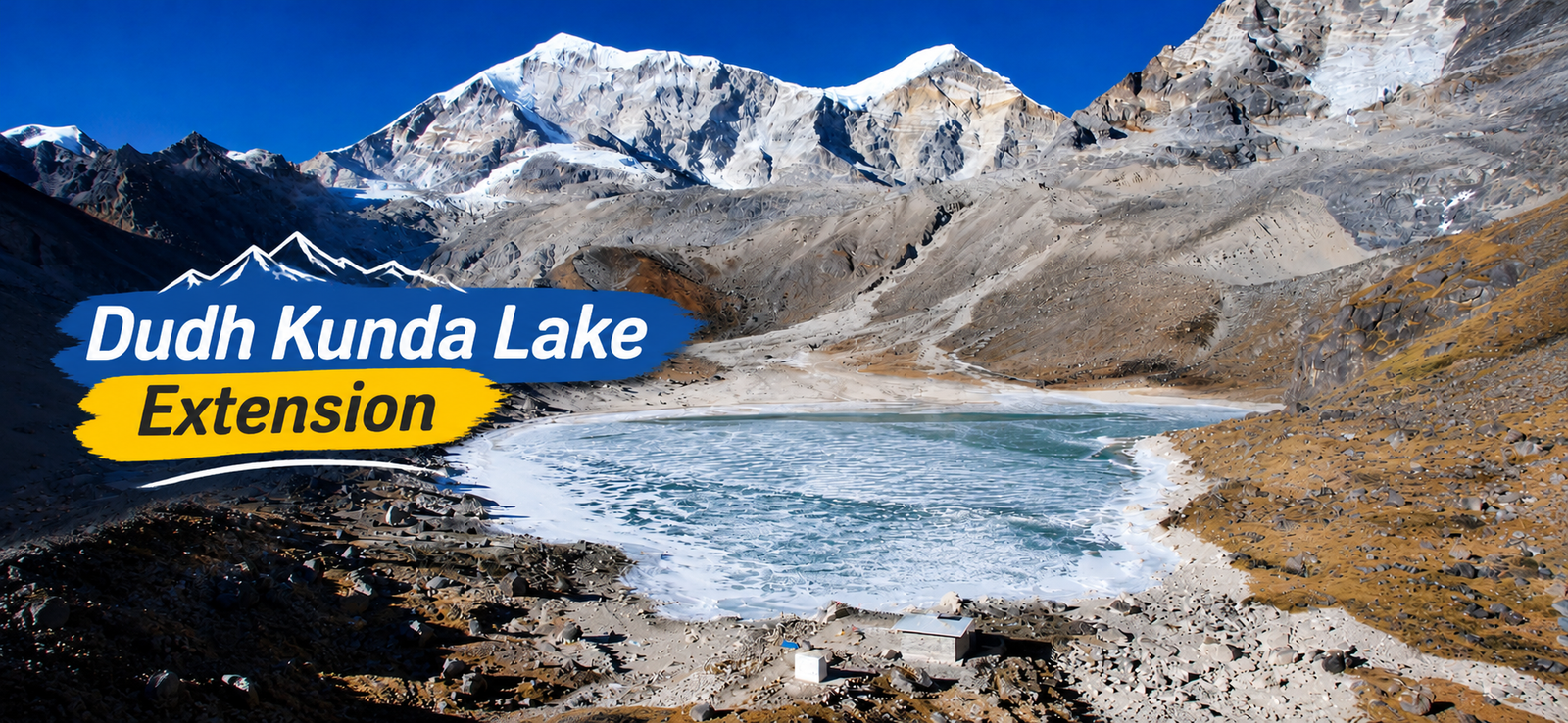
Dudh Kunda translates roughly to milk lake, a name that comes from the pale, milky color the water takes on under certain light, set against dark scree and snow patches at altitude. The lake sits at an elevation commonly cited around 4,560 meters, high in the hills above the villages the standard Pikey Peak route already passes through, making it a genuine high alpine destination rather than a minor detour.
- Elevation: Commonly cited at around 4,560 meters, though exact figures vary slightly between sources, which is typical for a remote alpine lake without a permanent survey marker.
- Religious significance: Sacred to both Hindus, who associate it with Lord Shiva, and Buddhists, who hold their own parallel reverence for the site, making it one of the relatively small number of places in Nepal with genuine dual religious importance.
- Character: A high, remote alpine lake surrounded by rock and sparse vegetation, with a stark, quiet feel very different from the forested, village heavy character of the standard Pikey Peak trail.
- Visitor numbers: Dramatically lower than Pikey Peak itself outside the festival season described below, since most travelers who come this far simply do not know the lake exists as an option.
Nepal has a more famous sacred lake in a similar category, Gosainkunda in the Langtang region, which draws considerably larger pilgrim crowds during its own festival period. Dudh Kunda occupies a comparable religious role for communities in the Solukhumbu area but remains far less visited by comparison, partly because of its remoteness and partly because it has simply never been marketed to international trekkers the way Gosainkunda has.
Why People Make the Journey
For local Hindu and Buddhist communities, a visit to Dudh Kunda is an act of pilgrimage, not sightseeing. The lake is treated as a place of ritual purification and religious significance, and that context shapes how the site feels even for a visiting trekker with no religious connection to it. There is a stillness and seriousness to the place that is different from a simple scenic viewpoint.
For trekkers without a specific religious motivation, the draw is usually a mix of three things, the chance to see a genuinely remote alpine lake most Everest region visitors never hear about, a real sense of solitude on a trail with very little tourist traffic, and the opportunity to extend a short trek into something longer and more physically demanding without leaving the broader Pikey Peak region.
- Pilgrimage travelers: Hindu and Buddhist visitors making a dedicated religious journey, for whom the lake itself is the primary destination rather than an addition to a trek.
- Experienced trekkers seeking solitude: Travelers who have already done one or more Everest region treks and specifically want a quieter, less developed trail this time.
- Photographers and alpine lake enthusiasts: Visitors drawn to high altitude lake landscapes who want something beyond the more photographed glacial lakes of the Khumbu.
- Trip extenders: Travelers who already have the extra days available and would rather deepen their time in the region than end the trip early after summiting Pikey Peak.
The Janai Purnima Festival
The single biggest event at Dudh Kunda each year is Janai Purnima, a Hindu festival that falls on the full moon day, typically in August. On this day, Hindu pilgrims traditionally bathe in the lake and renew the sacred thread, called the janai, worn across the chest by Hindu men of certain castes, along with other ritual observances tied to purification. The same period draws Buddhist visitors observing their own parallel traditions at the site.
- When it falls: The full moon day in the Nepali month that corresponds to roughly late July through August in the Gregorian calendar, a date that shifts slightly each year with the lunar calendar.
- What happens: Ritual bathing in the lake, renewal of the sacred thread for Hindu pilgrims, and a noticeably larger, more communal atmosphere at the lake than on any other day of the year.
- The catch: Late July through August falls squarely in Nepal’s monsoon season, which means the trek to reach the lake for the festival happens during the wettest, most landslide prone and leech heavy time of year on the approach trails.
- Who it suits: Travelers specifically motivated by the cultural and religious experience of the festival itself, who are willing to accept monsoon trekking conditions as the price of being there for it.
We are honest with travelers about this tradeoff rather than glossing over it. Visiting for Janai Purnima means a genuinely special cultural experience, but it also means wet trails, reduced mountain visibility much of the time, and the general discomforts of monsoon trekking in Nepal’s hills. For travelers whose priority is scenery and reliable weather rather than the festival itself, visiting outside the monsoon window is the better call, covered below.
Adding Dudh Kunda to Your Pikey Peak Trek Itinerary
Dudh Kunda is not part of the standard Pikey Peak Trek itinerary, and most trekkers who book the trip never visit it. Reaching the lake requires a dedicated extension built into your itinerary in advance, typically adding around three extra days to the standard trip length once you account for the additional trekking, the higher altitude adjustment, and the return to rejoin the main route.
- Added time: Roughly three extra trekking days on top of the standard Pikey Peak Trek itinerary, though this can vary depending on your fitness, the specific route taken, and how much buffer is built in for altitude and weather.
- Added altitude exposure: A meaningful jump beyond the 4,065 meter Pikey Peak summit itself, since Dudh Kunda sits noticeably higher at around 4,560 meters, which raises the importance of proper acclimatization before attempting the extension.
- Added cost: Extra guide, porter and accommodation costs for the additional days, along with potentially needing camping equipment if teahouse infrastructure near the lake is limited or seasonal.
- Added logistics: This extension needs to be requested and planned at the enquiry stage, not decided on the trail, since it affects staffing, equipment, and the overall shape of your itinerary.
Because infrastructure directly at the lake is minimal, some itineraries to Dudh Kunda involve camping rather than relying on teahouse accommodation for the final approach, particularly outside the festival period when any seasonal facilities near the lake are less likely to be staffed. We confirm the specific accommodation plan with you at the time of booking based on current conditions rather than assuming a fixed setup year round.
Difficulty and Fitness Considerations
Adding Dudh Kunda meaningfully increases the physical demands of a Pikey Peak Trek. The standard trek is often chosen specifically because it is short and relatively gentle by Everest region standards. The extension works against that appeal in exchange for a genuinely different, more remote experience, so it is worth being clear eyed about what it adds before committing to it.
- Altitude: At around 4,560 meters, Dudh Kunda sits comfortably in altitude sickness risk territory, which makes proper pacing and acclimatization more important than on the standard Pikey Peak itinerary alone.
- Terrain: Expect rougher, less maintained trail sections than the main Pikey route, since this is a far less trafficked path with correspondingly less trail investment over the years.
- Trail marking: Signage and well worn paths are less reliable the closer you get to the lake, which is one of the strongest reasons to treat this as a guided extension rather than an independent side trip.
- Weather exposure: Being higher and more exposed than the standard route, the Dudh Kunda extension is more sensitive to sudden weather changes, particularly outside the clearer spring and autumn windows.
We recommend the extension primarily to trekkers who are already comfortable with multi day teahouse trekking at altitude, ideally with at least one prior high altitude trek behind them, rather than as a first ever Himalayan trekking experience. First time trekkers are generally better served by the standard Pikey Peak itinerary on its own, with Dudh Kunda saved for a return trip once they have more altitude experience.
Best Time to Visit Dudh Kunda
When you choose to make this journey depends heavily on your priorities. The festival period offers a cultural experience unavailable at any other time of year, while the standard trekking seasons offer dramatically better weather, visibility, and trail conditions.
- Late July through August, for Janai Purnima: The only time to witness the festival itself, at the cost of monsoon rain, leeches, slippery trail sections, and a real chance of limited mountain visibility on the days around the full moon.
- October and November, post monsoon autumn: Clear skies, stable trail conditions, and the best overall visibility of the year, making this the strongest window for travelers prioritizing scenery and reliable weather over festival timing.
- March through May, spring: Also a strong option, with generally clear mornings, rhododendron blooms lower on the approach trails, and good stability, though afternoon cloud buildup is more common than in autumn.
- December through February, winter: Possible but considerably colder at this altitude, with a higher chance of snow blocking the final approach to the lake depending on conditions that particular year.
For most travelers whose main interest is the landscape and the experience of reaching a remote alpine lake, we recommend October or November. For travelers specifically motivated by the religious and cultural weight of Janai Purnima, the festival period is worth the monsoon tradeoffs, provided expectations about trail conditions are set honestly in advance.
A Closer Look at the Religious Significance
It is worth spending a little more time on why this particular lake carries the weight it does, rather than treating the religious side as a footnote. In Hindu tradition, high alpine lakes across the Himalaya are frequently associated with Shiva, and Dudh Kunda fits that broader pattern, understood locally as a place connected to the deity in a way that gives the site a seriousness beyond its scenic value. Pilgrims who make the journey are not simply visiting a viewpoint, they are completing an act of devotion that, for many, carries significance comparable to other major Himalayan pilgrimage sites.
Buddhist communities in the surrounding Solukhumbu hills hold their own parallel reverence for the lake, consistent with a broader pattern across the Himalaya where particular natural sites, lakes, caves, and peaks carry significance across both traditions simultaneously, sometimes with distinct but coexisting explanations for why the place matters. This dual significance is part of what makes Dudh Kunda unusual even among Nepal’s many sacred natural sites, and it shapes the atmosphere at the lake in a way a visiting trekker can genuinely feel, even without a personal religious connection to either tradition.
- For Hindu pilgrims: The lake is associated with Shiva, and the Janai Purnima rituals, bathing and renewing the sacred thread, are acts of purification tied directly to that association.
- For Buddhist visitors: The site holds its own parallel significance within local Buddhist tradition, consistent with the broader Himalayan pattern of sacred natural features recognized across religious lines.
- For local communities: Beyond formal religious observance, the lake is simply part of the cultural fabric of the surrounding villages, referenced and respected in daily life, not only on the one festival day each year.
- For visiting trekkers: Even without a personal stake in either tradition, most visitors describe a noticeably different, more contemplative atmosphere at Dudh Kunda than at a purely scenic high altitude lake elsewhere in the region.
We mention the comparison to Gosainkunda in the Langtang region deliberately, since it is the reference point most travelers who have researched Nepal trekking even a little will already have some familiarity with. Gosainkunda draws considerably larger crowds, particularly during its own Janai Purnima observance, partly because it sits on a more established, more heavily marketed trekking circuit. Dudh Kunda offers a comparable kind of experience with a fraction of the visitor numbers, which is exactly the appeal for travelers specifically seeking the road less traveled version of this type of pilgrimage trek.
A Rough Shape for the Extension, Day by Day
Because this extension is built as a custom addition rather than a fixed package, the exact day by day breakdown depends on current trail conditions, your starting point within the standard Pikey Peak itinerary, and the specific plan our team works out with you. That said, a rough shape helps most travelers picture what the extra days actually involve, so here is a representative outline rather than a fixed, guaranteed schedule.
- Branch off point: Rather than continuing along the standard exit route after the Pikey Peak summit, your itinerary branches toward Dudh Kunda from a point your guide will confirm based on current trail conditions that season.
- Day one of the extension: A long trekking day climbing steadily away from the standard route, gaining significant altitude as the trail leaves forested terrain behind and enters sparser, rockier high country.
- Day two of the extension: Continued ascent toward the lake itself, with a shorter final push on the morning you actually reach Dudh Kunda, timed where possible for calmer weather and better light for viewing and photographing the lake.
- Day three of the extension: Descent back down to rejoin the standard Pikey Peak route, typically a long but more straightforward day given the net loss of elevation on the way back.
- Rejoining the main itinerary: From here, your trip continues along the standard exit path toward Phaplu and onward transport back to Kathmandu, exactly as it would on a standard Pikey Peak Trek without the extension.
This shape can compress or stretch depending on your fitness, the weather on the days in question, and how much time you want to spend at the lake itself rather than treating it as a brief visit. Travelers who want a longer, more unhurried stay near Dudh Kunda, rather than a quick arrival and departure, should mention this when booking so an extra buffer day can be built in.
Acclimatization Strategy for the Higher Altitude
Because Dudh Kunda sits meaningfully higher than the Pikey Peak summit itself, the standard trek’s acclimatization profile is not automatically sufficient for the extension. We build additional pacing into any itinerary that includes this extension, rather than simply tacking three days onto the end of the standard schedule and hoping altitude adjusts itself along the way.
- Use the Pikey Peak summit as a staged adjustment: Reaching 4,065 meters at the main summit before continuing toward Dudh Kunda gives your body a useful intermediate adjustment point rather than climbing straight from lower elevations toward 4,560 meters in one push.
- Build in a buffer day where possible: An extra day somewhere in the itinerary before the final push to the lake reduces the risk of attempting the highest point of the whole trip while still adjusting.
- Watch for symptoms seriously: Headache, nausea, and unusual fatigue at this altitude are signals to slow down or descend, not to push through, and our guides are trained to make that call rather than defer to a traveler’s enthusiasm to reach the lake on schedule.
- Hydration and pacing on the final approach: The last push to Dudh Kunda tends to be the most physically demanding single stretch of the entire extension, so a slow, steady pace with regular water breaks matters more here than almost anywhere else on the trip.
How Dudh Kunda Fits With the Rest of Your Trek
The extension is typically built in around the main Pikey Peak Trek itinerary rather than run as a completely separate trip, since the approach and exit logistics overlap with the standard route for at least part of the journey. Exactly where the Dudh Kunda trail branches off from the main route, and how it rejoins afterward, depends on current trail conditions and the specific plan our team puts together with you.
- Typical structure: Standard Pikey Peak itinerary up to a certain point, a branch toward Dudh Kunda adding the extra days described above, then a return to rejoin the standard exit route back toward Phaplu and the road or flight home.
- Access route choice matters: If you are also considering one of the classic walk in routes to reach Pikey Peak itself, covered in our access routes comparison, combining a walk in with a Dudh Kunda extension adds up to a considerably longer overall trip, so think through your total available time before committing to both.
- Guide continuity: We keep the same guide and support team for the full trip including the extension, rather than handing you off to a separate specialist team partway through, so the experience stays consistent start to finish.
Because the exact trail conditions, teahouse or camping availability, and seasonal factors around Dudh Kunda shift more than they do on the well established main Pikey route, we build this extension as a custom addition discussed directly with you rather than offering a single fixed package price online. This lets us plan accurately around whatever the current season and conditions require.
Dudh Kunda Versus the Standard Pikey Peak Summit
Travelers deciding whether to add this extension often find it useful to see the two destinations compared directly, since they are genuinely different experiences rather than one simply being a longer version of the other.
| Factor | Pikey Peak summit | Dudh Kunda extension |
|---|---|---|
| Elevation | 4,065 meters | Around 4,560 meters |
| Added time | None, this is the standard itinerary | Roughly three extra days |
| Character | Wide panoramic summit view | Still, remote sacred alpine lake |
| Crowds | Moderate, a popular trekking destination | Very light outside the festival period |
| Infrastructure | Established teahouses throughout | Limited, possibly requiring camping |
| Best suited to | Almost all travelers on this trek | Experienced trekkers with extra time and interest in the cultural or remote appeal |
Neither destination replaces the other, and this is precisely why we present Dudh Kunda as an addition to the standard trek rather than an alternative version of it. Most travelers who add the extension still want the Pikey Peak summit experience in full, and simply choose to extend the trip further into the surrounding high country afterward rather than heading straight back down.
Overview of the Khopra Danda Trek The Khopra Danda Trek, also known locally as the Khopra Ridge Trek, is a…
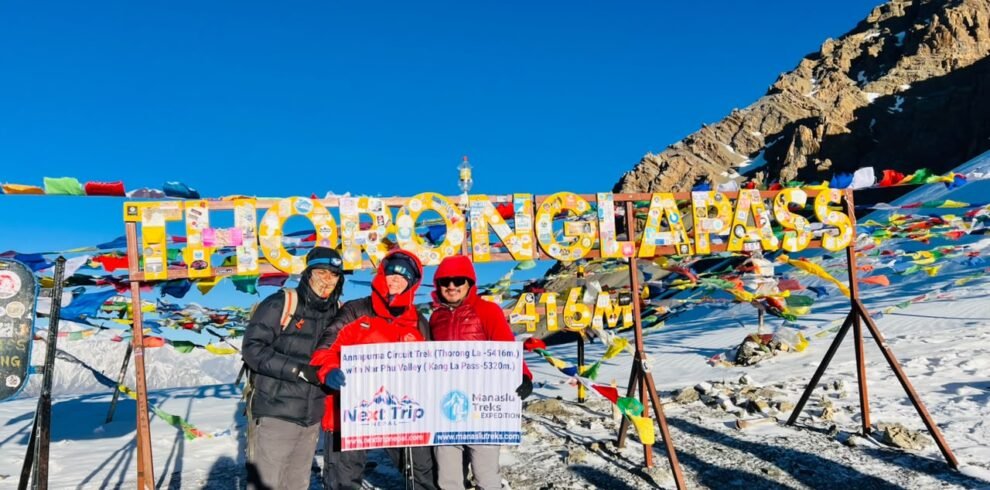
Nar and Phu sit behind a gorge so narrow that the Nepal government kept both villages closed to foreign visitors…
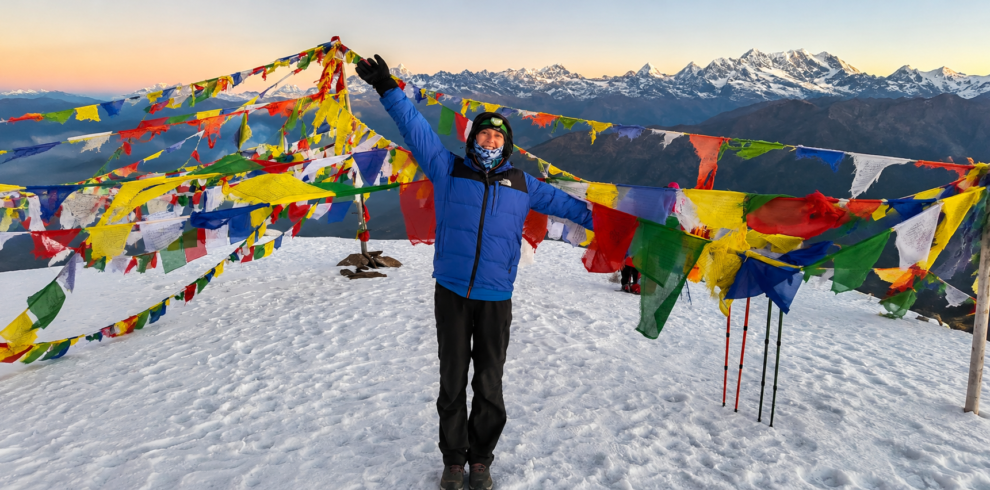
Pikey Peak Trek is a short, uncrowded trek in the lower, western foothills of the Everest region of Solukhumbu District,…
What If the Weather Turns
Because the extension pushes into higher, more exposed terrain than the standard route, weather contingency planning matters more here than on the main Pikey Peak itinerary. We build flexibility into any itinerary that includes this extension rather than presenting it as a rigid schedule that must be kept no matter what conditions look like on a given day.
- Built in buffer: Wherever possible, we include at least one spare day in the overall itinerary specifically to absorb a weather delay without forcing a rushed attempt on a poor weather day.
- Guide judgment on the day: Your guide makes the real time call on whether conditions are safe to continue toward the lake, and that call takes priority over the original plan if weather deteriorates.
- Fallback plan: If conditions genuinely do not allow a safe attempt on the extension within your available schedule, your guide will discuss realistic alternatives with you rather than pushing ahead regardless, which may mean returning to the standard route earlier than planned.
- Travel insurance: As with any high altitude extension in Nepal, appropriate travel insurance covering high altitude trekking and emergency evacuation is strongly recommended before adding Dudh Kunda to your trip.
What to Pack for the Extension
Most of what you need for the standard Pikey Peak Trek, covered in detail in our packing list and gear guide, still applies for the Dudh Kunda extension. A handful of additions are worth planning for given the higher altitude and rougher trail conditions involved.
- Warmer layers: The jump to around 4,560 meters means colder conditions than the standard Pikey summit, particularly outside the warmer festival month, so pack an extra insulating layer beyond what the standard itinerary requires.
- Sturdier footwear: Rougher, less maintained trail sections reward boots with good ankle support more than the gentler sections of the main Pikey route.
- Trekking poles: Genuinely useful on uneven terrain near the lake, more so than on much of the standard route.
- Rain gear, for the festival window specifically: If visiting during Janai Purnima, proper waterproof layers are essential given the monsoon timing, along with leech protection for lower elevation sections of the approach.
- A camera with a polarizing filter: The lake’s distinctive pale color photographs noticeably better with a polarizer to cut surface glare, for travelers bringing dedicated camera gear.
Is the Dudh Kunda Extension Right for You
This extension is not for everyone, and we would rather help you make the right call than upsell every traveler on adding days to their trip. The honest breakdown below should help you decide.
- Add it if: You have at least three extra days available, some prior high altitude trekking experience, and genuine interest in either the religious significance of the site or the appeal of a remote, little visited alpine lake.
- Add it if: You are specifically drawn to the Janai Purnima festival and are willing to accept monsoon trekking conditions as the cost of experiencing it.
- Skip it if: This is your first Himalayan trek, your schedule is tight, or your main goal is simply the shortest, most efficient route to a genuine high altitude summit experience, which the standard Pikey Peak Trek already delivers extremely well on its own.
- Skip it if: You are not comfortable with the idea of possible camping, rougher trail conditions, or less predictable logistics than the well established main route offers.
If you are still unsure, tell us what is drawing you to the extension when you enquire, whether that is the cultural experience, the photography opportunity, or simply wanting more days in the mountains, and we can help you decide whether it fits your specific trip rather than defaulting you toward either option without a real conversation first.
Frequently Asked Questions
What is Dudh Kunda and why is it significant?
Dudh Kunda is a high alpine lake at around 4,560 meters in the Solukhumbu region, sacred to both Hindus, who associate it with Lord Shiva, and Buddhists, who hold their own parallel reverence for the site. It is one of the relatively few places in Nepal with recognized significance in both traditions.
How many extra days does the Dudh Kunda extension add to a Pikey Peak Trek?
Roughly three extra trekking days on top of the standard itinerary, though the exact figure can vary depending on fitness, route, and weather conditions at the time.
What is Janai Purnima and when does it happen?
Janai Purnima is a Hindu festival held on the full moon day, typically in August, when pilgrims traditionally bathe in the lake and renew the sacred thread worn across the chest. It draws Buddhist visitors observing their own parallel traditions as well.
Is visiting during the festival a good idea for trekkers?
It depends on your priorities. The festival falls during the monsoon, which means wet trails and reduced visibility. Travelers specifically motivated by the cultural experience often find it worth the tradeoff, while those prioritizing scenery and reliable weather are usually better served visiting in October, November, March or April instead.
Do I need prior trekking experience to add this extension?
We recommend at least one prior high altitude trek before attempting the Dudh Kunda extension, given the jump in elevation beyond the standard Pikey Peak summit and the rougher trail conditions involved. First time trekkers are generally better served by the standard itinerary alone.
Will I need to camp, or are there teahouses near the lake?
Teahouse infrastructure directly at the lake is limited and can be seasonal, so some itineraries involve camping for the final approach, particularly outside the festival period. We confirm the specific accommodation plan with you at booking based on current conditions.
Can I combine the Dudh Kunda extension with a Jiri or Shivalaya walk in?
Yes, but be aware this adds up to a considerably longer total trip, since both additions extend the standard itinerary independently. See our access routes comparison for details on the walk in options, and plan your total available time accordingly before combining the two.
How much does the Dudh Kunda extension cost?
Because trail conditions, accommodation availability, and seasonal factors vary more than on the main Pikey route, we build this extension as a custom addition discussed directly with you rather than quoting a single fixed price online. Tell us your preferred timing when you enquire and we will put together an accurate cost for your specific plan.
Is Dudh Kunda similar to Gosainkunda in the Langtang region?
They occupy a similar religious category, both being sacred high alpine lakes with Hindu significance and their own pilgrimage traditions, but Dudh Kunda receives far fewer visitors than the better known Gosainkunda, largely due to its remoteness and lower profile among international trekkers.
What should I pack specifically for this extension beyond the standard Pikey Peak gear list?
An extra warm layer for the higher altitude, sturdier footwear for rougher trail sections, trekking poles, and, if visiting during the festival window, solid rain gear and leech protection. See our full packing list and gear guide for the complete standard list this builds on.
Who should skip the Dudh Kunda extension?
First time trekkers, travelers on a tight schedule, and anyone whose main priority is the shortest, most efficient route to a genuine high altitude summit experience are generally better served sticking with the standard Pikey Peak Trek itinerary on its own.
Is altitude sickness a serious risk on this extension?
It is a real consideration given the elevation involved, which is why we build extra acclimatization time into any itinerary that includes Dudh Kunda rather than treating it as a quick extra day. Travelers with no prior high altitude experience should discuss this honestly with our team before committing to the extension.
Can I visit Dudh Kunda without doing the full Pikey Peak Trek first?
It is possible to plan a trip focused primarily on Dudh Kunda rather than treating it purely as an extension, though most of our travelers choose to combine it with the standard Pikey Peak itinerary since the approach logistics overlap significantly. Tell us your priorities when you enquire and we can advise on the most efficient plan for your specific goals.
How crowded does the lake get during Janai Purnima?
Noticeably busier than any other day of the year, with local pilgrims making the journey specifically for the festival, though nowhere near the scale of crowds seen at more famous pilgrimage lakes elsewhere in Nepal. Outside this one day, the lake typically sees very few visitors at all.
Do I need a different permit for the Dudh Kunda extension?
Permit requirements can depend on the specific route and district your itinerary passes through on the way to the lake, and these details are confirmed as part of planning your custom extension. We handle the relevant permit arrangements as part of organizing your trip rather than leaving this for you to research separately.