
Anyone researching a trek in the Everest region eventually runs into the same fork in the road. Do you go for the Everest Base Camp Trek, the famous walk to the foot of the world’s highest mountain, or do you choose something shorter, gentler, and far less crowded, like the Pikey Peak Trek in the Solu region. Both treks sit in the same broad corner of Nepal, both promise genuine Himalayan scenery, and both get recommended constantly by other trekkers online. That overlap is exactly what makes the choice confusing.
This guide works through the practical differences in plain terms: how many days each trek actually takes, what they cost once every add on is counted, how high you climb and what that means for altitude sickness, whether you fly or drive, how hard the walking really is, how many other trekkers you will share the trail with, and what kind of Everest views you actually get on each route. By the end you should have a clear sense of which trek fits your time, your budget, your fitness, and what you actually want from the trip.
Pikey Peak Trek and Everest Base Camp Trek at a Glance
Before getting into the detail, it helps to see the two treks side by side. The table below summarizes the main points of comparison covered in this article.
| Factor | Pikey Peak Trek | Everest Base Camp Trek |
|---|---|---|
| Typical duration | Seven days, six nights, Kathmandu to Kathmandu | Commonly 12 to 16 days, most often sold as a 12 to 14 day or 14 day itinerary |
| Transport | Overland shared jeep both ways, no flight | Mountain flight to and from Lukla, plus road transport |
| Summit or high point | Pikey Peak, most commonly cited at 4,065 meters, with some sources listing 4,067 or 4,068 meters | Everest Base Camp at 5,364 meters, with most itineraries also including Kala Patthar at 5,545 meters |
| Difficulty | Easy to moderate, a widely recommended first high altitude trek | Moderate to difficult, several days spent above 4,000 and then 5,000 meters |
| Altitude sickness risk | Low, only a brief stretch above 4,000 meters | Meaningful and well documented, the main safety concern on the trek |
| Crowding | Quiet trails and teahouses, even in high season | One of the busiest trekking routes in Nepal, especially in autumn |
| Everest views | Wide panoramic view of Everest and many other peaks from a distance | Close up views from inside the Khumbu region, including Everest itself and the Khumbu Glacier |
| Rough package cost | Lower, reflecting the shorter length and overland transport | Roughly 1,200 to 4,500 US dollars depending on group size and service level, with budget group departures often around 1,200 to 1,700 dollars, plus the separate Lukla flight cost |
Duration: Seven Days Versus Two Weeks or More
The single biggest practical difference between these two treks is simply how long they take. Next Trip Nepal runs the Pikey Peak Trek as a fixed seven day, six night package, starting and ending in Kathmandu with no flight involved at any point. That is a complete Himalayan trekking holiday that fits inside a single week away from work, which is rare for anything in the Everest region.
The Everest Base Camp Trek operates on a completely different scale. Depending on the operator and the exact itinerary, you will see it sold anywhere from 12 to 16 days, with 12 to 14 days being the most common range and a 14 day itinerary often treated as the standard. Add travel days before and after, and most people block out closer to three weeks of their calendar once flights into Nepal and a buffer for Lukla flight delays are factored in.
That gap matters more than it might first appear. A trek that takes seven days is realistic for someone with a standard annual leave allowance, a family schedule to work around, or simply a preference for a focused trip rather than an extended one. A trek that takes two weeks or more on the ground, before international travel is even added, is a much bigger commitment and tends to suit people who have already set aside a proper holiday block, often built around a bucket list goal rather than a shorter getaway.
Cost: What Each Trek Actually Costs
Cost comparisons between these two treks are complicated by the fact that Everest Base Camp pricing varies widely across operators and seasons, and sources are not fully consistent on exact figures. Reported package prices for the Everest Base Camp Trek run roughly from 1,200 to 4,500 US dollars, with the lower end of that range reflecting basic group departures and the higher end reflecting private guides, better lodges, or added comfort. A budget group departure often lands somewhere around 1,200 to 1,700 dollars, but that figure should be treated as a general guide rather than a fixed number, since pricing structures differ from one operator to another.
On top of that package price sits the Lukla flight, which is not always included and is rarely optional, since there is no realistic overland alternative into the Khumbu region on a standard itinerary. Reported round trip costs for the Lukla flight vary from roughly 360 to 460 US dollars depending on the source, the season, and whether the fare is being quoted alone or bundled into a package. There is no single authoritative number here, and anyone budgeting for the Everest Base Camp Trek should treat that flight cost as a genuinely separate, and sometimes under disclosed, line item.
The Pikey Peak Trek avoids that particular cost entirely, since the trek uses shared jeep transport from Kathmandu to Dhap at the start and from Phaplu back to Kathmandu at the end. There is no flight to budget for, no flight delay risk to plan around, and no seasonal spike in airfare to worry about. Combined with its shorter length, the result is a trek that is naturally far more affordable as a complete package, which makes it a sensible choice for travelers working with a tighter trekking budget who still want a genuine high altitude Himalayan experience rather than a lowland walk.
Altitude and the Real Risk of Altitude Sickness
Altitude is where these two treks diverge most sharply in terms of physical risk. Pikey Peak tops out at an altitude most commonly cited as 4,065 meters, though a few sources list 4,067 or 4,068 meters instead. That small discrepancy appears to come down to differing survey sources rather than any real disagreement about the mountain itself, and the practical difference between those figures is negligible for a trekker. What matters more is that the trek only spends a brief stretch of time above 4,000 meters before descending again, which keeps the overall altitude exposure limited.
Everest Base Camp sits at 5,364 meters, and most itineraries also send trekkers up to Kala Patthar, a viewpoint at 5,545 meters, for the classic sunrise view of Everest. Getting there means spending multiple consecutive days above 4,000 meters and then above 5,000 meters, which is a fundamentally different altitude profile from Pikey Peak. Altitude sickness is a well documented and genuinely serious concern on the Everest Base Camp Trek, which is exactly why reputable itineraries build in rest and acclimatization days, most commonly at Namche Bazaar and again higher up the valley.
None of this means Pikey Peak carries zero altitude risk. Any trek above 3,000 meters deserves respect, proper pacing, and attention to symptoms like headache, nausea, or unusual fatigue. But the comparison is not close. Pikey Peak is widely recommended as a good first high altitude trek precisely because it lets a trekker experience thin air and a genuine Himalayan summit without the sustained, multiple day exposure to altitude above 4,000 and then 5,000 meters that defines the Everest Base Camp route. For anyone with a known sensitivity to altitude, a limited trekking history at height, or simply a wish to keep that specific risk low, Pikey Peak is the far safer starting point.
Flights Versus Overland Transport
The Everest Base Camp Trek depends on a short mountain flight between Kathmandu and Lukla, and this single factor shapes the entire trip in ways that go beyond cost. Lukla’s airstrip is short, set at altitude, and surrounded by mountains, and flights there are routinely affected by cloud cover and wind, particularly in the morning hours when most flights are scheduled. Weather related delays and outright cancellations are a widely known feature of flying into Lukla. No reliable statistic on exactly how often this happens turned up in the research behind this article, so no specific percentage is claimed here, but the pattern itself is consistently reported across trekking circles and should be treated as a real planning factor rather than a rare exception.
A delay of a day or two at either end of an Everest Base Camp itinerary is common enough that experienced trekkers build buffer days into their travel plans, particularly before an international flight home. Missing a connecting flight because Lukla was fogged in for two days is a genuine and recurring problem for travelers on a tight schedule.
The Pikey Peak Trek sidesteps this entirely. Transport runs by shared jeep from Kathmandu to Dhap at the start of the trek and from Phaplu back to Kathmandu at the end, covering the route entirely by road. The ride is long and the roads in this part of Nepal are rough in sections, so it is not a luxury experience, but it is dependable in a way that mountain flying simply is not. There is no weather window to wait for and no risk of the entire trip unraveling because a plane could not land. For travelers who have a fixed return flight home and cannot afford a multiple day delay, that reliability is worth real weight in the decision.
Best Season to Trek
Timing matters for both treks, and the two routes broadly share the same two strong windows, spring from March to May and autumn from September to November, with winter and monsoon serving as quieter but riskier alternatives. The detail within each season differs enough between the two regions that it is worth spelling out, at least for Pikey Peak, where operator estimates give a fuller picture.
Winter, from December through February, brings cold but generally stable weather to the Pikey Peak region, with daytime temperatures roughly 5 to 12 degrees Celsius and nights that commonly drop well below freezing. Sources disagree on exactly how cold it gets higher up, with some citing lows as harsh as negative 15 to negative 20 degrees Celsius and others giving a milder negative 5 to negative 10, so trekkers should prepare for the colder end of that range rather than assume the milder figure applies. Occasional snowfall is possible near Pikey Peak Base Camp, and a handful of lodges at higher points may have limited availability or close entirely during the coldest stretches. Trail numbers are low, which suits travelers who value solitude over comfort.
Spring, from March through May, is milder and arguably the most popular season on Pikey Peak, with daytime temperatures roughly 10 to 18 degrees Celsius and nights ranging from around freezing to a few degrees either side depending on elevation and source. Rhododendron forests bloom through the lower and middle sections of the trail, typically peaking around April, which adds a layer of color to the walk that autumn does not offer. Visibility is generally good in spring, though reported estimates vary widely, from roughly 65 to 80 percent clear conditions depending on the specific week, and April in particular is worth booking early given its popularity.
Monsoon, running from June through August and sometimes into September depending on the year, is the season most worth avoiding on Pikey Peak if mountain views are the priority. Daytime temperatures sit in a comfortable 14 to 20 degree Celsius range, but heavy rain is common, with one source describing daily rainfall above 150 millimeters in the wettest months, a figure that could not be independently confirmed and should be treated as indicative rather than exact. Visibility during monsoon drops substantially and inconsistently across sources, with estimates ranging from as low as 20 percent up to around 45 percent clear conditions depending on the point in the season, which reflects genuine unpredictability rather than a single fixed number. Leeches become a real nuisance in the lower forest sections. Trail numbers fall to their lowest point of the year.
Autumn, from September through November, is widely regarded as the best overall season on Pikey Peak, with daytime temperatures roughly 12 to 25 degrees Celsius depending on elevation and nights ranging from just above freezing to slightly below at higher points. Visibility estimates are consistently high but still inconsistent across sources, ranging from roughly 80 percent up to above 95 percent in some reporting, with October frequently singled out as the single clearest month of the year. This is also the busiest and most popular season on both Pikey Peak and Everest Base Camp, coinciding with the Dashain and Tihar festivals in Nepal, so teahouse demand rises on both routes and booking ahead is sensible wherever you choose to trek.
Everest Base Camp follows the same two main windows for broadly the same reasons, clear skies and manageable temperatures in spring and autumn, with winter cold and summer monsoon cloud working against mountain visibility at that much higher elevation even more than they do on Pikey Peak. The practical difference is that Everest Base Camp’s autumn crowds are considerably larger in absolute terms, given the sheer volume of trekkers the route attracts compared with Pikey Peak’s quieter trails even in its own peak month.
Accommodation, Food, and Connectivity on the Trail
Day to day life on the trail looks fairly similar on both treks, since both rely on the teahouse system that defines trekking in this part of Nepal. On Pikey Peak, accommodation runs through teahouses the entire way, typically with twin share rooms and shared bathrooms. Hot showers are available for a fee at the lower elevations and become less reliable the higher the trail climbs, and rooms themselves are unheated, so a good sleeping bag matters even when a bed and roof are guaranteed. Everest Base Camp uses the same basic teahouse model, though the sheer number of lodges along the busier stretches of that route means more variation in standard, from simple rooms to noticeably more comfortable options at a higher price in places like Namche Bazaar.
Food on Pikey Peak centers on dal bhat, the Nepali staple of rice, lentils, and vegetables, usually available with a refill included, alongside noodle soups, fried rice, momos, pancakes, porridge, and basic pasta dishes. Prices climb with altitude as everything has to be carried in on foot or by mule, and meat becomes less advisable to eat the higher you go, for reasons of both freshness and the practical difficulty of keeping it properly cold. Everest Base Camp’s menu follows a nearly identical pattern for the same reasons, since the same teahouse supply chain and the same altitude logic apply throughout the Khumbu.
Connectivity is patchy on both routes and grows weaker the higher you climb. Mobile signal on Pikey Peak comes and goes, WiFi is available at many lower teahouses for a fee but becomes unreliable higher up, and a local Nepali SIM card is generally recommended for anyone who wants a baseline of connectivity. Everest Base Camp trekkers typically rely on a similar mix of local SIM coverage and paid WiFi services at teahouses, though the Khumbu’s much larger trekking infrastructure means a slightly more developed, if still imperfect, network of paid connectivity options along the busier parts of that trail.
Difficulty and Daily Walking
Both treks involve walking for multiple hours a day on mountain trails, and neither should be mistaken for a casual stroll, but the overall difficulty is not the same. Pikey Peak is generally rated easy to moderate. There is no glacier crossing and no technical mountain pass anywhere on the route, and the trail mostly moves through forest, farmland, and ridge lines rather than the kind of exposed, rocky terrain found higher in the Khumbu. The one genuinely demanding push is the early climb to the summit area to catch sunrise, which is steep and cold but short in duration compared to the long high altitude days found on Everest Base Camp.
Everest Base Camp is commonly rated moderate to difficult, or moderately strenuous, and that rating reflects more than just the distance covered. Trekkers spend consecutive days walking at altitude where the air carries noticeably less oxygen, which makes even a modest uphill stretch feel considerably harder than the same climb would at sea level. The terrain itself becomes rockier and more exposed above Namche Bazaar, and the final approach to base camp crosses glacial moraine, loose rock that shifts underfoot and demands careful footing. None of this requires technical climbing skill or equipment, but the combination of distance, terrain, and sustained altitude adds up to a trek that asks considerably more of the body than Pikey Peak does.
Fitness preparation matters for both treks, but the margin for being underprepared is tighter on Everest Base Camp simply because there are more days in a row where tired legs and thin air compound each other. Someone who struggles on day eight of the Everest Base Camp Trek has little choice but to keep going, since turning back usually means a long walk out regardless. On Pikey Peak, the shorter overall length means that even a difficult day is followed by the finish line within a day or two, which lowers the stakes of any single rough patch on the trail.
Crowds and the Feel of the Trail
Everest Base Camp is, without much argument, one of the most heavily trekked routes in Nepal. Autumn in particular brings substantial numbers of trekkers onto the trail at the same time, and teahouses along the busiest stretches fill up well in advance during the peak weeks of September through November. Lodges along the main route are used to this volume and run efficiently as a result, but the experience is undeniably social and sometimes crowded, with queues at viewpoints, busy dining rooms in the evening, and a near constant stream of fellow trekkers, porters, and yaks sharing the trail.
Pikey Peak offers a genuinely different atmosphere. The trek sees far fewer trekkers overall, and even during its own busiest months the trails and teahouses stay noticeably quieter than anything comparable in the Khumbu. For travelers who want time with a guide, with the landscape, or with their own thoughts rather than a crowded trail experience, that quiet is one of the trek’s biggest draws, and it is a large part of why it keeps getting recommended as an alternative rather than a lesser substitute for the Everest Base Camp Trek.
This difference in crowding also affects the planning conversation around both treks. Teahouse space on Everest Base Camp during peak season is a real constraint, and a good operator books ahead accordingly. On Pikey Peak, availability is rarely the bottleneck, which gives trekkers somewhat more flexibility on exact dates, though booking ahead is still sensible during the busier spring and autumn windows.
The Everest Views Question
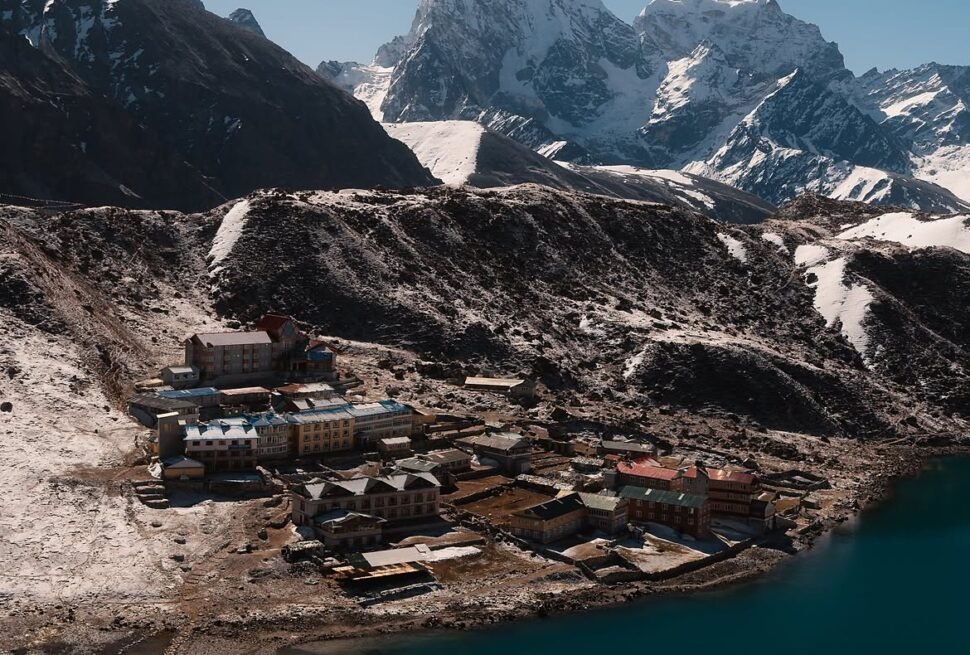
This is often the deciding factor people care about most, and it deserves an honest answer rather than a marketing one. The Everest Base Camp Trek takes you physically into the Khumbu region, past Sherpa villages, monasteries, and the Khumbu Glacier itself, ending at the base camp used by Everest expeditions and, on most itineraries, climbing further to Kala Patthar for a genuinely close sunrise view of Everest alongside Nuptse and Lhotse. If the goal is to stand inside the Everest massif, walk on the glacier the summit expeditions use, and see the mountain at close range, there is no substitute for actually going there.
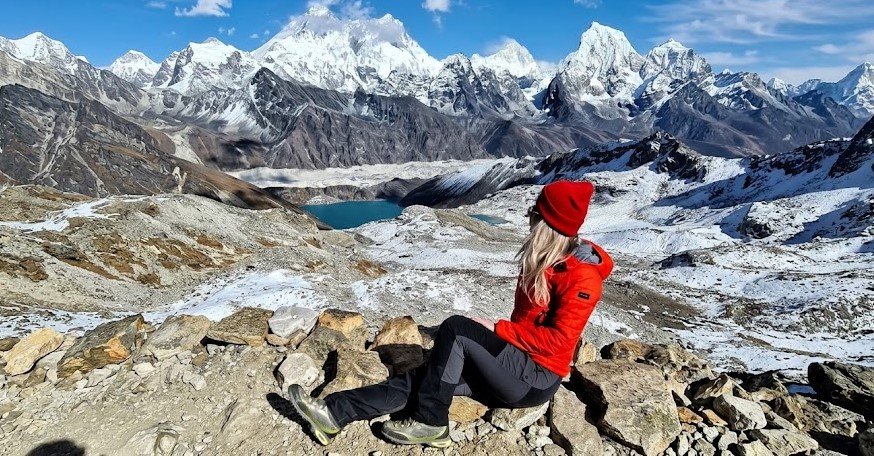
Pikey Peak offers something different rather than something lesser. From its summit area, on a clear day, the view is a wide panorama that takes in Everest along with a long line of other major peaks, including Makalu, Lhotse, and others across the eastern Himalaya, seen from a considerable distance across the Solu valleys. Many trekking sites repeat a claim that Sir Edmund Hillary once called this the best view of Everest in Nepal. That quote shows up constantly across operator websites, but no verifiable original source for it turned up in research for this article, so it should be treated as a popular and plausible story rather than a settled historical fact. What can be said with more confidence is that the panoramic sweep from Pikey Peak, taking in Everest as one peak among many rather than as the single close up subject, is a genuinely different and worthwhile way to see the mountain, not an inferior consolation prize.
Put simply, choose Everest Base Camp if you want to stand at the mountain’s foot and understand its scale up close. Choose Pikey Peak if you want to see Everest as part of a wider Himalayan skyline, from a quieter vantage point, without committing two or three weeks and a flight to Lukla to get there.
Culture Along the Trail: Monasteries and Communities
Both routes pass through communities shaped by Buddhist practice and Sherpa heritage, but the specific cultural stops differ. The Pikey Peak Trek passes near two monasteries worth knowing about before you go. Thupten Choling, close to the village of Junbesi at roughly 3,000 meters, was founded in 1968 on land donated for the purpose. It was established by Trulshik Rinpoche, a senior teacher within the Nyingma lineage who later became head of that school from 2010 and who was also a teacher of the 14th Dalai Lama. Rinpoche fled Tibet in 1959 during the Chinese invasion, arriving in Nepal with a group of monks and nuns, though sources differ on exactly which Tibetan monastery he had led before that, and on exactly where he spent his first years after arriving, so those specific details are best treated as not fully settled rather than precisely documented.
The original 1968 buildings at Thupten Choling were only ever meant to be temporary, and they deteriorated over the following decades until permanent rebuilding began in 2001, reportedly supported by funding from Switzerland. The 2015 earthquake damaged the site again, and residents reportedly lived in tents through the following rainy season while repairs continued. Population figures for the community vary a fair amount depending on the source, ranging from a description of several hundred nuns and monks up to figures as high as 900, with roughly 80 percent commonly described as Tibetan refugees across the sources that address the question. Given that spread, it is more honest to describe the community as numbering several hundred, with some estimates running considerably higher, than to quote one precise figure as fact. The monastery is often called one of the largest nunneries in the Everest region, though that specific claim appears in limited sources and is best read as commonly repeated rather than independently verified.
Further along the route near Phaplu sits Chiwong Monastery, perched above the village of the same name at roughly 2,938 meters. Chiwong was established earlier than Thupten Choling, between 1919 and 1923, by Sangey Tenpa Lama, who had himself taken refuge in Nepal after leaving Tibet, and the community reportedly began with around 50 monks. Because Chiwong predates the 1959 Tibetan refugee movement by several decades, it should not be grouped with Thupten Choling as part of that same historical wave. One source suggests Trulshik Rinpoche spent time at Chiwong at some point after his arrival in Nepal, which hints at a loose historical connection between the two monasteries, but no source reviewed confirms any formal institutional link between them, so the relationship is best described as two distinct communities on the same general trekking route rather than one shared lineage.
Both monasteries celebrate Mani Rimdu, a traditional Sherpa Buddhist festival tied to the story of Guru Rinpoche establishing Buddhism in Tibet, which in its full traditional form runs for about 19 days. Various monasteries across the wider Solu Khumbu region hold the festival at different points in the year, commonly in autumn at monasteries such as Tengboche in the Khumbu, though exact dates vary from year to year and should not be relied on without checking current timing. The Solu region itself is home primarily to Sherpa communities along the Pikey Peak route specifically, while other groups including Rai, Chhetri, Tamang, and Magar communities live in the broader Solu Khumbu district without being as directly documented along this particular trail.
Who the Pikey Peak Trek Suits Best
Pikey Peak is a strong fit for anyone taking their first step into high altitude trekking. Its easy to moderate rating, limited time above 4,000 meters, and short overall length make it a sensible way to find out how your body handles altitude before committing to something longer and more demanding. It is also a genuinely good choice for families with teenagers or older children who are reasonably fit, since the daily walking is manageable and the trip does not require the extended time away from school or work that a longer trek demands.
Travelers working within a tighter budget or a limited amount of annual leave should also give Pikey Peak serious consideration. A seven day, six night window fits inside a standard week of leave in a way that a two to three week Everest Base Camp trip simply cannot, and the lower overall cost, helped by the absence of any Lukla flight, makes it accessible to people who want a real Himalayan trekking experience without the full Everest Base Camp price tag.
Finally, Pikey Peak suits anyone who specifically wants a quieter trail. If the idea of sharing a dining room with dozens of other trekkers each evening sounds unappealing, or if the appeal of trekking lies in solitude and a close relationship with the landscape rather than a crowded, well trodden path, Pikey Peak delivers that atmosphere reliably, even during its own busier seasons.
Who the Everest Base Camp Trek Suits Best
Everest Base Camp remains the right choice for trekkers who specifically want the classic experience of reaching the base of the world’s highest mountain and walking on the Khumbu Glacier itself. For some people, that specific goal is the entire point of the trip, and no alternative route, however scenic, substitutes for actually standing there.
It also suits experienced trekkers who already have some altitude exposure under their belt and want a tougher, longer physical test. The sustained days above 4,000 and then 5,000 meters, the longer overall itinerary, and the more demanding terrain above Namche Bazaar all add up to a trek that rewards prior trekking experience and realistic fitness preparation. Trekkers who have already done a shorter high altitude trek, Pikey Peak included, and want to build on that experience often treat Everest Base Camp as the natural next step.
People with a generous amount of time available, whether that is an extended annual leave allowance, a career break, or simply a willingness to build real flexibility into travel plans around possible Lukla flight delays, are also better positioned for Everest Base Camp than those working within a tight week or two. Given the trek’s length, its cost, and its reliance on an unpredictable mountain flight, it rewards travelers who can treat the whole trip as a major, unhurried undertaking rather than squeezing it into the edges of a short holiday.
Can You Do Both
There is no rule that says a trekker has to pick one of these treks forever. A common and sensible pattern is to start with Pikey Peak as an introduction to high altitude trekking in Nepal, given its shorter length, lower cost, and gentler altitude profile, and then return later, better prepared and more confident, for the full Everest Base Camp experience. Doing it in that order lets a trekker learn how their own body responds to altitude on a trip with low stakes and a quick turnaround, rather than discovering a problem for the first time on day nine of a fourteen day itinerary.
The two treks also do not compete for exactly the same traveler on exactly the same trip. Someone with one week free this year and three weeks free next year might reasonably book Pikey Peak now through Next Trip Nepal and plan Everest Base Camp for a future trip, treating the two as complementary parts of a longer relationship with trekking in Nepal rather than a single either or decision.
Making the Decision
If time is short, budget matters, altitude sickness is a real concern, or this is a first high altitude trek, Pikey Peak is the more sensible choice, and it delivers a genuine wide angle view of Everest alongside a quieter, more affordable week on the trail. If the goal is specifically to stand at Everest Base Camp, walk the Khumbu Glacier, and take on the longer, harder, more iconic route, and there is enough time and budget to do it properly, the Everest Base Camp Trek remains the right target.
Neither trek is a lesser version of the other. They answer different questions about what a trekker wants from a trip to the Everest region, and the honest answer for most people lies in being clear about their own time, budget, and tolerance for altitude risk before booking either one. For trekkers who want expert guidance on which route actually fits their situation, including current permit requirements, seasonal timing, and realistic fitness preparation, working with an established operator on the ground in Nepal, such as Next Trip Nepal, is a sound way to get a straight answer rather than relying on generic online advice alone.
Whichever trek you choose, Nepal’s trekking rules have shifted in recent years in ways worth knowing about before you book. A widely reported policy, introduced from 2023 onward, requires licensed guides on most trekking routes in the country, a change aimed mainly at independent trekkers who previously walked without one. Agency bookings, including those for the Pikey Peak Trek, already included a licensed guide as standard practice, so this change affects planning far less for anyone booking through an operator than it does for someone hoping to walk alone. On Everest Base Camp specifically, a guide is not confirmed in research for this article as strictly mandatory by law, but it is strongly recommended by operators for safety reasons, and in practice the overwhelming majority of trekkers on that route already travel with one, which lines up with the broader direction of Nepal’s guide policy regardless of the exact legal wording. Permit requirements near Pikey Peak are also reported inconsistently across operator sites, since the route sits close to the edge of more than one administrative zone, so the sensible approach is to confirm current requirements with your operator at the time of booking rather than relying on a fixed claim found online.