Everest Base Camp gets described as everything from “the hardest thing I’ve ever done” to “surprisingly manageable if you train properly,” and both descriptions are honest, just describing different trekkers. The trek does not require technical climbing skills, ropes, or crampons, but it does demand genuine cardiovascular fitness and, more than anything else, the patience to walk slowly at altitude for nearly two weeks. This guide breaks down exactly what makes this trek hard, what does not, and how to know honestly whether you are ready for it, using real trail data rather than vague reassurance.
The short answer: Everest Base Camp is a moderate to challenging trek, roughly 7 out of 10 in overall difficulty, with altitude being the single hardest factor rather than technical terrain or raw distance. A reasonably fit adult who trains for two to three months beforehand and follows a properly paced itinerary with adequate acclimatization days completes it successfully in the vast majority of cases. The trekkers who struggle are almost always the ones who either skipped physical preparation entirely or chose a compressed itinerary that does not allow enough time to adjust to the altitude.
Quick Difficulty Summary
| Difficulty Factor | Rating (out of 10) | Why |
|---|---|---|
| Overall difficulty | 7 to 8 | Combination of altitude, duration, and cumulative daily walking adds up over 12 to 14 days |
| Altitude difficulty | 9 | The single hardest factor, reaching 5,364m at Base Camp and 5,545m at Kala Patthar |
| Daily walking effort | 6 to 7 | Most days involve 5 to 7 hours of walking, with some longer acclimatization or summit push days |
| Technical climbing skill required | 1 to 2 | No ropes, no crampons, no climbing experience needed on the standard route |
| Trail terrain difficulty | 5 | Rocky paths, stone steps, suspension bridges, and moraine sections, but no exposed scrambling |
Reading this table correctly matters. Everest Base Camp is not hard the way a technical mountaineering route is hard. It is hard the way a long, high altitude endurance event is hard, where the terrain itself is walkable by almost anyone in good health, but the cumulative effect of altitude, cold, and consecutive days of walking wears down trekkers who have not prepared for it.
Why Altitude Is the Real Difficulty, Not the Walking
Most first time trekkers assume the hardest part of Everest Base Camp will be the physical exertion of walking for two weeks. In practice, the altitude is almost always the bigger obstacle. Above roughly 3,000m, the air contains meaningfully less oxygen than at sea level, and by the time you reach Base Camp at 5,364m, you are breathing roughly half the oxygen you would at sea level. This is not something fitness alone solves. A marathon runner with no altitude experience can struggle more than a moderately fit trekker who acclimatizes properly, because altitude sickness does not correlate cleanly with cardiovascular fitness.
| Location | Altitude | Approximate Oxygen Availability Versus Sea Level |
|---|---|---|
| Lukla (trek start) | 2,860m | Roughly 73 percent |
| Namche Bazaar | 3,440m | Roughly 68 percent |
| Dingboche | 4,410m | Roughly 60 percent |
| Gorak Shep | 5,164m | Roughly 53 percent |
| Everest Base Camp | 5,364m | Roughly 52 percent |
| Kala Patthar | 5,545m | Roughly 50 percent |
This is why a properly paced itinerary matters more than raw fitness. The recommended safe daily elevation gain above 3,000m is roughly 300 to 500 meters of net sleeping altitude increase per day, with a rest or acclimatization day built in roughly every 1,000 meters of total gain. Itineraries that compress this schedule to save time or money are the single biggest cause of altitude sickness related trip failures on this route, not lack of physical fitness.
Daily Walking Distance and Hours
| Day | Route Segment | Approximate Walking Time | Elevation Change |
|---|---|---|---|
| 1 | Fly to Lukla, trek to Phakding | 3 to 4 hours | Descend slightly from Lukla to Phakding |
| 2 | Phakding to Namche Bazaar | 5 to 6 hours | Gain roughly 800m, the steepest single climbing day early in the trek |
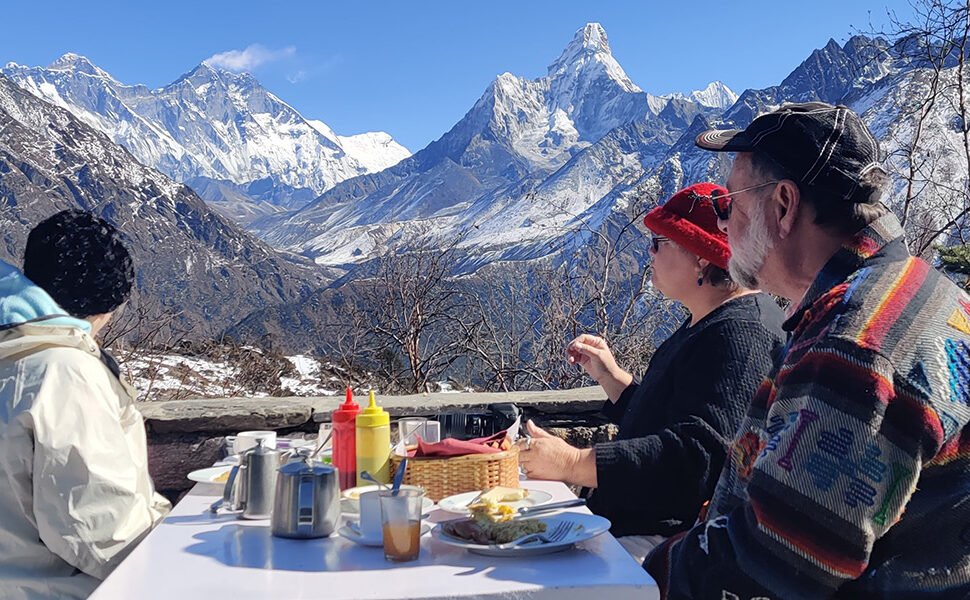
| 3 | Acclimatization day in Namche | 3 to 4 hours (day hike) | Short acclimatization hike to Everest View Hotel or Khumjung |
| 4 | Namche to Tengboche | 5 to 6 hours | Descend then climb, net gain of roughly 400m |
| 5 | Tengboche to Dingboche | 5 to 6 hours | Gain roughly 400m |
| 6 | Acclimatization day in Dingboche | 3 to 4 hours (day hike) | Short hike toward Nangkartshang Peak for acclimatization |
| 7 | Dingboche to Lobuche | 5 to 6 hours | Gain roughly 500m |
| 8 | Lobuche to Gorak Shep, then Everest Base Camp | 7 to 8 hours | The longest single day, gaining roughly 450m to Gorak Shep then an additional round trip to Base Camp |
| 9 | Kala Patthar sunrise, then descend to Pheriche | 7 to 8 hours | Early morning climb to 5,545m, then a long descent |
Notice that days 8 and 9 are consistently the hardest of the entire trek, not because the terrain changes dramatically, but because they combine the highest altitude with the longest walking hours, precisely when your body has the least oxygen available to work with. Trekkers who arrive at these two days already fatigued from skipping acclimatization earlier in the itinerary are the ones most likely to struggle here.
Terrain: What the Trail Actually Feels Like Underfoot
The Everest Base Camp trail is a well established, heavily trafficked route with no technical climbing sections on the standard itinerary. That said, “no technical climbing” does not mean the terrain is flat or effortless.
- Stone staircases, particularly the climb into Namche Bazaar, which gains roughly 800 vertical meters over a series of switchbacks and stone steps.
- Suspension bridges, some quite high above the river gorges below, which can be unsettling for trekkers uncomfortable with heights, though they are structurally solid and crossed by thousands of trekkers and yak trains annually.
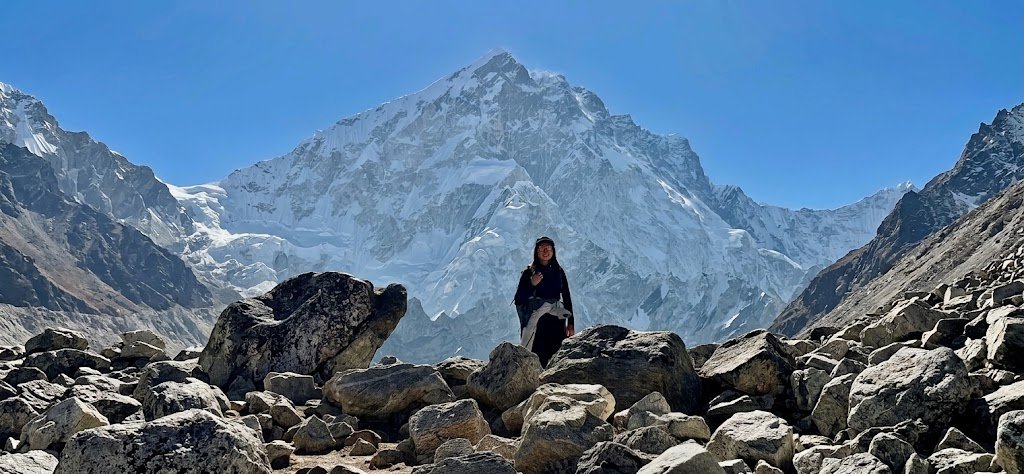
- Rocky, uneven moraine in the final stretch approaching Everest Base Camp itself, where the trail crosses the Khumbu Glacier’s lateral moraine, requiring careful footing rather than technical skill.
- Loose scree and rock on the climb to Kala Patthar, the steepest single push of the entire trek, though still a walking route rather than a scramble.
None of this requires ropes, harnesses, or prior climbing experience. A trekking pole and a good pair of broken in boots handle the vast majority of what the trail throws at you.
How Cold Does It Actually Get?
| Season | Daytime Temperature (Namche to Base Camp) | Nighttime Temperature |
|---|---|---|
| Autumn (September to November) | 5 to 15 Celsius | Minus 5 to minus 15 Celsius |
| Spring (March to May) | 5 to 15 Celsius | Minus 5 to minus 12 Celsius |
| Winter (December to February) | Minus 5 to 5 Celsius | Minus 15 to minus 25 Celsius |
| Monsoon (June to August) | 10 to 18 Celsius | 0 to minus 5 Celsius |
The cold itself is rarely what stops trekkers, since teahouses provide reasonably warm common rooms with heating stoves in the evening and a genuinely warm sleeping bag handles the overnight temperatures. What surprises first time trekkers more is how cold the actual walking hours can feel in the early morning shadow of the valley, before the sun clears the surrounding peaks, particularly on the Kala Patthar sunrise push where temperatures can sit well below freezing at departure time.
Who Struggles Most on This Trek
Based on the patterns visible across thousands of trekkers who attempt this route each year, a few categories consistently struggle more than others, regardless of their general fitness level.
| Trekker Profile | Why They Struggle | How to Mitigate It |
|---|---|---|
| Highly fit trekkers who skip acclimatization | Strong cardiovascular fitness can mask early altitude sickness symptoms, leading some fit trekkers to push through warning signs | Follow the itinerary’s rest days regardless of how strong you feel, and learn to recognize AMS symptoms independent of fitness level |
| Trekkers who booked a compressed itinerary to save money | Fewer acclimatization days means less time for the body to adjust, the single largest controllable risk factor | Choose a 12 to 14 day itinerary with at least two dedicated acclimatization days built in |
| Trekkers with untreated respiratory or cardiac conditions | Altitude places genuine strain on the cardiovascular and respiratory systems even in otherwise healthy people | Consult a doctor familiar with high altitude travel before booking, particularly with any pre existing heart or lung condition |
| Trekkers who arrive with zero physical preparation | Consecutive days of 5 to 7 hours of walking are genuinely taxing without any cardiovascular base | Begin a structured training program at least 8 to 12 weeks before departure |
How to Train for Everest Base Camp
You do not need to be an athlete to complete this trek, but you do need a real training program, not just an intention to “get in shape before the trip.” A practical 10 to 12 week plan looks something like this.
| Weeks Before Departure | Focus | Sample Activities |
|---|---|---|
| 10 to 12 weeks out | Build a cardiovascular base | Brisk walking, hiking, cycling, or stair climbing, 3 to 4 times per week, 30 to 45 minutes |
| 6 to 9 weeks out | Add elevation gain and load | Hill walks or stair sessions carrying a daypack with 5 to 8kg, increasing session length to 60 to 90 minutes |
| 2 to 5 weeks out | Simulate trek conditions | Back to back long hikes on consecutive days, wearing your actual trekking boots, carrying your actual daypack weight |
| Final 1 to 2 weeks | Taper and recover | Reduce volume significantly, focus on sleep, hydration, and arriving rested rather than fatigued |
The single most useful training habit is simply walking on consecutive days with elevation gain, since this most closely mimics the actual demand of the trek: not one hard effort, but a sustained, repeated demand across many days in a row.
Age and Everest Base Camp: How Old Is Too Old?
There is no hard age cutoff for this trek. Trekkers in their sixties and seventies complete Everest Base Camp successfully every season, and trekkers in their twenties occasionally turn back due to poor preparation or altitude sickness that has nothing to do with age. What matters far more than age itself is cardiovascular fitness, any pre existing medical conditions, and a properly paced itinerary. Older trekkers in good general health who train appropriately and choose a longer itinerary with extra acclimatization days have a completion rate comparable to younger trekkers, and in some cases better, since they are often more disciplined about pacing themselves and respecting rest days rather than pushing through fatigue.
Can Children Do This Trek?
Children as young as seven or eight have completed Everest Base Camp, though it is a genuinely demanding undertaking for a young child and requires careful planning, a longer itinerary than the standard adult pace, and close monitoring for altitude sickness symptoms, which children can sometimes struggle to communicate clearly. Most trekking agencies, including Next Trip Nepal, recommend a minimum age of around ten to twelve for a reasonable balance of physical capability and the maturity to communicate how they are feeling at altitude, though this is ultimately a judgment call best made with a guide experienced in family treks.
What Happens if You Cannot Continue
A meaningful percentage of trekkers who attempt Everest Base Camp each year do not reach the final destination, most commonly due to altitude sickness symptoms that do not resolve with a rest day, rather than physical exhaustion or injury. This is not a failure in any meaningful sense. Turning back or stopping at a lower point, such as Dingboche or Lobuche, when symptoms warrant it is the correct decision, and an experienced guide will recognize the warning signs and recommend this before the situation becomes dangerous. A licensed guide, mandatory on this route since April 2023, is trained specifically to make this call, which is one of the strongest practical arguments for trekking with a guide beyond the legal requirement itself.
Difficulty Compared to Other Major Nepal Treks
| Trek | Maximum Altitude | Overall Difficulty | How It Compares to Everest Base Camp |
|---|---|---|---|
| Everest Base Camp | 5,364m (5,545m at Kala Patthar) | 7 to 8 out of 10 | Baseline for this comparison |
| Annapurna Base Camp | 4,130m | 5 to 6 out of 10 | Meaningfully easier, lower maximum altitude and shorter overall duration |
| Langtang Valley | Roughly 3,870m at Kyanjin Ri, or up to 5,000m with the Tserko Ri extension | 5 to 6 out of 10 | Easier on the standard itinerary, though the Tserko Ri extension approaches Everest Base Camp altitude |
| Annapurna Circuit | 5,416m at Thorong La Pass | 7 to 8 out of 10 | Comparable overall difficulty, with the pass crossing itself being a harder single day than anything on Everest Base Camp |
| Manaslu Circuit | 5,106m at Larke La Pass | 7 to 8 out of 10 | Comparable difficulty, with a more remote, less developed trail adding a logistical challenge Everest Base Camp does not have |
| Upper Mustang | Roughly 3,840m at Lo Manthang | 5 to 6 out of 10 | Easier in terms of altitude, though strong winds and long daily jeep or walking stretches add their own demands |
Everest Base Camp sits toward the harder end of Nepal’s major teahouse treks, roughly comparable to the Annapurna Circuit and Manaslu Circuit, and meaningfully harder than Annapurna Base Camp, Langtang, or Upper Mustang on their standard itineraries. If you are choosing a first Himalayan trek and want something gentler to build experience on, those three lower altitude options are worth genuine consideration before committing to Everest Base Camp.
Gear That Actually Affects Difficulty
Beyond fitness and acclimatization, the right gear meaningfully changes how hard the trek feels day to day, independent of the terrain itself.
| Item | Why It Affects Difficulty |
|---|---|
| Properly broken in trekking boots | Blisters and foot pain from new or ill fitting boots are one of the most common reasons trekkers struggle physically, entirely preventable with preparation |
| Trekking poles | Meaningfully reduce knee and joint strain on the steep descents, particularly below Namche Bazaar and on the return from Kala Patthar |
| A sleeping bag rated well below the expected overnight temperature | Poor sleep from being cold at night compounds fatigue and makes altitude symptoms feel worse than they otherwise would |
| A properly fitted daypack | Carrying weight poorly distributed across your back and hips adds unnecessary strain across many consecutive days |
Mental Difficulty: The Part Most Guides Do Not Mention
Physical preparation gets most of the attention, but the mental demand of Everest Base Camp catches many trekkers off guard. Twelve to fourteen consecutive days without a rest day in the conventional sense, limited communication with home, basic teahouse accommodation, and the slow, deliberate pace altitude forces on you all add up to a genuinely different kind of challenge than a shorter, lower altitude hike. Trekkers who go in expecting a straightforward physical challenge sometimes find the monotony and isolation harder to manage than the walking itself, while trekkers who mentally prepare for a slower, more meditative pace often find the trek more manageable than they expected, even when their physical fitness is only moderate.
Is Everest Base Camp Harder Than Kilimanjaro?
This is one of the most common comparisons trekkers ask about, since both are frequently cited as accessible high altitude challenges for non climbers. Kilimanjaro reaches a higher single point, 5,895m at Uhuru Peak, compared to Everest Base Camp’s 5,364m, but Kilimanjaro is typically climbed in 5 to 9 days, a considerably more compressed altitude gain schedule than Everest Base Camp’s 12 to 14 days. This compression is why Kilimanjaro’s altitude sickness rates are notably higher despite similar peak altitudes. Everest Base Camp’s longer, more gradual itinerary genuinely reduces altitude risk compared to a rushed Kilimanjaro summit attempt, even though Everest Base Camp’s terrain, with its stone staircases and moraine sections, is arguably rougher underfoot than Kilimanjaro’s more consistent volcanic slopes.
Realistic Success Rates
Precise industry wide completion statistics are not centrally published, but based on data commonly reported by trekking agencies and Sagarmatha National Park entry figures, the overwhelming majority of trekkers who follow a properly paced 12 to 14 day itinerary with a licensed guide do reach Everest Base Camp successfully. The trekkers most likely to fall into the minority who do not complete the trek are disproportionately those on compressed itineraries under 10 days, those with no physical preparation, and those who ignore early altitude sickness symptoms rather than resting or descending when a guide recommends it.
What Next Trip Nepal’s Itinerary Does Differently
Next Trip Nepal’s standard 14 day Everest Base Camp package is deliberately built around two full acclimatization days, at Namche Bazaar and Dingboche, rather than the minimum single rest day some budget itineraries use to shorten the trip and lower the advertised price. This costs an extra day or two compared to the fastest possible itinerary, but it is the single biggest factor within a trekker’s control for reducing altitude sickness risk and improving the odds of actually reaching Base Camp and Kala Patthar rather than turning back partway through. For the full cost breakdown of this itinerary, including permits, guide fees, and the Lukla flight, see our complete Everest Base Camp Trek Cost guide.
Frequently Asked Questions
Do I need prior trekking experience for Everest Base Camp?
No prior high altitude trekking experience is strictly required, though general hiking experience and a solid cardiovascular fitness base make the trek considerably more comfortable. Many successful trekkers complete Everest Base Camp as their first major trek.
What is the hardest single day of the trek?
The day combining Lobuche to Gorak Shep followed by the push to Everest Base Camp itself is generally considered the hardest, combining the longest walking hours with some of the highest altitude of the entire trek. The Kala Patthar sunrise climb the following morning is a close second, due to the early start and extreme cold.
Is the Everest Base Camp trek dangerous?
The primary danger is altitude sickness, which is manageable with a properly paced itinerary, acclimatization days, and a licensed guide trained to recognize warning signs. Technical danger from the terrain itself is minimal on the standard route, since no climbing or exposed scrambling is involved.
Can I do Everest Base Camp without a guide?
No. Since April 2023, a licensed guide is legally required for every foreign trekker on this route, in addition to being genuinely valuable for altitude sickness monitoring and route guidance.
How much of the difficulty is really about altitude versus fitness?
Altitude is the dominant factor. A trekker with only moderate fitness who acclimatizes properly on a well paced itinerary generally has a better outcome than a highly fit trekker who rushes a compressed schedule and ignores early altitude sickness symptoms.
How Guides Actually Pace the Trek Day to Day
A large part of why the standard itinerary works as well as it does comes down to how an experienced local guide actually manages pacing on the ground, something that is easy to overlook when reading a printed day by day schedule. Rather than walking at a fixed speed for a fixed number of hours, a good guide constantly reads the group, slowing the pace on days when altitude is clearly affecting people more than usual, allowing extra rest stops when someone seems fatigued, and sometimes adjusting a rest day’s optional hike based on how the group is feeling that morning rather than following a rigid plan regardless of conditions. This kind of real time judgment is difficult to replicate without genuine route experience, and it is a meaningful part of why the same printed itinerary can feel noticeably easier with an experienced guide than without one.
Recognizing Altitude Sickness Symptoms Early
Understanding what altitude sickness actually feels like, rather than treating it as an abstract risk, is one of the most practical things a trekker can do before departure. Acute Mountain Sickness, the mildest and most common form, typically begins with a headache, mild nausea, fatigue beyond what the day’s walking would normally cause, and difficulty sleeping. These symptoms are common enough above 3,000m that experiencing a mild version of them is almost normal and does not necessarily mean you should turn back, but they are a signal to stop ascending, rest, hydrate, and monitor closely rather than push through and continue climbing.
| Symptom Severity | What It Looks Like | What To Do |
|---|---|---|
| Mild | Headache, mild nausea, fatigue, reduced appetite | Stop ascending, rest at current altitude, hydrate, consider acetazolamide if prescribed, reassess after 24 hours |
| Moderate | Worsening headache unresponsive to medication, vomiting, increasing fatigue, mild coordination difficulty | Descend immediately, do not continue ascending under any circumstances |
| Severe | Confusion, severe coordination loss, fluid in the lungs (HAPE) or brain (HACE), extreme shortness of breath at rest | Emergency descent and evacuation required immediately, this is life threatening |
A licensed guide is trained to distinguish between the very common mild symptoms that simply require caution and the moderate to severe symptoms that require immediate descent, which is precisely why the guide requirement matters beyond its legal status. Self diagnosing while already fatigued and mildly hypoxic is genuinely difficult, and this is a case where an outside, trained perspective meaningfully changes outcomes.
Diet, Hydration and Sleep: The Underrated Difficulty Factors
Three unglamorous factors have an outsized effect on how difficult the trek feels day to day, and none of them relate directly to fitness or terrain. Proper hydration, typically three to four liters of water per day at altitude, meaningfully reduces headaches and fatigue, yet many trekkers under drink simply because cold weather suppresses the normal thirst response. Appetite also commonly drops at altitude, which is a normal physiological response, but trekkers who eat too little compound their fatigue at exactly the point they need calories the most, given how much energy the body burns maintaining warmth and processing the reduced oxygen environment. Sleep quality also degrades at altitude for nearly everyone, partly due to a normal breathing pattern disruption called periodic breathing that is not itself dangerous but does reduce how rested you feel each morning. Trekkers who understand these three factors in advance and consciously push themselves to eat and drink more than their appetite suggests, rather than assuming their body will regulate normally the way it does at sea level, consistently report an easier experience than those who do not.
What a Typical Day Actually Feels Like
Beyond the raw hours and elevation figures, it helps to understand the actual rhythm of a trekking day on this route. Mornings start early, typically with breakfast between 6 and 7am, since teahouses and trails are most pleasant before the day’s clouds and wind build up in the early afternoon. The walking itself is not continuous exertion. Most guides set a deliberately slow pace, often described as “pole pole” style pacing borrowed from other high altitude trekking traditions, with frequent short breaks for water and photos rather than long uninterrupted pushes. Lunch is typically taken at a teahouse partway through the day’s route, providing a genuine rest and a hot meal before the afternoon’s remaining distance. Most days end by early to mid afternoon, leaving the evening free for reading, journaling, card games with other trekkers, or simply resting in the common room, which is also when altitude symptoms, if any, tend to become more noticeable as the body settles after the day’s activity.
Solo Female Trekkers and Difficulty Considerations
The physical and altitude related difficulty of Everest Base Camp does not differ meaningfully by gender, but solo female trekkers sometimes ask about additional considerations specific to their experience. The Khumbu region is generally considered safe and welcoming, with a well established trekking infrastructure and a strong local guiding culture, and solo female trekkers complete this route every season without incident. Booking with a company that pairs solo trekkers with a professional, vetted guide, as Next Trip Nepal does, and joining a group departure when possible rather than trekking entirely alone between teahouses, are the most practical steps for anyone, regardless of gender, looking to reduce the ordinary risks of remote travel rather than the trek’s physical difficulty specifically.
How Weather Changes the Difficulty Equation
Season and weather meaningfully shift which aspects of the trek feel hardest. Clear autumn and spring conditions, the two peak seasons, offer the most predictable footing and the best visibility, making the terrain itself feel easier, though these are also the busiest periods, with more crowded trails and teahouses. Winter trekking involves genuinely harder cold, sometimes well below minus 20 Celsius overnight at higher elevations, which adds real difficulty in terms of gear demands and comfort, though the trail itself is quieter and altitude sickness rates are not meaningfully different from other seasons. Monsoon season brings the least predictable difficulty profile, with rain, leeches at lower elevations, and the risk of Lukla flight delays due to poor visibility, though temperatures are milder and crowds are minimal. Unexpected weather, rather than the season’s average conditions, is often what actually determines how hard a specific trekker’s specific trip feels, since a single day of heavy snow or a multi day flight delay can change the entire character of an otherwise well planned trek.
The Lukla Flight: An Underrated Difficulty Factor
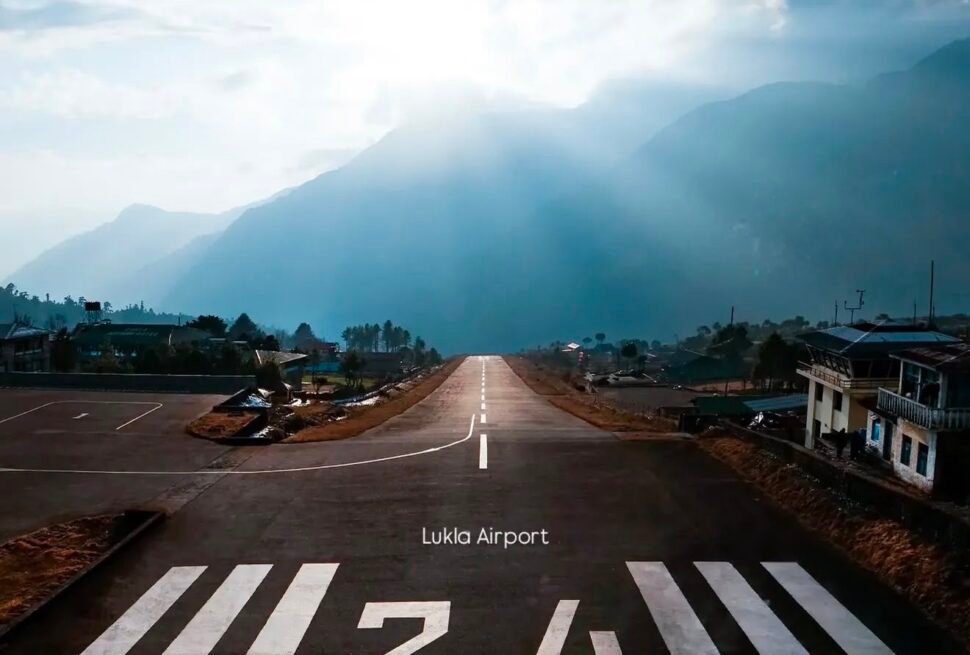
Physical and altitude difficulty aside, the Kathmandu to Lukla flight itself is worth understanding as its own kind of challenge. Lukla’s airport is short, angled, and set against mountainous terrain, and flights are frequently delayed or rerouted due to weather, particularly during the shoulder seasons. This is not dangerous in the way it might sound, modern flight operations are highly experienced with these conditions and simply do not fly when conditions are unsafe, but it does mean trekkers should build buffer days into their schedule both before and after the trek, since a multi day weather delay at either end is a realistic possibility rather than a rare edge case. Trekkers who book return flights or connecting international travel with no buffer day sometimes create their own added stress independent of anything happening on the trail itself.
Comparing Difficulty Across the Two Standard EBC Itinerary Lengths
Not every Everest Base Camp package runs the same length, and itinerary length directly changes the difficulty profile, independent of the trekker’s own fitness.
| Itinerary Length | Acclimatization Days | Relative Difficulty |
|---|---|---|
| 9 to 10 days (compressed) | Often just one, sometimes none | Meaningfully harder and riskier, higher altitude sickness rates due to insufficient acclimatization time |
| 12 to 14 days (standard) | Two dedicated acclimatization days, typically Namche and Dingboche | The recommended baseline, balancing a reasonable trip length against genuine altitude safety |
| 16 days or longer (extended) | Three or more, sometimes including a Gokyo Lakes or Chola Pass extension | Easier on a day to day basis due to more gradual pacing, though the cumulative physical demand of more consecutive trekking days adds its own form of fatigue |
A shorter, compressed itinerary is not simply a more intense version of the same trek. It genuinely changes the risk profile by removing the acclimatization buffer that makes the standard itinerary as manageable as it is, and trekkers evaluating a noticeably cheaper or shorter package should understand this tradeoff before assuming it is simply a more efficient version of the same experience.
Preparing Mentally: What to Expect Before You Go
Beyond physical training, a small amount of mental preparation meaningfully changes how the trek feels once you are actually on the trail. Reading detailed day by day accounts from other trekkers, understanding the itinerary’s actual rhythm rather than a vague sense of “two weeks of walking,” and setting realistic expectations about basic teahouse accommodation, shared bathrooms at higher elevations, and limited Wi Fi all reduce the number of small surprises that can otherwise compound into frustration when you are already tired and short on oxygen. Trekkers who arrive expecting exactly what the trek actually offers, rather than a romanticized or, conversely, an unnecessarily grim version of it, consistently report a smoother experience than those who arrive with mismatched expectations in either direction.
Insurance and Difficulty: An Often Overlooked Connection
Proper travel insurance with high altitude and helicopter evacuation coverage does not change the trek’s physical difficulty, but it changes what happens if something goes wrong, which is worth understanding as part of an honest difficulty assessment. A trekker who knows a genuine medical evacuation is financially covered can make clearer, less pressured decisions if altitude symptoms appear, since the decision to descend or evacuate is not complicated by cost anxiety at exactly the moment clear thinking matters most. Trekkers without adequate coverage sometimes delay reporting symptoms or resist a guide’s recommendation to descend, worried about the cost of an evacuation, which is precisely the wrong instinct at high altitude. This is one of the clearest cases where a seemingly unrelated piece of trip planning, insurance, directly affects how safely and confidently a trekker can handle the trek’s actual difficulty.
What Returning Trekkers Say Was Harder Than Expected
Across the common patterns reported by trekkers who have completed this route, a few specific difficulties consistently surprise first timers more than the general “altitude and walking” framing suggests. The cold during the early morning Kala Patthar climb is frequently cited as harder than expected, since departure typically happens well before sunrise in temperatures that can feel considerably colder than the daytime averages suggest. The mental monotony of walking similar terrain for many consecutive days, rather than any single dramatic obstacle, also surprises trekkers expecting a more varied physical challenge. Conversely, many trekkers report that the actual walking pace, kept deliberately slow by experienced guides, feels easier than anticipated, and that the biggest adjustment is simply accepting a slower rhythm than their normal hiking pace at lower altitude. This pattern, where the walking itself is more manageable than expected but the cold, altitude, and sustained duration are harder than expected, is common enough to be worth planning around specifically.
Related Planning Guides
For a direct comparison against Nepal’s other major route, see our guide to Everest Base Camp versus the Annapurna Circuit. For a full breakdown of altitude sickness prevention that applies directly to this trek, see our complete altitude sickness guide. To plan the ideal month for your trip, see our best time to trek in Nepal guide.
More Planning Guides
Pair this with our Everest Base Camp Packing List to make sure your gear matches the trek’s real demands, and see our honest answer to whether Everest Base Camp is worth it.
Final Word on Everest Base Camp Trek Difficulty
Everest Base Camp is a genuinely challenging trek, but it is challenging in a specific and largely manageable way: altitude more than terrain, endurance more than technical skill, and patience more than raw athleticism. A trekker who trains for two to three months, chooses a properly paced 12 to 14 day itinerary with real acclimatization days, and travels with an experienced licensed guide gives themselves a strong chance of success, regardless of age or prior trekking experience. The trekkers who struggle most are almost always the ones who treated the altitude as a minor detail rather than the central challenge it actually is, rather than the ones who simply lacked athletic ability or prior trekking experience to begin with.