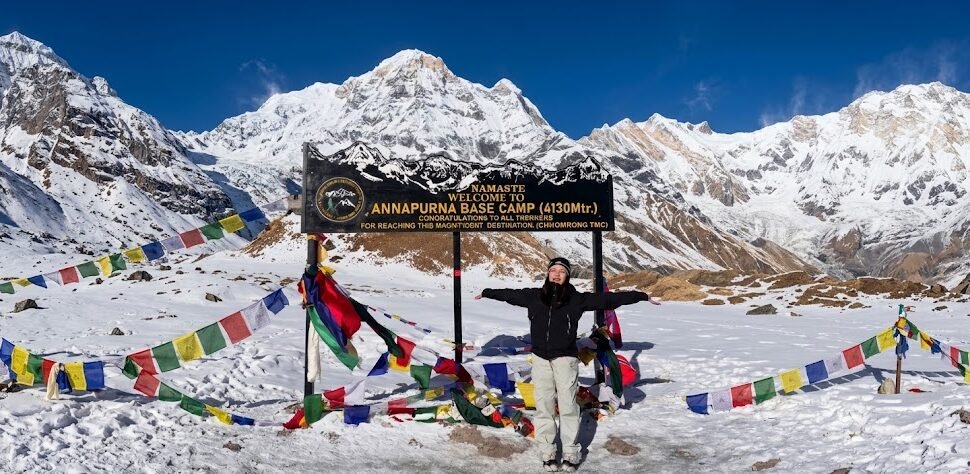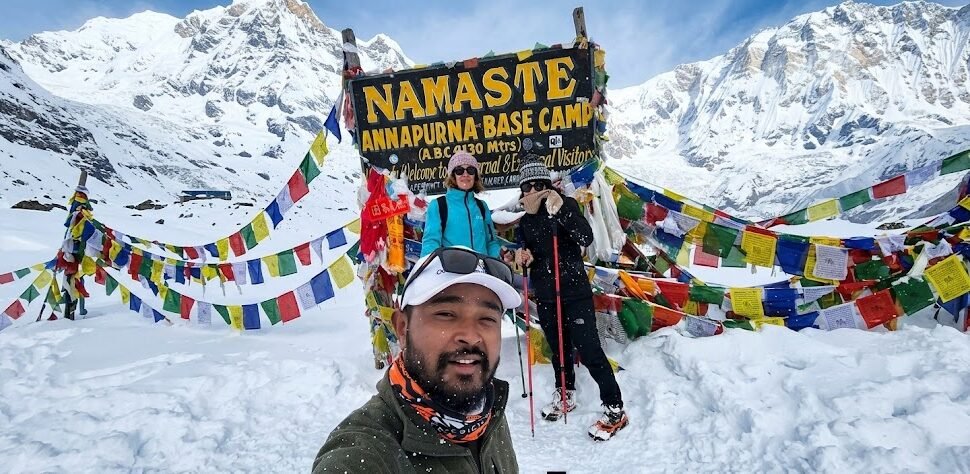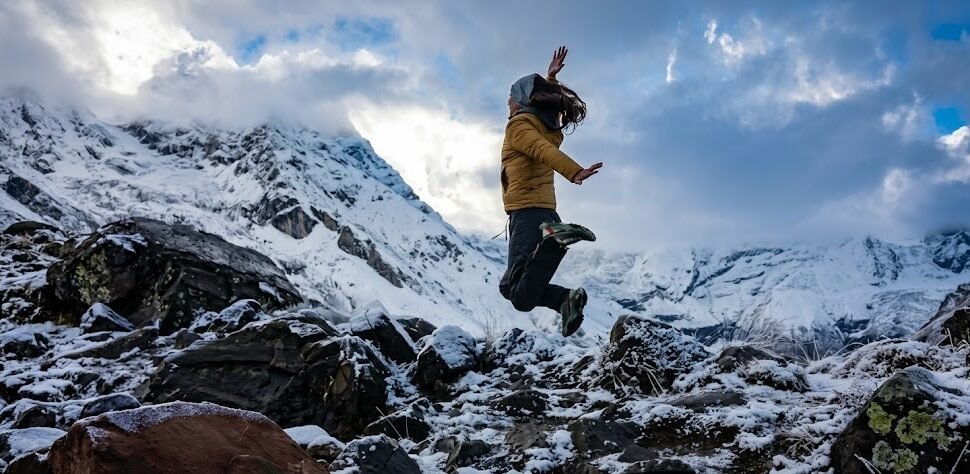
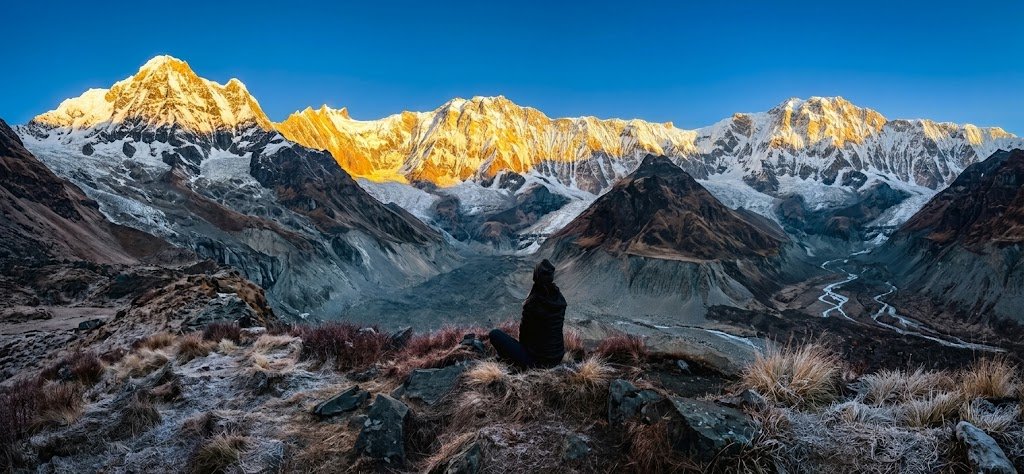
November is the month I personally recommend most often to trekkers who ask me straight out which single month they should pick for Annapurna Base Camp. Annapurna Base Camp sits at 4,130m, and in November the sanctuary sees night temperatures around -10°C with days climbing to about +5°C in clear sun. What makes November special is not any one dramatic feature, it is the combination of nearly October quality mountain views with a fraction of October’s crowds, plus an air clarity that in my experience often exceeds October because the last of the post monsoon haze has fully cleared by mid month.
November ABC Trek at a Glance
| Season | Late post monsoon into early winter |
| Recommended for | Almost everyone, my top overall pick |
| ABC Temperature Range | -10°C to +5°C at 4,130m |
| Pokhara Temperature | 11°C to 25°C |
| Trail Conditions | Dry, ice possible above 3,500m in the second half of the month |
| Teahouse Availability | Full through early to mid month, some closures begin late November |
| Crowds | Moderate, 40 to 60 percent lower than October |
| Guide Required | Yes, mandatory under ACAP regulations for solo trekkers |
| Overall Difficulty | Moderate, cold management required above 3,500m |
Why I Recommend November Over October
I have guided both months more times than I can count, and the honest comparison comes down to this. October gives you slightly warmer nights and the certainty of every teahouse being open and fully staffed. November gives you clearer air, a genuinely quiet trail, and a version of the Poon Hill sunrise that October simply cannot match because you are not sharing the viewpoint with two hundred other trekkers. For a guest who has never done a Himalayan trek before and wants maximum comfort, I still point them to October. For anyone who has trekked before, or who values atmosphere and solitude as much as guaranteed warmth, November is where I send my own recommendations first.
November Weather Table by Location
| Location | Night Low | Day High | Conditions |
|---|---|---|---|
| Pokhara (827m) | 11°C | 25°C | Dry, clear, warm days, cool evenings |
| Tikhedhunga (1,540m) | 7°C | 20°C | Clear, forest at peak autumn colour |
| Ghorepani (2,860m) | 0°C | 12°C | Cold nights, clear Poon Hill sunrises |
| Chhomrong (2,170m) | 4°C | 17°C | Pleasant days, frost on the ground at dawn |
| Himalaya (2,920m) | -2°C | 10°C | Cold, frost on the trail each morning |
| Deurali (3,230m) | -5°C | 7°C | Cold and clear, ice possible on the steps |
| MBC (3,700m) | -7°C | 4°C | Very cold, ice in sections, outstanding views |
| ABC (4,130m) | -10°C | 5°C | Very cold nights, some of the clearest views all year |
The cold at ABC in November is the one thing that genuinely differentiates it from October. At -10°C on a November night, the teahouse rooms are cold even under blankets, and I insist on a sleeping bag rated to at least -15°C for anyone I guide this month. Stepping outside before dawn for the sunrise view means facing -10°C or colder, sometimes with a wind chill on top of that if there is any breeze off the sanctuary walls. It is entirely manageable with the right gear, but it is a different level of preparation than October asks of you.
Mountain Views in November
I want to be direct about this because it surprises people: November views are, in my own experience, at least as good as October and often better. By mid November the last residual moisture from the monsoon has cleared completely from the atmosphere, and the low humidity of the approaching winter delivers an exceptional sharpness to the peaks. Annapurna I at 8,091m, Machhapuchhre from inside the sanctuary, and Dhaulagiri from Poon Hill all show a level of definition in November that October’s slightly higher humidity cannot always match.
The Poon Hill sunrise specifically is where November earns its reputation among trekkers who have done both months. A November 4am departure from Ghorepani often finds only a handful of other people at the top, compared to the crowded platform I see in peak October. Having the full Dhaulagiri and Annapurna panorama largely to yourself, rather than shoulder to shoulder with other groups, changes the entire feel of the moment.
Trail Conditions in November
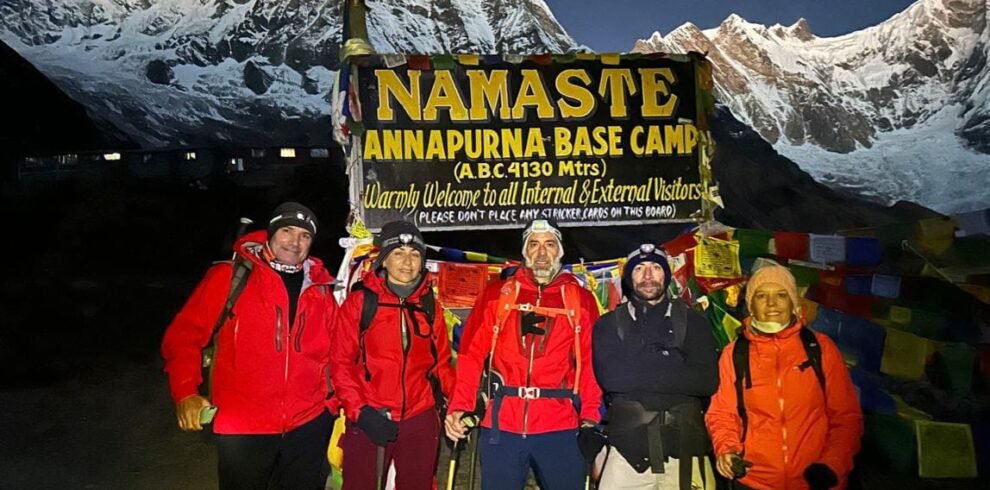
Early to mid November trail conditions are dry and stable throughout the route, essentially identical to October in terms of underfoot conditions. From roughly November 20 onward, temperatures dropping below freezing at night above 3,500m start creating ice on shaded sections, particularly the stone steps in the gorge between Himalaya and Deurali and the approach into the sanctuary itself. Morning starts before sunrise on these later November dates require more care. I do not carry microspikes as standard kit for early November groups, but I always pack them for anyone departing after November 20, and the MBC to ABC final section is where they matter most if ice has formed.
Late November also carries a small chance of the season’s first snowfall reaching the sanctuary. When this happens it is typically light, 5cm to 15cm, and clears within a day, but it can temporarily make the MBC to ABC section slower and more demanding. I monitor local weather reports and stay in contact with the teahouse network through the whole trip so we know what is coming before it arrives.
Teahouse Availability in November
Every teahouse on the route operates at full capacity through early and mid November, no different from October. From around November 20 onward, some sanctuary teahouses begin their winter closure, though the exact date varies significantly by year and by individual operator. Some years the ABC teahouses stay open through the end of November or even into early December, other years the closures start as early as November 15. For a late November departure, I confirm status at MBC and ABC directly with the teahouse owners before we leave Pokhara rather than assuming based on the previous year’s pattern.
November Day by Day Itinerary
| Day | Route | Altitude | Walking Time |
|---|---|---|---|
| 1 | Pokhara to Tikhedhunga | 827m to 1,540m | 4 to 5 hours |
| 2 | Tikhedhunga to Ghorepani | 1,540m to 2,860m | 5 to 6 hours |
| 3 | Poon Hill sunrise, on to Chhomrong | 2,860m to 2,170m | 8 to 9 hours total |
| 4 | Chhomrong to Himalaya | 2,170m to 2,920m | 5 to 6 hours |
| 5 | Himalaya to Deurali | 2,920m to 3,230m | 3 to 4 hours |
| 6 | Deurali to ABC via MBC | 3,230m to 4,130m | 5 to 6 hours |
| 7 | Full day at ABC, sunrise views | 4,130m | Rest and acclimatisation |
| 8 | ABC to Bamboo | 4,130m to 2,310m | 6 to 7 hours |
| 9 | Bamboo to Jhinu Danda | 2,310m to 1,760m | 4 to 5 hours plus hot spring |
| 10 | Jhinu Danda to Nayapul, drive to Pokhara | 1,760m to 827m | 3 to 4 hours |
November vs October: A Direct Comparison
The practical differences between the two months come down to temperature and crowds more than anything else. Mountain views are comparable, and I would say November edges ahead on clarity in most years. Trail conditions are similarly dry in both, with ice only becoming a factor in late November. Teahouse availability is guaranteed in October, while late November requires a confirmation call. Crowds in November run 40 to 60 percent lower than October’s peak volumes, and I have personally counted entire mornings on the Chhomrong to Himalaya stretch in November without passing another trekking group, something that simply does not happen in mid October. Costs in November sit slightly below October’s peak season pricing.
My honest advice: choose October if teahouse certainty and maximum warmth matter most to you, particularly for a first Himalayan trek. Choose November, especially the first three weeks, if mountain clarity, solitude, and the atmosphere of the trek matter as much as the views themselves.
Packing for November
| Category | Item | Notes |
|---|---|---|
| Sleep system | Sleeping bag rated -15°C | Not the -10°C minimum acceptable for October |
| Insulation | High fill power down jacket, 800+ fill | Or a lighter down jacket plus a second mid layer |
| Base layers | Heavyweight merino or synthetic thermal top and bottom | Midweight is not enough by mid November |
| Hands | Hand warmers plus liner and outer gloves | Useful for the pre dawn Poon Hill start |
| Traction | Microspikes or instep crampons | For late November ice above 3,500m |
| Eyes | UV400 sunglasses | Snow glare risk increases as the month progresses |
| Feet | Waterproof, well broken in trekking boots | Two sock layers for the coldest nights |
Permits and Costs in November
Permit requirements are identical every month of the year. The ACAP permit costs NPR 3,000, about USD 22, and the TIMS Card costs NPR 2,000, about USD 15. I arrange both in Kathmandu or Pokhara before we head to the trailhead. November guide rates run USD 30 to 45 per day, porter rates USD 25 to 30 per day, both at or slightly below October’s peak pricing. Accommodation runs USD 5 to 15 per room per night, and meals for two trekkers typically cost USD 25 to 40 per day. Budget USD 850 to 1,200 per person for a 10 day guided November trek, all inclusive.
We operate a no advance payment booking policy across both Manaslu Treks and Expedition and Next Trip Nepal. You do not send a deposit to lock in a November date. We confirm your itinerary and teahouse plan first, and payment happens according to terms we agree on together, not before.
Altitude Sickness in November
AMS risk in November follows the same underlying pattern as any other month, but cold introduces one specific complication worth knowing about. Cold suppresses your sense of thirst, so trekkers who feel less inclined to drink water in cold weather can end up dehydrated without realising it, and dehydration makes AMS symptoms harder to distinguish from simple fatigue. I make a conscious point of checking that every guest is drinking 3 to 4 litres a day regardless of how thirsty they say they feel. Helicopter evacuation is available in November with generally reliable weather for most of the month, becoming less certain only if a late month snow event grounds flights temporarily.
A Guide’s Perspective on the November Light
If you ask me what actually sets November apart beyond the numbers in the tables above, it is the quality of light in the sanctuary during the second half of the month. The sun sits at a lower angle than in October, throwing longer shadows across the Annapurna faces and giving the ice and snow a blue tinted quality in the early morning that photographers specifically chase. I have stood at ABC in November watching the first light climb down the face of Annapurna South while the dining room behind me held maybe six other trekkers total, not sixty. That quiet is worth something that no weather table can capture.
Jhinu Danda Hot Spring in November
By the time a November group reaches Jhinu Danda on the descent, the natural hot spring by the Modi Khola river feels genuinely earned rather than just a pleasant stop. Entry costs around NPR 300, and after a week of cold mornings and long descent days, sitting in the warm water with the river running past is one of the moments I see trekkers relax properly for the first time on the whole trip. I always build in real time here rather than rushing through, usually a full hour or more, because it matters as much to the experience as anything higher up the mountain.
Booking a November Trek With Us
Every guest booking a November ABC trek with Next Trip Nepal starts with a stay at the Moonlight Hotel in Thamel, included in the package, and receives an NTC SIM card on arrival so you can reach family and stay connected with me directly through the trek. I confirm teahouse status for late November departures personally before we leave Pokhara. As with every trek we run, there is no advance payment required to hold your date, we confirm the plan first.
What a November Morning at ABC Actually Feels Like
Waking up at ABC in November means opening your eyes in a cold room, usually around 5:30am if you want to catch first light on the summit. I tell every guest to dress fully inside the sleeping bag before ever unzipping it, base layer, fleece, down jacket, hat, all on before your feet touch the floor. Stepping outside at -10°C in the dark is a shock the first time, but within twenty minutes of the sun clearing the eastern ridge, the temperature climbs noticeably and by 8am you are often comfortable in just a fleece. That first hour of light hitting Annapurna I’s summit snowfields, turning them from grey to pink to gold, is the reason people put up with the cold night before it, and in November you get to watch it with maybe a dozen other trekkers rather than a crowded terrace.
Food and Hydration in November
The teahouse menu does not change by season, dal bhat, noodles, pasta, soups, eggs and pancakes remain available at every stop, but I encourage November trekkers to eat more deliberately than they might in warmer months. The extra calories genuinely help with cold tolerance overnight. Ginger tea and garlic soup are not just tradition, they are a real part of staying warm, and I make sure my groups have a hot drink in hand at every stop rather than relying purely on cold water from a bottle. Speaking of which, bring your water bottle into the sleeping bag with you at ABC and MBC, since anything left outside the bag can approach freezing by morning even inside an unheated room.
The Gorge Forest in November
The bamboo and rhododendron forest between Chhomrong and Himalaya has a completely different character in November than in the spring bloom months. Rather than flowers, what you get is a quiet, almost bare canopy in the upper sections, with the bamboo groves lower down still holding their green through the cold. I find this forest genuinely atmospheric in November, misty in the early morning before the sun burns through, and largely empty of other trekkers, which gives the whole gorge section a hushed quality that the crowded October version of the same trail simply does not have.
Group Size and Guide Ratios in November
November departures with us typically run six to eight trekkers, slightly smaller than our peak October groups, giving more individual attention on the colder sections of the route. Solo travellers are paired into an existing scheduled departure rather than being sent out with a single guide, both for safety reasons under ACAP’s guide requirement and because sharing the Poon Hill sunrise or the ABC morning with even a small group adds something a completely solo experience would miss.
Gear Rental Options for November
If you do not own a -15°C sleeping bag or a serious down jacket, both Kathmandu’s Thamel district and Pokhara’s Lakeside area have reliable rental shops carrying genuine cold rated gear. A -15°C bag rents for roughly USD 1 to 2 per day, and I personally check the actual gear during our pre trek briefing rather than trusting a shop’s label alone, since not every rental bag lives up to its stated rating. Renting locally also means you are not hauling bulky winter gear through airport luggage restrictions on the way to Nepal.
Combining a November ABC Trek With Other Nepal Travel
November is an excellent month to pair the ABC trek with additional time in Kathmandu or Pokhara, since the valley weather in both cities is dry, clear, and comfortable during this period, a pleasant bookend before or after the cold of the mountains. Some of my guests combine a November ABC trek with a shorter add on like the Australian Base Camp trek near Pokhara, a two day option that requires no separate permit process and gives another angle on the Annapurna range for those with extra time before flying home.
What Past November Trekkers Tell Me
The feedback I hear most often after a November trek is some version of surprise that the experience felt so different from what October photos online suggest. Several guests who researched the trek expecting October level crowds told me afterward that the quiet trail and empty viewpoints were the part they remembered most, more than the summit views themselves. That is a genuine pattern I have noticed across many seasons of guiding this specific month, and it is why I keep recommending it as my personal top choice.
Can I do the ABC trek without a guide in November?
No, current ACAP regulations require a licensed guide for the Annapurna Conservation Area regardless of season or prior trekking experience. This is enforced at the permit checkpoints along the route.
What is the temperature difference between Pokhara and ABC in November?
Roughly 25°C to 30°C at the extremes, with Pokhara reaching 25°C in the day while ABC drops to -10°C at night. This is one of the widest elevation temperature swings of any popular trek in Nepal and is worth planning your layering system around carefully.
Is the hot spring at Jhinu Danda open in November?
Yes, year round, and November is a particularly good month to visit since the water temperature contrast against the cool air feels even more welcome after a week of cold mountain nights.
Physical Preparation for a November Trek
The fitness demands of the ABC route do not change by month, roughly six to seven hours of daily walking on stone steps and forest trail with a net elevation gain of over 3,300m from Pokhara to the sanctuary. What November adds is the cold factor, and I recommend guests spend a few weeks before departure doing at least some walking or hiking in genuinely cold conditions if possible, simply to build familiarity with layering decisions before you are relying on them at altitude. Practicing putting on and removing your glove system, adjusting a down jacket zip, and managing trekking poles while wearing thicker gloves are all small things worth rehearsing rather than discovering for the first time on the trail.
The Modi Khola Gorge in November
The upper gorge section, where the trail squeezes between the walls of Hiunchuli and Machhapuchhre before opening into the sanctuary proper, is one of my favourite stretches of this entire route regardless of season, but November gives it a specific character. The waterfalls along this stretch, which roar at full volume during the monsoon, have settled into a quieter, more delicate flow by November, and the reduced water levels mean the suspension bridges and stream crossings feel more stable underfoot. Morning mist often sits in this gorge until mid morning, burning off slowly as the sun angle increases, which creates a genuinely dramatic approach to the sanctuary that flat midday light simply does not produce.
Flight and Road Logistics in November
Getting to the ABC trailhead does not carry the flight cancellation risk associated with Everest region treks, since Nayapul is a short drive from Pokhara rather than requiring a mountain airstrip landing. The Kathmandu to Pokhara connection in November is reliable, whether you choose the 25 minute scenic flight or the 6 to 7 hour road journey, since November weather in both cities tends to be stable and clear. Morning valley fog in Kathmandu can occasionally delay the earliest flights by an hour, so I avoid booking guests onto the very first flight of the day where possible, giving a small buffer in the schedule.
Managing the Cold Without Overpacking
A common mistake I see from November trekkers is overpacking heavy gear for the lower, warmer sections of the route while underpacking for the genuinely cold nights above 3,500m. The trick is a proper layering system rather than sheer volume of clothing. Below 2,500m you rarely need more than a light fleece even in November, since daytime temperatures stay comfortable. Above 3,000m, particularly after dark, the same light layers become inadequate quickly. I advise guests to pack for the two extremes specifically rather than a uniform kit meant to handle everything moderately, since that approach tends to leave people cold at altitude while carrying unnecessary weight through the warmer lower valley days.
Does November have good helicopter evacuation availability if needed?
Generally yes, weather in November is stable enough for reliable helicopter access for most of the month. The main exception is if a late month snow event grounds flights temporarily, which is one more reason I recommend earlier November dates for anyone particularly concerned about this.
What is the elevation gain on the ABC trek from Pokhara?
Roughly 3,300m net gain from Pokhara at 827m to Annapurna Base Camp at 4,130m, spread across the ascent days of the standard 10 day itinerary with built in acclimatisation stops.
Is November a good month for photography specifically?
Yes, arguably one of the best. The combination of exceptional air clarity, dramatic low angle winter light beginning to develop, and far fewer people in your frame makes November a strong choice for anyone prioritising photography over comfort.
Annapurna Base Camp Trek: Complete Monthly Guide
Use these month by month guides to plan your ABC trek around the exact conditions you want, or visit the Annapurna Base Camp Trek package page for the full itinerary, cost and booking details. Trek in January, February, March, April, May, June, July, August, September, October, November, or December.
Other Annapurna Region Treks Worth Considering
If a shorter trip suits your schedule better, our 6 Day Annapurna Base Camp Trek compresses the route for fitter trekkers with less time. For those who want the Poon Hill sunrise without continuing to the sanctuary, the standalone Ghorepani Poon Hill Trek is a shorter alternative. Trekkers seeking a different angle on the Annapurna range without the full ABC distance often choose the Mardi Himal Trek, and those with extra time in Pokhara can add the two day Australian Base Camp Trek.
A Note on Solo Female Trekkers in November
I regularly guide solo female trekkers on the November route, and the quieter trail this month tends to make the experience feel more personal rather than less secure. Teahouse owners along the route know our guides well after years of repeat business, and the smaller November crowds mean more direct interaction with local families running the lodges rather than the rushed, transactional feel of a fully booked October evening. If you are travelling solo, I pair you into one of our scheduled small group departures rather than sending you out with just one guide, which keeps costs reasonable while meeting the ACAP guide requirement properly.
What to Expect at the Permit Checkpoints in November
The ACAP and TIMS checkpoints at Nayapul, Ghorepani, Chhomrong and inside the gorge are staffed year round, and November sees noticeably shorter waits than the October peak, when queues can form behind large groups all checking in at once. I carry copies of every guest’s permits and handle the checkpoint process directly so there is no confusion or delay, but the lighter November traffic generally means this is a five minute stop rather than the longer waits sometimes seen in mid October.
Why Early November Differs From Late November
I want to be specific about this because treating the whole month as one uniform experience misses something important. Early November, roughly the first ten days, feels very close to October in terms of warmth and teahouse certainty, just with fewer people. Mid November, days 10 through 20, is where I think the month hits its sweet spot, cold enough to feel like a genuine winter transition but not yet carrying closure risk. Late November, from day 20 onward, starts to overlap with the uncertainty that fully defines December, teahouse closures becoming a real possibility and the cold intensifying toward what December delivers in full. When guests ask me to simply pick their dates for them within November, I steer toward days 8 through 18 more often than any other window.
The View From Chhomrong in November
Chhomrong sits at 2,170m looking directly up toward Annapurna South and Hiunchuli, and in November the clarity from this single viewpoint alone is often enough to convince skeptical guests that the extra cold is worth it. I like to schedule a proper break here rather than rushing through, since the village has a genuine mountain village character with terraced fields and stone houses that many treks bypass too quickly on the way to the higher, more famous viewpoints. The teahouses here also tend to have the best food quality on the whole route outside of Pokhara itself, since Chhomrong is large enough to support a proper supply chain even in the quieter November season.
My Final Thoughts on Choosing November
After enough seasons guiding this route to lose count, my honest recommendation stands. If you can only trek Annapurna Base Camp once and want the statistically safest bet for good weather and open teahouses, October remains the textbook answer. But if you are willing to pack a proper cold weather system and trade a few degrees of comfort for genuine quiet on one of the world’s great trekking routes, November is where I would send myself. The mountains do not care which month you arrive, they look the same either way. What changes is everything around them, the crowd at the viewpoint, the pace of the trail, the conversations at the teahouse table in the evening, and November consistently gives me the version of this trek I actually prefer to guide.
Do prices for gear rental or guides go up if I book late for November?
Not significantly, since November demand is lower than October’s peak. That said, I still recommend booking a few weeks ahead where possible so I can properly confirm teahouse availability at the sanctuary, particularly for dates in the second half of the month.
Is there mobile signal at Annapurna Base Camp in November?
Yes, NTC signal generally reaches the sanctuary in clear conditions, and every guest receives an NTC SIM card on arrival in Kathmandu so you can stay in touch throughout the trek.
What should I do with my valuables and passport while trekking?
I recommend leaving passports and anything not needed on the trail in the hotel safe in Kathmandu or Pokhara, carrying only a photocopy plus your permits. This is standard practice regardless of season and reduces what you need to keep track of at altitude.
Can I charge my phone and camera batteries along the November route?
Yes, every teahouse on the route offers charging for a small fee, usually NPR 200 to 500 per device depending on elevation. I recommend carrying a power bank as backup for the higher stops, since supply can be less reliable at ABC and MBC than at the lower villages.
How far in advance should I book a November ABC trek?
Three to four weeks ahead gives comfortable planning time, though we can often accommodate later requests given November’s lower demand compared to October. Booking earlier simply gives me more room to confirm teahouse arrangements and match you with the right departure group.
Is travel insurance mandatory for the November ABC trek?
We require it for every guest we guide, regardless of season, covering trekking up to at least 4,500m and helicopter evacuation. This is non negotiable for anyone booking through Next Trip Nepal and applies equally in November as in any other month.
Frequently Asked Questions
Is November better than October for ABC?
In some ways yes. November has clearer air on average, far fewer crowds, and a genuinely different atmosphere on the trail. October has warmer nights and guaranteed teahouse availability throughout. For experienced trekkers I recommend November first. For first timers who want maximum comfort, October remains the safer choice.
How cold is it really at ABC in November?
Nights reach around -10°C and can drop toward -15°C in the final week of the month. Teahouse rooms are unheated or have minimal electric heating. A sleeping bag rated to -15°C over heavyweight base layers is what keeps a November ABC night comfortable.
Are the ABC teahouses still open in late November?
Some are, some are not, and it varies by year. Winter closures typically begin in the second half of November, though some operators run through to early December. I confirm current status before every late November departure.
Will there be snow on the trail in November?
Possible but not certain, and mostly a late month risk. The section from Deurali to ABC, particularly the moraine above MBC, may carry 5cm to 20cm of snow after a winter storm event. This is passable with a guide but requires extra caution and time.
Do I need microspikes for a November trek?
Not typically for early to mid November. I pack them as standard for any departure after November 20, when ice becomes a more consistent morning feature above 3,500m.
How many other trekkers will I see in November?
Significantly fewer than October, roughly 40 to 60 percent fewer by my own observation over many seasons. The trail feels genuinely open rather than shared, especially in the gorge section between Himalaya and Deurali.
Is the Poon Hill sunrise worth doing in November?
Yes, and it is one of my favourite versions of the experience all year. The air clarity is excellent and the viewpoint is nowhere near as crowded as it is during peak October weeks.
Can beginners trek ABC in November?
Yes, November is entirely suitable for first time trekkers, particularly in the first three weeks of the month before the cold and closure risk both increase. It requires more cold weather preparation than October but nothing beyond what a properly equipped beginner can manage with a good guide.
What is the best week within November?
The first three weeks, roughly November 1 to 20, give the best balance of guaranteed teahouse access, manageable cold, and low crowds. After November 20, confirm teahouse status carefully before committing to firm dates.
Do I need travel insurance for a November trek?
Yes, always, and confirm the policy covers trekking up to at least 4,500m along with helicopter evacuation. This applies regardless of which month you travel.
I am Kiran Basnet, founder of Next Trip Nepal and a licensed guide based in Kathmandu. November is the month I recommend most often when someone asks me for a single answer, and after guiding it season after season I still find the quiet clarity of a November sanctuary genuinely hard to beat. Message me directly on WhatsApp and I will help you pick the right week within the month for your specific trip.
Plan your trip on the Annapurna Base Camp Trek package page, or compare conditions with our guides to ABC in October, ABC in December, and ABC in March. See also our complete Annapurna Base Camp Trek guide and costly mistakes to avoid before booking.