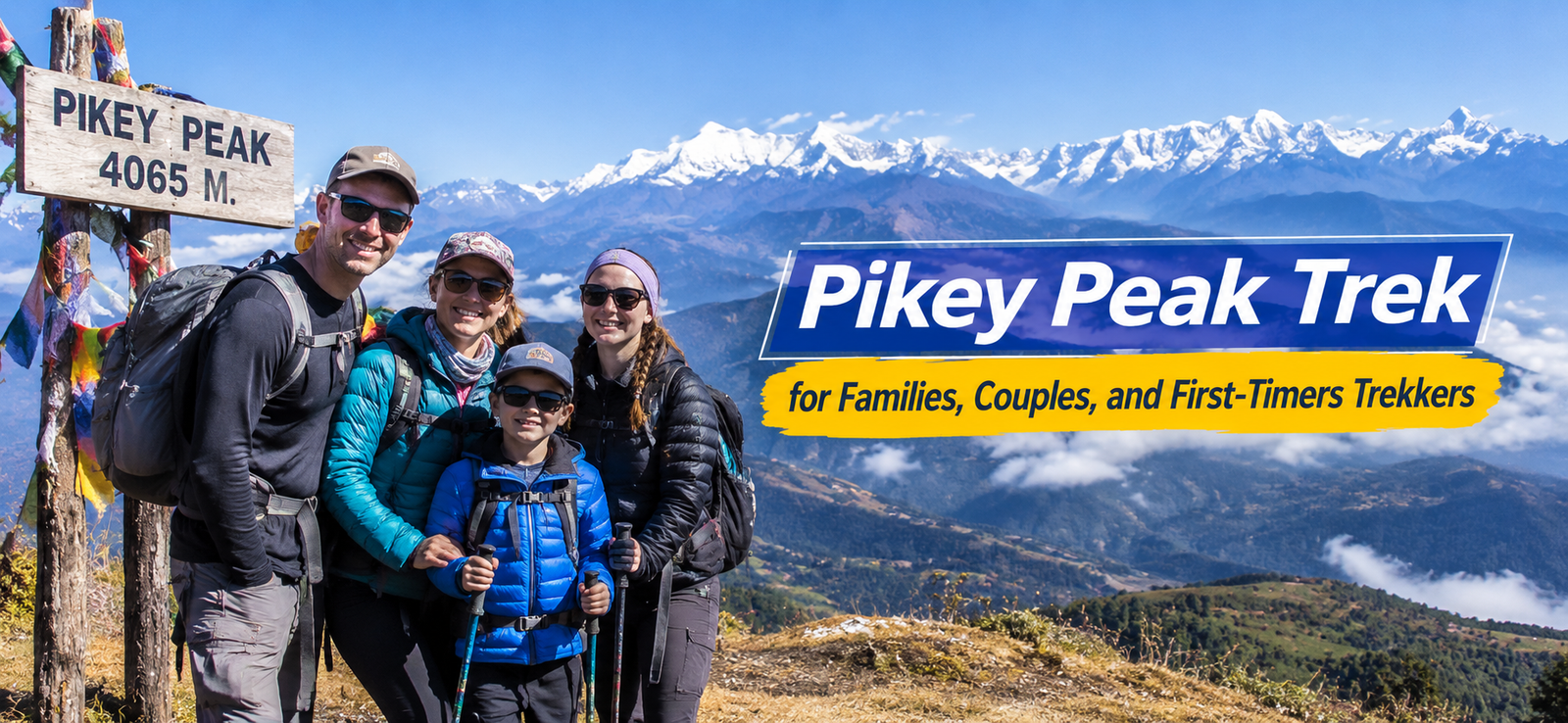
Most Pikey Peak Trek content online is written with a single reader in mind: a fit, experienced trekker traveling solo or with a like minded group. If you are planning this trip as a family with children, as a couple looking for a shared adventure or honeymoon, or as a first time trekker with no prior high altitude experience, a lot of that advice does not quite fit your situation. This guide is written specifically for those three reader types, covering honest difficulty expectations, how to adapt the standard itinerary, what to pack differently, and the questions worth asking before you book.
We cover the general itinerary and route details on our main Pikey Peak Trek page, and if you are weighing the guided versus independent question, that is covered fully in our solo trekking guide. This post assumes you want to know whether this specific trek suits your specific travel situation, and how to shape it if it does.
Is Pikey Peak Actually Beginner Friendly
Pikey Peak is frequently described as one of the more approachable treks in Nepal, and that reputation is largely earned, but it is worth being precise about what moderate actually means in practice rather than taking the label at face value.
- Altitude stays comparatively low: the summit sits at roughly 4065 meters, which is meaningfully lower than destinations like Everest Base Camp or Annapurna Base Camp, reducing both the severity and likelihood of altitude related symptoms for most healthy travelers.
- Daily walking hours are moderate: most days involve somewhere between four and six hours of walking at a comfortable pace, rather than the eight or nine hour days found on more demanding routes.
- Terrain is generally gentle underfoot: the trail runs through established forest and ridge paths without glacier crossings, exposed scrambling or technical sections, so no climbing skill or specialized equipment is required.
- The trek is short relative to its reward: a standard itinerary can be completed in well under two weeks including arrival and departure days, which matters for travelers with limited vacation time, including many first time trekkers and families.
- What moderate does not mean: moderate still means multiple consecutive days of uphill and downhill walking at altitude with no roads, no vehicle evacuation on short notice and teahouse rather than hotel standard accommodation, so it is not equivalent to a casual day hike.
The honest summary is that Pikey Peak is a genuinely reasonable introduction to Himalayan trekking for a reasonably healthy adult or child with no serious underlying heart or lung conditions, but it still deserves real preparation rather than being treated as effortless simply because other treks are harder.
Trekking With Children: What to Actually Consider
Families ask us about bringing children on this trek more often than almost any other question, and the honest answer is that it depends heavily on the individual child rather than a single age cutoff.
- There is no single official minimum age: Nepal does not set a universal legal minimum age for trekking, but individual operators set their own policies based on experience, so confirm your chosen operator’s specific age guidance before booking rather than assuming any figure you read online applies.
- Walking stamina matters more than age alone: a physically active child accustomed to hiking will generally cope better than an older but sedentary child, so judge readiness by your own child’s actual walking experience rather than age in isolation.
- Children can be more vulnerable to altitude symptoms: general medical guidance suggests children may be at least as susceptible to altitude related symptoms as adults, and may also struggle to clearly describe how they are feeling, which makes close parental observation important throughout the trip.
- A pediatrician consultation before booking is genuinely worthwhile: discussing the planned altitude profile and daily exertion with your child’s doctor ahead of time, particularly for any child with a history of respiratory or cardiac issues, is a sensible step rather than an overcautious one.
- Be willing to turn back: the single most important mindset for trekking with children is a willingness to slow down, rest an extra day or turn back entirely if a child shows signs of struggling, rather than pushing toward a fixed itinerary.
None of this means children cannot enjoy this trek. Many families complete it successfully and describe it as a genuinely memorable shared experience, but the families who have the best experience are consistently the ones who planned conservatively rather than ambitiously.
Suggested Family Itinerary Adjustments
A family itinerary should rarely look identical to a standard fit adult itinerary. The adjustments below are the ones we most commonly recommend.
- Add at least one extra day: stretching the standard itinerary by a day or two, splitting longer stages into shorter ones, reduces daily exertion and builds in natural acclimatization margin.
- Build in a dedicated rest day: a full day with no significant elevation gain partway through the trek gives children’s bodies time to adjust and gives the whole family a lower pressure day to recover.
- Increase your support ratio: hiring an additional porter or assistant guide for a family group reduces the physical load on parents and means an adult is not forced to choose between carrying gear and directly supervising a child on tricky sections.
- Plan shorter daily distances, not just shorter days: a day that covers less ground at a relaxed pace is generally easier on a child than the same number of walking hours covering more distance quickly.
- Keep a flexible mindset on the exact summit day: be prepared to adjust or skip the pre dawn summit push specifically if a child is tired, since the broader trek experience does not have to hinge entirely on that one moment.
- Pack entertainment for downtime: teahouse evenings are long and there is no television or reliable internet, so cards, a travel game or a favorite small toy make a meaningful difference to a child’s experience of the trip.
Pikey Peak for Couples and Honeymooners
Pikey Peak has become a genuinely popular choice for couples, including honeymooners looking for an adventure focused alternative to a conventional beach trip, and the trek lends itself well to that framing for several specific reasons.
- The sunrise summit moment has obvious romantic appeal: standing together on an open summit as the sun rises over multiple eight thousand meter peaks is the kind of shared experience many couples specifically seek out, and we cover how to plan and photograph that moment in our dedicated photography guide.
- The trek is short enough to fit a limited vacation window: many couples, particularly honeymooners, have limited time, and a trek that can be completed well within two weeks including travel days is far more realistic to fit into a honeymoon itinerary than a longer, higher altitude trek.
- Teahouses offer more privacy than a group trek might suggest: couples traveling as a private pair, rather than joining a larger fixed departure group, can typically arrange their own private room at most teahouses along the route, discussed further below.
- Pacing for mismatched fitness levels is manageable: on a trek this length and altitude, a guide can generally pace the day around the slower of two partners without the day becoming impractically long, which is harder to manage on longer, higher routes.
- It works well as a first shared adventure trip: for couples who have not trekked together before, the moderate difficulty here makes it a reasonable place to discover how you travel together under physical challenge, before considering something more demanding in the future.
Choosing Teahouses and Rooms as a Couple or Family
Accommodation on this route is simple teahouse lodging rather than hotel standard rooms, and understanding what that actually looks like in advance helps avoid mismatched expectations.
- Private rooms are generally available but basic: most teahouses along this route can offer a private room for a couple or family, typically with twin or double beds, but do not expect en suite bathrooms, reliable hot showers or heating inside the room itself at every stop.
- Shared bathrooms are common: many teahouses use shared bathroom facilities down the hall rather than an attached bathroom, which is worth preparing children for in advance so it does not come as a surprise.
- Booking ahead through an operator secures rooms during busy season: during the peak autumn and spring trekking seasons, teahouses can fill up, so arranging your route through an operator who pre books rooms is considerably more reliable than arriving and hoping for space, particularly important for families who cannot easily adapt to an unplanned room shortage.
- Heating is usually limited to a shared dining area: most teahouses heat only the communal dining room, typically with a wood or yak dung stove, so evenings are generally spent together there rather than in a heated private room, which is worth factoring into how you pack for warmth overnight.
- Extra blankets are usually available on request: if your room feels too cold overnight, most teahouses can provide additional blankets, so it is worth asking rather than assuming you must rely solely on your own sleeping bag.
What First Time Trekkers Get Wrong
Beyond families and couples specifically, first time trekkers of any travel style tend to repeat a similar set of avoidable mistakes, mostly rooted in expectations shaped by other kinds of travel rather than Himalayan trekking specifically.
- Expecting hotel standard comfort: first timers sometimes underestimate how basic teahouse accommodation is compared to a conventional hotel, so arriving with realistic expectations about simple rooms, shared bathrooms and limited heating prevents unnecessary disappointment.
- Underestimating how cold it gets: even outside winter, nights and pre dawn hours at altitude are genuinely cold, and first timers who pack as though they are visiting a mild destination are consistently the most uncomfortable trekkers on any route.
- Overpacking or underpacking in the wrong areas: new trekkers often overpack clothing while underpacking genuinely important items like a proper headlamp, blister care supplies or a reliable water purification method, discussed further in the packing section below.
- Believing altitude sickness only affects unfit people: physical fitness reduces general trekking fatigue but does not reliably prevent altitude related symptoms, which can affect fit and unfit travelers alike, so fitness should not be treated as a guarantee against needing to acclimatize sensibly.
- Assuming the itinerary is fixed and unchangeable: first time trekkers sometimes feel obligated to stick rigidly to a printed itinerary even when tired or unwell, when in reality a good guide expects and accommodates reasonable pace adjustments.
- Not asking questions before booking: many avoidable mismatches between expectation and reality come down to simply not asking enough questions of the operator in advance, covered in more detail later in this guide.
Fitness Preparation Timeline for Beginners
You do not need to be an athlete to complete this trek, but a sensible preparation window in the weeks before you travel makes a real difference to how enjoyable the experience feels.
- Six to eight weeks out: begin regular walking or hiking several times a week, gradually increasing distance and, where possible, including some uphill walking or stair climbing to build the specific muscles used on multi day ascents.
- Four to six weeks out: start wearing the actual footwear and daypack you plan to trek with on your training walks, since this is the window to identify and fix fit issues before they become blisters on the actual trek.
- Two to four weeks out: aim for at least one longer training walk of several hours with some elevation gain to build confidence in sustained walking, and begin paying closer attention to hydration habits.
- Final two weeks: shift toward lighter maintenance activity rather than new intense training, finalize your packing list, and make sure any required vaccinations or travel health preparations are complete.
- Throughout the preparation window: general cardiovascular fitness, such as regular walking, cycling or swimming, benefits overall trekking stamina even on days that are not specifically hiking focused.
Packing Differences by Traveler Type
While the core packing list for this trek is broadly similar for everyone, families, couples and first time trekkers each tend to have a few specific additions worth planning for.
- For families traveling with children: pack a basic pediatric first aid kit, any regular medication in clearly labeled quantities, familiar snacks a child already likes, and lightweight entertainment items for long teahouse evenings.
- For couples and honeymooners: consider a lightweight tripod or remote shutter if you want posed summit photographs together, discussed in more depth in our photography guide, and pack a few comfort items that make shared teahouse evenings feel less purely functional.
- For first time trekkers generally: prioritize a genuinely reliable headlamp with spare batteries, broken in hiking boots rather than new ones, blister prevention supplies such as tape or specific blister plasters, and a proper water purification method rather than relying solely on purchased bottled water.
- Shared essentials for every traveler type: layered clothing rather than a single heavy jacket, a sleeping bag rated for genuinely cold temperatures even outside winter, and sun protection, since high altitude sun exposure is stronger than it appears on a cool day.
- What most first timers overpack: excessive changes of regular clothing, since laundry is limited or unavailable on the trail and most trekkers end up wearing the same few functional layers repeatedly regardless of how much they packed.
Altitude and Health Considerations for Vulnerable Travelers
Families, first time trekkers and anyone with no prior high altitude experience should take altitude seriously without becoming alarmed, since sensible preparation significantly reduces risk for most healthy travelers.
- Altitude related symptoms can affect anyone: mild symptoms such as headache, fatigue or reduced appetite are common at this altitude range even in fit, healthy travelers, and are generally manageable with sensible pacing and hydration.
- Children may not communicate symptoms clearly: younger children in particular may express discomfort as general irritability or tiredness rather than describing a specific symptom, so parents should watch behavior closely rather than relying solely on a child’s own description.
- Older travelers and those with existing health conditions should consult a doctor first: anyone with a history of heart, lung or other chronic conditions should discuss the planned altitude and exertion with a doctor before booking, since individual risk varies considerably.
- Gradual ascent is the single most effective precaution: the extra days and rest day suggested earlier in this guide exist specifically to support gradual acclimatization rather than simply to make the trip more comfortable.
- A clear plan for descending if needed is essential: agree with your guide in advance that descending is always an acceptable option if any traveler, adult or child, shows worsening symptoms, rather than treating descent as a failure of the trip.
- This is general guidance, not medical advice: consult a travel medicine specialist or your own doctor for guidance specific to your health history and your child’s health history before booking any high altitude trip.
Budgeting and Group Size Considerations
Trip cost structure shifts somewhat depending on whether you are traveling as a family, a couple or booking into a larger fixed group, and these are the main factors worth understanding before you compare quotes.
- Private rooms typically cost more than shared dormitory style accommodation: couples and families booking private rooms throughout should expect this to affect the overall quote compared to a trekker willing to share a dormitory room with strangers.
- Additional porters increase cost but reduce physical burden: families hiring an extra porter or assistant guide, as recommended earlier, should factor this into their budget as a worthwhile cost rather than an optional extra.
- Smaller private groups generally cost more per person than larger fixed departures: if budget is the primary concern, joining a larger scheduled group departure is typically more economical than booking a fully private, custom paced family or couple itinerary.
- Confirm exactly what is included before comparing quotes: permit fees, porter and guide costs, accommodation and meals are not always bundled identically across operators, so ask for a clear breakdown rather than comparing headline prices alone.
- Specific permit and porter cost figures change over time: confirm current pricing directly with your chosen operator before booking rather than relying on a specific figure from any blog post, including this one.
Comparing Itinerary Styles
The table below summarizes how a standard itinerary compares to the family paced and couple or honeymoon focused adjustments discussed throughout this guide.
| Itinerary style | Typical length | Daily distance | Rest days | Best suited to |
|---|---|---|---|---|
| Standard itinerary | Shortest practical length | Full daily stages at a standard pace | Minimal, often none built in | Fit, experienced trekkers comfortable with a brisker schedule |
| Family paced itinerary | One to two days longer than standard | Shorter stages split across more days | At least one dedicated rest day | Families with children and travelers new to multi day trekking |
| Couple or honeymoon itinerary | Similar to standard, occasionally one extra day | Standard stages with flexible pacing for the slower partner | Optional, often one buffer day near the summit | Couples prioritizing a shared, well paced experience and private accommodation |
Building Your Own Itinerary: Questions to Ask Before You Book
Whichever traveler category you fall into, asking the right questions before booking is the single most effective way to avoid a mismatch between expectation and reality.
- What is your specific policy on trekking with children of our age? ask the operator directly rather than assuming a general industry standard applies.
- Can the itinerary be lengthened or paced more conservatively at no significant cost penalty? a flexible operator should be able to answer this clearly rather than pushing a fixed, rigid schedule.
- Is a private room guaranteed at every stop, or only where availability allows? this matters considerably for couples and families prioritizing privacy over cost.
- What is the guide’s specific experience with our traveler type? a guide experienced specifically with children, or with mixed fitness couples, is more valuable than general trekking experience alone.
- What happens if we need to turn back or slow down significantly partway through? a clear, calmly explained contingency plan is a good sign of an operator who takes safety seriously rather than treating the itinerary as fixed no matter what.
- What exactly is included in the quoted price? get a clear breakdown of permits, guide and porter costs, accommodation and meals before comparing operators on price alone.
What a Typical Day Actually Looks Like
Reading an itinerary on paper is very different from picturing how a day actually unfolds. Here is a realistic shape of a standard trekking day for a family, couple or first time trekker on this route.
- Early morning wake up and breakfast: most trekking days begin with an early breakfast at the teahouse, typically something simple like porridge, eggs or pancakes, before setting out while the air is still cool.
- A morning walking block: the first and generally longer walking stretch of the day usually happens in the morning, while energy is highest and before any afternoon cloud or warmth sets in.
- A trailside lunch stop: most days include a stop at a teahouse along the route for a cooked lunch, giving everyone a genuine rest rather than a brief snack break.
- An afternoon walking block to the next teahouse: the second portion of the day is typically shorter, bringing the group to that night’s accommodation with enough daylight left to settle in comfortably.
- Afternoon downtime at the teahouse: once you arrive, afternoons are generally unstructured, giving families time to rest, couples time to relax together and first timers time to deal with any blister care or gear adjustments before the next day.
- A shared evening meal and early night: dinner is usually eaten together in the communal dining area, often the only heated room, before an early night ahead of another early start.
Understanding this rhythm in advance helps set realistic expectations, particularly for children who do better with a predictable daily structure, and for first time trekkers who sometimes expect a more varied or eventful daily schedule than the trek actually involves.
Choosing the Best Season for Your Traveler Type
General seasonal advice for this trek is covered in more depth elsewhere on our site, but families, couples and first time trekkers often have slightly different priorities when weighing one season against another.
- Autumn is generally the most forgiving season for beginners: stable weather, clear visibility and comfortable daytime temperatures make autumn a sensible default choice for families and first time trekkers who want to minimize weather related uncertainty.
- Spring suits couples wanting a more colorful backdrop: rhododendron blooms lower on the route add a visual element that many couples specifically ask about, though afternoon haze can be more variable than in autumn.
- Winter can work for well prepared, cold tolerant travelers: winter offers clear air and quieter trails, but the genuinely cold temperatures, especially before dawn, make it a less forgiving choice for young children or anyone unused to serious cold.
- Monsoon season is generally not recommended for any of these traveler types: persistent rain, leeches on lower sections and the risk of landslides or flight delays to and from the region make monsoon a season to avoid, particularly for families managing children’s comfort and patience.
- Consider school holiday timing for families: beyond weather, families often need to plan around school calendars, so booking well in advance for autumn or spring school holiday windows helps avoid last minute availability problems.
Managing Group Dynamics and Expectations
A multi day trek puts a family or couple through sustained physical effort, basic accommodation and long stretches of unstructured time together, which can surface tension even among people who travel well together under normal circumstances.
- Talk through expectations before you book, not on the trail: agree in advance on how you will handle disagreements about pace, rest days or turning back, since these conversations are much harder to have calmly partway up a mountain.
- Accept that fitness levels within a couple or family will differ: rather than treating a pace mismatch as a problem to solve, plan for it directly by choosing an itinerary and guide who can accommodate the slower member comfortably.
- Build in deliberate downtime, not just rest days: quiet, low pressure evenings at the teahouse matter as much for group morale as physical recovery, so resist the urge to fill every hour with activity.
- Let children have some ownership of the experience: involving children in small decisions, such as choosing when to stop for a snack or what game to play that evening, tends to improve their engagement with the trip considerably.
- Keep perspective on summit day specifically: for couples and families, treating the sunrise summit attempt as one highlight among several rather than the single measure of a successful trip reduces pressure and disappointment if conditions do not cooperate.
What We Offer
We regularly build Pikey Peak itineraries specifically adapted for families, couples and first time trekkers, rather than offering a single fixed schedule for every traveler type.
- Family paced itineraries: we build in the extra days, rest day and additional porter support discussed in this guide when you tell us you are traveling with children.
- Private rooms arranged in advance: we pre book accommodation along your specific route rather than leaving room availability to chance, particularly important during busier trekking seasons.
- Honest guidance on fit: we would rather tell a family honestly that a different itinerary style suits them better than oversell a trip that is not the right match for their situation.
- Flexible extensions: if you want to combine this trip with the Dudh Kunda Lake extension or plan specifically around the sunrise summit photography opportunity, we can build either into a family, couple or first timer itinerary with appropriate pacing.
You can see the full standard itinerary and current pricing on our main Pikey Peak Trek page, and tell us about your family situation, travel style or experience level when you enquire so we can shape the itinerary around you rather than the other way around.
Frequently Asked Questions
Is there a minimum age for children on the Pikey Peak Trek?
There is no single official minimum age set by Nepal’s trekking regulations. Individual operators set their own age guidance, so confirm your chosen operator’s specific policy before booking rather than relying on a general figure.
Is Pikey Peak genuinely safe for complete beginners?
For most reasonably healthy adults with no serious underlying heart or lung conditions, yes, provided the itinerary allows sensible pacing and acclimatization. It is a genuinely moderate trek, but it still deserves real preparation.
Can couples get a private room for the whole trek?
Most teahouses along this route can offer a private room, and booking through an operator who pre arranges accommodation makes this considerably more reliable during busy seasons.
How fit do I actually need to be?
You do not need athletic fitness, but a regular walking routine in the weeks before travel, as outlined in our preparation timeline, makes a meaningful difference to how comfortable the trek feels.
Can the trek be shortened for a limited vacation window?
The standard itinerary is already relatively short, and some flexibility exists, but shortening it too aggressively reduces acclimatization margin, so discuss any compressed schedule carefully with your operator first.
What if my child or partner gets altitude sickness symptoms partway through?
Agree on a descent plan with your guide before you start. Mild symptoms are common and usually manageable with rest and hydration, but a guide should always support descending if symptoms worsen.
Do we need travel insurance that covers high altitude trekking?
Yes, confirm that your travel insurance specifically covers trekking at the altitude you will reach, including emergency evacuation, since general travel insurance does not always include this by default.
Is the food on the trek suitable for children with particular tastes?
Teahouse menus are generally simple and repetitive, with options like rice, noodles and basic soups. Packing some familiar snacks for children helps bridge any gaps in what is available on the trail.
Can we combine this trek with the Dudh Kunda extension as a family or couple?
Yes, the Dudh Kunda Lake extension can be added with appropriate pacing adjustments. Tell us your travel style when you enquire so we can plan the acclimatization and timing properly.
Will our guide speak enough English to communicate clearly with children or during an emergency?
Reputable operators provide guides with solid working English, but confirm this directly for your specific guide, particularly if clear communication with a child or during a stressful situation is a priority for you.
How much does hiring an extra porter for a family typically add to the cost?
Costs vary and change over time, so confirm current porter rates directly with your operator. Most families find the added comfort and safety margin worthwhile relative to the additional cost.
Is it realistic to do this trek as a honeymoon if neither of us has trekked before?
Yes, with sensible preparation and a pace appropriate to your fitness level. Many couples choose this trek specifically because it is approachable enough for a first shared trekking experience.
What is the single most common mistake first time trekkers make on this route?
Underestimating the cold, particularly before dawn and at the summit. Packing genuinely warm layers, even outside winter, prevents the most common source of discomfort for new trekkers.
Should we book a fixed group departure or a fully private itinerary?
A private itinerary gives you full control over pacing, accommodation and schedule, which suits families and couples well, while a fixed group departure is generally more budget friendly if cost is the main priority.