
June marks the real start of the monsoon on the Manaslu Circuit, and it is a month we approach differently than the busy spring and autumn windows. At Next Trip Nepal we do run June departures, but we are honest with every client about what this month actually involves, frequent rain, warm and humid lower elevation walking, leeches in the forest sections, and a noticeably quieter trail than any other time of year. This guide lays out exactly what to expect if you are considering the Manaslu Circuit in June, based on what our guides see on the ground each season rather than generic seasonal advice.
We cover temperature and rainfall at every stage of the route, how Larkya La behaves once the monsoon sets in, permit costs for 2026, what to pack for wet conditions, training considerations, a full cost breakdown, and honest answers to the questions clients ask us most often about trekking during this particular window.
Why June Is Considered A Monsoon Month
The monsoon typically arrives in Nepal in early to mid June and continues through September, with July and August generally the wettest months of the entire year. June sits at the transition point, the first month where you can genuinely expect regular rain, though it is usually not yet as consistently heavy as the peak of July and August.
This makes June a month of real tradeoffs. On one hand, the trail is about as quiet as it gets all year, teahouses are easy to book, and the forest sections turn a lush, vivid green that photographs beautifully between rain showers. On the other hand, you should expect regular afternoon and overnight rain, reduced visibility of the high peaks on many days, and practical challenges like leeches and muddy trail sections that simply are not a factor in the drier months.
We tell every client considering June the same thing directly. This is not the month for a first Himalayan trek if guaranteed mountain views matter to you, and it is not the month to choose if you have never dealt with sustained rain on a multi day trek before. It is, however, a genuinely rewarding option for experienced trekkers who have already seen Manaslu or a similar route in clearer conditions and want to experience the same trail in a completely different character, or for trekkers whose only available travel window happens to fall in June and who go in with realistic expectations rather than assuming the weather will behave like a photograph from an autumn brochure.
June Weather And Temperature On The Manaslu Circuit
At lower elevations from Soti Khola through Jagat and Deng, daytime temperatures in June commonly reach 20 to 30 degrees Celsius with high humidity. The lower forest sections feel warm and thick with moisture, especially between rain showers when the air holds onto heat and humidity.
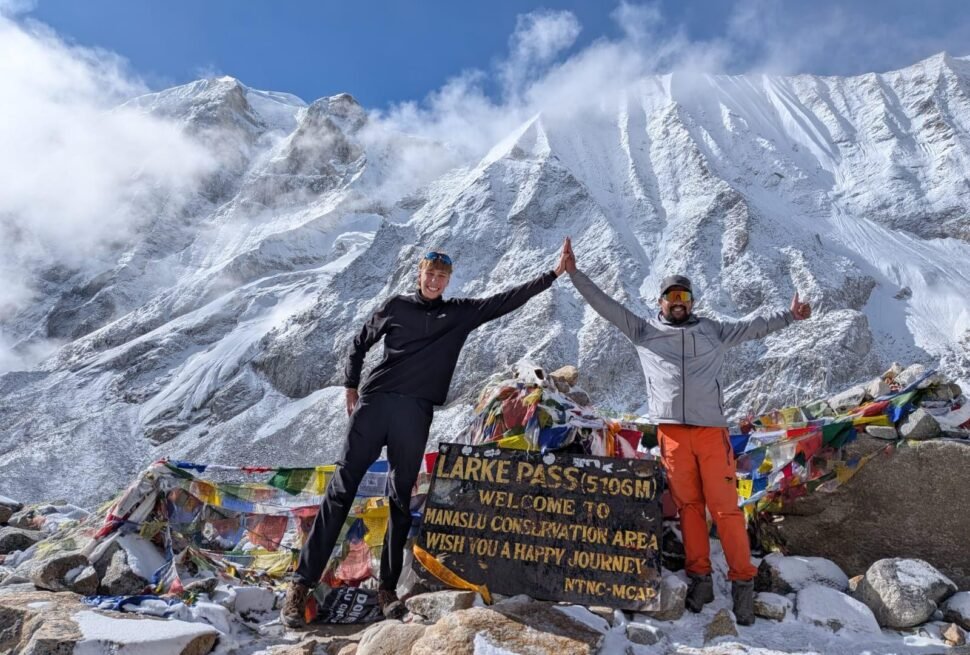
As you climb toward Namrung, Lho and Samagaon, temperatures ease somewhat but remain noticeably warmer and more humid than in the drier months. At high altitude camps like Samdo and Dharamsala, and on Larkya La itself at 5106 meters, expect a milder range than earlier in the year, roughly 0 to 10 degrees Celsius at the pass, though rain or wet snow can make the crossing feel considerably colder in practice.
Rain in June typically falls in the afternoon and overnight, with mornings offering the best, though not guaranteed, chance of drier conditions and occasional mountain views. Consistent heavy all day rain is less common in June than in July or August, but it does happen, particularly later in the month as the monsoon becomes fully established.
Early June often still carries some of the drier character of late May, while the second half of the month behaves more like a preview of full monsoon conditions. If you have any flexibility in choosing your exact departure date within June, an earlier start to the month generally gives you slightly better odds of drier weather, though this is far from a guarantee given how variable monsoon onset can be from year to year, and our team monitors seasonal forecasts each year to give clients the most current guidance available at the time of booking.
Larkya La Pass Conditions In June
Crossing Larkya La in June requires careful attention to conditions, since rain at lower elevation often falls as snow at the pass itself. Our guides monitor conditions at Dharamsala closely before any June crossing, and departures are sometimes delayed a day if visibility or snow accumulation makes the crossing unsafe.
A June crossing still starts well before dawn to take advantage of the calmest weather window, generally in the very early morning before cloud and precipitation build. Trekkers considering a June departure should build some flexibility into their schedule, since a weather related delay at Dharamsala is more likely in June than during the stable spring or autumn seasons. Our guides would rather sit an extra day at Dharamsala waiting for a safe window than push a group over the pass in poor visibility, and clients booking a June trek should expect and accept that possibility as part of the deal rather than a failure of planning.
Trail Conditions From Machha Khola To Samagaon
The lower trail through Jagat, Deng and Namrung turns intensely green in June, with waterfalls swollen from the rains and the forest at its most lush. This is genuinely one of the most beautiful times to see this section of trail, provided you accept that you will likely be walking in some rain at some point during your trip.
Trail conditions underfoot become noticeably muddier than in the dry season, particularly on the lower forested sections. Stream crossings can run higher than usual, and the suspension bridges over the Budhi Gandaki carry more visibly swollen water below them. Leeches are common in the lower forest between Machha Khola and Deng during monsoon season, a detail that surprises trekkers who have not encountered them before but is easily managed with the right precautions.
Beyond the forest sections, the trail itself remains structurally sound and safe to walk in June, since it is well used and maintained year round. What changes is simply the effort required underfoot, with more careful footing needed on wet stone steps and muddy inclines than you would encounter on the same sections in the dry season. Trekking poles become genuinely useful in June for exactly this reason, offering extra stability on slick or uneven ground that a dry season trekker might not think twice about.
Dealing With Leeches On The Trail
Leeches in the lower forest sections are a genuine feature of trekking in Nepal during the monsoon, and while they are not dangerous, they are unpleasant if you are not prepared. Wearing gaiters, tucking trousers into socks, and applying a leech repellent or salt solution to boots and lower legs are all standard precautions our guides recommend. Checking your legs and boots periodically during the day catches most leeches before they attach, and if one does attach, it can be removed calmly without pulling, using salt or a lighter flame nearby rather than force.
It is worth putting leeches in perspective for trekkers considering this month for the first time. They are a minor practical nuisance rather than a genuine hazard, comparable in seriousness to mosquitoes on a summer hike elsewhere in the world. Most clients who trek through June tell us the leeches became a bit of a running joke within their group by the second or third day, something to check for and laugh about rather than something that seriously detracted from the trip. A few minutes of vigilance each day is really all it takes to keep the issue manageable.
How Busy Is The Trail In June
June is one of the quietest months of the year on the Manaslu Circuit. Most trekkers avoid the monsoon window entirely, so you can expect very light teahouse occupancy and a trail that feels almost entirely your own for long stretches. For trekkers who genuinely want solitude and do not mind unpredictable weather, June offers an experience simply unavailable during the busy spring and autumn months.
Booking in advance is still worthwhile to secure your preferred guide and confirm permit paperwork, but teahouse availability is rarely a concern in June. This also means guides and porters have more flexibility in their schedules, which can make arranging a private departure relatively easy compared to peak season.
There is a quieter economic side to this that is worth mentioning as well. Trekking income drops sharply for teahouse owners, guides and porters during the monsoon months, and a June booking, however small compared to the busy autumn season, genuinely matters to the families who depend on this trail for their livelihood throughout the year. Trekkers who choose to travel during the off season are, whether they think of it this way or not, providing support to a local economy during its leanest months.
Permits Required For The Manaslu Circuit In 2026
Every foreign trekker needs three permits for the Manaslu Circuit, arranged through a registered trekking agency rather than independently.
The Restricted Area Permit, or RAP, falls under the December through August pricing window for a June trek, costing 75 US dollars for the first week and 10 US dollars per day after that, lower than the autumn peak season rate of 100 dollars for the first week and 15 dollars per day.
The Manaslu Conservation Area Permit, or MCAP, costs around 3000 Nepali rupees for foreign nationals, roughly 30 US dollars. The Annapurna Conservation Area Permit, or ACAP, carries the same fee structure and is required because the route exits through Dharapani and Besisahar into Annapurna Conservation Area territory.
Following the March 2026 update from the Department of Immigration, solo trekkers can now obtain the Restricted Area Permit without needing a second person in their group. A licensed guide remains mandatory regardless of group size, and permits must still be processed through a registered agency.
What To Pack For A June Manaslu Trek
June packing is defined almost entirely by the need to manage rain, humidity and mud, alongside the standard cold weather gear needed for the pass crossing.
- A genuinely waterproof jacket and trousers, not just water resistant, given the frequency of rain
- Quick drying clothing rather than cotton, since cotton stays wet and cold for long periods
- Gaiters, essential for both mud and leech protection in the lower forest
- A pack cover or dry bags to keep gear dry inside your backpack
- Sturdy waterproof trekking boots, ideally already broken in
- A down jacket for the pass crossing, since temperatures there remain cold regardless of season
- Insulated gloves for the pass plus lighter gloves for lower elevation
- A sleeping bag rated to at least minus 10 degrees Celsius for nights at Samdo and Dharamsala
- Leech repellent or salt for lower forest sections
- Water purification tablets or a filter, headlamp with spare batteries, and a basic first aid kit including altitude sickness medication
Most of this gear can be rented in Thamel in Kathmandu before departure, and our team can point you to reliable rental shops that stock genuinely waterproof options rather than lower quality water resistant gear that will not hold up through a full monsoon trek.
Physical Preparation For The Trek
The physical demands of the Manaslu Circuit remain the same regardless of season, and a June trek requires the same baseline fitness as any other month. What changes is the added physical and mental load of walking in wet, muddy conditions for extended periods, which can be more tiring than dry trail walking even over the same distance and elevation gain.
We recommend the standard six to eight week training routine of regular cardio, hiking with a loaded daypack where possible, and basic strength training. For a June departure specifically, practicing on muddy or wet terrain if you have access to it can help you get comfortable with the footing challenges you will face on the trail.
Cost Breakdown For A June Manaslu Circuit Trek
| Item | Approximate Cost (USD) |
|---|---|
| Restricted Area Permit, first week | 75 |
| Restricted Area Permit, additional days | 10 per day |
| Manaslu Conservation Area Permit | 30 |
| Annapurna Conservation Area Permit | 30 |
| Licensed guide, per day | 25 to 35 |
| Porter, per day, optional | 20 to 25 |
| Teahouse accommodation, per night | 5 to 15 |
| Meals, per day | 20 to 30 |
| Gear rental in Thamel, full set | 60 to 100 |
| Travel insurance covering high altitude trekking | Varies by provider |
These are approximate figures and will vary depending on your itinerary length, whether you hire a porter, and which teahouses you choose. Our team is happy to provide a detailed breakdown specific to your dates during a booking consultation.
Acclimatization And Altitude Safety
Altitude sickness risk is determined by ascent rate and individual physiology, not the season, so the standard acclimatization protocol applies in June exactly as it does at any other time of year. The itinerary builds in a rest day at Samagaon around 3530 meters, often paired with an optional side trip toward Manaslu Base Camp or Pungen Gompa, weather permitting.
Many trekkers choose to carry Diamox as a preventive measure, a decision that should be discussed with a doctor before travel. Our guides watch closely for early symptoms of acute mountain sickness and will adjust the pace or arrange descent if needed. Reduced visibility from cloud and rain in June can make it slightly harder to judge your own progress and fatigue by sight alone, so paying close attention to how your body actually feels becomes even more important than usual.
Sleep quality can also be affected by the higher humidity and occasional overnight rain on tin or tin sheet teahouse roofs, which is loud enough to wake some trekkers who are not expecting it. This is not a safety concern, simply a comfort factor worth knowing about in advance so it does not come as a surprise. Earplugs are a small, inexpensive addition to your packing list that a number of returning June trekkers specifically recommend to us for exactly this reason.
Food And Accommodation Along The Route
Teahouses along the route remain open through June, though some smaller or more remote lodges may operate with reduced staff or menu options compared to peak season. Dal bhat, fried rice, noodles, soup and simple pasta dishes remain the standard offerings, along with hot tea, coffee and lemon drinks that are especially welcome after a wet day on the trail.
Rooms are basic, generally twin share with shared bathrooms. Drying wet gear overnight can be a challenge in humid conditions, so a few dedicated dry bags for sleeping gear and spare clothing are genuinely useful in June, more so than in the drier months.
Sample June Itinerary
A typical fourteen day itinerary in June follows the same basic structure as other months, though with more built in flexibility for potential weather delays. Day one, drive from Kathmandu to Machha Khola. Day two, trek to Jagat. Day three, trek to Deng. Day four, trek to Namrung. Day five, trek to Lho. Day six, trek to Samagaon. Day seven, acclimatization day with optional side trip. Day eight, trek to Samdo. Day nine, trek to Dharamsala. Day ten, cross Larkya La and descend to Bimtang, weather permitting, with a built in buffer day available if needed. Day eleven, trek to Tal or Dharapani. Day twelve, continue toward Besisahar or Jagat area. Day thirteen, drive toward Kathmandu. Day fourteen, buffer or arrival day.
We generally recommend building at least one extra buffer day into a June itinerary specifically to accommodate a possible weather delay around the pass crossing, something less necessary during the more predictable spring and autumn seasons.
Manaslu Base Camp Side Trip
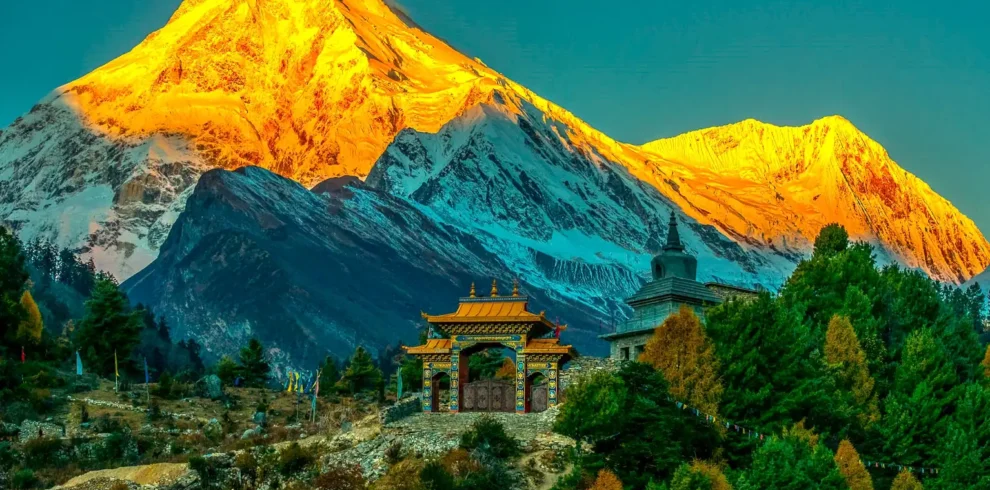
The optional side trip toward Manaslu Base Camp from Samagaon is weather dependent in June more than any other month. Clear views of Manaslu’s south face are possible, particularly in the early morning before cloud builds, but a fully overcast day is also a real possibility. Our guides will advise on the day’s conditions and help you decide whether the side trip is worthwhile on your particular acclimatization day.
Travel Insurance For High Altitude Trekking
Proper travel insurance covering high altitude trekking up to at least 5500 meters, including helicopter evacuation, is essential for any Manaslu Circuit trek, and arguably even more important during monsoon season when weather related delays and reduced visibility can complicate any emergency response. Read your policy carefully before departure and keep a copy of your policy number and emergency contacts with you on the trail.
Getting To The Trailhead
Most itineraries begin with a drive from Kathmandu to Machha Khola or Soti Khola, typically taking seven to nine hours depending on road conditions, which can be more variable in June due to monsoon related road damage or delays. Some itineraries use jeep transport further up the valley. On the return leg, most groups exit through Dharapani or Besisahar toward Kathmandu.
June Compared To Other Months
| Month | High Altitude Daytime | Crowd Level | Notable Feature |
|---|---|---|---|
| May | Minus 2 to 8 C | Moderate, thinning through month | Warmest pre monsoon month, afternoon cloud |
| June | 0 to 10 C | Low | Monsoon begins, frequent rain, leeches |
| July | Variable, often overcast | Very low | Wettest month, heavy consistent rain |
Pros And Cons Of Trekking In June
The advantages of a June trek are a genuinely quiet trail, easy teahouse availability, lush green forest scenery, and a real sense of having the mountain to yourself. Trekkers who prioritize solitude over guaranteed mountain views often find June rewarding in ways the busier months cannot match.
There is also a certain kind of relationship that develops with a trail this quiet. Without other groups filling every teahouse dining room, conversations with hosts and fellow travelers tend to run longer and go deeper. Guides have more time to share stories about the region, point out details of local life that get rushed past during busier months, and generally slow the whole experience down to a pace that many trekkers find surprisingly meaningful once they let go of any expectation that a Himalayan trek must always look like the postcard version.
The downsides are significant and worth stating plainly. Regular rain, reduced mountain visibility, muddy trail conditions, leeches in the lower forest, and a real chance of a weather related delay around the pass crossing all factor into a June trek. If seeing clear mountain views is your top priority, October, November or April are far better choices. If you are comfortable with variable weather and want a genuinely different, quieter experience of this route, June can still be a rewarding trek for the right trekker.
Photography In June
June offers a distinctly different photographic palette than the drier months, with intensely green forest, dramatic storm clouds, swollen waterfalls, and occasional striking light breaks between rain showers. Mountain views are less reliable, so a June trek rewards photographers who enjoy capturing mood and atmosphere over guaranteed blue sky peak shots.
Some of the most striking images our guides have seen from June departures come from exactly the kind of moment that a fair weather trekker would consider a disappointment, a brief clearing in the cloud that reveals a single ridge line or summit for a few minutes before closing back over. There is a genuine drama to mountain photography in this kind of weather that a consistently clear sky simply cannot offer, even if it means carrying your camera ready to shoot at a moment’s notice rather than composing a shot at leisure.
Wildlife And Nature Along The Trail
Monsoon rain brings the forest fully to life, with dense undergrowth, abundant birdlife, and frequent butterfly and insect activity throughout the lower and middle sections of the trail. This is also when leeches are most active, a reminder that the same rain that makes the forest so lush also brings its less welcome inhabitants out in force.
Amphibians and reptiles that are barely visible in the dry months become considerably more active in June as well, and trekkers who pay close attention to the forest floor and stream edges sometimes spot frogs, skinks and other small creatures that simply are not present, or are far less visible, during the drier trekking seasons. For anyone with an interest in general natural history rather than just mountain scenery, this month offers a genuinely different and interesting version of the same trail.
Health And Hygiene On The Trail
Basic hygiene practices become especially important in June’s warm, humid, wet conditions. Wash your hands regularly, carry hand sanitizer, and treat all drinking water either with a filter, purification tablets, or boiled water available at most teahouses. Keeping feet dry where possible helps prevent blisters and fungal issues that are more common during extended wet trekking, so packing an extra pair of dry socks to change into partway through the day is a small habit that makes a real difference. Foot care in general deserves a bit more attention on a June trek than it might on a dry season trip, since prolonged dampness is the main driver of the blisters and skin issues that occasionally cut a trek short, and a few minutes of care each evening goes a long way toward preventing problems before they start.
Village Life And Culture Along The Route
The Nubri and Tsum valleys carry strong Tibetan Buddhist traditions, visible in the mani walls, prayer wheels and chortens along the trek. Late June can overlap with Dumji festival preparations in some years, a summer celebration honoring Guru Rinpoche with cham dances and sand mandalas at village monasteries, though exact timing shifts with the lunar calendar. Walk clockwise around mani walls and stupas as is customary, and ask before photographing people or ceremonies.
With fewer trekkers passing through in June, teahouse hosts often have more time to chat, and clients who trek this month frequently mention feeling like more of a guest than a customer, simply because the pace of the season is so much slower for everyone involved, hosts included.
Some of our own guides mention that June is actually their favorite month to work, precisely because the trail slows down enough for them to reconnect with the villages and families along the route in a way that busier seasons do not really allow. That is not a universal view, and plenty of guides genuinely prefer the energy of peak season, but it is a perspective worth sharing since it reflects something real about how differently the same trail can feel depending entirely on when you choose to walk it.
Tips From Our Guides
Start walking early to make the most of the drier morning hours before afternoon rain typically arrives. Pack everything in dry bags inside your backpack, not just under a rain cover, since sustained rain finds its way in eventually. Check your legs and boots regularly for leeches in the lower forest sections. Change into dry clothes and socks as soon as you stop for the day. Build extra flexibility into your schedule around the pass crossing, and trust your guide’s judgment completely if a weather delay is recommended, since safety on Larkya La matters far more than sticking to a fixed itinerary.
Group Departures Versus Private Treks
Fixed group departures are uncommon in June given the low overall demand, so private treks are effectively the standard option this time of year. This actually works in your favor, since a private trek gives you full flexibility to adjust your schedule around weather, add a buffer day if needed, or shift your pace day to day based on trail conditions, all genuinely useful advantages during monsoon season.
Frequently Asked Questions About Trekking In June
Is June a good month for the Manaslu Circuit Trek? June works well for trekkers who prioritize solitude and do not mind variable weather, but it is not the right choice if guaranteed clear mountain views are your main priority. October, November and April are more reliable for weather.
Will I definitely see rain during a June trek? Yes, some rain during your trip is highly likely in June, typically in the afternoon or overnight, though full days of heavy rain are less common than in July or August.
Are leeches dangerous? No, leeches are not dangerous, though they are unpleasant. Standard precautions like gaiters, leech repellent, and regular checks manage the issue effectively.
Could bad weather delay the Larkya La crossing? Yes, this is more likely in June than during the drier months. We recommend building at least one buffer day into a June itinerary to accommodate a possible weather related delay.
Can solo trekkers get a permit in June 2026? Yes, following the March 2026 immigration update, the two person minimum for the Restricted Area Permit has been removed, so solo trekkers can obtain the permit provided they trek with a licensed guide through a registered agency.
Is the trail muddy in June? Yes, particularly in the lower forest sections, more so than any month outside of full monsoon season in July and August. Waterproof boots and gaiters are strongly recommended.
How many days should I budget for the trek? We recommend a fourteen day itinerary with at least one extra buffer day for a June departure, given the higher chance of a weather related delay around the pass crossing.
Booking A June Manaslu Circuit Trek With Next Trip Nepal
June is not the right month for every trekker, and we say that honestly rather than trying to sell every client on every possible departure date. If reliable clear mountain views matter most to you, we will happily point you toward October, November or April instead. But for trekkers who want a genuinely quiet trail, do not mind variable weather, and are drawn to the lush green character of the monsoon forest, June can be a rewarding and memorable trek.
Our guides know how to manage the specific challenges of a monsoon season trek, from timing the pass crossing around weather windows to handling the practical realities of leeches and mud on the lower trail. If you are considering a June departure, reach out to our team and we will walk you through exactly what to expect, help you pack appropriately, and build an itinerary with the flexibility this particular month genuinely requires.
We would rather turn a client away from a June booking than let them arrive with the wrong expectations and leave disappointed, and honestly, most conversations we have about this month end with the client either fully embracing what June offers or deciding to shift their dates to a more reliable window instead. Both outcomes are fine with us. What matters is that whoever does walk this trail in June does so with clear eyes about what they are signing up for, and our experience is that the trekkers who do exactly that tend to come back with some of the most memorable stories of anyone we work with all year.
Explore Other Months
Curious how the Manaslu Circuit Trek compares at a different time of year? Read our guide to trekking Manaslu in May or trekking Manaslu in July, or see our full Manaslu Circuit Trek overview for general route details, difficulty and highlights.