If you are researching the Everest Base Camp trek with helicopter return, the first real question is almost always the price. Quotes online range anywhere from under 2,000 dollars to well over 5,000 dollars for what looks like the same trip, and that gap makes it hard to know what you should actually be paying. This guide breaks the real cost down piece by piece, based on the package we run at Next Trip Nepal, so you know exactly what you are paying for before you book, not after. We cover the headline price, every included service, every excluded expense, how permits and government fees are calculated, how helicopter pricing actually works in the Khumbu region, and the realistic extra spending money you should carry so nothing catches you off guard once you are already on the trail.
What The Everest Base Camp Helicopter Return Trek Actually Costs
Our 10 day Everest Base Camp trek with helicopter return is priced at 2,100 dollars per person for a solo booking, with a 13 percent group discount bringing the per person cost down to 1,835 dollars when you book as part of a group. That price is not a teaser rate with a long list of extras bolted on afterward. It is the number you actually pay for the full package, and you can see exactly what it includes below.
You do not need to send any advance payment to confirm your booking with us either. We confirm your trip first and you pay once you have arrived in Nepal, which removes the biggest source of anxiety trekkers feel when comparing quotes from companies they have never dealt with before. This pricing structure has stayed consistent for several seasons now, and it reflects what it genuinely costs to run a safe, fully supported trip in the Khumbu region with a real helicopter operator, licensed guides and proper insurance for our staff, rather than a stripped down version of the trip designed purely to win the lowest quote on a comparison page.
How Booking And Payment Actually Works
The process starts with you sending us your preferred dates and group size, either through our website, by email or through a messaging app, whichever is easiest for you. We check helicopter and Lukla flight availability for those dates and confirm your booking in writing, usually within a day. At this stage we do not ask for a deposit or any advance payment, which is different from how many other agencies operate. You simply travel to Kathmandu as planned, meet your guide in person, and settle payment once you are satisfied that everything is exactly as described.
Payment itself is normally made in cash, in either US dollars or Nepali rupees, once you land in Kathmandu and before you fly to Lukla. Some trekkers ask about paying by card or bank transfer in advance, and while this can be arranged on request, most of our guests prefer the pay on arrival model precisely because it lets them verify the guide, the itinerary and the paperwork are all real before any money changes hands. If your plans change before your trip, talk to us directly rather than assuming a strict cancellation penalty, since we handle date changes and rescheduling case by case rather than through a rigid, one size fits all policy.
What Is Included In The Price
The 2,100 dollar package includes your Kathmandu to Lukla to Kathmandu flights, the helicopter return flight from Gorakshep back to Kathmandu, 2 nights in a Kathmandu hotel, all teahouse accommodation on the trail, three meals a day throughout the trek, an English speaking guide, a porter shared between two trekkers, all required permits, basic first aid supplies carried by your guide, loaned equipment such as a sleeping bag and down jacket if you need them, and arrangements for emergency evacuation if it becomes necessary.
That is a genuinely comprehensive list, and it is worth comparing item by item against any other quote you receive, because some companies leave out the porter, the loaned gear, or the Kathmandu hotel nights and then present a lower headline price that ends up costing more once you add those items back in. It is also worth asking whether a quoted price includes airport transfers in Kathmandu, since walking out of the arrivals hall and needing to negotiate a taxi on your first night in a new country is a small but avoidable stress that a properly organized package should remove for you.
What Is Not Included In The Price
Your Nepal visa is not included, and it typically runs between 30 and 125 dollars depending on how many days you need, paid on arrival at Kathmandu airport or in advance online. Travel and medical insurance is not included either, and we strongly recommend a policy that covers high altitude trekking and helicopter evacuation specifically, not just general travel insurance. Your international flights into and out of Nepal are also excluded, along with personal spending such as bottled drinks, hot showers on the trail which usually run 2 to 4 dollars, device charging which is typically 1 to 2 dollars per charge, tips for your guide and porter, and any excess baggage over the 15kg trekking limit.
A few guests also ask about optional extras that sit outside the core package, such as a private room upgrade in Kathmandu, a spa or massage after the trek, souvenir shopping in Thamel, or an extra day exploring Kathmandu’s Durbar Square, Boudhanath Stupa or Swayambhunath before or after the trek. None of these are required, and none are hidden fees, but it is worth setting aside a little extra cash if you want to enjoy Kathmandu properly rather than rushing straight through it.
Where Your Money Actually Goes On This Trek
Understanding the cost breakdown helps explain why a genuine helicopter return package cannot be priced much lower than ours without cutting something important. The domestic flights to and from Lukla alone are a fixed cost set by the airlines. The helicopter flight from Gorakshep to Kathmandu is the single biggest line item in the entire package, since a helicopter at that altitude burns fuel at a rate that makes the flight expensive regardless of which company operates it. Permits are fixed government fees. Your guide and porter’s daily wages, meals and insurance are a real ongoing cost across the full 10 days, and teahouse accommodation and meals add up across 8 nights on the trail.
When you see a quote that is dramatically cheaper than 1,800 to 2,100 dollars for a genuine helicopter return trek, it is worth asking directly what has been left out, because none of the costs above can realistically be avoided on a legitimate trip. As a rough guide, roughly a third of the total package price goes toward the helicopter flight itself, another meaningful portion covers the Lukla flights and teahouse accommodation and meals across the trek, a smaller share covers permits and government fees, and the remainder covers your guide and porter’s wages, insurance, equipment loans and our own operating costs as a licensed trekking agency based in Kathmandu.
Who Actually Sets Helicopter Flight Prices In The Khumbu
Helicopter operations in Nepal are regulated by the Civil Aviation Authority of Nepal, commonly referred to as CAAN, which sets safety standards and oversees licensing for every operator flying in mountain airspace, including the route between Gorakshep and Kathmandu. Fuel prices, maintenance costs for aircraft that operate at extreme altitude, pilot training requirements and insurance all factor into what an operator charges per flight, and these costs are broadly similar across every legitimate operator working in the Everest region. This is one of the main reasons genuine helicopter return prices tend to cluster within a fairly narrow range once you strip away marketing discounts and bundled add ons, rather than varying wildly from company to company the way land based trekking costs sometimes do.
A handful of helicopter operators run scheduled and chartered flights throughout the Khumbu, and we work with established operators who maintain strong safety records rather than the cheapest option available on a given week. If a quote for this trip looks unusually low, it is worth asking directly which helicopter company operates the flight and whether that operator is currently licensed and active in the region, since this single question tends to reveal a lot about how seriously an agency takes safety versus price.
Guide And Porter Wages And Why They Matter For Your Cost
The Trekking Agencies’ Association of Nepal, generally known as TAAN, along with the Nepal Mountaineering Association, publishes guidance on minimum daily wages, insurance coverage and working conditions for guides and porters. A legitimate agency pays its staff a fair daily wage, provides them with proper insurance in case of illness, injury or worse at altitude, and equips them with appropriate clothing and gear for the conditions they are working in. This is not a minor line item. It is a meaningful part of what separates a reputable trekking agency from one that keeps its headline price low by underpaying or under insuring the people who make your trip possible.
When you book with us, your guide and porter’s wages, meals, accommodation and insurance while on the trek are already built into your package price. This matters for your own experience too, since a guide who is properly paid and treated well tends to be a more attentive, motivated guide, and a porter who is not carrying an unsafe overload is a porter who stays healthy enough to support your entire group for the full 10 days rather than getting injured partway through. If you want to tip beyond the wages already covered in your package, that is a separate and entirely optional gesture, covered in more detail further down this guide.
Permit Costs Explained
Three separate permits are required for this trek, and all three are included in our package price. The Sagarmatha National Park entry permit costs NPR 3,000, or roughly 22 dollars, and is checked at the park entrance near Monjo as you climb toward Namche Bazaar. The Khumbu Pasang Lhamu Rural Municipality permit costs NPR 2,000, or roughly 15 dollars, and this replaced the old TIMS card requirement specifically for the Khumbu region. A TIMS card itself still costs around 20 dollars depending on how your trip is arranged. Together these permits add up to close to 60 dollars per person, and we handle the paperwork for all of them as part of your booking, so you never need to queue at a permit office yourself.
These permit fees are government revenue that goes directly toward maintaining trails, funding conservation work inside Sagarmatha National Park, which is also a UNESCO World Heritage Site, and supporting the local Sherpa communities who live and work throughout the Khumbu. Paying them properly through a licensed agency, rather than trying to skip them, is both a legal requirement and a fairly small contribution toward keeping this region protected for future trekkers.
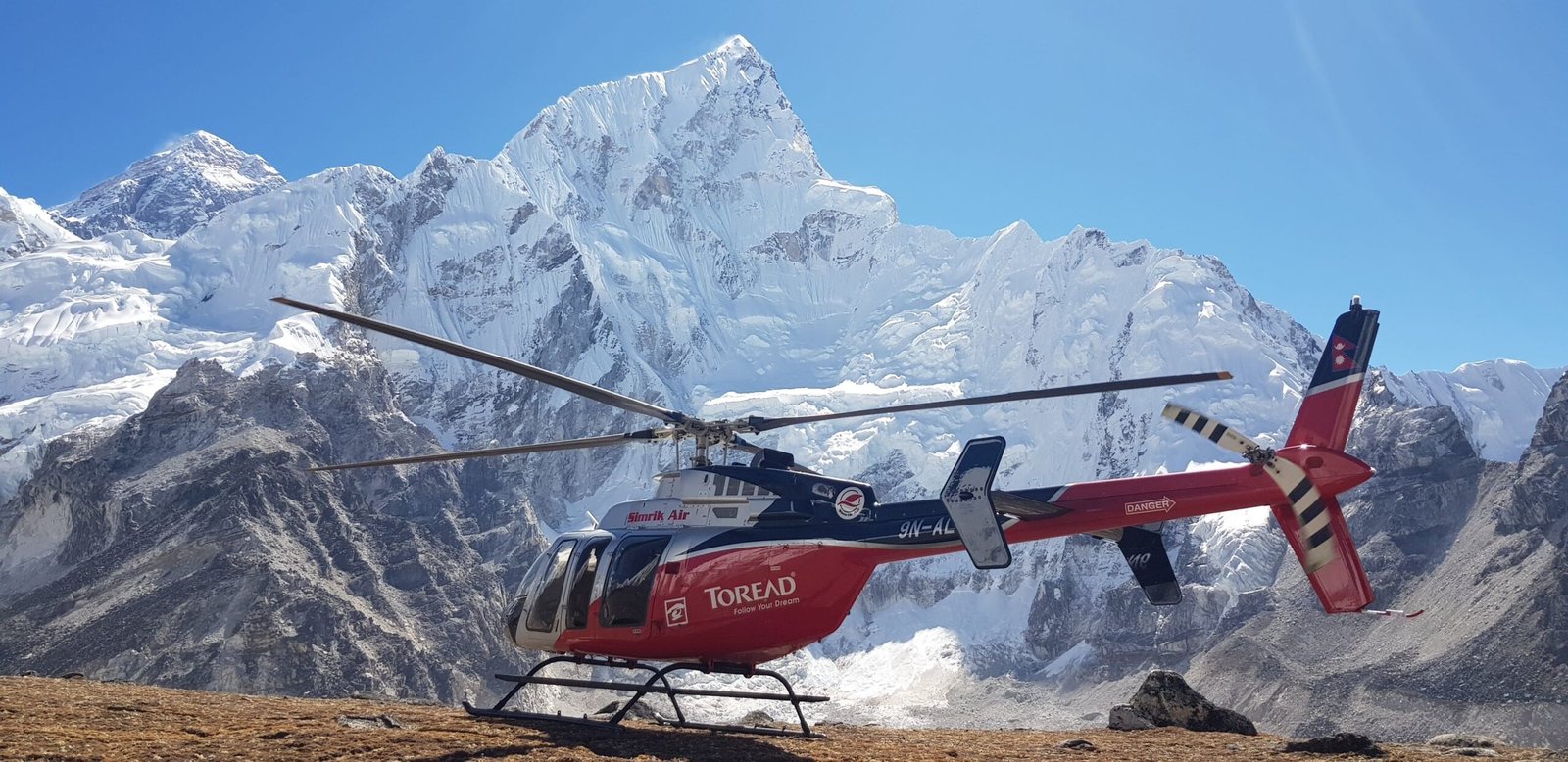
Our standard package price is based on a shared helicopter, which typically carries 4 to 5 passengers per flight from Gorakshep to Kathmandu. This is the most cost effective way to fly, and it is how the large majority of our guests travel. If you would prefer a private helicopter, either for a smaller group, more flexible timing, or simply the experience of flying without other passengers, this is available at an additional charge, and we can quote that separately once we know your group size and dates. A private flight generally costs several times more than a shared seat, since you are covering the full flight cost yourself rather than splitting it across passengers.
Some trekkers choose a private helicopter specifically so they can add a short scenic detour, weather and flight regulations permitting, or so that a family or small group can fly together on their own schedule rather than being grouped with strangers. If a flexible departure time genuinely matters more to you than saving money, it is worth discussing a private charter with us directly, since we can often combine it with other travelers heading the same direction to bring the per person cost down closer to the shared rate.
Travel Insurance Costs And What Your Policy Actually Needs To Cover
Travel insurance is not included in our package, but it is not optional in any practical sense either. A policy suited to this specific trip typically costs somewhere between 40 and 150 dollars depending on your home country, your age, the length of your trip and the insurer, and it is one of the smallest expenses on this entire list relative to the protection it provides. The detail that catches people out is altitude coverage. Many standard travel insurance policies cap coverage at 3,000 or 4,000 meters, which is far below Everest Base Camp at 5,364 meters and Kala Patthar at 5,545 meters, so a generic policy bought as an afterthought may not actually cover you once you are above Namche Bazaar.
Look specifically for a policy that names high altitude trekking up to at least 6,000 meters, helicopter evacuation, and coverage for weather related trip delays. Several insurers who specialize in adventure travel and trekking, including providers commonly used by Everest region trekkers, offer exactly this combination for a reasonable premium. Read the policy wording carefully rather than assuming the word insurance automatically means you are covered for a helicopter evacuation from Gorakshep, since this is precisely the scenario a cheap, generic policy is most likely to exclude or cap at a level that will not actually cover the real cost.
Currency, Payment Methods And Tipping In Nepal
Nepal runs largely on cash once you leave the main tourist areas of Kathmandu, and this becomes even more true once you are on the trail in the Khumbu. ATMs exist in Kathmandu and in Namche Bazaar, but they are unreliable above Namche, and card payments are essentially unavailable for the rest of the trek. We recommend carrying enough US dollars or Nepali rupees to cover your package payment plus a buffer for personal spending, tips and any unexpected extra nights. US dollars are widely accepted for larger payments and can be exchanged for rupees in Kathmandu at official exchange counters, which generally offer better rates than exchanging at the airport.
Tipping is an established part of trekking culture in Nepal rather than an awkward foreign custom, and guides and porters genuinely rely on it as part of their income. A commonly used guideline is somewhere between 10 and 15 dollars per trekker per day, split between your guide and porter team, though the exact amount is entirely your choice and should reflect the service you received. Tipping is usually handled as a group gesture on your final evening together, often presented in an envelope, rather than as daily cash handed over after each stage of the walk.
Add On Experiences And What They Actually Cost
A handful of optional upgrades come up regularly enough that they are worth pricing out in advance. An extra night in Kathmandu, whether before your flight to Lukla to settle in properly or after your helicopter return to decompress, typically costs between 20 and 60 dollars depending on the hotel standard you choose. A stop at the Everest View Hotel near Namche Bazaar, one of the highest placed hotels in the world with a direct view of Everest from its terrace, can sometimes be arranged as a lunch stop rather than an overnight stay, and this is usually a modest add on rather than a major cost. Professional photography or drone use inside Sagarmatha National Park may require a small additional permit fee, which we can arrange for you if this matters for your trip.
None of these add ons are necessary to have a complete, satisfying version of this trek, and our standard 10 day package is genuinely a full experience on its own. They are simply worth knowing about in case you want to personalize your trip a little further, and we are happy to build any of them into your itinerary during the planning stage rather than trying to arrange them last minute once you are already on the trail.
Extra Costs You Should Budget For
Beyond the excluded items already listed, it is smart to carry some extra cash for a few realistic scenarios. Weather delays sometimes push your helicopter flight back a day, and any additional teahouse night caused by weather is at your own expense, though this is relatively rare during the main autumn and spring seasons. Wifi access at higher teahouses often costs a few dollars per session. Bottled or boiled water costs more the higher you climb, generally between 1 and 4 dollars per liter above Namche Bazaar. Snacks such as chocolate bars, biscuits and instant noodles are widely available in teahouses but priced higher than in Kathmandu, reflecting the cost of carrying supplies up the trail by porter or yak. As a practical daily budget for this kind of personal spending, most trekkers find 10 to 20 dollars a day comfortable, more if you shower and charge devices daily, less if you are deliberately economical.
Tipping your guide and porter is expected in Nepal’s trekking culture, and a reasonable budget is somewhere between 10 and 15 dollars per trekker per day split between the team, though this is entirely your choice, as covered in more detail above.
A Realistic Cost Example For Two Different Trekkers
It can help to see the numbers laid out for two different styles of traveler. A budget conscious solo trekker booking our standard package at 2,100 dollars, paying roughly 50 dollars for a visa, 100 dollars for a solid travel insurance policy, and keeping personal spending modest at around 12 dollars a day across 10 days plus a 100 dollar tip for the team, ends up spending close to 2,470 dollars all in, not counting international flights. A trekker who wants more comfort, joining as part of a group to unlock the 1,835 dollar group rate, paying 100 dollars for a visa covering a longer stay, 130 dollars for a more comprehensive insurance policy, spending closer to 20 dollars a day on hot showers, wifi and extra snacks, and tipping generously at 150 dollars, ends up closer to 2,415 dollars, actually landing near the same total despite starting from a lower package price, simply because of how the group discount and personal spending choices interact.
The point of this example is not that everyone spends exactly this amount, since your own visa length, insurance provider and personal habits will shift the numbers, but that a genuine total budget for this trip, including everything outside the package, comfortably lands somewhere between 2,300 and 2,700 dollars per person once you account for the real extras rather than just the headline package price.
How This Compares To A Classic Everest Base Camp Trek
A classic 12 to 14 day Everest Base Camp trek that walks both directions typically costs somewhat less than the helicopter return version, since it removes the helicopter flight entirely. The tradeoff is 3 to 4 additional days on the trail walking back down through the same villages you already passed through on the way up. Many of our guests choose the helicopter return specifically because it saves those extra walking days, reduces the cumulative strain on your knees during the descent, and turns your final morning into a scenic flight over the Khumbu region rather than another long day of walking downhill. Whether the price difference is worth it usually comes down to how much vacation time you have and how your knees are feeling by day 9.
There is also a time value worth putting a number on. If 3 to 4 extra vacation days cost you real money in lost work time, or if flights home are more expensive on short notice because you need to add days to your trip, the helicopter return version can end up being the more economical overall choice even though its sticker price is higher, once your full travel costs are considered rather than just the trekking package itself.
Cancellation, Rescheduling And Refund Policy
Because we do not collect advance payment, cancelling or rescheduling before your trip begins carries no financial penalty from us, which is a genuine practical advantage over agencies that require a non refundable deposit months in advance. If your plans change while you are already on the trail, such as choosing to fly out earlier due to weather, health or personal reasons, we work with you directly to adjust the plan rather than enforcing a fixed penalty schedule. The one cost that is genuinely outside anyone’s control is a non refundable domestic flight ticket once it has been issued, since Lukla flights and helicopter charters are booked with airlines and operators who have their own policies, and we are upfront about this at the time of booking so there are no surprises.
Common Pricing Scams And Red Flags To Watch For
Beyond the basic comparison of what is included, a few specific red flags come up repeatedly when trekkers get burned by a cheap quote. Watch for agencies that quote a helicopter return price without naming the actual helicopter operator, since this can mean the flight is not actually confirmed and may be substituted with a walking descent at the last minute if a helicopter cannot be arranged. Watch for permit costs listed as payable separately on arrival rather than included in your quoted price, since this is a common way headline prices are kept artificially low. Watch for a porter or guide who is clearly not being paid or equipped properly, which is both an ethical problem and a sign the agency is cutting corners elsewhere too, possibly including safety standards you cannot easily see from a brochure.
Finally, be cautious of any agency demanding a large non refundable deposit before providing a detailed, written itinerary. A legitimate agency is happy to answer detailed questions about guides, permits, accommodation standards and the helicopter operator before you commit any money at all.
How The Season You Travel In Affects Your Total Cost
Our package price stays the same year round, but the season you choose can still shift your total spending in smaller ways. Autumn and spring are peak season, which means teahouses along the route are busier, and while room rates do not change dramatically, some of the most popular lodges near Namche Bazaar, Tengboche and Dingboche can sell out on their best rooms, occasionally pushing a trekker toward a slightly pricier option nearby. Winter trekking, from December through February, tends to mean quieter teahouses and sometimes friendlier negotiation on small extras like wifi or hot water, simply because there are fewer trekkers competing for the same services, though you will likely spend a little more on hot drinks and heating since teahouse dining rooms rely on a central stove that guests often tip toward keeping well stocked with fuel.
Monsoon season, from June through August, is the one period where we generally do not recommend this specific itinerary, largely because of flight reliability rather than cost, and this is covered in full detail in our separate guide to weather and helicopter delays. If your travel dates are flexible, booking in October, November, March or April tends to give you the smoothest experience for the price you are paying, since flight delays that add unplanned teahouse nights are less likely during these stable weather windows.
How To Avoid Being Overcharged Or Undercharged
The safest way to compare quotes is to ask every company for a full written breakdown of exactly what is included, not just a single headline number. Confirm whether the Kathmandu hotel nights are included, whether the porter is included or an optional extra, whether the helicopter is shared or private in the quoted price, and whether permits are included or billed separately on arrival. A company that will not confirm no advance payment and instead asks for a large deposit before you have even seen a detailed itinerary is worth being cautious about, regardless of the price they quote.
Frequently Asked Questions About Everest Base Camp Helicopter Return Cost
How much does the Everest Base Camp trek with helicopter return cost. Our package is 2,100 dollars per person solo, or 1,835 dollars per person with the 13 percent group discount, covering flights, helicopter return, accommodation, meals, guide, porter and permits.
Do I need to pay a deposit to book. No. We confirm your booking first and you pay after you arrive in Nepal, with no advance payment required.
Is the helicopter flight shared or private. The standard package uses a shared helicopter carrying 4 to 5 passengers. A private helicopter is available for an additional charge if you prefer it.
What permits do I need and are they included. You need the Sagarmatha National Park permit, the Khumbu Pasang Lhamu Rural Municipality permit and a TIMS card, all of which are included in the package price and arranged for you.
What happens to the cost if the helicopter is delayed by weather. Your flight is rescheduled as soon as conditions allow. Any extra teahouse night caused by a weather delay is at your own expense, which is why travel insurance covering weather delays is worth having.
Is the helicopter return trek cheaper or more expensive than the classic trek. It generally costs somewhat more than a classic walking only trek because of the helicopter flight, but it saves 3 to 4 days on the trail, which many trekkers find worth the difference.
How much should I budget for tipping. Around 10 to 15 dollars per trekker per day split between your guide and porter is a commonly used guideline, though the final amount is entirely your choice.
Does travel insurance really need to mention high altitude coverage specifically. Yes. Many standard policies cap coverage well below 5,364 meters, which is the altitude of Everest Base Camp, so a policy that does not specifically name high altitude trekking and helicopter evacuation may not actually pay out if you need it.
Can I pay by card instead of cash. Cash, in US dollars or Nepali rupees, is the standard way to settle your package on arrival, since card payment infrastructure is unreliable once you are outside Kathmandu. Card or bank transfer payment can be arranged in advance on request.
What is a realistic total budget including everything outside the package. Once you add a visa, proper travel insurance, personal spending on the trail and a reasonable tip, most trekkers land somewhere between 2,300 and 2,700 dollars total, not including international flights.
Book Your Everest Base Camp Helicopter Return Trek With Confidence
Now that you know exactly what you are paying for, you can compare quotes with real confidence instead of guessing which company is cutting corners. If you want the full breakdown of why trekkers choose us specifically for this trip, read our guide on the best Everest Base Camp trek with helicopter return company, or go straight to the Everest Base Camp Trek With Helicopter Return package page to check current dates and reserve your spot with no advance payment required.