Nepal does not belong only to the young or the ultrafit. The country that hosts the world’s highest peaks also contains some of the most accessible, most rewarding trekking routes on the planet — routes where the views are extraordinary, the teahouses are warm and welcoming, the trails are well-established, and the maximum altitude stays within a range that older trekkers can reach safely with proper preparation and the right pacing.
The persistent image of Nepal trekking as something that demands a 25-year-old’s knees and lungs keeps too many older travelers from experiencing something genuinely life-changing. The three routes covered in this guide — Ghorepani Poon Hill Trek, Langtang Valley Trek, and the Everest View Trek — are not consolation prizes for trekkers who cannot manage Everest Base Camp. They are outstanding experiences in their own right, each offering something the more demanding routes cannot: a pace that allows you to actually absorb where you are, terrain that rewards steady movement over speed, and mountain scenery that competes with anything in the world.
Why Nepal Works Exceptionally Well for Older Trekkers
Nepal’s teahouse trekking infrastructure is one of the most developed in the world. The main routes have guesthouses every few kilometres, meaning you rarely carry more than a daypack. Porters are affordable, professional, and completely normal on these routes — using one is not a sign of weakness, it is a sign of good judgment that lets you save your energy for the walking itself. A local guide adds safety, companionship, and the kind of cultural context that transforms a walk through a village into an understanding of how people actually live at altitude.
The medical infrastructure on popular routes has also improved significantly. Namche Bazaar and Manang have health posts specifically set up for trekkers. A helicopter evacuation from anywhere along these three routes to Kathmandu is possible within hours, and good travel insurance covers it at a reasonable cost. The combination of good infrastructure, experienced local guides, and comprehensive rescue options makes Nepal’s main routes significantly safer than remote trekking in many other parts of the world.
None of these three treks requires technical climbing skills, ropes, ice axes, or previous high-altitude experience. They require a reasonable base of cardiovascular fitness, a willingness to walk 4 to 6 hours per day on uneven mountain terrain, and the patience to go slowly and let acclimatization happen at the pace your body needs.
| Trek | Max Altitude | Duration | Daily Walking | Difficulty |
|---|---|---|---|---|
| Ghorepani Poon Hill | 3,210m | 4–7 days | 4–6 hours | Easy to Moderate |
| Langtang Valley | 3,870m | 7–10 days | 5–7 hours | Moderate |
| Everest View Trek | 3,880m | 5–7 days | 4–6 hours | Easy to Moderate |
Trek 1: Ghorepani Poon Hill Trek
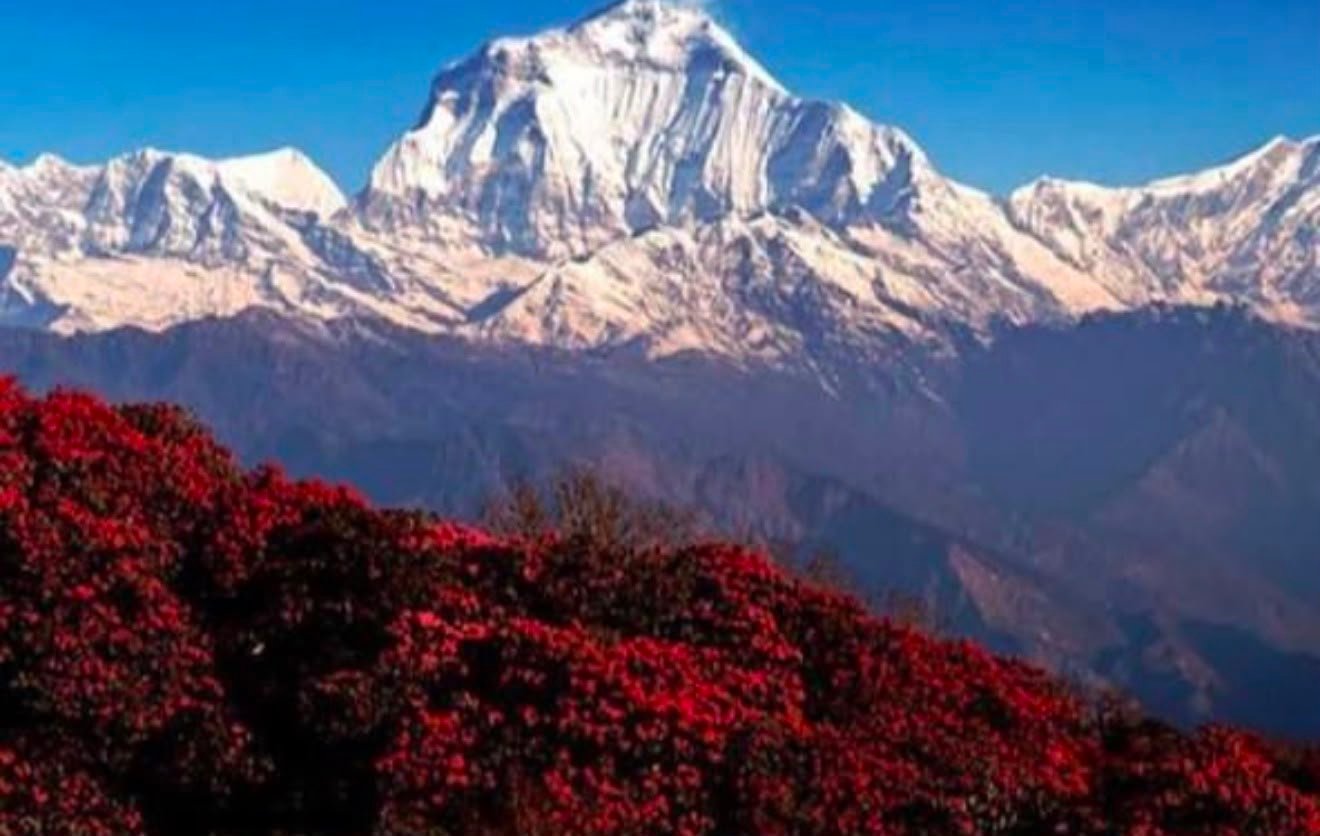
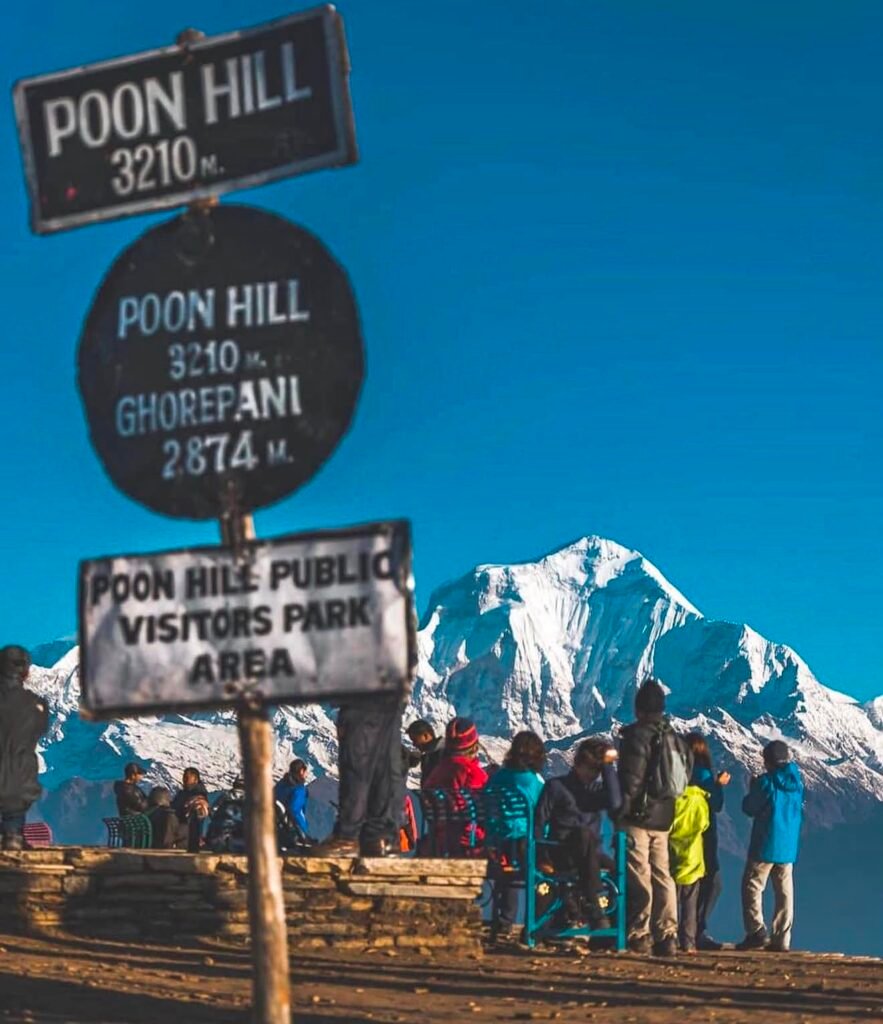
If you want to put one image in someone’s mind that convinces them Nepal trekking is possible for older adults, it is this: a ridge at 3,210 metres just before dawn, surrounded by other trekkers of every age, watching the sun rise over Dhaulagiri, Annapurna South, Hiunchuli, and Machhapuchhre in a panorama that turns the entire sky from deep blue to gold in about twenty minutes. Poon Hill is that ridge. The Ghorepani Poon Hill Trek is the route that gets you there without requiring the extreme logistics or physical output of more demanding routes.
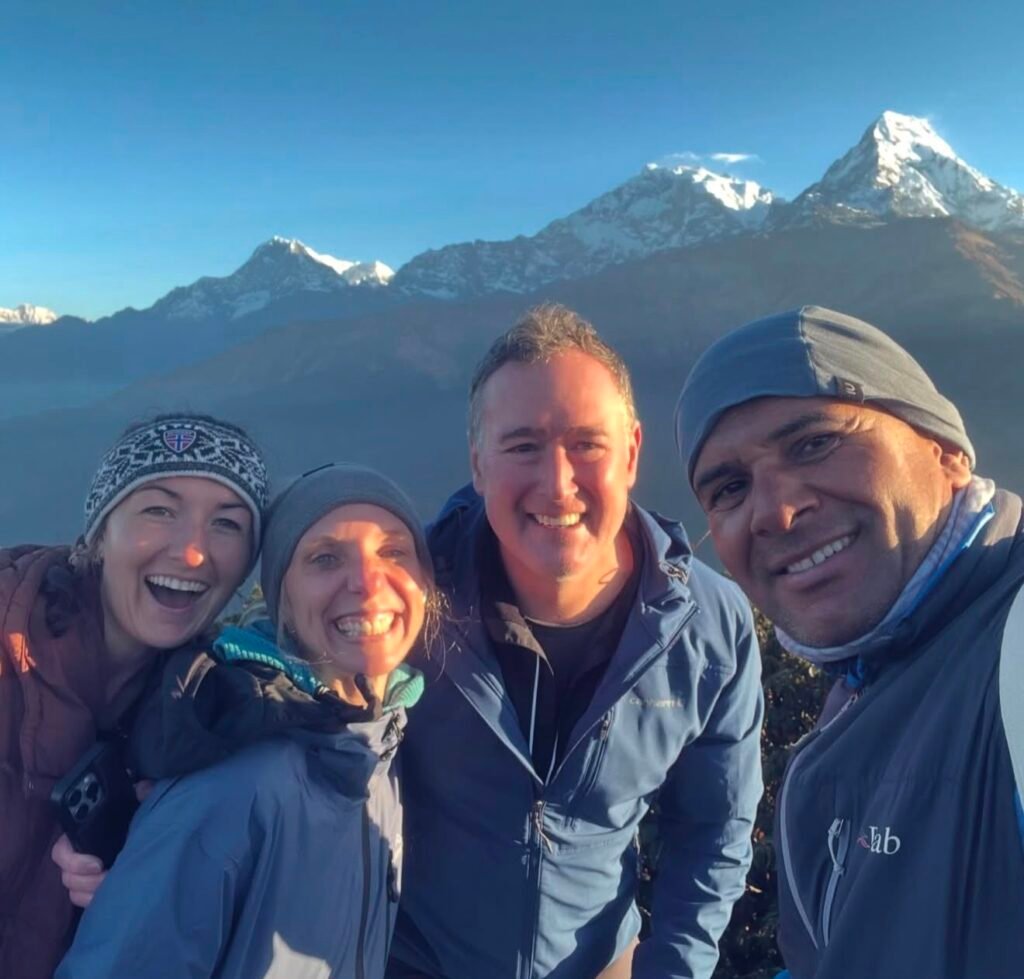
This is not a beginner’s walk in a park — it is a genuine mountain trek that takes you through rhododendron forests, traditional Gurung and Magar villages, stone-paved trails, and steep staircases that will test your legs and lungs. But its maximum altitude of 3,210 meters, its short daily walking stages, its excellent teahouse infrastructure, and its accessibility from Pokhara (just two hours by road from Kathmandu by air) make it the single most popular choice for older trekkers visiting Nepal for the first time.
Ghorepani Poon Hill Trek at a Glance
Why Ghorepani Poon Hill Suits Older Trekkers
The altitude is the single most important reason. At a maximum of 3,210 meters, Poon Hill stays well below the threshold where altitude sickness becomes a serious concern for most healthy older adults. Symptoms of altitude sickness typically become noticeable above 3,000 meters for acclimatization-sensitive individuals, but the short exposure time at Poon Hill’s altitude — you are only at the viewpoint for an hour or two in the early morning before descending — means the risk is very low compared to routes that keep you sleeping above 4,000 metres for multiple nights.
The trail itself is almost entirely on well-paved stone paths maintained by the Annapurna Conservation Area Project. There are no river crossings requiring balance on narrow logs, no glacier sections, and no exposed ridgelines where a misstep has serious consequences. The terrain is challenging in the way that long staircase sections always are — Tikhedhunga to Ghorepani involves significant stone stair climbing — but it is the kind of challenge that steady, patient movement addresses, not technical skill.
The cultural experience along the route is also deeply rewarding, resonating particularly with older travelers who have lived enough of life to appreciate what they are seeing. The stone villages of Tikhedhunga, Ulleri, Banthanti, and Ghorepani are lived-in, functioning communities where life operates much as it has for centuries. Children walk to school in their uniforms on the same paths you use. Farmers carry loads that would challenge professional porters. Older Gurung and Magar women sit outside tea shops and will happily sit for a photo if you ask through your guide. This is a living culture, not a staged experience.
The Route Day by Day
The standard 5-day itinerary works well for older trekkers with a moderate fitness level. Those who prefer even shorter stages or want more time for rest can extend it to 6 or 7 days by splitting some of the longer walking days.
Day 1: Pokhara to Tikhedhunga (1,540m) — Drive from Pokhara to Nayapul (about 1.5 hours), then walk 2 to 3 hours to Tikhedhunga. This is a gentle introduction day: flat to mildly undulating terrain through riverside paths and small villages. Arrive by midday. Use the afternoon to rest and adjust.
Day 2: Tikhedhunga to Ghorepani (2,860m) — This is the most physically demanding day on the route. The climb from Tikhedhunga to Ulleri via the famous stone staircase (around 3,000 steps over 2 kilometers) takes 1.5 to 2 hours and is the hardest single section on the entire trek. Take your time. There is no prize for speed. After Ulleri, the trail continues through rhododendron forest to Nangethanti and then Ghorepani. Total walking time: 5 to 6 hours. If this feels like too much, split it by overnighting at Ulleri or Banthanti.
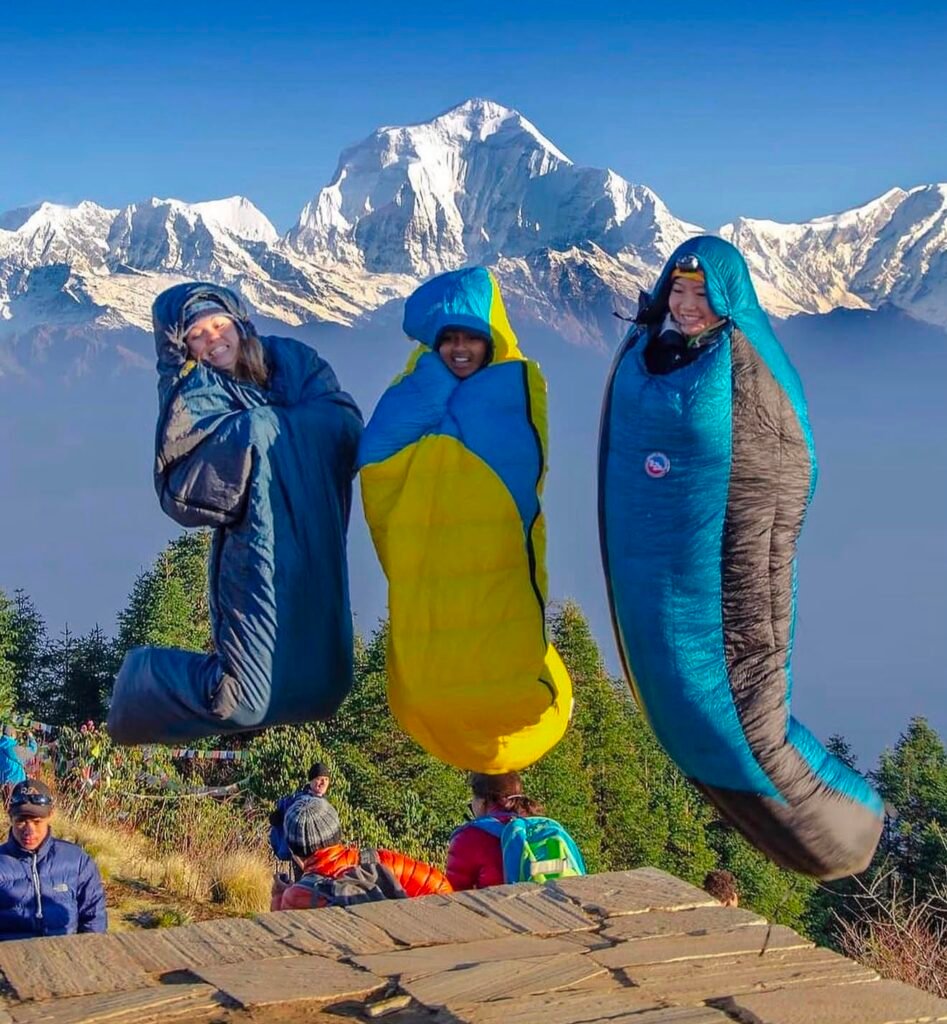
Day 3: Poon Hill sunrise, then to Tadapani (2,590m) — Rise at 4 am to hike 45 minutes to the Poon Hill viewpoint (3,210m) for sunrise. This is the centerpiece of the entire trek. On a clear morning, the panorama of Dhaulagiri (8,167m), Annapurna South (7,219m), Annapurna I (8,091m), Hiunchuli (6,441m), and Machhapuchhre (6,993m) laid out across the horizon is one of the finest views in all of Nepal trekking. Return to Ghorepani for breakfast, then continue to Tadapani through dense rhododendron forest. Walking time: 5 to 6 hours total, including the Poon Hill predawn climb.
Day 4: Tadapani to Chomrong or Ghandruk (1,940m) — Depending on your chosen return route, you descend through forest to Chomrong (the gateway to the Annapurna Sanctuary) or divert to the large Gurung village of Ghandruk, which has excellent mountain views and a Gurung culture museum worth visiting. Walking time: 4 to 5 hours.
Day 5: Ghandruk or Chomrong to Nayapul, drive to Pokhara — The final descent to the road head at Nayapul takes 3 to 4 hours. Drive back to Pokhara. The trek ends with an evening lakeside in one of Nepal’s most enjoyable cities.
Best Season for Older Trekkers on Poon Hill
March and April are the peak months for rhododendron blooms on this route. The forests between Tikhedhunga and Ghorepani are some of the finest rhododendron forests in Asia — trees that grow to 15 meters, heavy with deep red, pink, and white flowers in March, fading to fresh green by late April. If you can be on this route in mid-March, the combination of rhododendron bloom and clear mountain views is outstanding.
October and November deliver the clearest skies and most reliable views of the year. The post-monsoon air is washed clean of haze, the mountains are freshly dusted with snow, and the days are warm enough to be comfortable without being hot. November is colder in the evenings but drier and very clear. Both October and November are excellent choices for older trekkers who prioritise reliable mountain views over floral colour.
Accommodation and Cost
Teahouses on the Poon Hill circuit range from basic rooms with shared bathrooms at smaller villages to comfortable guesthouses with private rooms and hot showers at Ghorepani and Ghandruk. In 2026, expect to pay NPR 400 to 800 per night for a room and NPR 400 to 800 per meal at the larger villages. The total cost for a 5-day trek with a guide (USD 25 to 35 per day), a porter (USD 18 to 25 per day), permits (approximately USD 30 total), and teahouses runs between USD 400 and USD 700, depending on accommodation choices. This is one of the most affordable high-quality trekking experiences in the world.
Trek 2: Langtang Valley Trek
The Langtang Valley is Nepal’s closest Himalayan trekking destination to Kathmandu — just 7 hours by road or a short drive north of the capital — and it is dramatically underused by international trekkers compared to the Annapurna and Khumbu regions. That relative quiet is one of its greatest assets for older travelers. The trail is well-maintained but nowhere near as crowded as Poon Hill or the Everest region. The cultural experience is distinctly Tamang and Tibetan in character, with prayer flags, mani walls, and monasteries that have a different feel from the Sherpa culture of the Khumbu.
The maximum altitude for a standard Langtang Valley Trek is 3,870 meters at Kyanjin Gompa, the ancient monastery settlement at the head of the valley. This is a meaningful altitude — enough that proper acclimatization matters and the extra rest day at Kyanjin Gompa is genuinely necessary, not optional — but it is also the altitude of many trekking routes in Europe and South America that older adults complete without difficulty. The route does not require a flight, which removes the Lukla landing anxiety that some older travelers feel. You drive in from Kathmandu and walk from the road head at Syabrubesi (1,460m).
Langtang Valley Trek at a Glance
Why Langtang Valley Suits Older Trekkers
The Langtang Valley Trek offers something that few routes at comparable altitude can match: a gradual, consistent elevation gain that gives your body the time it needs to adjust. You start at Syabrubesi at 1,460 meters and gain altitude steadily over 4 to 5 days before reaching Kyanjin Gompa at 3,870 meters. There is no day when you gain more than 800 to 1,000 meters of elevation. This natural pacing is exactly what altitude acclimatization requires, and it means the chance of altitude sickness on a well-paced Langtang itinerary is significantly lower than on routes where you fly directly to 2,840 meters (Lukla) and then gain altitude rapidly over just a few days.
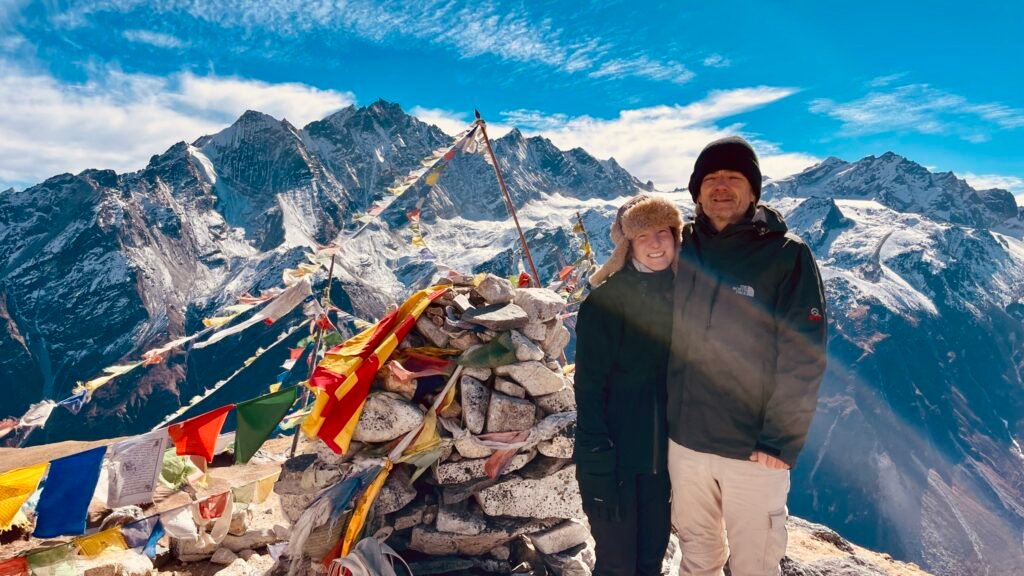
The valley itself is one of the most beautiful in the Himalaya. The Langtang River runs through a wide glacial valley flanked by enormous peaks: Langtang Lirung (7,227m), Gangchenpo (6,388m), and Dorje Lakpa (6,966m) form the walls on either side. At Kyanjin Gompa, you are surrounded on three sides by glaciers and high peaks in a way that few places in Nepal can replicate. The yak-cheese factory at Kyanjin produces fresh cheese daily that teahouses serve in simple but satisfying ways — the most unexpected food highlight of any trek in Nepal.
The route was heavily affected by the 2015 earthquake, which destroyed the village of Langtang and killed over 200 people. The rebuilt village of Langtang, now located on slightly different terrain above the original site, is a testament to the community’s resilience. Many teahouse owners lost family members and rebuilt entirely from scratch. Staying in their teahouses and talking with them about what happened adds a layer of depth to the Langtang experience that is unlike anything on other routes.
The Route Day by Day
Day 1: Kathmandu to Syabrubesi (1,460m) — Drive 7 hours from Kathmandu along the Trishuli River highway. The road passes through Trishuli Bazaar and climbs into the forested hills of Rasuwa District. Arrive at Syabrubesi in the late afternoon. This is the last significant town before the valley trail begins and has comfortable teahouses, hot showers, and basic supplies. Use the evening to organise your pack and rest after the long drive.
Day 2: Syabrubesi to Lama Hotel (2,470m) — The trail begins alongside the Bhote Koshi River before crossing and climbing through dense subtropical forest. The forest section between Syabrubesi and Lama Hotel is one of the most impressive on the route — thick canopy of oak, maple, and rhododendron, frequently visited by langur monkeys and, occasionally, red pandas if you are patient and quiet on the trail. Walking time: 5 to 6 hours. The altitude gain is manageable and this day is more about introducing your body to consistent uphill movement than about altitude.
Day 3: Lama Hotel to Langtang Village (3,430m) — The trail continues its steady climb through mixed forest that opens progressively into high-altitude meadow and alpine pasture. The valley broadens, and the first serious mountain views appear as you approach Ghoda Tabela (3,050m), the former military checkpoint and now a teahouse stop. From here to Langtang Village, the valley opens into a wide grazing meadow with Langtang Lirung filling the view ahead. Walking time: 6 to 7 hours. This is a longer day and the first where altitude becomes relevant. Move slowly in the afternoon section above 3,000 meters. Drink at least 3 liters of water.
Day 4: Langtang Village to Kyanjin Gompa (3,870m) — A shorter, more gradual walk through open yak pasture along the valley floor. The landscape here is high-Tibetan-plateau in character — bare rock, wide skies, distant glaciers, yak herds. Kyanjin Gompa arrives after 3 to 4 hours of gentle walking. Check in, eat lunch, and spend the afternoon resting. Visit the cheese factory in the late afternoon. The monastery at Kyanjin Gompa is one of the oldest in the Langtang region and remains an active center of Tibetan Buddhist practice.
Day 5: Rest and Acclimatization at Kyanjin Gompa — Do not skip this day. A rest day at 3,870 meters with short daytime walks to higher ground is essential for safe acclimatization before descending. Options for the acclimatization hike include the moraine above the Langtang Glacier for views of the icefall, or the lower slopes of Kyanjin Ri for expanded panoramic views. Avoid going above 4,200 to 4,400 meters on this day if you have not been above 4,000 meters previously. Return to Kyanjin for lunch and rest in the afternoon.
Optional: Kyanjin Ri Summit (4,773m) — Fitter older trekkers who have properly acclimatized and feel strong on the rest day may attempt Kyanjin Ri. This is a 2 to 3 hour climb from Kyanjin Gompa on a steep but non-technical trail. The views from the summit — Langtang Lirung, Dorje Lakpa, and the full sweep of the valley — are exceptional. However, this is genuinely optional and should only be attempted if you feel completely comfortable at 3,870 meters with no symptoms of altitude sickness. There is no shame in enjoying the valley view from Kyanjin and leaving Kyanjin Ri for a younger or more acclimatized group.
Days 6₄–7: Return to Syabrubesi — Descend via the same route or with slight variations. The descent is significantly faster than the ascent: most trekkers make Lama Hotel in one day and Syabrubesi the following morning. Drive back to Kathmandu in the afternoon of Day 7.
Mountain Views on the Langtang Trek
The views on the Langtang Valley Trek are among the most dramatic in Nepal, but they are different in character from the panoramic Annapurna sunrise spectacle of Poon Hill or the Everest-focused experience of the Khumbu. On the Langtang Trek, you are inside the mountains rather than looking across at them from a distance. The peaks tower immediately above the valley floor in a way that feels close and enveloping rather than distant and panoramic. Langtang Lirung’s south face rises 4,000 metres directly above Kyanjin Gompa in a near-vertical wall of rock and ice. Watching evening alpenglow turn that face from golden to deep rose takes about fifteen minutes and is worth the entire trek by itself.
Best Season for Older Trekkers on Langtang
October and November are the clearest months on this route and deliver the most reliable mountain views at Kyanjin Gompa. The post-monsoon skies stay clear for days at a stretch. Temperatures are cool but comfortable with proper layering. March and April bring rhododendron blooms to the lower forest sections and warmer daytime temperatures, but occasional afternoon cloud reduces summit views. Both windows are excellent for older trekkers. December and January are cold, particularly at Kyanjin Gompa, where night temperatures drop to −15°C, and are not recommended for older trekkers without cold-weather camping experience.
Trek 3: Everest View Trek
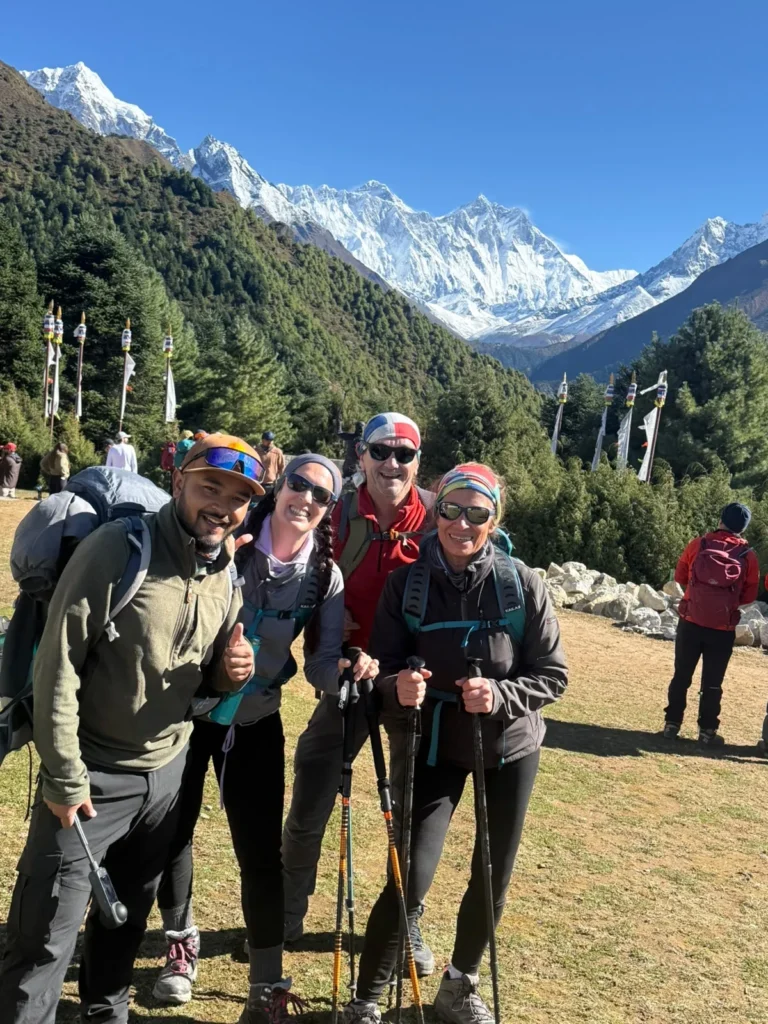
The name says everything and delivers exactly what it promises: views of Mount Everest, the highest mountain on Earth, without the physical demands, time commitment, or altitude exposure of the full Everest Base Camp Trek. The Everest View Trek takes you from Lukla — accessible by a short 35-minute flight from Kathmandu — along the main Everest trail to Namche Bazaar and then up to the famous Everest View Hotel at Syangboche (3,880m), where the panorama of Everest, Lhotse, Nuptse, Ama Dablam, and the full Khumbu Himalaya unfolds across the horizon in a view that has been photographed millions of times and still, in person, takes your breath away.
The Everest View Trek typically ends at or near Syangboche, with a return to Namche and then back to Lukla for the flight to Kathmandu. Some itineraries extend to Tengboche Monastery (3,860m) for an additional perspective and a night at one of the most beautifully positioned monasteries in the world. Neither option requires sleeping above 3,880 meters, which keeps the altitude manageable and the acclimatization demands within a range most healthy older adults can handle.
Everest View Trek at a Glance
Why the Everest View Trek Suits Older Trekkers
The Everest View Trek offers one thing that neither Poon Hill nor Langtang can: you see Everest. If standing within direct sightline of the world’s highest mountain is important to you — and for many older travelers who have carried that ambition for decades, it genuinely is — this trek delivers it without the 14-day commitment, 5,364-meter altitude, and physical demands of the full Everest Base Camp experience.
The route from Lukla to Namche Bazaar is one of the most well-served trekking trails in the world. Every kilometer has teahouses, signage, and a clear path. The main challenge is the sustained climb from the Dudh Koshi River valley up to Namche Bazaar (3,440m) — a 700-meter altitude gain over about 3 kilometers that takes most trekkers 2 to 3 hours and is steep enough to slow even fit walkers. Once you are in Namche, the terrain is more varied and less relentlessly steep.
Namche Bazaar itself is worth spending two nights in for the older traveller. The town has excellent bakeries, the region’s best teahouses and small hotels, a well-stocked equipment shop, a medical facility, hot showers, and reliable WiFi. Spending an acclimatization day in Namche — ideally with a morning hike to the Everest viewpoint ridge at 3,800 to 3,880 meters for a direct Everest sighting — allows your body to adjust before the hike to Syangboche and before any optional extension to Tengboche.
The Route Day by Day
Day 1: Fly Kathmandu to Lukla (2,840m), trek to Phakding (2,610m) — The flight to Lukla is 35 minutes in a small Twin Otter or Dornier aircraft. The landing strip at Lukla is famous for its steep uphill gradient and short length — it is one of the most technically demanding commercial runways in the world, though the pilots who fly it do so daily and the safety record is good. For older travellers anxious about the flight, the alternative is a helicopter charter, which costs more but lands at the same airstrip and offers better views. From Lukla, the first day’s trek descends along the Dudh Koshi River to Phakding, a pleasant walk through pine forest and small Sherpa villages. Walking time: 2 to 3 hours. This is an easy orientation day designed to let you settle in at altitude.
Day 2: Phakding to Namche Bazaar (3,440m) — The most demanding day of the trek. The route crosses the Dudh Koshi River multiple times on high suspension bridges before the main climb to Namche begins at the Sagarmatha National Park entrance gate. The climb itself is unrelenting — steep switchbacks through pine forest for 2 to 3 hours — but the first view of Everest through the valley framing appears on this section and rewards every step. Arrive in Namche Bazaar by midday. Walking time: 5 to 6 hours. Drink plenty of water. Avoid alcohol on your first night at altitude.
Day 3: Acclimatization Day at Namche Bazaar — Rest day. In the morning, take the well-marked trail north from Namche to the Everest viewpoint ridge (3,800m) where a clear direct sighting of Everest, Lhotse, and Nuptse is possible. You also see Ama Dablam from here — arguably the most beautiful mountain in the Khumbu — and the Tengboche Monastery ridge in the middle distance. Return to Namche for lunch. Spend the afternoon at the Sherpa Culture Museum (free entry), exploring the Saturday market if it falls on your visit, or simply resting at a teahouse with a view. This day is not optional. Proper acclimatization at Namche before going higher is essential regardless of fitness level.
Day 4: Namche Bazaar to Syangboche (3,780m) / Everest View Hotel (3,880m) — A short, steep climb from Namche to the Syangboche airstrip and the famous Everest View Hotel above it. The hotel, built by Japanese investors in the 1970s, is the highest-altitude hotel accessible without trekking experience — helicopters land on the small strip at Syangboche for guests who cannot walk. For trekkers, the climb takes 1 to 1.5 hours from Namche. The view from the hotel terrace is spectacular: Everest, Lhotse, Nuptse, Cho Oyu, Thamserku, Kangtega, and Ama Dablam all visible simultaneously. Spend the afternoon here and return to Namche for the night, or stay at the Everest View Hotel (significantly more expensive but the sunset and sunrise views justify it for those who can afford it).
Optional: Extension to Tengboche (3,860m) — Tengboche Monastery sits on a ridge 2 to 3 hours above Namche. The morning prayer sessions at the monastery, with monks chanting against a backdrop of Ama Dablam and the Everest massif, are among the most atmospheric experiences on any trek in Nepal. Adding one night at Tengboche extends the trek by one day and takes you one step closer to the high Khumbu without committing to the full EBC itinerary. Walking time from Namche: 2 to 3 hours up, 1.5 to 2 hours down. The altitude at Tengboche (3,860m) is similar to that at Syangboche and is safe after proper acclimatization at Namche.
Days 5–6: Return to Namche from Lukla, fly to Kathmandu — The return to Lukla reverses the approach trail. The descent is significantly faster than the climb: most trekkers make it from Namche to Lukla in 4 to 5 hours. Fly back to Kathmandu in the afternoon.
The Lukla Flight: What Older Trekkers Need to Know
The Lukla flight is the one element of the Everest View Trek that genuinely merits some attention for older travelers. The aircraft are small (12 to 18 passengers), the runway is short and steep, and weather delays are common, particularly in monsoon fringe months. In October and November — the best trekking months — delays are less frequent but still possible. Build at least one buffer day into your Kathmandu schedule before a connecting international flight. The flight itself takes 35 minutes. If you are anxious about small aircraft, a helicopter charter to Lukla is available for two to four people and provides the same access at a higher cost (approximately USD 500 to 700 per person). The helicopter ride also offers better aerial views of the Himalaya, which is a genuine bonus.
Mountain Views: What You Actually See
From the Syangboche ridge and Everest View Hotel terrace, on a clear day, you see Everest (8,849m) directly — not a distant triangle on the horizon but a full pyramid of rock and ice dominating the view. Lhotse (8,516m), the fourth-highest mountain in the world, appears alongside it. Nuptse’s west ridge forms the third side of what locals call the horseshoe around the Western Cwm. To the south and slightly west, Ama Dablam (6,812m) rises in a shape that experienced mountain observers consistently rate as the most beautiful individual peak they have ever seen — a perfect spire of granite and hanging glacier that appears in more photographs of the Khumbu than Everest itself.
On a clear morning before 10am in October or November, this view is precisely what decades of travel photography have led you to expect, but in person it is bigger, quieter, and more affecting than any image prepares you for. That is true for trekkers of any age, but it is particularly true for older adults who have long carried the aspiration to see these mountains. Standing at Syangboche and watching the early light hit the south face of Everest is something that changes people. We have seen it happen repeatedly in the twenty-three years our team has been operating in the Khumbu, and it never becomes ordinary.
Fitness Preparation: What Older Trekkers Should Focus On
All three of these treks require a base of cardiovascular fitness that, for older adults, is best built through regular aerobic exercise in the 3 to 6 months before the trek. The specific activities that translate most directly to uphill walking with a daypack are: stair climbing, hiking on uneven terrain, and sustained uphill walking on a treadmill set to 8 to 12 percent incline. Flat road walking, swimming, and cycling all contribute to cardiovascular fitness but do not prepare your legs and joints for the repetitive impact of downhill trail descent, which is where older trekkers most commonly develop knee pain.
Descending matters as much as ascending on all three routes. The stone staircases and steep descents on the Poon Hill circuit, the long descent from Kyanjin Gompa to Syabrubesi, and the steep drop from Namche back to Phakding all demand strong quadriceps and stable ankles. Eccentric quadricep exercises — step-downs from a low box, slow controlled squats — build the specific strength needed for descent and are worth including in any preparation program. Strong trekking poles are essential on all three routes and take significant load off the knees on descents. If you do not currently use poles, practice with them before you arrive.
Joint health is worth addressing with your doctor before booking. Mild to moderate knee osteoarthritis does not preclude trekking in Nepal — many of our clients in their 60s and 70s manage it successfully with good poles, a measured pace, and anti-inflammatory medication as needed. Severe arthritis, recent joint replacement, or unstable ankle or knee joints require a conversation with your orthopaedic surgeon before committing to any of these routes. Be honest with yourself and your doctor about what the terrain actually involves.
Altitude Sickness: What Older Trekkers Need to Know
Altitude sickness is democratic — it does not discriminate by age, fitness level, or previous trekking experience. A fit 30-year-old can develop acute mountain sickness (AMS) just as readily as a 65-year-old. What older trekkers need to understand is that some pre-existing conditions common in older adults — hypertension, cardiac arrhythmia, mild chronic obstructive pulmonary disease — interact with altitude in ways that require specific medical advice before your trip. If you take medication for any of these conditions, discuss altitude trekking with your doctor before booking.
The altitude thresholds for these three treks are as follows: Poon Hill (3,210m) is at the lower edge of where AMS becomes a consideration, and the short exposure time at that altitude makes serious AMS on this route rare. Langtang Valley (3,870m sleeping altitude) and the Everest View Trek (3,880m) require genuine acclimatization management — a rest day at intermediate altitude before sleeping high, adequate hydration (3 to 4 litres per day), and awareness of the symptoms of AMS: persistent headache not relieved by paracetamol, nausea, loss of appetite, unusual fatigue, and sleep disturbance.
Acetazolamide (Diamox) is available in Nepal and is often used by trekkers as a preventive medication. It has real benefits — it speeds acclimatization and reduces the severity of AMS symptoms — but it also has side effects, including increased urination, tingling in the fingers and toes, and, in some people, a mild visual disturbance. Discuss it with your doctor before departure. Do not start it in Nepal for the first time without medical guidance. The descent is always the correct treatment for genuine AMS — no viewpoint, no summit, and no personal goal is worth risking your health at altitude. If symptoms worsen, descend immediately.
What to Pack: Essentials for Older Trekkers
| Category | Item | Notes |
|---|---|---|
| Footwear | Ankle-support waterproof trekking boots (broken in) | Do not buy new boots to wear for the first time on trail |
| Poles | Adjustable trekking poles — both poles, not one | Essential for descents; protect knees significantly |
| Insulation | Down jacket (700-fill minimum) + fleece mid-layer | Evenings cold above 2,500m on any route |
| Rain Protection | Waterproof jacket and trousers | Keep accessible; mountain weather changes fast |
| Sun Protection | SPF 50+ sunscreen, UV lip balm, UV sunglasses | UV at altitude is significantly stronger than at sea level |
| Medical | Your regular medications + blister kit + pain relief + altitude medication if prescribed | Carry in your daypack, not the porter’s bag |
| Sleeping | Sleeping bag rated to −5°C or liner + teahouse blankets | Langtang and Everest View require warmer bag |
| Water | 2 × 1-litre reusable bottles + purification tablets or SteriPen | Staying hydrated is the single most effective AMS prevention |
| Power | Portable charger (20,000mAh) + universal adapter | Charging at teahouses costs NPR 200–500 per device |
| Knees | Knee support braces if you have existing knee issues | Wear from day one, not only when pain starts |
Guide and Porter: Non-Negotiable for Older Trekkers
Trekking any of these three routes without a guide and porter is legally permitted and many younger, experienced trekkers do so successfully. For older trekkers on their first Nepal trek, it is not advisable. Here is why.
A good local guide does more than navigate. They monitor your condition throughout the day and will notice the early signs of altitude sickness — a slight change in your colour, slowing pace, loss of appetite at lunch — before you register them yourself. They know the teahouse owners personally and can secure the best rooms when you need a proper rest. They speak Nepali and Tibetan dialects that open conversations with village elders, monastery monks, and farmers that no amount of phrasebook preparation can match. They understand the weather patterns and know when to push on and when to stop for the day in a mountain storm. In the event of a medical emergency, they manage the evacuation process, communicate with your insurance company’s assistance line, and ensure you are in the right hands quickly.
A porter carries your main bag (typically 15 to 20 kilograms) so that you walk with only a daypack of 5 to 8 kilograms. On a route with 1,000 metres of altitude gain in a day, the difference between carrying 8 kilograms and 20 kilograms is often the difference between enjoying the trek and suffering through it. Using a porter is not a compromise — it is smart logistics that allows you to actually look around at where you are instead of staring at the ground, managing the weight on your back.
Pay your guide and porter fairly. The going rate for an experienced licensed guide in 2026 is USD 25 to 35 per day plus tips. A porter earns USD 18 to 25 per day plus tips. On a 7-day trek, your guide and porter together represent perhaps USD 400 to 500 of a total trek budget that might be USD 1,200 to 1,500. They make the entire experience possible. Tip them well at the end.
Frequently Asked Questions: Nepal Treks for Older Adults
What is the maximum age limit for trekking in Nepal?
There is no official upper age limit for trekking in Nepal. We have guided clients in their late 70s on both the Poon Hill circuit and the Langtang Valley Trek. Age is not the determining factor — current fitness level, general health, and cardiovascular capacity are. If you can walk briskly for 2 to 3 hours on flat ground without stopping for breath, you have the basic fitness to begin preparing for one of these routes. The preparation period of 3 to 6 months of graduated fitness training is what converts that baseline into readiness for 5 to 6 hours of uphill mountain terrain.
Do I need travel insurance for these treks?
Yes, without exception. All three routes require helicopter-accessible terrain, and a medical evacuation from Kyanjin Gompa or Namche Bazaar to Kathmandu costs USD 3,000 to 6,000 without insurance. Good travel insurance with helicopter evacuation coverage costs USD 80 to 200 for a 2-week Nepal trip. Make sure your policy specifically covers trekking at altitude (some standard travel policies exclude trekking above 3,000 or 4,000 metres — check the fine print). World Nomads and IMG Global are commonly used by trekkers and have good track records for Nepal claims.
Is it safe to trek in Nepal as an older adult with a heart condition?
This requires specific medical advice from your cardiologist rather than a general answer. Stable, well-managed hypertension does not usually preclude trekking at the altitudes these three routes reach. Coronary artery disease, heart failure, significant valvular disease, or pecent cardiac events are different and require a frank discussion with your doctor. The physiological stress of sustained exercise at altitude puts measurable demand on the cardiovascular system. Your cardiologist knows your specific case; listen to their advice rather than relying on general trekking guides — including this one.
Which of these three treks is the easiest for someone who has never trekked before?
The Ghorepani Poon Hill Trek is the most accessible for first-time trekkers of any age. Its 3,210-meter maximum altitude, shorter duration (5 days), shorter daily walking sections, excellent teahouse infrastructure, and proximity to Pokhara (a comfortable city with good medical facilities) make it the natural starting point. It also delivers exceptional mountain views and cultural experience that make a first Nepal trek genuinely memorable. Many trekkers who do Poon Hill return specifically for the Langtang or Everest View Trek in subsequent years.
What about knee pain and joint issues on the trail?
Knee pain is the most common physical complaint on all three routes, particularly on the descent sections, and it is significantly more common in older trekkers. The most effective prevention combination is: quality broken-in trekking boots with good ankle support, two trekking poles used actively on all descents, knee support braces if you have any existing joint issues, and a pace on descents that is slower and more controlled than feels necessary. Anti-inflammatory medication (ibuprofen or naproxen sodium) taken with food can manage mild joint inflammation during the trek, but should be discussed with your doctor if you are on other medications. A porter who carries your main bag is also directly protective of your knees — the lighter your load, the less compressive force on your knee cartilage on every downhill step.
How long should I spend in Kathmandu before the trek?
At least two nights. One night to recover from long-haul flying and adjust to the 4.5-hour time zone difference from India or the 5.75-hour difference from UK. A second day for permit arrangements, equipment purchases or rentals, a briefing with your guide, and a visit to Thamel for anything you forgot. Kathmandu is at 1,400 metres, which is a gentle introduction to altitude before heading into the mountains. Older travellers with long-haul jet lag or who need more adjustment time should consider three to four nights in Kathmandu before starting the trek.
Can I do these treks solo or must I have a group?
All three routes can be done as a private solo client with your own guide and porter, which is actually the preferred arrangement for many older independent travelers. Private arrangements mean the itinerary is completely flexible to your pace. If you need an extra rest day at Namche or want to spend an additional hour at the Poon Hill viewpoint, you do. Group treks operate on fixed schedules that may not align with your pace or medical needs. The cost difference between a private and group trek is meaningful — a private 7-day Langtang trek with guide and porter costs perhaps USD 800 to 1,000 versus USD 500 to 600 on a group departure — but the flexibility and individual attention make the private option significantly better for older travelers.
What medical facilities are available on these routes?
Namche Bazaar has the best medical facility in the Khumbu — a government hospital with a doctor on staff, supplemented by the CIWEC Himalaya clinic during peak season. It can handle basic diagnoses and AMS management. Helicopter evacuation to Kathmandu is the primary option for serious medical emergencies. On the Langtang route, a basic health post exists at Kyanjin Gompa, but medical support is much more limited — your guide and your travel insurance’s emergency assistance line are the primary resources. On the Poon Hill circuit, the proximity to Pokhara (3 to 4 hours by road from the trailhead) means that serious medical situations can be managed by jeep evacuation more quickly than on more remote routes.
Final Thoughts: Which Trek Is Right for You?
The right trek for you depends on three things: how much time you have, how much altitude you are comfortable managing, and what you most want to see and experience.
If you have 5 to 6 days and want the clearest possible introduction to Nepal trekking with minimal altitude risk, the Ghorepani Poon Hill Trek is the answer. The sunrise from Poon Hill over the Annapurna massif is one of the iconic experiences of travel in Asia, the infrastructure is excellent, the cultural villages are authentic, and the altitude stays within a range where the vast majority of healthy older adults will have no problems. It is not a consolation prize — it is a genuinely great trek.
If you have 8 to 10 days and want something quieter, more culturally immersive, and more visually dramatic in the specific way that enclosed Himalayan valley trekking is, the Langtang Valley Trek offers an experience distinct from anything in the Annapurna or Khumbu regions. The combination of Tibetan Buddhist culture, extraordinary glacier and peak views from Kyanjin Gompa, and the relative quiet of a route that the majority of Nepal trekkers still overlook makes this an exceptionally rewarding choice.
If seeing Everest is the goal — if you have carried that ambition for years and want to tick it off properly without committing to 14 days and 5,364 metres — the Everest View Trek delivers exactly that. The view from Syangboche with Everest, Lhotse, Nuptse and Ama Dablam visible simultaneously is the reason people fly to Nepal from every corner of the world. The infrastructure of the Khumbu region is the best in Nepal. The Sherpa communities along the route are among the most extraordinary human communities on Earth. The flight to Lukla, once it is done, is simply a detail.
All three routes are doable for older adults with adequate preparation, a good guide, a porter who carries the main weight, and the patience to go at the mountain’s pace rather than yours. Nepal has been welcoming older trekkers for decades. The mountain paths do not ask your age. They ask only that you step onto them steadily and keep moving.
We have designed private itineraries for older trekkers on all three routes since 2017. We know which teahouses have the best beds, which rest stops allow you to recover properly, and which guides have the patience and communication skills that make the difference for older clients. Contact us to plan your trek at a pace that works for you.